A Year of Vegan Pizzas
by Reed Mangels, PhD, RD
The Oxford English Dictionary defines pizza as “A savoury dish of Italian origin, consisting of a flat, usually round base of dough, baked with a topping of tomatoes, cheese, and any of various other ingredients, such as meat, anchovies, or olives. Although tomatoes and cheese are the most typical toppings, on some kinds of pizza one or both of these may be absent.”
My thinking about pizza is more wide-ranging – pizza is a base of dough which is topped with whatever you choose to top it with. About a year ago, I challenged myself to make (or at least eat) a different vegan pizza each month, using seasonal vegetables and fruits as much as possible.
Here’s my year of vegan pizzas:
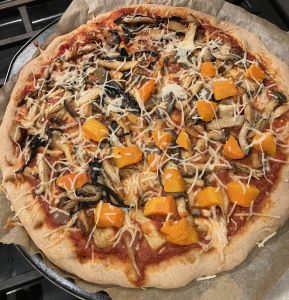
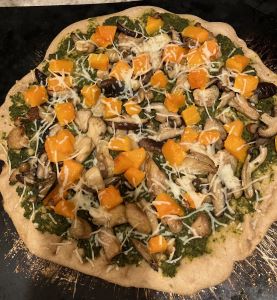 In January, I made 2 pizzas. One was topped with homemade pesto from the freezer and the other with commercial red sauce. Both featured a mix of sautéed mushrooms (shiitake, king trumpet, black trumpet, hedgehog, tree oyster, and lion’s mane) sautéed in a little olive oil, roasted butternut squash, and shredded Italian blend vegan cheese.
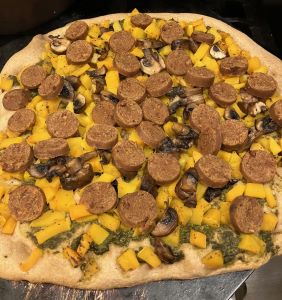 February’s pizza was topped with pesto from the freezer, sun-dried tomatoes, sautéed cremini mushrooms, roasted butternut squash, and slices of sautéed vegan Italian sausage.
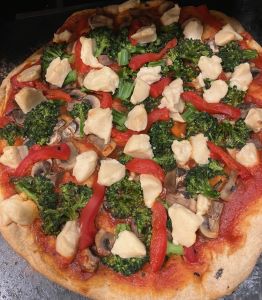 In March, the pizza consisted of a commercial red sauce, steamed broccolini, roasted red pepper, sautéed baby Bella mushrooms, and homemade vegan cashew Mozzarella cheese.
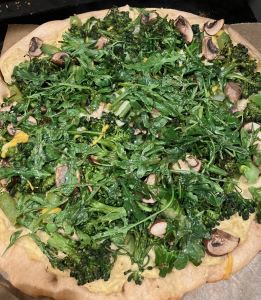 April’s pizza featured spring vegetables – sugar snap peas, broccolini, and arugula, along with sautéed mushrooms and shredded vegan cheese. The sauce was a lemon crème cashew sauce.
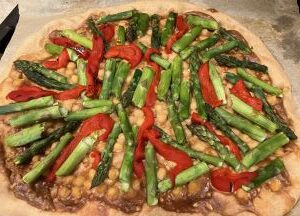 May’s pizza spotlighted fresh local asparagus, lightly steamed and used to top a pizza dough spread with peanut sauce. Chickpeas and red pepper slices also made an appearance.
In June, the pizza was topped with a commercial vegan roasted red pepper spread and showcased roasted zucchini, green pepper, red onions, and cremini mushrooms.
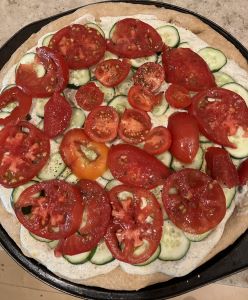 With July and hot weather, the pizza crust was prebaked and then topped with vegan sour cream (made with silken tofu, dill, and parsley), sliced cucumbers, sliced tomatoes, and capers.
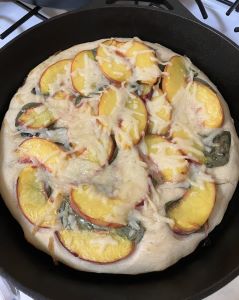 In August, the pizza celebrated local peaches with a topping of sliced peaches, fresh basil, and vegan Mozzarella shreds all baked in a cast iron skillet.
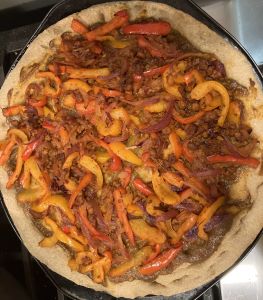 For September, the pizza crust was made with a mixture of all-purpose flour, whole-wheat flour, and cornmeal. It was topped with a cilantro/tomato sauce, sautéed peppers and red onions, and vegan chorizo.
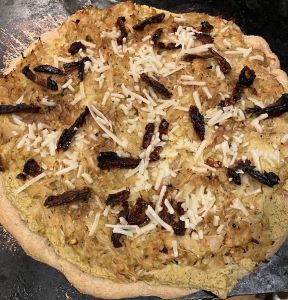 October’s pizza had a white bean spread made with white beans, fresh dill, and tahini. It was topped with sautéed cabbage and onions, sun-dried tomatoes, and vegan Mozzarella shreds.
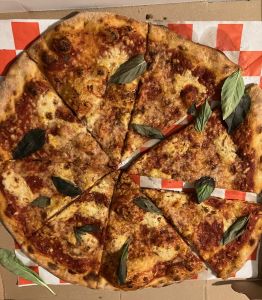 November’s pizza was purchased from a vegan pizzeria.
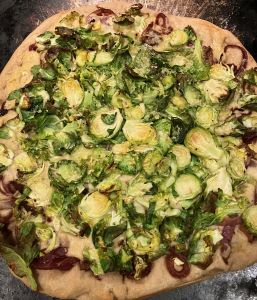 The year ended with December’s pizza – a homemade vegan cheese sauce, balsamic vinegar-caramelized red onions, shredded Brussels sprouts, and vegan Parmesan shreds.
Here’s my go-to pizza crust recipe:
Makes one pizza
1 cup warm water
2¼ teaspoon active dry yeast
1½ cups all-purpose flour
1¼ cups whole-wheat flour
1 teaspoon salt
Put warm water in a large bowl and sprinkle with yeast. Let stand 5 minutes. It should look foamy and bubbly. If it doesn’t, the yeast is too old to use.
Mix in both flours and salt. Knead dough for 10 minutes. Shape into a ball and place into an oiled bowl to rise. Cover and let rise in a warm spot about an hour. It should be about double in size.
Preheat the oven to 425 degrees.
Punch the dough down and gently stretch it into a 12-inch round or other shape of your choice on a parchment-lined baking sheet. Add toppings and bake for 15-20 minutes.