The Vegetarian Resource Group Blog

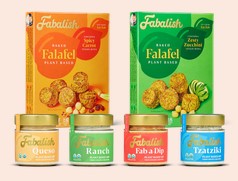
Review of Fabalish Vegan Sauces

Posted on September 01, 2023 by The VRG Blog Editor

Enjoy reading a review of Fabalish’s vegan sauces including Mayo, Ranch, Queso, and Tzatziki in the latest issue of Vegan Journal here: https://www.vrg.org/journal/vj2023issue3/2023_issue3_veggie_bits.php

To subscribe to Vegan Journal in the USA, see: https://www.vrg.org/member/2013sv.php

Key Differences Between American and British Perceptions of Animal Activism: Interview with Dr. Simon Brown

Posted on September 01, 2023 by The VRG Blog Editor

By Mihika Chechi, VRG Intern

When considering the many different social justice movements that exist in the world today, the animal rights movement stands out to many as being one of the most controversial. After all, there are innumerable philosophical questions, political connotations, and even internal disagreements pertaining to the topic of animal activism: “Do humans have an intrinsic responsibility to ensure the welfare of animals?” “Is factory farming an issue and can it ever be addressed effectively at the policy level?” “Should the animal rights movement focus only on the needs of domesticated animals?” Debates over hundreds of questions such as these often become the focal point of the animal rights movement, both among its observers and its members.

In some ways, these subtle nuances can positively diversify the movement in terms of which people choose to participate in it and why. Yet, these differences can also act as barriers to the congruence of the animal rights movement overall, by creating factions within the movement that hinder progress by working independently.

One particular division in the animal rights movement that I’m interested in exploring is that of public perception of animal activism in different countries, and whether this plays a role in how people advocate for the cause and how the public reacts. To explore this topic in greater depth, I interviewed Dr. Simon Brown, an academic with experiences in both the UK and the US whose research has often centered directly on issues concerning animals.

Q:  To establish a brief background on you, what former professional or academic experiences do you have in relation to animals and animal welfare?

A: “I am a researcher in philosophy. My research focuses on understanding animal minds and on the ethics of our treatment of animals. I am currently a Research Officer in the Animal Sentience group at the LSE. Before that, I was a Postdoctoral Fellow in the Foundations of Mind at Johns Hopkins. As part of those jobs (and as a grad student), I have spent quite a bit of time collaborating with various scientists studying animal minds and animal welfare, and I have also taught several undergraduate and graduate courses on animal minds and animal ethics. I grew up in the UK, moving to the US when I started my Ph.D. program in NYC in 2013; I was vegetarian from about 2005 and have been vegan from about 2018.”

Q: In your opinion, what differences have you noticed in the approach to animal rights in the UK and the US on the part of activists? Additionally, what differences have you noted in terms of how society perceives animals and responds to the animal welfare movement in each region?

A: “I’m not sure I’ve noticed huge differences in animal activism itself between the countries, mainly because I think activism is extremely varied in strategies and message in both countries anyway, and should be. My view is that a successful movement will require a combination of radical, extralegal elements, and more mainstream, popular elements, pursuing a number of related issues which speak to different people more immediately and draw them into coalitions that make progress wherever it can be made. That said, here are some possible differences, [on] which I’d need to do some more careful research to actually confirm:

  • I don’t know of any big open rescue cases happening in the UK in the way that they have in the US, possibly because the legal situation would be rather different. There is a much larger and more disruptive climate movement in the UK (XR/Just Stop Oil) and an associated movement called Animal Rising/Animal Rebellion, which I don’t think has an exact counterpart in the US, where the more radical pro-animal groups like DxE tend to be a bit more separated from the climate movement, and many of the big climate groups are in my experience much more reluctant to criticize animal agriculture. But from my understanding, Animal Rising is pulling away from the climate issue to focus more fully on animal rights, so there may be convergence there anyway.
  • I’m also not aware of a vegan lobbying group trying to get the UK government to cease agricultural subsidies in the way that AFA does in the US, but that’s partly because there is less lobbying generally anyway, or it happens in a slightly different way. There is less money in politics than in the US (especially post-Citizens United). Things are very complicated by Brexit at the moment: the EU set the Common Agricultural Policy which determined subsidies etc. (although the UK had its own animal welfare laws). The UK government has still not really made it clear what will replace that. The UK government likes to claim that we have the best animal welfare laws in the world and many of the public believe this (in fairness, they are some of the least bad welfare laws). However, many of the trade deals being negotiated post-Brexit may require (or in some cases already have required) the UK to allow imports of cheap meat that is produced under much lower standards of welfare (and food safety). But this is controversial and mostly unpopular, partly because the UK often describes itself as a nation of animal lovers.
  • Another big difference institutionally is that the US federal system means that there are many more opportunities for activists to try to get animal welfare legislation passed in local jurisdictions, e.g. the recent laws about pigs in California and the subsequent supreme court battle: I’m not totally sure what powers the Welsh and Scottish governments would have over animal welfare if they chose to diverge from England, but generally it’s entirely set by Westminster, at least as far as I can see.
  • In my experience, vegan options are more widely available in the UK than [in] the US (especially the US outside the big metropolitan centers), and are often better quality. Veganism gets a (slightly) more sympathetic hearing in the UK media than the mainstream US media. Veganism is a protected lifestyle under UK law, so vegans have similar rights to having their veganism respected by workplaces, etc.; e.g. Jews who keep kosher or Muslims who keep halal have their lifestyles respected.
  • There is more veganism and vegetarianism in the UK establishment than in the US establishment, e.g. the king seems to be somewhat sympathetic to plant-based diets for environmental reasons, and my sense is that senior politicians, etc. are more likely to be vegan than their US equivalents. This possibly relates to a sense of noblesse oblige and a commitment to the conservation of traditional landscapes amongst some of the aristocracy which can lend itself to environmentalism and a sense of responsibility for animals, as opposed to the more rapaciously egoistic and capitalistic ethos that tends to be more explicitly favored by US elites. But this is just an impression.”

Q: What factors (cultural, historical, political, environmental, etc.) do you think might contribute to these subtle differences?

“A few unique historical factors have shaped people’s understanding of animal agriculture in the UK.  One is the history of British food, which was notoriously bad especially after rationing due to WWII, making people very open to other cuisines, and in particular Indian cuisine, given the strong links to India thanks to the history of Imperialism — which tends to be much more amenable to vegetarian and vegan diets than traditional Northern European cuisines are (interestingly, there’s also a link going in the other direction: Gandhi seems to have developed many of his most distinctive views because he was hanging out in vegetarian restaurants in London as a law student and meeting a certain set of people; on the other hand, notoriously the 1857 uprising in India was partly caused by the East India Company not respecting Muslim and Hindu aversion to eating pork fat. There’s a very complicated story to be told about the relationship between Britain, India, and animals).

There’s a long history of vegetarianism in the UK: it’s where the Vegetarian Society was founded in 1847, and the movement had interesting links with other important social movements over the subsequent century: utilitarianism, feminism/suffragism, abolitionism, etc. But it was generally quite marginal and restricted to quite radical circles. It has been growing a lot more in the last decade or two.

There are two big events in British animal farming from around 20-40 years ago [that] shaped a lot of the public’s perceptions negatively. One was BSE/Mad Cow Disease, where cows were infected with a new disease, probably as a result of cows being fed pellets that included material from other cows, which was pretty horrible for the cows but also turned out to cause an incurable and painful death for humans who ate the infected beef; this was sort of covered up initially, and led to British beef being banned in many places, prompting a counter-campaign to save British beef farming by buying British. The other was an outbreak of foot and mouth disease in 2001, which infected quite a lot of farm animals around the country – but unlike the current avian influenza issue for factory-farmed chickens, which has largely gone unnoticed by the general public, this outbreak had huge effects, as every time a farm detected a case of foot and mouth, they had to quarantine and kill their entire herd and burn it. So the entire countryside was blanketed with checkpoint/lockdown-type areas and huge piles of burning animal carcasses, which were rather noticeable.

One huge difference between the countries is in hunting.  In the US this is mostly about a couple of people going out and shooting deer or whatever. In the UK it means fox hunting, which involves a large number of people, many upper class on horses wearing special costumes, who have a pack of dogs that chases down the fox and rips it apart. This was banned in 2004, but there are still loopholes and poor enforcement which allow groups to get away with it. Opposing them are groups of activists called saboteurs, who try to actively disrupt the hunt, often by putting themselves in great danger.  Fox hunting is incredibly contentious, and intersects with several other divisions in British society, especially class (it is associated with upper-class people, who feel entitled to trample over everyone else’s land in pursuit of the hunt) and a rural/urban divide. I think this plays out rather differently in the US, where hunting is less of an upper-class activity, and class is seen very differently in any case.

There’s also an issue about badgers being killed by dairy farmers who believe they spread TB; the government mostly sides with the farmers, but there have been high-profile campaigns to save the badgers, famously led by Brian May from Queen. I don’t think there is any equivalent of this in the US.

The role of sheep in UK landscapes is complicated and contested, especially in Scotland, Wales, and Northern Ireland, which are much more dominated by sheep farming, partly because they have mountainous regions which are harder landscapes to farm anything else. In Scotland, the introduction of sheep was associated with the Clearances, which remain a sore wound for some to this day. In Wales, national identity is now partly formed around sheep. But most of all, the famous landscapes of these countries which people love and identify with are often quite barren mountains. There’s now a rewilding movement [that] claims that if sheep weren’t there, these landscapes would be forested with rich rainforests, and that we should return to such landscapes, perhaps by paying farmers to transition into something more like park rangers, and that the result would be much better for biodiversity and the climate. Needless to say, this is still a pretty marginal movement, but it is growing.”

Q: Based on your own experiences and your observation of any differences in the general perception of animals, what advice would you give to animal rights activists hoping to make a significant impact in both the UK and the US? What kind of work would be most effective in both regions?

A: “I think the main advice would be that we need a diversity of tactics to reach different people who are at different stages in their vegan journeys, so focus on your strengths and the people you are likely to be able to reach, whether you are good at gentle persuasion or more confrontational tactics which may not pay off immediately but will get people thinking, whether you are better at in-person discussions or social media, or more academic or more simplistic kinds of messages: don’t spend time criticizing other activists (e.g. for being too confrontational or not confrontational enough), focus your energy on doing the kind of activism in which you personally will be able to help the animals the most, given your skills and the people you are personally in the best position to reach. Don’t try to tailor just to a country (that is pretty broad), but to specific people or groups within that country, whether that’s based on age, religion, class, education, culture, connection to animal agriculture, or to particular foods, etc., or even what an individual person is telling you about why they personally aren’t vegan yet.”
Vegan Pasta Night Book Review

Posted on August 31, 2023 by The VRG Blog Editor

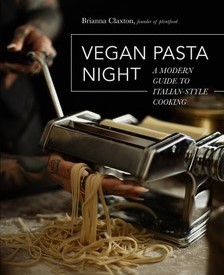
Every issue of Vegan Journal includes reviews of new vegan books we especially like. In the latest edition read about Vegan Pasta Night by Brianna Claxton here: https://www.vrg.org/journal/vj2023issue3/2023_issue3_book_reviews.php To subscribe to Vegan Journal in the USA, see: https://www.vrg.org/member/2013sv.php

The Vegan Way to Reduce Methane Fast in a Climate Crisis

Posted on August 31, 2023 by The VRG Blog Editor

By Jeanne Yacoubou, MS

In our recent article on the carbon footprints of vegan pizza vs. meat pizza, we mentioned that the major agricultural source of methane is bovine: belching beef cattle and dairy cows ruminating on forage or feed. During their lifetime, each animal burps out roughly 220 pounds of methane, comparable to the carbon emissions from burning 900 gallons of gasoline. As a whole, ruminants contribute 30% of all anthropogenic methane emissions. Since methane is a short-lived greenhouse gas – compared to carbon dioxide – the fastest way to reduce global heating is to cut methane as soon as possible.

And as countries, like dairy-dominant New Zealand, start charging a carbon tax for animal-caused methane emissions in 2025, the race is on to cut methane out of animal agriculture.

So, what are some of the ways that animal scientists propose to limit bovine methane production? Here’s a brief rundown.

  1. Adding certain substances to animal feed, like seaweed or 3-nitroproxypropanol, has been shown to reduce methane production in bovines. This research is a long way from being used on an industrial basis because neither compound has federal approval to be used as a feed additive. That process usually takes years. Plus, huge amounts of energy are required to grow the seaweed commercially. The cost of this energy could offset any benefit seaweed has for reducing global heating caused by bovines.
  2. Low-methane breeding research aims to create bovines that produce less methane. In fact, the first commercial sale of genetically altered semen this year could be a game changer if it doesn’t have any unforeseen negative consequences like digestive problems or slower weight gain. Unfortunately, low-methane selective breeding is predicted to result in only a 1.5% reduction in methane emissions. And if the low-methane animals need more time to fatten up to market weight, it could become costly to keep the animals alive longer. So, for economic reasons, farmers may opt out until low-methane genetic breeding proves itself to be commercially viable.
  3. Since the gut microbiome actually churns out the methane – not the bovines themselves – vaccinating animals against the gut microbes (methanogens) appears to be a strategy to reduce agricultural-sourced methane. Still new on an experimental basis, it’s unknown whether this method will work in the long-term. Altering the gut microbiome – the seat of the immune system – could have far-reaching consequences that prove to be too risky.
  4. Virtual fencing using GPS tags to keep cattle enclosed where you want them is a new technology that doesn’t suffer from the need to install, repair, or replace physical fences. Researchers are experimenting with using this method to move grazers rotationally from plot to plot where there’s less dry, older grass and more new grass. This strategy is based on the idea that cattle eating young grass produce less methane. According to the Food & Agriculture Organization, grazing ruminants (mainly cattle and sheep) produce 47% of agricultural methane, so decreasing it through modified grazing practices would be climate-friendly.

This method may work for small ranchers with enough land and a small herd. However, on a commercial basis, it’s doubtful that virtual fencing could be a long-term solution for methane reduction. Moving hundreds of cattle, possibly from state to state, to get to young grass, would be a logistical nightmare. Not to mention expensive.

Given the long-running heatwave in Texas, a major cattle-rearing state, companies would need air-conditioned trucks to transport animals or suffer from high fatality rates. Economic losses – either from fuel costs or high mortality – would outweigh any benefit from whatever reduction in methane could result.

So what’s the fastest, most inexpensive way to reduce methane from cattle and cows that we know of?

The only way to cause an immediate and permanent end to methane production from bovines is to end the meat and milk industries that are based on cattle and cows.

Since a recent climate modeling study published in July 2023 concluded that if methane reduction occurs this decade – along with decreases in CO2 emissions – global heating would be limited to “well below” 2 °C above pre-industrial levels. However, if methane reduction is delayed until the 2040s, a 2 °C breach will likely occur.

In light of the serious climate breakdown effects witnessed daily around the world at only 1.2 °C, it’s critical that methane emissions drop immediately. For ourselves and for future generations.

For more on the environment, see https://www.vrg.org/environment/

To support The Vegetarian Resource Group research and education, join at https://www.vrg.org/member/2013sv.php
Or donate at www.vrg.org/donate/

Review of Growee Vegan Spreads

Posted on August 30, 2023 by The VRG Blog Editor

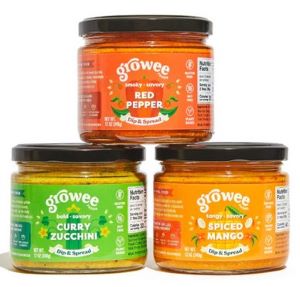
Growee Foods now offers a trio of spreads: Curry Zucchini, Spiced Mango, and Three Pepper. Read a review of these products in the latest issue of Vegan Journal here: https://www.vrg.org/journal/vj2023issue3/2023_issue3_veggie_bits.php

To subscribe to Vegan Journal in the USA, see: https://www.vrg.org/member/2013sv.php

Pears are Featured in these Vegan Recipes!

Posted on August 30, 2023 by The VRG Blog Editor

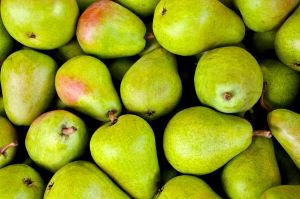
Debra Daniels-Zeller’s article Perfect Pears provides recipes for Reisling-Braised Kale and Pears With Basmati Rice; Sweet And Spicy Yams And Pears With Toasted Pecans; Maple-Sautéed Pears; Creamy Rosemary, Acorn Squash, and Pear Soup; Coconut-Cranberry-Pear Sauce Hazelnut-Orange Asian Pear and Beet Salad; Pear Crisp With Cranberries; Pear-Walnut Bread; and Berry-Poached Pears. She also explains the differences between popular varieties of pears. See: https://www.vrg.org/journal/vj2004issue3/2004_issue3_perfect_pears.php

To subscribe to Vegan Journal in the USA, see: https://www.vrg.org/member/2013sv.php

Vegan Africa

Posted on August 29, 2023 by The VRG Blog Editor

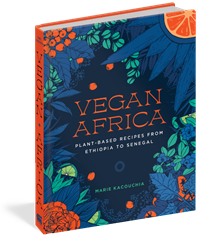
The latest issue of Vegan Journal features recipes from Marie Kacouchia’s book Vegan Africa. Be sure to try Cumin-Spiced Orange and Chickpea Salad; Plantain and Eggplant Stew; Potato Stew with Olives; Chakalaka (South African Relish); and Githeri (Kenyan Corn and Bean Stew).

Find her recipes here: https://www.vrg.org/journal/vj2023issue3/2023_issue3_vegan_africa.php

To subscribe to Vegan Journal in the USA, see: https://www.vrg.org/member/2013sv.php

Simple Habits for Incorporating Sustainability Into Everyday Life

Posted on August 29, 2023 by The VRG Blog Editor

By Mihika Chechi, VRG Intern

Veganism, defined as “the practice of not eating or using any animal products, such as meat, fish, poultry, dairy, or other animal products such as leather,” has become increasingly popular around the world in recent years. The reasons for turning to a vegan diet vary by the individual, but the most common ones include ethics, a passion for animal welfare, a concern for the potential health detriments of eating animals, and a feeling of duty toward the environment, as the factory farming industry is a major contributor of the greenhouse gas emissions that are exacerbating climate change. For those whose decision to become vegan is primarily motivated by environmental concerns, sustainability is often something they seek to maintain in everyday life. If you’re looking for inspiration for more ways to become environmentally conscious and practice sustainability in your life, look no further! Found below are some of the everyday sustainable habits of interns, members, scholarship winners, and volunteers of The Vegetarian Resource Group, as well as their advice for other people seeking to minimize their environmental impact.

Angelina: “As an avid consumer there’s room for improving sustainability in every aspect of my life. When it comes to food, I have learned that knowing the story of our food alters what we decide to consume. So while many of us do not have the benefit of farm-to-table options, learning about labels and agriculture methods can help the consumer’s decision process. Making conscious decisions as stewards of our earth incentivizes and rewards these sustainable food production methods.”
Jeff: “Apart from the vegetarian diet, there are several ways in which I practice sustainability in everyday life:
● Eating small meals (only what I need and no more), never wasting food.
● Don’t leave lights, ceiling fans, or other energy-consuming devices on when no one’s in the room.
● Avoid driving a car unless it’s really necessary; if possible, walk, ride a bike, or take public transportation instead.
● And of course the well-worn mantra of “the 3 R’s”: Reduce, Reuse, and Recycle as much as possible

As far as advice goes, awareness is an important first step. The points above are pretty common-sense and easy to put into practice.”
Amy: “I do lots of small things, like reducing consumption, recycling, avoiding plastic, etc. but the most exciting sustainability action I have taken is to set up a native plant garden that is pollinator-friendly. It’s so exciting to see the insects, including bees, dragonflies, and butterflies enjoying themselves. We also get bird visitors and that’s always fun too!”
Stephanie: “Something I do to practice sustainability in everyday life is keeping a waterproof watch in the shower. There are numerous times in which you get out of the shower and you look at the clock and think, “Oh my gosh, I didn’t know I was in there for so long.” You thought you were taking a short shower but you actually took a long shower and by taking a long shower you used a lot of water. So, to help the environment I keep a waterproof watch in the shower to ensure I take a short shower which helps save water.”
Elaina: “I practice sustainability in daily life by eating the food I make and not wasting it. I also close my blinds to block out the hot sun and reduce the need for electricity. I compost and recycle what I can. When I buy clothes I buy from sustainable brands that are carbon neutral and conserve water usage. Obviously we as individuals are not the only ones perpetuating climate change, but it is important that we as a collective realize that small changes to our lifestyles can make an impact. Look out for your emissions but also talk to friends, family members, neighbors, and peers about climate change and the importance of living sustainably.”
Coda: “I practice sustainability through mostly being vegan because the meat industry is one of the biggest causes of pollution. But I also practice sustainability [by] driving an eco-friendly car that was also pretty affordable considering, unlike most teenagers, I had to buy it myself with really good gas mileage. The advice I have to give is to stop eating products from cows, because although it’s not killing the cow, the processing plants and all those cows close together farting is not good for the environment. It’s why I stopped eating cheese.”
Jason: “Overall trying to be sustainable is a bit of a daily challenge. Some things I’ve found easier, like being vegan and eating local organic produce where possible. Some are harder, like removing plastics. I like to bike or walk where possible. I buy community solar for my house through Neighborhood Sun to know my home is powered by clean electricity and have recently installed mini splits for efficient air conditioning and reducing natural gas use for heat. My biggest challenge is probably enjoying traveling and hopping on a plane a couple of times a year. Nothing’s perfect, but do what I can and try to improve each day.”
Marcy: “I try to be conscientious about how much water I use by not letting water run if not necessary and not showering every day. I reuse paper towels; I don’t buy leather or fur products; and I drive a hybrid vehicle.”

The Vegetarian Resource Group’s Memorial and Honorary Gift Program

Posted on August 28, 2023 by The VRG Blog Editor

How often have you wanted to make a gift in honor of a loved one or friend but weren’t sure which charities are vegan-friendly, pro-environmental, or pro-animal rights? Please remember The Vegetarian Resource Group. You can make a gift in memory of a loved one or as a living tribute to honor someone you care about on a special occasion, such as a wedding or birth. We’ll send an acknowledgment to you and to the recipient(s) you choose. Your gift will support educational programs and help promote veganism.

Make checks payable to The Vegetarian Resource Group and mail to PO Box 1463, Baltimore, MD 21203, or donate at vrg.org/donate

Quick Ideas for Corn-Based Dishes

Posted on August 28, 2023 by The VRG Blog Editor

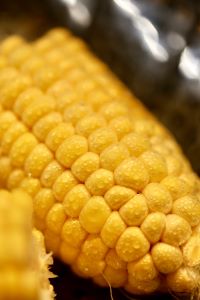
Are you looking for some quick and easy ideas for cooking creative corn-based dishes? See: https://www.vrg.org/blog/2015/08/25/quick-and-easy-ideas-for-preparing-dishes-with-corn/

To subscribe to Vegan Journal, visit https://www.vrg.org/member/2013sv.php

  • Donate

  • Subscribe to the blog by RSS

  • VRG-NEWS

    Sign up for our newsletter to receive recipes, ingredient information, reviews of new products, announcements of new books, free samples of products, and other VRG materials.

    Your E-mail address:
    Your Name (optional):


↑ Top