The Vegetarian Resource Group Blog

Weight Gain for Vegans
Posted on February 27, 2023 by The VRG Blog Editor

By Reed Mangels, PhD, RD

A Vegetarian Resource Group member contacted us asking for suggestions for gaining weight. She’s always been slightly underweight but has recently lost weight. She’s active but has not increased her activity and hasn’t changed her diet so she’s not sure why she lost weight. She is vegan and doesn’t think she can eat any more than she is already eating. Her diet includes lots of whole grains, vegetables, and nuts.

One question that I had was about the unintentional weight loss. Usually people’s weight fluctuates a bit but unintentional weight loss of 5% of weight over 6 to 12 months is concerning and worth discussing with a health care provider.

More than 20 years ago an article on weight gain in what was then Vegetarian Journal (now Vegan Journal) concluded, “… a slender look may be normal for you. You might want to contact a registered dietitian for a more individualized approach. A dietitian could determine your body fat level, assess your frame size, activity level, and caloric needs, and help you arrive at a realistic body weight goal.” This advice is true today also.

Food quantity is definitely an issue for some vegans – they have difficulty getting enough calories because they get full on high fiber foods. A few ideas that may help with that:

  • Eat salad last – fill up first on denser, higher calorie foods and then, if you have room for it, eat a salad.
  • Similarly, keep other bulky, low-calorie foods (broth and broth-predominant soups, raw vegetables, bran cereals, for example) at a minimum since they are filling without providing many calories.
  • Eat often – 3 meals and 3 snacks helps.
  • Bulk up beverages. Put some soymilk, a frozen banana, a spoonful of nut butter, maybe some other frozen fruit, and silken tofu (also a touch of maple syrup) in a blender or food processor and process until it is cold and thick. You don’t need to drink a huge glass of this – maybe 8-12 ounces – but have it in addition to what you usually eat. Adding a scoop of vegan ice cream is another idea.
  • How about making a cashew cream (here’s one easy recipe) and adding it to soups, pasta, even hot cereal?

When older adults unexpectedly lose small amounts of weight, it may be due to a loss of muscle. Some loss of muscle mass occurs with aging and this may be what is showing up as weight loss. Eating somewhat more protein along with resistance training can help to slow loss of muscle mass (1). You can read more about that here and here. Getting enough protein is also important for bone health. Dried beans and peas and soyfoods are some of the higher protein foods for vegans so adding a serving or two of these can help to maintain muscle mass.

Somewhat surprisingly, nuts, while offering many health benefits, may not be helpful for promoting weight gain. A number of studies where subjects were fed nuts in addition to their usual food have found that subjects either did not gain weight or did not gain as much weight as would be expected based on the extra calories (2). Nut butters do not seem to have the same effect so eating more nut butters and fewer nuts may help if you are trying to gain weight.

Weight gain should happen gradually – just as rapid weight loss is not typically sustainable, the same is true for rapid weight gain. Slow and steady is the goal.

Reference

  1. Haub MD, Wells AM, Tarnopolsky MA, Campbell WW. Effect of protein source on resistive-training-induced changes in body composition and muscle size in older men. Am J Clin Nutr. 2002; 76(3): 511–517.
  2. Traoret CJ, Lokko P, Cruz ACRF, et al. 2008. Peanut digestion and energy balance. Int J Obes 32:322-28.

To read more about weight gain see:

How Do I Gain Weight as A Vegetarian Athlete?
Gaining Weight on a Vegetarian Diet

The contents of this posting, our website, and our other publications, including Vegetarian Journal and Vegan Journal, are not intended to provide personal medical advice. Medical advice should be obtained from a qualified health professional. We often depend on product and ingredient information from company statements. It is impossible to be 100% sure about a statement, info can change, people have different views, and mistakes can be made. Please use your best judgment about whether a product is suitable for you. To be sure, do further research or confirmation on your own.
Vegan Restaurants Added to The Vegetarian Resource Group’s Guide to Veggie Restaurants in the USA and Canada

Posted on February 24, 2023 by The VRG Blog Editor

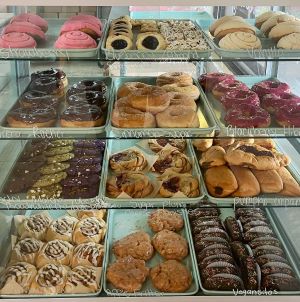
photo from Sweet Craft Vegan

The Vegetarian Resource Group maintains an online Guide to Vegan/Vegetarian Restaurants in the USA and Canada. Here are some recent vegan restaurant additions. The entire guide can be found here: http://www.vrg.org/restaurant/index.php

To support the updating of this online restaurant guide, please donate at: www.vrg.org/donate

Here are some new additions to VRG’s guide:

La Semilla, Modera Reynoldstown, 780 Memorial Dr. SE, Atlanta, GA 30316

La Semilla offers plant-based versions of your favorite Latin American dishes in a lively atmosphere just across from Cabbagetown Park in Atlanta, GA. Menu items include “Cochinta Pibil Tacos” with jackfruit, habanero pickled onions, and salsa verde, and even a vegetarian twist on Taco Bell’s famous “Crunch Wrap” with seitan beef. Their bar serves an expansive menu with homemade cocktails, wine, and beer.

 Soul Miner’s Garden, 3204 Union Rd., Gastonia, NC 28056

Try the variety of nachos and fries as starters. Entrees include green bowls, BBQ sliders, Philly basket, or vegan crunch wrap supreme. Sides offered include collards, pintos & onions, potato salad, and rosemary garlic fries.

Sprout and Lentil, 796 Aquidneck, Unit 3, Middletown, RI 02842

Sprout and Lentil offers a selection of burgers, wraps, and baked goods. Burgers include BBQ jackfruit burger with house-made BBQ sauce and the signature V-Rex spicy black bean burger with melted V-cheddar on a pretzel roll. Farm-to-table soups such as Thai red curry change with the season. Dessert items include cinnamon rolls and triple chocolate brownies. Sprout and Lentil also offers Shabbat meals and cooking classes.

Squash the Beef, 1400 E. 105 St., Cleveland, OH 44106

Enjoy burgers, sandwiches, drinks, sides, fries, and more. Tuesday is Taco Tuesday and Sunday is Soul Food Sunday.

Sweet Craft Vegan, 1280 W. Ruben M. Torres Sr. Blvd., Ste. C, Brownsville, TX 78520

All-vegan bakery specializing in Mexican cakes and pastries, such as Vegansitos (chocolate-coated vanilla cake with strawberry and cream filling), Rosca de Reyes (Traditional Mexican sweet bread), Conchas, and seasonal treats such as Thanksgiving pies, Christmas cookies and Tamales, and special donuts and cakes for Easter, Mother’s Day, and Father’s Day. Offerings are always fun, vibrant, and bursting with flavor, and a hit with vegans and non-vegans alike. Orders can be placed online for pick up in Harlingen, McAllen, or at their bakery in Brownsville. Custom orders can be placed by phone.

The Rabbit Hole, 2659 East Atlantic Blvd., Pompano Beach, FL 33062

There’s no better feeling than treating yourself to the heartwarming flavors of vegan comfort food. The Rabbit Hole offers a variety of dishes that put a cruelty-free spin on classic recipes. Some signature selections include “The Big Grin” – creamy house-made vegan mac & cheese topped with tender marinated and seasoned chargrilled plant-based pepper steak medallions basted in garlic herb butter and served with fresh grilled garlic toast and the “Spring Ting” Platter – jerk chicken, mac & cheese, kale collards, and a pumpkin maple cranberry cornbread muffin. You can also choose from dozens of appetizers, “wings,” burgers, salads, fries/sides, desserts, beverages, and more! Kids menu is also available. You can never go wrong with a warm bowl (or two) of vegan comfort food!

The Vegan Club, 13228 Shaker Square, Cleveland, OH 44120

The Vegan Club offers a variety of starters, salads, soups, sandwiches, entrées, desserts, beverages, and more for you to enjoy. If you’re looking for something hearty, try the Hot Vegan Chicken Sandwich – oyster mushroom on a pretzel bun with white French aioli, spicy mayo, lettuce, tomato, and vegan smoked gouda cheese – or the Vegan “Crab” Cakes and Sour Corn – heart of palm and artichoke “crab” cakes, mixed peppers, cashew sour cream, toasted farro, sun-dried tomato paste, and sour corn. Craving something a little lighter? Try the Roasted Butternut Salad – toasted farro, apple cider vinaigrette, crispy shallots, granny smith apples, roasted butternut squash, and butter lettuce – or the Relleno de Papa – stuffed potato balls, seasoned lentils, sofrito, and roasted red pepper coulis. For those with a sweet tooth, enjoy Chocolate Covered Strawberry –  a triple-layer cake, chocolate buttercream, strawberry frosting, fresh raspberries, and coconut crisp. Gluten-Free, Tree Nut, and Nut-Free items are available to accommodate all needs!

Prenatal Supplements for Vegans

Posted on February 24, 2023 by The VRG Blog Editor

By Reed Mangels, PhD, RD

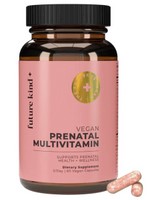
Prenatal multi-vitamin/multi-mineral supplements are often recommended in pregnancy to help make sure that the higher nutritional needs of pregnancy are being met. In the United States, more than 70% of pregnant and lactating individuals use at least one dietary supplement, most often a supplement labeled as being a prenatal supplement (1). There are a number of vegan prenatal vitamin/mineral supplements. If you’re deciding between products or thinking about whether to use a supplement, here are some things to think about.

One consideration is the adequacy of your diet. If you generally eat a healthy vegan diet with a variety of dried beans, whole grains, nuts and seeds, vegetables, and fruits you’re likely to be getting enough of many vitamins and minerals. If you’re concerned about the adequacy of your diet, it can be helpful to meet with a registered dietitian who specialized in prenatal nutrition and who is familiar with vegan diets.

There are a couple of nutrients where supplements are recommended for all pregnant individuals because of the important roles of these nutrients in pregnancy. Expert groups, including the U.S. Preventive Services Task Force and the American Thyroid Association, respectively, recommend that a 400-800 microgram folic acid supplement and a 150 microgram iodine supplement be used in pregnancy (2,3). A prenatal supplement that supplies these and other nutrients reduces the number of pills that you have to swallow. Don’t assume that all prenatal supplements supply folic acid and iodine; it’s important to check the label. A survey of the top-selling prenatal vitamin/mineral supplements sold in the United States found that only 58% contained iodine (4).

Vegans also need a reliable, daily source of vitamin B12 during pregnancy; this reliable source can be fortified foods, a stand-alone vitamin B12 supplement, or a prenatal vitamin/mineral supplement that provides vitamin B12. Vegan Health, a website that provides evidence-based nutrition recommendations, suggests use of a once-daily supplement in pregnancy that supplies 10-250 micrograms of vitamin B12 (5).

Other nutrients that can be challenging for vegans in pregnancy include iron, zinc, calcium, vitamin D, and choline.

Here’s the amount of each needed in pregnancy:

  RDA for adult pregnancy Sources include
Iron 27 milligrams (vegans may need 80% more – 48.6 milligrams) Dried beans, whole grains, fortified foods
Zinc 11 milligrams Dried beans, wheat germ, tofu
Calcium 1000 milligrams Leafy green vegetables, fortified plant milk
Vitamin D 15 micrograms (600 IU) Sunlight exposure, fortified plant milk
Choline 450 milligrams (Adequate Intake) Soy foods, dried beans, quinoa, peanuts and peanut butter

Thinking about your diet can help you to determine if it’s important that your prenatal supplement supplies one or more of these nutrients. Iron is especially challenging because so much is needed to support pregnancy. You don’t need to get 100% of the RDA for these nutrients from a supplement; your diet should provide at least part of your needs. Depending on your diet, there may be other nutrients that you need to supplement. For example, if you don’t eat many fruits or vegetables, I’d be concerned about vitamin C and vitamin A.

If you think your diet is low in one or more of these nutrients, look for a vegan prenatal supplement that supplies the nutrients of concern. Many prenatal multi-vitamin/multi-minerals supplements don’t supply much calcium so, if you aren’t using a calcium-fortified plant milk or eating plenty of green leafy vegetables, a separate calcium supplement may be needed.

DHA supplements or food sources of DHA appear to reduce the risk of having a premature or low birth weight infant (6). Sources of DHA for vegans are limited and a vegan supplement supplying at least 200 milligrams per day of DHA may be beneficial. DHA is rarely included in vegan prenatal supplements so a separate supplement may be needed.

References

  1. Jun S, Gahche JJ, Potischman N, et al. Dietary supplement use and its micronutrient contribution during pregnancy and lactation in the United States. Obstet Gynecol. 2020;135(3):623–633.
  2. US Preventive Services Task Force, Bibbins-Domingo K, Grossman DC, et al. Folic acid supplementation for the prevention of neural tube defects: US Preventive Services Task Force Recommendation Statement. JAMA. 2017;317(2):183–189.
  3. Alexander EK, Pearce EN, Brent GA, et al. 2017 Guidelines of the American Thyroid Association for the diagnosis and management of thyroid disease during pregnancy and the postpartum. Thyroid. 2017;27(3):315–389.
  4. Patel A, Lee SY, Stagnaro-Green A, et al. Iodine content of the best-selling United States adult and prenatal multivitamin preparations. Thyroid. 2019;29(1):124–127.
  5. Vegan Health. Daily needs. Vitamin B12. https://veganhealth.org/daily-needs/#Vitamin-B12.
  6. Middleton P, Gomersall JC, Gould JF, et al. Omega-3 fatty acid addition during pregnancy. Cochrane Database Syst Rev. 2018;11(11):CD003402.

To read more about vegan pregnancy see:

Vegan nutrition in pregnancy and childhood

Pregnancy and the vegan diet

To read more about dietary supplements see:

Do vegetarians have to take vitamin B12 supplements?

Calcium supplement

NIH’s Office of Dietary Supplements Offers a Helpful Dietary Supplement Label Database


The contents of this posting, our website, and our other publications, including Vegetarian Journal and Vegan Journal, are not intended to provide personal medical advice. Medical advice should be obtained from a qualified health professional. We often depend on product and ingredient information from company statements. It is impossible to be 100% sure about a statement, info can change, people have different views, and mistakes can be made. Please use your best judgment about whether a product is suitable for you. To be sure, do further research or confirmation on your own.
Learn How to Prepare a Blueberry French Toast Casserole

Posted on February 23, 2023 by The VRG Blog Editor

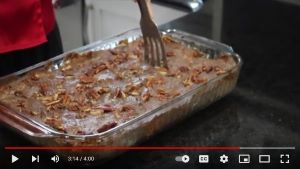
Try this simple vegan Blueberry French Toast Casserole for your next brunch or breakfast gathering. Using bananas as the base, it pulls together in minutes and can rest in the fridge overnight, all ready to bake the next morning. And just wait until your guests smell the lovely aroma of French Toast Casserole as you pull it from the oven! A wonderful way to begin the day.

See video at: https://youtu.be/Zjd8NkmWhnc

Get the recipe at https://www.vrg.org/journal/vj2019issue3/2019_issue3_blueberry_recipes.php

Vegan Friendly Camps for Kids

Posted on February 23, 2023 by The VRG Blog Editor

photo from YEA Camp

It’s not too early to find a vegan-friendly summer camp for your children. Here are some possibilities:

Vegan Camps

Camp4Real in Charlottesville, Virginia serves vegan meals. See: https://www.camp4real.com/summer-camps/

Veg Camp in Canada serves vegan food: https://www.facebook.com/vegetarianecocamp/

Vegan Camp in New Jersey serves vegan food: https://tomorrowsadults.org/camp/summer/

YEA Camp held in Massachusetts provides vegan food: https://yeacamp.org/

 Vegan-Friendly Camps

Camp Zeke is a Jewish camp that will accommodate vegans. They are located in the Pocono Mountains in Lakewood, PA. See: www.campzeke.org

Mountain Camp in California offers a vegan option at every meal as well as a salad bar. See:  www.mountaincamp.com/about/food-at-summer-camp

Takodah YMCA camp in New Hampshire offers a vegan option at every meal. See: https://www.camptakodah.org/summer-camp/about/food-nutrition/

Join the Discussion with 570+ Families in The Vegetarian Resource Group’s Parents and Kids Facebook Group!

Posted on February 22, 2023 by The VRG Blog Editor

Recent topics brought up include:

– The USDA is requesting comments on proposed changes to school lunch regulations. USDA seeks public comment on the following question: What feedback do stakeholders have about the current fluid milk substitute process? USDA is especially interested in feedback from parents and guardians and program operators with firsthand experience requesting and processing a fluid milk substitute request.”

– Incorporating peanut butter in meals in families with no nut allergies

– Reminder about VRG’s Scholarship Contest for graduating high school seniors promoting a veggie lifestyle

https://www.facebook.com/groups/VRGparentsandkids is intended to be a group that offers support for families raising children on vegan diets and for vegan kids around the world. We envision it as a place to get advice about a wide-variety of topics: pregnancy, birthday parties, school lunches, Halloween, non-leather apparel, cruelty-free products, summer camps, and more. Please use it as a place to share your wisdom, seek advice, or just find a sympathetic ear. The goal is to offer support.

Consequently, any profane, defamatory, offensive, or violent language will be removed. Feel free to disagree, but do so respectfully. Hateful or discriminatory comments regarding race, ethnicity, religion, gender, disability, sexual orientation, or political beliefs will not be tolerated. We expect that posts should relate to vegan diets and lifestyles. The Vegetarian Resource Group reserves the right to monitor all content and ban any user who posts in violation of the above rules, any law or regulation, SPAM, or anything otherwise off topic.

Please share this information with any veggie families that you know! Thanks.

Roasted Garlic and Herb Sauce

Posted on February 22, 2023 by The VRG Blog Editor

Photo by Rissa Miller

By Rissa Miller, Vegan Journal Senior Editor

(One portion is about 2 Tablespoons)

2 heads roasted garlic (see instructions below)

1/4 cup sundried tomatoes, soaked in 1/2 cup hot water

One 12-ounce package firm Lite Silken tofu, drained

1/4 cup fresh basil leaves

2 Tablespoons lemon juice

1 teaspoon Italian herb blend

1 teaspoon olive oil

Salt and pepper, optional, to taste

To make roasted garlic, preheat the oven to 400 degrees. Cut very tops off garlic, then place garlic in aluminum foil shaped into a bowl. Add a little water and close the bowl-packet. This will create steam and make it simple to separate the garlic from the skins. Optionally, season with a few drops of olive oil, salt or black pepper, if desired. Bake the closed packet on any oven-safe dish for 45-60 minutes. Allow to cool before handling. Can be made ahead and stored in the fridge.

To make the Sauce, place sundried tomatoes in a bowl and cover with 1/2 cup very hot water. Allow to soak for 25-20 minutes to soften.

Squeeze roasted garlic from papery skins, so just the roasted cloves go into a blender or food processor. Add all over ingredients, including the soaking water from the sundried tomatoes. Process until silky and smooth.

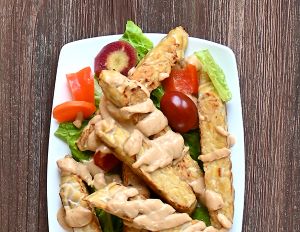
Serve over sautéed tempeh, roasted vegetables, salads, grains, or noodle dishes.

USDA Requests Comments from Stakeholders on New Standards for School Meals

Posted on February 21, 2023 by The VRG Blog Editor

By Reed Mangels, PhD, RD

On an average school day in the United States, nearly 30 million children and teens eat school lunches and 14 million eat school breakfasts. School meal programs are funded by the federal government and  operate in public and nonprofit private schools. Meal patterns for these programs are established by the U.S. Department of Agriculture (USDA).

The USDA is proposing changes to the nutrition standards for school meals to make these meals healthier. The proposed changes include:

  • Limiting the amount of added sugar in meals and snacks,
  • Requiring that at least 80% of grains served each week be whole grains,
  • Reducing the sodium content of school meals, and
  • Allowing schools to limit food contract bids to products that are locally grown, raised, or caught.

The USDA is requesting comments on the proposed changes. Parents and guardians of vegan school-aged children may be especially interested in one of the questions that the USDA is requesting feedback on. The USDA says, “While this rule does not propose changes to the fluid milk substitute requirements, USDA has received stakeholder feedback on the fluid milk substitute process on behalf of children who cannot consume, or have difficulty consuming, cow’s milk. USDA seeks public comment on the following question: What feedback do stakeholders have about the current fluid milk substitute process? USDA is especially interested in feedback from parents and guardians and program operators with firsthand experience requesting and processing a fluid milk substitute request.”

By law, schools are required to offer cow’s milk with every school breakfast and lunch. Currently, schools may (but are not required to) provide “non-dairy milk substitutes” for children for non-disability reasons (1, 2). Different rules apply for children who need a milk substitute for reasons related to a disability. In order to provide a substitute for cow’s milk for non-disability reasons, the National School Lunch Act requires that

  • a written statement from the student’s parent or guardian or a medical authority be submitted to support the request for non-dairy milk
  • non-dairy milks must meet specific nutrition requirements
  • The school cover any cost difference between cow’s milk and non-dairy milk.

In its request for comments, USDA says, “USDA recognizes that the specific nutrition and paperwork requirements and cost burden associated with fluid milk substitutes present barriers for schools and families. Additionally, USDA recognizes that under the statute, schools are allowed—but not required—to provide fluid milk substitutes for non-disability reasons; this means that, due to budget constraints, some schools may opt not to provide a fluid milk substitute requested for non-disability reasons on behalf of a child. As noted below, USDA requests public input on the current fluid milk substitute process. While USDA does not have the authority to change the statutory requirements outlined above, better understanding challenges associated with the current process may help USDA address the concerns raised by commenters.”

If your family has requested or considered requesting a milk substitute through the school meals program, the USDA would like to hear about your experience. What challenges did you face? What ideas do you have for improving the process?

Comments on the proposed changes can be submitted at https://www.regulations.gov/document/FNS-2022-0043-0001 and must be submitted by April 10, 2023.

References

  1. USDA. Meal Requirements Under the National School Lunch Program and School Breakfast Program. : Questions and Answers for Program Operators. https://fns-prod.azureedge.us/sites/default/files/resource-files/SP05-2022os.pdf#page=27. 2022.
  2. Child Nutrition Programs. Title 7. Code of Federa-7/l Regulations. Pt. 210. 2021 ed. www.ecfr.gov/current/title-7/subtitle-B/chapter-II/subchapter-A/part-210.

To read more about school meals see:

Getting Vegan Food into Schools

Vegan Options in a California School

Vegan Options in Portland, ME School Lunch

New York City School Lunch Program Features “Vegan Fridays”

School Food Lunch

VRG’s School Lunch Testimony

Tempeh in School Meals

The Bake Shop at MOM’s Organic Market in Timonium, Maryland

Posted on February 21, 2023 by The VRG Blog Editor

By Anna Markulis, VRG Intern

MOM’s Organic Market is the perfect stop for anyone looking for a quick and delicious vegan lunch made from sustainably sourced fresh ingredients. MOM’s is an organic grocery store located all along northeastern states including Maryland, Virginia, D.C., Pennsylvania, New York, New Jersey, and Massachusetts. The majority of MOM’s locations offer vegetarian and vegan meals at their in-store restaurants, “Naked Lunch” and the “Bake Shop.” While “Naked Lunch” is served at many locations among these states, the “Bake Shop” is unique to Timonium, Maryland and Jessup, Maryland. The inclusion of these restaurants will vary by store, so check your local location!

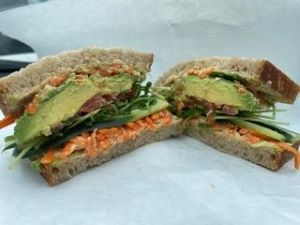
I visited the MOM’s in Timonium, Maryland, and stopped by their vegetarian food joint, “MOM’s Bake Shop.” The vast selection of made-to-order organic vegan or vegetarian sandwiches served on their homemade bread in addition to their nutritious fresh raw pressed juices certainly impressed me as a first-time customer. I chose to order the “Classic Veggie” – a whole wheat sandwich with hummus, avocado, tomatoes, cucumber, and pea shoots. The staff was so friendly and quick, even with so many people in line! The sandwich was bursting with flavor and had the perfect veggie “crunch” amount. I could immediately tell that they used the freshest ingredients. The hummus offered a contrasting yet delightful tanginess that complemented the bread and vegetables perfectly. My 14-year-old sister had a bite as well. She told me it was one of the best sandwiches she’s ever had, and that it was enough for her to “consider going vegan.” Overall, I was thoroughly impressed by the selection, quality, and flavor of the vegetarian and vegan sandwiches and juices. I will definitely be going back again soon!

Check out the Bake Shop at Mom’s in Timonium, Maryland: https://momsorganicmarket.com/maryland/timonium/
For information on Naked Lunch Kitchen: https://momsorganicmarket.com/nakedlunch/

To find out about other restaurants that serve vegetarian food in the USA and Canada, visit the Vegetarian Resource Group’s restaurant guide: https://www.vrg.org/restaurant/

Request for Information; Identifying Ambiguities, Gaps, Inefficiencies, and Uncertainties in the Coordinated Framework for the Regulation of Biotechnology (2023) – The Vegetarian Resource Group comments to USDA, EPA., FDA

Posted on February 20, 2023 by The VRG Blog Editor

February 2023

We welcome the opportunity to comment on the Request for Information; Identifying Ambiguities, Gaps, Inefficiencies, and Uncertainties in the Coordinated Framework for the Regulation of Biotechnology. As a consumer organization representing vegetarians and vegans, we have a unique perspective on issues related to biotechnology, especially those involving the use of genetic engineering based on the DNA of animals (whether based on actual DNA, cell lines, or virtual DNA).

  1. Describe any specific issues the agencies should consider in developing a plan to implement regulatory reform including any updated or new regulations or guidance documents.

Our response to question 4:

Regulations and guidance documents should require the provision of clear, helpful label information that consumers can use to make informed choices about products produced using new or emerging biotechnology. An example of this is the labeling of foods that were produced through genetic engineering based on the DNA of animals (whether based on actual DNA, cell lines, or virtual DNA), due to concern for consumer confusion. We believe that the name or statement of identity of meat, poultry, dairy, egg, or other products comprised of or containing cultured animal cells should inform consumers about how the animal cells were produced. Vegetarians, including vegans, do not eat meat or poultry (and eggs and dairy products in the case of vegans) and would want to be aware that a product contains cultured animal cells. We assume that this would also be the case for those with an allergy to meat, poultry, dairy, or egg products and for those who avoid one or more products due to religious beliefs. In addition, consumers may not want to purchase products comprised of or containing cultured animal cells due to concerns about any negative environmental impact of producing these products.1

The limited acceptance of these products was shown by a survey conducted online within the United States by The Harris Poll on behalf of The Vegetarian Resource Group from June 22-24, 2020 among 2,074 U.S. adults ages 18 and older.2 Approximately six percent of those surveyed are vegetarian (including vegans) all the time, and half of the vegetarians are also vegan (three percent). More than half (54%) of those surveyed always or sometimes eats vegetarian (including vegan) meals when eating out.

We asked if survey respondents would purchase a meat alternative grown from animal cell DNA obtained ten years ago, which does not currently involve the raising of animals. Only 12% of respondents said they would purchase such a product; 19% of vegetarians including vegans would purchase a meat alternative grown from animal cell DNA; 19% of those that sometimes or always eat vegan meals when eating out and 18% of those that sometimes or always eat vegetarian, including vegan, meals when eating out would purchase this type of meat alternative.2

Similarly, a 2021 national survey was commissioned by The Vegetarian Resource Group and conducted online by YouGov, of 8 -17 year-olds. This survey found that more than half (53%) of 8-17 year-olds sometimes or always eat vegetarian meals when eating out. As was done in the adult poll, we asked if survey respondents would purchase a meat alternative grown from cells (DNA) from an animal, which was collected years ago which does not currently involve the raising of animals. Only 9% of respondents said they would purchase a meat alternative grown from animal cell DNA.3

Since so many consumers would choose not to purchase a product produced using animal cell DNA, it is important that consumers be informed about the presence of cultured animal cells in products in clear, easily understood language. This should be indicated in the product name and in the ingredient list on the product label so that consumers can be aware of the product’s composition.

In addition to label information, it is important for companies to have specific information about the source of these cells in their products on their websites since many people look on product websites for information. This information should also be presented in clear, easily understood language.

Guidance and regulations are also needed to prevent the use of confusing terminology on labels of products produced through genetic engineering based on the DNA of animals (whether based on actual DNA, cell lines, or virtual DNA). Terms such as “vegetarian,” “vegan,” “animal-free,” or “plant-based” used on product labels of products produced through genetic engineering based on the DNA of animals (whether based on actual DNA, cell lines, or virtual DNA) are potentially confusing to consumers. Survey research indicates that U.S. consumers are not in favor of labeling products using animal cell DNA or derived from animal genes as “vegetarian,” “vegan,” “animal-free,” or “plant-based.”

A survey, conducted in the United States in March 2022 by YouGov on behalf of The Vegetarian Resource Group, consisted of 2,889 adults.4 Over six in ten (62%) vegans didn’t want meat and dairy alternatives that are made using NO animals or animal products but are based on animal cells or DNA extracted years ago from a live animal labeled as vegan. 62%-65% of those that ate vegan meals (not all those individuals are vegan) didn’t want them labeled vegan, animal-free or plant-based, with an even higher percentage at 71% wanting the product to be labeled so it informs consumers that the products use animal cell DNA or is animal-gene derived. 4

The terms “vegetarian,” “vegan,” and “plant-based” should not be used in the product name or on the product label of a food comprised of or containing cultured animal cells or produced through genetic engineering based on the DNA of animals (whether based on actual DNA, cell lines, or virtual DNA). This terminology would be a misrepresentation of the food product. Although neither the USDA nor the FDA currently defines “vegetarian,” “vegan,” or “plant-based,” these terms are commonly used to imply that products do not contain ingredients from meat/fish/poultry (vegetarian) or from all animal products and by-products (vegan). “Plant-based” has a variety of meanings but it is commonly used to indicate that a product is vegetarian or vegan.5 Having “vegetarian,” “vegan,” or “plant-based” on a label of a product containing cultured animal cells would be misleading to consumers.

Additionally, terms such as “non-animal” or “animal-free” should not be used in the product name or on the product label of a food comprised of or containing cultured animal cells or produced through genetic engineering based on the DNA of animals (whether based on actual DNA, cell lines, or virtual DNA). Use of these terms would be misleading for consumers who, for religious, ethical, philosophical, environmental, or other reasons do not want to purchase products in which animal products were used at some point in production.

The results of our surveys strongly support the need for updated or new regulations or guidance documents related for foods produced through genetic engineering based on the DNA of animals (whether based on actual DNA, cell lines, or virtual DNA).

  1. Describe any new or emerging biotechnology products that, based on lessons learned from past experiences or other information, the agencies should pay particular attention to in their evaluation of ambiguities, gaps, or uncertainties regarding statutory authorities and/or agency roles or processes.

Our response to question 5:

We are concerned that the rush to market foods produced through genetic engineering based on the DNA of animals (whether based on actual DNA, cell lines, or virtual DNA) may not allow for adequate time to evaluate the safety of these foods for human consumption and for the environment. We urge the statutory authorities and/or agencies to develop rigorous requirements for safety evaluation.

  1. What is the highest priority issue for the agencies to address in the short term and in the long term?

Our response to question 7:

As a consumer organization, we prioritize providing clear, helpful label information that consumers can use to make an informed choice. As discussed in our response to question 4, we believe that this is a high priority need that should be addressed in both the short term and the long term. Food labels should clearly indicate that products are animal DNA replicated, so that those with allergies, religious, or other concerns can differentiate these products from similar looking items.

Thank you for the opportunity to comment on this issue.

References

  1. Meat Atlas. https://eu.boell.org/en/MeatAtlas. 2021; pp. 60-61.
  2. What vegetarian and vegan products will American adults purchase? Questions asked by The Vegetarian Resource Group in a national poll. https://www.vrg.org/nutshell/harris2020veganadultwriteup2blog.pdf. 2020.
  3. How many youth in the U.S are vegan? How many teens eat vegetarian when eating out? https://www.vrg.org/nutshell/Yougov2021youthteenwriteup.pdf. 2021.
  4. How many vegetarians and vegans are there? https://www.vrg.org/nutshell/CulturedMeatYouGov2022.pdf. 2022.
  5. What does plant-based actually mean? https://www.vrg.org/journal/vj2018issue4/2018_issue4_plant_based.php. 2018.

  • Donate

  • Subscribe to the blog by RSS

  • VRG-NEWS

    Sign up for our newsletter to receive recipes, ingredient information, reviews of new products, announcements of new books, free samples of products, and other VRG materials.

    Your E-mail address:
    Your Name (optional):


↑ Top