The Vegetarian Resource Group Blog

Vegan Restaurants Added to The Vegetarian Resource Group’s Guide to Veggie Restaurants in the USA and Canada

Posted on May 20, 2022 by The VRG Blog Editor

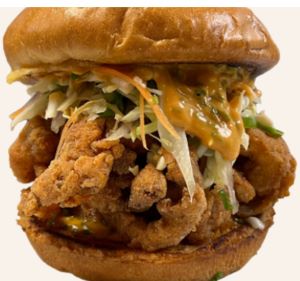
Photo from Paranormal Pizza Co.

The Vegetarian Resource Group maintains an online Guide to Vegan/Vegetarian Restaurants in the USA and Canada. Here are some recent vegan restaurant additions. The entire guide can be found here: http://www.vrg.org/restaurant/index.php

To support the updating of this online restaurant guide, please donate at: www.vrg.org/donate

Here are some new additions to VRG’s guide (Note: Due to the COVID-19 pandemic many are doing take-out and/or delivery now):

De Buena Planta, 1118 Abbot Kinney Blvd., Venice, CA 90291 and 2815 W. Sunset Blvd., Los Angeles, CA 90026

De Buena Planta is a plant-based Mexican restaurant that serves orange pancakes, salsa verde chilaquiles, machaca con huevo tacos, and more.  Despite the small dine-in capacity, the outdoor seating is charming, with music playing overhead.

Eat Greenz, 2901 Marne Hwy., Mt. Laurel Township, NJ 08054

Vegetable dumplingz, chik’n’bites, chin chin, cookies, tossed noodles with chink’n bites, fried bulgur wheat, Khadijah wheat, uncle Elroy’s nachos, and a variety of other dishes are available at Eat Greenz.

Gatherer Sandwiches, 3864 Mission Blvd., San Diego, CA 92109

Among their core values, Gatherer Sandwiches lists sustainability in sourcing produce, monitoring kitchen waste, and packaging choices. Sandwiches have catchy names like Stranger in the Alps (with turkey and of course, Swiss cheese), Visible Valley, (chicken, cheddar, carrots and more dressed with Ranch—naturally) and Smiling Swine (Bakon, avocado and sprouts). All are served on warm Bread & Cie bread, many with pickles, banana peppers, and honey mustard. Want to supersize your veggies, how about extra sauce, cheese or protein? You can for just a small fee. Some GF options are available. Gatherer Sandwiches expresses their aim to strike a balance between fresh, innovative vegan cuisine and nostalgic sides like Dill potato salad or Hawaiian mac salad, distinguished by a creamy, sweet and sour mayonnaise-based sauce.

M & Love Café, 3319 Highland Ave., Manhattan Beach, CA 90266

M & Love Café offers grab-and-go meals, bagels with sweet and savory toppings, baked goods, snacks, and smoothies. Bagel toppings include classic almond butter, banana, and house-made cashew cream cheeze as well as more unusual combinations such as avocado, rose petals, and jalapeno-lime crema. Salads, wraps, and sandwiches are also available such as kale summer salad, chickpea tacos, and tempeh sandwiches. All sweets are made from scratch and include donuts, muffins, and cookies. All items are gluten-free.

Paranormal Pizza, 554 N. New St., Bethlehem, PA 18108

Located in downtown Bethlehem, specializes in all-vegan pizzas made from scratch, including making their own cashew cheese in house. Alternatives to cashew cheese are available for those with allergies, as are gluten-free pizzas (for an extra charge). Offerings include the Gibson Praise with soy bacon bits, onions and mushroom; Alien Bounty Hunter with garlic knot crust, seitan pepperoni, beyond sausage, and veggies; and build your own – in addition to secret menu vegan wings.

Vegiterranean Kitchen, 481 East High St., Moorpark, CA 93021

Vegiterranean Kitchen serves Mediterranean-style appetizers, soups, salads, pita wraps, entrees, and desserts. Weekly specials include the Mediterranean sautéed veggies rice bowl and the peaceful burger made with cracked wheat and Mediterranean spices. Appetizers and soups include classic stuffed grape leaves and lentil soup as well as chickpea kibbeh (chickpea balls with cracked wheat, tahini, onions, and walnuts served with a red pepper paste sauce). All entrees are served with pita and turnip pickles and include stuffed eggplant with tahini, white bean plaki with spicy tomato and onion sauce. For dessert, options such as tahini bread and turmeric cake are available.

Baking with Aquafaba (Chickpea Liquid)

Posted on May 20, 2022 by The VRG Blog Editor

Basic Meringue Cookies

Perhaps you’ve heard about Aquafaba. The liquid you’ve been draining from your beans all these years is actually surprisingly similar to raw egg whites and can be used for baking in much the same way. The liquid can be baked, whipped to make meringue, turned into marshmallows, or used to create uncanny cheese substitutes.

Laura McGuiness shares her experience baking with aquafaba in a past issue of Vegetarian Journal. She explains, “Aquafaba is still largely a mystery, even to scientists. The proteins and starches in the bean juice appear to mimic the proteins in egg whites, but the exact science leaves something to be desired. What we do know from an analysis by The Norwegian Food Research Institute is that aquafaba is mainly composed of starch and proteins. Because of the high starch content, aquafaba is able to form stable gels, which may aid in its ability to emulate egg whites.”

You’ll find the following recipes in this article along with photos of some of the baked items:
Basic Meringue Cookies
Baked Alaska
Lemon Apocalypse Pie
Chocolate Mousse
Walnut Fudge
Lemon Dacquoise

The article can be found here: Aquafabulous

To subscribe to Vegan Journal, visit: http://www.vrg.org/member/2013sv.php

TIPS FOR VEGAN HIKING

Posted on May 19, 2022 by The VRG Blog Editor

Hiking, walking, and camping are great ways to get outside, enjoy nature, and unwind from your day-to-day life. We’ve got all the info you need to put together your own sweet or savory trails mixes, make vegan homemade oatmeal bars, and more. These ideas are great for the outdoors or car trips or even just to keep handy for snacking.

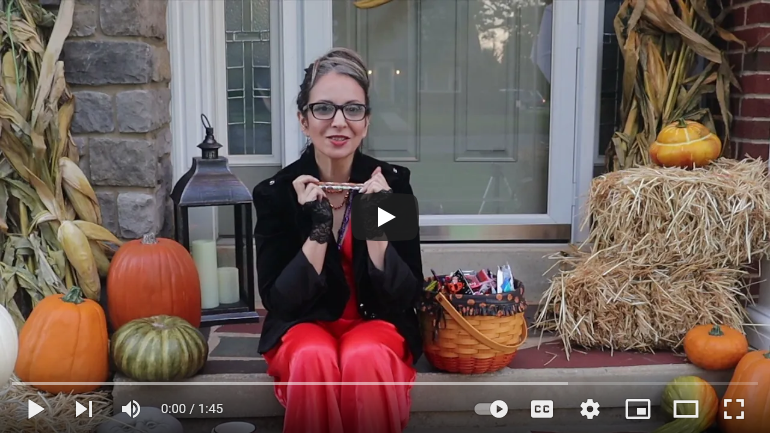
See video at https://youtu.be/IpYVzxt7OKQ

Recipe for Cherry Ginger Oat Bars: https://www.vrg.org/blog/2022/02/18/cherry-lime-ginger-oat-bars/

Vegan Hiking Boot Guide: https://www.vrg.org/blog/2022/03/10/vegan-hiking-boots-sold-online-in-the-usa-canada-and-europe/

Recipe for Homemade Trail Mixes: https://www.vrg.org/blog/2022/02/16/trail-mixes/

Vegan Hiking On the Appalachian Trail: https://www.vrg.org/blog/2020/01/29/hiking-while-vegan/

The contents of this website and our other publications, including Vegetarian Journal and Vegan Journal, are not intended to provide personal medical advice. Medical advice should be obtained from a qualified health professional. We often depend on product and ingredient information from company statements. It is impossible to be 100% sure about a statement, info can change, people have different views, and mistakes can be made. Please use your best judgment about whether a product is suitable for you. To be sure, do further research or confirmation on your own.

NEW JERSEY STUDENT LAILA JEFFRIES-EL WINS $5,000 VEGETARIAN RESOURCE GROUP COLLEGE SCHOLARSHIP

Posted on May 19, 2022 by The VRG Blog Editor

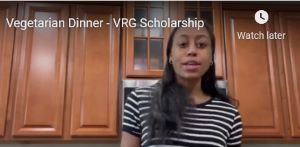
With some stops and starts, Laila began her process towards becoming vegetarian in seventh grade. In her junior year, she helped to establish a new club called Sprouting Change, which had numerous campaigns around food justice, animal rights, and sustainability.

Laila is in the Culinary Academy at her high school. She brought up the idea to her chef that they make vegetarian recipes at least once a week, and worked towards creating an alternative curriculum for students who wish to pursue a plant-based pathway. As a result of her efforts, the instructor Chef has adopted more vegan-friendly practices. For example, instead of having students in his class cook chicken wings, students are assigned to prepare buffalo cauliflower bites. Steak skewers were swapped for mushroom skewers with a vegan bordelaise sauce after Laila suggested this in her sophomore year.

Laila Jeffries-El was a co-captain of her school’s ProStart team, which competed in the New Jersey Restaurant and Hospitality Association statewide high school competition, where they present a business plan to industry professionals. She suggested they make the menu completely vegan, and developed a Filipino restaurant concept with menu items, marketing tactics, a SWOT analysis (Strengths, Weaknesses, Opportunities, and Threats), interior décor elements, kitchen layout, and even a mock floor plan. Menu items included shiitake mushroom steamed buns, green papaya salad, a peanut stew called kare-kare, and ube donuts for dessert. Laila wrote, “We aim to serve traditional Filipino food, while fostering sustainable practices in doing so… We are choosing to opt out of supporting meat production. By providing alternatives to meat and other animal products, we seek to help customers realize that food can be delicious while helping to reduce the carbon footprint.” Her team took second prize in the statewide contest.

Laila wants to continue “fighting for justice in my community. I hope that we will make improvements in the future generations in regard to racial equality … I plan to pursue Business and Economics in college. I will continue to educate myself on the inner workings of monetary and finance, and how I can use these skills to inform others. I would also love to be in a world where we no longer have to worry about global warming … I strive to promote the benefits of a vegetarian lifestyle to a broader community.”

For information on other winners and applying for the next Vegetarian Resource Group college scholarship contest, see https://www.vrg.org/student/scholar.htm

Deadline is February 20 of each year.

To support additional VRG scholarships and internships, donate at vrg.org/donate, call (410) 366-8343, or mail contribution to The Vegetarian Resource Group, P.O. Box 1463, Baltimore, MD 21203.

Join the Discussion with 565+ Families in The Vegetarian Resource Group’s Parents and Kids Facebook Group!

Posted on May 18, 2022 by The VRG Blog Editor

Recent topics brought up include:

– Mentioned summer camps offering vegan options.

– Parent posted: “I’m looking for quick vegan lunch ideas for toddlers attending a nut-free school. We have twin, 3.5 y/o daughters who are not picky eaters but we pretty much rotate the same 3-4 lunches each week.” Suggestions were given by other families.

– Shared: Are you searching for vegan sporting goods? If so, you might want to check out Eco Sports. Here you’ll find items for both children and adults including basket balls, soccer balls, and volley balls.


https://www.facebook.com/groups/VRGparentsandkids is intended to be a group that offers support for families raising children on vegan diets and for vegan kids around the world. We envision it as a place to get advice about a wide-variety of topics: pregnancy, birthday parties, school lunches, Halloween, non-leather apparel, cruelty-free products, summer camps, and more. Please use it as a place to share your wisdom, seek advice, or just find a sympathetic ear. The goal is to offer support.

Consequently, any profane, defamatory, offensive, or violent language will be removed. Feel free to disagree, but do so respectfully. Hateful or discriminatory comments regarding race, ethnicity, religion, gender, disability, sexual orientation, or political beliefs will not be tolerated. We expect that posts should relate to vegan diets and lifestyles. The Vegetarian Resource Group reserves the right to monitor all content and ban any user who posts in violation of the above rules, any law or regulation, SPAM, or anything otherwise off topic.

Please share this information with any veggie families that you know! Thanks.

Look Into My Eyes: Song from a Musical

Posted on May 18, 2022 by The VRG Blog Editor

Here is a song called Look into my Eyes from a musical I’ve written and this scene is when a young calf is pleading for its life. The story is about a dairy farming family and the youngest neurodivergent daughter who befriends a calf. It is inspired by Animal Farm, Beatrix Potter, Okja and all the wonderful people I’m lucky enough to know. I wondered if you might share it? I’m trying to get a production to tour round schools to hopefully inspire some young people to become vegan. Thanks, Hero HERO DOUGLAS

VEGAN CHILI FRIES

Posted on May 17, 2022 by The VRG Blog Editor

For short cooking video, see https://youtu.be/84T8Nph3NGU

Enjoy this Chili Fries recipe and other low-cost vegan dishes from Skyler Kilmer. See: https://www.vrg.org/blog/2020/10/15/vegan-at-the-dollar-tree-store/

UTAH STUDENT ANANYA IYENGAR WINS 2022 $5,000 VEGETARIAN RESOURCE GROUP SCHOLARSHIP

Posted on May 17, 2022 by The VRG Blog Editor

Ananya was raised in a vegetarian family and became vegan at the age of six. She and her brother began a club called Save Our Earth, which was dedicated to protecting animal rights and human rights. Her reference said she started volunteering for the Utah Animal Rights Coalition when she was 12 years old, and each year had been an integral, regular, and reliable volunteer for their annual VegFest. When she was 14, she spoke at VegFest on a panel comprised of vegan kids. She also helped spread the word about the event by doing promotional interviews with the media. In 2021 she volunteered at the UARC festival booth, juggling the tasks of serving prepared food, selling merchandise, accepting donations, and responding to problems.

Ananya has volunteered for a program feeding the homeless since 2016, and has helped cooked vegan meals for homeless youth. Though not formally in charge because of age and liability, she planned menus, purchased ingredients, and helped oversee activities. Ananya is also a triathlete. When she has participated in overnight camps for this community, she has pushed administrators in charge of these camps to ensure that they provide nutritious vegan meals as an option. She also joined in a live broadcast with Globeracers, an India-based platform for runners and athletes, where she talked about being a vegan athlete. When she first started competing, she and her brother were the only vegans. They encouraged and inspired other athletes to eliminate meat from their diets. She said people are beginning to realize that one can compete at the elite level without consuming animal protein.

Ananya’s future goal is to help us find ways to inhabit other planets by studying Astro-biology and data sciences, to continue to fight for the planet we currently have, and also continue to be a voice for the animals. She believes it is important for those who believe in animal rights to be present in this emerging field in order to encourage an ethical worldview, which centers the importance of sentience and kindness towards beings not like us.

For information on other winners and applying for the next Vegetarian Resource Group college scholarship contest, see: https://www.vrg.org/student/scholar.htm

Deadline is February 20th of each year.

To support additional VRG scholarships and internships, donate at www.vrg.org/donate, call (410) 366-8343, or mail contribution to The Vegetarian Resource Group, P.O. Box 1463, Baltimore, MD 21203.

A Perfect Week for a Vegan Dietetic Intern

Posted on May 16, 2022 by The VRG Blog Editor

By Cierra Peterlin, University of Maryland Dietetic Intern

As a dietetic intern, I have spent the past 10 months rotating through different job settings with organizations from hospitals to food pantries to universities and more. Sometimes the work is something that sparks joy and sometimes it is simply a professional experience. My week with The Vegetarian Resource Group was definitely the former! I have been living a vegan lifestyle for the past 2 years for pretty much all of the reasons there are: the environment, the animals, and human health and food security, so I was very excited when I learned that I would have the opportunity to spend a week of my internship with VRG.

When I first got placed in my dietetic internship at University of Maryland I was invited to attend the previous class’ virtual class day with VRG. I hadn’t previously known anything about The Vegetarian Resource Group, so as an interested and eager future intern, I attended. From that first exposure I could tell that VRG was something amazing and wanted to learn more. I spent time after that browsing the site and looking at the many articles and resources. Throughout my dietetic internship I had been referencing vrg.org for my own use as well as referencing certain articles for projects and recommending them to people I interact with who are interested in vegetarian nutrition.

Getting the chance to rotate with VRG, even for the quick week that I did was great. My main point of contact was Dr. Reed Mangels, PhD, RD, who was ever so supportive and helpful during my internship. Before my rotation started, Reed and Charles Stahler sent me a list of projects and asked me to create a schedule for the week that I would be with them. Right off the bat, I knew it was going to be a good week because the projects aligned so perfectly with my interests: not only was the week going to be all about vegetarianism, but the projects I was going to be working on were also focused on food waste and the environment, another passion of mine! Since I am based in Maryland and Reed in California we set up a schedule that worked for both of us to keep my projects moving so that I could successfully complete them within the week.

I learned a lot during my quick week with VRG and got to develop and exercise my writing and research skills. For my scientific review for a research article about food waste, I learned how to focus my writing for the general public. By the use of plain language, making study data relevant and reader-friendly, and with support and guidance from Reed, I was able to convey the findings of a study in more understandable terms. My other project was to write a blog about how to reduce food waste and create some daily menus for low waste vegan meals. In writing this blog it was the first time I had written something specifically geared toward vegans and vegetarians, which was really cool for me to do! One challenge that I faced was figuring out how to conceptualize data on the large amount of food waste created in the United States. Again, with help from my preceptor, Reed, we were able to translate large numbers into a relevant and understandable context. When creating the menus for this blog, I was thrilled to be able to make them completely vegan. In my previous experience with creating meal plans and recipes I had had to consider dairy, eggs, meat, and seafood. This project allowed me to create menus and recipes that are in line with my values as well as in support of greater environmental and human health.

Throughout this experience I was urged to think deeply about how I could hone my writing to reach a broad audience. By questioning how I would phrase things if I was speaking to a friend or family member who wasn’t as knowledgeable in nutrition and research and who didn’t spend their free time reading up on nutrition and environmental research (like me, ha ha), I was able to convey a clear and coherent message that was accessible to the general public. As a future dietitian I feel that it’s so important to be able to bring researched-based information and education to everyone and this exploration and consideration of my own writing really helped to give me a better sense of how to most effectively do just that.

I am very grateful for the week that I had with The Vegetarian Resource Group. The VRG team was welcoming and supportive throughout the brief internship and made it known that warmth would extend beyond my week rotation. The work of VRG is truly inspirational and impactful. Even as someone who has been vegan for a while and has a degree in nutrition, I learned so much in just one week with VRG. I hope to continue working to promote a vegan and vegetarian lifestyle as a future professional and hope that my work with and connection to The Vegetarian Resource Group isn’t over!

For information about VRG internships, see: https://www.vrg.org/student/index.php

To support VRG internships, donate at www.vrg.org/donate

The Environmental Impact of Cultured Meat

Posted on May 16, 2022 by The VRG Blog Editor


Victoria Erickson, who is finishing her degree in biological science at Chapman University, looked at several articles concerning the environmental impact of cultured meat and wrote the following.

Cultured Meat: Promises and Challenges

Treich N. (2021). Cultured Meat: Promises and Challenges. Environmental & resource economics79(1), 33–61. https://doi-org.libproxy.chapman.edu/10.1007/s10640-021-00551-3

https://pubmed-ncbi-nlm-nih-gov.libproxy.chapman.edu/33758465/

USE THIS REVIEW TO FIND MORE PAPERS

This paper comes off as pro-environmental and pro-cultured meat even though they do discuss some concerns with cultured meat. They state that their goal is to initiate the consideration of economic funding for the production and research of cultured meat. Therefore, their intentions are inherently biased towards the pros of cultured meat. They point out the typical pros such as morality, potential use of less resources, and reduced pollution. I can respect that they do mention that the ingredients of tissue culture media are expensive and that a lot of energy is required to maintain live tissue culture due to factors such as temperature regulation, aeration, and mixing.

————————————————————————————————————–

Tuomisto HL, Ellis MJ, Haastrup P (2014) Environmental impacts of cultured meat: alternative production scenarios. Proceedings of the9th International Conference on LifeCycle Assessment in the Agri-Food Sector.19-21October2016, Dublin, Ireland.

This paper aimed to determine if cultured meat production does truly result in less greenhouse gas (GHG) than typical livestock meat production under alternative production scenarios including plant-based media instead of cyanobacteria based media and using a suitable bioreactor. They are claiming that these alternative production scenarios would be more suitable for commercialization of cultured meat and therefore they use these conditions as a proxy for the environmental impacts (GHG emissions, energy use, land and water use) of cultured meat. In section 2.2 of the paper where they define the scope, they do a relatively good job at accounting for important factors and cover all the main bases. Once again, this paper does exclude several factors such as production of growth factor and vitamins for the media (although they seem to account for all other components of the media which is good) and production of the animals that donate the initial cells. Overall I am satisfied with the level of detail and coverage they provide regarding their tissue culture process. The concrete conclusion of interest here is that for cultured meat, energy input requirements were at the same level with beef production, whereas GHG emissions and land use were lower than any of the livestock products. They conclude that although uncertainty remains with cultured meat, it does have the potential for lower GHG and therefore this route should continue to be researched. They also make the point that the land being freed up as a result of livestock production stopping could be used to recover the ecosystem and result in even more beneficial impacts of cultured meat. I would like to point out that the odds of that extra land being used for anything that would have a positive impact on the environment are small but there is always the possibility for some positive impact.

————————————————————————————————————–

Mattick CS, Landis AE, Allenby BR, Genovese NJ (2015) Anticipatory life cycle analysis of in vitro bio mass cultivation for cultured meat production in the United States. Environ SciTechnol 49:11941–11949

This paper came to the same conclusion of Tuomisto et al. 2014 that cultured meat will have less environmental impacts, but it will require greater energy costs. They overall conclude that cultured meat seems like a suitable alterative to livestock meat production despite the tradeoffs of energy use and unpredictability. They came to this conclusion by evaluating the life cycle energy use, global warming potential and eutrophication potential, and land use associated. I appreciate their acknowledgment of the fact that tissue culture technology will likely evolve in the coming future and that their life cycle analysis is supposed to account for future possible changes. I personally am unfamiliar with the software used to conduct this analysis and therefore cannot comment on the viability of their claim. Overall I feel that this article does not seem to be pushing a pro-environment/pro-cultured meat agenda. Their data and discussion feels unbiased and they go very in depth without excluding too many factors. In fact, this is the first paper I have seen that lists the specific media ingredients they are accounting for and they discuss bioreactor cleaning which is necessary but often excluded in studies.

Chen Zeng, who recently complete his Master of Food Science at Cornell University, reviewed the above and wrote the following.

I think the author did a good job summarizing these three articles.

The first article provides a detailed explanation of the background and history of cultured meat compared to the other two pieces. They also list out some of the topics that are not discussed in the other two articles like demand, supply, and moral and regulatory issues which I think are also important considering that these are also affecting cost of production and resources.

The second article focuses on comparison of the environmental impact of conventional meat and cultured meat under different production scenarios including cyanobacteria based nutrient media with plant-based media and I think they did a good job covering the main factors.

For the third article, the anticipatory life cycle analysis seems reasonable to me and overall I think they also did a good job on it.

One thing I noticed is that these articles are focusing on livestock such as poultry, pork, and beef. I know there are also companies making cultured seafood and I think it would be interesting to add that into the comparison and see how it can affect the result.

NOTE FROM THE EDITOR: We expect that there will be many more scientific published peer reviewed articles coming that look at many factors on this subject pro and con, and that it will be awhile before people make confident conclusions with consensus.

The contents of this posting, our website, and our other publications, including Vegetarian Journal and Vegan Journal, are not intended to provide personal medical advice. Medical advice should be obtained from a qualified health professional. We often depend on product and ingredient information from company statements. It is impossible to be 100% sure about a statement, info can change, people have different views, and mistakes can be made. Please use your best judgment about whether a product is suitable for you. To be sure, do further research or confirmation on your own.

  • Donate

  • Subscribe to the blog by RSS

  • VRG-NEWS

    Sign up for our newsletter to receive recipes, ingredient information, reviews of new products, announcements of new books, free samples of products, and other VRG materials.

    Your E-mail address:
    Your Name (optional):


↑ Top