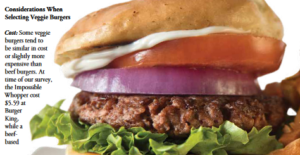
Casey Brown, RD states, “The new meat-like, plant-based
burgers are now widely available at supermarkets and quick-service chains like
Burger King. Anecdotally, many omnivores like them equally to meat burgers. We
often hear they are good alternatives environmentally, as well as for animal
welfare and flavor reasons. But how do they stack up nutritionally?”
Beyond Meat will be giving out samples at the
football games listed below. If you are there, let us know if you see students
sampling at The Tailgate Tour produced
by Florida based NFuse 360 Entertainment.
● Oklahoma State vs. Texas on October 16
● Houston vs. East Carolina on October 23
● Georgia vs. Florida on October 30
● North Carolina State vs. Florida State on
November 6
● Texas A&M vs. Mississippi on November 13
● Michigan State vs. Ohio State on November 20
● Vanderbilt vs. Tennessee on November 27
● ACC Football Championship Game in Charlotte,
North Carolina on December 4
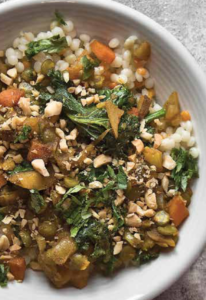
Are you looking for a soothing bowl of soup that incorporates lots of
veggies? Look no further! Chef Nancy Berkoff provides recipes for a wide
variety of vegetable chowders in her previous Vegetarian Journal
article: Vegetable
Chowders
Enjoy these recipes (most are inexpensive to prepare): Southwestern Green Bean and Red Pepper Chowder, Carrot, Pear, and White Bean Chowder, Brunswick Stew à la Vegan, Anusim Chowder, Potato and Kale Chowder, and Lentil Chowder
– Vegan books for children on sale from Animal Justice
Project
– Vegan baby and toddler shoes
sold online
– YouTube Cooking Videos from The Vegetarian Resource Group
https://www.facebook.com/groups/VRGparentsandkids is intended to be a
group that offers support for families raising children on vegan diets and for
vegan kids around the world. We envision it as a place to get advice about a
wide-variety of topics: pregnancy, birthday parties, school lunches, Halloween,
non-leather apparel, cruelty-free products, summer camps, and more. Please use
it as a place to share your wisdom, seek advice, or just find a sympathetic
ear. The goal is to offer support.
Consequently, any profane, defamatory, offensive,
or violent language will be removed. Feel free to disagree, but do so
respectfully. Hateful or discriminatory comments regarding race, ethnicity,
religion, gender, disability, sexual orientation, or political beliefs will not
be tolerated. We expect that posts should relate to vegan diets and lifestyles.
The Vegetarian Resource Group reserves the right to monitor all content and ban
any user who posts in violation of the above rules, any law or regulation,
SPAM, or anything otherwise off topic.
Please share this information
with any veggie families that you know! Thanks.
Here we share Debra Daniels-Zeller’s article Awesome Autumn Desserts
from Our Past that previously ran in Vegetarian Journal. Enjoy
recipes for Sour Cherry Applesauce Brown Betty; Cranberry-Raspberry Slump; Rum
Raisin Rice Pudding; Tart Apple Kuchen; Gingered Fruit Compote; Bourbon Baked
Pear Crisp; and Orange-Spice Cake. See: Awesome
Autumn Desserts from Our Past
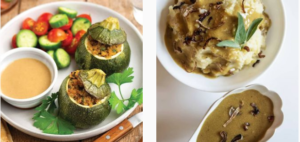
Now that cooler weather has arrived, you might enjoy these
recipes for Easy Bowls created by James Craig Thieman. In this previous Vegetarian Journal article, you’ll find
a wide variety of bowls including:
The next time you’re traveling near Roanoke, Virginia, you
might want to make a stop at Honestly Vegan. The restaurant says, “We refuse to
compromise on quality in our restaurant. That’s why we source our fresh
ingredients from local farmers’ markets. No matter what time of year, you can
be sure you’re eating the best of the season.”
This restaurant serves up dishes such as a Sweet Potato
Tots, Sloppy Black Bean Burger, Mock BBQ Sandwich, Pita Pizza, and Mock
Meatball Sub. They also offer a menu for kids including a Corn Dog, Mock
Chicken Nuggets, Hot Dog, and more.
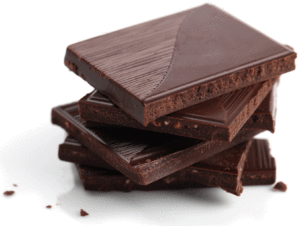
Walk down the candy aisle in a natural foods store or in
many supermarkets and the number of vegan choices is astounding. There are
“mylk” chocolates, dark chocolates, very dark chocolates, and a myriad of
flavored chocolate selections. How do these compare in terms of nutrition?
Chocolate is made from the seeds of a tropical tree called
the cacao tree. The seeds, which are also called beans, are fermented, dried,
roasted, shelled, and ground in the process of making chocolate. The result of
this processing is a thick liquid, called cocoa liquor, that contains fiber,
fat, and protein from the cacao seeds. Cocoa butter is the fat that is produced
from cacao seeds. (Although “butter” may sound like a dairy product, cocoa
butter does not contain dairy.) Additional
pure cocoa butter is added to the cocoa liquor. Sugar and other ingredients are
also added, and the mixture is formed into chocolate bars.
An ounce of chocolate, whether vegan or not has around 150
to 190 calories. Some chocolate bars may indicate the percentage of chocolate
on the label. The percentage indicates the percent by weight of the product
that is cocoa butter and cocoa solids. For example, a bar that is 71% chocolate
is 71% by weight cocoa butter and cocoa solids. The remaining 29% is mostly
sugar. Generally, the higher the percentage of cocoa butter and cocoa solids,
the (slightly) higher the calories. For example, Equal Exchange 71% has 180
calories in an ounce, but Equal Exchange
92% has 190 calories per ounce. This difference is insignificant.
Generally, products with higher percentages of cocoa butter
and cocoa solids, have more fat and saturated fat and less added sugar. Those
with lower percentages of cocoa butter and cocoa solids have less fat and more
added sugar.
Additions like mint or orange flavoring have little impact
on a chocolate bar’s nutrient content. Nuts add a small amount of protein and
chocolate bars with salted nuts or sea salt will have more sodium (about 50-100
milligrams more per ounce of chocolate) than those without added salt.
An ounce of dark chocolate provides around 15% of the Daily
Value for iron and magnesium and more than half of the Daily Value for copper.
Reference:
McGee, H. On Food and
Cooking. The Science and Lore of the Kitchen. New York: Scribner; 2004.
The Vegetarian Resource Group (VRG) is a non-profit organization dedicated to educating the public on veganism and the interrelated issues of health, nutrition, ecology, ethics, and world hunger. We have been helping health professionals, food services, businesses, educators, students, vegans, and vegetarians since 1982. In addition to publishing the Vegan Journal, VRG produces and sells a number of books.
Sign up for our newsletter to receive recipes, ingredient information, reviews of new products, announcements of new books, free samples of products, and other VRG materials.