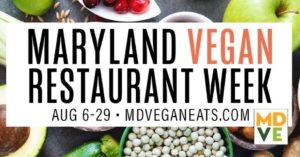
Get ready! Maryland Vegan Restaurant Week
(actually weeks) is August 6th through 29th this year. What
a terrific time to support local veggie restaurants! For details on all the
restaurants participating and special events see: https://www.mdveganeats.com/
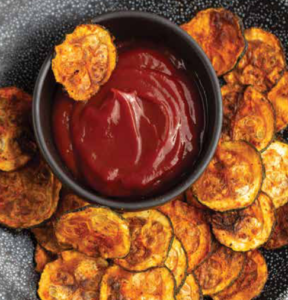
Are you looking for some creative ideas on how to prepare zucchini? If so, Hannah Kaminsky’s previous Vegetarian Journal article From A to Zucchini offers recipes forGreek Zucchini Carpaccio; Falafel-Stuffed Zucchini; Barbecue Zucchini Chips; Zucchini Pâté; and Zucchini Bread Thumbprints. Enjoy!
To subscribe to Vegetarian Journal in the USA, see: vrg.org/member
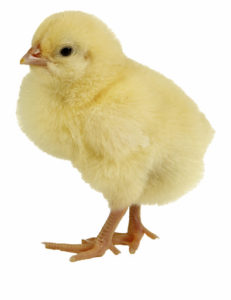
In order to produce eggs, laying hens are bred. The male chicks are culled (killed) as male layers do not lay eggs and aren’t the best for the production of meat. This Dutch study looked at knowledge about this practice and alternatives. Of course animal rights advocates and others would suggest just being vegan. See: https://www.ncbi.nlm.nih.gov/pmc/articles/PMC8248538/
The contents of this posting, website, and our other
publications, including Vegetarian Journal, are not intended to provide
personal medical advice. Medical advice should be obtained from a qualified
health professional. We often depend on product and ingredient information from
company statements. It is impossible to be 100% sure about a statement, info
can change, people have different views, and mistakes can be made. Please use
your best judgment about whether a product is suitable for you. To be sure, do
further research or confirmation on your own.
– An article about a student starting a community garden at
her high school.
– How do we talk to our kids about the climate crisis?
– Someone posted about donating money so that vegan children’s
books can be donated to schools in the United Kingdom.
https://www.facebook.com/groups/VRGparentsandkids is intended to be a
group that offers support for families raising children on vegan diets and for
vegan kids around the world. We envision it as a place to get advice about a
wide-variety of topics: pregnancy, birthday parties, school lunches, Halloween,
non-leather apparel, cruelty-free products, summer camps, and more. Please use
it as a place to share your wisdom, seek advice, or just find a sympathetic
ear. The goal is to offer support.
Consequently, any profane, defamatory, offensive,
or violent language will be removed. Feel free to disagree, but do so
respectfully. Hateful or discriminatory comments regarding race, ethnicity,
religion, gender, disability, sexual orientation, or political beliefs will not
be tolerated. We expect that posts should relate to vegan diets and lifestyles.
The Vegetarian Resource Group reserves the right to monitor all content and ban
any user who posts in violation of the above rules, any law or regulation,
SPAM, or anything otherwise off topic.
Please share this information
with any veggie families that you know! Thanks.
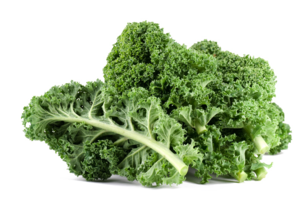
How often do you eat kale, spinach, collard greens, and
other dark green vegetables? Daily? A few times a week? Once a week? Monthly?
If you live in the United States and answered “daily,” you’re among the
approximately 26% of Americans who eat dark green vegetables every day.1
The other 74% of Americans eat them less often. Maybe if you’re vegan, you eat
dark green vegetables more often. A study of Seventh-day Adventists found that
vegans ate about 40% more leafy green vegetables daily than did nonvegetarians.2
Why eat dark
green vegetables? They’re a good way to get nutrients like calcium (true of
greens other than spinach), iron, vitamin C, and potassium as well as a variety
of phytonutrients. They can be prepared
quickly or eaten raw or cooked long and slow, if you prefer. Try a massaged kale salad with a lime-tahini
dressing or collards with tomatoes and garlic, or shred greens and add to soups
and stir-fries.
Red and orange
vegetables like carrots, red peppers, and tomatoes are eaten more commonly than
dark green vegetables. In the United States, 79% of adults on average eat red
and orange vegetables daily.1 How about you? Dark orange vegetables
are especially noteworthy for their vitamin A content and tomatoes for
supplying lycopene and vitamin C. Vitamin A is needed for a healthy immune
system; lycopene and vitamin C are antioxidants.
So, crunch a
carrot, steam some kale, slice some tomatoes – let’s try to eat dark green and
red or orange vegetables every day!
References
1. Ansai N, Wambogo EA. Fruit and vegetable consumption
among adults in the United States, 2015–2018. NCHS Data Brief, no 397.
Hyattsville, MD: National Center for Health Statistics. 2021. DOI: https://dx.doi.org/10.15620/cdc:100470
2. Orlich MJ, Jaceldo-Siegl K, Sabaté J, Fan J, Singh PN,
Fraser GE. Patterns of food consumption among vegetarians and non-vegetarians. Br
J Nutr. 2014;112:1644-1653.
VRG internships can be conducted long distance. Responsibilities depend on background, major if in college, and interest of applicant. Tasks may include research, writing, and/or community outreach. Internships are especially helpful for students working towards journalism, English, and nutrition degrees. Business majors can obtain experience related to the business aspects of a non-profit organization. Activists can learn new skills and gain a broader knowledge, as well as share their expertise. Positions are open throughout the year for all ages (including high school students). Let us know if you need credit for high school volunteer or service learning work or college credit, plus the amount of hours you need. Internships are unpaid. If you would like to apply for a VRG internship, please email a resume, writing sample, and cover letter detailing your interests, skills, goals, and vegetarian knowledge to [email protected], or send by mail to:
The Vegetarian Resource Group
P.O. Box 1463
Baltimore, MD 21203
On June 29, 2021, the US Food and Drug Administration (FDA)
released a list of topics that they intend to issue guidance on over the next
year. One topic on the list was “Labeling of Plant-based Milk Alternatives; Draft
Guidance for Industry.” These “plant-based milk alternatives” include products
like soy milk, almond milk, oat milk, and other beverages based on legumes,
nuts, grains, and other plant foods.
In 2018, the FDA asked for public comments on the “Use of the Names of Dairy Foods in Labeling Plant-Based Products.” At that time, the FDA wanted to hear from consumers about how they use plant-based products and how they understand terms such as, for example, “milk” or “yogurt” when included in the names of plant-based products. They also wanted to know if consumers are aware of and understand differences between the basic nature, characteristics, ingredients, and nutritional content of plant-based products and their dairy counterparts. VRG submitted comments at that time and, in 2020, asked survey respondents what they expected from a beverage labeled soy milk.
If
FDA requests public comments as they develop guidelines for labeling plant
milks, we will post instructions for responding to their request on VRG’s blog.
Shantika Bhat is interested in neurological
diseases and how to care for patients. She interviewed Cathy Conway, a
registered dietitian who works with patients who have developmental and
intellectual disabilities.
Playing the role
Something
that always comes up in the medical field is that fear of preconceived notions
of a doctor’s role. Some patients will be scared that the doctor will be
telling them what to do or that the doctor doesn’t want to listen to them.
Oftentimes it’s not talked about how intimating a title can be for patients and
so Cathy wants to break down those feelings by playing her role in a manner
that’s focused on active listening.
“It
is really important to respect an individual and hear what they are saying,”
says Conway.
As
a registered dietitian she gets patients all the time who will believe that she
will be telling them what to eat and what not to do, however, she doesn’t. She
listens and asks them “What do you think?”
“I
call it peeling an onion. You want to get to the real issue by asking the
questions and repeating what my patients tell me.” For example, Conway had a
patient who had Type 2 Diabetes and their A1C was high. Conway asked the
patient questions and made the patient realize what they were doing that wasn’t
healthy without directly saying it. I learned from Conway that making your
patients realize what they did wrong is more effective than telling them what
they did wrong. At the end of the day it’s the patients who make the decision
so you have to make sure they realize what they need to fix.
Working with Intellectual and Developmental
patients: Patient-Centered Care
I
thought when working with patients who have intellectual disability that health
professionals would need extra training. My perception has changed a little bit
after talking with Conway. I went into this thinking that there must be extra
training for many disabilities; however, Conway says she learned the most from
experience over time. I knew that with a spectrum of all of these disabilities
that a training will not be enough for you to be able to provide the best care
for them. It is all case by case which is why Conway treats her patients using
Patient Centered Care. The Institute of Medicine’s
article Crossing the Quality Chasm: A New
Health System for the 21st Century defines patient–centered care as
“Providing care that is respectful
of, and responsive to, individual patient
preferences, needs and values, and ensuring that patient values guide all clinical decisions.”
“You
can’t put everyone in a box,” says Conway.
Active
listening is so important because it helps to really connect to the patient so
that the dietitian or doctor can help them best. Active Listening is a
technique used to connect and engage the speaker and listen in conversations.
Conway recommends that everyone going into the healthcare field learn Patient-Centered
care and active listening.
Diets
Conway
advocates for diversity and trying something new. In New York they passed Bill S1471A/A4072, which requires hospitals to make
plant-based meals and snacks containing no animal products or by-products that
are nutritionally equivalent to other menu items available to those that
request them. The bill also requires hospitals to list the plant-based options
on all written materials and menus. One of Conway’s patients was in the
hospital for a week and got to try the menu with these foods he wouldn’t have
tried elsewhere. And now this patient orders plant-based foods such as quinoa on
a regular basis on his outings.
“You
should try different foods so that new foods can be added to your regular diet.
The more exposure the better,” said Conway
Pide stuffed full of almond cheese and local kale, with cherry tomato jam to top it off from Littleburg Vegetable Kitchen
The Vegetarian Resource Group maintains an online Guide to
Vegan/Vegetarian Restaurants in the USA
and Canada.
Here are some recent vegan restaurant additions. The entire guide can be found
here: http://www.vrg.org/restaurant/index.php
To support the updating of this online restaurant guide,
please donate at: www.vrg.org/donate
Here are some new additions to VRG’s guide (Note: Due to
the COVID-19 pandemic many are doing take-out
and/or delivery now):
Double
Zero, 414 Light St., Baltimore, MD 21202
Located near the Baltimore Harbor area. Pizza and “Not
Pizza” menu. The pizza is prepared in a wood burning stove and some of the
options are Pesto Pizza, Artichoke Pizza, and Truffle Pizza. Most pizzas can be
made nut and/or gluten free with Gluten-free Crust and Rice Cheese. “Not Pizza”
items sound especially inviting including Pasta Bolognese with a Walnut
Mushroom Ragout and Pizzaiola, which consists of Cauliflower, Oregano, Roasted
Garbanzo and Chili. Dessert items offered are Chocolate Budino and Tiramisu.
Reservations suggested.
El
Grifo, 97 Calle Betances, Caguas, PR 00725
Check out El Grifo to try fully vegan dishes like loaded
supreme nachos, chili cheese burger, cocopao, and more! El Grifo emphasizes
zero waste, slow food, and whole food plant based commitment.
Green
Door Café, 92037, La Jolla, CA 92037
At this café, you get to choose from breakfast, salads,
raw & soups, the main event, tapas & sides, and desserts, smoothies,
and more. Some examples are Sambusa Trio (three sambusas, lentil, potato curry
& spinach with sweet chili sauce), Red Velvet Pancakes (GF) (three dense
blueberry filled cakes, topped with cashew cream sauce, fruit compote &
seasonal fresh berries, organic agave & powdered sugar), and Vegan ‘Caesar
Pleaser’ (GF) (locally sourced romaine lettuce tossed in a fresh cashew &
almond based dressing, topped with pepita parmesan & gluten free croutons
served with gluten free coconut buttered bread). They are located next to South
La Jolla State Marine Reserve.
Houston
Sauce Kitchen, Houston, TX 77004
Black-owned all-vegan food truck serving a huge variety of
comfort food made from fresh ingredients, including Cauliwings, a range of
burgers and sammiches, cajun fries, and Crunchy Boudain Sushi Roll. Many of these dishes are complemented by
specially crafted sauces, from Asian zang to sunnyside lemon pepper, which can
also be found at many restaurants and stores in the Houston area (including
their Sauce Co Shoppette storefront and the Houston Saucepit BBQ food truck),
and online. Follow them on social media
@houstonsauceco to see their rotating weekly menu and daily chef specials, in
addition to their schedule and location that week. Generally found at the Green
Zone food truck park on Almeda near Wheeler, with outdoor picnic table seating
and WiFi, but also at pop-up events around the area.
Lagusta’s
Luscious commissary, 11 Church St., New Paltz, NY 12561
Lagusta’s Luscious commissary is a part of Lagusta’s
Luscious, an artisanal vegan chocolate company that sources its ingredients
from ethical and local sources to make delicious chocolates. The commissary
offers coffee, tea, and various meals for breakfast lunch and dinner—like the
Creamy Ramen or Mac + Chz Casserole. They also carry a variety of jarred items,
such as sauces, spreads, and oils. And of course, they sell their handmade
chocolates— like their Peanut Caramel Bar or Strawberry & Cream Bark.
Littleburg
Vegetable Kitchen, 3 Marble St., Stoneham, MA 02180
Brand-new menu released every Monday at noon. Serving the
Greater Boston area, meal delivery occurs on Fridays, Saturdays, and Sundays—day/time
dependent on city where delivery is requested. Pick-up from the kitchen is
available midday on Saturdays. The brand-new menu released every Monday
features 14 to 18 main dishes, sides, sweets, and other bites, all of which are
meant to celebrate the flavors of vegan Mediterranean food, rather than trying
to make vegan food imitate non-vegan food. Try the Deluxe Mac & Cheese; a
stuffed flatbread; handmade pasta; or the Build-Your-Own Gyro kit.
Philly
Vegan, 1126 Hull St., Richmond, VA 23224
Menu includes specialties, sandwiches, sides, egg rolls,
desserts, beverages, plus a legit-kid’s menu. Among the mouth-watering options
are Double Lentil Burger with Cheese + Mama C’s PB Blondies.
Trio
Plant-Based, 610 W. Lake St., Minneapolis, MN 55402
Enjoy plant-based soul food at this restaurant. Appetizers
include BBQ jackfruit fries, cauliflower wings, and nachos with cheeze sauce
and walnut taco meat. Favorite main dishes include the Mac attack burger with
buffalo mac and cheeze and the boolin buffalo cauliflower-based chicken wrap.
The dessert menu includes the Trio big chocolate cookie, vanilla cake with
strawberry sauce, and sweet potato pie. A kid’s menu is also available.
Vegan
City, 760 Kapahulu Ave., Honolulu, HI 96816
Menu items include entrées
such as loco mock made with Beyond Burger, avo, and quinoa; sandwiches with 2
sides (buffalo cauliflower delicious), poutine, and desserts. They offer brunch
all day and cinnamon rolls made in house. You’ll also find kombucha on tap.
The Vegetarian Resource Group (VRG) is a non-profit organization dedicated to educating the public on veganism and the interrelated issues of health, nutrition, ecology, ethics, and world hunger. We have been helping health professionals, food services, businesses, educators, students, vegans, and vegetarians since 1982. In addition to publishing the Vegan Journal, VRG produces and sells a number of books.
Sign up for our newsletter to receive recipes, ingredient information, reviews of new products, announcements of new books, free samples of products, and other VRG materials.