The Vegetarian Resource Group Blog

“Nutrition is the main determinant of health”: Interview with Jay Lavine, MD

Posted on June 28, 2021 by The VRG Blog Editor

By Shantika Bhat, VRG Intern

Shantika Bhat is interested in the intersection of ethics and medicine so she decided to ask Jay Lavine questions about his experience as a doctor.  Dr. Lavine, a retired opthamologist, answers questions about promotion of healthy diets and the medical system.

The current medical system

The current medical system focuses a lot on trying to fix people, which can be problematic in the long run, said Lavine. Prevention of diseases and solving them at the root cause should be the main focus of the medical system. However, according to Lavine, he thinks that the medical system is too focused on giving drugs. Thirty-seven percent of all deaths in the United States are attributable to four health behaviors: smoking, unhealthy diet, lack of physical activity, and problem drinking according to an article in the Journal of the American Medical Association. To Lavine the healthcare system has turned to more of an economic standpoint of trying to gain profit rather than doing what’s in the best interest of the patient. According to Lavine this is why patients he had were scheduled for unnecessary surgeries and given drugs when they could’ve fixed their problem by simple diet changes. However, when focusing on the diet aspect often doctors don’t have time to follow through with such lifestyle changes. A study titled Time Allocation in Primary Care Office Visits found that doctors spend a median of 16 minutes with patients age 65 and older, which isn’t enough time to explain diets, answer questions or concerns, and more. Lavine says the systematic approach to earning the most money for the medical industry has been to make doctors see more patients in less time to maximize profits which has hindered many physician and patient relationships. Relationships are key for trust between the patient and doctor so that positive change can be made, but the system needs to be changed to allow for more productive time.

Educating and Advocating for Vegan/Vegetarian Diets

Note from Shantika: I discussed several of the following topics with Dr. Lavine. From all the books, shadowing experiences, and more that I have experienced, I have seen that implicit bias, patient autonomy, and cultural competency have always been a huge struggle and influence in the medical industry. These three factors all come into play when it comes to lifestyle changes such as diet. Implicit bias is when we have attitudes towards people or associate stereotypes with them without our conscious knowledge. Patient autonomy is about patients’ ability to advocate for their self-interest. Cultural competency is about where doctors understand different cultures and can advise with that in mind.

In Lavine’s description of medical school he believes that one’s perspective and exposure plays a huge role in the way they treat their patients. For example, doctors who are vegan/vegetarian themselves have more tips and advice to give patients because they are themselves vegan/vegetarian; however, a non-vegan and vegetarian will only learn those tips from exposure in medical school. If doctors who don’t follow a vegan or vegetarian diet don’t get exposed well enough during medical school about implicit bias and effective diet teaching, then their way of explaining to patients about diet change might be less well rounded. From what Lavine witnessed he saw that everyone gets different level exposures to different procedures in medical schools. This is why he saw peers with negative biases about suggesting vegetarian and vegan diet change. Since there is no standard that each gets, bias can seep through when the doctor advises the patients. Jay Lavine once attended a lecture and it was about the prevention of heart diseases and the speaker was only talking about different medicines. Lavine asked about diet changes and then the doctor made jokes about the diets with negative connotations. Overall that action highlights that different doctors may say negative comments like that because of their own dietary preferences or they believe that the patients won’t follow through. This is where better training on bias and preventive techniques should be taught more.

“My adoption of the vegan/vegetarian diet symbolized to me the philosophy that one should conduct one’s life in a way that doesn’t cause harm to other beings both human and not human,” said Lavine. His perspective and exposure to a vegan/vegetarian diet helped change the way he treated patients to a more preventive route compared to other colleagues who didn’t have the same lifestyle. “We should all be for ourselves but that shouldn’t be at the expense of using others,” said Lavine. In terms of education, there could be much done to improve the way doctors educate patients on diet changes. Jay Lavine would explain and suggest dietary changes and give recipes to help patients figure out a plan to adopt it. He thinks the best way for doctors to educate is to 1) repeat terms a lot so that the patients can internalize it; 2) give handouts and articles that the patient should read because it allows patient autonomy to choose what’s best for themselves; and 3) give people the benefit of doubt and not assume that they will not change. Those are his three tips to start when suggesting a change to a patient. In addition, patients have the responsibility to try to understand what the doctors say and go for the change if they can do so.

It’s good to acknowledge that not everything is easy when it comes to switching to a healthier diet, says Lavine. One is the fact that many Americans in poverty may not be able to access healthy options, which is why social history, follow-ups, and support programs should be implemented. Health disparities are a huge issue that society needs to fix for healthier communities. Another fact is that cultural differences can cause some conflicts between the diet change if the doctors don’t educate themselves about their patients. There needs to be more diversity and cultural competency training in medical school as well. “You can turn any cultural foods vegan/vegetarian if the knowledge is applied,” said Lavine. Finally, the topic of the younger generation of kids wanting to change diets can cause conflicts in the household if parents don’t agree. Each parent responds differently but, highlighting the parents who may think a vegan/vegetarian diet can cause a lack of nutrients;  Lavine suggests giving parents literature and tips to read to help mediate between kids and parents.

“I think that there is too much judging and the lack of open mindedness in seeing things in the way that patients might see them,” said Lavine. He believes that doctors should try to understand how patients may feel and try to help them rather than quickly assess that patients will not follow through on diet changes.

“Nutrition is the main determinant of health,” said Lavine. Prevention and the focus on changing diets should be more advocated in the healthcare industry. Overall, training on implicit bias, patient autonomy, and more exposure in medical schools are ways to improve doctors’ ways of educating patients’ healthier diets.

Dr. Lavine is author of the Eye Care Sourcebook. See https://www.amazon.com/Eye-Care-Sourcebook-Jay-Lavine/dp/0737303956

Vegan Restaurants Added to The Vegetarian Resource Group’s Guide to Veggie Restaurants in the USA and Canada

Posted on June 25, 2021 by The VRG Blog Editor

The Vegetarian Resource Group maintains an online Guide to Vegan/Vegetarian Restaurants in the USA and Canada. Here are some recent vegan restaurant additions. The entire guide can be found here: http://www.vrg.org/restaurant/index.php

To support the updating of this online restaurant guide, please donate at: www.vrg.org/donate

Here are some new additions to VRG’s guide (Note: Due to the COVID-19 pandemic many are doing take-out and/or delivery now):

Baked by Chanice, 2800 10th St. NE, Washington, DC 20017

Satisfy your sweet tooth with the mouthwatering bakes at Baked by Chanice. Chanice is a teenage baker who opened her cookie and cake business out of her kitchen during the COVID pandemic, and in May 2021, had the grand opening to her storefront location. Order a custom cake or indulge in a Chocolate Lover’s Collection, a box including Chocolate Chip, Chocolate Chip Coconut Walnut, S’mores, and Kitchen Sink cookies.

Fudi Fast Food, 115 Plymouth Rd., Plymouth Meeting, PA 19642

Fudi Fast Food is accomplishing the impossible: combining fast-food guilty pleasures with healthy, vegan ingredients. With their wide array of fast-food favorites turned into well-balanced nutritious meals, you can satisfy your cravings without breaking your diet or your wallet. Try one of their mouthwatering wraps, like the Santa Barbara BKT, a unique spin on a BLT with Fudi Chkn, kale, Bkn, tomato, and feta, or pair the Chkn strips with one of Fudi’s numerous housemade sauces, such as the Citrus-miso Cesar, K-pop Ketchup, or Cabo Diablo. If you have a sweet-tooth, then you must try the smoothies, acai bowls, frozen banana bowls, or, the Fudi special, Banana Wrap!

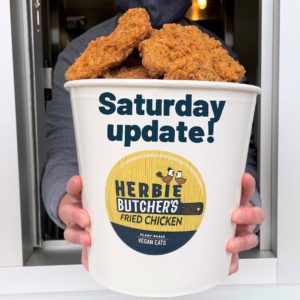
Herbie Butcher’s Fried Chicken, 735 E. 48th St., Minneapolis, MN 55417

Enjoy this all-vegan fried chicken shop. Not only do they serve chicken, but they also offer milkshakes, biscuits, and mac n’ cheese. It’s tried-and-true American comfort food. Their mission is to create vegan meats and cheeses that are even better than the real thing! Vegans, vegetarians, and omnivores will all find something to enjoy at this fast-casual restaurant in South Minneapolis.

Ka Papa Cuisine, 1830 S Osprey Ave., Ste. 104, Sarasota, FL 34239

This family-owned restaurant is upscale serving dishes inspired by Asia, Europe, and North America and has something everyone can enjoy. They source many of their ingredients locally and offer a full beer and wine menu. Be sure to try their Ricotta-Spinach Ravioli which is served in white wine lemon-caper sauce. 

kb&co, 10224 104 St. NW, Edmonton, AB T5J 1B8 Canada

kb&co is a casual conscious eatery that values lowering their carbon footprint and preserving the planet’s water supply through an animal-free menu, mindful ingredient sourcing, and eco-friendly packaging. They have a wide variety for breakfast and lunch such as different smoothies, wraps, soups, snacks, and more. Examples such as green curry stew (green curry, onion, red & green bell pepper, carrot, zucchini, mushroom, basil, coconut cream), cashew cream cheese avocado toast, sloppy joe (chili, avocado, red onion, tomato, romaine, sweet chipotle cashew cream), and more. They are located in Fox One Tower in downtown Edmonton.

Llama Love Vegan, 11633 Santa Monica Blvd., Los Angeles, CA 90025

Llama Love Vegan is a delivery-only restaurant inspired by traditional Peruvian foods and drinks. The menu features a variety of foods native to South America including quinoa, maca (Peruvian ginseng), and aji (Peruvian sweet pepper). Specialties include a quinoa bowl with salsa criolla, “Guacamaca” with fresh chips, and a spice rice surprise with spicy aji. Elixirs of life are also available including wellness juice with a dash of turmeric and chicha made with fresh Incan purple corn juice. The Peruvian menu is rounded out with desserts such as hot chocolate made with 100% cacao and vegan Arroz con Leche (Mexican rice pudding.

Maya’s Cookies, 4760 Mission Gorge Pl., Ste. G, San Diego, CA 92120

They sell a large selection of cookies, including Classic Chocolate Chip, Snickerdoodle, White Chocolate Macadamia and Drunken Grandma. They also have wheat free cookies including Chocolate Chip S’mores, Oatmeal Chocolate Chip and Wheat Free Drunken Grandma. Finally they offer specific “collections” like The Pride Collection, The Graduation Collection and The Father’s Day Collection

Thank Goodness it’s Vegan, 27 West Main St., Goshen, NY 10924

Thank Goodness it’s Vegan offers a variety of American vegan comfort foods and desserts. Some examples of food that they have are Tofu Scrambles, vegan BLT, Sesame Teriyaki Littles, Chocolate Encased Cannoli, and more.

Nan’s Noodle House, 3103B Edmonton Trail NE, Calgary, AB T2E 3N6 Canada

If you’re in need of some homemade comfort food, then look no further than Nan’s Noodle House. With mouthwatering bowls of Rich Miso Ramen, a creamy broth loaded with wheat noodles, green onions, corn, shiitake mushrooms, menma bamboo, and topped with your choice of vegan Hay’m slices or Chick’un, you can indulge in delicious favorites. Bite into a steaming Gua Bao, buns packed with glazed Chick’un, pickled vegetables, and cilantro, or snack on the Yakitori Chick’un Drumskicks served with a tangy BBQ dipping sauce. Make sure to take a look around the Vegan Market inside of the restaurant while sipping on a Thai Coconut Iced Tea or Thai Iced Coffee.

The Farm Café and Concessions Food Truck, 12 Emerald St., Keene, NH 03431

Food served includes soup of the day, bowls, wraps, sandwiches, quesadillas, burgers, salads, yummy sides, as well as gluten-free bakery boasting a cookie of the day. Mouth-watering options such as Buff-a-Flower Power Wrap with grilled cauliflower, Green Monster Quinoa Bowl, All Buffed Up Mac & Over the Rainbow just might make you want to road trip to NH!

TEMPETHON 2021

Posted on June 25, 2021 by The VRG Blog Editor

On Sunday June 27, 2021, a groundbreaking virtual conference called TEMPETHON 2021 will go live to spotlight the Indonesian fermented protein, tempeh (spelled “tempe” in Indonesia). A staple of the Indonesian diet, tempeh has only recently caught fire in western markets. In the USA, tempeh products are exploding with an annual growth rate of 30.1% in Natural Food Stores and 29.7% in Conventional Grocery Stores. The next big thing in plant-based products, chefs and consumers alike rave about tempeh’s firm texture, nutty/mushroom flavor, and versatility. Nutritionally, tempeh packs a big punch with 15 grams of cholesterol free protein in a 3oz serving, establishing itself as one of the most nutritious sources of plant-based protein on earth.

TEMPETHON 2021 includes:

1. A TEDx talk by Amadeus Winarno, PhD and co-founder of the Tempeh movement.

2. Cooking classes from a variety of world cuisines, hosted by Melania Edwards, Author, Founder, and CEO of The Tropical Kitchen. Live cooking demonstrations will include exotic Indonesian recipes from The Tropical Kitchen. Renowned tempeh chef and author JL Fields will demonstrate how to create tempeh burgers using simple ingredients. Ecuadorian Fermenter Cata Vallejo will showcase tempeh in South American Cuisine. Tempethon 2021 will also include special recipes from the famous Miyoko Schinner of Miyoko’s Creamery and Lightlife’s Executive Chef.

3. A tempeh innovation panel hosted by Seth Tibbott, Founder of the Tofurky Company. This will showcase some of the cutting-edge innovations driving growth in the tempeh space. It is a chance to learn about hi-tech home tempeh incubators, a new 100-million-dollar tempeh plant in Indiana, KETO friendly tempeh snack foods, a plan to build 100small tempeh plants in India, a UK tempeh start up that raised £1.6m in less than three hours of crowd funding and a Portland, Oregon producer making amazing non soy tempeh out of various grains and legumes.

The event is sponsored by the Indonesian Tempe Movement, a non-profit organization with branches in the USA and UK. To register for complimentary tickets, visit: https://www.eventbrite.com/e/tempethon-2021-tickets-155571569753

Enter The Vegetarian Resource Group Video Contest! Deadline is July 15, 2021

Posted on June 24, 2021 by The VRG Blog Editor

Create and submit a video relating what you want to tell others about vegetarianism/veganism.

Some possible topics: food, nutrition, your feelings about veganism/vegetarianism, water usage and vegetarianism, veganism and animal rights, or other vegan topics which appeal to you. Humor and feelings are appreciated. All videos should be positive, not be critical of anyone, and not include any footage of animal cruelty. You may submit a video you have already made.

Aspects of judging include accuracy and judges wanting to share the video with others. Entrants give permission to The Vegetarian Resource Group to post and share the video, to link to and from the video, and share the video with the media. Deadline to enter this year is July 15, 2021.

Details on the contest can be found here: https://www.vrg.org/videoscholarship.php

June 24th is National Praline Day – Enjoy Making Vegan Pralines!

Posted on June 24, 2021 by The VRG Blog Editor

These have become a favorite at The Vegetarian Resource Group’s Pre-Thanksgiving Potluck! This recipe from Keryl Cryer (former Senior Editor of Vegetarian Journal) replaces evaporated milk (or cream) with almond milk, which makes it vegan and adds an even nuttier flavor to the pralines.

KERYL’S PRALINES

(Makes approximately 40 pralines)

  • 3 cups organic white sugar
  • 1 cup vanilla almond milk (at room temperature)
  • 2 Tablespoons non-hydrogenated vegan margarine
  • 2 dashes ground cinnamon
  • 1-2 cups pecan halves (at room temperature)

In a medium-sized pot, combine the sugar, almond milk, margarine, and cinnamon. Cook, stirring, over medium heat until sugar is dissolved. Reduce heat to low and continue to cook, stirring occasionally, for approximately 20 minutes until bubbly and foamy.

While the mixture cooks, lay out sheets of aluminum foil, shiny side up, on a flat surface, such as a counter or table. When the mixture is bubbly, remove from heat. Stir in pecans until evenly coated. Use a large serving spoon to spoon mounds of coated pecans onto the foil. Work quickly but carefully. If the mixture starts to harden in the pot or becomes sugary before you finish, add some more milk and mix until smooth.

Allow pralines to harden on the foil for approximately 10 minutes. As soon as the pralines are hard, move them to a serving platter or a storage container. Store pralines at room temperature.

Silver Diner with locations in Maryland, New Jersey, and Virginia offers many vegan options!

Posted on June 23, 2021 by The VRG Blog Editor
Silver Diner Beyond Meatballs Mac n Cheese

The next time you’re passing through either Maryland, New Jersey, or Virginia and see a Silver Diner, you may want to stop in since they offer many vegan options that are clearly labeled on their menu. Try Hibiscus Mango Soy Shake, Just Egg Benedict, Oat Milk Protein Pancakes, Brussels Sprouts & Hummus Bowl, Meatless Tacos, Veggie Chili, Beyond Meat Miso Burger, Beyond Meatballs Mac n Cheese, Pineapple-Basil Vegan Stir-Fry, and more!

For locations and more information, see: https://www.silverdiner.com/

Open Tofu Sandwich

Posted on June 23, 2021 by The VRG Blog Editor
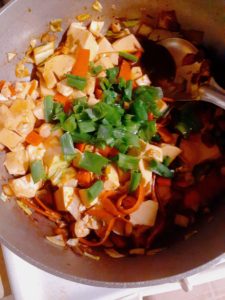
Tofu mixture to go on sandwich

By Shantika Bhat, VRG Intern

(Makes 6 servings)

1 Tablespoon coconut oil

1 medium-sized onion, chopped

4 cloves garlic, minced

3 cups chopped carrots

3 cups chopped cabbage

1 Tablespoon gochujang, vegan sriracha chili sauce, or vegan Thai chili paste

2 Tablespoons soy sauce

1 teaspoon organic brown sugar

2 teaspoons sesame oil

1 teaspoon black pepper

36 ounces silken tofu, cubed

6 pieces toasted bread

1 teaspoon vegan mayonnaise

5 scallions (green onions) chopped, for garnish

In a large pot put coconut oil, then add onion and garlic too and fry for 2 minutes. Add carrots and cabbage and fry for 4 minutes. In a separate bowl add gochujang, soy sauce, brown sugar, sesame oil, and black pepper and mix so that everything is evenly integrated. Pour the sauce mixture into a large pot and stir for about 2 minutes. Add the silken tofu and mix and sit for 15 minutes or until the sauce thickens up.

Have a slice or piece of bread ready and add a thin layer of vegan mayonnaise. Once the dish is cooled down, spread some of the tofu mixture on the bread and sprinkle scallions on top. Enjoy!

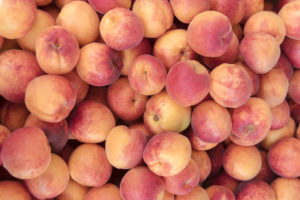
Nothing Beats a Delicious Peach!

Posted on June 22, 2021 by The VRG Blog Editor

Debra Daniels-Zeller’s previous Vegetarian Journal article “Peach Passion” features a wide range of vegan peach-based recipes. Enjoy Cinnamon-Peach Oatmeal with Toasted Walnuts; Creamy Peach Salad Dressing; Lime-Cilantro Peach Salsa; Coconut-Peach Soup; Tempeh Teriyaki with Peaches; Grilled Balsamic Peaches; Cardamom-Peach Upside-Down Cake; Peach Cashew Cream; and Lemon-Peach Jasmine Rice Pudding.

Read the entire article here: https://www.vrg.org/journal/vj2006issue2/2006_issue2_peach_passion.php

To subscribe to Vegetarian Journal in the USA, see: https://www.vrg.org/member/2013sv.php

How to Start a Charity Garden at Your Local School

Posted on June 22, 2021 by The VRG Blog Editor

By Julia Comino, The Vegetarian Resource Group Intern

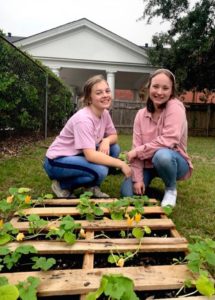
A small, overgrown green island floating in an ocean of black asphalt. That was the humble beginnings of my Charity Garden. And inside the grass-lot, was me, soiled and sweaty absolutely not understanding what I had gotten myself into.

     When I first embarked on my journey of founding a charity garden at my high school, in all honesty, I had no idea what I was doing. My limited gardening knowledge consisted of quite a few deceased succulents that sadly did not survive my horticultural attempts. However, after putting two years of work into creating the Charity Garden at my school, I can confidently offer you a few pieces of advice as you begin your quest to create a charity garden. In order to be successful in this mission, you have to consider who, what, when, where, and how.

     Think about whose permission and help you will need; what materials, knowledge, and funding you will require; when you will prepare, plant, and harvest the produce you will grow; where your garden will be located; and finally how you will accomplish your goal of creating a functioning charity garden.

Who

Depending on your high school’s policy, who you will need to receive permission from to begin this garden and how you must go about forming a club or organization may differ. For me, a student at a private school with a student body of just under 300 in the upper class, who I needed to ask was clear and simple. I first asked one of my teachers who doubled as my Speech and Debate coach if she would be willing to be the teacher sponsor of my club, which, lucky for me, she was, and then I moved on to ask my school’s principal. However, if you attend a public or larger high school, you may need to do some more digging to find out who you need to ask.

     Before you speak to the individual or individuals you will need to ask permission of, you first need to create a basic plan for your project. In my case, I admit, I possibly went overboard when it came to this part of the process.

     Armed with a trifold poster presentation I spent a few too many hours crafting, I walked into my principal’s office the summer before my junior year confidently and ready to persuade my principal to my plan. The presentation covered everything that I naively thought would need to be done to begin my garden. There was a section dedicated to the budget this environmental club and charity garden would require for that school year, a whole side of the poster hosting a sketch of the area in which the garden would be located, and a timeline of the creation process along the bottom of the poster. With my presentation so well-crafted and executed articulately, my principal agreed to allow me to turn my plan into a reality.

What

As put together as my pitch was the actual creation of my charity garden was in no way as perfectly or easily done. The “what” phase is where I initially went wrong. While no amount of forethought can allow you to escape the inconsistencies of the reality of making an idea tangible, you can save yourself some strife by working to plan ahead as much as possible. I recommend sitting down and writing out every single necessary item that comes to mind.

     Consider what needs that you already have met without any planning. Maybe your school already has a sprinkler system or hose that you can use without purchasing or planning for another water source. Test the pH of your soil to see if you will have to buy products to make it more viable. Ask around and see if there are any gardeners who are willing to donate supplies such as soil, gardening tools, or seeds for your organization to use or if they would be willing to help you by working in the garden. After all, you never know the extent of others’ generosity until you ask.

     However, I found that you do not need to use store-bought tools or gardening supplies to begin this garden. To cut back on waste production, repurposing items can be an environmentally and economically friendly choice. For planter beds, I recycled old wood pallets by stapling a mesh bottom to the bottom boards and then filling the slots with soil and mulch. Cans, milk jugs, and bottles can be used as temporary planters. Should you be hoping to create an aesthetically pleasing garden, you can host events where students at your school can paint and decorate your make-shift planters using eco-friendly materials.

     Beyond the materials you will need, you also must consider what knowledge you will need to build and care for this garden. Personally, I have never had a green thumb, and when I founded the Environmental Club and Charity Garden at my school my fervent passion surrounding climate justice clouded my judgment around how my lack of gardening experience would affect this process. I have fond childhood memories of spreading almond-shaped, white pumpkin seeds in the corner of my yard that I had designated “Julia’s Garden” as my mother tended to her real garden. However, had I chosen to reminisce on these times with more candor, these childish fantasies would have dissipated with the realization that not one of these seeds ever prospered under my careless cultivation. The fruitlessness of my prior pumpkin planting should have forewarned my Charity Garden’s tragic pumpkin patch incident. An unusually early frost paired with a lack of pollinating insects and my insufficient gardening knowledge left these sad seedlings withered and barren by the time harvest came.

     Learn from my pumpkin planting woes, and do yourself a favor by picking up a Farmer’s Almanac, checking out gardening forums and blogs online, or seeking advice from farmers in your area. What supplies you gather and buy can be just as important as what knowledge you acquire when it comes to being a beginner gardener.

When

Timing is important, not only with when you plan to plant certain types of seeds but also with the timeline for when you hope to complete your garden. Be generous with how long you give yourself to create a garden space. While a desire to get your garden up and running as soon as possible is a great mindset to have, you also must be realistic with how this project will fit into your and others’ schedules. In my case, the creation of the Charity Garden at my high school was an extension of the Environmental Club I founded. This meant that I had a group of passionate individuals who were invested in creating this garden with me. I advise seeking out your own team of people who want to create a garden as much as you do. This will not only allow you to get work done quicker, but it will also help you remain invested and held accountable.

     Once you have created a basic timeline for when you want to have different portions of this project done, remember to allow yourself flexibility, both with time and financially. Fundraising was what the majority of my early work in creating my garden consisted of. When creating your schedule, factor in the amount of time you will spend raising money to afford supplies you will need. Host bake sales, car washes, have a donation jar, or even sell merchandise to raise funds.

     When it comes time to begin sowing seeds in your garden, make sure the plants you are growing match the season that you are in. It is easy to do a quick google search to find out when it is best to begin growing certain plants, and when these plants will be ready for harvest. Remember, you are on nature’s time.

Where

Deciding where your garden will be hosted is what’s next on the to-do list. It is important to be logically resourceful with this decision as well as willing to allow your imagination to turn what may seem to be a plot devoid of any life into the flourishing garden in your mind’s eye. In my case, I turned my fanciful gaze onto an overgrown grass plot surrounded by a crumbling metal fence in the middle of my school parking lot. While at first glance, this plot seemed barely habitable, with its proximity to a working hose and with the offering of soil in an otherwise asphalt covered space, I found the area would be just fine.

     Look at your own campus. An accessible rooftop could host a cluster of raised planting beds or a patch of grass that is not in use could be transformed into a blossoming garden space. Your only limit is your imagination. However, of course, you still must be practical. Make sure that the location you choose is one that is close to a water source, receives enough sunlight, and matches the needs of the plants you wish to grow.

     When you choose your space, analyze what work needs to be done to first transform the area into a functional garden, but also what work will be needed to maintain the area. In the case of my garden, the grass lot I chose had not been used in almost a decade. Not only was the entire plot infested by weeds, but a large limb of an old oak tree loomed over half the space cascading it in shade. This was not ideal for a garden. So I had to find someone who had the ability to trim back this branch as well as cut down the weeds overrunning the area. As part of this process, you must learn how to be your own advocate. When asking for others’ help you need to be able to persuade them into believing that the cause they would be helping is worth their time. Luckily, the school’s gardener was fond of my plan to reinvent this previously empty lot and had no issue with sprucing up the space during his normal care of the campus

How

Once you have completed all of this planning, this is where it gets fun! You are ready to start planting. Schedule events for your club or members of your school to come out and get their hands dirty, planting your new garden. Follow a plan for where each plant should be located within the garden giving special consideration for each seedling’s sunlight needs. For some plants, you may find that starting them in seed starter trays is the best practice. These trays, while can be bought in stores, can also be made out of old juice boxes or even cardboard boxes.

     After all your seedlings are in the ground, now you are just doing maintenance and care. Weeding, watering, and looking after your vegetation can be tedious, but with patience and hard work, you will be ready for your first harvest. But before you can reap the produce of your labor, you need to plan how you are going to disperse what you have grown with those in need. Working in accordance with any outreach protocols your school has, you can now find out how you can best give out your garden’s produce. Reach out to local food pantries or shelters for those with complex living situations to see if anywhere would be interested in receiving fresh produce donations. Work with school officials to see if allowing those in need to come into the garden to take what they need would be a possibility. See if your city has community fridges you can stock. Or maybe even plan events at public centers in which you can set up stands to give out your produce. There are so many ways in which you can share the fruits of your labor.

     No matter if you have a green thumb or if, like me, you are new to the business of gardening, you can successfully create a Charity Garden with a little planning and a lot of passion. While even I may still be learning how to garden as I go, I have discovered that with enough dedication, and with getting my hands a little dirty, I can cultivate my dreams into fruition, and you can too!

You may also be interested in veganic gardening and farming articles found here: https://www.vrg.org/links/#veganic-farming

Rissa Miller, Senior Editor of Vegetarian Journal will be a Guest Speaker for the Peace Advocacy Network on June 22, 2021

Posted on June 21, 2021 by The VRG Blog Editor

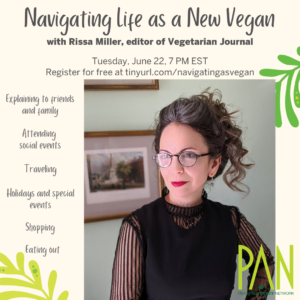
Peace Advocacy Network is excited to invite Rissa Miller, senior editor of Vegetarian Journal Magazine and organizer of Baltimore Vegan Drinks, to join us for a discussion about Navigating Life as a New Vegan.

From talking to family and friends about your lifestyle to attending social events (safely!) to traveling, Rissa has you covered with 26 years worth of advice, tips, and insightful suggestions from her experience participating in almost every kind of activism you can imagine.

Register to join us on Tuesday, June 22 at 7 pm EST for the free virtual discussion at https://tinyurl.com/navigatingasvegan

  • Donate

  • Subscribe to the blog by RSS

  • VRG-NEWS

    Sign up for our newsletter to receive recipes, ingredient information, reviews of new products, announcements of new books, free samples of products, and other VRG materials.

    Your E-mail address:
    Your Name (optional):


↑ Top