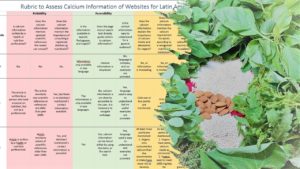
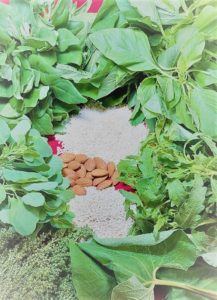
After conducting a Google search on Latin
American websites (mostly in Spanish) with information on calcium for vegans,
The Vegetarian Resource Group intern Odette Olivares identified 102 websites.
Twenty-one sites were selected for having good quality information. From very
scientific sites to YouTube videos and Facebook groups, you will be able to
find the site for you and expand your knowledge about calcium for vegans! See: https://www.vrg.org/nutrition/best_latin_american_websites.htm
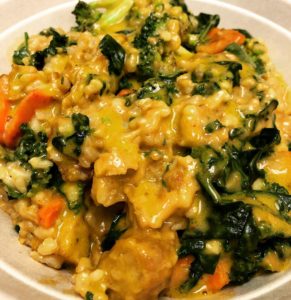
The Rain Tree (tempeh, broccoli, carrots, spinach, kale, brown rice, with a tasty Thai peanut satay sauce, with red curry drizzle) from Planted Plate in Princeton, NJ
The Vegetarian Resource Group maintains an online Guide to
Vegan/Vegetarian Restaurants in the USA
and Canada.
Here are some recent vegan restaurant additions. The entire guide can be found
here: http://www.vrg.org/restaurant/index.php
To support the
updating of this online restaurant guide, please donate at: www.vrg.org/donate
Here are some new
additions to VRG’s guide (Note: Due to the COVID-19 pandemic many are doing take-out
and/or delivery now):
Allyum, 2940 SW Avalon Way, Seattle,
WA 98126
Dinner options
include the lentil based “No Meatballs” and the Allyum Caesar Salad. Brunch
includes Tiramisu Pudding and mushroom fried “Chicken and Waffles.” Gluten-free
options available as well.
Women-owned and 100%
vegan, Cosmic Kitchen makes a lovely spot for breakfast, lunch, or dinner!
Dishes include wraps, such as the Star Wrap with vegan tuna and the veggie
Galaxy Wrap, as well as bowls and soups, such as the chickpea and quinoa
Vibration Bowl and Tortilla Soup. Fresh smoothies and bowls are also available!
Galiotos Delicatessen, 131 Mulberry
St., New York, NY 10013
Vegan Italian
Delicatessen in the heart of NYC’s Little Italy. Their menu includes
sandwiches, salads, sides, pasta, coffee, baked goods, and a variety of
European drinks. They also have fresh produce and some Italian-style shelf
items. The owners are trying to evoke the feeling of classic Italian delis of
NYC’s past.
Haven Eatery, 366 Bloor St. W.,
Toronto, ON M5S 1X2 Canada
Haven Eatery is a
minimalistic restaurant serving vegan lunch and dinner made entirely of fresh
ingredients. The open-concept kitchen allows you to watch the chef prepare your
meal on the wok. Popular dishes include Sweet & Sour Chik’n, “Prawn”
Tempura, and Curry Vermicelli Noodles.
Planted Plate, 15 Spring St.,
Princeton, NJ 08540
Their extensive menu
includes breakfast, tacos and burritos, salad bowls, sandwiches and wraps,
pitas and kabobs, hot bowls and some interesting takes on Beyond Burgers.
Sauvage Food Truck, location varies,
Denver, CO
Menus consisting of
vegan Cajun food varies according to pop up locations. Dishes run the gamut
from bayou fries to “shrimp” po’boys to an upscale three course meal.
Bringing the flavors of the bayou to the streets of Denver. Laissez les bon
temps rouler!
Taco Vega, 456 N. Fairfax Ave., Los
Angeles, CA 90036
Everything on their
menu is 99% organic and GMO-free. They strive to serve whole, unprocessed foods
to keep you and our planet healthy. They offer nachos, quesadillas, tacos,
salads, burritos, bowls, and churros! They even serve a diverse variety of
beverages such as horchata lattes and Corsa pro coffee drinks.
Their menu is
extensive, ranging from specialty cinnamon rolls, bread loaves, and donuts. You
can even choose from their savory baked goods such as empanadas and challah
bread. They also provide a gluten-free section of their menu as well.
While the Coronavirus Pandemic is
going on, more and more people are doing their shopping online. If you’re
searching for a vegan belt, some of the options below may work for you. This is
a crucial time to support vegan companies!
Avesu is a German company that sells a wide variety of belts in
different colors. Check their site to see which countries they deliver to.
– Info on a new book titled The Pig Who Made it Big, a rhyming picture book about a pig whose life suddenly changes after a film crew comes to shoot a movie on the farm. The director takes a shine to the pig and notices how intelligent and talented she is.
– Soy and Children written by Reed
Mangels, PhD, RD
– Shared an announcement about The
Vegetarian Resource Group Scholarship Contest for graduating High School
Seniors in the USA
https://www.facebook.com/groups/VRGparentsandkids/ is intended to be a group that offers support for
families raising children on vegan diets and for vegan kids. We envision it as
a place to get advice about a wide-variety of topics: pregnancy, birthday
parties, school lunches, Halloween, non-leather apparel, cruelty-free products,
summer camps, and more. Please use it as a place to share your wisdom, seek
advice, or just find a sympathetic ear. The goal is to offer support.
Consequently, any profane, defamatory, offensive,
or violent language will be removed. Feel free to disagree, but do so
respectfully. Hateful or discriminatory comments regarding race, ethnicity,
religion, gender, disability, sexual orientation, or political beliefs will not
be tolerated. We expect that posts should relate to vegan diets and lifestyles.
The Vegetarian Resource Group reserves the right to monitor all content and ban
any user who posts in violation of the above rules, any law or regulation,
SPAM, or anything otherwise off topic.
Please share this information
with any veggie families that you know! Thanks.
The Vegetarian Resource Group is a vegan activist non-profit
organization that does outreach all-year-long. For example, VRG responds to the
public’s questions every day and sends literature free of charge to other
groups/individuals doing educational activities in schools, hospitals, camps,
restaurants, libraries, offices, etc. Our ability to continue doing this
depends on people like you! Your donations allow us to promote the vegan
message whenever we’re called upon for assistance. Please consider becoming a
monthly or quarterly donor to The Vegetarian Resource Group.
During these challenging times, thanks so much for your support.
You can donate online here: vrg.org/donate
The Covid-19 pandemic, caused by the novel coronavirus known as SARS-CoV-2,
presents many unique challenges to public health. People may be wondering how a
massive pandemic allegedly arose from one wet market—and how to prevent the
next crisis. Unfortunately, the answer is complicated. It involves our
relationships with animals (both wild and domestic) and with the environment.
Climate change further influences all of these interactions.
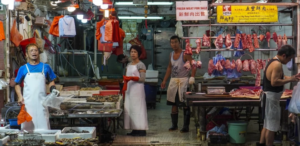
Recently wet markets (that sell
live animals for food) have come under scrutiny for the dangerous mixing of
wild animals and humans. The criticism of these markets is filled with
ethnocentrism and Western ideals. Although wet markets are undoubtedly perfect
places for viral multiplication and transmission, people fail to recognize two
other major factors:
1. The role of concentrated animal feeding operations (CAFOs) in spreading
infectious disease to people.
2. Humans’ relationships with the Earth’s ecosystems, both near and
distant.
THE ORIGINS OF ZOONOTIC DISEASES
Viruses that come from animals, also called zoonotic viruses, are a major
threat to society and public health. According to the Centers for Disease
Control and Prevention, (CDC), a division of the United States Department of
Health and Human Services, “… scientists estimate that more than six out of
every 10 known infectious diseases in people can be spread from animals, and
three out of every four new or emerging infectious diseases in people come from
animals.”1 Since humans come in contact with animals in many ways,
it’s important to consider different situations where zoonotic diseases can be
easily transmitted across species.
WET MARKETS
Recently, wet markets have come under scrutiny for the dangerous
commingling of wild animals and humans. Also, they bring an exotic combination
of animals, which normally are not found close to each other in the wild,
together in one place. At a wet market:
A. Wild animals can infect domesticated animals.
B. Viruses can spread between different species.
Birds and bats especially carry
many viruses. When they come in contact with an animal of a different species,
a virus can mutate and adapt, eventually gaining the ability to infect a new
host. In this manner, viruses spread widely.2
Some viruses are unable to
directly infect a human, including avian (from birds) forms of influenza and
some types of coronaviruses. These viruses require an intermediate host that
serves as the go-between such that the virus can enter a new species. In the
intermediate host, a virus changes sufficiently through mutations that enable
it to adapt to a new host. Later, when given the chance to infect a human at
close proximity, it may be able to do so by binding to specific cell receptors.3,4
The risk of wet markets stems
from being places that allow for many different types of species to come in
contact for the first time. This gives viruses numerous potential hosts and
greater possibility of genetic recombination through mutation. Without certain
mutations, a particular virus may not be able to exploit a new species.
The cramped conditions in wet markets lead to animals being under severe stress. As a result, wild animals, already carrying many viruses that they are immune to, will shed more viral particles in the market.5 This means that there is a greater chance of viral infection for humans and other animals that are in the wet market. Unfortunately, stressful conditions for animals is not unique to wet markets. Conventional animal agriculture also places extreme stress on food animals.
CONCENTRATED ANIMAL FEEDING OPERATIONS (CAFOs)
According to the Natural Resources Conservation Service, a division of the
United States Department of Agriculture (USDA), CAFOs “congregate animals,
feed, manure and urine, dead animals, and production operations on a small land
area.”6
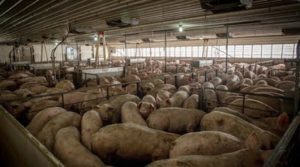
CAFOs present many challenges for public
health. The risk lies in their scale and sanitation. Many individuals of the
same species, known as monocultures, are housed together in small cages, rooms,
or buildings. If a virus is able to infiltrate (either from wild animal, human,
or another method), it will easily spread between animals.
The lack of genetic diversity within
livestock also facilitates viral transmission between animals.7 The
Food and Agriculture Organization of the United Nations (FAO of the UN) stated
that “livestock health is the weakest link in our global health chain, and
disease drivers in livestock as well as wildlife are having increasing impacts
on humans.”8
THE WET MARKET-CAFO CONNECTION
Besides the contributions to pandemic risk that wet markets and CAFOs
present when considered individually, their connection is also problematic. For
example, consider the case of influenza, a common virus in poultry and swine. Influenza
is more common within CAFOs compared to wet markets. For example, in a
systematic review over a six-year period, researchers noted that of 364 avian
influenza outbreaks, 56.1% originated in poultry CAFOs while only 0.8% started
in wet markets.9
Scientists also report that many viruses
undergo genetic recombination that occur among individuals of the same species and
between species. In other words, if a wild animal comes in contact with
livestock, either directly or indirectly, it can easily spread certain viruses
to the domestic food animals.10
Typically, viruses are not very pathogenic in
the wild host. Once infected by a wild virus, domestic animals serve as
“amplifier hosts” in which that virus often becomes more pathogenic than it was
in the native species. Through genetic recombination and/or mutation, the wild
virus becomes adapted to the new host.11
The transport of both domesticated and wild
animals can also magnify zoonotic viruses. The animals being transported might
be exposed to viruses that their immune systems have never encountered. During
this exposure, foreign viruses have the potential to recombine and create completely
novel viruses.12
J.F. Chan and colleagues,
in a 2013 Trends in Microbiology article state that in the wild, bats
and birds are favorable reservoirs for most emerging viruses because of several
“unique ecological, biological, immunological, and genetic features.” The loss
of biodiversity and habitats for bats and birds leads to an increased
interaction with humans and other species, including domesticated animals. The
researchers report that the increased crowding of different wildlife species at
wet markets has made it easier for viruses to jump between species.13
In some countries, animal
agriculture also occurs in mixed species settings. For example, in China,
it’s common to raise pigs along with ducks and other avian species. 14
The high probability of viral transmission caused by interspecies mixing cannot
be overstated.
THE ROLE OF INTERMEDIATE HOSTS IN VIRAL TRANSMISSION
In a 2020 editorial by A. Rodriguez-Morales and fellow researchers
published in Le Infezioni in Medicina many viruses use intermediate
hosts like civets or camels because they cannot spread directly from the
original infected animal (bat or bird) directly to humans.15
M. Konda and fellow
investigators, in a 2020 review article in Cureus summarize the
viral process in intermediate hosts16:
1. Mutates and recombines in intermediate hosts, thus adapting to humans
2. Binds to the correct cell receptor in humans
3. Enters the human cell
4. Integrates its own genetic material into the human cell’s
5. Commands the human cell to reproduce virus.
6. Human cell continues to reproduce more virus.
Scientists hypothesize that
SARS-CoV-2, the virus that causes Covid-19, used an intermediate host between
bat and humans just like its viral cousins responsible for other recent
coronavirus outbreaks.17
CONCLUSIONS: PANDEMICS, WET MARKETS, AND CAFOs
Both wet markets and CAFOs present unique challenges for the future of
public health. CAFOs, with thousands of genetically similar animals in close
proximity, provide the perfect environment for a virus to spread.
Wet markets bring hundreds of
wild species together in one place. They allow for interspecies viral
transmission and the potential of recombination to form novel pathogens. Wet
markets also allow virus-infected animals, like wild bats and birds, to come
into contact with humans and domestic animals.
Both CAFOs and wet markets may have
very poor sanitation and living conditions for animals, creating stressed
animals that shed more virus. This situation facilitates rapid viral spread.
Wet markets and CAFOs jeopardize
public health and food security. Research should focus on prevention of
pandemics in both types of food systems. Ultimately, humans need to reevaluate
their role in the Earth’s ecosystems if we hope to prevent the next global
pandemic of a zoonotic virus like SARS-CoV-2.
Notes from the editors:
WHAT IS A WET MARKET?
According to researchers, “A
typical wet market is a partially open commercial complex with vending stalls
organized in rows; they often have slippery floors and narrow aisles along
which independent vendors primarily sell ‘wet’ items such as meat, poultry,
seafood, vegetables, and fruits.” See: https://link.springer.com/article/10.1007/s10460-019-09987-2
In this sense of the term, wet markets
exist all over the world, including the United States, where they are called “farmer’s
markets.”
In this paper, “wet market” refers to open
markets selling live animals, including wild, domestic, and/or domesticated
wild animals, as well as animal products (eggs, meat, bones, organs, etc.).
WHAT IS A CAFO (concentrated animal feeding operation)?
The
U.S. Environmental Protection Agency (EPA) defines Animal Feeding Operations (AFOs)
as “agricultural enterprises where animals are kept and raised in confined
situations. AFOs congregate animals, feed, manure and urine, dead animals, and
production operations on a small land area. Feed is brought to the animals
rather than the animals grazing or otherwise seeking feed in pastures, fields,
or on rangeland. There are approximately 450,000 AFOs in the United States.”
19
“A CAFO is another EPA term for a large
concentrated AFO. A CAFO is an AFO with more than 1,000 animal units (an
animal unit is defined as an animal equivalent of 1,000 pounds live weight and
equates to 1,000 head of beef cattle, 700 dairy cows, 2,500 swine weighing more
than 55 lbs, 125 thousand broiler chickens, or 82 thousand laying hens or
pullets) confined on site for more than 45 days during the year. Any size
AFO that discharges manure or wastewater into a natural or man-made ditch,
stream or other waterway is defined as a CAFO, regardless of size.”19
References
1. Zoonotic Diseases. cdc.gov. https://www.cdc.gov/onehealth/basics/zoonotic-diseases.html.
Published July 14, 2017. Accessed November 4, 2020.
2. Chan JF, To KK, Tse H,
Jin DY, Yuen KY. Interspecies transmission and emergence
of novel viruses: lessons from bats and birds. Trends Microbiol.
2013;21:544-555.
3. Johnson KEE, Song T,
Greenbaum B, Ghedin E. Getting the flu: 5 key facts about influenza virus
evolution. PLoS Pathog. 2017;13:e1006450. Published 2017 Aug 24.
4. Konda M, Dodda B, Konala
VM, Naramala S, Adapa S. Potential Zoonotic Origins of SARS-CoV-2 and Insights
for Preventing Future Pandemics Through One Health Approach. Cureus.
2020;12:e8932. Published 2020 Jun 30.
5. Brook CE, Boots M,
Chandran K, et al. Accelerated viral dynamics in bat cell lines, with implications
for zoonotic emergence. Elife. 2020;9:e48401. Published 2020 Feb 3.
6. Animal Feeding
Operations. NRCS.
https://www.nrcs.usda.gov/wps/portal/nrcs/main/national/plantsanimals/livestock/afo/.
Accessed November 4, 2020.
7. Jones BA, Grace D, Kock
R, et al. Zoonosis emergence linked to agricultural intensification and
environmental change. Proc Natl Acad Sci U S A. 2013;110:8399-8404.
doi:10.1073/pnas.1208059110
8. Food and Agriculture Organization of the
United Nations. World Livestock 2013 – Changing Disease Landscapes. Rome, IT: FAO; 2013.
9. Chatziprodromidou IP,
Arvanitidou M, Guitian J, et al. Global avian influenza outbreaks 2010-2016: a
systematic review of their distribution, avian species and virus subtype.
Systematic Reviews. 2018 Jan;7(1):17.
10. Keesing F, Belden LK,
Daszak P, et al. Impacts of biodiversity on the emergence and transmission of
infectious diseases. Nature. 2010;468:647-652.
11. Jones BA, Grace D, Kock
R, et al. Zoonosis emergence linked to agricultural intensification and
environmental change. Proc Natl Acad Sci U S A. 2013;110:8399-8404.
12. Liverani M, Waage J,
Barnett T, et al. Understanding and managing zoonotic risk in the new livestock
industries. Environ Health Perspect. 2013;121:873-877.
13. Chan JF, To KK, Tse H,
Jin DY, Yuen KY. Interspecies transmission and emergence
of novel viruses: lessons from bats and birds. Trends Microbiol.
2013;21:544-555.
14. Keck F. Livestock Revolution and Ghostly
Apparitions: South China as a Sentinel
Territory for Influenza
Pandemics. Current Anthropology.
2019:60:S20.
15. Rodriguez-Morales AJ,
Bonilla-Aldana DK, Balbin-Ramon GJ, et al. History is repeating itself:
Probable zoonotic spillover as the cause of the 2019 novel Coronavirus
Epidemic. Infez Med. 2020;28:3-5.
16. Konda M, Dodda B, Konala VM, Naramala S, Adapa S. Potential Zoonotic Origins of SARS-CoV-2 and Insights for Preventing Future Pandemics Through One Health Approach. Cureus. 2020;12:e8932. Published 2020 Jun 30.
17. Hu T, Liu Y, Zhao M,
Zhuang Q, Xu L, He Q. A comparison of COVID-19, SARS and MERS. PeerJ.
2020;8:e9725. Published 2020 Aug 19.
18. Wet Market. Merriam-Webster.
https://www.merriam-webster.com/dictionary/wet market. Accessed November 5,
2020.
Jacqueline Tang did a Vegetarian
Resource Group internship while a pre-med and public health major at Johns
Hopkins University.
The contents of this posting,
our website, and our other publications, including Vegetarian Journal, are not
intended to provide personal medical advice. Medical advice should be obtained
from a qualified health professional. We often depend on product and ingredient
information from company statements. It is impossible to be 100% sure about a
statement, info can change, people have different views, and mistakes can be
made. Please use your best judgment about whether a product is suitable for
you. To be sure, do further research or confirmation on your own.
As most of you know, the restaurant industry is struggling during the Pandemic. If you’re able to, now is a good time to pick-up or have delivered food from a local vegan restaurant. See The Vegetarian Resource Group online Guide to Veggie Restaurants in the USA and Canada: www.vrg.org/restaurant/index.php
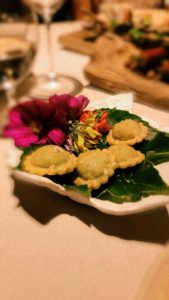
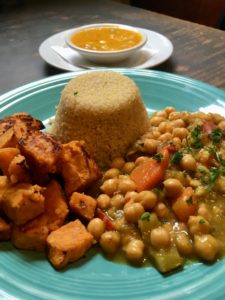
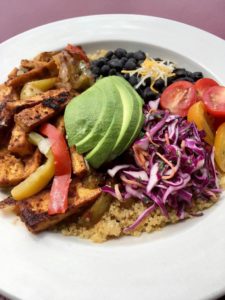
Photo from One World Cafe
For those living in Baltimore City, many of us in The VRG office especially enjoy delicious food from One World Café. In addition to their usual menu, they also offer vegan specials each weekend that are outstanding! For example, some of their previous specials include: Tofu fajita with grilled peppers, onions and quinoa bowl with seasoned black beans, cabbage salad and slice avocado; Middle Eastern salad and falafel platter; Grilled polenta with tofu triangles in an onion gravy and served with sautéed navy beans with spinach and mushrooms; and Curry chickpea and veggies over organic quinoa with roasted sweet potatoes served with a mango chutney. Their food features whole foods and not just processed foods. Presently they are open Wednesday through Sunday for pick-up, delivery, and limited outdoor and indoor dining. They are located near JHU’s Homewood Campus. See: www.facebook.com/One-World-Cafe-191474677552909/
When
The Vegetarian Resource Group intern Odette Olivares decided to try veganism
(after watching the documentary, Earthlings), she was a teenager living in
Mexico. She bumped into many sites that offered comprehensive information about
vegan nutrition, but she still had many questions. Since she knew that many new
Latin American vegans might be going through the same situation, she created a
selection of the best Latin American websites with information on calcium for
vegans. It is completely possible to obtain all the calcium we need from a
vegan diet, but we want reliable sources.
Spanish and Portuguese-language websites
were evaluated according to four categories: author and sources reliability;
information accessibility; completeness and correctness; and inclusion of Latin
American recipes high in calcium. Are you curious to know which are the
websites with the highest scores? Take a look at this selection: https://www.vrg.org/nutrition/best_latin_american_websites.htm
The Vegetarian Resource Group (VRG) is a non-profit organization dedicated to educating the public on veganism and the interrelated issues of health, nutrition, ecology, ethics, and world hunger. We have been helping health professionals, food services, businesses, educators, students, vegans, and vegetarians since 1982. In addition to publishing the Vegan Journal, VRG produces and sells a number of books.
Sign up for our newsletter to receive recipes, ingredient information, reviews of new products, announcements of new books, free samples of products, and other VRG materials.