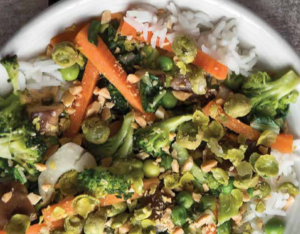
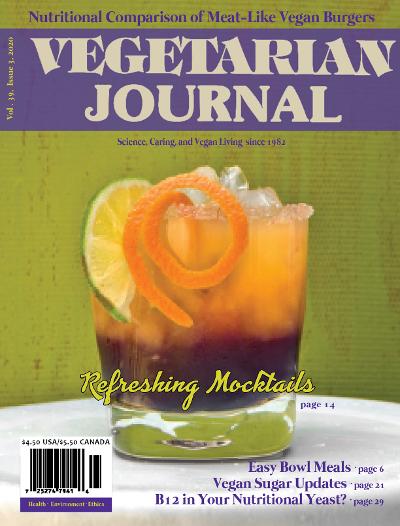
The latest issue of Vegetarian Journal features a recipe piece called “Bowled Over” written by James Craig Thieman. Enjoy Tikka Masala Bowls; Southern Anytime Bowls; Garden Cabbage & Barley Bowls; Orange & Sweet Tater Bowls; Wasabi Rice Bowls with Peas; and Deconstructed Samosa Bowls. You can read the entire piece here: https://www.vrg.org/journal/vj2020issue3/2020_issue3_bowled_over.php
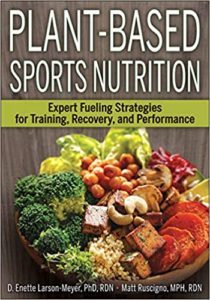
Each issue of Vegetarian Journal contains book reviews and the latest issue takes a look at 3-Ingredient Vegan by Nava Atlas and Plant-Based Sports Nutrition by D. Enette Larson-Meyer, PhD, RDN and Matt Ruscigno, MPH, RDN. Find the reviews here: https://www.vrg.org/journal/vj2020issue3/2020_issue3_book_reviews.php
Each issue of Vegetarian Journal features a column called “Scientific Update.” Here you will find reviews of recent scientific papers related to vegetarianism written by Reed Mangels, PhD, RD. Topics covered in the latest column include Urinary Tract Infections in Vegetarians; Vegetarian Pregnancy; and Certain Food Choices Promote Health and the Environment. See: https://www.vrg.org/journal/vj2020issue3/2020_issue3_scientific_update.php
Whole Foods Market is voluntarily recalling Vegan Vanilla Cake from 21 stores across Alabama, Georgia, Mississippi, North Carolina, South Carolina, Tennessee, and one store in Tallahassee, Florida, due to an undeclared soy (soy milk) allergen. The affected product was sold as whole, 6-inch cakes in both the cake case and self-serve areas of the Bakery Department. The product was packaged in plastic dome containers with Whole Foods Market scale labels, a PLU code of 41070 and product sell-by date through August 24, 2020. All affected product has been removed from store shelves.
The contents of this posting, our website, and our other publications,
including Vegetarian Journal, are not intended to provide personal medical
advice. Medical advice should be obtained from a qualified health professional.
We often depend on product and ingredient information from company statements.
It is impossible to be 100% sure about a statement, info can change, people
have different views, and mistakes can be made. Please use your best judgment
about whether a product is suitable for you. To be sure, do further research or
confirmation on your own.
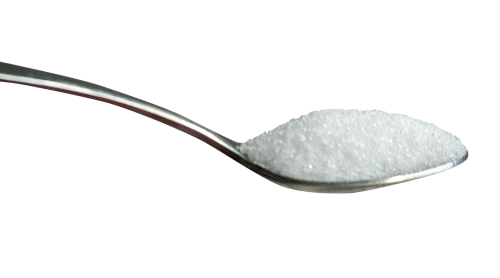
The latest issue of Vegetarian Journal features an article by The Vegetarian Resource Group’s Research Director Jeanne Yacoubou, MS titled Sweet Stuff: Not all Cane Sugar is Processed Through Bone Char. In this article you will learn which Domino plant locations in the USA still use bone char to whiten sugar and which don’t. See: https://www.vrg.org/journal/vj2020issue3/2020_issue3_sweet_stuff.php
When someone
becomes vegan they are usually advised to eat a varied diet. But what does that
actually mean? For example, if you’re told to eat 6-8 servings of whole grains
per day, how much of which whole grain foods should you be eating?
Each issue of Vegetarian
Journal contains a column called Nutrition Hotline written by Reed Mangels,
PhD, RD. Her recent column discusses the issue of what to do if pregnant and
anemic. Dr. Mangels states that while your dietitian is correct to encourage
you to increase your iron intake, it’s not necessary to start eating meat. Read
the entire column here: https://www.vrg.org/journal/vj2020issue3/2020_issue3_nutrition_hotline.php
“Family, Tradition, Cultura. All gone vegan while preserving and celebrating Mexican regional cuisine,” is the opening line of Dora Stone’s video on the best vegan Mexican recipes. Founder of the blog Dora’s Table, Dora Stone is a Mexican food photographer and recipe developer that works to spread vegan eating within the Hispanic community.
One day, I stumbled upon Dora’s Table and was thrilled. As the only person in my Mexican family to be exploring veganism, I was eager to find something like this. I love experimenting with new vegan recipes, whether for dessert or dinner, but I had never tried out a veganized Mexican recipe.
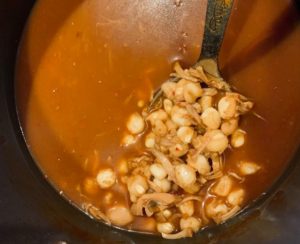
After I spent hours pursuing the website and watching enthralling videos of chiles being cooked and tamales being steamed. I soon knew that I needed to try out a recipe from Dora’s blog, and chose the jackfruit vegan pozole rojo.
Throughout my early childhood, my paternal grandmother’s pozole had been just one of the many traditional mexican dishes that reminded me of my family and my heritage. But since I became vegetarian at the age of seven – now nine years ago – I hadn’t enjoyed a bowl of pozole. So as I excitedly planned to take on this veganized pozole recipe, I went in search of the necessary ingredients, which were not those I normally used on a day to day basis. White hominy, chiles de árbol, and chiles anchos might not have been in my pantry, but I was familiar with their presence in supermarkets in the Southwestern border community I am part of.
I easily recruited my father to take me to a nearby market and connected
with him as we learned the shapes and names of the numerous chiles and spices
that were arrayed in bins next to pan dulce. After I collected all my ingredients,
including the canned jackfruit that would replace the usual meat of pozole, I
arranged my workspace on my kitchen counter and began.
Several hours later I finished the simmering, sautéing, grinding,
chopping, and mixing required in the recipe and presented the soup to my
parents. While it was not perfect, and the spices may have been a little bit
off, I smiled wide when my dad proclaimed his satisfaction. Later that week my
abuela let me know it was a bit spicy for her taste, which was unexpected but
happily taken critique.
I never expected that a blog of vegan cooking would help me connect to
my Mexican heritage, but that is exactly what Dora’s Table helped me do. Generations of women before me cooked
with the same chiles and served their families dinner proudly, and with
veganized Mexican recipes, I can now do the same.
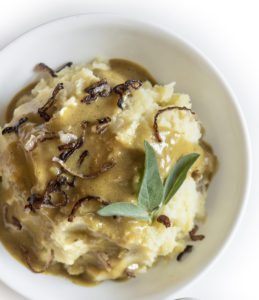
Add cubed potatoes to a large cook pot and cover with water.
Bring to a boil and cook for 30-40 minutes, until potatoes are fork-tender. Put
aside 1 cup of cooking liquid before draining potatoes. Once drained, return
cooked potatoes to cook pot and add ½ cup cooking liquid and ½ cup vegan milk. Using a potato masher, sturdy
fork or electric mixer, mash the potatoes and blend with liquid to desired
texture. If smoother, creamer texture is desired, add more of the cooking
liquid and re-mash. Season to taste with salt and pepper. Serve warm.
Cook’s Note: These
potatoes are wonderful with various add-ins such as a teaspoon of garlic powder
or onion powder, chopped fresh parsley or chives, or even a palm full of
nutritional yeast.
– Info about the launching of an occasional So Many Kids in
the Kitchen group and our first virtual show is next week.
– Parent posted: Part of my doctoral research is focused on
school lunch programs. What is your opinion or take on it? Do your kids eat
school lunches and if yes, do you find enough vegetarian options. For example,
Child Nutrition Program (CNP) officially introduced tempeh as a meat-equivalent
last year. However, how many schools really serve tempeh? Ours does not!
– What is your take on “organic” veggie/fruit
produce? Do you “trust” them enough to spend extra $$ on organic
produce? Do you “believe” they are better for the health of your
children?
– Mention of new veggie book for children called The Turtle Who Fights For Animal Rights.
https://www.facebook.com/groups/VRGparentsandkids/ is intended to be a group that offers support for
families raising children on vegan diets and for vegan kids. We envision it as
a place to get advice about a wide-variety of topics: pregnancy, birthday
parties, school lunches, Halloween, non-leather apparel, cruelty-free products,
summer camps, and more. Please use it as a place to share your wisdom, seek
advice, or just find a sympathetic ear. The goal is to offer support.
Consequently, any profane, defamatory, offensive,
or violent language will be removed. Feel free to disagree, but do so
respectfully. Hateful or discriminatory comments regarding race, ethnicity,
religion, gender, disability, sexual orientation, or political beliefs will not
be tolerated. We expect that posts should relate to vegan diets and lifestyles.
The Vegetarian Resource Group reserves the right to monitor all content and ban
any user who posts in violation of the above rules, any law or regulation,
SPAM, or anything otherwise off topic.
Please share this information
with any veggie families that you know! Thanks.
The Vegetarian Resource Group (VRG) is a non-profit organization dedicated to educating the public on veganism and the interrelated issues of health, nutrition, ecology, ethics, and world hunger. We have been helping health professionals, food services, businesses, educators, students, vegans, and vegetarians since 1982. In addition to publishing the Vegan Journal, VRG produces and sells a number of books.
Sign up for our newsletter to receive recipes, ingredient information, reviews of new products, announcements of new books, free samples of products, and other VRG materials.