plant based foods Disney
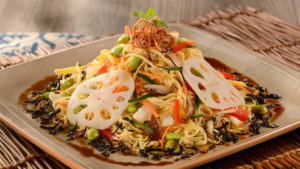
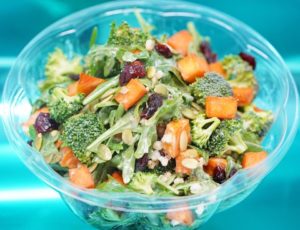
Shiriki Noodle Salad
Credit: Disney
Caryn Ginsburg enjoys visiting Disney World and
recently contributed an article on vegan food served at Disney World and Disneyland
Resorts. Caryn reports: Disney frequently
adds vegan foods. The following resource, among others, can help any vegan
visitor plan a truly delicious vacation to Orlando, Florida, or to Disneyland
in California: Disney Plant-Based Cuisine: Brochure available at the
park. See sample at www.disneyworld.disney.go.com/dining/plant-based.
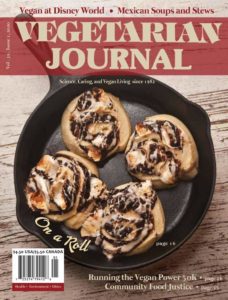
In the latest issue of Vegetarian
Journal, Casey
Brown, RD responds to a reader’s question: I
am interested in going vegan, but I have Irritable bowel syndrome (IBS). I’m not sure what I would be able to eat if
I went vegan?
Little Fig Bake Shop is a vegan wholesaler ran by Melanie
Molinaro that supplies delicious vegan baked goods to several veggie
establishments in Baltimore. Enjoy their donuts, brownies, cookies, cakes, and
more.
They also manufacture an incredible vegan fried chik’n
product and do custom orders. You can contact them at [email protected]
– Our son is about to turn one. My wife and I eat a
plant-based diet, but are feeling a bit lost and a little scared as we prepare
to transition the baby off of formula and on to “real” food as his primary
source of nutrition, while staying vegan. Help?
– How do you educate young children and tell them the truth
about where meat comes from and how animals are badly treated, but not terrify
them?
– Just got back from my son’s one-year check-up, and the
only concern the doctor had about a plant-based diet was the amount of fat (or
lack thereof) in whatever plant-based milk we may choose to transition to.
Anyone know of any brands/varieties that have comparable fat to whole cow’s
milk and also hit the other main important points (protein, calcium, vitamins D
and B12)?
https://www.facebook.com/groups/VRGparentsandkids/ is intended to be a group that offers support for
families raising children on vegan diets and for vegan kids. We envision it as
a place to get advice about a wide-variety of topics: pregnancy, birthday
parties, school lunches, Halloween, non-leather apparel, cruelty-free products,
summer camps, and more. Please use it as a place to share your wisdom, seek
advice, or just find a sympathetic ear. The goal is to offer support.
Consequently, any profane, defamatory, offensive,
or violent language will be removed. Feel free to disagree, but do so
respectfully. Hateful or discriminatory comments regarding race, ethnicity,
religion, gender, disability, sexual orientation, or political beliefs will not
be tolerated. We expect that posts should relate to vegan diets and lifestyles.
The Vegetarian Resource Group reserves the right to monitor all content and ban
any user who posts in violation of the above rules, any law or regulation,
SPAM, or anything otherwise off topic.
Please share this information
with any veggie families that you know! Thanks.
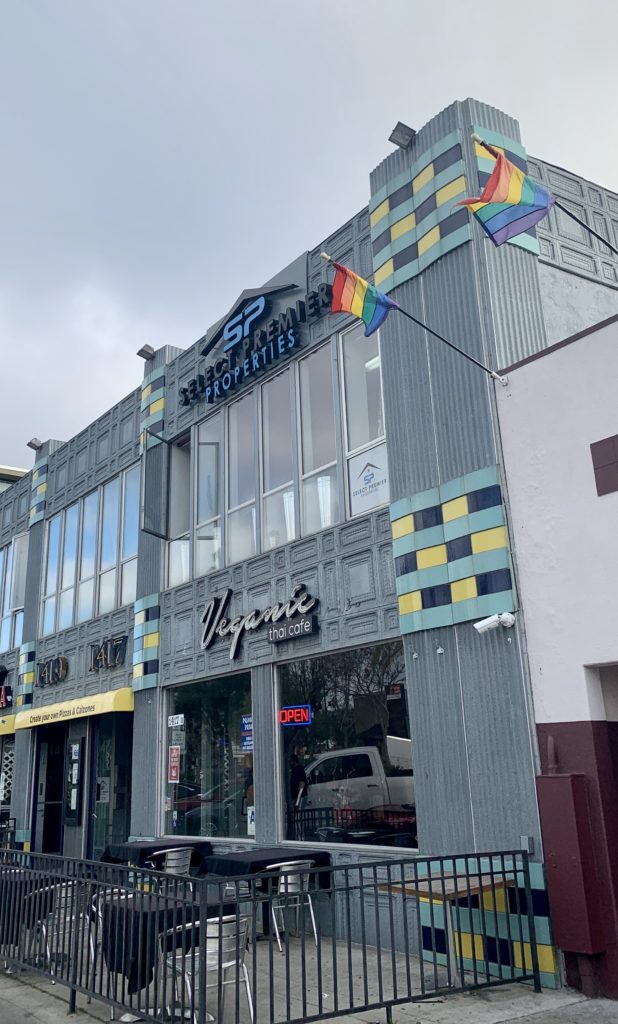
Nestled among blocks of storefronts in the
Hillcrest section of San Diego, CA, Veganic Thai Café awaits visitors with warm
lights and an abundance of vegan Thai food. I visited one Sunday afternoon
while hungry for a delicious midday meal, which I happily received by the end
of my stay.
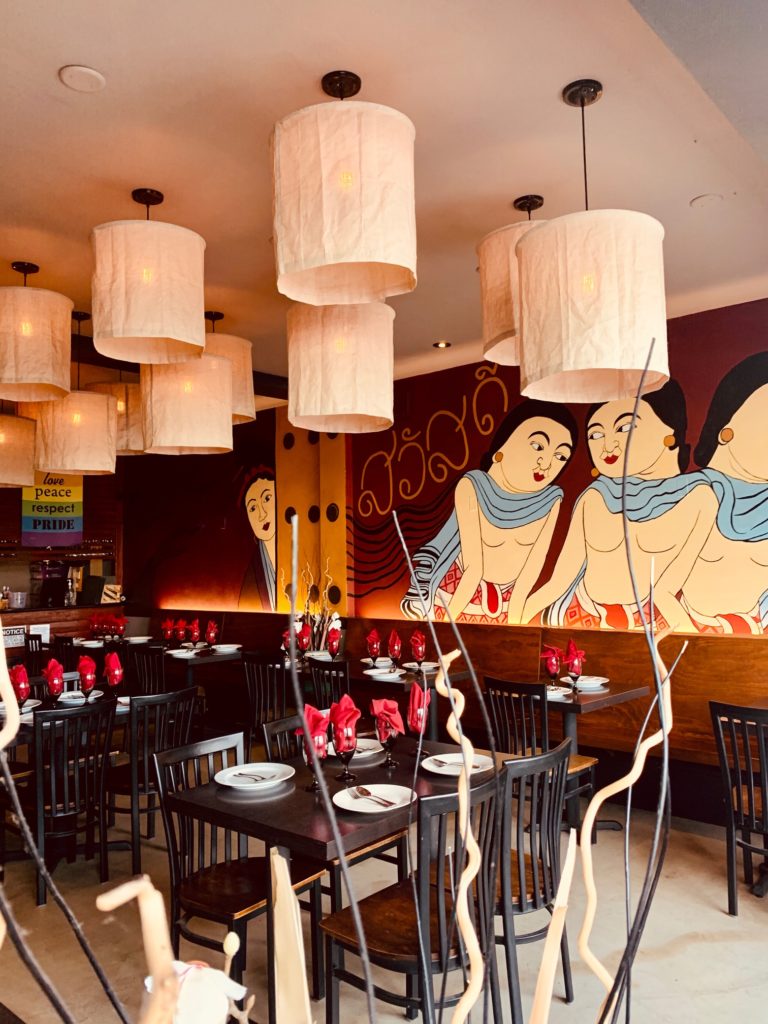
The restaurant has an elegantly designed interior, with a unique mural
covering one wall of the restaurant. After entering, the waitress quickly sat
me and my party of three near the kitchen and filled our glasses with water.
When reviewing the menu, I noted the statements on the front page
describing the key aspects of their menu. Their vegan menu products “contain no
meat, dairy products, honey, eggs, and animal products,” although they did
mention when asked that they do not pay attention to whether their sugar is
vegan or not. Additionally, as noted in their name, this café likes to
incorporate organic tofu and vegetables into their recipes. Their extensive
menu was broken up into appetizers, salads, soups, curries, specialties,
noodles and fried rice, stir-fried, desserts, and beverages.
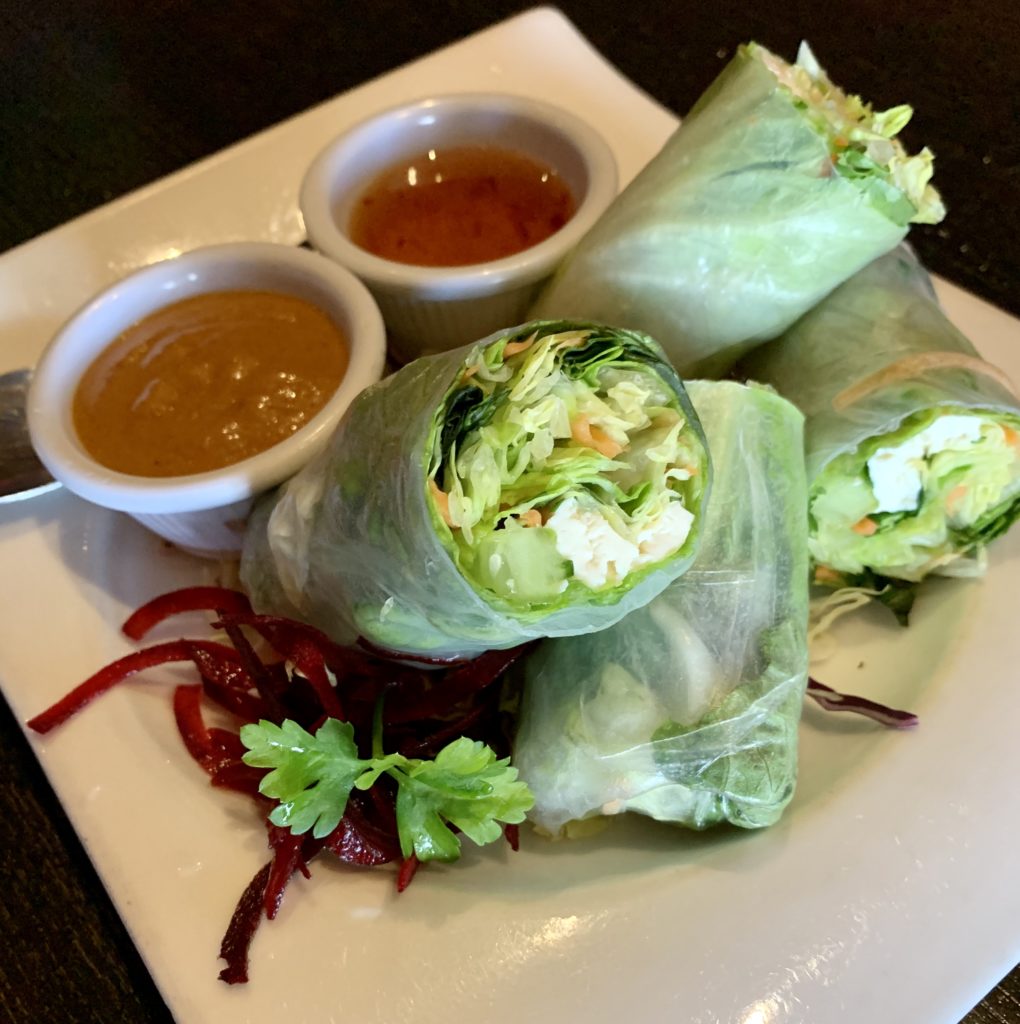
My table decided to order two appetizers of summer rolls and soy chicken
satay. The summer rolls were fresh and served with plum sauce and peanut sauce.
Their tofu was not fried, so I would recommend this order specifically for
people who prefer soft textures. Additionally, the satay “chicken” (fried soy
protein coated with curry on a kabob stick) was a very nice mix of great
flavors and textures, and a good start to the meal.
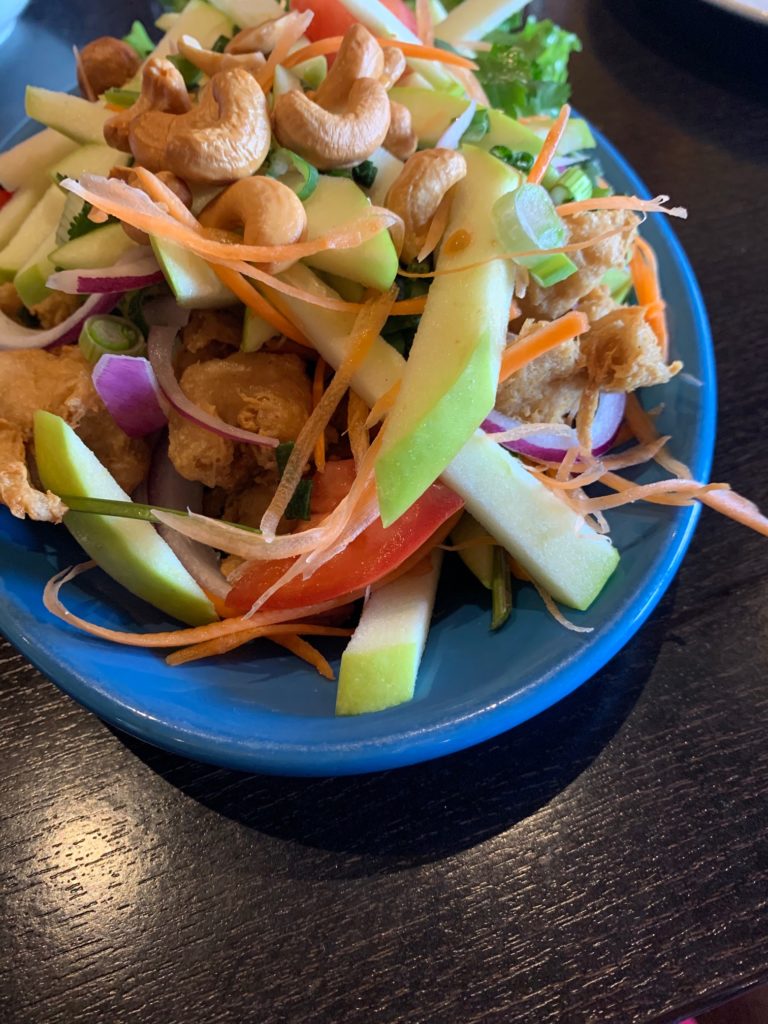
For the main course, I ordered the green apple salad with soy “chicken.”
While this is usually prepared with a spicy lime dressing, I asked for the
dressing on the side. I truly enjoyed my salad, which had carrots, red onions,
cashews, lettuce, tomato, soy chicken, green onions, and of course green apple
slices. It was a light meal that still provided protein and nutrients through
the fresh vegetables. With every crunch of crisp green apple, I became more
pleased with the dish. I was also pleased with the size of the plate and the
relative amount of soy chicken to vegetables.
While I stuck to soy chicken, Veganic Thai Café offers several other
forms of soy “meats,” such as faux shrimp, beef, duck, and tofu. This variety
is perfect for a family like mine where some members are used to non-vegan
foods because the replacement proteins very closely resemble the food they
imitate. Veganic Thai Café also caters to a wide range of spice tolerance,
offering a mix of non-spicy and spicy menu items, with a 1-10 range for the
latter.
Overall, my meal at Veganic Thai Café was satisfying and I would
recommend for vegans, vegetarians, or omnivores in San Diego to stop by and get
a taste of their own.
Several years ago, The Vegetarian Resource Group created an article on how to be prepared for a disaster. At the time, we were thinking of cases where there was a threat of a tornado, hurricane, etc. Today we’re seeing countries having to confine individuals due to the spread of a virus. The information we published is still helpful and includes a sample menu as well as list of supplies to have on hand. The article can be found here: https://www.vrg.org/nutshell/disaster.htm
According to Good Planet Foods, White Castle will be offering non-dairy cheese on any slider, starting in March 2020 in New Jersey and New York City restaurants, before moving nationally.
The contents of this posting, our
website, and our other publications, including Vegetarian Journal, are not
intended to provide personal medical advice. Medical advice should be obtained
from a qualified health professional. We often depend on product and ingredient
information from company statements. It is impossible to be 100% sure about a
statement, info can change, people have different views, and mistakes can be
made. Please use your best judgment about whether a product is suitable for
you. To be sure, do further research or confirmation on your own.
The Vegetarian Resource Group maintains an online Guide to
Vegan/Vegetarian Restaurants in the USA and Canada. Here are some recent vegan
restaurant additions. The entire guide can be found here: http://www.vrg.org/restaurant/index.php
To support the updating of this
online restaurant guide, please donate at: www.vrg.org/donate
Here are some new additions to VRG’s
guide:
Globally Local
252 Dundas St., London, ON N6A 1H3
Canada
1141 Highbury Ave. North, London, ON
N5Y 1A5 Canada
492 College St., Toronto, ON M6G 1A4
Canada
Globally Local is a 24 hour vegan
drive thru. Specializing in vegan fast food, this restaurant offers sides,
“chickUN,” all day-breakfast, dessert, burgers, tacos and more. All the
ingredients used in specific dishes can be found on their website, where you
can also place orders. Globally Local also uses a variety of faux meats
including house-made chickpea burgers, soy taco meat, house-made sausage, gyro
meat and more! These are used in dishes like the “Vopper” burger and “Famous
Style Fries”.
Happy Soul
531 13th St. West, Bradenton, FL 34205
Happy Soul offers delicious vegan,
soy-free, and gluten-free foods. On top of the creative food found on their
rotating schedule, they also offer special homemade drinks like almond milk,
kombucha, lemonade, and their most popular, the homemade tea varieties. The
restaurant also provides desserts from the attached Sugar Cubed bakery shop
like cookies and whole cakes. Customers can sit inside or enjoy the weather
with their outdoor seating, and customers can also purchase wholesale food or
catering services for events.
Kindred
7537 Maple St., New Orleans, LA 70118
Kindred many local favorites and
comfort food staples prepared completely vegan. With a focus on classics like
the Poboy Sandwich, Fried Chicken Sandwich, and Cheeseburgers, anyone is sure
to find a plant-based favorite here. Kindred also specializes in cocktails and
blended frozen drinks to enjoy along with their hearty dishes. Be sure to check
out their dessert selection as well.
Lifestyle Café
891 Oak St., Columbus, OH 43205
Waffles, pastries, overnight oats to
endless options of delicious sliders that include Bang Bang Shrymp, Sloppy Mo,
Beyond Brat, Krabby Patty, and more. A BLT or Kale salad are another delicious
option on the menu. This plant-based, wholefood kitchen also offers daily fresh
gluten-free options. Be sure to take in your own cup to receive a discount on
one of the amazing homemade blends of beetroot, turmeric, chocolate and a large
selection of local teas. Weekend brunch at this warm little spot is a must!
Modern Times at The Belmont
Fermentorium
600 SE Belmont St., Portland, OR 97214
This is a café and brewery tasting
room. Five out of seven entrees are made with Beyond “meat” products.
The Reuben fries are topped with seitan and there’s also a Panang fried rice
made with vegan spicy soy chicken.
Planetary Burger
3088 Main St., Vancouver, BC V5T 3G5
Canada
Burgers, Fries & Shakes! Not sure
which burger to get? Try the tasting flight of sliders to get an idea of what
is offered (beet burger, spicy cauliflower burger, mushroom burger, or and
classic cheeze burger). Fries are baked, not fried and super tasty. Cashew and
coconut-based milkshakes come in chocolate, vanilla, coffee, blueberry açai,
and strawberry flavor and are sweetened using dates, maple syrup, and agave.
This spot ranks high on the list by the locals so be sure not to miss!
SoBe Vegan
401 North Fort Lauderdale Beach Blvd.,
Fort Lauderdale, FL 33304
And
110 Washington Ave., Miami Beach, FL 33139
(reopening in Spring)
Calling itself the “ultimate vegan
quick casual restaurant,” SoBe Vegan aims to offer a variety of healthy, vegan
American style food to its visitors. SoBe Vegan now offers healthy burgers, hot
dogs, salads, “chick’n” and 6 different flavors of shakes. With beer and wine
offered for adults, a kids menu for children, and dog-friendly, this restaurant
is great for families who want to help SoBe Vegan meet their goal of helping
the younger generation.
Sweet Soul Bakery
454 Lake Ave., St. James, NY 11787
The mission of this little Long
Island, New York bakery is simple–create delicious and satisfying food that is
appealing to vegans and non-vegans alike. They offer tasty desserts and treats
for everyday and special occasions without preservatives or artificial
ingredients, while using organic ingredients whenever possible. Stop in to try
the soup of the day, like Loaded Baked Potato or Spicy Zucchini and follow them
on Facebook for special events like a Vegan Egg Sandwich pop up!
Spring Café
153D Centre St., New York, NY 10013
Small vegan brunch & comfort food
café. Sells burgers, salads, breakfast sandwiches, smoothies, sides, and bao
buns. Uniquely, they serve a sandwich made with a Filipino purple yam called
ube. Lots of interesting vegan burgers to choose from as well.
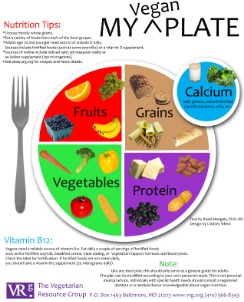
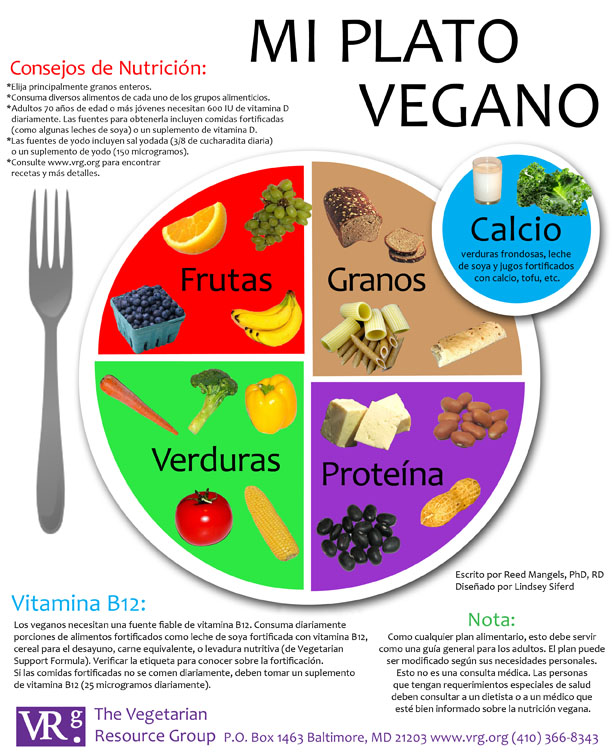
Nothing beats a simple graphic to get the vegan message out!
The Vegetarian Resource Group created My
Vegan Plate to display on outreach tables at various events. If you live in
the United States, you can request copies of this handout to distribute by
emailing us at [email protected]
How often have you wanted to make a gift in honor of a loved
one or friend but weren’t sure which charities are vegan-friendly,
pro-environmental, or pro-animal rights? Please remember The Vegetarian
Resource Group. You can make a gift in memory of a loved one or as a living
tribute to honor someone you care about on a special occasion, such as a
wedding or birth. We’ll send an acknowledgment to you and to the recipient(s)
you choose. Your gift will support educational programs and help promote
veganism.
Make checks payable to The Vegetarian Resource Group and
mail to PO Box 1463, Baltimore, MD 21203, or donate at vrg.org/donate.
The Vegetarian Resource Group (VRG) is a non-profit organization dedicated to educating the public on veganism and the interrelated issues of health, nutrition, ecology, ethics, and world hunger. We have been helping health professionals, food services, businesses, educators, students, vegans, and vegetarians since 1982. In addition to publishing the Vegan Journal, VRG produces and sells a number of books.
Sign up for our newsletter to receive recipes, ingredient information, reviews of new products, announcements of new books, free samples of products, and other VRG materials.