The Vegetarian Resource Group Blog

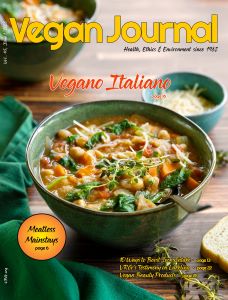
Meatless Mainstays

Posted on February 27, 2026 by The VRG Blog Editor

photo by Hannah Kaminsky

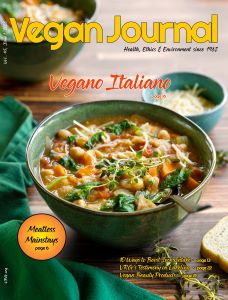
Are you searching for some new ideas for vegan main dishes? We have you covered! In the latest issue of Vegan Journal Lauren Bernick shares her recipes for BBQ Spaghetti Squash Sandwiches, King Ranch Not-Chicken Casserole, The Whole Easy Enchilada, Veggie Stew and Mash Potatoes, Cauliflower Steak and Whipped Sweet Potatoes and Greens, and Tostadas.

Read the entire article here: https://www.vrg.org/journal/vj2026issue1/2026_issue1_meatless_mainstays.php

To subscribe to Vegan Journal in the USA only, visit: www.vrg.org/member

Note from the Coordinators in Vegan Journal

Posted on February 26, 2026 by The VRG Blog Editor

For the first time in a while, we walked the floor of the Fancy Food Show held in New York City. As expected, there were many vegan food items on display from around the world.

Read our report here: https://www.vrg.org/journal/vj2026issue1/2026_issue1_note_coordinators.php

To subscribe to Vegan Journal in the USA only, visit: www.vrg.org/member

HOW MANY ADULT VEGANS ARE IN THE U.S.? HOW OFTEN DO AMERICANS EAT VEGETARIAN MEALS?

Posted on February 26, 2026 by The VRG Blog Editor

The Vegetarian Resource Group asks in a 2026 National Survey Conducted by The Harris Poll

By Reed Mangels PhD RD, Charles Stahler, and Debra Wasserman

Food companies, marketers, researchers, students, and media for years have been asking The Vegetarian Resource Group about the number of vegetarians and vegans. To help answer this question, VRG commissioned The Harris Poll to conduct a nationally representative online poll of 2,096 U.S. adults aged 18 and over. We asked:

Which one, if any, of the following best describes your eating behavior? Please select the option that best applies.

1) I never eat meat, fish, seafood, poultry, dairy, or eggs

2) I never eat meat, fish, seafood, or poultry

3) I sometimes eat meals without meat, fish, seafood, poultry, dairy, or eggs

4) I sometimes eat meals without meat, fish, seafood, or poultry

5) I usually eat meals without meat, fish, seafood, poultry, dairy, or eggs

6) I usually eat meals without meat, fish, seafood, or poultry

7) None of these

We considered those who never eat meat, fish, seafood or poultry; plus those who never eat meat, fish, seafood, poultry, dairy, or eggs, as vegetarian. We classified that second category of vegetarians who don’t eat dairy or eggs also as vegan. Because we use the word “never” and don’t just ask if a person considers him/herself vegetarian or vegan, our numbers may be lower than those reported in other polls.

Sixty-seven percent of adults in the United States always, sometimes, or usually eat vegetarian meals (including vegan), while 33% presumably never have vegetarian meals or vegan meals. Thirty-three percent of adults always, sometimes, or usually eat vegan meals. Five percent are vegetarians, with over half (3%) also being vegan.

This has strong implications for food companies, food services, and restaurants, who have to cater to different audiences.

HOW MANY AMERICAN ADULTS EAT VEGETARIAN AND VEGAN MEALS?

5% Vegetarians Including Vegans

2% Vegetarians who are not Vegans (never eat meat, fish, seafood, poultry)

3% Vegans (Never eat meat, fish, seafood, poultry, dairy, eggs)

8% Usually eat vegetarian meals (not including vegan)

10% Usually eat vegan meals

13% Always or usually eat vegan meals

10% Always or usually eat vegetarian meals (not including vegan)

23% Always or usually eat vegetarian meals (including vegan)

23% Sometimes eat vegetarian meals (not including vegan)

21% Sometimes eat vegan meals

33% Always, Sometimes, or Usually eat vegan meals.

67% Always, Sometimes, or Usually eat vegetarian meals (including vegan meals)

33% Presumably never eat vegetarian or vegan meals

PEOPLE WHO NEVER EAT MEAT, FISH, SEAFOOD, OR POULTRY

(Total percentage of vegetarians, including vegans, of U.S, adult population)

5% Total

5% male
5% female

7% Ages 18-34 – significantly higher than those ages 65 plus (2%)
5% Ages 35-44
6% Ages 45-54 – significantly higher than those ages 65 plus (2%)
4% Ages 55-64
2% Ages 65 plus – significantly lower than those ages 18-34 (7%) and ages 45-54 (6%)

6% Northeast*
5% Midwest
5% South
3% West
5% Hispanic – no significant difference compared to White or Black
8% Black (non-Hispanic) – significantly higher than White non-Hispanic (4%)

4% White (non-Hispanic) – significantly lower than Black non-Hispanic (8%)

6% Less than $50,000 annual household income
4% $50,000 – $74,999 annual household income
4% $75,000 – $99,999 annual household income
5%  $100,000 or more annual household income.

4% Homeowner – significantly lower than renters (7%)

7% Renter – significantly higher than homeowners (4%)

4% Married

6% Not Married

6% Urban

5% Suburban

3% Rural

The demographics for those more likely to be vegetarian include adults ages 18-34 (7%) and 45-54 (6%) compared to older adults ages 65 plus (2%), as well as renters (7%) vs. homeowners (4%). Black (non-Hispanic) adults are twice as likely as White (non-Hispanic) adults to be vegetarian (8% vs. 4%).

PEOPLE WHO NEVER EAT MEAT, FISH, SEAFOOD, POULTRY, DAIRY, OR EGGS

(Total Number of vegans as percentage of U.S, adult population)

3% Total

3% male
3% female

4% Ages 18-34
2% Ages 35-44
4% Ages 45-54
1% Ages 55-64
1% Ages 65 plus

4% Northeast*
3% Midwest
2% South
2% West
1% Hispanic – significantly lower than Black (non-Hispanic) (6%)
6% Black (non-Hispanic) – significantly higher than both Hispanic (1%) and White (non-Hispanic (2%)

2% White (non-Hispanic) – significantly lower than Black (non-Hispanic) (6%)

3% Less than $50,000 annual household income
2% $50,000 – $74,999 annual household income
1% $75,000 – $99,999 annual household income
3% $100,000 or more annual household income.

2% Homeowner – significantly lower than renters (4%)

4% Renter – significantly higher than homeowners (2%)

2% Married

3% Not Married

3% Urban

2% Suburban

2% Rural

The demographics of those more likely to be vegan include Black (non-Hispanic) adults who are significantly more likely than both Hispanic (1%) or White (non-Hispanic) adults (2%) and renters who are twice as likely as homeowners (4% vs. 2%).

PEOPLE WHO ALWAYS, SOMETIMES, OR USUALLY DO NOT EAT MEAT, FISH, SEAFOOD, POULTRY, DAIRY, OR EGGS

(Total Number of vegans plus people usually and sometimes eating vegan meals, as percentage of U.S, adult population).

This would appear to be the main market for companies marketing vegan items, though there can be crossover from other groups. For example, individuals or families choosing plant milks because of lactose intolerance, may be eating other animal products. Anecdotally, you may observe this at the supermarket checkout line.

33% Total

32% male
33% female

38% Ages 18-34 – significantly higher than those ages 55-64 (28%) and 65 plus (29%).
34% Ages 35-44
34% Ages 45-54
28% Ages 55-64 – significantly lower than those ages 18-34 (38%)
29% Ages 65 plus – significantly lower than those ages 18-34 (38%)

38% Northeast*
31% Midwest
33% South
31% West
29% Hispanic
37% Black (non-Hispanic)

33% White (non-Hispanic)

31% Less than  $50,000 annual household income
31% $50,000 – $74,999 annual household income
31% $75,000 – $99,999 annual household income
34% $100,000 or more annual household income.

32% Homeowner

37% Renter

35% Married

32% Not Married

35% Urban – significantly higher than rural (28%)

34% Suburban

28% Rural – significantly lower than urban (35%)

The demographics more likely to be eating vegan meals are 18- to 34-year-olds compared to those ages 55 plus (38% vs. 28% ages 55-64 and 29% ages 65 plus), and those living in urban areas compared to those who live in rural areas (35% vs. 28%). Though there isn’t as much difference between all groups as people might expect. So they all seem to be potential markets, depending on your product, and marketing strategy. Price of the product may have different influences for various categories. For example, an expensive meat analog or restaurant meal may be affordable for one group, but not another. A large package of food may be suitable for one family unit, but not a smaller family or single person. Thus, some individuals consuming vegan meals may be looking for meat analogs, while others may be seeking inexpensive and less processed beans.

* The Northeast Includes CT, ME, MA, NH, NJ, NY, PA, RI, and VT. The Midwest includes IL, IN, IA, KS, MI, MN, MO, NE, ND, OH, SD, and WI. The South includes AL, AR, DC, DE, FL, GA, KY, LA, MD, MS, NC, OK, SC, TN, TX, VA, and WV. The West includes AK, AZ, CA, CO, HI, ID, MT, NV, NM, OR, UT, WY, and WA.

With U.S. adults 18 and over numbering about 267 million**, we can estimate the number of vegetarians in the U.S. adult population, (5%) based on this poll, to be approximately thirteen million adults. Vegans included in the vegetarian figure (3% would be around eight million adults.

**https://datacenter.aecf.org/data/tables/6538-adult-population-by-age-group#detailed/1/any/false/1096,2545,1095,2048,574,1729,37,871,870,573/2803/13515,13516

SURVEY METHOD: This survey was conducted online within the United States by The Harris Poll on behalf of The Vegetarian Resource Group from January 6-8, 2026, among 2,096 adults ages 18 and older. The sampling precision of Harris online polls is measured using a Bayesian credible interval. For this study, the sample data is accurate to plus or minus 2.5 percentage points using a 95% confidence level. For more information, contact The Vegetarian Resource Group at [email protected] or (410) 366-8343.

To see other vegan and vegetarian polls, go to www.vrg.org/nutshell/faq.htm#poll 

For more information on veganism, vegan recipes, ingredients, vegan college scholarships, and vegetarian restaurants in the U.S. and Canada, see www.vrg.org
Can a Vegan Diet Be Anti-Inflammatory?

Posted on February 25, 2026 by The VRG Blog Editor

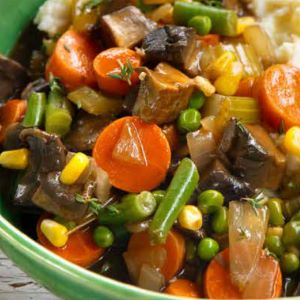
In the Nutrition Hotline column of the latest issue of Vegan Journal, Reed Mangels, PhD, RD, answers the question Can a Vegan Diet Be Anti-Inflammatory? Read how she comes to this conclusion: A vegan diet emphasizing whole foods and with little to no highly processed foods fits with this dietary pattern described as being associated with a lower risk of chronic inflammation. Thus, a whole foods vegan diet can be considered an anti-inflammatory diet. Studies that have found that a vegan diet is associated with lower blood concentrations of C-reactive protein, a marker of inflammation, support this conclusion.

Read the entire column here: https://www.vrg.org/journal/vj2026issue1/2026_issue1_nutrition_hotline.php

To subscribe to Vegan Journal in the USA only, visit: www.vrg.org/member

Warm Up with a Bowl of Vegan Soup!

Posted on February 25, 2026 by The VRG Blog Editor

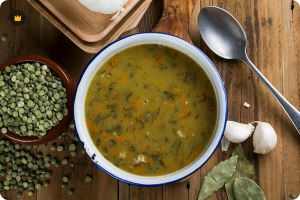
photo from Freepik

We don’t know about you, but we enjoy soup any day, but especially on a cold winter evening. A previous VRG article titled “Hot, Hearty Soups for Cold Winter Days,” provides numerous vegan recipes you’re certain to enjoy.

The entire article can be read here: https://www.vrg.org/journal/vj2005issue1/2005_issue1_soups.php

To subscribe to Vegan Journal, visit www.vrg.org/member

Food Joy Reviewed in Vegan Journal

Posted on February 24, 2026 by The VRG Blog Editor

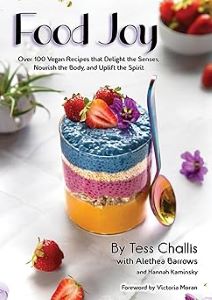
Food Joy is written by Tess Challis, with contributions from her daughter, Alethea Barrows. The book showcases stunning photography by Vegan Journal Senior Editor Hannah Kaminsky. Together, they’ve created a vibrant and inviting cookbook filled with inspiring plant-based recipes for the whole family.

Read Vegan Journal’s review of this book: https://www.vrg.org/journal/vj2026issue1/2026_issue1_book_reviews.php

To subscribe to Vegan Journal in the USA only, visit: www.vrg.org/member

What are Some of the Brands of Plant Milks that Can Be Used in the National School Lunch Program?

Posted on February 24, 2026 by The VRG Blog Editor

by Reed Mangels, PhD, RD

Schools that participate in the National School Lunch Program and School Breakfast Program are permitted to provide an allowable fluid milk substitute for cow’s milk for children without a disability who cannot drink cow’s milk (for example, for vegan children). Schools are required to provide a substitute for children with medical conditions such as a life-threatening cow’s milk allergy.

Fluid milk substitutes, such as plant milks, must meet specified nutritional standards, be requested in writing by a medical authority or the child’s parent or legal guardian, and the school must cover any expenses that exceed program reimbursements (1).

For a plant milk to be considered an allowable fluid milk substitute for the National School Lunch Program or the School Breakfast Program, a cup of plant milk must contain at least 276 mg of calcium, 8 grams of protein, 500 IU of vitamin A, 100 IU of vitamin D, 24 mg of magnesium, 222 mg of phosphorus, 349 mg of potassium, 0.44 mg of riboflavin, and 1.1 mcg of vitamin B12. The milk can be flavored or unflavored (1).

We wondered which plant milks meet these standards. The Connecticut State Department of Education has developed a helpful list of products that are acceptable for use in their school lunch programs (2, 3). Note that other brands of acceptable milk may be available in other areas of the country. Some national brands on this list include:

  • Pacific Foods Ultra Soy Original Plant-based Beverage quart aseptic container (food service must pour 8-ounce portions)
  • Kikkoman Pearl Organic Soymilk Smart Original, Smart Creamy Vanilla, Smart Chocolate, 8 oz aseptic container
  • Ripple Plant-based Milk Vanilla or Chocolate, 8 oz aseptic container
  • 8th Continent Soymilk Original or Vanilla half gallon refrigerated container (food service must pour 8-ounce portions)

Silk Soy Original also appears to meet the USDA’s requirements. There may be other acceptable products that are not on this list.

This information may be helpful if you approach a local school to request a fluid milk substitute. At this time, the school is not required to meet your request for a child without a disability. Each school foodservice decides which, if any, allowable fluid milk substitutes it uses. If one product is offered and the student does not accept that product, the school foodservice is not required to offer a different substitute.

References

  1. Food and Nutrition Service, Department of Agriculture. Child Nutrition Programs: Meal Patterns Consistent With the 2020–2025 Dietary Guidelines for Americans. 7 CFR Parts 210, 215, 220, 225, and 226. https://www.govinfo.gov/content/pkg/FR-2024-04-25/pdf/2024-08098.pdf. 2024.
  2. Connecticut State Department of Education. Allowable Fluid Milk Substitutes for Non-disability Reasons in the School Nutrition Programs. https://portal.ct.gov/-/media/SDE/Nutrition/NSLP/SpecDiet/Milk_Substitutes_SNP.pdf, revised 2025.
  3. Connecticut State Department of Education. List of Acceptable Foods and Beverages. Dairy Alternatives. https://portal.ct.gov/-/media/sde/nutrition/hfc/fblist/acceptablefoodslist17.pdf?rev=933d1db3f7914464af4cb93f6f6c81bd&hash=1BBDF40F428A86726549F49683315792. Revised, November 2025.

For more information about school meals see:

USDA Issues Revisions to Child Nutrition Programs

Getting Vegan Food into Schools

Vegan Options in a California School

Vegan Options in Portland, ME School Lunch

The contents of this website and our other publications, including The Vegan Journal, are not intended to provide personal medical advice. Medical advice should be obtained from a qualified health professional. We often depend on product and ingredient information from company statements. It is impossible to be 100% sure about a statement, info can change, people have different views, and mistakes can be made. Please use your best judgment about whether a product is suitable for you. To be sure, do further research or confirmation on your own.

10 Ways to Boost Your Iron Intake on a Vegan Diet

Posted on February 23, 2026 by The VRG Blog Editor

Vegans looking to boost their iron intake have lots of options. In the latest issue of Vegan Journal, you will find a list of some higher-iron vegan foods, all with more than 3 milligrams per serving, some of which may be surprising sources of iron.

Read the entire article here: 10 Ways to Boost Your Iron Intake

To subscribe to Vegan Journal in the USA only, visit: www.vrg.org/member

TheBeHive. Vegan cheese and meat deli owner Ben Stix talks about ethical business

Posted on February 23, 2026 by The VRG Blog Editor

In VRG’s Work with Purpose series, Vegan Journal editor Hannah Kaminsky talks to TheBeHive owner about starting an ethical business. See the video at https://youtu.be/_dMglrK4GrM

Work with Purpose is Vegan Journal’s series on ethical entrepreneurs. This episode features The Behive from Austin, TX and Nashville, TN. Tips for starting a business with values. Vote with your dollar. Treat people well and take care of people in your business. Try stuff. Have humility to change the plan. Ways to make a difference. Order Vegan pepperoni, turkey, taco meat, and more. Vegan is just food. Peanut butter is vegan.

For info on other careers with values, see https://www.vrg.org/links/JobSearch.htm

To join The Vegetarian Resource Group and receive Vegan Journal, go to https://www.vrg.org/member/

Vegan Restaurants Added to VRG’s Guide to Veggie Restaurants in the USA and Canada

Posted on February 20, 2026 by The VRG Blog Editor

photo from Long Count

The Vegetarian Resource Group maintains an online Guide to Vegan/Vegetarian Restaurants in the USA and Canada. Here are some recent vegan restaurant additions. The entire guide can be found here: www.vrg.org/restaurant

To support the updating of this online restaurant guide, please donate at: www.vrg.org/donate

Here are some new additions to VRG’s guide:

Long Count, 155 Ave. B, New York, NY 10009

The theme at Long Count is to experience the way “… time transforms flavor — through wines…”  “slow-fermented sauces…” and more. Here, the goal is for the food to complement the wine. Some sample plates are Arancini with preserved truffle, miso aioli, and tempeh parmesan; Shiitake showcasing shoyu–porcini glaze, fresh wasabi, and chive blossom; King Trumpet offering cashew miso, poached kohlrabi, and chamomile butter; and Rainbow Carrots with caramelized sunchoke miso, anise hyssop oil, and kale chips to note a few. When it’s time for dessert, there’s Hazelnut Cake accompanied by butterfly pea–poached pears, white chocolate ganache, and chocolate–orange ice cream.

Mr. Charlie’s, 1560 Garnet Ave., San Diego, CA 92109

Here, you will find timeless American classics with a plant-based twist, such as “frowny meals,” “not a double double,” “not a cheeseburger,” not a chicken sandwich,” “not chicken nuggets,” and everyone’s favorite, french fries!

Sabor a Vida Café & Deli, 735 Shadowridge Dr., Vista, CA 92083

Focused on kindness, sustainability and environmental as well as human health, Sabor a Vida Café & Deli endeavors to use house-made sauces and local, organic ingredients whenever possible. Besides various Avocado Toasts, they have Super Food Toasts like homemade Roasted Garlic Cashew Spread with kale and pumpkin seeds. Sandwiches have names that honor natural elements like Rainbow with vegan ham, bacon, lettuce, tomato, onion, avocado, and Provolone. Panini offerings include Love with spinach, roasted red pepper, mozzarella, and pesto spread, and many others. For Wraps and Burritos, you may choose Flour or Spinach. Eden wraps spinach, edamame beans, carrots, cucumber, avocado, and homemade Cashew Cream. Lightning Burrito strikes with hash brown, beans, Just Egg, vegan ham, tomato, avocado, and cheddar. One of their Salad options is Agua with greens, tomato, black beans, marinated tofu, avocado, roasted sesame seeds, and homemade coconut Ranch dressing. A Sabor Bowl example is Bosque with quinoa, black beans, kale, chickpea tuna, feta cheese, and homemade Jalapeño cashew cream. They serve a large menu of coffee and tea drinks, soft drinks, Mexican Hot Chocolate, and more. One of their many Smoothies is Black Forest, featuring strawberries, blueberries, bananas, cacao nibs, cacao powder, almond milk, and agave. Among their several Vida Bowls is Tropical Delight showcasing banana, mango, pineapple coconut milk, fresh ginger, turmeric powder, maple syrup, toasted coconut, and chia seeds.

Street Beet, 1800 Michigan Ave., Detroit, MI 48216

Street Beet aims to create modern, “nostalgic…plant-based twists on classic comfort foods…” The large Brunch menu offers Crab Cake Benedict–English muffins, crab cakes, arugula, poached “eggs”, hollandaise, old bay, and chives; garlic butter grilled Shrimp and (Cheesy) Grits with scallion; Breakfast Hash of Home fries, sausage, scrambled or sunny “egg”, grilled onions, and peppers, cheddar cheese, Pico, and spicy mayo to name a few. Besides Wraps, Sandwiches, Salads, Burritos, Burgers, Franks, Biscuits and Gravy, some Sides are Hot Honey Brussels Sprouts with Violife feta, fried shallots, and more. They offer a Kids Menu, too. Soft Beverages include Hot Cocoa, Tea, Coffee, Sodas, Non-alcoholic Mimosas and Bloody Mary, Espresso Martini, Spiced Citrus Mule and Lavender Lemonade. They have Floats and Milkshakes like Coffee Shake with chocolate sauce, and cocoa powder, Chocolate Malt with sprinkles, Cookie Butter with salted caramel and cookie crumble, Strawberry and Classic Vanilla—all with whipped cream. For Desserts there’s Bread Pudding, Salted Maple Pie with whipped cream and cinnamon, “gooey” warm Cinnamon Roll with cream cheese frosting and Classic Sundae–three scoops of vanilla ice cream, chocolate sauce, salted caramel, and house-made whipped cream.

Throop Soups, 737 Dunmore St., Throop, PA 18512

Throop Soups is a plant-based restaurant serving seasonal salads, soups, sandwiches/wraps, smoothies, and oat bowls. The southwest salad includes black beans, veggies, pico de gallo, and hummus with chipotle garlic vinaigrette. The roasted cauliflower soup is a cheesy and creamy roasted cauliflower soup with roasted garlic and nooch. Vegan crab cakes are served on a multigrain bun with tomato, lettuce, and tartar sauce. Smoothie options on the menu include pistachio cake, mint chocolate chip, and carrot cake.

Veggie Life, 1732 N Berwick Rd., Wells, ME 04090 

Veggie Life features vegan comfort foods. Shareables include creamy buffalo chik’n dip served with toasted crostini, as well as spinach rangoon wontons filled with spinach, scallion, and cheese. Plantstrami Sammie is made of vegan pastrami with Dijon mustard on grilled marble rye. Signature pizzas include white pizza with an alfredo base, as well as animal lovers pizza with meatballs, tempeh sausage, and bacon. Sunday brunch includes savory classics such as vegan eggs benedict with English muffins, vegan ham, and poached vegan egg drizzled with house-made hollandaise; blueberry bliss waffles served with maple syrup; and berry bliss smoothie bowl topped with crunchy granola. Reservations not required but encouraged.

  • Donate

  • Subscribe to the blog by RSS

  • VRG-NEWS

    Sign up for our newsletter to receive recipes, ingredient information, reviews of new products, announcements of new books, free samples of products, and other VRG materials.

    Your E-mail address:
    Your Name (optional):


↑ Top