The Vegetarian Resource Group Blog

Vegan “Fish” Products

Posted on August 07, 2025 by The VRG Blog Editor

photo from Gardein

Are you searching for vegan “fish” alternatives? If so, here’s a list of some products you might want to try out. Many of these items are now sold in stores and online.

Akua Krab Cakes

Gardein Golden Frozen Fishless Filet

Gardein Mini Crispy Crabless Cakes

Jinka Tuna

Loma Linda Tuno in Three Varieties

Lily’s Vegan Pantry Vegan Fish

Lily’s Vegan Pantry Golden Fish Fillet

Lily’s Vegan Pantry Vegan Crab Steak

Lily’s Vegan Pantry Vegan Salmon

Lily’s Vegan Pantry Vegan Scallops

Lily’s Vegan Pantry Vegan Shrimp Ball

Lily’s Vegan Pantry Vegan Tuna

Lily’s Vegan Pantry Squid

Lily’s Vegan Pantry Vegan Lobster

Lily’s Vegan Panty Vegan Red Spot Shrimp

Mind Blown Coconut Shrimp

Mind Blown Crab Cakes

Mind Blown Dusted Shrimp

Save da Sea Salmon and Tuna Salad

Quick Solution for Growing Too Many Tomatoes

Posted on August 07, 2025 by The VRG Blog Editor

By Reed Mangels, PhD, RD

I don’t know about you, but tomato season is never long enough for me! Nothing compares to the flavor of a fresh, local tomato, preferably just picked and still warm from the sun. I reluctantly buy an occasional tomato in the winter and am reminded, once again, how these don’t have the taste or texture of summer tomatoes.

So, I accept surplus tomatoes from friends with gardens and, at the farmers market, buy more tomatoes than I could possibly eat. When that glut of tomatoes happens, I have 2 tried and true solutions for easily preserving summer’s tomatoes.

Easy solution Number 1: Cut and freeze

Supplies needed: Cutting board, knife, freezer containers, measuring cup or kitchen scale (optional)

Wash ripe tomatoes. Remove the core, cut into small pieces, place in freezer container and freeze until you need tomatoes. If you freeze 14 ounce portions (a scant 2 cups or use a scale), you can easily use a thawed portion the same way you’d use a 14-ounce can of diced tomatoes. I don’t mind tomato skin or seeds in my dishes but if that’s a concern, you can put tomatoes in boiling water for one minute, transfer them to an ice bath, and then easily remove the tomato skin with your fingers. Cut the peeled tomatoes in half and scoop out the seeds with clean fingers or a spoon and then cut into pieces for freezing.

Easy solution Number 2: Oven roast and freeze

Supplies needed: Cutting board, knife, baking sheet, immersion blender or food processor, freezer containers

Wash ripe tomatoes, core, and cut them in half. Place on a parchment-lined cookie sheet, place a clove of garlic in each tomato half, drizzle with a little olive oil and sprinkle with salt and/or pepper to taste. Bake at 225 degrees until they are very soft. This could take several hours or longer. Once the tomatoes have baked and cooled, you can put them, the garlic, and any juices left after roasting in a bowl and purée into a sauce with an immersion blender. Alternatively, put roasted tomatoes, garlic, and any juices into a food processor and pulse into a chunky sauce. Freeze in containers of your choice. When thawed, the sauce can be served over pasta or used as the base for a soup or sauce.

I should note that I haven’t tried canning tomatoes. It’s simpler, in my opinion, to freeze them. If canning is something you want to try, be sure to follow proper procedures including ensuring safe acidity by adding bottled lemon juice or citric acid. USDA’s Complete Guide to Home Canning is a reliable reference for canning tomatoes.

For more tomato ideas see:

What To Do With All Those Tomatoes

Quick and Easy Dishes Featuring Fresh Tomatoes

Tomato Heaven

Burrito on My Plate shows viewers the water footprint of a vegan versus a meat-based burrito

Posted on August 06, 2025 by The VRG Blog Editor

The Vegetarian Resource Group has a graphic called Burrito on My Plate, which shows viewers the water footprint of a vegan versus a meat-based burrito. It takes 225 gallons of water to make a vegan burrito without tofu and 253 gallons of water to make a vegan burrito with tofu. In comparison, it takes 541 gallons of water to make a beef burrito.

The Burrito on My Plate Graphic can be seen here: https://www.vrg.org/environment/BurritoOnMyPlate.pdf

The article detailing how we came up with the numbers of gallons of water needed to produce each type of burrito can be found here: https://www.vrg.org/journal/vj2017issue2/2017_issue2_burrito_plate.php

WHAT DO YOU EXPECT FROM A VEGGIE BURGER?

Posted on August 06, 2025 by The VRG Blog Editor

istockphoto by franny-anne

The Vegetarian Resource Group and Vegan Journal commissioned YouGov to ask the following question in a national YouGov adult poll. Listed also are the results.

Which of the following, if any, do you expect from a food labeled as a veggie burger? Please select all that apply.

24%  To be able to use it in a similar way in cooking as a burger from a cow.

6%  To have the same amount of saturated fat and cholesterol as a burger from a cow.

6%  To contain meat from a cow.

9%  To only be something that I would purchase if costs less than a burger from a cow.

41%  The front of the burger package will identify the main ingredient (such as soy or beans) and say something like “black bean-based veggie burger.”

15%  The front of the burger package will say “veggie burger” but will not identify the main ingredient or ingredients.

11%  To have the same amount of iron as a as a burger from a cow.

10%  To have vitamin B12 added.

43%  To be labeled “plant based burger”

31%  To be labeled “vegan burger”

21%  None of these.

Most people (94%) would not expect a veggie burger to have meat from a cow, and only 6% expect a veggie burger to have same amount of fat and cholesterol as a burger from a cow. As few as 9% said they would only purchase a veggie burger if it costs less than a burger from a cow. Cost had less impact than we expected. Over four in 10 (41%) would expect the main ingredient identified on the front of the package. There was a large segment of the population (43%) expecting a veggie burger to be labeled “plant-based burger” and a large segment (31%) expecting it to be labeled “vegan burger.” So a marketer has to consider their strategy.

All figures, unless stated otherwise, are from YouGov Plc. Total sample size was 2,769 adults. Four percent were vegetarian (Never consume meat, fish, seafood or poultry) while around 96% consumed one or more of these products.  Fieldwork was undertaken between February 6–10, 2025 online in the United States. The figures have been weighted and are representative of all U.S. adults aged 18 and over. Results are based on a sample and are subject to statistical errors normally associated with sample-based information. For the above questions, we can have a 95% confidence level that VRG’s numbers from YouGov are plus or minus one percent (margin of error). Between 15% and 40%, and between 60% and 85%, the margin of error is plus or minus two percent. Be careful when comparing poll numbers to other polls or countries, as questions and definitions of vegetarian and vegan are often different.

You can see other Vegetarian Resource Group polls at https://www.vrg.org/nutshell/faq.htm#poll

Follow The Vegetarian Resource Group on Instagram!

Posted on August 05, 2025 by The VRG Blog Editor

Be sure to follow The Vegetarian Resource Group on Instagram: @vegetarianresourcegroup

Celebrate National Couscous Day

Posted on August 05, 2025 by The VRG Blog Editor

Couscous istockphoto

Today is National Couscous Day! Here’s some quick and easy ideas on how to prepare vegan dishes with couscous: https://www.vrg.org/journal/vj2015issue1/2015_issue1_cooking_tips.php

Heading to the Ocean City, NJ beach? Be sure to stop at these establishments.

Posted on August 04, 2025 by The VRG Blog Editor

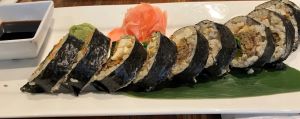
Vegan Pasta Primavera

If you happen to be heading towards the Ocean City, New Jersey shore, be sure to visit these restaurants offering veggie food.

Bashful Banana clearly labels vegan options on their menu. We sampled their Vegan Pasta Primavera and their Spicy Orange Rice Bowl with Tofu. Both dishes were delicious and quite filling. The following day we ate a Vegan Quesadilla (ask for vegan cheese and leave off the sour cream) and the Vegan Thai Tofu Scramble Rice Bowl for lunch. Again, both offerings were quite good and filling. Bashful Banana also offers frozen Banana Whip.

Spicy Orange Rice Bowl with Tofu

Bashful Banana is located on the Ocean City Boardwalk. For information, see: http://www.mybashfulbanana.com

Sautéed Tofu with Veggies

     A short drive from Ocean City, you might want to visit Lil Saigon in Northfield, NJ. They label vegan options on their menu and we tried Sautéed Tofu with Veggies and their Eggplant Hot Pot. Both dishes were beautifully presented. To be on the safe side, when ordering remind them that you do not want fish sauce in your vegan dishes.

Eggplant Hotpot

Lil Saigon is located in Northfield, NJ. For more info, see: https://www.lil-saigon.com

Iodine and Cruciferous Vegetables

Posted on August 04, 2025 by The VRG Blog Editor

istockphoto

by Reed Mangels, PhD, RD

A reader contacted us to ask if cruciferous vegetables inhibit iodine absorption. To answer this question, it’s important to know a little about why we need iodine and what cruciferous vegetables are.

Iodine is an essential mineral that is used by the thyroid gland to make thyroid hormones. These hormones play an important role in controlling metabolism and are needed for infant and child development. Vegans get iodine from iodized salt, sea vegetables, dietary supplements, and to some extent, from plant foods. The iodine content of plant foods depends on factors such as the concentration of iodine in the soil where the plants were grown (1). When foods or supplements containing iodine are used, the iodine is absorbed and transported in the blood to the thyroid gland.

Cruciferous vegetables are what we think of as the cabbage family and include broccoli, Brussels sprouts, cauliflower, kale, kohlrabi, and cabbage. These vegetables, along with soy, beans, sweet potatoes, cassava, and some other foods, contain substances called goitrogens that interfere with the thyroid gland taking up iodine from the blood. This could lead to a reduced production of thyroid hormones.

According to several authoritative sources, goitrogens are mainly a problem for people who do not have an adequate amount of iodine in their diet or for those who consume large amounts of these foods (2-4), especially in raw form (5). Large amounts mean, for example, a diet which is based mainly on cassava. A recent review concluded that cruciferous vegetables “are safe for thyroid function, especially when the proper iodine supply is provided” (4).

It’s important to have an adequate intake of iodine, which for vegans probably means using iodized salt and/or taking a supplement that contains iodine (6). With an adequate intake of iodine, it’s unlikely that eating cruciferous vegetables will interfere with iodine uptake by the thyroid gland.

To read more about getting adequate iodine on a vegan diet see:

Iodine in the Vegan Diet

Food Sources of Iodine

Am I Getting Enough Iodine?

References

  1. Ershow AG, Skeaff SA, Merkel JM, Pehrsson PR. Development of databases on iodine in foods and dietary supplements. Nutrients. 2018;10(1):100.
  2. National Institutes of Health. Office of Dietary Supplements. Iodine. Fact sheet for health professionals. https://ods.od.nih.gov/factsheets/Iodine-HealthProfessional/. 2024.
  3. Oregon State University, Linus Pauling Institute, Micronutrient Information Center. Iodine. https://lpi.oregonstate.edu/mic/minerals/iodine. 2024.
  4. Institute of Medicine, Food and Nutrition Board. Dietary Reference Intakes for Vitamin A, Vitamin K, Arsenic, Boron, Chromium, Copper, Iodine, Iron, Manganese, Molybdenum, Nickel, Silicon, Vanadium, and Zinc. Washington, DC: National Academy Press, 2001.
  5. Galanty A, Grudzińska M, Paździora W, et al. Do brassica vegetables affect thyroid function?-A comprehensive systematic review. Int J Mol Sci. 2024;25:3988.
  6. Mangels R. Am I getting enough iodine? Vegan Journal. 2024, Issue 3.

The contents of this website and our other publications, including Vegetarian Journal and Vegan Journal, are not intended to provide personal medical advice. Medical advice should be obtained from a qualified health professional. We often depend on product and ingredient information from company statements. It is impossible to be 100% sure about a statement, info can change, people have different views, and mistakes can be made. Please use your best judgment about whether a product is suitable for you. To be sure, do further research or confirmation on your own.

Maryland Vegan Restaurant Month

Posted on August 01, 2025 by The VRG Blog Editor

Maryland Vegan Restaurant Month runs August 1st through 31st, 2025. Be sure to try out all the restaurants participating this month including Harmony Bakery, Land of Kush, and Oleum in Baltimore City, plus many other establishments.

For more information, see: https://www.mdveganeats.com/

Enjoy Making Dessert without Turning Your Oven On!

Posted on August 01, 2025 by The VRG Blog Editor

Peaches and Cream Icebox Cake photo by Hannah Kaminsky

Vegan Journal Senior Editor Hannah Kaminsky previously penned an article called “Keep Your Cool! Refreshing No-Bake Desserts”.  Recipes include Peaches and Cream Icebox Cake, Orange Dream Ice Cream Bars, Raspberry White Chocolate Macaroons, Root Beer Float Pie, and Bananas Foster Crème Brûlée.

You can find the entire piece here: https://www.vrg.org/journal/vj2019issue3/2019_issue3_keep_cool.php

Subscribe to Vegan Journal in the USA only by visiting www.vrg.org/member

  • Donate

  • Subscribe to the blog by RSS

  • VRG-NEWS

    Sign up for our newsletter to receive recipes, ingredient information, reviews of new products, announcements of new books, free samples of products, and other VRG materials.

    Your E-mail address:
    Your Name (optional):


↑ Top