The Vegetarian Resource Group Blog

Too Hot to Cook! 25 Ideas for Hot Weather Meals

Posted on June 30, 2025 by The VRG Blog Editor

photo from Freepik

When the temperature outside climbs high, no one wants to slave around the stovetop or oven. Reed Mangels, PhD, RD, offers 25 Ideas for Hot Weather Meals in the latest issue of Vegan Journal.

Find her suggestions here: https://www.vrg.org/journal/vj2025issue2/2025_issue2_too_hot.php

To subscribe to Vegan Journal in the USA only, visit www.vrg.org/member

Food Safety Concerns During Pregnancy

Posted on June 27, 2025 by The VRG Blog Editor

photo from Freepik

The latest issue of Vegan Journal features the topic of Food Safety Concerns During Pregnancy by Reed Mangels, PhD, RD, in her Nutrition Hotline column. Reed states, “While no one wants to get sick, foodborne illnesses are an especial concern during pregnancy. Changes in the immune system in pregnancy result in an increased risk for illness. Listeria, a foodborne illness, can cause miscarriage, premature delivery, stillbirth, and serious sickness for a newborn baby. Listeria outbreaks are often associated with deli meats and soft cheeses, but have also been caused by fruits and vegetables.”

Learn more here: https://www.vrg.org/journal/vj2025issue2/2025_issue2_nutrition_hotline.php

To subscribe to Vegan Journal in the USA only, visit www.vrg.org/member

Cooking with Zucchini

Posted on June 27, 2025 by The VRG Blog Editor

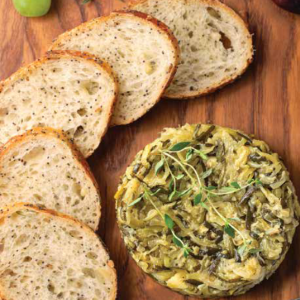
Zucchini Pâté photo by Hannah Kaminsky

Hannah Kaminsky is the Senior Editor of Vegan Journal. She is the author of several vegan cookbooks and wrote an article titled “From A to Zucchini” in an issue of Vegan Journal. Zucchini is a relatively inexpensive vegetable and easy to find in stores. Enjoy recipes for Greek Zucchini Carpaccio; Falafel-Stuffed Zucchini, BBQ Zucchini Chips; Zucchini Pâté; and Zucchini Bread Thumbprints.

Read the entire article with recipes here: https://www.vrg.org/journal/vj2020issue2/2020_issue2_a_zucchini.php

To subscribe to Vegan Journal in the USA, see: https://www.vrg.org/member/2013sv.php

NAYA INDICATES VEGAN OPTIONS

Posted on June 26, 2025 by The VRG Blog Editor

                                photo from Naya

NAYA has over 30 restaurants in New Jersey, Connecticut, Massachusetts, and Pennsylvania, and are looking to expand. They indicate on their menu which items are vegan, such as quinoa, white pita, whole wheat pita, falafel, cauliflower, hummus, cabbage slaw, toum,  and lemon tahini. Note that the rice is not vegan. A store worker said it contained butter. See: https://images.getbento.com/accounts/68d11e9348e2111e15250c0329f33fdc/media/dXXZywbSDWEcoYWnyoxA_MA_MENU_NUTRITIONAL_GUIDE_060225_1.pdf

The contents of this posting, our website, and our other publications, including Vegan Journal, are not intended to provide personal medical advice. Medical advice should be obtained from a qualified health professional. We often depend on product and ingredient information from company statements. It is impossible to be 100% sure about a statement, info can change, people have different views, and mistakes can be made. Please use your best judgment about whether a product is suitable for you. To be sure, do further research or confirmation on your own.

Check-Out Urban Vegan Kitchen in New York City

Posted on June 25, 2025 by The VRG Blog Editor

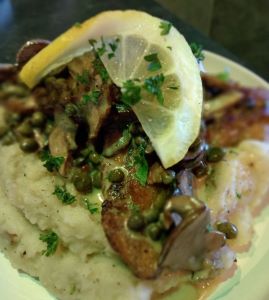
Wild Style Seitan Scaloppini

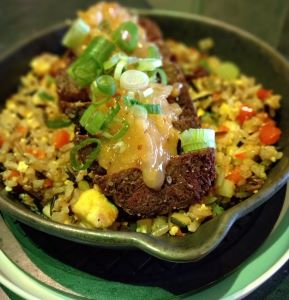
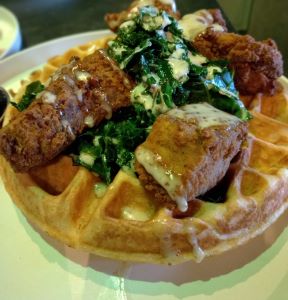
On a recent trip to New York City, we visited Urban Vegan Kitchen located at 265 West 23rd Street. Among the delicious dishes we sampled were I’m Still #1 Korean Buffalo Wings, Wild Style Seitan Scaloppini, Wild at Heart Chunk Steak and Rice, and Golden Era Chick-Un & Waffles.

       Wild at Heart Chunk Steak and Rice

Golden Era Chick-Un & Waffles

For more information, visit: https://urbanvegankitchen.com/

For a complete list of veggie restaurants in New York City, see: https://www.vrg.org/restaurant/New_York.php#c60

Quick and Easy Ideas for Watermelon

Posted on June 25, 2025 by The VRG Blog Editor

photo from Freepik

by Chef Nancy Berkoff, RD

Watermelon isn’t just a juicy warm-weather treat. This fruit contains potassium and vitamins A and C. Humans have been feasting on watermelon for centuries. Although native to Africa, watermelons have been known in India since prehistoric times. The first recorded watermelon harvest took place 5,000 years ago in Egypt. Pictures of the fruit were found in paintings on the walls of ancient buildings.

We never get much beyond slicing watermelon and offering it as a terrific accompaniment to summer meals. Watermelon is a “total utilization” fruit, though. You can use the interior, the juice, the seeds, and the rind! It is perfect with sweet (cereal, vegan yogurt, baked goods) or savory (grilled veggie dogs or burgers, pasta salad) foods.

If you want to get melon-creative, cut watermelon into stick shapes and freeze in plastic bags — you’ll have your own watermelon-sicles which can be eaten as a snack or tossed into the blender with other smoothie ingredients. (Watermelon daiquiris, anyone?). Or fill a scooped-out watermelon with sweet wine, port, lemonade, or cold ginger tea, then allow to marinate and serve as an appetizer or dessert.

Frozen Sweet Treats
“Helados” (ice cream) are a very popular ending to Latin meals; add watermelon to sorbet or frozen vegan ice cream to create your own helado. If simple desserts work for you, thinly slice watermelon, sprinkle with rose- or orange-blossom water, and serve chilled. Mango chunks or slices can be alternated with sliced watermelon for a colorful dessert. If fresh mango is not available, frozen mango will work.

To go savory with your watermelon, you can use watermelon cubes to “tame the heat” in curries and chilies, in veggie salad with onions and garlic, and in stir-fries or sautés (add small watermelon cubes at the last minute), or use as a garnish. Try a “watermelon steak” (a thick slice of watermelon, rind removed) topped with slices of ripe avocado and shredded jicama, chopped parsley, and a squeeze of fresh lime juice. If you would like to get adventurous, do some web searches for a watermelon curry recipe, popular in Caribbean and South Asian cuisine.

When slicing watermelon, be certain to capture the juice to use in salads, smoothies, or other cold beverages. If you have extra watermelon, blend it to create watermelon juice, refreshing on its own or when combined with other fruit or veggie juices (carrot, cucumber, spinach, etc.).

Roasted Seeds
If your watermelon comes with seeds, save them! Use only the mature, black seeds, and discard the small, white seeds. Collect the seeds, place them in a colander or strainer, and rinse very well, until they are squeaky clean. Spread the cleaned seeds on a baking sheet and allow to dry in a sunny area, or in a low oven. You can skip this step and pat the seeds dry, but very dry seeds roast best.

Preheat a large frying pan and add seeds, stirring and turning until they are roasted. Taste one to see if the desired texture has been reached. When seeds are roasted, mix together a small amount of salt with water, pour over the seeds, and allow the water to dissolve while stirring. Store in an air-tight container.

Pickled watermelon rind takes a bit of time to prepare, but is really worth the effort! The Watermelon Council, www.watermelon.org, has step-by-step instructions. Pickled watermelon rind is a versatile condiment, so tasty that it’s hard to refrain from just eating it right out of the jar!


Resources for Pediatric RDs with Vegan Clients

Posted on June 24, 2025 by The VRG Blog Editor

photo from Freepik

by Reed Mangels, PhD, RD

I recently responded to a query from a dietitian who works in pediatrics – “I have not had to manage this in a bit, so I thought I would check on any current updates to guidelines. We have a 14-month-old in our practice where the family is vegan. What resources do you suggest I look at before meeting with the family?”

In addition to sharing a list of ideas, I also offered to work with the dietitian if there were specific questions.

Here’s a  list of resources I suggested both for the use of dietitians and for vegan parents who would like to share them with health care providers.

From the Vegetarian Resource Group:

Feeding Vegan Kids

Tips for Parents of Young Vegans

From the Vegetarian Nutrition Dietetic Practice Group:

Vegetarian Nutrition for Toddlers and Preschoolers

Baroni L, Goggi S, Battaglino R, et al. Vegan Nutrition for Mothers and Children: Practical Tools for Healthcare Providers. Nutrients. 2018;11(1):5. Published 2018 Dec 20. doi:10.3390/nu11010005  (free full text is available)

Vegan Kids Nutrition, Karla Moreno-Bryce, RD – website has several useful hand-outs

The contents of this website and our other publications, including Vegetarian Journal and Vegan Journal, are not intended to provide personal medical advice. Medical advice should be obtained from a qualified health professional. We often depend on product and ingredient information from company statements. It is impossible to be 100% sure about a statement, info can change, people have different views, and mistakes can be made. Please use your best judgment about whether a product is suitable for you. To be sure, do further research or confirmation on your own.


June 24th is National Praline Day – Enjoy Making Vegan Pralines at Home!

Posted on June 24, 2025 by The VRG Blog Editor

This vegan praline recipe from Keryl Cryer (former Senior Editor of Vegetarian Journal now Vegan Journal) replaces evaporated milk (or cream) with almond milk, which makes it vegan and adds an even nuttier flavor to the pralines.

KERYL’S PRALINES

(Makes approximately 40 pralines)

  • 3 cups organic white sugar
  • 1 cup vanilla almond milk (at room temperature)
  • 2 Tablespoons non-hydrogenated vegan margarine
  • 2 dashes ground cinnamon
  • 1-2 cups pecan halves (at room temperature)

In a medium-sized pot, combine the sugar, almond milk, margarine, and cinnamon. Cook, stirring, over medium heat until sugar is dissolved. Reduce heat to low and continue to cook, stirring occasionally, for approximately 20 minutes until bubbly and foamy.

While the mixture cooks, lay out sheets of aluminum foil, shiny side up, on a flat surface, such as a counter or table. When the mixture is bubbly, remove from heat. Stir in pecans until evenly coated. Use a large serving spoon to spoon mounds of coated pecans onto the foil. Work quickly but carefully. If the mixture starts to harden in the pot or becomes sugary before you finish, add some more milk and mix until smooth.

Allow pralines to harden on the foil for approximately 10 minutes. As soon as the pralines are hard, move them to a serving platter or a storage container. Store pralines at room temperature.

New York Pizza Suprema

Posted on June 23, 2025 by The VRG Blog Editor

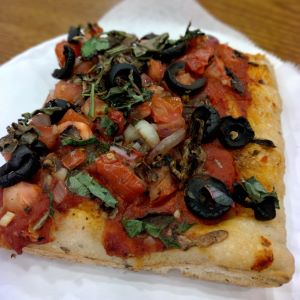
The next time you find yourself in New York City near Moynihan Station (Amtrak), Penn Station (NJ Transit and LIRR stations), or Madison Square Garden, you might want to cross the street and grab a slice of vegan pizza at New York Pizza Suprema. Veggie Medley consists of a light Sicilian crust, homemade onion cooked based sauce with diced tomatoes, black olives, sliced onions, and fresh sautéed garlic mushrooms topped off with fresh basil. Or you can try several different vegan cheese pizzas such as The Vegan Alfredo, Vegan Margherita, Vegan Grandma, Vegan White, and other varieties.

They are located at 413 8th Ave., New York, NY 10001. For more information, see: https://nypizzasuprema.com/

Study Examines the Association of Animal-based Butter versus Plant-based Oils on Mortality

Posted on June 23, 2025 by The VRG Blog Editor

istockphoto

by Reed Mangels, PhD, RD

For vegans, there’s no question—we don’t use animal-based butter. Non-vegans may be faced with a dilemma. Butter is sometimes presented as a “more natural” choice than plant oils. A recent study examined the correlation between frequent use of dairy butter, or of plant oils, and mortality.

Study subjects were adults in the United States who had participated in one of three large studies, namely the Nurses’ Health Study, the Nurses’ Health Study II, and the Health Professionals Follow-up Study. Over an up to 33-year follow-up period, the more than 220,000 study participants provided the researchers with information about what they ate and their health status. Deaths among participants were recorded. The investigators examined the subjects’ reported intakes of butter (added at the table and used in cooking) and plant-based oils (safflower, soybean, corn, canola, and olive oil). Those subjects with the highest intake of butter had a 15% higher risk of death compared to those with the lowest intake of butter. Those with the highest intake of plant-based oils had a 16% lower risk of death compared to those with the lowest intake of oils.

Higher butter intake was also associated with an increased risk of death due to cancer but not to death due to cardiovascular disease. In contrast, higher intakes of plant-based oils were associated with a lower risk of death due to cancer and of death due to cardiovascular disease.

Replacing 2 small pats of butter per day with 2 teaspoons of plant-based oils was associated with a 17% reduction in total mortality and the same (17%) reduction in cancer mortality.

When the researchers examined the effects of individual oils, they found that higher intakes of canola, olive, or soybean oils were associated with lower total mortality while there was no association between total mortality and intakes of corn and safflower oils. Higher olive oil intakes were associated with a lower risk of death from cancer or cardiovascular disease; higher intakes of canola oil and soybean oil were both associated with a lower risk of death from cancer.

The authors of this study conclude, “substituting butter with plant-based oils may confer substantial benefits for preventing premature deaths.”

Reference

Zhang Y, Chadaideh KS, Li Y, et al. Butter and plant-based oils intake and mortality. JAMA Intern Med. 2025;185:549-560.

To read more about fats and oils see:

Study Examines Plant and Animal Fat and Mortality in the United States

The Latest on Saturated Fat

Should Toddlers be on a Low-fat Veggie Diet?

Is Coconut Oil Good for You?

What About an Oil-free Diet?


The contents of this website and our other publications, including Vegetarian Journal and Vegan Journal, are not intended to provide personal medical advice. Medical advice should be obtained from a qualified health professional. We often depend on product and ingredient information from company statements. It is impossible to be 100% sure about a statement, info can change, people have different views, and mistakes can be made. Please use your best judgment about whether a product is suitable for you. To be sure, do further research or confirmation on your own.

  • Donate

  • Subscribe to the blog by RSS

  • VRG-NEWS

    Sign up for our newsletter to receive recipes, ingredient information, reviews of new products, announcements of new books, free samples of products, and other VRG materials.

    Your E-mail address:
    Your Name (optional):


↑ Top