The Vegetarian Resource Group Blog

Allulose

Posted on February 20, 2026 by The VRG Blog Editor

By Jeanne Yacoubou, MS

Also known as: D-allulose, D-psicose

Commercial source: vegetable (corn)

Used as: sugar substitute, zero-calorie sweetener, bulking or browning agent

Definition: A simple sugar with GRAS status possessing 70% of the sweetness of table sugar (sucrose). Allulose does not cause cavities, a rise in blood glucose, nor upset the gut microbiome, but it may cause gastrointestinal problems especially in high amounts.

Category: Vegan

More information: Cleveland Clinic, U.S. FDA

Manufacturers/Distributors:

Tate & Lyle: “…allulose is derived from corn…No animal or dairy inputs are used in this. No processing aids of animal or dairy origin are used when manufacturing [allulose].”

Apura Ingredients: “Allulose is a [microbial] enzyme-derived product from fructose, produced by the hydrolysis of corn starch…No animal-derived ingredients are used in the production of…allulose.”

North Central Companies: “Allulose does not contain or come into contact with any ingredient of animal origin or their derivatives.”

Icon Foods: “Allulose contains no dairy, no animal ingredients…Allulose is all corn.”

Added: January 2026

For more ingredient information, see https://www.vrg.org/ingredients/index.php

Support ingredient research and vegan education. Join The Vegetarian Resource Group at https://www.vrg.org/member/

The contents of this posting, our website and our other publications, including Vegan Journal, are not intended to provide personal medical advice. Medical advice should be obtained from a qualified health professional. We often depend on product and ingredient information from company statements. It is impossible to be 100% sure about a

Do Nuts Offer Health Benefits? A Report from The Adventist Health Study 2

Posted on February 19, 2026 by The VRG Blog Editor

photo from Freepik

by Reed Mangels, PhD, RD

Cardiovascular disease (a group of diseases, such as stroke and heart failure) affecting the heart and blood vessels) and heart disease are the main causes of death worldwide. Thus, health care professionals are interested in finding ways to reduce the risk of developing and of dying from these diseases. Diet is one area of active investigation and nuts are a food group of interest. More than ten years ago, researchers estimated that eating an ounce of nuts daily could reduce the risk of having a heart attack or stroke by 4-6 percent (1). More recently, researchers at Loma Linda University examined the effect of eating nuts on the risk of dying from cardiovascular disease or heart disease (2).

What is the study?

The study subjects were 80,529 Seventh-day Adventists living in the United States and Canada who participated in a large, long-term study called The Adventist Health Study-2. The study subjects completed questionnaires at the start of the study that asked, among other questions, how often they ate nuts. Nuts were separated into tree nuts (almonds, walnuts, pecans, etc.) and peanuts. Peanuts are botanically classified as legumes, so they were examined separately. The subjects were observed for an average of 11 years and deaths from cardiovascular disease and heart disease were recorded.

What did this study find?

At the end of the study period, more than 4,200 deaths due to cardiovascular disease and heart disease had occurred. Overall, eating nuts, was significantly associated with a reduced risk of death from cardiovascular disease and heart disease. Statistical adjustments were made for age, sex, race, and other factors. If we compare someone in the 90th percentile of nut intake (eating a little less than an ounce of nuts daily) and someone in the 10th percentile of nut intake (eating no or almost no nuts), the risk of dying from cardiovascular disease is 14% lower and of death from heart disease is 19% lower. These results are based on total nut consumption, including tree nuts and peanuts and peanut butter. If only tree nuts are examined, the risk of dying from cardiovascular disease is 17% lower with a higher consumption of tree nuts and the risk of dying from heart disease is 27% lower with a higher consumption of tree nuts (2).

Statistical techniques were used to model what would be likely to happen if a 1-ounce serving of total nuts or tree nuts replaced a serving of other foods. When a serving of nuts regularly replaced a 3-ounce serving of unprocessed red meat, the risk of death from cardiovascular disease was 41% lower for total nuts and the risk of death from heart disease was 35% lower. Using a serving of tree nuts to replace a serving of processed meat, or eggs, or cheese, or fried potatoes, was associated with a 21%-26% lower risk of dying from cardiovascular disease and 20%-30% lower risk of dying from heart disease (2).

These results suggest that choosing more nuts, including tree nuts and peanuts, may be a way to reduce the risk of dying from cardiovascular disease or heart disease.

References:

  1. Del Gobbo LC, Falk MC, Feldman R, Lewis K, Mozaffarian D. 2015. Effects of tree nuts on blood lipids, apolipoproteins, and blood pressure: systematic review, meta-analysis, and dose-response of 61 controlled intervention trials. Am J Clin Nutr. 102:1347-56.
  2. Suprono MS, Shavlik DJ, Butler FM, et al. Nut consumption and risk of cardiovascular disease and ischemic heart disease mortality: The Adventist Health Study 2. J Nutr. 2025;155:4465-4475.

To read about ways to add more nuts to your meals see:

Quick and Easy Ideas for Nuts

Nuts to You!

Celebrating Peanut Butter on National Peanut Day

The contents of this website and our other publications, including Vegetarian Journal and Vegan Journal, are not intended to provide personal medical advice. Medical advice should be obtained from a qualified health professional. We often depend on product and ingredient information from company statements. It is impossible to be 100% sure about a statement, info can change, people have different views, and mistakes can be made. Please use your best judgment about whether a product is suitable for you. To be sure, do further research or confirmation on your own.

VRG’s Annual Scholarship Program for Graduating High School Seniors in the USA Promoting Veganism – Deadline is Tomorrow (February 20th, 2026)

Posted on February 19, 2026 by The VRG Blog Editor

Due to the generosity of anonymous donors, The Vegetarian Resource Group each year will award one $10,000 and several $5,000 college scholarships to graduating U.S. high school students who have promoted veganism in their schools and/or communities. Entries may only be sent by students graduating from high school in SPRING 2026

We will accept applications emailed or postmarked on or before FEBRUARY 20, 2026. Early submission is encouraged.

Applicants will be judged on having shown compassion, courage, and a strong commitment to promoting a peaceful world through a vegan diet/lifestyle. Payment will be made to the student’s college (U.S. based only). Winners of the scholarships give permission to release their names to the media. Applications and essays become property of The Vegetarian Resource Group. We may ask finalists for more information. Scholarship winners are contacted by e-mail or telephone. Please look at your e-mail.

If you would like to donate to additional scholarships or internships, go to www.vrg.org/donate

Applications

For information on applying, visit: https://www.vrg.org/student/scholar or call (410) 366-8343 or email [email protected].

This contest is sponsored by The Vegetarian Resource Group/Vegan Journal, PO Box 1463, Baltimore, MD 21203.

Try These Vegan Egyptian Recipes!

Posted on February 18, 2026 by The VRG Blog Editor

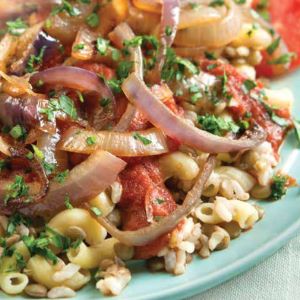
Chef Nancy Berkoff shares delicious vegan Egyptian recipes in her article Vegan Recipes from Egypt. Dishes include Kasheri with Brown Rice, Brown Rice Mujaddara, Makloubeh (Layered Eggplant), Vegan Kofta, Orange and Olive Salad, Khoshaf (Compote), and Egyptian Lemonade.

To subscribe to Vegan Journal visit: http://www.vrg.org/member/2013sv.php

What Are Some Examples of Confusing Advice in the 2025-2030 Dietary Guidelines for Americans?

Posted on February 18, 2026 by The VRG Blog Editor


by Reed Mangels, PhD, RD

In an earlier post about the 2025-2030 Dietary Guidelines for Americans, I said I’d explain more about one of the many confusing statements in these guidelines, namely, that despite the Guidelines stating that they prioritize whole foods, the number of recommended servings of grains has a been reduced. That’s only one of a number of problems, specifically with the Guide to Daily Servings that is a companion to the Guidelines.

Warning: This is a somewhat technical discussion, but it is important for those who are concerned about issues like how these flawed Guidelines will be used to develop meal plans for everything from school lunch to congregate meal sites to military cafeterias and how they may be used to develop educational materials. All comparisons in this post will be to the 2020-2025 Dietary Guidelines.

The Latest Dietary Guidelines Tell Americans to Eat Fewer Grains

Calorie needs depend on age, sex, and physical activity level. The average moderately active 4-year old needs about 1400 calories per day; a sedentary woman age 51 years and older needs 1600 calories; a moderately active 26-45-year old woman needs about 2000 calories; a moderately active 26-45-year old man needs about 2600 calories; and an active 16-year old boy needs about 3200 calories;. Here’s how many servings of grain products the two most recent editions of Dietary Guidelines call for.

Dietary Guidelines edition 1400 calories 1600 calories 2000 calories 2600 calories 3200 calories
2025-2030 1-3/4 to 3-3/4 servings of grains 1-3/4 to 3-3/4 servings of grains 2 to 4 servings of grains 3 to 6 servings of grains 3-1/4 to 6-1/2 servings of grains
2020-2025 5 servings of grains 5 servings of grains 6 servings of grains 9 servings of grains 10 servings of grains

It’s clear that the number of servings of grains recommended has decreased by anywhere from 1-1/4 servings per day to 6-3/4 servings per day. The 2025-2030 Guidelines say that all grain servings should be whole grains whereas the 2020-2025 Guidelines called for at least half of grain servings being whole grains, but this does not explain why the total number of servings of grains has been slashed. Grain foods provide many nutrients including B-vitamins, iron, zinc, fiber (whole grains), folic acid (enriched grains), and protein. Grain products include breads, tortillas, chapatis, rice, quinoa, breakfast cereals, oatmeal, pasta. To see why the number of servings of grains is markedly reduced in the 2025-2030 Guidelines, we need to see which food group now has an increased number of servings.

The Latest Dietary Guidelines Tell Americans to Eat More “Protein Foods”

It’s a little challenging to compare the 2020-2025 and the 2025-2030 Guidelines recommendations for “protein foods” because each edition uses different serving sizes. For illustration purposes, I will convert recommendations into ounces of meat, fish, and poultry.

Dietary Guidelines edition 1400 calories 1600 calories 2000 calories 2600 calories 3200 calories
2025-2030 6 to 7-1/2 ounces of meat, fish, poultry 7-1/2 to 10-1/2 ounces of meat, fish, poultry 9 to 12 ounces of meat, fish, poultry 10-1/2 to 13-1/2 ounces of meat, fish, poultry 12-15 ounces of meat, fish, poultry
2020-2025 4 ounces of meat, fish, poultry 5 ounces of meat, fish, poultry 5-1/2 ounces of meat, fish, poultry 6-1/2 ounces of meat, fish, poultry 7 ounces of meat, fish, poultry

The number of ounces recommended has increased from 2 ounces per day to 8 ounces (or a half pound of cooked meat) per day. In honesty, I must note that the “protein foods” group also includes eggs, beans, peas, lentils, nuts, seeds, nut butters, seed butters, and soy products. I’d like to think that people would be eating more plant “protein foods” under the new guidelines, but I think it’s more likely that many people will continue to equate meat with protein and use these guidelines to rationalize eating more animal products. This is bad for human health, the environment, and animals. And, there’s no evidence that Americans are deficient in protein. The group developing the most recent Guidelines has been criticized for their ties to the meat and dairy industry.

The Latest Dietary Guidelines Offer Confusing Advice About Amounts of Protein Foods

Things start getting really confusing when we compare what a serving of “Protein Foods” looks like in the 2025-2030 Guidelines and the 2020-2025 Guidelines. Serving sizes in the 2020-2025 Guidelines were based on a careful analysis involving looking at the nutrient content of foods included in a food group and how frequently the food was consumed. If you’re interested in the details of this process, you can read the entire report here. It’s not clear how serving sizes in the 2025-2030 Guidelines were determined. This has led to some surprising recommendations.

In the 2020-2025 Guidelines, based on careful analysis, an ounce-equivalent from the “Protein Foods” Group is:

  • 1 ounce of lean meat, poultry, or seafood or
  • 1 egg or
  • ¼ cup cooked beans or tofu or
  • 1 Tablespoon of nut or seed butter or
  • ½ ounce of nuts or seeds

All of these foods have similar amounts of nutrients including protein and of calories.

The 2025-2030 Guidelines equate a serving of “Protein Foods” as 3 ounces of meat, poultry, or seafood; 1 egg; ½ cup beans, peas, or lentils; 1 ounce of nuts or seeds; 2 Tablespoons of nut or seed butter; 3 ounces of soy. If we convert these amounts so they can be compared with an ounce of meat, poultry or seafood we get:

  • 1 ounce of meat, poultry or seafood is equivalent to
  • 1/3 of an egg or
  • 1/6 cup of beans, peas, or lentils or
  • 1 ounce of soy or
  • 2 teaspoons of nut or seed butter or
  • 1/3 of an ounce of nuts or seeds

These amounts have wildly different amounts of calories, protein, and other nutrients. This suggests to me a glaring lack of analysis, consideration of nutrient amounts, and awareness of food composition. It will make it even more challenging to plan meals using these Guidelines.

To read more about the Dietary Guidelines for Americans see:

2025-2030 Dietary Guidelines for Americans Released

What do the 2025-2030 Dietary Guidelines for Americans Say About Vegan Diets? See: https://www.vrg.org/blog/2026/02/06/what-do-the-2025-2030-dietary-guidelines-for-americans-say-about-vegan-diets/

The Vegetarian Resource Group Submitted Testimony Concerning the Scientific Report of the 2025 Dietary Guidelines Advisory Committee

VRG Testimony on 2025-2030 Dietary Guidelines

The Dietary Pattern in Dietary Guidelines for Americans Could Easily Be Made Vegan and Nutritionally Adequate

What Have the U.S. Dietary Guidelines Said About Vegan and Vegetarian Diets?

2020-2025 Dietary Guidelines for Americans Released

VRG’s testimony about the 2020 Dietary Guidelines and the Scientific Report Underlying the 2020 Dietary Guidelines

NSF Vegan Label

Posted on February 17, 2026 by The VRG Blog Editor

By Jeanne Yacoubou, MS

In August 2025, the National Sanitation Foundation (NSF) debuted its vegan label, one of the hundreds of third-party certifications offered by them in several diverse industries since 1944.

The NSF vegan label certifies many types of products and procedures as meeting all of NSF’s requirements for a vegan designation. The products eligible for NSF’s vegan certification are:

  • Foods
  • Dietary supplements
  • Cosmetics
  • Personal care products
  • Household products

In November 2025, NSF announced that Michele’s Granola was the first company to receive NSF’s vegan certification for its granola and muesli products.

According to NSF’s website, their vegan label applies to:

  • Ingredients
  • Processing aids
  • Food contact packaging

NSF also states on their website that their label ensures supply chain verification and that standard operating procedures are in place for proper storage and handling of vegan ingredients. The certification also requires:

  • Cleaning and sanitation to prevent contamination or commingling with non-vegan substances
  • Employee training
  • Traceability and recall
  • Complaint handling
  • Compliance monitoring with technical reviews

Q&A with NSF

The VRG asked Carey Allen, Director of Food Claims at NSF, several questions about the NSF label. Here is our Q&A email exchange from January 2026:

Q: What is your working definition of the term “vegan” as it applies to food and beverages?

A: NSF P543: Vegan and Cruelty-Free Products (NSF P543) includes specific requirements for vegan products. Ingredients, processing aids and food contact packaging material used in or on products labeled as “vegan” must not be derived from animals nor contain animal ingredients at any amount. Products may not contain animal-derived GMOs and must not be subject to animal testing. Eligible products under NSF P543 include foods, dietary supplements, cosmetics, personal care products, and household products.

Q: Do you base vegan certification solely on an ingredients list supplied by a food company? If more is involved, please elaborate.

A: Products certified by NSF as vegan undergo a strict technical review. The certification process involves key documentation, reviewing not just the product ingredients, processing aids, and packaging, but also product labels, the manufacturing facilities and standard operating procedures.

Q: For vegan certification, do you rely on a company’s statements from their ingredient suppliers about processing aids? If more is involved, please explain.

A: NSF reviews all ingredients and processing aids as part of the certification process. We review the source of each element to ensure it complies with the standard, review manufacturing supplied documentation such as specification sheets and/or certificates of analysis, and each ingredient and processing aid manufacturer completes a compliance declaration or provides a current third-party vegan certificate. This review also applies to contact packaging manufacturers.

Q: Would you certify foods and beverages manufactured using animal genes via precision fermentation as their sole animal input as “vegan”?

A: No.

Q: Would you certify food grown in labs using animal cells as “vegan”?

A: No.

Q: How is your vegan certification different from other vegan certifications?

A: NSF vegan certification includes the analysis and control of ingredients and processing aids from production, procurement and handling to manufacturing, distribution and consumption of the finished product.

NSF vegan certification not only involves a thorough review of each ingredient and processing aid but also includes a review of the manufacturing facility. Manufacturing facilities are required to have policies and procedures in place to ensure that compliance is maintained with NSF’s Vegan Certification Protocol.

A standard operating procedure (SOP) on ingredient and processing aid approval must address vegan integrity of raw materials. A SOP for the handling and storage of ingredients, processing aids, and products must include measures to eliminate cross-contamination and commingling of vegan and non-vegan ingredients and processing aids; and clear identification and segregation of ingredients, processing aids, and finished products that are and are not vegan.

SOPs for cleaning and sanitation must include a risk assessment to identify potential contamination risks, a cleaning schedule, and a method for evaluating the efficacy of cleaning procedures, if the facility is not dedicated vegan. All employees at the manufacturing facility are required to receive vegan training. Other SOPs reviewed ensure there are procedures in place for traceability and recall, as well as complaint handling. Any product that has been subject to animal testing at any time, including but not limited to during research and development, is prohibited.

To maintain NSF’s vegan certification, operations that have products certified as vegan with NSF must undergo an annual review.

Q: You state in your certification protocol that evidence of vegan integrity could be a current third-party vegan certificate. Which third-party certifications would you consider legitimate and treat as evidence of vegan integrity?

A: This list may evolve through time, so as certificates are submitted, the certification program is evaluated to determine compliance with our vegan program.

Q: Are you able to identify any specific vegan certifications that you would accept when determining the “vegan integrity” of a product you have been asked to certify? If you accept another certification as evidence of vegan integrity, do you stop there and declare the product as NSF-certified, too, or do you conduct your own review as well before making your declaration? If you conduct your own review, then how is the determination of vegan integrity as declared by another certifier relevant?

A: The list of acceptable vegan certificates is likely to change over time, and vegan certificates are evaluated as they are submitted as evidence of compliance. Many products are multi-ingredient. NSF requires complete ingredient and processing aid information for all products seeking vegan certification. While an ingredient or processing aid may be approved because it is certified vegan, we would still require information to verify the compliance of all other ingredients and processing aids used in or on the final product seeking certification.

Q: Do you do onsite visits as part of the certification process, reviewing work logs while there and cross-referencing them with documents you had been previously sent by the company? If so, are the visits announced or unannounced?

A: No, we do not conduct onsite audits.

The contents of this blog posting, our website and our other publications, including Vegan Journal, are not intended to provide personal medical advice. Medical advice should be obtained from a qualified health professional. We often depend on product and ingredient information from company statements. It is impossible to be 100% sure about a statement, info can change, people have different views, and mistakes can be made. Please use your best judgment about whether a product is suitable for you. To be sure, do further research or confirmation on your own.

For more ingredient information, see https://www.vrg.org/ingredients/index.php

To join The Vegetarian Resource Group and receive Vegan Journal, join at https://www.vrg.org/member/

Celebrate the Chinese New Year

Posted on February 17, 2026 by The VRG Blog Editor

This year the Chinese New Year falls on February 17th. Celebrate the year of the snake with delicious vegan dishes including Fried Lotus with Black Rice, Sesame Kale, and Bean Sprouts & Bamboo Stir-Fry with Udon Noodles. See: http://www.vrg.org/journal/vj2013issue3/2013_issue3_chinese_cooking.php

Subscribe to Vegan Journal at https://www.vrg.org/member/

Linger: Salads, Sweets and Stories to Savor Features Creative, Plant-Centered Recipes

Posted on February 16, 2026 by The VRG Blog Editor

By Reed Mangels, PhD, RD

For a long time, I’ve bookmarked recipes by Hetty Lui McKinnon, a regular contributor to New York Times Cooking. When I saw her book, Linger: Salads, Sweets and Stories to Savor, on the list of new acquisitions from my local library, I requested it, thinking there might be a few vegan recipes I’d be interested in.

To my delight, Linger, is a mostly vegan cookbook. By my count, there are 94 recipes that either are vegan or could easily be made vegan and 8 that are vegetarian but not vegan. Each recipe is clearly identified as vegan and/or gluten-free and is accompanied by an enticing photo.

McKinnon’s book is organized around shared meals based on salads. Each of the 12 chapters features a collection of recipes that could be served together for a lunch or dinner party. Of course, the recipes also work well for smaller gatherings, say family dinners where you could make one or a couple of dishes.

An exciting feature of this book is McKinnon’s philosophy that anything can be a salad, or at least can inspire a salad. For example, Linger includes salads based on gnocchi and on dumplings, as well as salads inspired by falafel, French onion soup, and shawarma. Salads feature a variety of vegetables, grains, beans, nuts, and seeds. Each chapter also includes a dessert recipe such as Black Sesame Tofu “Basque” Cheesecake and Hong Kong Milk Tea Tres Leches. Both of these recipes are vegan.

So far, I’ve made Charred Gai Lan with Black-Eyed Peas and Chile Crisp Vinaigrette and Shaved Brussels Sprouts with Tofu Crumble, Shiitake and Hot Tahini. Both recipes were quick to prepare and super-flavorful. I appreciate McKinnon’s suggestions for substitutions which accompany each recipe. I didn’t have gai lan, so I successfully used her suggestion to substitute bok choy.

I’m looking forward to trying Hot-and-Sour Potato Salad; Mushroom, Seaweed, and White Bean Burger Salad; Kung Pao Cabbage with Tofu; Ginger-Roasted Kabocha with Black Rice and Ginger-Miso Dressing; and Cherry Tapioca Pudding, among others.

Linger: Salads, Sweets and Stories to Savor (ISBN 9780593804193) is a 310-page hardcover book. It is published by Alfred A. Knopf and retails for $40.

Who Doesn’t Love Noodles?

Posted on February 16, 2026 by The VRG Blog Editor

photo by Rissa Miller

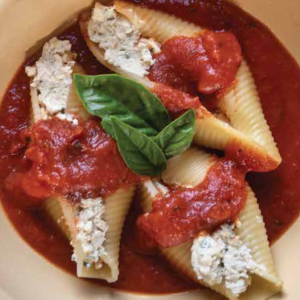
Chef Joseph Solar shares a wide variety of noodle dishes in his recipe piece in Vegan Journal. Start cooking Stuffed Shells with Basil, Golden Beet Japchae, Mushroom Marsala, Classic Vegan Pad Thai, or Vegan Carbonara!

Find the complete article here: https://www.vrg.org/journal/vj2022issue4/2022_issue4_noodling_around.php

Subscribe to Vegan Journal in the USA only at https://www.vrg.org/member/2013sv.php

Allulose: Vegan Sugar Substitute

Posted on February 13, 2026 by The VRG Blog Editor

By Jeanne Yacoubou, MS

Allulose is a simple sugar (monosaccharide) introduced to the U.S. market in the 2010s. In this article, The VRG takes a look at what food scientists and health researchers know about allulose and what the U.S. Food and Drug Administration (FDA) says about this natural sweetener.

Allulose characteristics

Found in extremely small quantities in a few foods including figs and raisins, allulose has the same chemical formula as fructose but in a different 3D arrangement. Research shows that under ordinary cooking conditions of certain food products, fructose is converted to allulose. Unlike fructose, however, allulose does not disrupt the gut microbiome. In fact, research using human cell lines shows allulose demonstrates gut protective effects as a prebiotic food source for probiotic bacteria in the intestinal tract.

On the other hand, high fructose consumption is associated with several chronic health conditions including metabolic syndrome and cardiovascular dysfunction. Allulose does not cause a rapid rise in blood glucose or insulin like table sugar (i.e., sucrose which is composed of equal parts of glucose and fructose) does. Moreover, allulose has been shown to decrease blood glucose levels after meals in both healthy adults and those with type 2 diabetes. According to the FDA in its 2020 Guidance on this simple sugar, allulose is “virtually unmetabolized by the human body” and excreted unchanged.

In taste tests, people find allulose to be almost as sweet as table sugar without a bitter aftertaste like other sugar substitutes. Technically, allulose is 70% as sweet as sucrose. It possesses a mouthfeel similar to sugar. When in granular form, it resembles table sugar. Allulose is not known to promote tooth decay like table sugar does.

Allulose: GRAS status

Despite being declared generally recognized as safe (GRAS) by the FDA, the safety of allulose in humans is not well-established although a 2010 randomized, double-blind study with a small sample size showed no deleterious effects on several major metabolic biomarkers after 12 weeks of daily consumption.

However, the FDA had not conducted rigorous testing on allulose before issuing its GRAS determination. It should be pointed out that FDA does not regularly conduct safety tests on food ingredients before making GRAS declarations; rather, FDA often accepts industry-funded data as evidence of safety. Although some countries such as Japan and Mexico have approved allulose for food use, not all have. For instance, allulose is not approved for food use in Canada or Europe while safety testing is ongoing.

It’s noteworthy to point out that in a 2019 press release, FDA made this comment about allulose: “…This is the first time the FDA has stated its intent to allow a sugar to not be included as part of the total or added sugars declarations on labels.” However, the FDA also refers to its allulose guidance document linked to previously in this section when stating “…the FDA intends to exercise enforcement discretion to allow manufacturers to use 0.4 calories per gram of allulose when calculating the calories from allulose in a serving of a product. However, manufacturers must continue to include allulose in the total carbohydrates declaration.”

Allulose health studies

There are a few human studies that show the benefits of allulose. For example, a 2023 study indicated that allulose may help prevent obesity and atherosclerosis and lower type 2 diabetes risk. A 2018 study revealed that overweight and obese adults on allulose supplementation showed a significant decrease in both body mass index (BMI) and total abdominal and subcutaneous fat compared to a placebo group. Another study from 2024 showed allulose did not affect gut microbial diversity, which is believed to be important to maintain human health. By contrast, small quantities of some artificial sweeteners (AS) have been shown to damage the gut microbiome, although other research shows certain AS has no substantial effect on it (Conz et al. 2023).

Commercial source of allulose

Commercial production of allulose is from corn without any animal-derived processing aids according to four manufacturers or distributors contacted by The VRG. These companies were Tate & Lyle, Icon Foods, Apura Ingredients, and North Central Companies. Based on this research, we classify allulose as a vegan food ingredient.

Baking with allulose

Allulose tends to brown at high temperatures, so reduce the oven temperature to 315-320ºF and extend baking time by 15% when using allulose according to the Supplyside Food and Beverage Journal. Allulose cannot be used as a sugar source for fermenting yeast in bread baking.

Allulose is available in granulated, powder, and liquid forms.

For more ingredient information, see https://www.vrg.org/ingredients/index.php

Support ingredient research and vegan education. Join The Vegetarian Resource Group at https://www.vrg.org/member/

The contents of this posting, our website and our other publications, including Vegan Journal, are not intended to provide personal medical advice. Medical advice should be obtained from a qualified health professional. We often depend on product and ingredient information from company statements. It is impossible to be 100% sure about a statement, info can change, people have different views, and mistakes can be made. Please use your best judgment about whether a product is suitable for you. To be sure, do further research or confirmation on your own.

  • Donate

  • Subscribe to the blog by RSS

  • VRG-NEWS

    Sign up for our newsletter to receive recipes, ingredient information, reviews of new products, announcements of new books, free samples of products, and other VRG materials.

    Your E-mail address:
    Your Name (optional):


↑ Top