The Vegetarian Resource Group Blog

Our Annual Vegan Pre-Thanksgiving Potluck is this Sunday! 11/18

Posted on November 16, 2012 by The VRG Blog Editor

If you’re in Baltimore this weekend, we’d love you to join us at our 31st Annual Vegan Pre-Thanksgiving Potluck Dinner!

Sunday, November 18, 2012
5:00 P.M.
North Baltimore Mennonite Church
4615 Roland Avenue, Baltimore, MD 21210

Admission is $4 per adult and children under the age of 16 are admitted free. Please bring a vegan dish that serves four as a contribution from each member of your party. A vegan dish is made without meat, fish, fowl, dairy, eggs, honey, or other animal-derived ingredients. Write the ingredients of your dish on a 3 x 5 card to accommodate guests with special diets. Also, please bring a serving utensil for each dish. Paper plates, cups, napkins, and plastic utensils will be provided; however, we suggest participants please bring their own reusable dishes and utensils in order to reduce waste.

If you are unable to cook, you may bring a prepared vegan dish for four from a local natural foods store or restaurant. We also encourage you to bring a non-perishable vegetarian canned food item to donate to North Baltimore Mennonite Church, who will distribute it to those in need.

Need recipe ideas? Check out our Vegan Thanksgiving page.

To volunteer or for more information email [email protected] or call (410) 366-8343.

We look forward to seeing you there!

The Sexual Politics of Meat at Towson University

Posted on November 15, 2012 by The VRG Blog Editor

By Whitney Blomquist, VRG Intern

Carol Adams, author of The Sexual Politics of Meat, came to speak at my college, Towson University. I was asked to set up a booth for The Vegetarian Resource Group at the presentation along with four other health and animal rights organizations. I was excited to be able to table for VRG while enjoying Carol’s presentation.

As the room filled up a slide of images began to play on the screen. They depicted the link between women and animals exploitation in advertisements. Each picture showed ads that are used to encourage and condone the consumption of meat. Carol’s presentation was very raw and powerful. Some of the images were disturbing and some were very revealing. Carol goes on to state that her concept of the “absent referent” separates the meat eater from the animal and the animal from the end product. The “absent referent” refers to the issue of advertisements in popular culture sending messages that animals, like women, are nothing more than a piece of “meat.” Rather it be a piece of meat that you eat or one you look at in a sexual sense, the lines have become blurred and society has become accepting of both the demeaning of women and the mistreatment of animals.

Carol did an excellent job presenting her position on the relationship between women and animals and got the crowd surprisingly interested. She was kind enough to answer questions and mingle with everyone after the presentation.

Some long time vegans visited the VRG booth and I had a lengthy conversation with someone who was interested in resources for vegetarians that had began to eat meat again but wanted to become vegetarian again. She mentioned the cost strains of being a vegetarian in college and I shared with her some tips of how I shop inexpensively and prepare quick meals and healthy snacks to get through a busy day of classes.

As Carol said, her book is older than most of the students she shows this presentation to, revealing how pertinent these topics remain.

For more information on The Sexual Politics of Meat, please visit Carol Adams website: http://www.caroljadams.com/

You can purchase The Sexual Politics of Meat here.

To learn more about eating vegetarian/vegan on a budget, please visit:
http://www.vrg.org/journal/vj2006issue2/2006_issue2_mealplans.php

http://www.vrg.org/blog/2011/11/08/vegetarian-and-vegan-living-in-your-twenties/

Old 1980s Baltimore Vegetarians Newsletters Needed

Posted on November 14, 2012 by The VRG Blog Editor

We’re working on an archiving project for The Tom Regan Animal Rights Archive at NC State University. We are in need of original copies of the below issues of the Baltimore Vegetarians Newsletter (VRG was originally Baltimore Vegetarians):

  • 1982 Vol. 1 Issues 1 & 2
  • 1983 Vol. 2 Issues 1, 3, & 12
  • 1984 Vol. 3 Issues 1, 2, 3, 4, 5, & 6
  • 1985 Vol. 4 Issue 3
  • 1986 Vol. 5 Issues 7 & 11
  • 1987 Vol. 6 Issis 6

If you have an original copy of any of these issues that you are willing to give to us to give to NC State, email us at [email protected] and let us know which issue(s) you have.

Please do not send the issues via mail without first contacting us in an effort to avoid receiving the same issue multiple times. Thank you! -Whitney Blomquist, VRG Intern

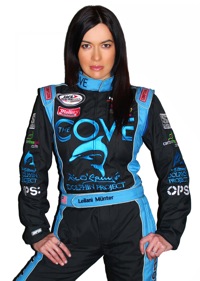
ARCA Driver Leilani Munter Hopes To Drive Vegan-Themed Racecar

Posted on November 12, 2012 by The VRG Blog Editor

By Valerie Shore, VRG Intern

“Mainstream” and “Veganism” aren’t two words that people would always associate together, but Leilani Munter is working to close that gap. Leilani became vegetarian at only six years old and is now a newly reformed vegan ARCA racecar driver who is using her position to bring awareness to many environmental issues in her races. ARCA, the Automobile Racing Club of America, has a mix of both hobby and professional racers and is a regional stock car racing club, similar to NASCAR. Leilani advocates her issues of choice by having the outside of her car advertise them, so that they appear on-screen for all ARCA fans to see. It’s difficult to raise funds for advertising like this, but Leilani is determined to see her cars on the track.

Getting sponsorship is hard, Leilani claims. Since she is an activist who has such solid beliefs, companies shy away from supporting her. Leilani races maybe once a year, when she can get all of the different funds put together, because it does take a while. In February 2012, Leilani raced at Daytona with a race car decked out in messages about “The Cove,” the Academy Award-winning documentary about the dolphin and whale slaughter that is happening in Taiji, Japan. Leilani ended up having a tire on the car burst, but it actually ended up being a blessing in disguise – the downtime allowed the media to focus on her car and prompted discussion about the issue from the commentators. That’s why her newest project, a “Powered by Plants” race car, is so important for her. Essentially, the “Powered by Plants” race car will be a vegan-themed race car promoting a plant-based diet and bringing awareness about veganism to the fans of ARCA. Leilani hopes to be sponsored by vegan and Eco-friendly companies that agree with her cruelty-free message. She says she has always been more of an activist than just a driver, and refuses to sacrifice what she believes in for sponsorship.

In even more of an effort to dispel myths about the vegan community, Leilani also hopes to have a vegan chef present at the raceway when her “Powered by Plants” car races, preparing vegan food for all of the crowds at the stadium. She believes one of the best ways to getting through to non-vegetarians is through non-judgemental, friendly ways – and what’s more friendly than free food? Many of us have experienced times when someone will scoff at the idea of “vegetarian meat,” but the truth is that it’s good. When she was married, Leilani had an entirely cruelty-free reception, with all vegan food. She says that many of her guests were apprehensive, but afterwards came up to her and were surprised by how much they actually enjoyed the food. Leilani hopes that the crowds at her race will experience a similar epiphany, and perhaps reverse some of the stigmas they have about the vegan/vegetarian community.

However, one of the problems she’s facing is the fact that some vegan companies, according to her, aren’t willing to sponsor her pro-plant car because the audiences at ARCA aren’t in “their demographic.” “How else do you reach new customers if you don’t go outside of people who are probably already eating your product?” Leilani asks. But, she is not giving up on her “Powered by Plants” car. Leilani wants people to know the impact of what they choose to put on their plate and how meat alternatives can be sustainable options. To learn more about Leilani’s “Powered by Plants” race car, check out her website at http://leilanimunter.com.

Elevation Burger Offers Vegetarian and Vegan Menu Options

Posted on November 09, 2012 by The VRG Blog Editor

By Jeanne Yacoubou, MS
VRG Research Director

With thirty locations in ten states and four international locations, Elevation Burger opened in 2005 as a fast-casual burger chain featuring 100% USDA Organic beef. For patrons looking for a meatless alternative, Elevation Burger has offered two veggie burgers from the beginning.

Veggie Burger #1’s ingredients are as follows: button mushrooms, onions, crimini mushrooms, portabella mushrooms, cooked brown rice, rolled oats, mozzarella cheese, water, bulgur, parsley, cheddar cheese. Contains 2% or less of yeast extract, natural flavor, modified vegetable gum, salt, mushroom extract, garlic powder, autolyzed yeast extract, spices, citric acid, malted barley, natural butter flavor, whey, dehydrated onion, annatto, dehydrated mushrooms, guar gum, natural smoke flavor, turmeric, soy lecithin.

Veggie Burger #2’s ingredients are as follows: organic cooked brown rice, water, organic corn, organic carrots, organic onions, organic green peppers, organic rolled oats, organic red bell peppers, organic soy protein isolate, organic canola oil, organic high oleic sunflower oil. Contains 2% or less of broccoli, sea salt, carrageenan, organic soy sauce, organic onion powder, konjac flour, organic garlic powder, organic spices.

We were told that all burgers are served on a potato roll containing the following ingredients: enriched unbleached wheat flour, water, yeast, sugar, potato flour, vital wheat gluten. Contains 2% or less of honey, vegetable oil, salt, guar gum, natural and artificial flavors, yeast nutrient (ammonium sulfate), dough conditioners (mono-diglycerides, sodium stearoyl lactylate, ascorbic acid, monocalcium phosphate, azodicarbonamide), calcium sulfate, enzymes, calcium propionate, yellow corn flour, turmeric, annatto.

Patrons may order either Veggie Burger #1 or #2 wrapped in iceberg lettuce instead of on a potato roll.

The veggie patties are grilled on a separate, specially designated surface away from all beef burgers. No oil is used. The same utensils are not used for both veggie and beef patties. Once sanitized, however, utensils previously used for meat products may be used for non-meat products. The kitchen contains a three-compartment sink that is used for all utensils.

Elevation Burger offers Elevation Sauce as an optional condiment for all of its burgers. Their Elevation Sauce is “…a creamy, tomato-based sauce that is not spicy or hot.” It contains eggs and is not vegan.

The caramelized onions offered as an optional condiment are prepared on the same grill surface as beef burgers.

Also on the menu is a grilled cheese sandwich served on the potato bun described above. Elevation Burger told us that the cheddar cheese is made with “microbial rennet, not animal rennet.”

Elevation Burger cuts its own potatoes and fries them in olive oil. There are no flavored coatings on the potatoes nor any flavorings in the oil. We were also told that no meat items are prepared in the same fryer.

Mandarin oranges are offered as a side dish at Elevation Burger. Cookies served at Elevation Burger contain eggs and butter.

Readers interested in learning more about Elevation Burger may visit: http://www.elevationburger.com

The contents of this article, our website, and our other publications, including the Vegetarian Journal, are not intended to provide personal medical advice. Medical advice should be obtained from a qualified health professional. We often depend on product and ingredient information from company employees or company statements. Information does change and mistakes are always possible. Please use your own best judgment about whether a product is suitable for you. Further research or confirmation may be warranted.

To purchase our Guide to Food Ingredients, please visit our website: http://www.vrg.org/catalog/index.php?main_page=product_info&cPath=1&products_id=8

For information on food ingredients, fast food, and for other information of interest to vegetarians and vegans, please subscribe to our enewsletter at http://www.vrg.org/vrgnews/

To support VRG research, you can donate at http://www.vrg.org/donate

There are many ways to stay connected to The Vegetarian Resource Group!
Get our blog delivered right to your inbox: http://feeds.feedburner.com/TheVRGBlog
Like us on Facebook: http://www.facebook.com/thevegetarianresourcegroup
Follow us on Twitter: http://twitter.com/VegResourceGrp

VRG’s Booth at Southern MD County Fair

Posted on November 07, 2012 by The VRG Blog Editor

By Natalie Evans

After recently working a booth for The Vegetarian Resource Group at a fair in Baltimore with our daughter and seeing the expressed interest of the public, I thought it only fair to try to help get The VRG fever spreading south! County fairs in Southern Maryland consist of tractor pulls, quilt competitions, baked goods, farm animals and of course dogs – that is, hot dogs!

When I initially contacted the liaison for the rental space he asked what business I was with so that he could place us accordingly. When I told him I was a volunteer for The VRG, he said “Hmmm, never heard of them, but I do know we have lots of vegetable eaters down here.” Immediately, I thought we had an in! The fair houses a commercial building where vendors can advertise to the public with free samples, magnets, pens and raffles. As we were setting up our table on Thursday night, worry set in as the table across from us was a Cake Shop with free samples. We had a basket of fresh vegetables on display but not for sampling, the competition was on!

With that in mind the fellow vegans and vegetarians were pleasantly surprised to see The VRG display. Along with the smiles and excitement we were also met by raised eyebrows from the local cattle and chicken farmers who got a laugh at removing the “Don’t” from the “Be kind to animals don’t eat them” bumper sticker. One local wanted to know if we could put a food stand up since the only food offered at the fair was mainly meat. This led to many interesting conversations. We learned of local farms who offer organic CSA’s to others sharing when to uproot sweet potatoes and what fall crop should be planted. Many shared their health improvement since switching to plant based diets.

To our surprise, based on the visitors who stopped at the booth to either gain information or share, all had one frequent comment, “Wow, this is exciting to see!” With limited resources in the rural area, many were excited to learn about VRG. Some took time to look through recipe books, while others signed up for The VRG email list or subscribed to the journal. We encouraged them to add their name to a sheet to form a local group of vegetarians and vegans.

Of all of the vendors distributing information at this fair, I left feeling that we had won the competition I had set that Thursday night. The visitors to The VRG were fed a wealth of information. We may not have been giving out sweet treats but I am certain that what we gave out will have a positive impact! We are hopeful that we can continue to spread the word throughout the community to help those who are interested~ thank you VRG for letting us help you help others!

If you would like to to volunteer in St. Mary’s Country Maryland, or do outreach booths in other parts of the country, please e-mail VRG’s outreach coordinator Mary at [email protected].

Butter Oil in Chocolate: Dairy-Derived

Posted on November 06, 2012 by The VRG Blog Editor

By Jeanne Yacoubou, MS
VRG Research Director

In August 2012, The VRG received a question from a Canadian reader about butter oil. She saw it listed as an ingredient in several chocolate bar brands that appeared otherwise dairy-free. The reader was concerned that dairy-derived butter oil would make some of her favorite dark chocolate bars non-vegan and thus unsuitable for her.

The VRG contacted several chocolate companies in both the USA and Canada in September and October 2012 about butter oil. Based on what we’ve been told by phone and email correspondence, butter oil used in chocolate bars is dairy-derived. (Note: The VRG discovered one blog on the Internet which claimed that butter oil is derived from canola oil. No chocolate company using butter oil today whom we contacted substantiated this claim during research for this report.)

One of the chocolate bars in question was Godiva’s 72% Extra Dark Chocolate Bar. We learned that the butter oil in their 72% Extra Dark Chocolate Bar is “derived from dairy butter.” There are no other dairy-derived ingredients in this bar. The word “milk” does not appear in parentheses after “butter oil” as it does on the labels of some other brands.

Godiva does not state that any of their chocolate is vegan since the same equipment is used to make all of their products, most of which contain milk or milk products. As an example, the Godiva Santo Domingo Bar, available only in a few select boutiques, where there are …no direct milk ingredients…and is 85% cocoa, is not called vegan…It’s made on the same equipment as their milk chocolate bars. (Butter oil is not listed as an ingredient in this bar either.)

Barkleys Natural Confectionery based in British Columbia sells several flavors of Kayer Dark Chocolate Truffle Bars containing butter oil. Barkleys’ Director told us that “…our butter oil is derived from milk.” There are no other dairy-derived ingredients in this bar.

Barkley’s also stated that they will be “…launching three new flavors in the brand that will be vegan – using no butter oil.” The Kayer bars contain “organic coconut palm sugar” which is, according to their website, “a 100% organic, minimally processed, unfiltered, unbleached natural sweetener and contains no preservatives…no cane sugar added…just pure, unadulterated palm sugar made from 100% coconut nectar from Coco Nucifera.” For more information: http://www.barkleys.ca/page/1smyg/Kayer_Organic_Chocolate_Bars.html

Trader Joe’s carries several chocolate products listed on their Vegan Products page including 70% Dark Chocolate Bars and 72% Dark Chocolate: http://www.traderjoes.com/lists/vegan.asp. The VRG emailed Trader Joe’s about these bars’ ingredients asking specifically if butter oil was an ingredient. Nicki in Customer Relations emailed us a response: “There is no dairy used in our Trader Joe’s 70% Dark Chocolate Bars. Please know that we fully disclose all ingredients used in our TJ’S products.”

The VRG also asked a few other chocolate companies identified by our Canadian reader as those listing butter oil as an ingredient in their chocolate bars. We called Seattle Chocolates, Marich, and Maisie Jane’s. All three told us by phone that the butter oil used in their chocolate bars is derived from dairy butter.

VRG readers may like to know that Seattle Chocolates sells an Extreme Dark Truffle Bar which does not list butter oil or any other dairy ingredient in its ingredients statement: http://shop.seattlechocolates.com/scc/shop-chocolate/truffle-bars/extreme-dark-truffle-bar.html

Kristen of the Marich Confectionery Company told us by phone that their quality assurance manager confirmed that “the butter oil [in our chocolate products] is from dairy butter.” Kristen emailed The VRG with this information: “A few of our hand-packed products are vegan: Jelly Beans, Licorice Pastels, Celestial Sours, Black Heart Black & Black Cherry Licorice.” Ingredients are listed on their website: https://www.marich.com/

Della the office manager at Maisie Jane’s California Sunshine Products told us by phone and email that “No, we do not have any chocolate products that are vegan.” She stated that the “butter oil [in our chocolate products] is from dairy butter.” Della also said “Several of Maisie Jane’s items are vegan…: Almond Butter, Natural Almonds, Natural Organic Pistachios, Natural Organic Cashews, and our Tamari Almonds.” Ingredient information on Maisie Jane’s products can be found here: http://www.maisiejanes.com/

For more information about butter oil, readers may find the website of the Canadian Dairy Commission helpful. There it states that one advantage of using butter oil is the “control of fat bloom in chocolate candy:” http://www.milkingredients.ca/index-eng.php?id=173

The contents of this article, our website, and our other publications, including the Vegetarian Journal, are not intended to provide personal medical advice. Medical advice should be obtained from a qualified health professional. We often depend on product and ingredient information from company employees or company statements.Information does change and mistakes are always possible. Please use your own best judgment about whether a product is suitable for you. Further research or confirmation may be warranted.

To learn more about the commercial sources of food ingredients or to purchase our Guide to Food Ingredients, please visit our website:
http://www.vrg.org/catalog/index.php?main_page=product_info&cPath=1&products_id=8

For information on food ingredients, fast food, and for other information of interest to vegetarians and vegans, please subscribe to our enewsletter at http://www.vrg.org/vrgnews/

There are many ways to stay connected to The Vegetarian Resource Group!
Get our blog delivered right to your inbox: http://feeds.feedburner.com/TheVRGBlog
Like us on Facebook: http://www.facebook.com/thevegetarianresourcegroup
Follow us on Twitter: http://twitter.com/VegResourceGrp

To support VRG research, please donate at http://www.vrg.org/donate

VRG’s Annual Vegan Pre-Thanksgiving Potluck 11/18, Baltimore

Posted on November 01, 2012 by The VRG Blog Editor

Please join us for our 31st Annual Vegan Pre-Thanksgiving Potluck Dinner!

Sunday, November 18, 2012
5:00 P.M.
North Baltimore Mennonite Church
4615 Roland Avenue, Baltimore, MD 21210

Admission is $4 per adult and children under the age of 16 are admitted free. Please bring a vegan dish that serves four as a contribution from each member of your party. A vegan dish is made without meat, fish, fowl, dairy, eggs, honey, or other animal-derived ingredients. Write the ingredients of your dish on a 3 x 5 card to accommodate guests with special diets. Also, please bring a serving utensil for each dish. Paper plates, cups, napkins, and plastic utensils will be provided; however, we suggest participants please bring their own reusable dishes and utensils in order to reduce waste.

If you are unable to cook, you may bring a prepared vegan dish for four from a local natural foods store or restaurant. We also encourage you to bring a non-perishable vegetarian canned food item to donate to North Baltimore Mennonite Church, who will distribute it to those in need.

Need recipe ideas? Check out our Vegan Thanksgiving page.

To volunteer or for more information email [email protected] or call (410) 366-8343.

We look forward to seeing you there!

Veg*n survey participants needed

Posted on October 31, 2012 by The VRG Blog Editor

Associate Professor of Psychology and VRG member Dr. Hank Rothgerber is conducting a survey on vegetarians and vegans. He needs as many participants as possible and greatly appreciates your help. Respondents will have a chance to win a $50 amazon.com gift card.

You can click on the following link to access the survey: https://www.surveymonkey.com/s/36X3D8C

The study has been approved by the Bellarmine University Institutional Review Board.

Preparing for Hurricane Sandy – Disaster Planning for Vegetarians

Posted on October 28, 2012 by The VRG Blog Editor

If you’re in Hurricane Sandy’s path, stay safe, and check out these tips for disaster planning.

Disaster Planning for Vegetarians
By Reed Mangels, PhD, RD, updated Feb., 2011 by Corey Bivins

It may be a blizzard in the Northeastern US or a hurricane in the South, a tornado in the Midwest or an earthquake in the West. It may be a wild fire, an oil spill or even terrorism. Suddenly you’re left without electricity and possibly without safe water. The stove, freezer, refrigerator, microwave, and toaster oven aren’t working. Grocery stores are closed or may not have much on the shelves. Many groups have recommendations aimed at helping the general public cope with these kinds of disasters. They call for use of foods like canned tuna, canned meat, and powdered milk. What about vegetarians? What sort of plans should we make?

Most authorities recommend having enough non-perishable food and water on hand at all times to last at least 3 days. Depending on where you live and the types of disasters you anticipate occurring, you may want to have more food and water on hand. The U.S. Department of Health and Human Services’ website (http://www.hhs.gov/) recommends having enough food and water to last 1 to 2 weeks in case food and water supplies are disrupted due to pandemic flu. You should also have a 30-day supply of important prescription medicines on hand.

The foods that you choose for your disaster kit should require no refrigeration, minimal or no preparation or cooking, and little or no water. You can pick up a few items each time you shop and gradually build up your supplies. Once you have the food on hand, you will need to develop a system for replacing items as they get older; perhaps every six months or so you can plan to use the items you have and replace them with items you’ve just purchased.

Which non-perishable foods not requiring cooking should you have on hand? Suggested foods for vegetarians include ready-to-eat canned foods like vegetables, fruit, beans, and pasta; dried fruit; juice boxes or canned juice; powdered milk, either soy or cow’s (include extra water in your survival kit if you plan to use powdered milk); individual aseptic packages of milk (soy or cow’s); crackers; packaged breads with a long shelf-life; high energy foods like peanut butter and other nut butters, jelly, nuts, seeds, trail mix, granola and energy bars, cookies, and other snacks. Remember to include foods for those family members with special needs like infants or those with allergies. The sidebar shows one possible 3-day meal plan for a vegetarian family of four that does not require cooking or refrigeration.

Some may question the use of canned foods, however, the advantage of these foods is that they can be eaten right out of the can and don’t require cooking, water or special preparation. Look for low sodium and low sugar products. You can purchase cans of organically grown fruits and vegetables. Be sure to include a manual can opener in your disaster kit!

In the event that you are evacuated and must go to an emergency shelter, it is prudent to bring your emergency food kit along with you. Vegetarian diets are not the norm and in an emergency setting, you may or may not be able to find a variety of vegetarian foods unless you bring your own.

While this article features foods that are available in the supermarket, there are companies which make freeze-dried or air-dried foods. These do tend to be expensive. Some vegetarian items are available.

If you have a safe cooking source such as a wood or propane stove, solar cooker, outdoor grill, or a camping stove, you can prepare some simple hot foods. Non-perishable vegetarian foods which require minimal cooking and which can be prepared on a camping stove include canned soups; soups or meals “in a cup”; instant mashed potatoes; dry mixes for hummus or refried beans; quick cooking brown rice; couscous; textured vegetable protein (mix with tomato sauce and spices); ramen-type noodles; beverages like tea, cocoa, coffee or substitutes; and instant hot cereals. If you plan to use these foods in case of a disaster, you should include a selection of them in your emergency kit. Remember to have a safely stored supply of cooking fuel if necessary. Outdoor grills and camp stoves should only be used outdoors to insure proper ventilation.

Make sure you have a can opener, and scissors or a knife for cutting open packages. It would also be beneficial to have kettle, camping coffeepot, or pot for boiling water. If water is limited and dish washing is not possible, you will need to use disposable plates, cups and utensils so a supply of these will also be helpful.

Article continues here »

  • Donate

  • Subscribe to the blog by RSS

  • VRG-NEWS

    Sign up for our newsletter to receive recipes, ingredient information, reviews of new products, announcements of new books, free samples of products, and other VRG materials.

    Your E-mail address:
    Your Name (optional):


↑ Top