The Vegetarian Resource Group Blog

Visit from UMD Dietetic Interns – L-Cysteine in Your Diet

Posted on June 21, 2012 by The VRG Blog Editor

University of Maryland Dietetic Interns visited the VRG offices as part of their training. One student had this to say about L-cysteine: http://umdieteticinternship.blogspot.com/2012/05/l-cysteine-in-your-diet-lastweek-my.html.

Folic Acid in Pregnancy

Posted on June 20, 2012 by The VRG Blog Editor

By Reed Mangels, PhD, RD

I’ve recently gotten some questions about the use of folic acid supplements prior to and during pregnancy. Folic acid is one form of folate, an essential vitamin. Folic acid is the form of folate that is used in supplements and fortified foods because it is the form that is most stable. It is added to enriched grain products including breads, pasta, and breakfast cereals. There are several forms of folate that are found naturally in foods; these are called “food folates.” Foods that are naturally high in folate include green leafy vegetables, dried beans, and oranges.

The Centers for Disease Control (CDC) urges women to take 400 micrograms of folic acid every day, starting at least one month before getting pregnant and continuing during pregnancy, to help prevent major birth defects of the baby’s brain and spine (1). They specifically call for use of folic acid from fortified foods and/or supplements, in addition to getting folate from foods.

The first few weeks of pregnancy are important times for the development of the fetus’ brain and spinal cord. Taking folic acid in the period from about 1 month before to 6 weeks after conception is associated with reduced risk of having a baby with a neural tube defect. Neural tube defects include spina bifida, anencephaly, and other serious birth defects. Folic acid is also associated with reduced risk of cleft lip/palate (2).

You may be wondering if you can just get the folate you need for pregnancy from foods. Somewhat surprisingly, no studies have been published that look at food folate and the prevention of neural tube defects. All of the studies that have been done looking at neural tube defects have compared women who used folic acid supplements or foods fortified with folic acid to women who did not use these products. In these studies, women who used folic acid had a 35% to over 70% lower risk of having a baby with a neural tube defect.

It’s unfortunate that food folate studies have not been done but, at this point, there may be ethical questions about doing such studies since folic acid has shown such impressive effects in terms of risk reduction.

Numerous factors affect how well humans absorb food folate. These include genetics and race/ethnicity (3). Folic acid is not affected as much by these variations in absorption. This may be another reason why folic acid supplements are recommended before and during pregnancy in addition to getting folate from foods.

Because of the significant impact of folic acid, specifically on the reduction of the risk of having a child with a serious birth defect, and the lack of evidence for similar benefits of food folate, I would not personally be comfortable with telling someone contemplating pregnancy to avoid folic acid supplements or fortified foods at the recommended levels. That said, food sources of folate also contain many other important nutrients. These foods including dried beans and green leafy vegetables should be a part of everyone’s diet.

Some websites raise concern about health risks of using folic acid. Many of these concerns do not apply for the short-term used of folic acid just before and during pregnancy. For example, one study is pointed to as suggesting a higher risk of breast cancer with use of folic acid (4). This study was conducted in postmenopausal women, not in women who took folic acid only around the time of pregnancy, so is not really relevant to this discussion.

Similarly, a report of higher risk of colon cancer (5) found no increased risk in those taking supplements for up to 3 years.

One study which found a correlation between use of folic acid in pregnancy and breast cancer (6) had some subjects taking more than 10 times as much folic acid as is recommended. The number of subjects in this study was small and the researchers themselves comment that their results could be due simply to chance. No other study has replicated the findings of this study.

Some websites raise the issue of whether or not children whose mothers take folic acid in pregnancy have a higher risk of asthma. There have been 4 studies of the relation between supplemental folic acid in pregnancy and childhood asthma. Two found statistically significant associations between childhood asthma and late (but not early) pregnancy maternal folic acid exposure. Another found a statistically significant association between childhood wheeze and early (but not late) pregnancy maternal folic acid exposure. A fourth study found little association between maternal dietary folate in pregnancy and infantile wheeze. (7) One group of researchers commented, “We would remind women that respiratory risks from late pregnancy folic acid are unproven, but that even if they are real, the absolute increase in risk to an individual child would be fairly small. Hypothetically, if the relative risk increase of asthma from standard dose late pregnancy folic acid was 10–20% (consistent with the Australian and English studies), and assuming an Australian childhood asthma prevalence of 20%, a pregnant woman taking folic acid in late pregnancy would increase her child’s risk of asthma by 2–4%. Couching the statistics in these terms may help patients make an informed decision (7).”

Bottom line (my opinion): We don’t have enough information to recommend food folate in place of folic acid to reduce risk of neural tube defects. Based on what we know now, the benefits of folic acid supplements prior to conception and during pregnancy outweigh the risks.

References
1. Centers for Disease Control. Facts About Folic Acid. http://www.cdc.gov/ncbddd/folicacid/about.html
2. Wilcox AJ, Lie RT, Solvoll K, et al. Folic acid supplements and the risk of facial clefts: A national population-based control study BMJ, 2007 Mar 3;334(7591):464.
3. Caudill MA. Folate bioavailability: implications for establishing dietary recommendations and optimizing status. Am J Clin Nutr. 2010 May;91(5):1455S-1460S.
4. Stolzenberg-Solomon RZ et al. Folate intake, alcohol use, and postmenopausal breast cancer risk in the Prostate, Lung, Colorectal, and Ovarian Cancer Screening Trial. Am J Clin Nutr. 2006 Apr;83(4):895-904.
5. Fife J et al. Folic acid supplementation and colorectal cancer risk; a meta-analysis. Colorectal Dis. 2011 Feb;13(2):132-7.
6. Charles D et al. Taking folate in pregnancy and risk of maternal breast cancer. BMJ 2004;329:1375;6.
7. Sharland E, Montgomery B, Granell R. Folic acid in pregnancy – is there a link with childhood asthma or wheeze? Aust Fam Physician. 2011 Jun;40(6):421-4.

VRG’s Outreach Booth at Sports Cardiovascular and Wellness Nutrition Conference

Posted on June 19, 2012 by The VRG Blog Editor

The Vegetarian Resource Group recently had an outreach booth at the annual meeting of the Sports Cardiovascular and Wellness Nutrition (SCAN) dietetic practice of the American Dietetic Association/Academy of Nutrition and Dietetics. Thank you for volunteering to Amanda Gilley, Dorothy Kenney, Amanda Matte, and Jenny Saccenti, as well as Debra Wasserman and Charles Stahler. We had a chance to share vegan information with sports dietitians who see patients, as well as an opportunity for several important conversations about vegetarian needs with dietitians working for major companies that are developing vegetarian and vegan products.

To volunteer at VRG booth, contact Mary at [email protected]
To support VRG outreach, donate at http://www.vrg.org/donate

VRG Outreach to Living Classrooms Families

Posted on June 15, 2012 by The VRG Blog Editor

by Hillary Blunt, VRG Intern

Musical hits of today and yesterday, along with the several tables aiming to give health education about a variety of subjects, ranging from breast cancer to health insurance to vegetarian diets, filled the gymnasium of Carmel Anthony Youth Development Center last Saturday, June 9th. I had the chance to represent The Vegetarian Resource Group at the CARE Community Health and Wellness Fair in Baltimore with longtime VRG volunteer, Dorothy Kenney.

We enjoyed handing out coloring books to shy children, who, adorned in tutus and brightly colorful knee-socks, came out of their shells when given the opportunity to perform a belly dancing routine they had learned that morning. While talking to parents about vegetarianism and incorporating vegetables into children’s diets, we were pleased to hear from a good number of people that they did, in fact, eat vegetarian as much as they could.

One mother expressed to us that she has a lot of trouble getting her daughter to eat any sort of fruits or vegetables. Without much of a delay, Dorothy gave her a good potential solution: smoothies! In prelude to her solution, Dorothy asked this question: “Does your daughter like juice?” Because, perhaps, if the fruits and vegetables are blended together in a yummy looking smoothie, they might be more appealing to the woman’s daughter.

We also handed out a large number of materials to a teacher with Living Classrooms. He had been vegetarian for about ten years, and had just made the transition to eating vegan three months ago. After answering questions about vegetarianism for as long as he had been working with Living Classrooms, the teacher took pamphlets and handouts to distribute to his class and to use as tools for educating about what being vegetarian means, and why some people choose to live that lifestyle.

Living Classrooms, the group that threw this event, is a non-profit educational organization based in Baltimore and D.C., whose mission is to strengthen communities through giving children and young adults hands on education and job training. They strive for, what they call, “learning by doing,” or learning by directly experiencing a subject matter. To learn more about Living Classrooms, visit their website, at www.livingclassrooms.org

To support VRG outreach, please donate at http://www.vrg.org/donate

To volunteer at outreach booths, please contact Mary at [email protected].

The “Vegabetic”: Successful Veganism as a Type 1 Diabetic

Posted on June 14, 2012 by The VRG Blog Editor

by Aileen McGraw

For fifteen years, what I put in my body has been all-important. Hyperawareness of my intake and output continues as a daily priority. My choice to go vegan occurred just over two years ago in April of 2010, but my diagnosis with type 1 diabetes mellitus, commonly known as juvenile diabetes, happened in August of 1997.

While I used to administer upwards of five shots of insulin via syringe each day, in 2007 I transitioned to the insulin pump. Instead of time-dependent injections, I now deliver rapid-acting insulin continuously through a catheter to manage my blood glucose level. Need to clear up the medical jargon? Find explanations and definitions of diabetic terminology on the American Diabetes Association or Medline Plus websites.

So – what is diabetes?

Diabetes is a disorder of metabolism— the way the body uses digested food for growth and energy. Most of the food people eat is broken down into glucose…the main source of fuel for the body.
After digestion, glucose passes into the bloodstream, where it is used by cells for growth and energy. For glucose to get into cells, insulin must be present. Insulin is a hormone produced by the pancreas, a large gland behind the stomach. (National Institute of Diabetes and Digestive and Kidney Diseases).

When I eat, unlike non-diabetics, my pancreas cannot give proper insulin doses. Glucose does not move to cells from my blood as my pancreas sends out too little insulin. The result? I need to self-administer different amounts of insulin depending on my personal food intake, activity level and current blood glucose level.

Considering that people with diabetes have trouble using food for growth and energy, the omnivore-vegan transition might initially intimidate. Personally, the journey towards veganism brought both challenge and triumph. My childhood consisted of avid milk drinking. A cup of cow’s milk equates roughly to one slice of bread or one small fruit in carbohydrate content. I turned to milk whenever I needed a quick, easy snack that supplied carbohydrate and also included calcium and protein. When my go-to blood sugar stabilizer, cow’s milk, fell out of the picture, I found that along with plant-based milks like soy milk, many fast-acting carbohydrates like apple juice, bread, crackers and glucose tablets still fit the vegan tab. When I became vegan, I noticed that my blood sugars were lower on average, and reduced my basal rate (the continuous drip of insulin) to compensate. Lower blood sugars presented several potentially serious risks, but with proper management, I kept my levels largely within my personal target range. My A1C (an indicator of how well my blood sugar was controlled within the past couple months) dropped more than half a point, a sign of effective control.

Energy plays a central role in both diabetic and vegan lifestyles. Challenge came in managing carbohydrate intake while choosing foods for their protein content. Meeting with a registered dietitian revealed the importance of adequate protein to maintain strength as well as hair and nail health. With a relatively active lifestyle (I was a competitive cheerleader in high school and I dance at college), my dietitian and I decided to select for protein to help me gain muscle mass. Meals like pancakes and cottage cheese, while high in both carbohydrates and protein, contain dairy and eggs. Protein-rich vegan combinations like tofu, broccoli and almonds provide lower carb content. My personal remedy? Include carb sources like oatmeal, brown rice and bagels with other typically protein-rich/low-carb foods. That’s not to say pancakes disappear in a vegan meal plan. I love using bananas or flax seed and water as egg replacers in pancake mixes. Come breakfast time, water and nut or plant-based milks ensure that my pancakes retain their fluffy texture.

Being a vegan diabetic, I know that I need to eat more before physical activity. This past winter, I skied for the first time. While I was far from Olympic caliber, learning technique took a lot out of me. As my friends refueled with dairy products and meat-based protein, I made sure to pack along my favorite soy protein powder (Whole Foods Soy Protein Powder in Natural Vanilla flavor) and consume my fair share of peanut butter and lentil soup. However, even with meal planning, I experienced late-night blood sugar drop, or post exercise hypoglycemia. My body responded to changing stress levels and stores of glycogen with a drop in blood glucose level. Everyone’s reaction to exercise varies, which is why I check my blood glucose level before, during and after physical activity and pack snacks in case of low blood sugar. I found instant oatmeal and apples to be quick and easy fast-acting foods. My best advice, simple and overused: prepare and plan ahead.

If the vegan shift brought tremendous change, then the college-vegan-diabetic transition created a trifecta of new and unexpected (yet manageable!) challenges. At Northwestern University, I balance picking up my own prescriptions with buying additional groceries and navigating the dining hall options. Lucky for me, Northwestern won Most Vegan-Friendly College from PETA2 for the second year in a row. Oven roasted herb potatoes and hummus flatbread plates? As both a vegan and a diabetic, I can’t complain! For me, NU’s on-line weekly menus provide invaluable planning information. I access menus at my favorite dining halls, being sure to fill any nutritional holes with a quick run to Walgreens, Whole Foods or my dorm room.

As freshman year wraps up and I enter my 16th year with diabetes and embark on vegan year three, I can say sincerely that I enjoy myself in health and life at large. Bottom line: use experience to your advantage and have fun! As a diabetic, I’m used to knowing my body. This made the switch easier; I adhered to the already familiar routine of monitoring how what I eat makes me feel. My advice? Dive in full force. Know your body; explore the make up of your food. Be innovative with low blood sugar snacks (might I suggest “vegan cookie dough?” Instant oatmeal, peanut/nut/sunflower seed butter, bananas, and – if you’re up for it – raisins). All changes present risk, but for me, keeping confidence up and reflecting over my convictions allow me to lead a “vegabetic” lifestyle with ferocity.

Questions about monitoring carb intake, planning meals, finding recipes or “free foods” (those low enough in calories and carbs that they are considered “free”)? Many solutions and resources can be found in VRG’s Vegan Menu for People with Diabetes (containing a carb exchange/equivalency table and daily menu pattern, also available in Spanish) and the Physician’s Committee for Responsible Medicine guide to going vegan with diabetes. You can also find general information about nutrition for people with diabetes on the American Diabetes Association “Food & Fitness” page.

As stated in Vegetarian Journal 2003 Issue 2 in “Vegan Menu for People with Diabetes:” “Every person who has diabetes has his or her own individual energy and nutrient needs, so please consult your health care professional to make sure our suggestions will work for you.”

This is not personal medical advice. This article stems from personal experience and things that I individually find helpful. Consult your healthcare professional for personal suggestions and/or medical advice.

Written by Aileen McGraw during her internship with The Vegetarian Resource Group
India to be World’s Largest Beef Exporter in 2012 Due to an Expanding Dairy Herd…

Posted on June 11, 2012 by The VRG Blog Editor

According to the U.S.D.A., “India is forecast to become the world’s leading beef exporter in 2012 due to an expanding dairy herd, efficiency improvements, increased slaughter and price-competitiveness in the international market particularly vis-à-vis Brazil.”

A related article said India will be the world’s largest exporter of beef. The story stated, “India also prohibits killing of milk-producing water buffalo, but male buffalo and female buffalo once they stop producing milk can both be killed. And, based on the stats from the USDA, they increasingly are, at least for export.”

Tanuj, a VRG volunteer in India, had this to say about the articles. At first even I was a bit surprised and confused when I read that article on beef exports. First I thought about the holy and sacred status that the cow is given in Indian society. On seeing various statistics, what I found is that we have to consider the real picture and facts to understand India’s growing beef exports.

First of all I would I would like to tell you that, not all the societies in India have the same mind frame regarding the status of cow. There are certain States in India like Kerala and West Bengal and some north-east Indian states where the cow slaughtering is legal and so the people there also have different thinking.

When I saw the major companies in India which export beef, I also analyzed that most of them are in south India and the north east states where the cattle killing is legal. It’s interesting to note that some parts consider beef as an integral part of their diet. Now there are some facts that according to me can be responsible for India to be the largest exporter of beef.

On analyzing the chief producers and consumers of beef in the world, I found that U.S, Brazil, China, Argentina and India are the major producers of beef and at the same time U.S, Brazil and China are also the largest consumers of beef in the world. As very few people in India like or prefer to eat beef, so the major share of Indian beef produced goes for export, which is not the case with these other countries. Further, India has the highest population of cows in the world followed by Brazil, China and U.S. Another factor pertaining to India is its neighboring countries. The large part of India’s export( including buffalo meat) goes to the Middle East and the South Asian market, which needs cheaper meat which can be provided easily by India. A majority of it is consumed in Bangaladesh. It’s a matter of concern that due to not legalizing the cattle slaughtering (as Hindu sentiments are involved in it), this leads to a lot of smuggling of cows.

Here was the original article.
http://www.fas.usda.gov/psdonline/circulars/livestock_poultry.pdf

Also see:
http://www.treehugger.com/sustainable-agriculture/india-worlds-largest-beef-exporter-2012.html

For information on the calcium content of Indian foods that don’t
contain dairy, see
http://www.vrg.org/journal/vj2009issue4/2009_issue4_calcium_indian.php

Here are some vegan Indian recipes.
http://www.vrg.org/recipes/vjindian.htm

Planting Pride: Chicago’s First Veggie Pride Parade

Posted on June 11, 2012 by The VRG Blog Editor

By Aileen McGraw, VRG Intern

Armed with my pleather jacket, broken camera and twin sister, Keara, I register for Chicago’s first Veggie Pride Parade just in time to embark from Grant Park. Grabbing a nametag, I join the ranks of other “Hello, my name is” vegans, vegetarians and supporters of plant-based diets.

The Veggie Pride Parade’s inaugural year was 2001 in Paris. Since then, the parade has spread internationally with locations in New York and Ontario. June 2, 2012 marks the first annual Chicago Veggie Pride Parade (CVPP), sponsored by ChicagoVeg and other prominent Chicago vegan and vegetarian businesses and organizations.

“We are vegans. We are vegetarians. We are the change.” I begin the parade following this handwritten mantra. Passing vendor booths including those of The Original Soul Vegetarian and The Chicago Diner, I see some of what makes this city’s vegan community so vibrant. Chicago boasts vegan diners with roots in the 1980s, a hybrid soul food restaurant and raw juice bar. Chicago truly innovates wholly and sustainably.

Making the Columbus Drive to Roosevelt Road turn, I inevitably notice participants of the CVPP costume contest. With VeganMania’s Tofu Man leading the way, bananas, what I’ll call asparagus, and happy-to-be-alive farm animals pepper the crowd. The event’s soundtrack provides me with clips of conscious conversation. I hear one couple voice their opinions on corporate money as another marcher enthusiastically proclaims, “skip the middle cow!”

Continuing onto the main stretch of South Michigan Avenue, I hasten my pace as event coordinators ask us to parade “just a little bit quicker.” We fall slightly behind schedule while a No Meat Athlete takes pictures, seemingly undaunted. At route’s end, my sister and I separate from the crowd, most of who return to hear speakers including holistic health promoter Karyn Calbrese, activist and writer Marla Rose, and Marisa Buchheit, Miss Chicago 2012.

After a quick photo-op with Tofu Man, we depart. Still feeling veganly inspired, we take the Red Line train to the Belmont stop with one goal in mind: shakes. Cookie dough peanut butter shakes from The Chicago Diner, to be exact. Our own grand finale captures what I consider to be the success of Chicago’s Veggie Pride Parade premier. My sister, self-proclaimed meat and cheese enthusiast, downs a Temptation Vegan Ice Cream confection without reservation. She confesses recent interest in going more (or even full-fledged) vegan. Like the CVPP’s stated mission, today’s event is about encouraging “everyone, vegan or not, to come and walk, socialize, learn, and of course celebrate the Veg lifestyle with us.”

Vegan in Argentina

Posted on June 08, 2012 by The VRG Blog Editor

By Ann Austin, VRG Intern

During the summer of 2011 I was going to live in Ushuaia, Argentina, the closest city to Antarctica for about 6 weeks. I would stay with a host family of four and volunteer every day at a pre-school called Dailan Kifki. Although Ushuaia was going to be my final destination, there were no direct flights to the area from the United States. So I first flew into Buenos Aires and stayed there for a couple days before departing once more for my home-to-be.

In Buenos Aires I stayed with a friend of my host’s in Ushaia. A lot about Buenos Aires reminded me of New York; drivers’ disregard for pedestrians, the subway, old museums, streets and sidewalks crowded with people waking at fast pace, and most importantly the hundreds of restaurants. In Buenos Aires I had no trouble finding food to eat. There were vegan and vegetarian restaurants aplenty where I could find meals I was used to as well as vegan versions of traditional Argentine cuisine. Two restaurants that I especially liked were called “Noble y Natural” and “Kensho” and they served all vegan food. Buenos Aires was only a stopping point, however. The big capital city would not be anything at all like the small, remote town of Ushuaia.

In Ushuaia, the food situation was a lot different than in Buenos Aires. Because Ushuaia is located in such an isolated area and the temperature is always so cold, there isn’t much produce that is grown anywhere nearby. Argentina is one of the highest meat-consuming countries in the world and, in Ushuaia especially, it was very difficult to find vegan food. But it was still possible. One of the reasons it was so hard for me to find food for myself at the beginning was because, for the first couple of weeks at least, I wasn’t looking for any. The family I was living with made me food when they ate their meals. There was always food I was able to eat, but the meals did not have much nutritional value. Most nights I would have polenta or some type of white pasta for dinner. Although the family was respectful of my wishes to not consume any animal products, it was difficult to get all of my nourishment from the food I was eating at practically every meal. I gained weight consuming empty carbs every day and I found it was hard for me to stay healthy eating only the food they made for me.

The food (even more than the language) was the toughest aspect to get used to. And not just the food itself, but the timing of the meals as well. The members of my host family didn’t eat breakfast, and if they did it was something very light. I, however, could not make it through the day without something to eat in the morning. I had to have food in my stomach before I set off for work at the pre-school. I usually had whole-wheat bread with jam. Most people I met would go about their days having eaten little or no breakfast and then around noon they’d have a light snack. The family I stayed with would come home after school/work and have a pretty heavy snack between 3 and 5pm. This is when mate, a beverage made from dried leaves of the yerba mate plant, is drunk. It’s usually consumed with crackers, cookies, pastries etc. I was usually hungry by the time I was done working, so I would have crackers with the mate. Dinner was eaten late, usually around 9 or 10pm. It was an interesting contrast to my normal eating habits in the US. I enjoyed the challenge of the new experience, but it was still extremely difficult to adjust to.

Eventually I began going shoppping by myself at the local grocery store. I’d buy almonds, bananas, apples, and other snack foods that I could bring with me to the school. But the food was not very fresh. I often could not find good quality fruits and vegetables. Almost all the fruits were badly bruised or rotten. However, in my last couple of weeks in Argentina I discovered a natural foods store called Iacasi only a few blocks away from where I lived. I was so happy I had found it. It had EVERYTHING. Dried fruits, nuts, lentils, vegan cookies, whole wheat and buckwheat pasta, candies, I even found some dulce de soja (the vegan version of dulce de leche) which tasted just as good as the real thing. I was finally able to find healthy food. The only problem was that it was expensive so I could only get a few items at a time with the money I had. The health food store became my haven for a while. I regret not having found it sooner. I probably could have stayed healthier in Argentina had I been able to chose my own food from the start. My experience in Ushuaia, though challenging, gave me a lot more courage to advocate for myself when it comes to food. I realized that I shouldn’t rely too heavily on others and that I should be the one taking control of my diet. Though there were not too many good options for me, I still gained a lot of knowledge
about Argentine culture and its foods (even the kinds I didn’t get to eat).

Veggie Pride Parade, New York

Posted on June 08, 2012 by The VRG Blog Editor

By Rebecca Kaplan, VRG Intern

Vegetarians and vegans showed up in full force on Sunday May 27, 2012 for the fifth annual NYC Veggie Pride Parade. Hundreds of proud vegetarians marched from Greenwich Village to Union Square park to show their support for vegetarianism.

According to the parade’s press release, the parade was a venue for people who are vegetarians to come together with one united voice, whatever their individual reasons are for choosing not to eat meat. To whit, a variety of organizations were represented at the parade, from a group of Seventh day Adventists, who choose not to eat meat for religious reasons, to Mercy for Animals, an animal-rights organization. The Vegetarian Resource Group was there with plenty of information about the vegan and vegetarian lifestyle for any passersby who were curious, or vegetarians who wanted to learn more.

VRG volunteer Dorothy Kenney, who has been with the organization for two years, came out to represent the organization and answer questions. For a man who dabbled with a vegan diet but was unable to find food that would fill him up, she recommended VRG’s vegan food pyramid (http://www.vrg.org/nutshell/MyVeganPlate.pdf). Several grandparents of vegan and vegetarian children were grateful to receive information packets with guides for vegetarian children (http://www.vrg.org/nutrition/veganpregnancy.php). And for people who had a limited understanding of vegetarian, such as one man who asked, “Do vegetarians eat fish?” there was Vegetarianism in a Nutshell (http://www.vrg.org/nutshell/nutshell.htm).

The event drew a great crowd, and vegetarians and non-vegetarians alike lined up to sample the delicious free vegan fare that some booths were giving away. All of these aspects, as well as the people wearing bright Pea and Carrot costumes (give peas a chance!) drew attention from the general New York crowd, which helped accomplish the parade’s goal: to “see vegans and vegetarians come out of the shadows once and for all,” Pamela Rice, the organizer of the parade, said in a press release. To volunteer at VRG outreach booths, please contact Mary at [email protected].

To support VRG outreach, please donate at https://www.givedirect.org/give/givefrm.asp?CID=1565.

For information on VRG internships, see http://www.vrg.org/student/.

Sautéed Collard Greens and Tomatoes

Posted on June 06, 2012 by The VRG Blog Editor

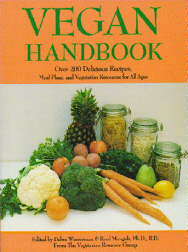
This great summer recipe is from Vegan Handbook By Debra Wasserman and Reed Mangels, Ph.D., R.D., which contains over 200 delicious recipes, meal plans, and vegetarian resources for all ages! Purchase a copy »

Sauteed Collard Greens and Tomatoes
Serves 4

1 teaspoon oil
1 pound collards, chopped
2 ripe tomatoes, chopped
2 teaspoons lemon juice
1/2 teaspoon garlic powder
1/4 teaspoon mustard powder

Saute all ingredients together over medium-high heat for 7 minutes. Serve warm.

  • Donate

  • Subscribe to the blog by RSS

  • VRG-NEWS

    Sign up for our newsletter to receive recipes, ingredient information, reviews of new products, announcements of new books, free samples of products, and other VRG materials.

    Your E-mail address:
    Your Name (optional):


↑ Top