The Vegetarian Resource Group Blog

Interview Request for People with Vegan Cats

Posted on May 11, 2011 by The VRG Blog Editor

Thanks to those who contacted Terri in response to a recent interview request we posted on her behalf regarding peoples’ experiences with vegan pets.

Terri could still use input from people with vegan cats.

Terri is a vegan freelance writer and the information is for a vegan pet food company’s newsletter.

If you can help, please contact Terri at: [email protected].

Pizza Hut Australia

Posted on May 09, 2011 by The VRG Blog Editor

by Jeanne Yacoubou, MS
VRG Research Director

A www.vrg.org reader living in Australia wrote us to find out information about the ingredients in the food at Pizza Hut. She inquired at her local restaurant but was told it may take some time to get answers.

The VRG sent an email to Pizza Hut Australia and received a speedy reply from a Pizza Hut food technologist. She told us the following “regarding rennet in the cheeses used at Pizza Hut Australia.”

“…[I]t is important to note that not all of our cheeses are vegetarian.

The mozzarella cheese we use on all our pizzas, (including our standard, 11-inch large pizzas [in the] Legends range), contains non-animal rennet and so is classified as a vegetarian cheese. This includes the mozzarella cheese which we use to stuff the crust of Stuffed Crust Pizzas.

We also have cheddar (or Tasty) cheese available in stores and this is made with animal- derived rennet and so is NOT a vegetarian cheese. On our permanent menu, cheddar is used in Cheese Pizza and also in the whole Mia (9-inch) Pizza range. Cheddar is also used in promotional pizzas or side items from time to time. Examples of promotional products include Big Dippers, Dipsticks, and Cheesy Bites Pizza.

Note that the whole Mia Pizza range (9-inch) contains both mozzarella and cheddar (or Tasty) cheese and because the cheddar cheese contains animal-derived rennet it is not vegetarian.

We also add feta to various pizzas and the feta cheese contains non-animal rennet and so like the mozzarella is vegetarian.

It’s also important to be aware that Pizza Hut does not guarantee that all Veggie Pizzas are “vegetarian” because of the way our pizzas are made. Pizzas are topped from ingredients stored in pots in a refrigerated bench (make-table) using topping cups. Pizza Hut also prepares a large volume of Meat Lovers Pizza on site which include many different types of ham, bacon bits, bacon rashers, meatballs, chorizo sausage and chicken, all of which are meat products and all of which are prepared on the same make table; are cooked on the same pans in the same oven; and are also cut using the same board and knife as the vegetarian pizzas.

So with that in mind, cross contamination of meats with veggies is a definite reality, especially given that the same topping cups are used for both.

We have Veggie Pizzas on our menu and every effort is made to ensure that no meat lands on these (and any other) vegetable-only pizzas, however it cannot be guaranteed. Because of the above, we cannot offer strictly vegetarian items.

Please be advised that Pizza Hut does change product formulations from time to time. [T]herefore, the information above should be checked on a regular basis.”

In a follow-up email, The VRG asked if the “non-animal rennet” used by Pizza Hut Australia was genetically modified Chymax™. (This form of rennet is replicated today in microorganisms although originally it was derived from genetic material extracted long ago from a young ruminant’s (i.e., calf’s or kid’s) stomach.)

In response, we were told that “[o]ur suppliers specify either “animal derived” or “non-animal derived” rennet in our cheeses. I do not have access to further details about the precise rennet used in their manufacture process.”

Readers may like to compare the information presented here from Pizza Hut Australia with that collected in June 2010 from Pizza Hut USA:

http://www.vrg.org/blog/?s=pizza+hut

For updates on Pizza Hut and other quick service chains, check our blog regularly or subscribe to our free enewsletter at www.vrg.org.

To support VRG research, you can donate here:
https://www.givedirect.org/give/givefrm.asp?CID=1565

The contents of this website and our other publications, including The Vegetarian Journal, are not intended to provide personal medical advice. Medical advice should be obtained from a qualified health professional. We often depend on product and ingredient information from company statements. It is impossible to be 100% sure about a statement, info can change, people have different views, and mistakes can be made. Please use your best judgment about whether a product is suitable for you. To be sure, do further research or confirmation on your own.

Labeling of Household Cleaning Products

Posted on May 06, 2011 by The VRG Blog Editor

Natural Foods Merchandiser reports:

According to a Whole Foods Market online survey of nearly 2,500 U.S. adults, three out of four respondents think the government requires manufacturers of household cleaning products to list ingredients on the label. In fact, the fed doesn’t. Beginning in April 2012, however, all household cleaning products carried by Whole Foods must list every single ingredient on product packaging.

Athletes and a Vegetarian Diet

Posted on May 04, 2011 by The VRG Blog Editor

ATHLETES AND A VEGETARIAN DIET
Links to related articles on our website.
Compiled by Corey Bivins

Can I be a vegan athlete?

Sports Nutrition Guidelines For the Vegetarian
http://www.vrg.org/nutshell/athletes.htm

http://www.vrg.org/links/#Athletes

Vegetarian Action
http://www.vrg.org/journal/vj2002issue1/2002issue1action.htm

Vegetarianism and Tennis: A Natural Partnership
http://www.vrg.org/journal/vj2006issue2/2006_issue2_action.php

Chef Ralph Estevez
http://www.vrg.org/journal/vj2008issue3/2008_issue3_action.php

Dwayne DeRosario: Message from the Yards
http://www.vrg.org/journal/vj2001nov/2001novdwayne.htm

Vegan Weightlifting: What Does the Science Say?
http://www.vrg.org/journal/vj2003issue4/2003_issue4_weight.php

The Vegan Teen Athlete
http://www.vrg.org/journal/vj2010issue1/2010_issue1_vegan_teen_athlete.php

You Don’t Have to Eat Meat to Build Muscle
http://www.vrg.org/journal/vj2003issue1/2003_issue1_scientific.php

Updated Vegan Guide to Leather Alternatives
http://www.vrg.org/blog/2010/12/27/updated-vegan-guide-to-leather-alternatives/

Bringing Cruelty-Free Athletic Gear and Wear to the Masses
http://www.vrg.org/journal/vj2008issue1/2008_issue1_veggiebits.php

Letter from Reader About Naan

Posted on May 02, 2011 by The VRG Blog Editor

We received this note from a reader:

I was reading your latest Vegetarian Journal and felt compelled to write because of info from your Nutrition Hotline. It is mentioned that naan is usually vegan. I think this may be misleading. I was in India two times – 1st for 2 weeks, then for two months. Both times I found it hard to be a vegan because milk and yogurt are added to so many things. I did eat the naan the first time because a waiter said it did not have dairy in it (now I think that was a misunderstanding or a willingness to please). Since, I have found that it usually does have dairy in it and avoided it my second time there. I have tried to buy it here in stores like Whole Foods and it always has milk in it.

I have run into the same thing in Indian restaurants in the US. I just do not eat naan now. I was at a wedding in CA at a nice restaurant a couple of years ago and asked them. The waiter assured me it was not made with milk. So I decided to go talk to the cooks who were outside cooking the naan in barrels. They said that their batter did have milk in it.

When I was in India I was working for a company that was owned by an Indian-American and employed many people from India. When I asked them about it they said as far as they knew, it was usually made with milk. Maybe the preference for naan made with yogurt, milk, or water is regional, I am not sure.

-Michelle

The author of the Nutrition Hotline said the reader does bring up valid points that naan does sometimes contain animal products. She said, “In my experience when I went to Indian restaurants, I have been told almost 100% of the time that naan does not contain dairy/egg if it is not brushed with ghee/butter. Certainly you should ask the wait staff, but as examples above illustrate, this isn’t a certainty either.”

We asked the opinion of Saurabh Dalal, who is a long time vegan Jain and active with the Vegetarian Society of D.C. and the International Vegetarian Union. He said, “I usually do not eat naan because I assume it has dairy in it. In the U.S., I believe some/many Indian restaurants also use eggs, which would likely not be the case in India. I would not say naan is usually vegan. Often the roti or puri is vegan…but it’s still good to ask the wait-staff if there is any milk/dairy, egg, or even butter or ghee put on top.”

So the consensus seems to be to avoid naan. If anyone is certain of vegan naan options, please let us know. Also, what is your experience with roti?

For information about calcium content of popular Indian dishes (vegan versions), see http://www.vrg.org/journal/vj2009issue4/2009_issue4_calcium_indian.php

Update:

We found in the Punjab store in Baltimore a product called naan that was labeled 100% vegetarian, parve, and halal. So this product appears to be nondairy.
It shouldn’t have dairy if parve, though could have eggs. However, there are no obvious eggs on the ingredients label. It does contain cane sugar and l-cysteine. This product was distributed by Kontos Foods and labeled as Alexander’s Great Flatbreads. They have several varieties of naan.

For more information, see
http://208.64.161.54/kontos/Pages/products_flatbread.lasso?markets=foodservice

http://208.64.161.54/kontos/Pages/product_detail.lasso?-KeyValue=13&-Token.Action=&image=1product_detail.lasso?-KeyValue=13&-Token.Action=&image=1

Research Participation Request from Grad Student

Posted on April 29, 2011 by The VRG Blog Editor

The following study participation request is from a graduate student from East Stroudsburg University of Pennsylvania who is composing a thesis which will look at the perception of a vegetarian/vegan and omnivore diet on health status.

Please click on the following link to access the survey:

https://www.surveymonkey.com/s/jennyklock

Subway™ to Test Market Falafel throughout Illinois after Successful Chicago Test

Posted on April 27, 2011 by The VRG Blog Editor

by Jeanne Yacoubou, MS
VRG Research Director

April 15, 2011 – Begun in April 2010 at approximately fifty Subway™ Chicago locations, the successful falafel test menu item will be offered "in a few weeks" at all Illinois Subway™ stores according to the Subway™ regional office in Chicago. Falafel is a Middle Eastern food made principally with garbanzo beans.

According to the regional Subway™ office in Chicago, the falafel patty itself is all-vegetable. As is customary, it may be ordered on any bread product offered at Subway™.

The all-vegetable falafel "puck," identified as such by Zaibak Brothers and Company™, the family-owned Chicago manufacturer of the falafel test item, arrives "flash frozen and 80% cooked" at Subway™ locations according to the regional Chicago Subway™ office. The cooking process is completed in a TurboChef™ oven separate from all egg and meat products. Pucks are placed on specially designed paper intended for one-time use and heated until crispy on the outside and "fluffy and moist" on the inside. Three pucks come on a six-inch sub; six on a foot-long. Now, in Chicago stores, a foot-long falafel sub is offered for $5.00.

The falafel sandwich is served with a cucumber sauce that contains dairy. Patrons may request the Fat Free Sweet Onion Sauce that is an all-vegetable sauce available at Subway™. Tomatoes, onions, cucumbers, and olive oil are standard at all Subway™ stores and may be selected as condiments for the falafel menu item.

The VRG is very pleased that Subway™, which now is the leader among all restaurant chains, including McDonald's™, in terms of number of store locations, offers a "non-traditional" menu item that is a favorite among many vegetarians and vegans. This is not surprising for Subway™ given its non-traditional tendencies. In fact, according to a March 2011 Wall Street Journal article, Subway™ regularly opens outlets in non-traditional locations such as an automobile showroom in California; an appliance store in Brazil; a ferry terminal in Seattle; a riverboat in Germany; and a Goodwill store in South Carolina. Currently, approximately one-fourth of Subway locations are in non-traditional locations.

Mr. Don Fertman, Subway’s™ Chief Development Officer, stated, “The non-traditional is becoming traditional.” With the falafel sandwich, Subway™ is non-traditional in a fast food/quick service chain food sense, too. With time and customer support, the "non-traditional' falafel can become "traditional" fast food/quick service chain fare.
To show support for this sandwich, and to encourage Subway™ to adopt is as part of its standard menu, purchase this item when in an Illinois Subway™ and encourage your Midwest friends and family to do so. Become a friend of Subway™ falafel on Facebook and post a favorable comment requesting that it become a permanent menu item: http://www.facebook.com/group.php?gid=144712849001&v=wall#!/group.php?gid=144712849001&v=info

For more information on quick service chains, see

http://www.vrg.org/fastfoodinfo.htm#subway_article
http://www.vrg.org/fastfoodinfo.htm
http://www.vrg.org/vote/

Ecofair 2011 – Reisterstown, MD

Posted on April 26, 2011 by The VRG Blog Editor

Come visit VRG’s booth at Ecofair!

Sunday, June 5th, 2011
12pm-3pm
Pearlstone Conference and Retreat Center
5425 Mt. Gilead Road, Reisterstown, MD 21136

$5.00 General Admission
$20.00 max. Family Admission

Click here for more information about the event.

Interview Request from Freelancer for People with Vegan Pets

Posted on April 21, 2011 by The VRG Blog Editor

We received a request from a vegan freelance writer who is writing the quarterly newsletter for a vegan pet food company and needs to interview people with vegan pets who have had positive experiences.

If you can help, please contact Terri at: [email protected].

Three Book Reviews

Posted on April 20, 2011 by The VRG Blog Editor

These reviews originally appeared in Vegetarian Journal Issue 3, 2010. To subscribe to Vegetarian Journal, visit: http://www.vrg.org/journal/

The Cancer Survivor's Guide: Foods That Help You Fight Back!

By Neal D. Barnard, MD, and Jennifer K. Reilly, RD
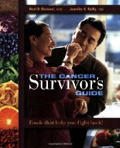
The Cancer Survivor's Guide is a part of The Cancer Project's nutrition education program. It was written for people who have been diagnosed with cancer, but it can give everyone insights into food's role in health.

The first chapters cover foods' role in cancer prevention and survival. Barnard and Reilly promote a low-fat, high-fiber, vegan diet that includes a generous variety of fruits and vegetables. Specific advice is given for people with breast or prostate cancer.

This volume provides detailed information about how to start eating a healthy vegan diet. Practical suggestions include breakfast, lunch, dinner, and snack ideas; shopping suggestions; and tips for revising conventional recipes.

The second half of the book consists of more than 130 vegan recipes. A nutritional analysis is provided for each dish.

While this book would be an especially useful resource for anyone diagnosed with cancer, it could help anyone plan a healthier diet. Of course, as the authors state, all cancer treatments-including the dietary changes discussed in this book-must take into account individual needs and should be discussed with your doctor.

The Cancer Survivor's Guide (ISBN 978-1-57067-225-5) is published by Healthy Living Publications. It has 246 pages and retails for $19.95. Purchase the book online at http://astore.amazon.com/httpwwwvrgorg-20/detail/1570672253 Reviewed by Reed Mangels, PhD, RD.

Chicken Soup

By Jean Van Leeuwen
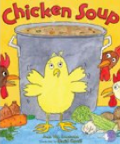
Upon seeing the title Chicken Soup, one wouldn't think this children's book could be veggie-friendly. Nevertheless, this sweet tale of comic misunderstandings is suitable for kids ages 4 through 8.

The author creatively tells the story of Mrs. Farmer, who has taken out a huge soup pot and appears to be about to cook chicken soup. A cow proceeds to pass this startling message on to all the chickens via other animals on the farm. The chickens hide; however, Little Chickie has a cold and keeps on sneezing wherever she takes cover. Each time the young chick sneezes, all of the other chickens have to find a new hiding spot on the farm.

Eventually, Mr. Farmer is able to catch the young chicken and brings her to Mrs. Farmer. This is when the readers learn that, instead of preparing chicken soup, Mrs. Farmer has made some vegetable soup for Little Chickie to help her feel better.

Chicken Soup (ISBN 978-8109-8326-7) is published by Abrams Books for Young Readers. This hardcover book retails for $16.95 and can be purchased online or in your local bookstore. Reviewed by Debra Wasserman.

The 30-Minute Vegan

By Mark Reinfeld and Jennifer Murray
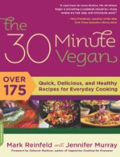
This husband-and-wife team share their passion for vegan cooking in a new, quick-and-easy cookbook. The recipe section starts off with smoothies and other beverages and then moves on to breakfast/brunch dishes, including Onion-Zucchini Corn Cakes prepared with spelt flour, flaxseeds, rice milk, zucchini, and onions. Next, you'll find snack ideas, such as Crispy Kale (baked kale with olive oil, nutritional yeast, and salt) and Savory Toasted Pepitas (consisting of pumpkin seeds, soy sauce, maple syrup, sesame oil, and vinegar).

Lunch recipes include several wraps and sandwiches. You will also find a wide variety of soups and great tasting salads, such as Coleslaw with Shaved Fennel and a Tuna-Free Tempeh Salad. Among the supper dishes are Tofu Saag (an Indian dish usually prepared with cheese) and Chipotle Chile-Rubbed Southwest Tempeh. The desserts section brings tasty options like Chocolate-Sesame Bonbons and Luscious Live Pie.

Nutritional analyses are not provided; however, most recipes do not appear to be high in fat. Plenty of tips and resources are offered throughout this book.

The 30-Minute Vegan (ISBN 978-0-7382-1327-9) is published by Lifelong Books. This book retails for $18.95 and can be purchased online at http://astore.amazon.com/httpwwwvrgorg-20/detail/B002FQOHY2. Reviewed by Debra Wasserman.

  • Donate

  • Subscribe to the blog by RSS

  • VRG-NEWS

    Sign up for our newsletter to receive recipes, ingredient information, reviews of new products, announcements of new books, free samples of products, and other VRG materials.

    Your E-mail address:
    Your Name (optional):


↑ Top