The Vegetarian Resource Group Blog

VRG Organization Timeline

Posted on September 07, 2010 by The VRG Blog Editor

Recently we were reflecting on VRG’s history and the wonderful things we’ve been able to do, with your help, in the past almost 30 years. To support VRG’s projects such as the ones below, click here.

Organization Timeline
A Sampling of Accomplishments

1982:

  • In September Charles Stahler (activist), Debra Wasserman (activist), Ernie Kopstein (vegan medical doctor), Audrey Fluke (nurse), and Norris Fluke (Master's swimmer) met and started Baltimore Vegetarians (BV), which later becomes The Vegetarian Resource Group (VRG).
  • In November we hold our first pre-Thanksgiving vegetarian potluck dinner, which has been an annual event since the beginning and in December we sponsor an alcohol-free and smoke-free vegetarian New Year's Eve party and receive great publicity in newspapers and on the radio and TV.
  • Our first newsletter was a 4-page typed written publication.

1983:

  • Hold a highly successful Tofu Cooking Demonstration with a standing room crowd.
  • Sponsor signs on buses in Baltimore promoting vegetarianism.
  • Continuing our innovative campaign to get the word out, the group set up an activity at a local Children's Fair where kids prepare their own healthful snacks. We also spoke at a high school, sponsored our first World Vegetarian Day Conference, gave a cooking demonstration in the plaza next to City Hall, donated food to a local soup kitchen, performed cooking demos at local health foods stores, hosted camping trips, organized booths at the Baltimore City Fair, and distributed information at a community college.
  • Another great success was when, on October 1, 1983, our local
    Mayor proclaimed World Vegetarian Day in Baltimore. Since then, many localities have followed suit.
  • We published the cookbook Vegetarianism for the Working Person – Quick and Easy Recipes, which later is renamed Meatless Meals for Working People.

1984:

  • Started writing "Beyond Carrot Cake," a vegetarian column for a free community-based newspaper in Baltimore.
  • We also had mentions in publications such as What's New in Home Economics and Women's Circle Home Cooking.
  • We published the Healthy Holidays cookbook and produced "Be Kind to Animals-Don't Eat Them" and "Vegetarians Are Sprouting Up All Over" bumper stickers, as well as vegan recipe postcards.
  • VRG's first annual essay contest was mentioned by the National Science Teachers Association.
  • Debra Wasserman served on the consumer board of the local Giant supermarket chain.
  • A mention of our cookbook Vegetarianism for the Working Person – Quick and Easy Recipes in Changing Times magazine resulted in over 800 orders for this book, which launched VRG as a publisher.
  • We have a street-level vegetarian window display at the main branch of the Pratt Library in Baltimore city for 6 weeks.
  • Baltimore Sun runs editorial called "Eating Less Meat," which promotes our group.

1985:

  • Researched and produced our first "Guide to Fast Food," which answered questions such as "Which Fast Food Chain(s) Doesn't Fry Their French Fries in Lard?" This piece earned mentions in USA Today, The Los Angeles Times, and by the Copley News Service, to name a few. Requests for the guide and our other materials came from the American Heart Association, Johns Hopkins Hospital, the Mayo Clinic, Vogue magazine, the Captain of the RMS Queen Mary, the Arkansas Democrat, People Weekly, Self, Shape, and even the Camp Fire Girls.
  • Ruth Ransom, our first volunteer Registered Dietitian, helped us create a 4-week vegetarian meal plan and an alternative version to the four food groups, which interestingly was very similar in concept to the Food Pyramid promoted many years later by government and health professional organizations.
  • Sponsor weekend vegetarian camping trip in Lebanon State Forest, NJ.
  • Because of having members around the country, started using the name Vegetarian Journal on our newsletter.

1986:

  • We sent information for distribution at the American Dietetic Association (ADA) annual meeting.
  • Our newest dietitian, Suzanne Havala, produced a "Guide to Vegetarian Weight Loss," a "Hospital Survival Guide," and "Osteoporosis: Beyond a Simple Answer."
  • We continued our commitment to educating teachers, children, and parents by giving a presentation on vegetarian diets at an in-service for home economics teachers in Baltimore County Public
    Schools.
  • We receive $500 grant from the Ahimsa Foundation, which was significant to us.
  • Exhibit at Baltimore City Fair. Volunteers build a booth for us to use.

1987:

  • VRG's Nutrition Advisor, Suzanne Havala, was chosen to be the primary author of the ADA position paper on vegetarianism, which accomplished the following: 1) Put health advantages in perspective with health risks; 2) Abandoned the complementary protein myth; 3) Updated information on B12; 4) Set the record straight concerning vegetarians and calcium; and 5) Reiterated that the daily requirements for protein can be easily met in a vegetarian diet. The position paper increased health professionals' acceptance of vegetarian eating patterns.
  • VRG Co-Director Debra speaks at the Toronto, Canada Vegetarian Society Vegetarian Festival on the waterfront.

1988:

  • Gave assistance to Child Magazine (among others) for a story on vegetarianism, and offered our materials in the program of the Society for Nutrition Education annual meeting in Toronto, Canada.
  • We exhibit at The American Dietetic Association Annual Meeting for the first time.
  • We sponsor a World Vegetarian Day Convention in Baltimore.
  • We exhibited at the Natural Products Expo East show.

1989:

  • Had outreach booths at the annual conferences of the National Education Association (NEA) and the American Federation of Teachers.
  • Vegetarian Times said about The VRG's work: "Holding their own within the mainstream — not just working against it — is part of the secret of their success… VRG quickly outgrew its local status to become one of the largest, most well-run vegetarian resource bases in the country."
  • We produced our Vegetarianism in a Nutshell poster and our first brochure titled Vegetarianism in a Nutshell.
  • We sponsored our first summer weekend conference held in Ocean Grove, NJ.
  • Exhibit at Children's Fair in Baltimore sponsored by the Children's Theater Association.

1990:

  • Baltimore Vegetarians officially becomes The Vegetarian Resource Group.
  • Sheila Schwartz of the Humane Education Committee in New York City created a lesson plan to go along with our newest handout, I Love Animals and Broccoli Coloring Book. She distributed both to NYC school teachers.
  • The VRG's contact information was given in the New York Times, resulting in over 300 phone calls in two days. As soon as the phone stopped ringing, we were deluged by over 1,500 letters requesting information.
  • Debra Wasserman, Charles Stahler, and Reed Mangels, PhD, RD did an 8-minute CNN television segment, which aired five times in a three-day period.
  • We sponsored a weekend gathering at the shore in Spring Lake, NJ.

1991:

  • VRG publishes Simply Vegan – Quick Vegetarian Meals, which includes a great nutrition section by Reed Mangels, PhD, RD. At the time, it was extremely rare to see the word "vegan" on a book cover.
  • Reed Mangels, PhD, RD appeared on CNN and spoke about our "Teenagers and Vegetarianism" brochure.
  • At the Annual Meeting of the American Home Economics Association, we gave a presentation on "Tofu, Tempeh, and TVP."
  • We published 30 quantity vegan recipes in servings of 25 for use by food services.
  • VRG also ran an Adopt-A-Classroom Program this year and was able to send materials to over 75 classrooms.
  • VRG sponsors a one-day conference in New York City with over 700 attendees. We also sponsor a one-day conference in Baltimore, MD.

1992:

  • Debra had a letter to the editor published in The New York Times headlined, "Chefs in US: Must Recognize Demand for Vegetarian Cuisine," and it offered information and quantity recipes. The letter was prominently boxed off and it brought us a lot of attention in the food service industry. Inquiries for our materials have ranged from a US Air Team requesting advice concerning a proposal for serving vegetarian foods, to the Food Service Director at Gallaudet University, to the Omaha Steaks company.
  • VRG sponsors a Vegetarian Conference in the Pocono Mountains,
    PA July 23rd-26th.

1993:

  • Due to a feature in Parade magazine, we received thousands of requests for vegetarian information. Mentions in the consumer publication Workbasket and the employee wellness periodical The Hope Heart Newsletter, resulted in similar responses.
  • VRG had a booth at the American School Food Service Association's (ASFSA) annual meeting in Boston and thanks to several generous donations we were able to hand out 1,000 of our Quantity Vegan Recipe Packets for free.
  • In November, The Vegetarian Resource Group had a booth at the American Heart Association's Annual Conference held in Atlanta, Georgia. Thirty thousand people attended this convention, including 13,000 doctors. There were several hundred booths displaying surgical equipment and/or pharmaceutical products. We were one of only a handful of booths promoting diet and prevention of heart disease.
  • VRG creates computer software game called The Vegetarian Game.
  • VRG starts publishing Vegetarian Journal's Foodservice Update.
  • We also publish Vegetarian Journal's Guide to Natural Food Restaurants in the U.S. and Canada.
  • VRG sponsored a vegetarian conference and day-long canoe trip in Luray, VA July 8th-11th.

1994:

  • VRG publishes The Lowfat Jewish Vegetarian Cooking — Healthy Traditions from Around the World, by Debra Wasserman.
  • VRG sponsored a one-day event of cooking demos and natural foods samples in Baltimore.
  • Debra gave a vegan cooking demonstration on Good Morning America in September.
  • Published Simple, Lowfat & Vegetarian — Unbelievably Easy Ways to Reduce the Fat in Your Meals, in February. This 368-page book was written by Suzanne Havala, M.S., R.D., with lowfat vegan recipes by Mary Clifford, R.D., and a foreword by Dean Ornish, M.D.
  • VRG exhibited at the USDA NET (Nutrition Education and Training program) Promoting Healthy Habits for Our Children conference.
  • VRG exhibited at the American Academy of Family Practitioners annual meeting.
  • The Vegetarian Resource Group had an exhibit again this year at the annual meeting of the American School Food Service Association (ASFSA), held this year in St. Louis, Missouri. VRG was also invited by ASFSA to present two sessions on vegetarianism for conference attendees. Julie Hoskins, M.S., R.D., presented a two-hour session on incorporating vegetarian items into school menus, and Suzanne Havala, M.S., R.D., gave an hour-and-a-half lecture on the health and nutritional aspects of vegetarian diets.
  • VRG commissions a Roper Poll to find out how many adults are vegetarian and/or vegan. At this time about 1% of the US adult population is vegetarian.
  • VRG sponsors vegetarian conference in Western Maryland July 7th-10th.
  • VRG publishes two new brochures: Vegan Diets in a Nutshell and Una Dieta Vegetariana (Spanish).

1995:

  • Brad Scott, a VRG volunteer, sets up VRG information on Envirolink.
  • The Vegetarian Resource Group presented two poster sessions at the Annual Meeting of The American Dietetic Association. The first session, titled "Creating Vegetarian Nutrition Education Materials in Conjunction with a Supermarket Chain: A Unique Collaboration," highlighted the vegetarian nutrition brochure which was co-produced by the VRG along with Wegmans' supermarket chain. The second session was entitled "Vegetarian Nutrition Online," and it focused on the VRG's continuing efforts to provide information on vegetarianism on the Internet.
  • The Vegetarian Resource Group conducted a Roper poll of 8- to 17-year- olds to find out the number of young vegetarians in the United States. Almost two percent of 8- to 12-year-olds say they don't eat meat, fish, or fowl. A little over one percent of teens are vegetarian.
  • VRG publishes Leprechaun Cake and Other Tales, which is a vegan children's story-cookbook. We also publish a second kid's handout called I Love Animals and Broccoli Shopping Basket.

1996:

  • In 1996 Vegetarian Journal's Guide to Natural Foods Restaurants in the US and Canada was mentioned in The New York Times.
  • VRG publishes Guide to Vegetarian Restaurants in Israel, as well as a Spanish version of its Heart Healthy Eating Tips brochure.
  • VRG publishes Vegan Handbook, which includes the best articles from previous issues of Vegetarian Journal.
  • VRG Nutrition Advisor Suzanne Havala works with the national Meals on Wheels program to create menu alternatives for its clients. Cathy Conway, RD tests quantity recipes for VRG in various settings in New York City. Menus are released the following year.
  • VRG starts VRG-News, our online newsletter.

1997:

  • Jeanne Bartas completed Vegetarian Journal's Guide to Food Ingredients. Jeanne's year of detailed research took her beyond dictionary definitions. By contacting food companies, and then their suppliers, she played detective as she tracked down the actual commercial sources of the ingredients.
  • Seven 4-H interns worked in The VRG office for two days. Most were from cattle ranches. We had the interns taste-test and write an article about various soy ice creams. It was a great learning experience for all of us.
  • Our website www.vrg.org went live in January, 1997. The Tufts University Nutrition Navigator awarded the VRG website one of their highest rankings for a nutrition website.
  • VRG commissions a Roper Poll to find out how many adults are vegetarian and/or vegan. At this time about 1% of the US adult population is vegetarian.
  • VRG publishes Conveniently Vegan.
  • VRG is now listed on the combined Federal Campaign National List.

1998:

  • VRG Food Service Advisor Chef Nancy Berkoff gave a vegetarian presentation at the annual meeting of the National Association of College and University Food Service.
  • VRG's Nutrition Advisor Reed Mangels, PhD, RD, authored a chapter titled "Nutrition Management of the Vegetarian Child" in the Pediatric Manual of Clinical Dietetics, published by the American Dietetic Association.
  • Chef Nancy Berkoff, EdD, RD, becomes our Foodservice Advisor.

1999:

  • Nancy and Debra gave a culinary demonstration at the ADA's Annual Meeting concerning the introduction of vegetarian foods into institutions.
  • VRG sponsors a Zogby poll to find out how often restaurant customers were ordering vegetarian meals. 5.5% of adults said they always order a vegetarian meal when dining out; 11.7% said they often order a veggie dish; and 40.8% said they often order a veggie dish. 38.9% said they never order a veggie dish when dining out.
  • VRG hosts an intern from Japan for 6 months.

2000:

  • VRG commissions a Zogby Poll to find out the number of adult vegetarians. Defining vegetarians as those who never eat meat, poultry, or fish, Zogby arrived at the figure 2.5% of the statistical population who can be considered vegetarian. .9% are considered vegan.
  • VRG also sponsored a Roper Poll to find out how many kids are vegetarian. 2% of kids between the ages of 6 and 17 are vegetarian.
  • VRG publishes Vegan in Volume, which contains quantity recipes for institutions. Many university and restaurant chefs use this book.
  • VRG starts an online vegetarian parent's group through Yahoo for parents to exchange ideas and help one another.

2001:

  • VRG published another update of its Guide to Fast Food and Quick Service Chains, which was quoted in the book Fast Food Nation and Atlantic Monthly magazine, referencing our information about natural flavorings in McDonald's French fries.
  • VRG's Nutrition Advisors Reed Mangels and Suzanne Havala are awarded Awards of Excellence in Service and Leadership from the American Dietetic Association's Vegetarian Nutrition Dietetic Practice Group.
  • Chef Nancy Berkoff, RD, EdD gave a lecture titled "Implementing Vegetarian Menus into Food Service" at the American Dietetic Association's annual meeting.
  • VRG starts offering an Online Course on Vegetarianism taught
    by Chef Nancy Berkoff, RD, EdD
  • VRG publishes Vegan and Vegetarian FAQ book. We also print vegetarian placemats.
  • VRG publishes Vegan Meals for One or Two.
  • The VRG is featured in an article on vegetarianism in the National Education Association magazine reaching two million educators.
  • VRG featured on Tofurky package.

2002:

  • Thanks to a generous donor, VRG begins offering two $5,000 scholarships annually to graduating High School Seniors promoting vegetarianism in their school/neighborhood. The first award was given in spring 2003.
  • At the Natural Products Expo West trade show for the health food industry, Nancy gave a demo on Meeting the Needs of Your Vegan Customers.

2003:

  • Vegetarian Resource Group Harris Interactive survey of adults — 2.8 percent of those surveyed said they never eat meat, poultry, or fish/seafood. A majority of the vegetarians said they never eat meat, poultry, fish/seafood, dairy products, eggs, or honey. Thus, over half the vegetarians can be classified as vegans.
  • VRG's Nutrition Advisor Reed Mangels, PhD, RD, is co-author of the American Dietetic Association's new Position Paper on Vegetarianism.
  • VRG publishes Vegan Microwave Cookbook.
  • VRG's Co-Directors Charles Stahler and Debra Wasserman are inducted into the North America Vegetarian Society's Vegetarian Hall of Fame.

2004:

  • VRG Co-Director Charles Stahler is interviewed by the Associated Press concerning the impact Mad Cow Disease has had on the vegetarian movement. The resulting article sent reader's nationwide to VRG's website www.vrg.org
  • VRG publishes Vegan Menu for People with Diabetes.
  • VRG's nutrition Advisor Reed Mangels, PhD, RD, co-authored The Dietitian's Guide to Vegetarian Diets: Issues and Applications 2nd edition. This is a textbook.
  • VRG sends testimony to the USDA about revising the Food Guide Pyramid.
  • Fantastic Foods sponsored VRG so we could give Meatless Meals for Working People to 1,000 dietitians at the annual meeting of the American Dietetic Association.

2005:

  • VRG commissions Harris Interactive® poll of youth — 3 percent of 8- to 18-year-olds are vegetarian (that is, they say they never eat meat, poultry, or fish/seafood.)
  • VRG publishes the 4th edition of Vegetarian Journal's Guide to Natural Foods Restaurants in the U.S. and Canada. We also publish the 4th edition of
    Meatless Meals for Working People, which we has sold over 90,000 copies.
  • VRG exhibits at the School Nutrition Association Convention.

2006:

  • VRG publishes a second vegan Passover cookbook called Vegan Passover Recipes.
  • VRG researcher Jeanne Yacoubou does an article for Vegetarian Journal called "Vegetarian Certifications
    on Food Labels " What do They Mean?"
  • VRG's Foodservice Advisor Chef Nancy Berkoff, EdD, RD, presented 8-hour culinary education workshops at American Culinary Federation's regional conferences.
  • VRG publishes the 4th edition of Simply Vegan.
  • Thanks to generous donors, VRG establishes The Eleanor Wolff Intern Scholarship that allows VRG to offer a paid summer internship for a student in need including housing.
  • VRG commissions Harris Interactive® poll to find out how many adults are vegetarian or vegan. 2.3% are vegetarian and about half of these vegetarians are vegan.
  • VRG publishes a full-color version of our Vegan Diets in a Nutshell for tabling.

2007:

  • VRG celebrates its 25th Anniversary with a special edition of Vegetarian Journal.
  • VRG researcher Jeanne Yacoubou writes an article for Vegetarian Journal on Egg Labels and Certifications: What do they Mean?" to point out that free-range chickens do not have to go outside to be labeled free-range, beak-trimming is acceptable under organic law, etc.
  • VRG exhibits at the American Academy of Family Physicians Scientific Assembly.
  • VRG volunteer Mark Rifkin, RD starts offering Call-a-Dietitian Day from the VRG office every other month.

2008:

  • VRG publishes Vegan Seafood: Beyond the Fish Shtick for Vegetarians.
  • VRG conducts a Zogby Poll to find out How Many People Order Vegetarian Meals When Eating Out. 6.7% of American adults always order a veggie meal when dining out.
  • VRG's online vegetarian course is accepted by the American Culinary Federation for chefs completing their continuing education credits in nutrition.
  • VRG did a survey to determine which are the top mainstream restaurant chains offering vegetarian options.
  • VRG publishes a full-color updated version of its Heart Healthy Eating Tips brochure.

2009:

  • VRG commissions Harris Interactive® poll of adults: In the survey, 3% of U.S. adults indicated they never eat meat, poultry, and fish/seafood. They were classified as vegetarian. About 1/3 to 1/4 of the vegetarians (one percent of the U.S. adult population)
    also never eat dairy, eggs, and honey, and were classified as vegan.
  • The American Culinary Federation asked VRG Food Service Advisor Nancy Berkoff to do an 8-hour seminar for culinary educators.
  • VRG's Nutrition Advisor speaks at the American Dietetic Association's annual meeting.
  • VRG's researcher Jeanne Yacoubou writes a Vegetarian Journal article titled "The Vegetarian Solution to Water Pollution."
  • VRG exhibits at Green Festivals.
  • VRG publishes a full-color Vegan Nutrition in Pregnancy and Childhood brochure.
  • VRG's Nutrition Advisor Reed Mangels, PhD, RD, is co-author of the American Dietetic Association's new Position Paper on Vegetarianism.
  • VRG hosts interns from Utah, Ohio, and Japan.
  • VRG mailed Vegetarian Journal to 1,000 doctors in Colorado.
  • Over 150,000 people per month continued to visit the VRG website.

2010:

  • VRG commissions Harris Interactive® poll via its YouthQuerySM online omnibus service. In the poll, 3% of U.S youth indicated they never eat meat, poultry, and fish/seafood. They were classified as vegetarian. About 1/3 of the vegetarians (1% of the U.S. youth population) also never eat dairy, eggs, and honey, and were classified as vegan. One-third of the vegetarians (1% of the U.S. youth population) were vegan, except for honey.
  • VRG volunteer Heather Gorn helps redesign VRG's website www.vrg.org
  • VRG's Co-Director writes Vegetarian Journalarticle on organic farmers.
  • VRG publishes full-color brochure titled "Save our Water."
  • Reed Mangels, PhD, RD co-authored a new edition of the "Dietitian's Guide to Vegetarian Diets" textbook.
  • VRG's updated Guide to Food Ingredients placed on line at www.vrg.org.
  • VRG's updated Guide to Naturals Foods Restaurants in the U.S. and Canada placed on line at www.vrg.org.
  • VRG presents an abstract at the American Dietetic Association Food and Nutrition Conference and Exhibition concerning Vegetarian and Vegans staying vegetarian.

VRG around the web

Posted on September 03, 2010 by The VRG Blog Editor

Two interviews with VRG Nutrition Advisor, Reed Mangels, have been published on the web recently.

The first, from babble.com’s The Family Kitchen blog is called Happy and Healthy: Ten Tips to Raising Vegetarian Children. Reed offers 10 tips for raising healthy vegetarian children.

The second is the September 2010 online edition of Today’s Dietitian. Defending Vegan Diets — RDs Aim to Clear Up Common Misconceptions About Vegan Diets

How Do I Gain Weight As A Vegetarian Athlete?

Posted on September 02, 2010 by The VRG Blog Editor

by Julia Driggers, RD

For starters, gaining weight for a vegetarian athlete is the same as gaining weight for any athlete. First, you want to look at what you are eating, how much, and your training routine. To gain weight at your current activity level, all you need to do is simply add extra calories to your diet. In general, an extra 250 to 500 calories per day can lead to a 1/2 to 1 pound weight gain, respectively, per week. For example, if you eat the way you usually do, but add an extra 250 calories everyday for a week, at the end of that week you should gain 1/2 pound. Similarly, if you eat the way you usually do, plus an extra 500 calories everyday for a week, by the end of that week you should gain 1 pound. The amount of calories you choose to add are based upon the amount of weight you want to gain. If you desire to gain less than 10 pounds add an extra 250 calories to your daily intake. If you desire to gain more than 10 pounds, add an extra 500 calories to your daily intake.

Adding calories to your diet is easy. All you have to do is add more snacks throughout the day or add extra calories to the foods you eat. It is important that you add calories with healthy items to provide more vitamins and other nutrients in your diet. Below is a list of 250 calorie and 500 calorie healthy snack ideas. Try adding one or more of these ideas every day to help gain weight. Also listed are ways to add calories to your foods. When you don't have time for snacking, this is a good way to increase the calories in your food without having to plan another meal.

There is no need to eat more than 500 extra calories per day for higher weight gain. Evidence has shown that exceeding more than 500 calories per day and gaining more than 1 pound per week is not beneficial to the athlete. A greater than 1 pound weight gain a week can lead to an increase in fat mass and a reduction in muscle mass. Extra body fat and less lean muscle can slow an athlete down and make it harder to compete. Once you reach your goal weight, continue to eat about the same amount to maintain your weight gain.

If your training routine becomes more intense, you will need to increase the amount of calories you are eating just to maintain your weight. If you are increasing your caloric intake, but are still having a hard time gaining weight during training, you may need to focus more on increasing calories during your off-season. During your off-season you lead a more relaxed life style and it's easier to put on pounds. To gain weight during this time, simply follow the recommendations for adding calories.

250 Calorie Snack Ideas

  • 2 Slices Whole Wheat Bread WITH 1 Tbs Peanut Butter, 1 Tbs Jelly
  • 1 cup Orange Juice with Calcium AND 6 oz Soy Yogurt
  • 1 Odwalla Bar
  • 1 Clif Bar
  • 1 Whole Wheat Pita Pocket WITH 5 Tbs Hummus
  • 1/2 cup Guacamole WITH 1-1/2 cup Celery Sticks AND 1/2 cup Soy Milk
  • 1 Medium Apple WITH 1 Tbs Almond Butter
  • 1/4 cup Mixed Nuts WITH 1-1/2 Tbs Raisins
  • 1 Crunchy Granola Bar AND 1/2 cup Soy Milk
  • 1 oz Hard Pretzels AND 1 cup 100% Cranberry Juice

500 Calorie Snack Ideas

  • 1 Whole Wheat Bagel WITH 2 Tbs Almond Butter, 1/2 Medium Sliced Banana
  • Fruit Smoothie WITH 1-1/2 cup Soy Milk, 1 cup Orange Juice with Calcium, 1 Medium Banana, 10 Large Strawberries, 1 cup Blueberries
  • 1/2 cup Almonds WITH 1/4 cup Dried Cranberries
  • 1 Whole Wheat English Muffin WITH 2 Tbs Earth Balance Margarine, 2 Tbs Jelly AND 1/2 cup Soy Milk
  • 3/4 cup Black Bean Dip WITH 1 cup Tortilla Chips
  • 1 Slice Wheat Bread WITH 1 Tbs Peanut Butter AND 1 cup Sweetened Applesauce AND 1 cup Soy Milk
  • 10 Whole Wheat Crackers (Triscut) WITH 1/2 cup of Hummus
  • 2 cups Lentil Soup AND 1 Whole Wheat Roll AND 1/2 cup Orange Juice with Calcium

Tips for Adding Calories to Foods

  1. Add Earth's Best Margarine or other vegan margarine (100 calories per tablespoon), Flax Seed Oil (120 calories per tablespoon) or Canola Oil (120 calories per table spoon) to stir-frys, sandwiches, vegetables, cooked cereal, breads, pasta, and rice.
  2. Add Wheat Germ (25 calories per tablespoon) to hot cereals, pastry, cake, and pancake batters and casseroles.
  3. Add Veganaise or Oil-based Salad Dressing (90 calories per tablespoon) to sandwiches, salads, and sauces on cooked vegetables.
  4. Add Vegan "Sour Cream" (43 calories per tablespoon) and Vegan "Cheeses" (50 calories per oz) to potatoes, casseroles, dips, sauces and baked goods.
  5. Add Silk Soy Creamer (15 calories per tablespoon, 240 calories per cup) to smoothies, hot and cold cereals, pastry, cake, and pancake batters, and puddings .
  6. Add Nuts (82 calories per 1/2 oz) and Dried Fruit (86 calories per 1/2 cup) to hot and cold cereals, yogurts, salads, cooked vegetables, and stir-frys.

Donate to VRG Through The Combined Federal Campaign (CFC)

Posted on August 31, 2010 by The VRG Blog Editor

Federal government employees can support The Vegetarian Resource Group through the Combined Federal Campaign (CFC). Look for us under Health & Medical Research Charities of America.

We are also participating in the California State Employees Charitable Campaign. If you are a California State employee, please support Vegetarian Resource Group outreach.

Please also remember VRG in other workplace fund drives, matching gifts, etc.!

3rd Edition of Dietitian’s Guide to Vegetarian Diets

Posted on August 26, 2010 by The VRG Blog Editor

See below for announcement for the 3rd edition of the Dietitian's Guide to Vegetarian Diets. This goes out to faculty everywhere who’ve expressed an interest in Jones and Bartlett books. We're thrilled accurate information on vegetarianism is being distributed to professors and nutrition students around the country.

AVAILABLE: 9/30/10
Dietitian’s Guide to Vegetarian Diets, Third Edition

Reed Mangels, PhD, RD, The Vegetarian Resource Group
Virginia Messina, MPH, RD, Nutrition Matters, Inc.
Mark Messina, PhD, Nutrition Matters, Inc

Evidence-based and thoroughly referenced, this text includes case-studies, sample menus, and counseling points to help readers apply material to the real world.

ISBN: 9780763779764
Paperback, 536 pages, © 2011

Help promote plant based eating on Cooking Light’s website

Posted on August 25, 2010 by The VRG Blog Editor

Gita P. is one of eight semi-finalists in Cooking Light Magazine’s “Healthy Cook of the Year” contest. Her recipe, Sweet and Sour Indian Vegetables, is vegan, gluten free, and low-fat.

Please consider visiting the contest web site and voting for Gita’s recipe to promote healthy and compassionate cuisine.

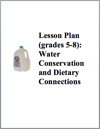
Lesson Plan: Water Conservation and Dietary Connections (grades 5-8)

Posted on August 24, 2010 by The VRG Blog Editor

Click here to view the entire version of VRG’s new lesson plan for kids grades 5-8 about water usage.

by Jeanne Yacoubou, MS © The Vegetarian Resource Group

Purposes:

  • To calculate total daily water consumption and average daily water consumption including both direct and indirect uses.
  • To compare and contrast students’ water use.
  • To graphically represent data in tables and histograms.
  • To correlate water use and dietary choices.

Objectives: As a result of this lesson’s activities, students will be able to:

  • Identify direct and indirect ways that people consume water on a daily basis.
  • Calculate daily averages of personal water use based on established reference values.
  • Display data in tabular and histographic form.
  • Make cross-comparisons concerning water usage in terms of dietary choices.
  • Propose ways to mitigate water consumption on personal, national, and global levels.

Lesson Background:

Teachers may look at the United Nations’ 2006 report titled
Livestock’s Long Shadow available at http://www.fao.org/docrep/010/a0701e/a0701e00.htm. Chapter IV deals with water pollution due to animal agriculture. Both national and global issues are discussed. The major conclusion of this Report is that livestock production is a leading source of environmental damage including climate change; water and air pollution; land degradation; and loss of biodiversity. The Report suggests that a human diet that is plant-based would prevent much of the environmental damage caused by animal agriculture, including the feedcrop production associated with it.

Please see the section titled Water Facts (below) for tabular information and other relevant statistics involving direct and indirect personal water use.

Procedure:

NOTE: The students need to keep a daily log of their
water usage for approximately seven days. Calculating the daily water use of friends or family members with different dietary preferences (e.g., vegetarian or vegan) for comparison purposes may contribute added insight.

Lesson Step #1: Introduction and Topic Setting

The teacher introduces the subject by role playing a "water waster" by letting the water run in the classroom, cafeteria, and/or bathroom. Teacher leads a general
discussion to determine how much students know about the quantity of water needed to perform common daily activities (e.g., flush a toilet). Showing the EPA table (Table 1 below) of common values may be instructive. Teacher may ask how someone can conserve water in daily living. To lead into the activity, teacher proposes that food choices also can be responsible for water wastage in an indirect way. Showing Tables 2 and 3 (below) will be helpful at this point. Students may conclude that purchasers of these foods are indirectly responsible for the water use and/or pollution.

Lesson Step #2: Activity: Daily Log of Personal Water
Usage and Sample Determination

  1. Students discuss daily log sheets with teacher and among
    themselves. All obvious water uses need to be calculated (toilet flushing, brushing teeth, taking showers, etc.) as well as the not so obvious uses: water used for growing food, preparing food, etc.
  2. Students discuss ways to determine flow rates of showers, toilets, etc. This may be accomplished by looking through
    manufacturer materials or websites, contacting manufacturers, or
    doing a calculation. Calculations may be done using a watch and
    large empty containers. The amount of water collected per minute
    may be determined. Students should be advised to standardize the
    flow rates used over all the days of data collection or told about
    the necessity of recalculating them each time. For cooking, personal quantities may be calculated by dividing the total amount of water used to cook a food item by the number of people eating the meals consumed. Similar calculations would be done for clothes and dish washing. Alternatively, one can estimate the quantity eaten/consumed.
  3. Students determine amount of water collected in a given time
    frame from a classroom, bathroom, or kitchen sink as an example
    using empty containers and a stopwatch.
  4. At the end of the predetermined data collection time period,
    students assemble all data into a class histogram. See sample below.

Lesson Step #3: Culminating activity: Students present to everyone what their average daily use of water was. Students display their histograms. Students summarize conclusions drawn based on questions from the lab sheet

Water Facts:

Table 1. Water Consumed during Daily Activities (data taken from http://www.epa.gov/reg5rcra/wptdiv/p2pages/water.pdf)

Activity Water consumed (gallons)
Flush toilet 5-7
Run dishwasher 15-25
Wash dishes by hand 20
Water a small lawn 35
Take a shower 25-50
Take a bath 50
Wash a small load in a washing machine 35
Brush teeth with water running 2-5

U.S. and Global Daily Water Intakes

Chapter Four of Livestock’s Long Shadow cites sources that on average, people consume 30-300 L of water per day for household uses while 3,000 L of water are used to grow their daily food.

David and Marcia Pimentel, authors of Food, Energy, and Society, 3rd ed. (2008), cite sources that Americans average 400 L water/person/day. They point out that in eighty-three other countries, the average daily water use per person is below 100 L. In the U.S., daily freshwater withdrawals of surface and groundwater used mainly for irrigation of crops for humans and livestock are 5,700 L per person. Worldwide, the average daily value of water for food production is 1, 970 L/person.

Table 2.Water Used to Produce Some Common Items

(Note: One liter is approximately the same as one quart. One kilogram is approximately the same as 2.2 lbs.)

Food Item Hoekstra & Chapagain (L/kg)
Corn 500
Wheat 850
Soybeans 1,900
Rice 1,600
Cow’s milk 700
Eggs 1,500
Beef (feedlot) 13,000
Pork 3,900
Poultry 2,400

Note: Values taken from Chapagain A, Hoekstra A (2004) Water Footprints of Nations Volume One: Main Report. Value of Water Research Report Series No.16. Delft (The Netherlands): UNESCO – IHE Institute for Water Education. http://www.waterfootprint.org/Reports/Report16Vol1.pdf

Table 3. Water Used to Produce some Common Items (Data taken from Hoekstra and Chapagain 2004; numbers are rounded off on table children use for activity.)

(Note: One liter (approximately one quart) equals 1,000
milliliters (ml). One pound equals 454 g.)

Product Water used (gallons)
1 cup of coffee (125 ml) 140
1 glass of milk (200 ml) 200
1 slice of bread (30 g) 40
1 slice of bread (30 g) with cheese (10 g) 90
1 potato (100 g) 25
1 bag of potato chips (200 g) 185
1 apple (100 g) 70
1 glass of apple juice (200 ml) 190
1 egg (40 g) 135
1 hamburger (150 g) 2400
Dry pasta (made in Italy;1 kg)* 1900
Cheese pizza (made in Italy; 725 g)* 1200 (or 248 L per 150 g = ~¼ pizza)
Tomato pizza (made in Italy; 600 g)* 300 (or 75 L per 150 g = ~¼ pizza)

Note: Values taken from Chapagain A, Hoekstra A (2004) Water
Footprints of Nations Volume One: Main Report. Value of Water
Research Report Series No.16. Delft (The Netherlands): UNESCO –
IHE Institute for Water Education. http://www.waterfootprint.org/Reports/Report16Vol1.pdf

Asterisked values taken from Aldaya M, Hoekstra A. (2009) The
Water Needed to Have Italians Eat Pasta and Pizza. Value of Water
Research Report Series No.36. Delft (The Netherlands): UNESCO –
IHE Institute for Water Education. http://www.waterfootprint.org/Reports/Report36-WaterFootprint-Pasta-Pizza.pdf

Click here to see the complete lesson plan.

VRG’s Vegan Dinner in Boston 11/7/10

Posted on August 19, 2010 by The VRG Blog Editor

VEGAN DINNER
Sunday, November 7, 2010, 6 PM
MY THAI CAFE
CHINATOWN, BOSTON, MASSACHUSETTS

The Vegetarian Resource Group will hold a vegan dinner during the American Dietetic Association Food and Nutrition Conference and Expo. Dietitians, VRG members, and the public are invited. Come and meet the dietitians from the ADA Vegetarian Nutrition Dietetic Practice Group. Please reserve early. Hope to see you there.

MENU
Thai Coconut Soup with Tofu
Thai Mango Salad
Yellow Curry with brown rice
Wide Rice Noodles with Chinese Broccoli and Gluten
Fresh Fruit Cocktail
Jasmine tea

This vegan restaurant also sells unique vegan Bubble Tea and vegan cakes. You may want to order takeout after the meal to sample these treats.

COST: $25 before October 1, 2010. $28 after October 1.
Children 12 and under are $12. Includes tax and tip. PAYMENT MUST BE
MADE IN ADVANCE. Menu subject to change. Please reserve
early. Refunds will be made only if we have a replacement for your seat.

Call (410) 366-8343 between 9 AM and 5 PM Eastern Time Monday to Friday; fax (410) 366-8804; click on the donation button at www.vrg.org and write “ADA Dinner” in the notes section; or send a check to VRG, P.O. Box 1463, Baltimore, MD 21203.

NAMES:
NUMBER ATTENDING: x $25/person before 10/1/10= $ Enclosed
NAMES ATTENDING:
ADDRESS:
STATE/ZIP
E-MAIL:
PHONE:
DONATION:
TOTAL ENCLOSED:

Frequently Asked Questions about the Controversy Surrounding the United Nations’ Livestock’s Long Shadow and Responses

Posted on August 17, 2010 by The VRG Blog Editor

by Jeanne Yacoubou, MS
VRG Research Director

Background: Dr. Frank Mitloehner's October 2009 scientific paper, co-authored with Dr. Maurice Pitesky and Dr. Kimberly Stackhouse, and his presentation at the March 2010 American Chemical Society meeting, titled Clearing the Air: Livestock’s Contribution to Climate Change (Adv. in Ag. 103: 3-40), have raised questions about the validity and accuracy of the United Nations' (UN) Food and Agricultural Organization's (FAO) 2006 report titled Livestock's Long Shadow: Environmental Issues and Options (herein noted as Long Shadow). In response to many inquiries about the impact of this criticism on the claims made in Long Shadow, The VRG addresses some questions on this issue.

Q. How legitimate is Mitloehner's assertion that Long Shadow significantly overestimates the contributions of livestock to anthropogenic (i.e., human-caused) greenhouse gases (GHGs) that in turn contribute to global climate change when Long Shadow states that globally, 18% of anthropogenic GHGs come from livestock? In other words, does Mitloehner's criticism that FAO conducted a "lopsided analysis" to derive the 18% figure, calling it a "classical apples-and-oranges analogy that truly confused the issue" mean that FAO cannot accurately claim that emissions from livestock are greater than those generated from transport? (Note: The GHGs include carbon dioxide (CO2), methane (CO2), and nitrous oxide ((N2O), which together are expressed in the calculations as carbon dioxide equivalents. This way of grouping the three major greenhouse gases accounts for the different global warming potential of the three gases (i.e., molecules of methane and nitrous oxide retain heat much better than molecules of carbon dioxide (respectively and approximately, 23 and 296 times better), meaning methane and nitrous oxide contribute more to climate change on a per molecule basis than carbon dioxide itself.)

A. Long Shadow's 18% figure is based on a comprehensive life cycle analysis (LCA) considering both direct and indirect sources of global GHG emissions due to all activities related to livestock production. Direct sources include nitrous-oxide producing animal manure and methane-producing enteric fermentation. Indirect sources include land use changes (e.g., deforestation) and animal feed production.

Mitloehner's major criticism of Long Shadow is that it did not conduct a comprehensive LCA of the transport sector. Instead, FAO used the value calculated by the Intergovernmental Panel on Climate Change (IPCC) value without modification. The IPCC value only considered direct sources of fossil fuel burning and not indirect ones such as GHGs emitted due to crude oil extraction, road construction, or the manufacturing of cars. Thus, asserts Mitloehner, FAO cannot claim that livestock produces more GHGs than transportation.

FAO's Pierre Gerber, an author of Long Shadow, has admitted to BBC News: "I must honestly say that he has a point" about the different LCAs used to calculate livestock's and transportation's contributions to climate change and accepts Mitloehner's criticism. However, Gerber contends, "But on the rest of the report, I don't think it was really challenged." In other words, the different methodologies do not invalidate the conclusions of Long Shadow, including the conclusion that livestock production contributes 18% to total global climate change in both direct and indirect ways. Gerber told the Columbia Journalism Review that "We stand entirely behind the 18 percent figure."

Gerber stated that the data needed to perform a LCA for the transport sector, such as detailed emissions numbers for every country, are not available. But the IPCC calculations were done as carefully as possible (with an uncertainty of less than five percent for carbon dioxide emissions from fossil fuel use, which make up approximately 75% of all GHGs), despite the uncertainties in calculating values for all other GHGs in the atmosphere. What is most difficult to assess is the proportion of the subtotals (from each sector) coming from anthropogenic versus natural sources. What complicates matters even more is the overlap between sectors revealed most easily when comprehensive LCAs are done for every sector such that the sum of all emissions could be over 100%.

Gerber also stated that the total GHG determination won't change significantly by a comprehensive LCA of the transport sector. All that may occur is a rearrangement by sectors of the total. In other words, a LCA for the transport sector may change the relative amount of GHGs contributed by that sector. Later reports by FAO will include more "disaggregation" by sector (i.e., livestock, transport, industry, etc.) of the total value as more data are collected.

Furthermore, Gerber said that FAO is currently working on much more comprehensive analyses of emissions from food production that should allow comparisons between diets, including meat-based and vegetarian diets. This report will partition the global 18% into different commodities such as eggs, milk, beef, etc., produced in different farming systems and in different world regions and climatic zones in order to pinpoint the sources of anthropogenic GHG emissions caused by livestock. Equipped with this information, the FAO can propose effective mitigation strategies that are very specific to different segments of the livestock industry in different parts of the world. An updated report should be completed by the end of 2010.

It may be said that both Mitloehner and Gerber agree that reducing emissions in both the livestock and the transport sectors is important for environmental protection. Knowing exactly where these emissions are generated can lead to more appropriate mitigation strategies that will most likely vary among world regions according to livestock subsector type (i.e., eggs, beef, etc.) and farming system (i.e., feedlot, grazing system, etc.).

Q. Dr. Mitloehner implies that Long Shadow is not relevant to local or national public policy discussions about food production and the environment as the popular press leads readers to believe, citing the EPA's calculation from its Inventory of U.S. Greenhouse Gases and Sinks: 1990-2007 published in 2009, which states that livestock's contribution in the United States to anthropogenic GHGs is approximately 3% of all human-created GHGs. Does Dr. Mitloehner's claim make Long Shadow irrelevant to such local or national policy discussions?

A. It is interesting to note that Dr. Mitloehner offers the EPA report and a California EPA report in direct comparison with the UN's although he points out the different scope and assumptions of the three. In some respects, his criticism of Long Shadow's comparative use of a comprehensive LCA to one that is not (i.e., the livestock sector's versus the transportation sector's), referring to it as "a classical apples-and-oranges" problem, may be applied to his analysis as well. For example, one major difference is that Long Shadow determines the indirect contribution to GHGs derived from animal feed production (a large indirect contribution by livestock production) while the EPA does not, but rather groups GHGs from animal feed and human crops together, so that GHGs generated from the production of animal feed crops alone cannot be determined (and, so, cannot be included in their 3% figure).

It should also be noted that the 3% value cited by Mitloehner includes only the GHGs due to enteric fermentation and manure management even though he grants that other aspects of livestock production, such as land use changes, feed production, and on-farm fossil fuel burning, do produce significant amounts of GHGs. These other aspects were considered in Long Shadow and included in its total GHGs produced by the livestock sector (18%).

Despite the different assumptions of the reports, it is noteworthy that they reach many of the same conclusions. For example, enteric fermentation and manure management generate approximately the same amounts of methane (~40% of total anthropogenic GHGs) and nitrous oxide (~65% of total anthropogenic GHGs). The EPA report also points out that methane emissions from manure management increased by 54% since 1990, due mainly to the trend among pig and dairy farmers to store manure as a liquid slurry which produces greater methane emissions that storage of manure as a solid. Both methane and nitrous oxide are gases which have much greater global warming potential than carbon dioxide. Mitloehner also points out that the increasing use on crops of synthetic fertilizers, which reduce methane emissions, tends to increase the production of the more potent nitrous oxide. These facts are not made clearly by Mitloehner but they are important when considering the overall effect of different sectors on total world GHG emissions.

Several of Mitloehner's other statements made at the ACS meeting go beyond his level of expertise as an animal scientist. For example, Mitloehner criticizes Long Shadow by implying that it misleads Americans into believing that dietary changes away from meat-based diets is a major way for climate change reduction in the United States. He states that "We certainly can reduce our greenhouse-gas production, but not by consuming less meat and milk. Producing less meat and milk will only mean more hunger in poor countries." Mitloehner uses the EPA report, which asserts that the US transport sector is responsible for 26% of GHG emissions while livestock rearing contributes only 3% of the total US GHG emissions, to defend his claims. However, based on these points, one cannot rightly claim that reducing milk and meat consumption in the US will not contribute to reducing global climate change. Nor can one make any statement about reducing world hunger.

Mitloehner goes on to say that to meet increasing demand for meat and milk, the focus in confronting climate change should be on smarter farming, not less farming. In saying this, Mitloehner implicitly depends in part on the scientific legitimacy of Long Shadow to support his view that developing nations should model their agricultural systems on the United States' intensive systems. Long Shadow, in fact, makes a similar claim, along with recommendations that "sustainable" intensive of livestock and feed crop production occur in conjunction with reduced deforestation and improved animal nutrition and manure management. In Mitloehner's use of and similarities to Long Shadow's conclusions, one cannot rightly assert that Long Shadow is irrelevant to public policy discussions about agricultural practices, nationally or globally.

It is noteworthy to point out that Mitloehner's research was funded in part by the Beef Checkoff Program, which provides research money collected from beef producers to some scientists. Whether this funding reflects a conflict of interest and biases the conclusions drawn by Mitloehner is up to the reader to discern.

Q. In the conclusion to his article Mitloehner briefly considers this question: If livestock were simply eliminated from the global agricultural system, would the 18% figure be eliminated as well? Do you agree with him that the GHG emissions coming from the use of resources, previously dedicated to animal agriculture but now used for other "human activities," could produce even greater GHG emissions?

A. Mitloehner does not explore this topic at length and provides no specific examples of "other human activities" and how they would produce even greater amounts of GHGs. It is left to the reader to speculate.

However, he does rightly point out that non-livestock substitutes for such things as synthetic fertilizer in place of manure; vinyl instead of leather; and synthetic fibers to replace wool, etc. also produce GHG emissions. Mitloehner does not quantify these emissions values. Whether they would be greater or less than those of comparable livestock-generated products remains to be seen.

Some propose that if the world transitions to veganic farming where plant-based compost and inedible crop residues are used as fertilizer instead of animal waste products or synthetic fertilizers, it would be possible that a major reduction in GHGs produced by the agricultural sector could result. Interested readers may learn more about veganic farming at www.goveganic.net.

Q. If there were no animal agriculture and everyone were vegan, how much of a reduction of GHGs could result?

A. To the best of our knowledge, there has not been any comprehensive research done that answers this question. Possibly, the upcoming FAO report mentioned in a previous question will provide an answer or at least a well-reasoned, well-supported partial answer.

Mitloehner cites Bruinsma's 2003 report titled World Agriculture: Towards 2015/2030, an FAO Perspective, that says "Overall, 32% of the world's cereal production (the primary concentrate) is fed to livestock" including corn (52%), barley (19%), and wheat (19%). The United States Department of Agriculture (USDA) states that approximately half of US soybean production (and the US is the world's leader in soybean production and consumption), is fed to livestock. Given these high quantities of foodstuffs given to livestock, it is reasonable to assume that significantly fewer GHGs would be produced in a world where fewer cereals and legumes are needed to support large numbers of livestock, i.e., in a world where everyone, or at least the majority, ate a plant-based diet. Long Shadow states that animal feed production is estimated to account for 33% of agricultural cropland, so an elimination or reduction in the numbers of livestock supported by that land would most likely result in less GHG emissions.

Research is beginning to support this claim. For example, a 2009 study titled Climate Benefits of Changing Diet by Elke Stehfest, et al. published in the peer-reviewed journal Climatic Change (95:83-102), concludes that a global food transition to less meat, or even a total switch to a plant-based diet would have a dramatic effect on land use practices and result in climate stabilization. The researchers determine that up to 2,700 Mha of pasture and 100 Mha of cropland could be abandoned as a result of dietary change that excluded all or most livestock. The change would create large carbon uptake due to vegetation regrowth as the former cropland and pastures return to more natural states. Without livestock or with reduced numbers of livestock, methane and nitrous oxide emissions produced by enteric fermentation and manure would be eliminated or substantially reduced, further contributing to climate stabilization.

The VRG will continue to report on the relationship of diet to climate change as scientists and government bodies publish their findings and statistics. Interested readers may subscribe to our free e-newsletter for updates on this timely topic. Visit our website to read more about vegetarianism and the environment, including our newest brochure titled Save Our Water the Vegetarian Way.

Join VRG with $25 and get a copy of Meatless Meals for free!

Posted on August 12, 2010 by The VRG Blog Editor

Join The VRG with $25 via our donation form,
and receive the Vegetarian Journal for one year and a copy of Meatless Meals for Working People: Quick and Easy Vegetarian Recipes!

Meatless Meals for Working People by Debra Wasserman shows you how to be a vegetarian within your hectic schedule. This book features 100 quick and easy recipes, convenient frozen food ideas, and a chapter on fast packaged foods. A vegetarian spice chart, vegan meal plan, and seasonal party ideas for twelve assist the reader who wants to do more.

Fast meals include Rigatoni Combination and Easy Tostadas. Just a few of the lunch ideas are Mock "Tuna" Salad, Rice Burgers, and Corn Fritters. For dessert try Coconut Clusters, Rice Pudding, Fresh Fruit Salad with Peanut Creme, and Spicy Date Nut Spread.

  • Donate

  • Subscribe to the blog by RSS

  • VRG-NEWS

    Sign up for our newsletter to receive recipes, ingredient information, reviews of new products, announcements of new books, free samples of products, and other VRG materials.

    Your E-mail address:
    Your Name (optional):


↑ Top