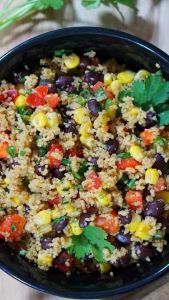
Are You Looking for Vegan Thanksgiving Recipes?
Take a look at many different vegan Thanksgiving dishes you can prepare at home: https://www.vrg.org/recipes/vegan_thanksgiving.php
Thanks to generous donors, in 2025 The Vegetarian Resource Group will be awarding $40,000 in college scholarships! Deadline is FEBRUARY 20, 2025.
We will accept applications postmarked on or before FEBRUARY 20, 2025. Early submission is encouraged.
Applicants will be judged on having shown compassion, courage, and a strong commitment to promoting a peaceful world through a vegetarian (vegan) diet/lifestyle. Payment will be made to the student’s college (U.S. based only). Winners of the scholarships give permission to release their names to the media. Applications and essays become property of The Vegetarian Resource Group. We may ask finalists for more information. Scholarship winners are contacted by e-mail or telephone. Please look at your e-mail.
If you would like to donate to additional scholarships or internships, go to www.vrg.org/donate
Applications
Please click here to download a PDF of the application. However, applicants are not required to use an application form. A neatly typed document containing the information below will also be accepted as a valid application.
Please send application and attachments to [email protected] (Scholarship application and your name in subject line) or mail to The Vegetarian Resource Group, P.O. Box 1463, Baltimore, MD 21203.
If emailing, please put your essay in a separate attachment with your first name and last initial. A PDF or Word document is preferred, but if you send a Google document, make sure permission is given so readers can access it. For more information call (410) 366-8343 or email [email protected].
In an article by Laura McGuiness titled, “Get Cultured with Homemade Fermented Foods.” You’ll find recipes for:
Classic Caraway Sauerkraut
Kimchi
Fermented Veggies
Simple Sourdough Loaf
Strawberry Cream Cheese
Pomegranate Kombucha
Read the article here: https://www.vrg.org/journal/vj2018issue4/2018_issue4_fermented_foods.php
Please subscribe to Vegan Journal at: https://www.vrg.org/member/2013sv.php
Vegan Journal is published by The Vegetarian Resource Group. Enjoy in-depth original research, product and book reviews, scientific updates on veggie nutrition, delicious vegan recipes with gorgeous photos, plus so much more. Both long-term vegans and those new to a vegan life-style will enjoy this magazine.
To subscribe in the USA only, see: https://www.vrg.org/member/2013sv.php
By Reed Mangels, PhD, RD
I was recently invited to participate in a panel at a conference for health care providers. The conference, Food as Medicine, featured speakers, most of whom were MDs, describing the health benefits of plant-based diets that include a variety of whole foods. The panel discussion, which took place at the end of the day, was titled Food For Thought: Improving Patient Health and Nutrition Through Collaboration. The panelists were Michael Klaper, MD, a primary care physician; Rak Jotwani, MD, a primary care physician; Debra Shapiro, MD, an obstetrician/gynecologist; Martha Sandoval, MD, a family medicine physician; and me. All panelists were passionate about the health benefits of plant-based diets.
We were each asked to speak on the importance of collaboration—especially from personal experience—with professionals from various fields to enhance patient health through a focus on nutrition. As the only non-physician on the panel, I decided to describe the skills and training that registered dietitians have and to promote collaborations between RDs and other members of health care teams who are working to encourage use of plant-based diets. Here’s an excerpt from my talk:
Registered dietitians or registered dietitian/nutritionists, such as myself, are health professionals with expertise in food and nutrition. RDs or RDNs have completed at least a master’s degree (so 5-6 years at least of nutrition-related coursework), a supervised practice requirement (typically 1,000 or more hours), and passed a national exam. We are required to continue professional development throughout our careers. Registered dietitians may specialize in areas ranging from sports nutrition, to diabetes, to pediatrics, to functional medicine, to vegetarian and vegan nutrition, and more.
RDs and RDNs can play key roles on the health care team because of their training and their knowledge of both the theoretical and the practical aspects of food and nutrition. They do nutrition assessment and counseling for inpatients and outpatients though one-on-one sessions, group sessions, and classes. They may develop educational materials. They educate other members of the health care team about nutrition so that the dietitian’s message can be supported and amplified. In turn, they can provide important information and support for the recommendations of other health care providers.
Dietitians are uniquely able to work with individuals who often have strong food preferences and cultural practices, a variety of cooking skills, have more or less money to purchase food, have time constraints, have a myriad of health issues, and have varying motivations. We are keenly aware that one size doesn’t fit all and that a single sheet of paper describing a diet is not likely to result in true change.
Dietitians work in a variety of settings – traditionally in hospitals and clinics but now, more and more, in private practice, as part of a private practice or health care system, in gyms, in industry, in academia, non-profits, etc.
My personal work has been in academia and in the non-profit sector. I’ve had opportunities to collaborate with nurses, physicians, and others with a goal of developing reliable, evidence-based materials, especially those related to vegan/vegetarian nutrition.
The other members of the panel spoke of the joys and challenges associated with working with other health care professionals including other physicians, nurses, dietitians, physical therapists, and health coaches. They described how wonderful it was to have a group of providers all working together to promote healthy plant-based diets, exercise, stress management, and other components of a health-supporting lifestyle. Each team member would use their skills and training to support clients/patients and other providers. They also described the challenges of working with providers who were not aware of the health benefits of plant-based diets and who provided out-of-date information or questioned the physicians’ recommendations.
We agreed that it was important to seek out like-minded colleagues and to work to educate our colleagues about plant-based/vegetarian/vegan nutrition. I thought about VRG’s work, for at least the past 35 years, to provide reliable, evidence-based information about vegetarian/vegan nutrition to dietitians and to develop much-needed educational materials that can be used by dietitians and other health care professionals.
To read more about registered dietitians see: Becoming a Registered Dietitian Nutritionist
Debra Daniels-Zeller’s article Perfect Pears provides recipes for Reisling-Braised Kale and Pears With Basmati Rice; Sweet And Spicy Yams And Pears With Toasted Pecans; Maple-Sautéed Pears; Creamy Rosemary, Acorn Squash, and Pear Soup; Coconut-Cranberry-Pear Sauce Hazelnut-Orange Asian Pear and Beet Salad; Pear Crisp With Cranberries; Pear-Walnut Bread; and Berry-Poached Pears. She also explains the differences between popular varieties of pears. See: https://www.vrg.org/journal/vj2004issue3/2004_issue3_perfect_pears.php
To subscribe to Vegan Journal in the USA, see: https://www.vrg.org/member/2013sv.php
Cynthia King Dance Studio offers the CKDS ballet slipper with canvas uppers and synthetic leather soles in adult and children’s sizes and various colors. Visit https://cynthiakingdance.com/veganballetslippers
Very Fine Shoes offers a wide variety of custom made vegan dance shoes. Visit www.veryfineshoes.com/veganshoes
Perhaps you’ve heard about Aquafaba. The liquid you’ve been draining from your beans all these years is actually surprisingly similar to raw egg whites and can be used for baking in much the same way. The liquid can be baked, whipped to make meringue, turned into marshmallows, or used to create uncanny cheese substitutes.
Laura McGuiness shares her experience baking with aquafaba in a past issue of Vegetarian Journal. She explains, “Aquafaba is still largely a mystery, even to scientists. The proteins and starches in the bean juice appear to mimic the proteins in egg whites, but the exact science leaves something to be desired. What we do know from an analysis by The Norwegian Food Research Institute is that aquafaba is mainly composed of starch and proteins. Because of the high starch content, aquafaba is able to form stable gels, which may aid in its ability to emulate egg whites.”
You’ll find the following recipes in this article along with photos of some of the baked items:
Basic Meringue Cookies
Baked Alaska
Lemon Apocalypse Pie
Chocolate Mousse
Walnut Fudge
Lemon Dacquoise
The article can be found here: Aquafabulous
To subscribe to Vegan Journal, visit: http://www.vrg.org/member/2013sv.php
There are so many varieties of apples available in markets these days; but do you know what to do with them? Chef Nancy Berkoff, EdD, RD, shared some creative ideas in her previous Vegan Cooking Tips column in Vegan Journal. From apple curry to apple salsa to homemade applesauce, you’ll never run out of ways to prepare apples. See: https://www.vrg.org/journal/vj2020issue4/2020_issue4_cooking_tips.php
Subscribe to Vegan Journal in the USA only at https://www.vrg.org/member/2013sv.php
By Jeanne Yacoubous, MS
As the climate crisis unfurls wildfires and floods all over the world, traditional agriculture is under threat. People everywhere are already feeling the sting of higher prices for several popular foods including coffee and chocolate. Increasingly low crop yields in numerous countries mean food security about basic dietary staples such as wheat, rice, and corn is becoming a major concern.
In fact, scientist Kai Kornhuber and colleagues warned in research published in 2023: “Synchronized crop failures due to simultaneous weather extremes across multiple breadbasket regions pose a risk to global food security and food system supply chains.”
One way to alleviate food worries as well as mitigate your reliance on grocery stores is to grow at least some of your own food. The VRG’s recent article on veganic gardening offers lots of helpful tips for new as well as experienced gardeners.
Here, we focus on perennial vegetables (PVs) as an undiscovered, nutritional treasure that can expand your culinary horizons while they sequester carbon continually for years – if not decades – and produce abundant yields.
Perennial vegetables as a climate solution
Scientists have reported for decades that anthropogenic (human-caused) greenhouse gas (GHG) emissions caused by fossil fuel burning create the climate crisis which will continue to intensify as long as emissions continue to increase. To curb the heatwaves, wildfires, flooding, extreme drought, and sea level rise, fossil fuel burning must be drastically reduced – or end completely.
Although emissions from transportation and home heating represent the largest share, agriculture also contributes significantly to total GHG emissions. By one estimate, food production and the land use changes it requires, such as deforestation to make way for cattle grazing or farmland to grow more animal feed, are responsible for 28% of global GHG emissions.
Unfortunately, research published in September 2024 indicates that agriculture’s portion of global GHG will grow. Lead author Yi Yang and colleagues write: “Climate change will likely exacerbate the already large environmental impacts of agricultural production…agriculture’s response to climate change could create a powerful positive GHG feedback loop through multiple pathways…”
So, solving the climate crisis must involve several lifestyle changes, including dietary modifications.
The carbon footprints of food are a metric used to describe the greenhouse gas emissions associated with the production of that food. Animal foods have the largest carbon footprints while plant foods have the smallest. People who would like to lower their climate impact may do so by choosing foods that have lighter carbon footprints.
Another strategy to mitigate the climate crisis is to draw down greenhouse gases, including carbon dioxide, from the atmosphere and sequester them in soil. Growing perennial vegetables in your garden for food is one way to accomplish this.
What are perennial vegetables?
According to Eric Toensmeier et al., perennial vegetables (PVs) are woody, herbaceous, or vining plants that are among “613 cultivated perennial vegetables, representing 107 botanical families from every inhabited continent…Perennial vegetables (PVs) are a neglected and underutilized class of crops with potential to address crises of crop biodiversity, climate change, and nutrient deficiencies. ”
As a functional definition of PVs, the investigators propose these criteria:
Perennial vegetables that are best at sequestering carbon
All plants do not sequester carbon equally. Perennial plants – those that regrow each year instead of dying off after the first frost – sequester carbon longer than annual plants because their ability to store carbon is longer in roots that continually grow deeper and wider for years if not decades.
Edible perennial plants are known as perennial foods. Here, we’ll focus on growing perennial vegetables (PVs).
To the best of our knowledge, there is not a complete list of perennial vegetables ranked by carbon sequestration ability, but a 2020 article by Eric Toensmeier et al. provides useful information. Based on numerous articles on certain tree or plant species which have included experimentally calculated carbon sequestering abilities, the investigators found that woody perennial vegetables sequester the most carbon compared to herbs and vines. They expressed this value in terms of tons of carbon per hectare per year.
More specifically, Toensmeier and colleagues found “the average rate for woody PVs is 3.7 tC/ha/yr, while that of perennial vines and herbs is 0.43 tC/ha/yr/.”
For a complete listing of the 613 cultivated, perennial vegetables identified by Toensmeirer and colleagues and additional tables of their nutritional profiles, see the supplementary information at the end of their 2020 article.
Long-rooted perennial vegetables
Generally, the nonprofit Plants for a Future writes that perennial plants with long, wide roots store more carbon, for longer, in deeper carbon pools in soil. So, we looked for perennial plants that are edible and have the deepest roots. Here are a few deep-rooted perennials:
Perennial vegetables
You’re probably familiar with asparagus, rhubarb, and globe artichoke, and may have even eaten or cooked with them. Do you know that they are all perennial vegetables?
If these vegetables already have a place in your garden, then introducing more perennials will only further complement the annuals – such as tomatoes, zucchinis, and cucumbers – that last only one season. With perennials, you can easily extend your harvest to all four seasons without replanting. Ever.
Unlike most garden annuals that require full sun and well-drained soil to thrive, the majority of perennials grow well in full shade, water-logged soil, or without fertilizer or irrigation (except under extremely arid conditions). Perennials are low-maintenance to grow. However, years-long neglect would likely result in their becoming weedy, so it’s important to harvest frequently.
Although many perennials are most suited to warmer regions, several do well in cold areas as annuals. In future parts of this series, we’ll discuss those perennials for Northern gardeners as well as many others that will succeed in warmer locales.
Types of perennial vegetables
By way of a general introduction to the wide variety of perennial vegetables hailing from all corners of the globe, here’s a sneak peek at some of the most interesting, highlighting their edible parts as described in Eric Toensmeier’s classic book titled Perennial Vegetables.
Edible leaves
Most perennial vegetables, including those from trees, shrubs, and woody vines, have edible leaves, stems, and leafstalks.
Example: water celery. Thriving in a water garden or on land (sunny or shady), water celery is a leafy green that really tastes like celery.
Edible shoots
Perennial vegetables with tender, new growth emerging in spring as shoots are edible.
Example: asparagus. Considered the classic harbinger of spring, asparagus is served as a fine delicacy the world over.
Edible fruits eaten like vegetables
Tomatoes and eggplants are annual fruits prepared and eaten like vegetables. Some perennials fit this category as well.
Example: chayote. Fruits grown on a vine, chayote are used like zucchini.
Edible pods and beans
Perennial legumes often yield edible pods and beans.
Example: scarlet runner bean. Easily yielding for two decades, these beans succeed in a few North American regions.
Edible flowers and buds
Perennial vegetables could be the flowers or flower buds of plants, analogous to broccoli and cauliflower.
Example: globe artichoke: Like the perennial asparagus, globe artichoke is gourmet but can grow in your garden.
Edible roots
Some perennials are root crops that form vast, underground colonies that persist for decades.
Example: sunchoke (Jerusalem artichoke). With a name similar to its sunflower relative, sunchokes have sweet and crispy roots.
Airborne roots
Perennial vegetables may be tubers (like yams) growing above ground on vines.
Example: air potato. No digging required to get to this root crop! Sized like a medium potato, air potatoes grow on climbing vines and can be picked just like apples or pears.
Perennial gardening books
To learn more, check out:
A Global Inventory of Perennial Vegetables by Eric Toensmeier
Global Gardening: Increasing the Diversity of Plants in Your Own Garden While Feeding a Hungry World by Hank Bruce and Tomi Jill Folk
Gourment Gardening: 48 Special Vegetables You Can Grow for Deliciously Distinctive Meals by Anne Halpin
Plants for a Future: Edible & Useful Plants for a Healthier World by Ken Fern
by John Jeavons
Perennial plant seed companies
There are not too many places that sell perennial vegetable plants and seeds. Many listings are outdated. Here are a few that are currently operational and have online sales:
Educational Concerns for Hunger Organization (ECHO)

Join The VRG with $35 via our subscription form, and receive the Vegan Journal for two years and a copy of Simply Vegan!
The Vegetarian Resource Group (VRG) is a non-profit organization dedicated to educating the public on veganism and the interrelated issues of health, nutrition, ecology, ethics, and world hunger. We have been helping health professionals, food services, businesses, educators, students, vegans, and vegetarians since 1982. In addition to publishing the Vegan Journal, VRG produces and sells a number of books.
Sign up for our newsletter to receive recipes, ingredient information, reviews of new products, announcements of new books, free samples of products, and other VRG materials.