The Vegetarian Resource Group Blog

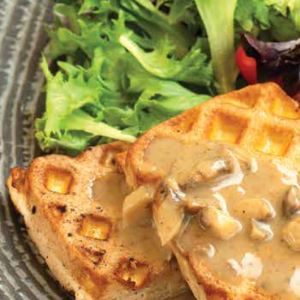
Are You Searching for Last Minute Vegan Gravy Recipes?

Posted on November 28, 2024 by The VRG Blog Editor

photo by Rissa Miller

Chef Nancy Berkoff has you covered! See: https://www.vrg.org/journal/vj2023issue1/2023_issue1_cooking_tips.php

Your support through Combined Federal Charity (CFC) or your Local/State Campaign is greatly appreciated!

Posted on November 27, 2024 by The VRG Blog Editor

The Vegetarian Resource Group continues to be very busy on a daily basis. Below are some examples of successes and activities. Your support through Combined Federal Charity (CFC) or your Local/State Campaign is greatly appreciated! You can also donate directly to VRG at www.vrg.org/donate

Here’s a sampling of some of our accomplishments and outreach:

  • The Vegetarian Resource Group Nutrition Advisor Reed Mangels, PhD, RD, was interviewed for an article for Contemporary Pediatrics about nutritional benefits and/or drawbacks of veganism and vegetarianism in adolescents. The aim of this article is to provide general practice pediatricians with guidance and nutritional information that they can share with their patients who may want to pursue either of these diets. Reed was also interviewed in The New York Times about nutrition for new vegetarians or those transitioning to a vegetarian diet.
  • The Dental Hygienist’s Guide to Nutritional Care textbook asked to reprint VRG’s My Vegan Plate. One of our VRG interns separately said, “This visual was also a resource my supervisor, the registered dietitian I worked with during my peer nutrition coach internship, recommended for vegan clients.”
  • Reed Mangels, PhD, RD, spoke for the Vegetarian Nutrition Dietetic Practice Group Spotlight session at the annual FNCE meeting of the Academy of Nutrition and Dietetics in Minneapolis, Minnesota. The session was based on two systematic reviews of topics in vegetarian nutrition, namely, Vegetarian Nutrition for Disease Management and Vegetarian Nutrition for Disease Prevention, that were conducted for the Academy of Nutrition and Dietetics Evidence Analysis Library. The session is titled Exploring the Rewards and Challenges of Vegetarian Diets: A Fresh Look at the Academy’s Position.
  • Charles Stahler and Debra Wasserman coordinated a booth at the Animal Vegan Summit in Alexandria, Virginia, while Elsa Spencer, PhD, staffed a VRG booth at Charlottesville VegFest in Virginia, Phil Becker staffed a booth at World VegFest in San Francisco, California, and Heather Francis coordinated VRG’s booth at the Boston Veg Food Fest in Massachusetts.
  • VRG sent 600 of VRG’s I Love Animals and Broccoli Coloring Books plus El arco iris vegetariano coloring books to PG County Maryland WIC. A nutritionist from a county health department in New Jersey asked to reprint our My Vegan Plate. We sent 400 Vegan Journals for grab bags for the Columbia, South Carolina VegFest and also Sarasota, Florida VegFest, and we sent a box of brochures for tabling at a Black Family Wellness Expo in AL. We also shipped a box of Vegan Journals to be distributed at Texas VegFest in Austin, Texas.
  • VRG continues to host interns/volunteers throughout the year.

This is just a small sampling of what we are doing at VRG every day. Thank you so much! We couldn’t do this without your support.

You can donate directly to VRG at www.vrg.org/donate You can also mail donations to The Vegetarian Resource Group, PO Box 1463, Baltimore, MD 21203 or call in your donation to (410) 366-8343 Monday through Friday 9am to 5pm EST.

Banana Peels into Food?

Posted on November 27, 2024 by The VRG Blog Editor

Photo by Julia Kuzenkov on Unsplash

Want to try making banana peels into edible food?

Try this recipe: https://getpocket.com/explore/item/don-t-waste-banana-peels-turn-them-into-tasty-vegan-pulled-pork?utm_source=pocket-newtab-en-us

And here’s a banana peel taco recipe: https://www.vrg.org/nutrition/vegan-zero-waste-recipe-ideas.pdf

My Vegan Plate from The Vegetarian Resource Group

Posted on November 26, 2024 by The VRG Blog Editor

Nothing beats a simple graphic to get the vegan message out! The Vegetarian Resource Group created My Vegan Plate to display on outreach tables at various events. If you live in the United States, you can request copies of this handout to distribute by emailing us at [email protected]

You can view the handout here: https://www.vrg.org/nutshell/MyVeganPlate.pdf

This same handout can also be read in Spanish here: https://www.vrg.org/images/miplatovegano.jpg

We also have a version you can print out for kids to color on: https://www.vrg.org/nutshell/MyVeganPlateCP.pdf

Donations towards this outreach are always appreciated: www.vrg.org/donate

A Recent Study on Vegetarian Diets and Cardiovascular Disease

Posted on November 26, 2024 by The VRG Blog Editor

Photo by Kaboompics.com

by Reed Mangels, PhD, RD

There have been many studies of vegetarian diets and the risk of having cardiovascular disease and of dying from cardiovascular disease. The term cardiovascular disease refers to conditions that affect the heart or blood vessels. These conditions can lead to events like heart attacks, strokes, and heart failure. For the past couple of years, I’ve worked with a group of investigators to systematically examine and compare relevant research on vegetarian (including vegan) diets and cardiovascular disease (1).

We did something called an umbrella review which provides an overall assessment of the information available on a specific topic. An umbrella review is an evaluation of systematic reviews.  A systematic review summarizes the results of studies that have been done on a specific topic. There have been a number of systematic reviews on vegetarian diets and different aspects of cardiovascular disease. We critically examined systematic reviews that focused on the topic of vegetarian diets and cardiovascular disease. We evaluated systematic reviews that had been published since 2018.

Consistent with findings from other studies, we found that people eating vegetarian diets had a lower risk of having cardiovascular disease and of dying from cardiovascular disease compared to people not eating vegetarian diets. When we looked specifically at systematic reviews that included vegans, we found that vegans had lower blood pressure, lower LDL (bad) cholesterol and lower total cholesterol, lower triglycerides, and lower C-reactive protein (an indicator of inflammation). These studies were all studies of free-living vegetarians and vegans – people who had chosen to follow a vegetarian or vegan diet.

We also looked at studies where adults who were at risk for cardiovascular disease were assigned to either a vegan diet or a nonvegetarian diet. We found that, in these studies, there was a greater reduction in  total and LDL cholesterol, and fasting glucose (blood sugar) in people following a vegan diet than was seen in the comparison group of people who were following a nonvegetarian diet.

Based on the results of our work, we concluded that clinicians (medical doctors and dietitians, for example) may consider recommending vegetarian/vegan diets to reduce risk factors for cardiovascular disease and to reduce the risk of having or dying from cardiovascular disease.


Reference:

  1. Landry, MJ, Senkus KE, Mangels AR, et al. Vegetarian dietary patterns and cardiovascular risk factors and disease prevention: An umbrella review of systematic reviews. Am J Prev Cardiol. 2024;20:100868. You can read the article here.

To read more about cardiovascular disease and vegan/vegetarian diets see:

Heart Healthy Diets: The Vegetarian Way

Vegetarian Diet Reduces Risk of Cardiovascular Disease

Healthier Vegetarian Diets Are Associated with a Reduced Risk of Major Cardiovascular Events

Vegan Diet Improves Cardiovascular Health: Results of a Twins Study

Report From VRG Intern Aashay Mody During Fall 2024

Posted on November 25, 2024 by The VRG Blog Editor

This past September, I began my role as a VRG intern, which gave me many opportunities to engage with diverse kinds of information about veganism. Since I have been vegan for over 5 years, I already knew quite a bit about different aspects of veganism when starting my internship; however, this experience still provided me with new perspectives. Going into it, I wanted to improve my communication skills while also getting to learn more, and the things I did helped me with these goals.

One of the tasks I did was review other VRG interns’ data collection for nutrition information about different kinds of plant-based milk, while also compiling data myself for coconut milk. Through this, I was able to learn about how the diversity of options available for each type of plant-based milk varies greatly and about the overall nutritional differences between them. I also considered how various factors may impact a company’s decisions to label their products as “vegan” or indicate their plant-based nature in another way.

In addition, I contributed to the VRG’s restaurant guide and wrote blog postings. One of my articles was a review of a local Mexican food spot, in which I included my own thoughts on their dishes as well as what the rest of my family thought. Working on the restaurant guides showed me how the extent of variety in vegan food available across the U.S. is beyond what I had ever considered.

I value veganism for ethical reasons and for its environmental benefits, especially because I would like to pursue environmental science in the future, which is why I am grateful for the opportunity to be a VRG intern.

For more information about VRG internships, see https://www.vrg.org/student/index.php
To support VRG internships, donate at www.vrg.org/donate

Searching for a non-leather briefcase?

Posted on November 25, 2024 by The VRG Blog Editor

photo from Matt & Nat

Here’s some American online shops offering various styles of non-leather briefcases:

Doshi briefcases for both men and women

Matt & Nat briefcases for men and women

Tough Traveler briefcases for men and women

Perennial Vegetable Gardening According to Climatic Region: Part 3 of a Series on Climate Foods

Posted on November 22, 2024 by The VRG Blog Editor

By Jeanne Yacoubou, MS

In Parts 1 and 2 of our series on climate foods, The Vegetarian Resource Group introduced perennial vegetables and suggested general techniques to grow a perennial garden. In this article, we’ll help you select perennials that will most likely do well in your particular situation.

Beyond USDA hardiness zones: sunset climate zones

The USDA Plant Hardiness Zone Map is the standard way gardeners decide whether a certain species will do well in their yard. It is based on “the average annual extreme minimum winter temperature.” You determine your zone by zip code.

However, this method has limited usefulness because it’s only concerned about the temperature at which a plant could be killed by frost. It doesn’t consider all the factors involved in allowing a plant to thrive.

The Sunset Climate Zone system is a more robust measure to figure out if a plant species will do well in your yard. This rating takes into account:

  • Length of growing season
  • Timing and amount of rainfall
  • Winter low temperature
  • Summer high temperature
  • Wind
  • Humidity
  • Sun exposure

Initially designed for gardeners on the West Coast, the Sunset system now covers the entire country.

When researching the best perennial vegetables for your yard, look for Sunset zone information to maximize your success. Eric Toensmeier’s book, Perennial Vegetables, on which the following recommendations are based, is an excellent source for Sunset information about uncommon perennials.

Best perennial vegetables for the Rocky Mountain states, northern plains, and Canada (USDA zones 1-3, Sunset zones 1, 44, 45)

It may be extremely cold and snowy for long periods, but herbaceous plants and roots do amazingly well snuggled under insulating snow. These are your best bets:

  • Sorrel
  • Good king Henry
  • Groundnut
  • Arrowhead
  • Rhubarb
  • Sunchoke
  • Ostrich fern
  • Watercress

Best perennial vegetables for the mid-Atlantic, Northeast, and Midwest (USDA zones 4-7, Sunset zones 2-4, 6, 11, 32-43)

Most perennial vegetables are from tropical countries but grow well in regions that typically have cold – but not frigid – periods in winter. Adding a thick (6-12 in.) layer of mulch around the base of plants helps protect them during cold spells in these relatively temperate areas.

Alternatively, growing perennials as annuals will maintain their productivity over the years. For instance, you can store edible roots or tubers in a cool (35-500F), dark basement or garage just like you do with potatoes. Take cuttings from herbaceous plants and keep them inside as houseplants over the winter, returning them outside in spring. Place them next to a window or under full-spectrum lights.

For plants that are very delicate, such as chaya, you may permanently grow them in a container that you place outside during the spring and summer but bring inside for the winter.

Lastly, for perennial trees and woody shrubs with edible leaves whose above-ground parts die after the first frost but where the ground won’t freeze, they will resprout new growth the following spring. These species – referred to as dieback perennials – include chaya, katuk, moringa, and cranberry and edible hibiscus.

For gardeners in this area of the country, the following tables list the perennials that can be grown as annuals.

Species that can overwinter inside from cuttings:

  • Katuk
  • Okinawa spinach
  • Perennial cucumber
  • Tree collards
  • Sissou spinach

Species that can overwinter indoors as tubers:

  • Achira
  • Chinese arrowhead
  • Oca
  • Ulloco
  • Water chestnut
  • Yacon

Perennial vegetables that can be started from seed as annuals:

  • Cache bean
  • Cranberry hibiscus
  • Lablab bean
  • Malabar spinach
  • Runner bean

For more information on methods used to grow perennials in cold regions, see the books Palms Won’t Grow Here and Other Myths by David Francko and Hot Plants for Cool Climates by Dennis Schrader and Susan A. Roth.

Best perennial vegetables for the hot and humid Southeast (USDA zones 8-9 and Sunset zones 26-28, 31)

Having originated from tropical regions, most perennials thrive in the Southeast. Bananas and chayote are prime examples. You could also cultivate yams, katuk, and perennial beans as dieback perennials. Growing taro in this area is easy.

Best perennial vegetables for the hot and arid Southwest (USDA zones 8-10 and Sunset zones 10, 12, 13, 29, 30)

Like the Southeast, the Southwest U.S. is ideal for growing most perennial vegetables. Moringa trees and chaya shrubs are perfect candidates for dieback perennials because of their edible leaves, joining the spineless nopale cactus frequently grown in gardens of this region. The drought-loving, 7-year lima bean is one of several perennial beans that thrives here. Several species of fruiting cacti, as well as pomegranates and mesquite, round out perennial gardens in the Southwest.

Key takeaways on perennial vegetable selection

Of the 100+ perennial vegetable species, there are sure to be several that can thrive under almost any climatic condition. Some others may be adapted to zones when grown as annuals or dieback perennials. To determine which would be best suited for your garden, research your options before planting.

Consider Serving Mocktails this Thanksgiving

Posted on November 22, 2024 by The VRG Blog Editor

photo by Rissa MillerPhoto by Rissa Miller

Surprise your guests with fancy mocktails this Thanksgiving! Previously the Journal featured an article titled “Non-Alcoholic Thirst Quenchers,” by Mikiel Peratino. Mikiel is a former assistant manager and bartender at Great Sage vegan restaurant in Maryland. Enjoy recipes for Strawberry Fauxjito; Virgin Piña Colada; Warm Golden Pumpkin; Black Rose Mule; Watermelon Cooler; S’mores Mudslide; Virgin Cucumber Basil Gimlet; and Butterfly Margarita. These drinks look absolutely gorgeous and will bring a smile to your face!

Read the entire article here: https://www.vrg.org/journal/vj2020issue3/2020_issue3_thirst_quenchers.php

To subscribe to Vegan Journal in the USA, see: https://www.vrg.org/member/2013sv.php

Please Show Your Support for all the Good Work The Vegetarian Resource Group Does Year-Round by Donating to VRG!

Posted on November 21, 2024 by The VRG Blog Editor

The Vegetarian Resource Group continues to be very busy on a daily basis. Below are some examples of successes and activities. Your support is greatly appreciated! You can donate to VRG at vrg.org/donate

Here’s a sampling of some of our accomplishments and outreach:

  • Over 1,400 registered dietitians visited The Vegetarian Resource Group booth at the national Food and Nutrition Conference & Expo held in Minneapolis, MN. Many collected information for themselves or to use with their students and/or clients.
  • We were asked permission to reprint VRG’s Vegan My Plate (vrg.org/ nutshell/MyVeganPlate.pdf) in The Dental Hygienist’s Guide to Nutritional Care book.
  • VRG sent 600 I Love Animals and Broccoli Coloring Books plus El arco iris vegetariano coloring books to PG County Maryland WIC. A nutritionist from a county health department in New Jersey asked to reprint our My Vegan Plate. We sent 400 Vegan Journals for grab bags for the Columbia, South Carolina VegFest and also Sarasota, Florida VegFest, and we shipped a box of brochures for tabling at a Black Family Wellness Expo in Alabama. We also shipped a box of Vegan Journals to be distributed at Texas VegFest in Austin, Texas.
  • A dietitian requested teen brochures and nutshell handouts to use at the University of Illinois in Chicago.
  • A bookstore in Providence, RI and vegan restaurants in MA, MD, NJ, and VA are offering VRG brochures to their customers.
  • Some of the places VRG had booths at this year include the Santa Cruz VegFest in California, Wilmington VegFest in North Carolina, New England VegFest in Massachusetts, the Animal/Vegan Summit in Virginia, as well as the Maryland Academy of Nutrition and Dietetics meeting in Minneapolis, Minnesota.
  • Finally, VRG is hosting several high school/college interns and volunteers this year.

This is just a small sampling of what we are doing at VRG every day. Thank you so much! We couldn’t do this without your support.

You can donate directly to The VRG at www.vrg.org/donate

You can also mail donations to The Vegetarian Resource Group, PO Box 1463, Baltimore, MD 21203 or call in your donation to (410) 366-8343 Monday through Friday 9am to 5pm EST.

  • Donate

  • Subscribe to the blog by RSS

  • VRG-NEWS

    Sign up for our newsletter to receive recipes, ingredient information, reviews of new products, announcements of new books, free samples of products, and other VRG materials.

    Your E-mail address:
    Your Name (optional):


↑ Top