The Vegetarian Resource Group Blog

Vegan Women and Strength Training

Posted on March 10, 2026 by The VRG Blog Editor

photo from Freepik

by Reed Mangels, PhD, RD

There is good evidence that a combination of resistance exercise and a relatively high protein intake increases muscle mass and strength. Can a vegan diet promote increased muscle mass and strength during resistance training? That’s what a recent study (1) asked.

What is the study?

The study subjects were young women who had not engaged in a regular exercise program for at least 6 months before the start of the study. They were either vegans who had followed a vegan for an average of three years before the study started or non-vegetarians who either ate meat daily or at least three times a week. The study included 25 vegan women and 20 non-vegetarian women. The women ate their usual food throughout the study and did not take protein, amino acid, or creatine supplements. They reported what they ate throughout the study.

The women participated in a 16-week total-body resistance training program directly supervised by experienced trainers. Twice a week, on non-consecutive days, they did strength training targeting specific major muscle groups including exercises such as leg curls, bench presses, abdominal crunches, and pull-downs. Total training volume-load (sets x load x repetitions) did not differ between groups. In other words, the two groups trained similarly.

At the beginning and the end of the study, the women’s thigh and calf muscle thickness were measured with ultrasound and their strength was measured.

What did this study find?

At the end of the study period, both groups had a significant increase in muscle thickness in their thigh and in overall strength. There was no significant difference between the groups. Diet records showed that the vegans consumed an average of 1.0 grams of protein per kilogram body weight and the nonvegetarians consumed an average of 1.3 grams of protein per kilogram body weight. The somewhat higher protein intake in the nonvegetarians did not result in greater muscle or strength gain.

The researchers commented that the women’s protein intakes which were modestly above the RDA of 0.8 grams of protein per kilogram body weight “likely falls within an effective range to support muscle adaptations, particularly in previously untrained young women” (1). They concluded, “both vegetarian [vegan] and nonvegetarian diets can effectively support early gains in muscle mass and strength when nutritional and training conditions are comparable” (1).

Reference:

  1. Martini GL, Schemes MB, Strey B, et al. No differences in muscular adaptations to long-term resistance training between young strict vegetarian and non-vegetarian women. Scand J Med Sci Sports. 2026;36(2):e70224.

To read more about vegan diets for athletes see: Athletes & Vegan/Vegetarian Diets

The contents of this website and our other publications, including Vegetarian Journal and Vegan Journal, are not intended to provide personal medical advice. Medical advice should be obtained from a qualified health professional. We often depend on product and ingredient information from company statements. It is impossible to be 100% sure about a statement, info can change, people have different views, and mistakes can be made. Please use your best judgment about whether a product is suitable for you. To be sure, do further research or confirmation on your own.

QUALIFIED CHARITABLE DISTRIBUTIONS (QCD) AND DONOR ADVISED FUNDS

Posted on March 09, 2026 by The VRG Blog Editor

Because the standard deduction has been raised to over $16,000 for individuals and over $32,000 for married couples filing jointly, some people may lose the advantage of deducting all their charitable donations, since their itemized deductions won’t exceed those amounts.

So for donors who are over 70-1/2 years old, they may want to use the Qualified Charitable Distributions. The QCD is a distribution from an individual retirement account directly to a charity, such as The Vegetarian Resource Group. The distribution from the plan administrator directly to the charity counts toward the donor’s required minimum distribution for the year, but the charitable donation is not included in the donor’s adjusted gross income. Note that you can do a QCD at 70-1/2 before you are required to take distributions.

Others may use a donor-advised fund. Donor-advised funds (DAFs) are accounts where the donors can advise on where and when to distribute funds. Donors claim the charitable deduction in the year the money is transferred to the DAF even though the funds have not been given to the final specific charities. This allows donors to consolidate several years of charitable gifts into one year for their income tax returns. For example, married donors who usually give $3,000 per year to their favorite charitable organization can create a Donor-Advised fund, deposit $21,000 in it for a current year tax deduction, and then distribute $3,000 per year as annual gifts in future years. For example, here is information about a few Donor Advised Funds.

https://www.fidelitycharitable.org/philanthropy/what-is-a-donor-advised-fund.shtml
https://www.schwabcharitable.org/public/charitable/donor_advised_funds
http://programforgiving.org/charitable/pages/home.jsp

This is not legal or tax advice. You should speak to your legal or tax advisor.

To donate directly to The Vegetarian Resource Group, go to www.vrg.org/donate

PLANTREACT Natural Flavors Are Not Made from Animal DNA

Posted on March 09, 2026 by The VRG Blog Editor

Flavor company T. Hasegawa USA manufactures PLANTREACT, vegan natural flavors made without animal-derived genetic material from a virtual DNA library, according to Mark Webster, VP of Sales & Marketing. Intended to impart meat or dairy taste profiles to foods or beverages, PLANTREACT flavors are used in a wide variety of vegan products.

Read about PLANTREACT here: https://www.vrg.org/journal/vj2026issue1/2026_issue1_PLANTREACT_natural_flavors.php

To subscribe to Vegan Journal in the USA only, visit: www.vrg.org/member

Enjoy These Vegan Recipes at Your Passover Seder!

Posted on March 08, 2026 by The VRG Blog Editor

photo from Freepik

Passover begins the evening of April 1, 2026 this year and The Vegetarian Resource Group is the publisher of several books that feature vegan Passover recipes. Below we share three recipes with you. In the USA, you can purchase these vegan cookbooks from the VRG Book Catalog here: http://www.vrg.org/catalog

Fresh Tomato Soup (from No Cholesterol Passover Recipes, by Debra Wasserman)

(Serves 4)

1 large onion, chopped

5 small ripe tomatoes, chopped

1-1/2 cups water

½ teaspoon fresh parsley, minced

Pepper and salt to taste

Combine all the ingredients in a large pot and cook over medium heat for 15 minutes and then cool. Place mixture in a blender cup and blend until creamy. Reheat and serve hot.

Minted Carrots with Chilies (from Vegan Passover Recipes, by Nancy Berkoff)

(Serves 4-5)

1-1/2 cups sliced onions

Vegetable oil spray

1 garlic clove, minced

2 Tablespoons peeled and minced fresh ginger

2 Tablespoons seeded and minced fresh chilies or green pepper

1-1/4 pounds carrots (about 3-1/2 cups), peeled and sliced lengthwise 1-inch thick

2 Tablespoons chopped fresh mint

Place onions in a large frying pan, spray liberally with vegetable oil, and sauté over medium heat until soft and golden, about 5 minutes. Add garlic, ginger, and chilies and stir. Allow to cook for 1 minute.

Add carrots and add enough water to just cover. Cook uncovered for 15 minutes, or until carrots are tender. Add mint, cook for 2 more minutes. Serve hot.

Russian Potato and Mushroom Croquettes (from The Lowfat Jewish Vegetarian Cookbook, by Debra Wasserman)

(Serves 5)

1-1/2 pounds potatoes, peeled and chopped

5 cups water

1 onion, peeled and chopped

¼ pound mushrooms

1 teaspoon oil

1 Tablespoon water

Salt and pepper to taste

1 cup matzo meal

1 Tablespoon oil

Boil potatoes in 5 cups water until tender. Drain and mash potatoes.

In a separate pan, sauté onion and mushrooms in 1 teaspoon oil and 1 Tablespoon water over medium-high heat for 3 minutes. Mix the mashed potatoes, sautéed onion and mushrooms, seasonings, and matzo meal together in a large bowl. Form 10 burgers (croquettes).

Heat 1 Tablespoon oil in a large frying pan over medium-high heat. Fry croquettes for 8 minutes, flip over and continue frying for another 8 minutes. Serve two croquettes per person.

Don’t forget, you can purchase these vegan cookbooks from the VRG Book Catalog here: http://www.vrg.org/catalog

Vegano Italiano

Posted on March 06, 2026 by The VRG Blog Editor

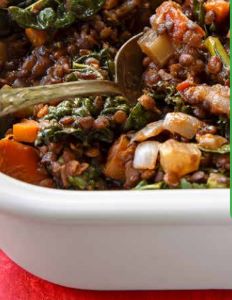
Braised Lentils and Kale photo by Hannah Kaminsky

Who doesn’t love Italian food? The latest issue of Vegan Journal includes vegan Italian recipes from Donna Spencer. Enjoy preparing Italian Roasted Cauliflower, Tuscan Bread Soup, Pasta with Tomato-Pumpkin Sauce, Braised Lentils and Kale, Rustic Blueberry Crostata, and Garlic Beans and Greens.

Find all these vegan recipes here: https://www.vrg.org/journal/vj2026issue1/2026_issue1_vegano_italiano.php

To subscribe to Vegan Journal in the USA only, visit: www.vrg.org/member

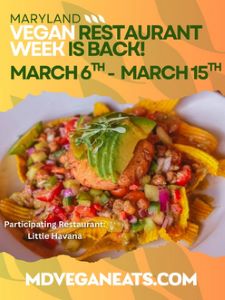
MD Vegan Restaurant 10-Day Event Starts Today!

Posted on March 06, 2026 by The VRG Blog Editor

MD Vegan Restaurant week runs 10 days this year starting today through March 15th. Some of the participating restaurants in Baltimore City include Land of Kush, Golden West, Harmony Bakery, Oleum, Slutty Vegan, and Little Havana. Find a complete list of restaurants offering vegan specials here: https://www.mdveganeats.com/

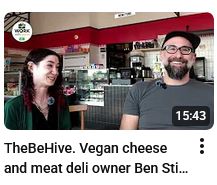
TheBeHive. Vegan cheese and meat deli owner Ben Stix talks about ethical business

Posted on March 05, 2026 by The VRG Blog Editor

In VRG’s Work with Purpose series, Vegan Journal editor Hannah Kaminsky talks to TheBeHive owner about starting an ethical business. See the video at https://youtu.be/_dMglrK4GrM

Work with Purpose is Vegan Journal’s series on ethical entrepreneurs. This episode features The Behive from Austin, TX and Nashville, TN. Tips for starting a business with values. Vote with your dollar. Treat people well and take care of people in your business. Try stuff. Have humility to change the plan. Ways to make a difference. Order Vegan pepperoni, turkey, taco meat, and more. Vegan is just food. Peanut butter is vegan.

For info on other careers with values, see https://www.vrg.org/links/JobSearch.htm

To join The Vegetarian Resource Group and receive Vegan Journal, go to https://www.vrg.org/member/

Scientific Updates from Vegan Journal

Posted on March 05, 2026 by The VRG Blog Editor

In each issue of Vegan Journal, Reed Mangels, PhD, RD, reviews the latest scientific papers related to veggie diets. Recent topics covered include Components of the Portfolio Diet Associated with the Reduced Risk of Death from Heart Disease; What Can Be Done to Add More Vegan Dishes to Hospital Menus?; and Nutrition/Environmental Impact/Cost: Vegan Versus Meat Dishes.

Read the Scientific Updates here: https://www.vrg.org/journal/vj2026issue1/2026_issue1_scientific_update.php

To subscribe to Vegan Journal in the USA only, visit: www.vrg.org/member

Seven Sundays Oat Granola Reviewed in Vegan Journal

Posted on March 04, 2026 by The VRG Blog Editor

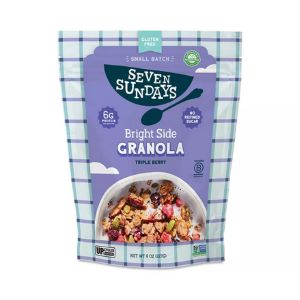
Seven Sundays Oat Granola Bright Side Triple Berry

Seven Sundays oat granola is crafted with upcycled oat protein, rolled oats, and sorghum flakes, it’s sweetened with dates and maple syrup and only has 2-3 grams of added sugars per serving.

Read the review here: https://www.vrg.org/journal/vj2026issue1/2026_issue1_veggie_bits.php

To subscribe to Vegan Journal in the USA only, visit: www.vrg.org/member

Which Vegan Cookbooks Do You Use Most Often?

Posted on March 04, 2026 by The VRG Blog Editor

by Reed Mangels, PhD, RD

The books on my cookbook shelf are not pristine. Far from it. Bindings are worn, pages are loose or have fallen out and been tucked back into the book. There are hand-written notes and some food stains on many pages. These are not books for show – they’ve been well-used, and well-loved.

Two of these cookbooks are worthy of special mention because I use them almost every week. They both feature creative vegan recipes that are relatively quick to prepare, don’t use multiple pots or bowls, and include ingredients that are likely to be in the supermarket. They both focus on entrées that are based on beans or soy products or seitan and lots of vegetables. I can count on the recipes to turn out well.

The first is Vegan on the Cheap by Robin Robertson. One feature of this book that makes me smile is the price per serving for the recipes. The book was published in 2010. Sixteen years later, it’s downright quaint to see a recipe for an entrée that costs less than a dollar per serving. While food prices have gone up considerably, these recipes are still inexpensive because of their emphasis on beans, tofu, grains, and pasta, and (relatively) low-cost vegetables. My fondness for this cookbook is actually not its budget nature but the way that it features hearty main dishes that even my non-vegan friends like. I appreciate that it includes a chapter of slow-cooker recipes as well as chapters on soups, salads, pasta, skillet meals, casseroles, sandwiches, foundational recipes, and desserts. Some of my favorite recipes are Korean Cabbage Salad with Tofu, Linguine with Variations on a Pesto, Farfalle with White Beans and Cabbage, Barbecued Black Beans and Tofu Burritos, Smoky Southwestern Sweet Potato Shepherd’s Pie, Curried Tofu Wraps, Black Bean Soup with Kale and Rice, Three Sisters Spicy Stew, and Moroccan-Inspired Lentil Soup.

My other most-used cookbook is Isa Does It by Isa Chandra Moskowitz. Published in 2013, this is the cookbook I’m most likely to go to for inspiration. With chapters including soups, salads, handhelds, pasta, stews and curries, stir-fries, bowls, breakfast, desserts, and Sunday night suppers (fancier dishes that take longer to cook), I can always find something to make. I’ve successfully made double and even triple batches of many recipes when I’ve cooked for a lot of people. My favorite recipes include Harira with Eggplant & Chickpeas, Roasted Potato & Fennel Soup, Kale Salad with Butternut Squash & Lentils, Chicky Tuna Salad Sandwiches, Gardeny Shiitake & Chard Fusilli, Smoky Incan Stew, Curry Peanut Sauce Bowl with Tofu & Kale, Lemon-Blueberry Loaf, Marbled Banana Bread, and Chai-Spiced Snickerdoodles.

These are the cookbooks that I would take with me if I was going away (to a place with a kitchen) for an extended time period. They’re the books I flip through when I am uninspired but still need to make a meal or when I have friends coming for dinner.

Both books appear to be available new and used and can be found at public libraries.

Vegan on the Cheap (ISBN 978-0-470-47224-8) is a 258-page softcover book. It is published by Wiley and retails for $17.99.

Isa Does It (ISBN 978-0-316-22190-0) is a 312-page softcover book. It is published by Little, Brown and Company and retails for $32.

  • Donate

  • Subscribe to the blog by RSS

  • VRG-NEWS

    Sign up for our newsletter to receive recipes, ingredient information, reviews of new products, announcements of new books, free samples of products, and other VRG materials.

    Your E-mail address:
    Your Name (optional):


↑ Top