Posted on
September 16, 2024 by
The VRG Blog Editor
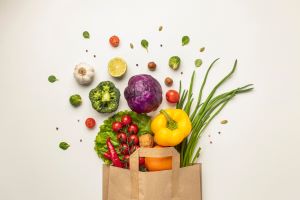
Image by Freepik
In the most recent issue of Vegan Journal, Reed Mangels, PhD, RD, reviews a study looking at the benefits of prescribing produce to individuals with various illnesses. Read her article here https://www.vrg.org/journal/vj2024issue3/2024_issue3_produce_prescriptions.php
To subscribe to Vegan Journal visit www.vrg.org/member
Category
Uncategorized
Comments
0
Posted on
September 14, 2024 by
The VRG Blog Editor
 By Ren Patel, VRG Intern
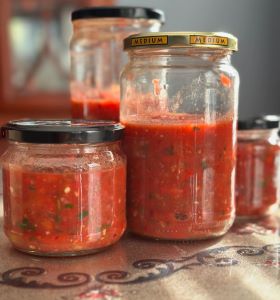
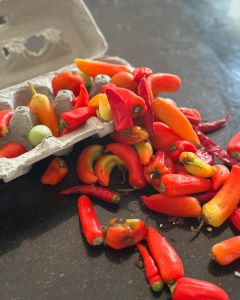
This delicious recipe is made from two components: a homemade salsa and a basic bean fry. The salsa was made with ingredients from Leominster High School’s local community garden. For those interested in promoting vegetarianism, community gardening is a great way to do so. It gets people to feel more connected to their food, which in the case of a garden is usually vegetables. This salsa consists of long thin, jalapeños and Hungarian hot wax peppers. These peppers are relatively sweet with a nice kick to them.
For those who have never made salsa before, it’s incredibly easy! Here is the general breakdown:
You will need spicy peppers, onion, tomatoes, cilantro, and seasonings. I used a mix of canned and fresh tomatoes for my recipe. However, you can do it either way! Canned tomatoes make it easier to get a liquid texture, while fresh ones will usually give you a chunkier texture. Once your blend or food process the onions together with the peppers, you can add in some tomatoes and seasonings. My salsa included salt, pepper, and a bit of cumin. I mixed everything together in a bowl along with some freshly chopped cilantro. If you prefer to follow a good recipe, I recommend this one by Kristine’s Kitchen.
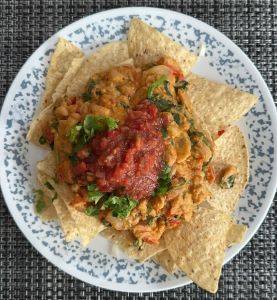 As for the nachos, I prepared these with pinto beans, onion, bell peppers, cilantro, and tomato. You can use either black beans or kidney beans based on what you prefer. I placed all the vegetables together and added some garlic, mushroom umami, black pepper, and cumin. To give it a saucier texture, I added some Chipotle Flavored Bitchin’ Sauce (an amazing vegan sauce that is made from an almond base)! Then I melted shredded Trader Joe’s vegan cheese into the beans, but you can top the dish with the cheese for the classic nacho look. Finally, I assembled my nachos by placing the beans on a bed of chips and topping them with homemade salsa!
Have fun experimenting with this recipe. It’s super fun to make with and for others. Sharing these nachos with my fellow gardeners was a great way for us to bond over the food we had grown. Since they were completely vegan, all of us were able to enjoy them! Consider making vegan party foods the next time you are with friends. It ensures everyone can enjoy the food and feel included. With that said, always inquire about allergies and health concerns since not everyone can eat nuts, gluten, or other foods. If you use gluten-free chips, this recipe is completely gluten-free. If you want to make it nut-free, try substituting the Bitchin’ Sauce for another vegan chipotle sauce.
Category
Uncategorized
Comments
0
Posted on
September 13, 2024 by
The VRG Blog Editor
By Reed Mangels, PhD, RD
A friend recently confided that she was trying to reduce her sodium intake. Her blood pressure is elevated. She’s trying, with her doctor’s approval, to see if she can lower her blood pressure by changing her diet. As we talked, I realized that, despite being open to the idea of reducing sodium, she wasn’t sure what changes to make. She’s already on the right track—she doesn’t use many processed foods, she eats a lot of fresh fruits and vegetables, and she enjoys cooking. Here are some ideas I shared with her.
- Read the Nutrition Facts section of the label. Different companies have products that vary in sodium content. Even if the label doesn’t say “low-sodium”, you may find a product that is lower in sodium than its competitors. For example, looking at a supermarket shelf of canned beans, I found a range of 90-450 milligrams of sodium per 1/2 cup serving. Choose the lowest sodium product, and you’ve saved as much as 360 milligrams of sodium.
- Drain and rinse canned beans. You may have noticed that many recipes in Vegan Journal call for canned beans, drained and rinsed. The reason we suggest this is that up to 40% of the sodium in a canned product can be rinsed away. Therefore if you choose a can of beans with a label value of 200 milligrams of sodium, you can reduce the sodium by as much as 80 milligrams by draining and rinsing the beans.
- Add no-salt added tomato sauce to jarred pasta sauce. Jarred vegan pasta sauce can be a convenience whether you’re using it on top of pizza crust, in vegan lasagna, or tossed with pasta. You can reduce sodium content by mixing it with purchased no-salt-added tomato sauce in the ratio of your choice—1 cup tomato sauce to 1 cup pasta sauce, 2 cups tomato sauce to 1 cup pasta sauce, etc. Add a little oregano and basil, if you like. If you decide to use the 1:1 ratio of pasta sauce to tomato sauce, you’ve reduced the sodium in a 1/2 cup serving of pasta sauce from, say, 470 milligrams to 255 milligrams.
- Mix salty snacks with unsalted snacks. If you like to snack on salted nuts or salted pretzels, buy a bag of unsalted nuts or unsalted pretzels and make your own reduced-sodium mix. You can adjust the ratio of salted product to unsalted product, and as you get used to eating food with less salt, you may find that you’re using much more of the unsalted product and less of the salted one. If you start with a 1:1 ratio, you might save 75 milligrams of sodium in a 1/4-cup serving of nuts or as much as 250 milligrams of sodium in a 1-ounce serving of pretzels.
- Toss the flavoring packet. Products like ramen noodles are convenient, but they are super salty. Much of their salt comes from the flavoring packet. You can discard it and flavor the noodles with a low-sodium spice blend. If that’s not an option, start by using just a small bit of the seasoning packet and taste before adding more. If you’re eating a package of ramen noodles, you could reduce their sodium from 730 milligrams to 25 milligrams just by discarding the unopened flavoring packet.
- Make your own condiments. Salad dressings, barbecue sauce, salsa, even ketchup can be sources of lots of sodium. While you may not want to make all of these products, choosing a couple that you use frequently and finding recipes for them where you control the added salt (and use reduced-sodium ingredients where possible) can cut sodium markedly. For instance, a commercial barbecue sauce might have 300-400 milligrams of sodium per 2 Tablespoons. Making your own with tomato paste could give you a product with 20 milligrams of sodium per 2 Tablespoons. There are some commercial vegan reduced-sodium barbecue sauces, but I could find only one kind in area stores.
- Find or make a low-sodium vegetable broth. Many vegan recipes call for vegetable broth. Packaged vegan broths could have 600 milligrams or more of sodium per cup. Vegan broth base or bouillon could result in broth with as much as 800 milligrams of sodium per cup of broth. You could make your own broth using fresh vegetables and adding little or no salt, use a commercial low-sodium vegan broth, or replace the broth in a recipe with 1 part of regular commercial broth and 1 part of water (or even more water and less broth). If you’re working with a well-seasoned recipe, it’s likely that you won’t even notice that you didn’t use as much broth as was called for. Replacing a cup of commercial vegan broth with a cup of low-sodium vegan broth could save as much as 680 milligrams of sodium.
- Flavor food creatively. Salt is often added to commercial products as an inexpensive way to flavor food instead of using more expensive herbs and spices for flavor. If you do your own cooking, you can change that. Experiment with herbs, spices, vinegars, fruit juices, and other ingredients to enable you to cut the salt without sacrificing flavor.
- When using a recipe, don’t feel bound to use the amount of salt called for. I’ve found that, in many recipes, I can use half or even less of the salt without noticing it. You can always add salt, but it’s hard to take it out once it’s been added to a dish. Many of our recipes in Vegan Journal call for salt to taste, encouraging the person preparing the recipe to use their own judgment rather than relying on someone else’s idea of how salty a dish needs to be. If you don’t add a lot of salt to a recipe, people can add the amount of salt that they like at the table.
- Be aware of salty ingredients like miso, soy sauce, tamari, and liquid aminos. If the recipe has these ingredients, it probably doesn’t need additional salt. And, just as you might do with table salt, taste the dish before adding salty ingredients—it’s likely that you won’t need as much as the recipe calls for.
Southwest Quinoa & Beans uses a homemade no-salt spice blend. See both recipes on our blog:
No-Salt Spice Blend: www.vrg.org/blog/2022/04/20/mexican-inspired-no-salt-spice-blend/
Southwest Quina & Beans: www.vrg.org/blog/2022/04/21/southwest-quinoa-beans
Category
Uncategorized
Comments
0
Posted on
September 13, 2024 by
The VRG Blog Editor
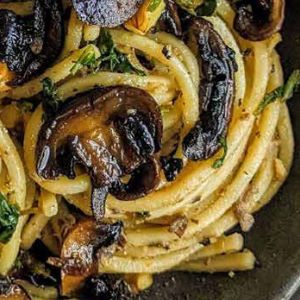
photo by Olga Kouloufakos
Olga Kouloufakos shares a variety of Mediterranean vegan recipes in the latest issue of Vegan Journal. You can prepare Stuffed Tomatoes; Vegan Meatballs (based on mushrooms and oats); Moussaka; Pasta with Chickpea & Mushroom Pesto; and Lasagna.
Read her entire article here: https://www.vrg.org/journal/vj2024issue3/2024_issue3_mediterranean_mainstays.php
To subscribe to Vegan Journal visit www.vrg.org/member
Category
Uncategorized
Comments
0
Posted on
September 12, 2024 by
The VRG Blog Editor
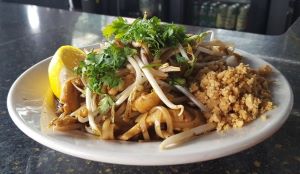
Summer Pad Thai photo from Sawatdee Thai Restaurant
Where: Sawatdee Thai Restaurant, Minneapolis, Minnesota
When: Sunday, October 6, 2024, 6 PM
Come meet dietitians from the Vegetarian Nutrition Dietetic Practice Group as well as VRG members. The public is invited. You must preregister. You can pay at www.vrg.org/donate and write in the names of attendees and that this is for the Networking dinner.
BUFFET
Appetizers: Vegetarian Spring Rolls and Fried Tofu
Main Dishes:
Red Curry with Tofu
Summer Pad Thai
Combination Vegetable Dish with broccoli, cauliflower, mushrooms, onions, napa, water chestnuts, tomatoes, and mock duck.
Plus: Brown Rice and White Rice and Coffee or tea and water
Dessert: Mango and Sticky Rice
Cost: $30 for VRG and Vegetarian Nutrition Practice Group members before September 15, 2024. $35 for others. $20 for two to ten year olds. Other drinks can be purchased from the restaurant separately.
PLEASE PAY at www.vrg.org/donate and write in the Comments: Networking Dinner with the Attendee names. Or call (410) 366-8343. Or mail payment to The Vegetarian Resource Group, P.O. Box 1463, Baltimore, MD 21203. We look forward to seeing you there.
Category
Uncategorized
Comments
0
Posted on
September 12, 2024 by
The VRG Blog Editor
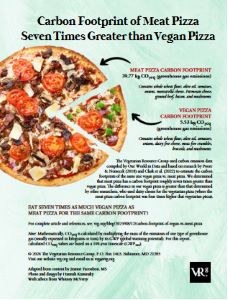
In the latest issue of Vegan Journal, we include a one-page graphic showing that the Carbon Footprint of Meat Pizza is Seven Times Greater than Vegan Pizza. Find the graphic on page 30 here: https://www.vrg.org/journal/vj2024issue3/VJ_issue3_2024.pdf
To subscribe to Vegan Journal visit www.vrg.org/member
Category
Uncategorized
Comments
0
Posted on
September 11, 2024 by
The VRG Blog Editor

Hannah Kaminsky introduces herself as the newest Senior Editor of Vegan Journal. Read the piece here: https://www.vrg.org/journal/vj2024issue3/2024_issue3_note_research.php
To subscribe to Vegan Journal visit www.vrg.org/member
Category
Uncategorized
Comments
0
Posted on
September 11, 2024 by
The VRG Blog Editor
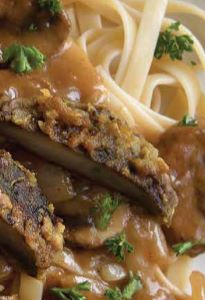
Mushroom Marsala photo by Rissa Miller
Chef Joseph Solar shares a wide variety of noodle dishes in his recipe piece in Vegan Journal. Start cooking Stuffed Shells with Basil, Golden Beet Japchae, Mushroom Marsala, Classic Vegan Pad Thai, or Vegan Carbonara!
Find the complete article here: https://www.vrg.org/journal/vj2022issue4/2022_issue4_noodling_around.php
Subscribe to Vegan Journal in the USA only at https://www.vrg.org/member/2013sv.php
Category
Uncategorized
Comments
0
Posted on
September 10, 2024 by
The VRG Blog Editor
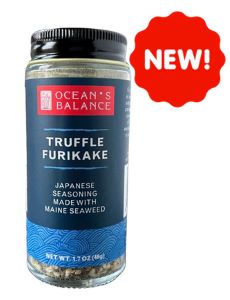
If you love the taste of sushi but hate rolling it at home or paying astronomical prices at restaurants, furikake is the answer to effortlessly satisfy those cravings. This traditional Japanese condiment is a savory blend of seaweed flakes, sesame seeds, and many other umami ingredients. Ocean’s Balance Truffle Furikake. Read our review of this product in Vegan Journal: https://www.vrg.org/journal/vj2024issue3/2024_issue3_veggie_bits.php
For more information on this product, visit www.oceansbalance.com
Category
Uncategorized
Comments
0
Posted on
September 10, 2024 by
The VRG Blog Editor
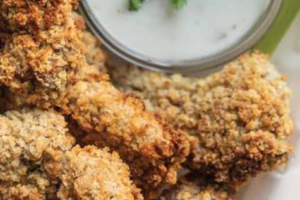 Cajun Chickn Nuggets photo by Rissa Miller
In a previous issue of Vegan Journal Chef Jay Staten shares vegan recipes that can be made using an air fryer. But don’t worry, if you don’t own an air fryer, he also includes oven directions. Enjoy preparing Crispy Broccoli, Vegan BBQ Ribz, Jay’s Black Bean Burgers, Maryland Seasoned Fries, and Cajun Chick’n Nuggets.
Read the column here: https://www.vrg.org/journal/vj2022issue2/2022_issue2_air_fryer.php
To subscribe to Vegan Journal, visit: https://www.vrg.org/member/2013sv.php
Category
Uncategorized
Comments
0