Large Study Finds Infants From Vegan Families Have Similar Growth to Infants from Nonvegetarian Families
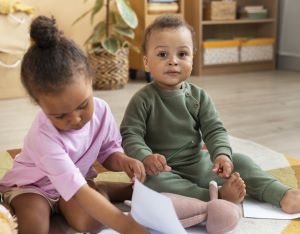
photo from Freepik
by Reed Mangels, PhD, RD
Pregnancy and the first two years after birth are important times for a child’s growth and development and good nutrition plays an important role. A recent study examined the growth of infants from vegan, “vegetarian,” and nonvegetarian families (1).
What is the study?
This study, from Israel, used data collected over a 10-year period during which almost 1.2 million infants were studied for the first 2 years after birth. The infants were measured and weighed at birth, in early infancy, and at 2 years. Each infant’s caregiver was asked if the family diet was vegan, “vegetarian” (including lacto-ovo vegetarian and those who ate fish), or nonvegetarian. Approximately 98.5% of infants were from nonvegetarian households, 1.2% from “vegetarian” households, and 0.3% from vegan households. Information was not collected on what the infants ate or on supplement use.
What did this study find?
The main finding of this study was that, overall, there were minimal differences in average growth among the different households. The growth of infants from vegan, “vegetarian,” and nonvegetarian families was generally similar.
Infants from vegan households had a slightly lower birth weight (about 3-1/2 ounces less on average) than did infants from nonvegetarian families. Infants from “vegetarian” families were in between. This difference between the groups is not considered to be clinically meaningful. About 6.1% of infants from vegan families were low-birth weight (less than 5-1/2 pounds at birth) compared to 4.6% of infants from nonvegetarian families. In contrast, high-birth weight (more than 8.8 pounds) was more common in infants from nonvegetarian families than in infants from vegan families.
Mothers in the vegan group were more likely to fully breastfeed their infants for the first 6 months and to continue breastfeeding for 12 or more months than mothers whose family was “vegetarian” or nonvegetarian. Exclusive breastfeeding is recommended for the first 6 months with partial breastfeeding continuing for up to two years or beyond, as long as mutually desired by the mother and the child.
When the infants were measured and weighed at ages 2 months and 2 years, there was little difference between the three groups. Infants from vegan families were more likely to be classified as underweight at age 2 months but by age 2 years there were minimal differences between the groups.
Since this study classified infants based on their family’s reported dietary pattern, we can’t say for certain that the infants were vegan/”vegetarian”/nonvegetarian. Infants’ diets commonly are similar to their family’s dietary pattern, however.
The results of this study suggest that infants from vegan families grow similarly to infants from “vegetarian” and nonvegetarian families.
Reference:
- Avital K, Fliss-Isakov N, Shahar DR, et al. Growth trajectories in infants from families with plant-based or omnivorous dietary patterns. JAMA Netw Open. 2026;9:e2557798..
To read more about vegan diets for infants and young children see:
Vegan Nutrition in Pregnancy and Childhood
Baby-led Weaning for Vegan Families
Vegan Babies: Starting Solid Foods
The contents of this website and our other publications, including Vegan Journal, are not intended to provide personal medical advice. Medical advice should be obtained from a qualified health professional. We often depend on product and ingredient information from company statements. It is impossible to be 100% sure about a statement, info can change, people have different views, and mistakes can be made. Please use your best judgment about whether a product is suitable for you. To be sure, do further research or confirmation on your own.