The Vegetarian Resource Group Blog

Quick Ideas for Using Canned Beans or Leftover Cooked Beans

Posted on February 09, 2026 by The VRG Blog Editor

Image by timolina on Freepik

Chef Nancy Berkoff’s previous Journal article “Usin’ the Old Bean” offers several easy suggestions for preparing dishes with canned or leftover cooked beans. Nancy says, “Doesn’t it always seem as if you have either leftover cooked beans in the refrigerator or extra cans of beans staring out at you from the pantry? Cooked or canned beans are certainly edible in their natural state. But this can get so boring!”

Some of her international bean dish ideas primarily using garbanzo or white beans (also called Great or small Northern beans) include:

Italian: Toss lightly with tomato sauce, minced garlic or garlic powder (be careful, since garlic “grows” in power as it’s heated), dried red pepper flakes, and chopped fresh or dried basil.

Greek: Toss very lightly with olive oil, chopped fresh parsley, and chopped black olives; if you’d like to serve this cold, toss in some chopped cucumbers and fresh tomatoes.

Central American: Add in chopped fresh or canned tomatoes, chopped fresh cilantro, chopped onions, and chopped green bell peppers; if you’d like some heat, add some Tabasco or hot sauce.

English: Toss cooked white beans with ketchup or used canned vegetarian baked beans and serve on toast. (Beans on toast is a mild English teatime item.)

Indian (and this is a very Anglicized version): Toss cooked lentils or garbanzos with curry powder and chopped onions. If you have the time, purchase garam masala (spice mix) and some tandoori paste, then toss cooked beans with these and bake until bubbly.

Norwegian: Very mild, very pure-cooked, or baked beans flavored only with a small amount of bay leaf.

French: Invest in a small bottle of Herbes de Provence (found in most markets), an aromatic spice blend that includes lavender and thyme. Toss lightly with tomato juice, lemon juice, and Herbes de Provence. If you have the time, you can make a vegan cassoulet by simmering white beans with onion, garlic, tomatoes, vegan sausage, black pepper, and thyme.

Find the entire article here: https://www.vrg.org/journal/vj2003issue1/2003_issue1_cooking_tips.php

Subscribe to Vegan Journal in the USA only here: www.vrg.org/member

Celebrate National Pizza Day with Vegan Pizza!

Posted on February 09, 2026 by The VRG Blog Editor

photo from Freepik

Chef Nancy Berkoff offers creative suggestions on how to make pizza in your home:

Make Your Pizza

Preheat oven to 400 degrees (you can use a toaster oven for individual pizzas). The microwave won’t work for this — no one wants a “steamed” pizza.

Whatever type of “dough” you’ve selected, bake it, if necessary. If using bread, like English muffins or burger buns, slice thin and toast lightly.

Decide on your sauce and toppings — we’ve given some suggestions below. Smooth a thin layer of sauce on your “dough” and then go to town with the toppings — really pile them on.

Place your masterpiece on a nonstick baking dish and allow to bake until your “dough” is crunchy and your veggies or fruit are cooked to the texture you’d like. Times will vary depending on the thickness of the bread you used and the amount of toppings, but can take as little as 7 minutes or up to 20 minutes. Make enough so you can have cold pizza for breakfast, or pack some for lunch!

Super Pizza Combos

  • English muffin topped with mushroom sauce and fresh and canned mushrooms, chopped canned tomatoes, and chopped green peppers
  • Pita with mushroom sauce, topped with three different types of cooked beans, mushrooms, and onions
  • Sliced French bread topped with tomato purée, rosemary, fresh and canned tomatoes, peppers, and onions
  • Baked pizza dough topped with tomato sauce, shredded spinach, basil, oregano, and white beans
  • Sliced burger bun topped with tomato sauce, chopped chilies and peppers, zucchini, and mushrooms
  • Baked pizza dough with orange juice concentrate and peanut butter sauce (mix the two together for the consistency you want) topped with fresh and frozen strawberries, pineapple, chopped walnuts, and coconut, or topped with canned peaches and plums, shredded dried apricots, raisins, and dates

The entire article can be read here: https://www.vrg.org/journal/vj2001nov/2001_nov_cooking_tips.php

To subscribe to Vegan Journal in the USA, visit: www.vrg.org/member

What do the 2025-2030 Dietary Guidelines for Americans Say About Vegan Diets?

Posted on February 06, 2026 by The VRG Blog Editor

by Reed Mangels, PhD, RD

Imagine you’re talking with a new vegan and they tell you that they’re hungry all the time. You ask them what they’re eating, and they tell you they’re eating like they did when they weren’t vegan – they’ve just taken meat, fish, eggs, and dairy products off of their plate. No wonder they’re hungry. They haven’t replaced the calories animal products supplied. In addition, they’re missing nutrients that could easily be supplied by plant foods. Clearly, they need to add a variety of foods such as beans, tofu, tempeh, veggie meats, fortified plant milks, nuts, and seeds, not only to help with the hunger problem but also to meet nutritional needs.

The information about vegan diets in the most recent edition of Dietary Guidelines for Americans is based on an exercise that approached vegan diets in the same uninformed way that our hypothetical new vegan did – take a vegetarian diet and just eliminate dairy products and eggs. No appropriate replacement; just remove those foods. Then evaluate the nutrient content of the hypothetical diet. It’s no surprise that these inadequate diets are described thusly, “vegan diets show broader shortfalls [than vegetarian diets] in vitamins A, D, E, B6 and B12; riboflavin; niacin; choline; calcium; iron; magnesium; phosphorus; potassium; zinc; and protein”(1). Something as simple as adding several servings of cooked dried beans and fortified soymilk would markedly improve the hypothetical menus and eliminate many of the so-called “shortfalls.” But, that’s not what the committee responsible for developing the Guidelines did. They provide little guidance for those Americans following vegan diets other than the vague statement, “To avoid nutrient gaps, prioritize targeted supplementation, diversify plant protein sources for amino acid balance, and enhance mineral bioavailability through food preparation techniques” (1).

Earlier editions of the Dietary Guidelines provided more real guidance including supplying a vegan version of the USDA Food Pattern and developing a “healthy vegetarian eating pattern” that included alternatives to cow’s milk. In addition, earlier editions spoke positively about vegetarian diets and encouraged all Americans to eat more plant foods.

The 2025-2030 Guidelines, as I described in an earlier post, tell vegans and vegetarians to “consume a variety of whole foods, especially protein-rich foods, such as dairy, eggs, beans, peas, lentils, legumes, nuts, seeds, tofu, or tempeh.” Note that, animal-based protein sources are prioritized and are apparently recommended for vegans.

In contrast to the current edition of Dietary Guidelines, earlier editions provided information on calcium sources for those avoiding dairy products. These groups include not only vegans but also those with cow’s milk allergy, lactose intolerance, a dislike of dairy products, or who come from a culture that uses few or no dairy products. The current edition assumes, apparently, that everyone drinks whole cow’s milk. If you don’t, “prioritize targeted supplementation,” whatever that means.

Vegans do need to pay attention to vitamin B12, calcium, iron, zinc, iodine, and vitamin D. Actually, vitamin D adequacy is a challenge for many people, not just vegans (2). Our website and blog posts provide lots of information about good sources of vitamin B12, calcium, iron, zinc, iodine, and vitamin D for vegans. There’s little or no evidence that vegan diets are commonly lacking in vitamins A, E, B6, riboflavin, niacin, choline, magnesium, phosphorus, potassium, or protein. In fact, plant foods are some of the highest sources of many of these nutrients.

What are the implications of this inaccurate information about vegan diets? I hope that vegans, and those interested in vegan diets will seek out more accurate sources of information about nutrition. Websites including the Vegetarian Resource Group, VeganHealth, and the Vegan RD provide reliable, evidence-based nutrition information. I am concerned about settings such as school meal programs, senior meals, and military rations that use the Guidelines as a basis for menu planning and are interested in implementing more vegan-friendly meals. They will not get support or help from this edition of the Dietary Guidelines. I’m concerned about health care professionals who may base their nutrition advice on these flawed Guidelines. I note that the professional organization for registered dietitians, the Academy of Nutrition and Dietetics, states that “some of the recommendations in the DGAs [Dietary Guidelines for Americans] are not aligned with the current body of evidence.” The Academy of Nutrition and Dietetics goes on to point out that parts of these guidelines will make it difficult for registered dietitians to apply the guidelines in ways that meet the needs of “a broad spectrum of populations.”

The most recent Dietary Guidelines are deeply flawed in terms of nutrition advice for vegans and, truly, for all Americans. In a future post, we’ll look at their meal plans which prioritize animal-based foods.

References

  1. Dietary Guidelines for Americans, 2025-2030. https://cdn.realfood.gov/DGA.pdf.
  2. Palacios C, Gonzalez L. Is vitamin D deficiency a major global public health problem? J Steroid Biochem Mol Biol. 2014;144 Pt A:138-45.

To read more about the Dietary Guidelines for Americans see:

2025-2030 Dietary Guidelines for Americans Released

The Vegetarian Resource Group Submitted Testimony Concerning the Scientific Report of the 2025 Dietary Guidelines Advisory Committee

VRG Testimony on 2025-2030 Dietary Guidelines

The Dietary Pattern in Dietary Guidelines for Americans Could Easily Be Made Vegan and Nutritionally Adequate

What Have the U.S. Dietary Guidelines Said About Vegan and Vegetarian Diets?

2020-2025 Dietary Guidelines for Americans Released

VRG’s testimony about the 2020 Dietary Guidelines and the Scientific Report Underlying the 2020 Dietary Guidelines

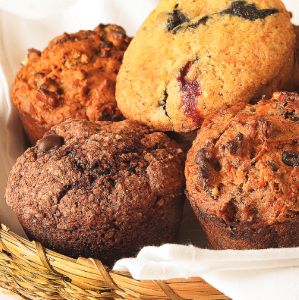
Everyone Loves Vegan Muffins!

Posted on February 06, 2026 by The VRG Blog Editor

Serving muffins on a chilly day will be well-received. Debra Daniels-Zeller’s previous Journal article Muffin Mania offers recipes for Carrot Cake Muffins, Blueberry Cornmeal Muffins, Apple Cider Walnut Muffins, Pumpkin Muffins, Gluten-Free Mocha Chocolate Chip Muffins, and Gluten-Free Banana Nut Muffins.

Read the entire article here: https://www.vrg.org/journal/vj2014issue4/2014_issue4_muffin_mania.php

Subscribe to Vegan Journal in the USA only by visiting https://www.vrg.org/member/

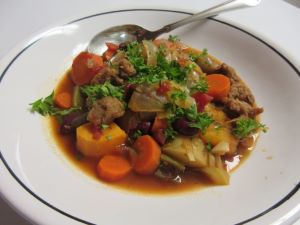
Travel the World in a Stew Pot

Posted on February 05, 2026 by The VRG Blog Editor

South African Potjiekos

Winter is the perfect time to serve a vegan stew. In a previous edition of VRG’s magazine, Zel Allen serves up several international stews. Enjoy:

Burgoo (a regional stew from Kentucky)
Harira (the national soup/stew of Morocco)
Neapolitan Cannellini Ragu (Italian stew) along with homemade Parmesan
South African Potjiekos
African Pumpkin Stew
Rajastani Ragout (Indian inspired stew)
Savory Indonesian Stew
Guisada Mexicana

The entire article can be read here:
http://www.vrg.org/journal/vj2017issue4/2017_issue4_travel_world.php

To subscribe to Vegan Journal in the USA, see: https://www.vrg.org/member/2013sv.php

VRG’s Annual Scholarship Program for Graduating High School Seniors in the USA Promoting Veganism

Posted on February 05, 2026 by The VRG Blog Editor

Due to the generosity of anonymous donors, The Vegetarian Resource Group each year will award one $10,000 and several $5,000 college scholarships to graduating U.S. high school students who have promoted veganism in their schools and/or communities. Entries may only be sent by students graduating from high school in SPRING 2026

We will accept applications emailed or postmarked on or before FEBRUARY 20, 2026. Early submission is encouraged.

Applicants will be judged on having shown compassion, courage, and a strong commitment to promoting a peaceful world through a vegan diet/lifestyle. Payment will be made to the student’s college (U.S. based only). Winners of the scholarships give permission to release their names to the media. Applications and essays become property of The Vegetarian Resource Group. We may ask finalists for more information. Scholarship winners are contacted by e-mail or telephone. Please look at your e-mail.

If you would like to donate to additional scholarships or internships, go to www.vrg.org/donate

Applications

For information on applying, visit: https://www.vrg.org/student/scholar or call (410) 366-8343 or email [email protected].

This contest is sponsored by The Vegetarian Resource Group/Vegan Journal, PO Box 1463, Baltimore, MD 21203.

How can you prepare vegan dishes with TVP chunks?

Posted on February 04, 2026 by The VRG Blog Editor

By Reed Mangels, PhD, RD

I was squatting down in front of a bin in the bulk foods section of a local store, when someone asked, “What are you making with that?” He was curious about the TVP chunks that I was scooping into a container. I told him that I planned to use the chunks in a curry sauce with cauliflower. More questions followed – How do you cook TVP chunks? What else can you do with them? How do they taste? Do TVP chunks have protein? We chatted for a while. Afterwards, I kept thinking about TVP chunks, a product I use every few weeks.

TVP is made from defatted soy flour which is made into a paste and formed into different shapes like strips, chunks, and flakes. The shapes are dehydrated. I often use the chunks in recipes in place of seitan strips or cubes or instead of diced tofu. Since the dehydrated TVP chunks are shelf stable, they can be kept on hand to use anytime.

To rehydrate the TVP chunks I put them in a heatproof bowl and cover them with boiling water. I let them sit, covered, for about 10 minutes and then drain off any excess liquid. Rehydrated TVP has a fairly bland taste. Some recipes call for soaking TVP chunks in hot broth, instead of water, to add flavor. Since I usually use them in highly flavorful sauces, I don’t find it necessary to use broth for soaking.

According to USDA’s nutrient data base, an ounce of dried TVP has approximately 125 calories, 17 grams of protein, 1 gram of fat, 11 grams of carbohydrate, and 6 grams of fiber. TVP supplies iron, zinc, and some calcium and by itself, is low in sodium.

Here are 10 ideas for dishes that include TVP chunks:

  1. Make or buy a curry sauce, heat it, and mix with rehydrated TVP chunks and steamed vegetables of your choice.
  2. Barbecue TVP chunks – combine rehydrated TVP chunks with a commercial or homemade barbecue sauce and heat on the stovetop or in the oven or microwave. Serve on a bun or over cornbread.
  3. Make a flavorful brown gravy and add rehydrated TVP chunks and pre-cooked stew vegetables (e.g. carrots, potatoes, turnips, and parsnips). If you are looking for a good gravy recipe, Chef Nancy Berkoff, EdD, RD has lots of ideas. If you want a good stew recipe, see the Seitan Stew in this article and replace the seitan with rehydrated TVP chunks.
  4. Rehydrated TVP chunks are great in a stir-fry! Add them along with longer cooking vegetables like onions and carrots so they can soak up lots of flavor.
  5. TVP chunks can be add to your favorite soup recipe or canned soup. If adding them to a soup recipe, you can skip the rehydrating, as long as they are in a hot liquid in the soup pot for at least 10 minutes. If you are adding them to canned soup, either heat them in the soup or rehydrate the chunks before adding them to the soup.
  6. Sauté rehydrated TVP chunks with sliced peppers and onions and spices and wrap in a whole-wheat tortilla or serve in whole-wheat rolls.
  7. When you make fried rice, add rehydrated TVP chunks. Here’s an easy recipe for fried rice.
  8. Mix rehydrated TVP chunks with Chocolate Mole Sauce (see the mole sauce recipe in The Savory Side of Chocolate from Vegan Journal).
  9. Make Chef Nancy Berkoff’s Hungarian Sauce, add sautéed mushrooms and onions, and rehydrated TVP chunks and serve over cooked noodles or other pasta.
  10. Try a shepherd’s pie. Combine rehydrated TVP chunks with leftover cooked vegetables, add some gravy, top with mashed potatoes and bake until hot.

Quick Vegan Breakfast in a Mug or Travel Cup

Posted on February 04, 2026 by The VRG Blog Editor

photo from Freepik

In a Vegan Cooking Tips column that previously ran in Vegan Journal, Chef Nancy Berkoff said breakfast in a mug can be just one part of your morning meal, sipped leisurely during an early morning class or meeting; or it can be a gulp-able meal unto itself, taken on the dash.

Here’s some of her delicious combination suggestions:

Creamy Smooth: ½ cup fruit-flavored soy yogurt, ½ cup vegan milk, ½ banana, 1 Tablespoon nutritional yeast, 1 teaspoon thawed orange juice concentrate

Harvest Apple: ½ cup tofu or plain vegan yogurt, ¼ cup applesauce, 1 Tablespoon thawed apple juice concentrate, ¼ cup vegan milk, sprinkle of cinnamon

Potassium Plus: carrot juice, ¼ cup orange juice, ½ banana

Sunny: ½ cup orange juice, 2 ounces pineapple juice, ½ banana or 2 ounces of tofu or vegan yogurt, 3 ounces strawberries, 1 Tablespoon wheat germ

Ginger-Peachy: ½ cup sliced peaches, ¼ cup orange juice, 2 Tablespoons carrot juice, dash of maple syrup, dash of ginger

Apples Plus: apple cider blended with applesauce, apple juice concentrate, raisins, cinnamon

Banana Split: hot or cold milk blended with banana, berries, pineapple, cocoa powder (or chocolate syrup)

What the Bunny Knows: carrot juice blended with banana, celery, wheat germ, ­­orange juice concentrate

Read the entire column here: https://www.vrg.org/journal/vj2013issue2/2013_issue2_quick_breakfasts.php

Subscribe to Vegan Journal in the US only: https://www.vrg.org/member/

Index to Vegan Recipes that Have Appeared in Vegan Journal

Posted on February 03, 2026 by The VRG Blog Editor

Each issue of Vegan Journal (published by The Vegetarian Resource Group) contains a wide variety of vegan recipes. You can search through our recipe index here and find something new to prepare at home: https://www.vrg.org/journal/CookingAndRecipes.htm

Where to Purchase Vegan Chocolates for Valentine’s Day

Posted on February 03, 2026 by The VRG Blog Editor

photo from No Whey Chocolate

Are you looking for places to purchase vegan chocolate for Valentine’s Day? Here’s some online sources that sell vegan chocolate:

Coracao Confections (vegan chocolates) https://www.coracaoconfections.com/

Dallmann Chocolates (vegan chocolates) https://dallmannconfections.com/collections/vegan-chocolates

Divine Chocolate (variety of vegan chocolate bars) https://www.divinechocolateusa.com/collections/valentine

Lagusta’s Luscious (variety of handcrafted vegan chocolate) https://lagustasluscious.com/

Lake Champlain Chocolates (wide variety of vegan offerings) https://www.lakechamplainchocolates.com/seasonal-chocolates/vegan-valentine-chocolates

No Whey Chocolate (vegan and kosher) https://nowheychocolate.com/valentines-day-chocolate/

  • Donate

  • Subscribe to the blog by RSS

  • VRG-NEWS

    Sign up for our newsletter to receive recipes, ingredient information, reviews of new products, announcements of new books, free samples of products, and other VRG materials.

    Your E-mail address:
    Your Name (optional):


↑ Top