Posted on
December 28, 2021 by
The VRG Blog Editor
Each issue of Vegetarian Journal
features a Nutrition Hotline column by Reed Mangels, PhD, RD. The latest column
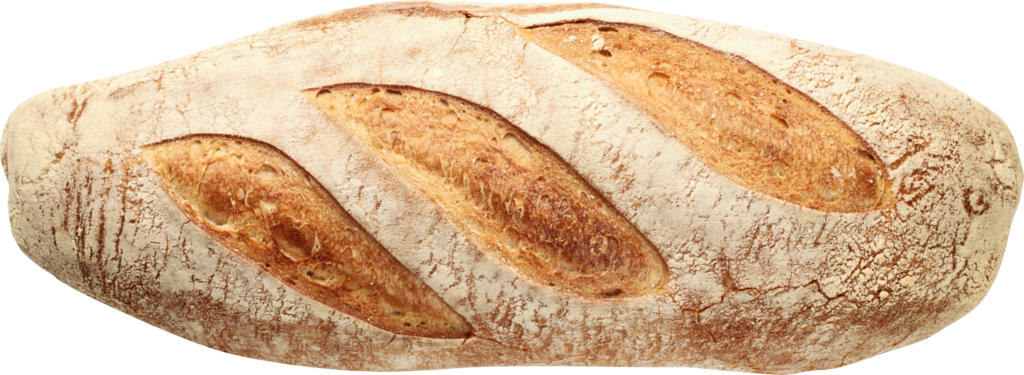
looks at the benefits of sourdough bread. Mangels states, “The main nutritional
advantage associated with sourdough breads compared to quick breads (like
biscuits and banana bread) and to yeast-raised breads is that some minerals are
better absorbed from sourdough breads. To appreciate this advantage, it helps
to be familiar with phytates.”
Posted on
December 27, 2021 by
The VRG Blog Editor
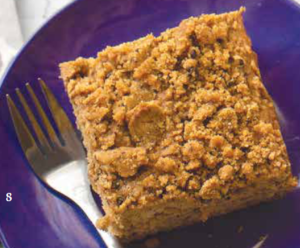
Cold Brew Coffee Cake photo by Hannah Kaminsky
The latest issue of Vegetarian Journal includes a recipe piece by Hannah Kaminsky titled Beverage Inspired Holiday Treats. You might want to add one of these delicious desserts to your New Year’s menu this year: Hot Cocoa Brownies, Maple Brown Sugar-Oat Milk Pops, Cold Brew Coffee Cake, Poached Pear Upside-Down Cake, and Orange-Pepper Peanut Brittle.
Posted on
December 27, 2021 by
The VRG Blog Editor
By Reed Mangels, PhD, RD
When I was growing up, I couldn’t understand why my mother
disdained white potatoes. She strongly preferred the taste of sweet potatoes
and would only occasionally make baked potatoes or use a package of instant
mashed potatoes. In contrast, I was a white potato fan, although I never cared
for instant mashed potatoes.
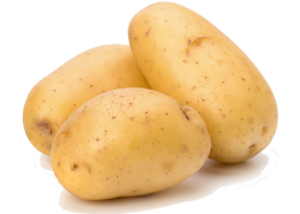
I was reminded of the potato debate of my childhood when I
started reading about the “Healthful Plant-Based Diet Index,“ which is used in
epidemiology research. The creators of this index classify sweet potatoes as
healthy plant foods and potatoes as less healthy plant foods (1). The less
healthy plant foods group also includes fruit juice, refined grains,
sugar-sweetened beverages, sweets, and desserts – not exactly illustrious
company. I wondered if their categorization of potatoes as less healthy plant
foods was based on fried potatoes. Indeed, French fries and potato chips are
included in the potato category but so are baked and mashed potatoes (1).
Are potatoes truly a “less healthy plant food”? The answer
seems to depend on what they are being compared to and, to some extent, on how
they are prepared. Several studies find that higher consumption of “potatoes,”
which includes both baked and fried potatoes, is associated with greater
long-term weight gain (2) and a modest increase in risk of type 2 diabetes (3)
and hypertension (4). In all of these studies, French fries had a greater
effect on risk than did mashed or baked potatoes. There was still a
statistically significant higher risk of health effects in those eating more
mashed or baked potatoes compared to those who ate less (2-4).
In contrast, other studies do not find an association
between the amount of potatoes that people eat and their risk of heart disease
(5), hypertension (6), or mortality (7).
Potatoes are known to have a high glycemic Index which means
that they are more likely to lead to increased blood glucose levels. They are often eaten fried or with butter or
sour cream. On the positive side, they are a good source of potassium and of
vitamin C and are a low-fat food if eaten unadorned.
Based on what I’ve read about potatoes, there’s no reason to
avoid eating them. Eat reasonable amounts, mix it up so that sometimes you eat
potatoes and sometimes whole grains or other carb sources including sweet
potatoes, choose baked or mashed potatoes over fries, and think about what
you’re putting on them.
So, my mother was on the right track – sweet potatoes are nutritional superheroes providing
lots of beta-carotene, vitamin C, and potassium. I’ve grown to appreciate them.
Still, when I want a comfort food, I turn to a baked potato with a little vegan
butter and nutritional yeast.
For recipes using potatoes and sweet potatoes see:
1. Satija A, Bhupathiraju SN, Rimm EB, et al. Plant-based
dietary patterns and incidence of type 2 diabetes in US men and women: Results
from three prospective cohort studies. PLoS Med. 2016;13(6):e1002039.
2. Mozaffarian D, Hao T, Rimm EB, Willett WC, Hu FB. Changes
in diet and lifestyle and long-term weight gain in women and men. N Engl J
Med. 2011;364:2392-2404.
3. Halton TL, Willett WC, Liu S, Manson JE, Stampfer MJ, Hu
FB. Potato and french fry consumption and risk of type 2 diabetes in women. Am
J Clin Nutr. 2006;83:284-290.
4. Borgi L, Rimm EB, Willett WC, Forman JP. Potato intake
and incidence of hypertension: results from three prospective US cohort
studies. BMJ. 2016;353:i2351.
5. Larsson SC, Wolk A. Potato consumption and risk of
cardiovascular disease: 2 prospective cohort studies. Am J Clin Nutr.
2016;104:1245-1252.
6. Hu EA, Martínez-González MA, Salas-Salvadó J, et al.
Potato consumption does not increase blood pressure or incident hypertension in
2 cohorts of Spanish adults. J Nutr. 2017;147:2272-2281.
7. Hashemian M, Murphy G, Etemadi A, et al. Potato
consumption and the risk of overall and cause specific mortality in the
NIH-AARP study. PLoS One. 2019;14(5):e0216348
Posted on
December 24, 2021 by
The VRG Blog Editor
In honor of The Vegetarian Resource Group’s 40th anniversary
next year, a member has pledged a $5,000 match. So your donation to support vegan
education will be doubled. You can donate at www.vrg.org/donate and write MATCH in the comments area.
Thank you!
Posted on
December 23, 2021 by
The VRG Blog Editor
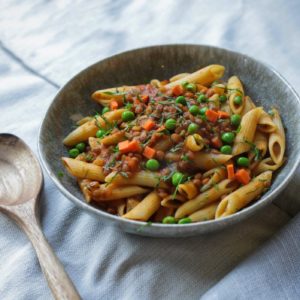
photo of Lentil Bolognese Bowl from NuLeaf
The Vegetarian Resource Group maintains an online Guide to
Vegan/Vegetarian Restaurants in the USA
and Canada.
Here are some recent vegan restaurant additions. The entire guide can be found
here: http://www.vrg.org/restaurant/index.php
To support the updating of this online restaurant guide,
please donate at: www.vrg.org/donate
Here are some new additions to VRG’s guide (Note: Due to
the COVID-19 pandemic many are doing take-out
and/or delivery now):
Badass
Burgers, 1502 Liliha St., Honolulu, HI 96817
There are several types of burgers, chicken sandwiches,
and plate lunches. The Bad ass chick sandwich is a must-try.
Jennifer
Lee’s Allergen Friendly & Vegan Shoppe, Boston Public Market at Haymarket,
100 Hanover St., Boston, MA 02108
Jennifer Lee’s is a bakery in the Boston Public Market offering
savory baked goods such as Chocolate sprinkles doughnuts, soft pretzel, the
cookie monster, and more. Preorder pickup orders must be placed 24hrs in
advance.
Lightbox
Café, 704 S. 4th St., Philadelphia, PA 19147
Organic hot teas, smoothies, lattes, bowls, desserts, and
more are available at Lightbox Café. The atmosphere is cozy, and brunch is a
must at this café.
Loving
Vegan Market & Cuisine, 2240 W. Fairbanks Ave., Winter Park, FL 32789
Wraps, rolls, burritos, salad, pasta, noodles, burgers, and
more are available. They use fresh herbs from their own garden.
Nuleaf,
888 8th Ave., New York, NY 10019 and 23 W. 23rd St., New York, NY 10010
Nuleaf offers hummus avocado wraps, lentil soup, fiesta
bowls, chickpea salad wraps, and various other options.
Enjoy a wide variety of bowls including My Thai Power
Bowl, Tempeh Club Power Bowl, Berry Bowl Smoothie Blast, and Force Fruit Bowl,
as well as sandwiches and burritos.
Soul
& Juice, 122 W. 6th St., Bloomington, IN 47404
Smoothies, gourmet toasts, fruit waffles, acai bowls, and
more are on the menu.
Trendy Vegan serves shakes, salad plates, soups, and
appetizers, etc. The bento box comes with a main dish, salad, spring roll,
rice, and dandan noodle.
Posted on
December 23, 2021 by
The VRG Blog Editor
By Jeanne Yacoubou, MS
VRG blog commenter Nirav asked us in June 2021 for “…an
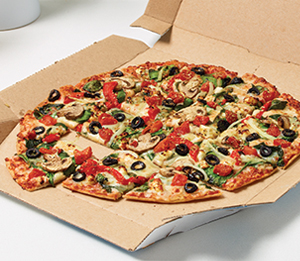
update…and latest information…” on Domino’s Pacific Veggie Pizza. He
referred to our 2013 article titled “Parmesan-Asiago Cheese on Domino’s
Pacific Veggie Pizza Contains Animal-Derived Lipase.”
We first reached out to Domino’s in July 2021 through its
website contact form. Here is what we asked:
“Does the Pacific Veggie Pizza contain any cheese made with
animal enzymes, including rennet or lipase? The information on your ingredients
page states there are three cheeses in this pizza: provolone, mozzarella, and
feta, but specific enzyme types and sources aren’t given.”
For interested readers, here is the complete ingredient statement
for the Pacific Veggie Pizza posted
on the Domino’s Pizza website. Bolded words are theirs:
“Provolone Cheese
[Shredded Provolone Cheese (Pasteurized Milk, Cultures, Salt, Enzymes), Nonfat
Milk, Sodium Propionate (Added As A Preservative)], Pizza Sauce [Tomato
Puree (Water, Tomato Paste), Sugar, Salt, Spices, Garlic, Soybean Oil, and
Citric Acid], Pizza Cheese [Part Skim Mozzarella Cheese (Pasteurized
Milk, Cultures, Salt, Enzymes, Modified Food Starch, Cellulose (Added to Prevent
Caking), Nonfat Milk, Whey Protein Concentrate, Natural Flavors, Sodium
Propionate (Added as a Preservative)], Spinach, Feta Cheese [Cultured
Pasteurized Milk, Salt, Enzymes, Potato Starch (Added To Prevent Caking)],
Fresh Mushrooms, Fresh Yellow Onions, Roasted Red Peppers [Red Peppers,
Water, Salt, Citric Acid, Calcium Chloride], Diced Tomatoes [Fresh
Vine-Ripened California Tomatoes, Tomato Juice, Salt, Calcium Chloride, Citric
Acid], Black Olives [Ripe Olives, Water, Salt, Ferrous Gluconate (added
to stabilize color)], Garlic & Herb Shake-On [Garlic, Onion, Spices,
(Black Pepper, Fennel, Parsley, Basil, Bay Leaves, Marjoram, Oregano, Savory,
Thyme, Red Pepper, Coriander, Cumin, Mustard, Rosemary, and Celery Seed),
*Carrot, *Orange Peel, Natural Flavor, Flavor, (Natural Flavoring, Soy
Lecithin), And No Greater Than 2% Soybean Oil Added As A Processing Aid.
*Dehydrated].”
A few days later we received the following email response from
Katie of Domino’s Customer Support:
“Domino’s pizza cheese (mozzarella) is made with a microbial
rennet. As far as our other cheeses, Domino’s purchases from many suppliers and
does not specify the source of all ingredients. The source could vary from time
to time based on availability.
L-cysteine and the enzymes in our hand tossed dough are microbial based. We use
sweet dairy whey and it is a byproduct of milk from cows.
Most of the products Domino’s serves (such as pizza cheese or sandwich bread)
do not contain animal derived enzymes. The Alfredo sauce does contain enzymes
from a beef source.
All enzymes used in this cheese are from a non-animal source.”
Note from The VRG: The sentence in the quote above from Katie in
Domino’s Customer Support is bolded by The VRG for emphasis. The Spinach &
Feta pizza at Domino’s contains the Alfredo sauce made with beef enzymes.
The VRG wanted more information about the part of Katie’s
response where she had stated that “…All enzymes used in this cheese are from
a non-animal source.”
It is not clear which cheese(s) she was referring to in that
sentence.
So we replied to Katie asking for more clarification on this
point. We wanted to know if she were talking about one or more of the three
cheeses in the Pacific Veggie Pizza.
This time, Ramea of Domino’s Customer Support replied by
repeating:
“All of the enzymes in our mozzarella cheese are from a non-animal source. As far as our other cheeses,
Domino’s purchases from many suppliers and does not specify the source of all
ingredients. The source could vary from time to time based on availability.”
Cheese Enzymes on Domino’s Pacific Veggie Pizza
Still unclear from the lack of specificity in the
answer, we extended our reach back to three mid- and senior-level employees who
had helped us with Domino’s ingredient information in years prior to our 2013
article. Although they were no longer with the company, we managed to reach a
few employees in the quality assurance and menu and product development
departments at Domino’s.
The VRG asked them:
“In 2013, Carey Allen, a Quality
Assurance Specialist at Domino’s, wrote to us:
‘..Domino’s
shredded provolone, pizza cheese (mozzarella), and feta cheeses are made with
rennet derived from a non-animal source. Parm/Asiago blend (the cheese applied
to the Hand Tossed crust for Pacific Veggie) contains lipase enzyme from an
animal source, but the rennet is derived from a non-animal source. Parmesan
shake-on (grated parm) rennet is non-animal sourced and does not contain
lipase.
All
American Legends® theme pizzas, including the Pacific Veggie build,
include cheese applied to the crust rim when made with hand tossed dough. If
there is concern, the consumer ordering can specify ‘no cheese on crust rim.’’
Could
you tell us if these statements are still accurate today?”
Spencer Breidinger,Manager
of Global Product Quality and Regulatory Compliance – Supply Chain Services at
Domino’s, wrote to us in November 2021:
“Yes, they are accurate with the
exception of the cheese rim on ‘Legends’ pizzas. We no longer apply cheese to
the rim of these menu items.”
To get more clarification on the other points previously stated by
former employee Carey Allen (quoted above), The VRG followed up by asking:
“1. Of the three cheeses in the
Pacific Veggie Pizza, (according to your website: provolone, mozzarella, and
feta), do any of them contain animal-derived lipase?
2. Is the
Parm/Asiago blend (the cheese applied to the hand tossed crust for Pacific
Veggie that contains animal-derived lipase), the cheese that is NOT used anymore?”
Spencer replied by writing in response to the first question
in December 2021 after consulting with his team:
“No added lipase is in these
cheeses, however naturally occurring lipase enzyme may be present.”
And to the second question, he replied:
“The Parm-Asiago is no longer
used on the crust of those pizzas, but is still a menu item that can be chosen
by the consumer. The cheese itself has not changed.”
Interested readers who have further questions
about Domino’s menu items should contact Domino’s directly.
The contents of this posting, our website, and our other
publications, including Vegetarian Journal, are not intended to provide
personal medical advice. Medical advice should be obtained from a qualified
health professional. We often depend on product and ingredient information from
company statements. It is impossible to be 100% sure about a statement, info
can change, people have different views, and mistakes can be made. Please use
your best judgment about whether a product is suitable for you. To be sure, do
further research or confirmation on your own.
Posted on
December 22, 2021 by
The VRG Blog Editor
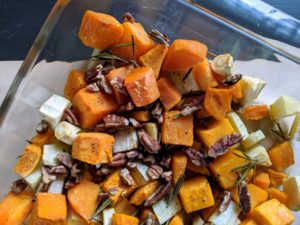
Photo by Rissa Miller
(Serves 8)
By Rissa Miller, Senior Editor Vegetarian Journal
This simple side dish offers a different way to prepare both
butternut squash and parsnips. Their combination of sweet and tart with a
veggie crunch creates a nice balance and a hearty winter offering.
Preheat oven to 375 degrees. In a 9- x 13-inch casserole
dish, toss squash, parsnips, olive oil, rosemary leaves, and pecans, seasoning
with salt/pepper as desired. Bake uncovered for 40-45 minutes, stirring once
during baking.
Serve warm with a drizzle of maple syrup if desired.
Posted on
December 22, 2021 by
The VRG Blog Editor
By Reed Mangels, PhD, RD
Vitamin D is known as the sunshine vitamin because humans
are able to produce vitamin D after sunlight exposure. This essential vitamin
is needed for healthy bones, plays an important role in the immune system, and
helps our nerves function properly.
Certainly, in winter, many of us aren’t out in the sun (or
at least not with large amounts of skin exposed) to the same extent that we are
in summer. For that reason alone, other sources of vitamin D may be needed in
the winter. In fact, anything that prevents skin from being directly exposed to
the sun affects the amount of vitamin D that our bodies can produce. Clothing,
sunscreen, air pollution, clouds, window glass, even darkly pigmented skin all
limit vitamin D production. That’s not to say, however, that a lot of sun
exposure is needed for vitamin D production. Around 10 to 15 minutes a day of
sun on hands and face appears adequate for many people. It gets more
complicated in the winter, however. In addition to being bundled up, having fewer
daylight hours, and staying inside more, in winter, there’s not enough of the
type of sunlight needed to stimulate vitamin D production in some areas. In
locations above 42 degrees north latitude (Chicago, Boston, and Portland,
Oregon, for instance), vitamin D production does not occur from late October
through early March. Even as far south as Atlanta (about 35 degrees north
latitude), vitamin D production doesn’t occur from November to February.1,
2
Vitamin D is stored in our liver and fat tissue. Although it
could be possible to rely on stores in the winter months, studies consistently
show that blood vitamin D levels drop significantly in the winter, suggesting
that additional vitamin D is needed.3, 4 There also are other factors
that can reduce vitamin D production including being an older person and having
darker skin. And there are concerns about sun exposure and increased risk of
skin cancer – although the short sun exposure needed for vitamin D production
seems to be pretty low risk.
The RDA for vitamin D is 600 IU per day for children and
adults up to 71 years old, and 800 IU per day for those age 71 years and older.5
Some plant milks are fortified with vitamin D and can be an important source of
this vitamin for vegans. Still, with 40 to 240 IU in a cup of fortified plant
milk, one would need to drink a lot of plant milk to meet the recommended
amount of vitamin D. The same is true for nonvegans relying on fortified cow’s
milk for vitamin D – multiple cups would be needed. A supplement of vitamin D
can be helpful in meeting vitamin D needs especially in winter or other
situations where sunlight exposure is limited. A recent study found that a 600 IU/day vitamin
D supplement in the winter months helped promote an adequate vitamin D status,
regardless of location.6
1. Holick MF. Vitamin D deficiency. N Engl J Med
2007; 357:266-81.
2. Wang SQ, Halpern AC. Estimated equivalency of vitamin D
production from natural sun exposure versus oral vitamin D supplementation
across seasons at two US latitudes. J Am Acad Dermatol.
2010;62(6):929.e1-929.e9299.
3. Outila TA, Kärkkäinen MU, Seppänen RH, Lamberg-Allardt
CJ. Dietary intake of vitamin D in premenopausal, healthy vegans was
insufficient to maintain concentrations of serum 25-hydroxyvitamin D and intact
parathyroid hormone within normal ranges during the winter in Finland. J Am
Diet Assoc. 2000;100(4):434-441.
4. Kroll MH, Bi C, Garber CC, et al. Temporal relationship
between vitamin D status and parathyroid hormone in the United States. PLoS
One. 2015;10(3):e0118108.
5. Institute of Medicine, Food and Nutrition Board. Dietary
Reference Intakes for Calcium and Vitamin D. Washington, DC: National
Academy Press, 2010.
6. Mendes MM, Hart KH, Williams EL, Mendis J, Lanham-New SA,
Botelho PB. Vitamin D supplementation and sunlight exposure on serum vitamin d
concentrations in 2 parallel, double-blind, randomized, placebo-controlled
trials. J Nutr. 2021;151(10):3137-3150.
The Vegetarian Resource Group (VRG) is a non-profit organization dedicated to educating the public on veganism and the interrelated issues of health, nutrition, ecology, ethics, and world hunger. We have been helping health professionals, food services, businesses, educators, students, vegans, and vegetarians since 1982. In addition to publishing the Vegan Journal, VRG produces and sells a number of books.
Sign up for our newsletter to receive recipes, ingredient information, reviews of new products, announcements of new books, free samples of products, and other VRG materials.