The Vegetarian Resource Group is a
vegan activist non-profit organization that does outreach all-year-long. For
example, VRG has been participating in numerous virtual events throughout the
USA by providing speakers on a wide variety of vegan topics. We also send
literature free of charge to other groups/individuals doing educational
activities in schools, hospitals, camps, restaurants, libraries, offices, etc.
Our ability to continue doing this depends on people like you! Your donations
allow us to promote the vegan message whenever we’re called upon for
assistance. Please consider becoming a monthly, quarterly, or single-time donor
to The Vegetarian Resource Group.
Thanks so much for your support. You can make a donation online here: vrg.org/donate
There are very few studies of vegan children, so it was
exciting to see that German researchers had recently published results from the
VegChi Youth Study. This study, from three study centers in Germany, provides
an interesting look at vegan children’s growth and diet. The study subjects
were all German children and adolescents, 6-18 years old. There were 115 vegans,
149 vegetarians, and 137 nonvegetarians. The children and teens seemed to be
growing normally and there was no significant difference in height, weight, or
BMI among the groups.
The vegans seemed
to be aware of the need to have reliable sources of vitamin B12. Close to 90%
of them used a vitamin B12 supplement. This was reflected in lab results. Approximately
8% of the vegans were categorized as likely deficient in vitamin B12 compared
to 13% of vegetarians and 4% of nonvegetarians.
All three groups of
children had adequate median protein intakes. In contrast, all groups had
median calcium intakes below German recommendations with the vegan group having
the lowest intake. The median calcium intake of the vegan children was less
than half of what is recommended.
On average, the
vegan children had the lowest blood cholesterol and LDL-cholesterol
concentrations. They also had the highest intakes of iron, zinc, vitamin C, and
folate and the lowest intake of added sugars. These results suggest that a
vegan diet can meet the nutritional needs of children and teens.
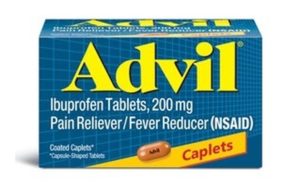
A reader passed the following along to VRG in reference to an inquiry into some of the ingredients in Advil Caplets.
“I got this today and am passing it along in case it’s
useful.”
Thank you for contacting GlaxoSmithKline Consumer Healthcare
regarding Advil Caplets requesting for the below information:
Thank you for your enquiry on Advil Caplets marketed by
GlaxoSmithKline Consumer Healthcare (GSKCH) in the United States.
Please note that Advil film coated tablets are no longer
available and are discontinued from the market.
The ingredients in Advil Caplets include: Ibuprofen 200mg,
acetylated monoglycerides, colloidal silicon dioxide, corn starch,
croscarmellose sodium, methylparaben, microcrystalline cellulose,
pharmaceutical glaze, pharmaceutical ink, povidone, pregelatinized starch,
propylparaben, sodium benzoate, sodium lauryl sulfate, stearic acid, sucrose,
synthetic iron oxide, titanium dioxide, and white wax.
Stearic Acid is not animal derived and unfortunately, we
cannot state the exact source of the stearic acid as it is considered proprietary
by the manufacturers of the material.
Please note that Polysorbate 80 is not present in Advil
Caplets. However, please be informed that Polysorbate 80 used in some of our
Advil products is produced by a chemical synthetic process and is not animal or
pant derived.
Prior to using a product, we recommend you to always check
the list of ingredients printed on the product pack and follow the usage
instructions. If you are unsure whether a product is suitable for you, kindly
consult your physician or healthcare professional prior to use.
Yours sincerely,
GSK Consumer Relations Healthcare
The contents of this posting, our email, our website, and
our other publications, including Vegetarian Journal, are not intended to
provide personal medical advice. Medical advice should be obtained from a
qualified health professional. We often depend on product and ingredient information from company statements. It is impossible to be
100% sure about a statement, info can change, people have different views, and
mistakes can be made. Please use your best judgment about whether a product is
suitable for you. To be sure, do further research or confirmation on your own.
A recently published study examined close to 210,00 men and
women to determine whether subjects
whose diets included more plant foods had a lower risk of strokes. To
evaluate the quality of the participants’ food intake the researchers used
three different indices: the plant-based diet index (PDI), the healthful
plant-based diet index (hPDI), and the unhealthful plant-based diet index
(uPDI). Healthy plant foods included whole grains, fruits, vegetables, nuts,
and legumes. Plant foods categorized as unhealthy included sugar-sweetened
beverages, refined grains, potatoes, and sweets/desserts. They used the
participants’ scores on these different indices to look at any association with
their diet and risk of strokes (total, ischemic, hemorrhagic). Ischemic strokes
are due to a blood clot blocking blood flow to the brain while hemorrhagic
strokes are caused by a weakened blood vessel rupturing and bleeding into the
brain.
They found that a better score on the hPDI, indicating a
more healthful plant-based diet, was associated with a 10% lower total stroke
risk and marginally lower ischemic stroke risk. Also, those who had higher
animal product intakes had a higher risk of strokes compared to those whose
diets were lower in animal products. A higher score on the uPDI, indicating a
more unhealthful plant-based diet was associated with a greater risk of stroke.
Although most study subjects were not vegetarian, the study included about 1700
lacto-ovo vegetarians. Vegetarians tended to have higher scores for the PDI and
hPDI because they ate more whole grains, fruits, nuts, vegetables, and legumes
compared to non-vegetarians. There seemed to be no overall effect of the
vegetarian diet when it came to the risk of stroke although the small number of
strokes in vegetarians made it difficult to draw conclusions. Overall, eating healthy plant-based diet is
associated with a lower risk of strokes.
Baden MY, Shan Z, Wang F, et al. Quality of
plant-based diet and risk of total, ischemic, and hemorrhagic stroke. Neurology. 2021;96(15):e1940-e1953.
doi:10.1212/WNL.0000000000011713
The contents of this posting, our website and our other
publications, including Vegetarian Journal, are not intended to provide
personal medical advice. Medical advice should be obtained from a qualified
health professional. We often depend on product and ingredient information from
company statements. It is impossible to be 100% sure about a statement, info
can change, people have different views, and mistakes can be made. Please use
your best judgment about whether a product is suitable for you. To be sure, do
further research or confirmation on your own.
Having grown up in a small, southern town in Mississippi, I had never
experienced being a part of a community of individuals who were as passionate
about plant-based living and environmental justice as I was until I began my
internship with The Vegetarian Resource Group. Within my first week of
virtually interning with The VRG, my relationship with advocacy and how I view
my choice to be a vegetarian evolved immensely. After just a few email
exchanges with Charles Stahler, the co-founder and co-director of The VRG who I
worked with closely throughout my internship, I found myself re-evaluating how
I viewed veganism and vegetarianism. When I made the decision to switch to a
vegetarian diet four years ago, I did so rather nonchalantly. I saw this
decision as a simple switch toward a more sustainable lifestyle. I stand by my
reasoning for my initial choice, but now, after learning about the history of
the veganism movement, discussing the positive effects of vegan and vegetarian
diets on one’s health and the environment, and becoming a part of a community
of plant-based individuals during this internship, I value my vegetarian
lifestyle so much more.
I can say in all honesty that I have enjoyed every assignment I have worked on throughout my internship. The first project that I worked on was writing a review of a restaurant in my town that served vegan options. I chose Petra Café a small Mediterranean and Greek restaurant in Hattiesburg, Mississippi. Not only was the food I ordered delicious, but my first experience of writing for The VRG Blog was invigorating. As someone who hopes to pursue a career in journalism, I appreciated this chance to not only view but experience the editing process and gain a better understanding of what it takes to compose a well-written and well-researched published piece.
In my second week of
interning I had the opportunity to participate in The VRG’s Zoom seminar with
Professor Phyllis McShane’s class of University of Maryland dietetic students. I
able to listen in on Dr. Reed Mangels’ (The VRG nutrition advisor and
registered dietitian), Charles Stahler’s, and others’ riveting presentations on
veganism and nutrition, and I also had the chance to speak about my experience
as a plant-based teenager. After joining in for the day of presentations,
conversation, and sharing information on veganism, I wrote about this
experience in The VRG Blog.
However, my writing skills
are not the only ones this internship has improved. Over the course of my
internship, I’ve improved my baking skills and spoiled my friends and family
with sweet treats while testing out vegan recipes for the Vegetarian Journal like the Cold Brew Coffee Cake, my high school
mock trial team’s favorite that became highly requested, and Hot Cocoa Brownies.
Whether it be creating info-graphics to reviewing vegan products for Veggie
Bits, working with Rissa Miller, the senior editor of Vegetarian Journal magazine, was always a joy because of her
cheerful personality that showed even over email.
One of the characteristics
of this internship that I appreciated the most was the freedom and creativity
that I was allowed to have with the projects I worked on. While working with
Dr. Reed Mangels for the TEEN FAQ blog, I was able to not only write an article
sharing my experience of eating vegan as a low-income teenager but also was
encouraged to create other forms of media. I designed a graphic for The VRG’s
social media as well as created a video that would share this information. I
worked with The VRG staff to write an outline, choose recipes, and research
low-cost foods for this visual presentation before setting up my phone camera
and going to film. I was able to share tips on how to make eating plant-based
diets affordable while showcasing some of my favorite cheap recipes like peanut
butter banana oatmeal and my fruit cobbler in a mug.
Writing for the VRG Online Restaurant
Guide has been one of my favorite responsibilities of this internship. I
learned how to effectively and quickly gather information through skimming
websites, reviews, and Facebook pages or when this online snooping was not
enough I turned to contacting restaurants myself. Writing short, catchy
snippets on vegan restaurants, from taco dive bars to youth-owned vegan
bakeries, was not only very fun, but surprisingly productive as my researching
skills have definitely improved. I loved the feeling of accomplishment I had
every time I would send Debra Wasserman, the Co-Coordinator of The Vegetarian
Resource Group, a finished snippet on a restaurant. I also had the chance to
work with Debra when writing a review on The
Student Vegan Cookbook. I, again, was able to improve both my writing and
my skills in the kitchen with this project as I tried out the recipes for Carrot Cake Oatmeal and Cilantro Kale Salad.
I also had the chance to
collaborate with another intern, Shantika Bhat, during my internship. Shantika,
a senior in high school from Baltimore, Maryland, and I worked together on
interviewing past VRG interns for next year’s 40th-anniversary edition of the Vegetarian Journal. Not only did this
experience teach me how to work with others in a virtual setting, but I also
gained a new friend in Shantika. Through two of my projects for The VRG Blog, The Favorite Inexpensive Vegan Foods of 2021
Summer Interns, and The VRG 2021
Interns Favorite Vegan Foods, I was able to connect with the other summer
interns. Although our conversations were conducted over email, I was able to
learn about and befriend several of the interns I interviewed for this project.
Although my internship was conducted remotely, without ever having met any of
The VRG staff or the other interns in person, I have still been able to have
productive and interesting conversations ranging from veganism to dialects as well
as form long lasting relationships.
I am truly sad that my
internship with The VRG is coming to an end, but I can’t help but be
overwhelmed with gratitude for all that I have learned while interning. My time
interning with The VRG has not only improved my skills as a writer but also as
an advocate. As I pursue an education in Journalism and Political Science at
American University this fall, I know I will take all I learned from this
experience with me!
Bon Appétit Management Company announced a climate change policy to reduce emissions by 38%, per calorie of food, by 2030. They said, “In tandem, Bon Appétit is also introducing a set of tools to assist clients in meeting their own emissions reduction goals. As a food service management company with operations on the sites of colleges and universities, corporate offices, and cultural institutions in 33 states, Bon Appétit’s food purchases represent the vast majority of its total emissions. The processes of growing, transporting, packaging, and refrigerating food culminate in one-third of all anthropogenic greenhouse gas emissions worldwide.”
Bon Appétit stated, ”
Bon Appétit will continue to track red meat and cheese consumption through the Food Standards Dashboard, as it has done since 2007, and has set an aggressive target of less than 1-ounce-per-guest-per-meal for beef and less than 2.5 ounces for all meat, poultry, and seafood.
Bon Appétit’s Plant-Forward Culinary Collaborative – a working group of chefs tasked with creating plant-forward resources for the company’s culinary staff – will work together with the company’s wellness team to conduct regional plant-forward trainings, helping to skew menus away from carbon-intensive meat and cheese, and toward plants.”
All
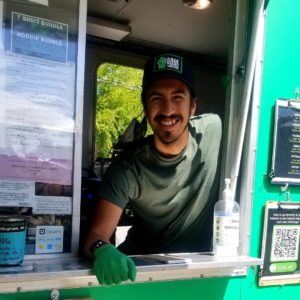
across the United States and Canada, you can find food trucks selling vegan and
vegetarian food. Whether it’s tacos, falafel, injera, or fried chicken, there’s
a food truck for it. They’re becoming increasingly popular due to their
versatility and accessibility. Because the vegan population of the U.S. is
fairly small compared to the meat-eating population, would-be restaurant owners
are sometimes hesitant to open a fully-fledged all-vegan restaurant. But food
trucks are the perfect solution—they’re more affordable; both for the
restaurant owner, and for the customers.
The very nature of a food truck allows it
to travel—which means you can find food trucks at parks, bars, farmers markets,
concerts, and other special events. These are all public spaces, attended by
people of all lifestyles and diets. Vegan food trucks being located in these
spaces increases the accessibility of veg-friendly food for those who are not
vegan. And it may even prove to many people that vegan food can be cheap and
delicious! Many vegan food trucks also travel to areas that have very little
access to fresh, nutritious foods—such as “food deserts.” The trucks selling
their food in these communities can help increase accessibility to vegan food
for those who would not normally have it.
A popular vegan food truck in my city resides
at a different brewery each day out of the week, all in different parts of town.
With the truck being located in so many different kinds of spaces, it exposes
typical meat-eaters to vegan and vegetarian foods that they wouldn’t have
otherwise tried. The truck— Sage Against the Machine in Bellingham, WA— serves
a wide range of affordable, tasty vegan meals. They offer comfort foods made
vegan, like chili dogs and vegan mac n’ cheese. Offering meat-eaters vegan
versions of these foods that they enjoy is a great way to expose them to vegan
food and prove that it doesn’t have to be expensive or hard-to-find.
Part of the marketing strategies of food
trucks like Sage Against the Machine is to offer merchandise such as shirts or
stickers. People using the merchandise spread the word throughout the city
about vegan food. They also offer punch cards, where you buy ten meals and get
one free. So, even people who aren’t vegan will return to the food truck
continuously so that they’ll get their reward! Food trucks oftentimes display
colorful, artistic exteriors to catch people’s eyes. Having distinct logos and
colors allows food trucks to become easily recognizable, and become established
as well-known eateries in their communities.
Do you have a food truck in your city that
offers vegan or vegetarian food? Tell friends and family about it, or post
positive reviews on social media. Also, contact the truck to let them know about
upcoming local events—including concerts, marathons, farmers markets, or art
shows. That way, the truck can offer its services to the event and they can
serve food there! Or, if you’re planning an event, invite the food truck to
attend! I invited two vegan food trucks in my city to an environmental and art
event I was planning. Tons of meat-eating people got to experience yummy vegan
food that day!
Unlike a traditional restaurant, people may happen upon a food truck by chance rather than purposefully seek it out. This is why food trucks are the future of popularizing the vegan and vegetarian lifestyle. While a meat-eater may never choose to get dinner at a sit-down vegan bistro, they may find themselves at a concert where the food truck serves vegetarian food! These trucks work hard to market their food towards all kinds of people—and we should continue to support them in our communities if we have them. If you don’t have a food truck in your area that serves vegan or vegetarian food, try to seek them out while you are traveling!
When it’s hot outside, and maybe even hotter inside, the
soups and hearty casseroles we crave in cooler weather don’t sound appealing.
Besides, no one wants to have the oven heating up their kitchen or to spend
time over a hot stove on a steamy summer day! Some of these dishes can be
prepared in the morning when it’s cooler and some don’t require cooking.
Hummus or other bean
spreads
1. Dip cut up vegetables, crisp fruits, and crackers or
tortilla chips in homemade or purchased hummus
2. Roll hummus and chopped vegetables in a whole-grain
tortilla
3. Spread white bean dip on sliced baguettes and top with
strips of roasted red pepper
4. Warm corn tortillas in a skillet and top with pinto bean
spread, salsa, chopped tomatoes, and shredded lettuce
5. Top a microwaved potato or sweet potato with a bean
spread. Try a garlicky hummus on a white potato or roasted red pepper hummus on
a sweet potato.
Sandwiches – serve
with fresh fruit and a side salad
6. Tofu salad with sliced tomatoes in a pita pocket
7. Not-tuna salad (made with chickpeas, vegan mayo, chopped
celery, and spices to taste) on toasted rye bread
8. Marinated tofu with sprouts or lettuce, shredded carrots,
and peanut sauce in a wrap. Marinated tofu and peanut sauce can be purchased or
homemade
9. Sliced bagel with nut butter and sliced fruit (try
nectarines, peaches, or other fruit in season)
10. Vegan deli slices on a sub roll with vinaigrette
dressing, tomatoes, and lettuce
Salads – make ahead
and chill until dinner; can serve with a fruit salad and bread
11. Potato salad with black beans, corn, and a salsa
dressing
12. Pasta salad with chickpeas, cherry tomatoes, fresh
basil, and Italian dressing
13. Spaghetti with a soy-sesame dressing tossed with cubes
of baked tofu and steamed (or microwaved) broccoli
14. Rice salad with adzuki beans, diced carrots and
cucumbers, and a sweet chili sauce
15. Peanut noodles with water chestnuts and red pepper
strips
16. Taboulleh (bulgur with parsley, scallions, mint,
tomatoes, and cucumbers in a lemon-olive oil dressing) with chickpeas
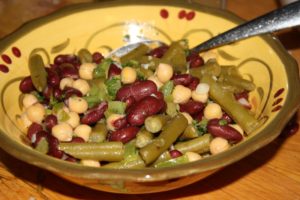
17. Three bean salad
18. Shredded cabbage in a soy-sesame dressing with baked
tofu or seitan strips
19. Quinoa and bean salad with shredded kale and a cumin-lime
vinaigrette
20. Chef salad with strips of vegan deli slices and cubed or
grated vegan “cheese”
Miscellaneous
21. Veggie sushi – homemade or purchased
22. Smoothie made with plant milk, silken tofu, fresh and/or
frozen fruit; can add nut butter and leafy greens for a meal in a glass
23. Vegan yogurt with berries and chopped nuts on a toaster
waffle
24. Gazpacho garnished with croutons, chopped tomatoes and
cucumbers, and avocado slices
25. Rice paper wrappers filled with rice noodles, shredded
Napa cabbage, baked tofu, cubed mango, and chopped peanuts
Finland, a country in northern Europe, has done something
that few other countries have – issued nutritional guidance for vegans. The
Finnish Food Authority, which issued this guidance, is a government entity
under the Ministry of Agriculture and Forestry. According to its website, the
Finnish Food Authority “works for the good of humans, animals and plants,
supports the vitality of the agricultural sector, and develops and maintains
information systems.”
The Finnish Food Authority recommends that a vegan diet
“contains cereal products, vegetables, legumes, nuts, seeds, fruit, berries and
vegetable fats as well as a nutritious milk replacement drink.” A vegan plate
is described as consisting of one third foods supplying protein including whole
grains and legumes, one third raw and cooked vegetables, and one third
additional carbohydrates such as pasta, potatoes, or barley. Supplements of
vitamin D, vitamin B12, and iodine are recommended. A “carefully composed”
vegan diet can be used by pregnant and breastfeeding women, children and teens.
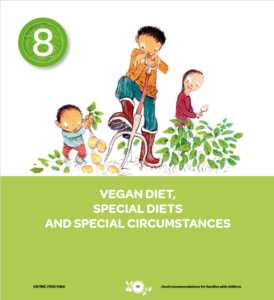
These guidelines are complemented by a section in Eating Together, the national food recommendations for families
with young children. This section provides additional information about vegan
diets in pregnancy and lactation and for infants and young children. According
to this text, vegan infants should be exclusively breastfed for the first 4-6
months with breastfeeding continuing at least until age 1 year. After 1 year,
the recommendations call for use of a drink made from soy, oats, quinoa, or
other grains (excluding rice) that is fortified with calcium and vitamin D and
designed for young children. Vegan families shall be provided with guidance by
a nutritional therapist and children’s growth should be monitored.
These sensible guidelines should be adopted, with
modifications for country-specific foods, by other countries, including the
United States.
The Vegetarian Resource Group (VRG) is a non-profit organization dedicated to educating the public on veganism and the interrelated issues of health, nutrition, ecology, ethics, and world hunger. We have been helping health professionals, food services, businesses, educators, students, vegans, and vegetarians since 1982. In addition to publishing the Vegan Journal, VRG produces and sells a number of books.
Sign up for our newsletter to receive recipes, ingredient information, reviews of new products, announcements of new books, free samples of products, and other VRG materials.