The Vegetarian Resource Group is a
vegan activist non-profit organization that does outreach all-year-long. For
example, VRG has been participating in numerous virtual events throughout the
USA by providing speakers on a wide variety of vegan topics. We also send
literature free of charge to other groups/individuals doing educational
activities in schools, hospitals, camps, restaurants, libraries, offices, etc.
Our ability to continue doing this depends on people like you! Your donations
allow us to promote the vegan message whenever we’re called upon for
assistance. Please consider becoming a monthly, quarterly, or single-time donor
to The Vegetarian Resource Group.
Thanks so much for your support. You can make a donation online here: vrg.org/donate
The Vegetarian Resource Group maintains an online Guide to
Vegan/Vegetarian Restaurants in the USA
and Canada.
Here are some recent vegan restaurant additions. The entire guide can be found
here: http://www.vrg.org/restaurant/index.php
To support the updating of this online restaurant guide,
please donate at: www.vrg.org/donate
Here are some new additions to VRG’s guide (Note: Due to
the COVID-19 pandemic many are doing take-out
and/or delivery now):
Chihuahua
Brothers, 863 North Howard St., Baltimore, MD 21201
Mexican vegan food truck that specializes in tasty,
authentic Mexican street cuisine. They offer tacos and hot dogs (both a spicy
Sonoran Dog and a ‘gringo’ or stadium style dog), as well as chips and
beverages such as Jarritos. Their food comes with various sides and extras such
as peppers and sauces that give it a rich and full combination of flavors. Can
be found in the elegant, artsy Mount Vernon neighborhood, right opposite the
UMMC Midtown Campus, or around the city, depending on the day – follow them on
social media to see their schedule, or you can book them to travel to your
event.
ConGreka,
Ave. Main 3140 Santa Rosa, Bayamon, PR 00959
Enjoy pancakes, oatmeal and fruit, veggie burgers, tacos,
and more.
Earthly
Café, 746 Shore Rd., Somers Point, NJ 08244
The breakfast menu includes classics such as buttermilk
pancakes and waffles with options to add on including chocolate chips,
blueberries, or whipped topping. Favorites on the lunch menu include pulled
barbeque jackfruit on a Pugliese roll and a sesame orange salad with tofu
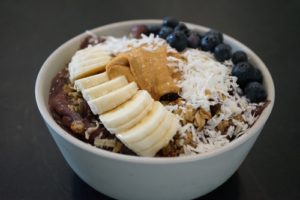
chicken. Acai bowls and smoothies are also available. Their menu changes every
few months to accommodate what produce is in season and they strive to source
local and organic produce when possible. A kid’s menu is also available.
Obon
Shokudo, 720 SE Grand Ave., Portland, OR 97214
They serve a myriad of different classic Japanese
favorites made vegan! You can find them at this street location or at the PSU
Portland Farmer’s Market on Saturday. Try one of their many flavors of
‘onigiri’, a kind of Japanese rice ball. They even give free ‘dog sushi’ for
customers with canine companions!
Enjoy burgers, chick’n sandwiches, mac bowls, and loaded
fries.
Soda
Club, 155 Ave. B, New York, NY 10009
Here you can select from more than 200 natural and organic
wines curated from around the world, pairing them with fare from the “Snacks”
menu, which features fresh vegan pasta, focaccia, and a date cake served with
vanilla ice cream. Non-wine-drinkers need not go thirsty, as beer and chic
sodas (such as the Blood & Roses, containing blood orange and rosemary) are
also served. The swanky décor and the easily-shared plates of food seem
well-suited for an after-work dinner with friends or a casual weekend date
night.
The
Littlest Bake Shop, 645 E. 59th St., Kansas City, MO 64110
Come taste their delicious housemade bakes like their
Churro Cake, a decadent vanilla-cinnamon cake topped with vanilla frosting and
a dusting of cinnamon sugar, or their array of baked goods that change every
day of the week. For a special treat, come enjoy your weekends at their
not-so-little brunch with your choice of The Texan (Jalapeno Cheeze Tofu
Scramble with Herbed Potatoes), The Midwest (Biscuits and Mushroom gravy), or The
New Yorker (Tofu Scramble with Herbed Potatoes)!
Vegan
15, 3003 English Creek Ave. #201, Egg Harbor Township, NJ 08234 and 2001 Market
St., Dujour Café, Philadelphia, PA 19103
Vegan 15 is an all-vegan restaurant founded on ideals of
ethics, health, and the planet. At the restaurant you’ll find healthy,
plant-based meals that are delicious and wholesome. They offer many options,
inspired by various different cultures, so there’s something for everyone. Find
Italian-inspired pasta dishes, American-style burgers, Thai rice bowls, and
even Mediterranean falafel. Complete your meal with a dessert like their
refreshing coconut sorbet!
Veg’d,
280 Bristol St., Costa Mesa, CA 92626
Committed to serving delicious, sustainably-sourced meals,
this café serves a wide selection of all-vegan foods including smoothies,
burgers, sandwiches, and bowls that suit all different preferences and tastes.
With a Michelin-star-rated head chef, and lots of positive reviews, everyone is
sure to find something they enjoy. Try their Veg’d green Forest Smoothie for a
quick breakfast. 50% of the profit will go towards one of three sustainability
projects in Sumatra and Borneo!
Zest
Plant-Based Kitchen, 439 E. Front St., Traverse City, MI 49686
This quaint Traverse City café is the perfect spot for a
breakfast, lunch, or an on-the-go snack. Here you can find smoothies, acai
bowls, salads, and bowls. Their goal is to serve up healthy and delicious
plant-based food that anyone can enjoy. They also serve up a unique ‘Indian
Dish of the Week’ that changes.
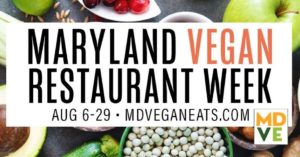
Maryland Vegan Restaurant Week (actually weeks)
is August 6th through 29th this year. What a terrific
time to support local veggie restaurants! For details on all the restaurants participating
and special events see: https://www.mdveganeats.com/
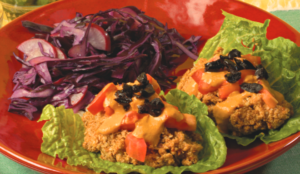
Too hot to cook? Be sure to try these raw dishes: Creamy
Avocado and Corn Soup; Spicy Jicama Sticks; Sunflower Seed Tacos; Food
Processor Salsa; Blender Jalapeño ‘Cheese’ Sauce; Red Coleslaw; and Easy
Mexican Chocolate Sauce.
In addition to The Vegetarian Resource Group’s quarterly
vegan magazine (Vegetarian Journal),
VRG publishes a national email newsletter called VRG-News each month. Vegan
news is so vast these days that we saw the need to publish more than can fit in
our quarterly magazine.
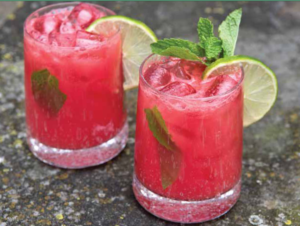
Are you in the mood for a creative non-alcoholic beverage? A previous issue
of Vegetarian Journal featured an article titled “Non-Alcholic Thirst
Quenchers,” by Mikiel Peratino. Mikiel is a former assistant manager and
bartender at Great Sage vegan restaurant in Maryland. Enjoy recipes for
Strawberry Fauxjito; Virgin Piña Colada; Warm Golden Pumpkin; Black Rose Mule;
Watermelon Cooler; S’mores Mudslide; Virgin Cucumber Basil Gimlet; and
Butterfly Margarita. These drinks look absolutely gorgeous and will bring a
smile to your face!
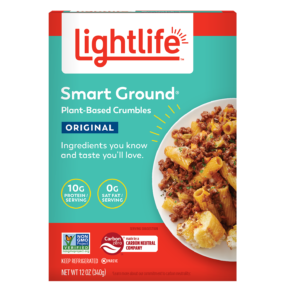
“The last three packages I bought of Lightlife Smart Ground
Original had a smokey aroma and a smokey taste, which was positively awful in
the lasagna I made with it. I’m afraid I will have to stop using the
product if this is the new version.” –Barbara
What are other readers’ experiences with this reformulated product? Let us know at [email protected]
As a college professor at Palomar
College in California, I have had a large “captive” sample for polling the
views of American college students. Early in the semester, I asked
students in my classes on contemporary issues to fill out anonymous surveys
dealing with problems and solutions. I included questions about how solutions
complement one another. The results helped me structure the class to
dispel myths and supply information and analysis as needed. Although anonymous,
the surveys did require each responder to state their age, and this helped me
understand generational changes in knowledge and opinions. My students
ranged widely in age; the average age was 26.
A few questions asked for written answers, and the responses were
especially informative concerning veganism. Some older students expressed
the concern that the vegan diet does not supply a sufficiency of essential
nutrients, especially protein. Scientific studies have shown that the
vegan diet is nutritionally adequate. However, despite the science,
concerns and criticisms of diets and other practices often become part of a
stereotype of the diet or practice and linger on as myths in the minds of the
generation who first heard them.
The younger students were generally more open to veganism, but they,
like their older peers, did not show an understanding of the variety of
benefits of veganism. I discovered that almost all of my students saw
veganism as a dietary pattern unrelated to other proposed solutions to our
social issues today. I was surprised that most of the students saw no
connection between veganism and the practice of simplicity. Simplicity
means minimizing consumption and conserving natural resources. It also reduces
hassle and stress, and it declutters both the household and the mind. Most of
my students saw no kinship between simplicity and veganism, but my research and
personal practice reveals a strong connection.
Since veganism can improve health, it reduces or avoids the complications
of ill health. It can mean fewer medications, less visits to doctors’
offices, less tests, less treatments, less surgeries, etc. It makes for a
simpler life.
In my family, we have found that the vegan diet also makes life simpler
in the kitchen. Preparing and cooking meat leaves the pans, dishes,
utensils, and dish water and sink greasy. Grease from cheese and meat calls for
elbow grease. Such complicated cleanup in the kitchen and at the BBQ grill
is avoided by the vegan diet. Life is simpler in the vegan kitchen.
To their credit, some of my students were aware that the vegan diet is a
green diet. It reduces environmental problems like overuse of natural
resources, and it reduces emissions from vehicles and the industries required
to produce food from animals. From the fossil fuels for running the
tractors to produce grains to feed cattle, to the slaughter houses which
require massive amounts of water and energy, to all the power needed to
refrigerate or freeze beef – the production of a hamburger is highly
inefficient. It is a complicated, messy business. It complicates life for
all of us. A veggie burger is a vastly simpler lunch.
Vegan
ethics is based on simple, indisputable principles, such as, It is wrong to
inflict unnecessary harm or death on animals. It is a clean break with
predation. One of my older students wrote this one year after becoming
vegan: “With no blood on my hands, I have less weight on my mind.” The
simplicity of veganism is evident not only outwardly in the kitchen pots and
the resources and atmosphere of the planet, but also inwardly in important
ways. As a non-predator, I am at peace with the animals and the planet,
and this peace is mirrored inwardly. The simplicity of vegan ethics yields
peace of mind.
Who knew that veganism is a form of simplicity? My students did not
know this at the beginning of the semester. Veganism simplifies our lives
on many different levels. The more research we do, and the more experience
we gather, the better we understand the multiple benefits of the vegan way of
life.
Lately it seems like cold brew coffee concentrate is all the rage. Basically, it’s coarsely ground coffee that’s been brewed for 14 to 18 hours and is used as a base for iced coffee and beyond. Once you’ve made it, store in the fridge and use for hot or iced coffee, or other barista style drinks, like the Iced Coffee Latte Fizz. Coffee concentrate is stronger, more concentrated, than a classic brew. That’s why it’s diluted when served, usually 1:1 ratio, depending how strong you like your iced java!
Cold Brew Coffee Concentrate
1/2 cup course ground coffee 4 cups cold water
Pour water over coffee grounds in a pitcher or large French press. Stir until all grounds are well mixed. Allow to infuse for 14-18 hours in the fridge. When done, strain using cheesecloth, a fine-mesh strainer, or with your French press.
To make a beverage with the concentrate, try adding it 1:1
with cool water or your favorite plant milk over ice, or enjoy hot, diluted
1:1. Try our recipe below for a barista style drink.
Note: Don’t feel like making your own cold brew coffee concentrate? You can buy it in most major grocers from brands like Califia, Chameleon, Grady’s, Jovy, Starbucks, and Stok.
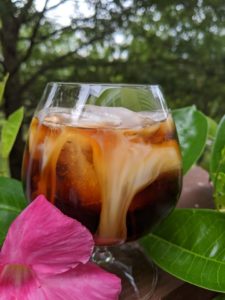
Iced Coffee Latte Fizz
1/3 cup cold brew coffee concentrate 1/3 cup cool water 1 splash raspberry syrup, or plain simple syrup, to taste 2-3 Tablespoons berry flavored or plain seltzer 1/3 cup chilled plant milk of choice
Fill a glass with ice. Layer the ingredients into the cup, coffee, water, raspberry syrup, and stir at this point. Then add the seltzer and pour the plant milk over the top evenly to create coffeehouse-style streams in the beverage. Drink immediately.
Mix it up by trying other flavored seltzer and fruit-flavored syrups, such as ginger, lemon, orange or coconut!
The Vegetarian Resource Group’s office is located in
Baltimore, Maryland, and we’re happy to report that the number of vegan
restaurants in our hometown continues to grow. In fact, the pace in which this
is happening is unbelievable!
Recent new dining options include Double Zero
(vegan pizza), Liora
(vegan versions of Baltimore favorites including “crab” cakes and more), and Hue Café and Apothecary (located
Northwest of the city in Owings Mills and offers a tea bar plus a vegan menu). There’s
also a vegan Mexican food truck called Chihuahua
Brothers. And wait, NuVegan will
be opening up soon near Johns Hopkins University Homewood Campus (offers vegan
soul food).
If you live in Baltimore or are passing through, be
sure to dine at one of the many vegan restaurants in town during Maryland Vegan
Restaurant Week that actually runs for several weeks (August 6th-29th
this year). See: https://www.mdveganeats.com/
The Vegetarian Resource Group (VRG) is a non-profit organization dedicated to educating the public on veganism and the interrelated issues of health, nutrition, ecology, ethics, and world hunger. We have been helping health professionals, food services, businesses, educators, students, vegans, and vegetarians since 1982. In addition to publishing the Vegan Journal, VRG produces and sells a number of books.
Sign up for our newsletter to receive recipes, ingredient information, reviews of new products, announcements of new books, free samples of products, and other VRG materials.