Posted on
December 08, 2020 by
The VRG Blog Editor
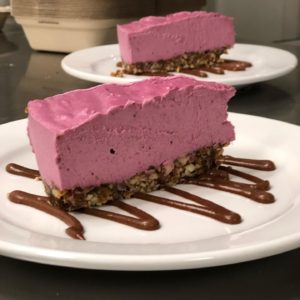
Cranberry cheesecake from Sanctuary Bistro in Charlotte, NC
The Vegetarian Resource Group maintains an online Guide to
Vegan/Vegetarian Restaurants in the USA
and Canada.
Here are some recent vegan restaurant additions. The entire guide can be found
here: http://www.vrg.org/restaurant/index.php
To support the
updating of this online restaurant guide, please donate at: www.vrg.org/donate
Here are some new
additions to VRG’s guide (Note: Due to the COVID-19 pandemic many are doing take-out
and/or delivery now):
Big Nonna’s, 12601 Tech Ridge Blvd.
A-300, Austin, TX 78753
Big Nonna’s serves
vegan pizza and ice cream. With a soft and chewy crust, house-aged vegan cheese
made from pumpkin seeds, and a slightly tangy tomato sauce, it is hard to go
wrong with Big Nonna’s pizza. You can select from a huge range of toppings,
including the homemade “beetaroni”, which is beet-based pepperoni. The ice
creams are made from different bases including coconut, soy, nut butters, and
sunflower seeds. Death metal by chocolate is a must-try flavor for
first-timers. Big Nonna’s also offers gluten-free and soy-free menu.
Cosmic Vegans, 7145 N. 58th Dr.,
Glendale, AZ 85301
Cosmic Vegans is a
space where food trucks and vegan entrepreneurs gather. The place is bustling
with people and string lights illuminate the marketplace. If you don’t know
what you’re in the mood for to eat, venture here for a wide range of cuisines
to indulge in. The line-up of food trucks and stalls change frequently, so
check the website to see who will be cooking up delicious food at Cosmic Vegans
when you want to visit.
Healthy Substance, 6852 W. Archer
Ave., Chicago, IL 60638
Not only is Healthy
Substance presently the only 100% vegan Mexican restaurant in Chicago, but it
was also named one of the top 100 restaurants in the United States for 2020.
One can order a variety of Mexican dishes, vegan drinks, and desserts ranging
from tamales to gorditas to chocolate cake!
Mama Dút, 1414 SE Morrison St.,
Portland, OR 97214
Take a bite out of
Mama Dút’s delicious Vietnamese dishes! Their menu features everything from
mouth-watering vegan pork belly bao buns to Vietnamese coffee cheesecakes. It
will satisfy your sweet and savory taste buds but beware their menu sells out
fast so be sure to pre-order early!
Planta Queen, 3015 Grand Ave.,
Coconut Grove, FL 33133
Planta Queen Coconut
Grove is inspired by Asian cuisine that focuses on being sustainable and
upscale in their offerings. Try vegan sushi made with ingredients such as
watermelon and mushrooms. Some standout dishes include scallion pancakes,
coconut ceviche, and truffled fried rice. Not only is the food reminiscent of
Asian culture, but the atmosphere was influenced by Chinese courtyards and the
bar is a highlight with its delightfully pink barstools. Planta Queen is a
great restaurant if you are look for inventive food that is served in a stylish
ambiance.
Sanctuary Bistro, 6414 Rea Rd. Ste.
C2, Charlotte, NC 28277
Sanctuary Bistro’s
menu is nothing short of inventive. This family-owned restaurant offers dishes
such as beet salad, artichoke dip, garlicky greens, lasagna, jambalaya, black
lentil Shepard’s pie, Kansas BBQ tofu, tiramisu, cheesecake, and much more.
Seitan’s Realm, 3496 N. High St.,
Columbus, OH 43214
Enjoy a wide range
of dishes including BBQ Wingz, Broccoli Salad, Vinegar Coleslaw, Cheezestake
Sandwich, Peanut Butter Pie, and more.
Señor Sisig Vegano, 701 Valencia St.,
San Francisco, CA 94110
Food trucks are a
fun dining experience, and what makes Señor Sisig Vegano’s food truck even
better, is that all menu items are completely vegan. Cooking up soy-based
proteins, the owners are using traditional techniques, marinades, and spice
mixtures so flavors and textures are not sacrificed. Incorporating Filipino
ingredients into Mexican dishes, some must try menu items are the vegan
“longanisa chorizo” burrito, “chicken” nachos, and “pork” fries topped with
guacamole and pico de gallo.
Terms of Endearment, 135 Metropolitan
Ave., Brooklyn, NY 11249
Terms of Endearment
is an incredible restaurant serving up a huge variety of vegan meals, alongside
fresh-baked French pastries. Everything served is made on-site and beautifully
plated. Check out their Instagram to see the amazing pictures they capture of
their dishes and festive pastry items. Their specialty drinks such as the
Rosewater Dragonfruit Latte and Lavender Butterfly Pea Latte look almost too
pretty to drink! While you’re there, try out the Artichoke Caprese Sandwich,
Holiday [Vegan] Cheese Plate, and Orange Blossom Corn Waffle for breakfast.
Posted on
December 08, 2020 by
The VRG Blog Editor
By Lucia Rivera,
VRG Intern
Pupusas, beans,
yuca, plantains, and more await vegan eaters at Salvadoran restaurants. While
most restaurants that serve cuisine from El Salvador offer options with meat,
vegetarians and vegans can also have delicious options to try.
One of the staple dishes of Salvadoran
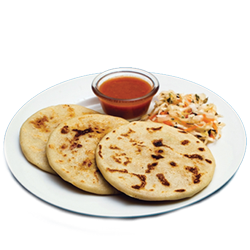
cuisine are pupusas, thick tortilla-like griddle cakes filled with a variety of
mixtures, ranging from beans to loroco (an edible flower). Pupusas are the
national dish of El Salvador and can be the main meal when dining out at
Salvadoran restaurants.
For vegans eating
at Salvadoran restaurants, one can order bean pupusas, or pupusas filled with
other vegetable options. Some Salvadoran restaurants, like Chévere in
Sacramento, California even offer especially made vegan pupusas with jackfruit
and vegan cheese filling. As a topping to pupusas, vegans and non-vegans alike
can enjoy curtido, a pickled cabbage slaw topping.
The beans in pupusas are usually cooked with vegetable oil, but some restaurants might use lard. To make sure, it is always best to check with the chef to inquire about what ingredients are in their bean pupusas.
Besides pupusas, there are several vegan
side options that are commonly served at Salvadoran restaurants. One of these
is fried yuca, also known as cassava in other parts of the world, which is a
white starchy root. Fried yuca is a great vegan option as it is usually fried
in vegetable oil. While you can always check with the chef of a restaurant to
make sure, yuca is generally fried in vegetable oil throughout Central America
because vegetable oil is much more easy to transport and cheaper to buy in
large quantities than lard.
Additionally, fried plantains are a great
side to go with yuca and pupusas! Plantains are also generally fried in
vegetable oil. Even if one ordered bean pupusas, a side of black beans can be a
perfect final addition to one’s meal at a Salvadoran restaurant.
For more
information on Latin American eating, see
Posted on
December 07, 2020 by
The VRG Blog Editor
By Reed Mangels, PhD, RD
A recently published study suggests that there is yet
another reason to eat more fruits and vegetables. This study of 8,927 women,
who had been diagnosed with breast cancer, asked the women about their diet
every 4 years after their diagnosis. Over the follow-up period, averaging 11.5
years, slightly more than a quarter of the women died; almost half of the
deaths were related to breast cancer. Women who ate more fruits and vegetables
and women who ate more vegetables after their diagnosis had a lower risk of
dying from any cause than did women with lower intakes of these foods. Women
with the highest intakes of vegetables and fruits averaged 7.4 servings per
day; those with the lowest intake averaged 2.2 servings per day. When the
investigators examined specific foods, they determined that women with a
greater intake of green leafy and cruciferous vegetables (vegetables in the
cabbage family) had a lower risk of death than did women with lower intakes of
these foods. Vegetables and fruits high in vitamin C and vegetables high in
beta-carotene (like carrots, winter squash, and sweet potatoes) were associated
with a lower risk of death. Blueberries appeared to be associated with a lower
risk of death. Each 2 servings/week of blueberries was associated with a 25%
lower risk of dying from breast cancer and a 17% lower risk of dying from any
cause. Higher fruit juice consumption., but not higher orange juice
consumption, was associated with a higher risk of death from breast cancer and
from any cause.
Farvid MS, Holmes MD, Chen WY, et al. Postdiagnostic fruit
and vegetable consumption and breast cancer survival: prospective analyses in
the Nurses’ Health Studies. Cancer Res. 2020;80(22):5134-5143.
Posted on
December 07, 2020 by
The VRG Blog Editor
By
Katelynn Budzich, VRG Intern
As
an Environmental & Sustainability Studies minor at Loyola University Maryland,
a requirement is to complete a capstone project. I was excited about this
course because it would be an opportunity to use what I have learned in my
classes, as well as, participate in something related to my interests in
environmental causes. I first came across an internship position at The
Vegetarian Resource Group from a list of places my professor (who runs the
minor) sent out. The list included some environmental focused work
opportunities. However, the one that stood out to me was The Vegetarian Resource
Group. My two passions in life are food and writing. Thus, The VRG was a
perfect amalgamation of the two.
All of the experiences I read online that
other interns had, sounded amazing, so I was excited to potentially find myself
doing similar work. However, as an intern during the Fall 2020 semester of my
senior year, COVID-19 became a reality and changed what my internship
experience at The Vegetarian Resource Group would look like. There were certain
projects that I could no longer complete, seeing that everything was now
virtual and had to be catered to online work. At first, I was worried I would
miss out on some great opportunities, yet, after filling out my project
schedule, I knew I was going to enjoy my time at The Vegetarian Resource Group
because despite restrictions, all of the projects were right up my alley and
seemed like great learning experiences.
I worked on many projects related to my
love of food and major in marketing. One article included reviewing a local
restaurant in Maryland
that serves vegan food. I chose a restaurant located in a food hall that my
friends and I always go to. Every time I am there, I always pass over the vegan
restaurant, but I am glad I finally had an excuse to try the food at that stall
because it was delicious. After seeing what I ordered, some of my friends who
are not vegan or vegetarian even ordered food from there when we went to the
food hall again. This article was a great moment for myself as well as the
people around me to better understand the possibilities of vegan food and how
great the quality can be.
I was also tasked with completing a book
review that combined business lessons, veganism, and social responsibility.
This project was a breath of fresh air because it was the one time in my day
where I didn’t have to look at a screen and I could enjoy a good book. The book
gave a lot of great tips on how to start and run a business that will stay with
me beyond my time at The Vegetarian Resource Group.
Some other fun projects I worked on were
product reviews, an article on differing opinions on vegan commercials, and
designing an advertisement for The Vegetarian Resource Group. The product
reviews were such a fun experience because I got all of my friends involved and
we tried the items together. They all tasted great and afterword, I did a short
write-up on what we sampled. Next, when I was working on creating an article
that shared vegans’, vegetarians’, and non-vegetarians’ opinions on vegan ads,
I researched vegan commercials and contacted other interns and volunteers to
participate, which was a great experience gathering and working with other
volunteers from The VRG. I then asked all of the volunteers to watch the
commercials and send back to me what they thought about them from the
perspective of people with different eating habits, which I composed into an
article. One more really fun project I completed was designing an advertisement
to join The Vegetarian Resource Group. This was an opportunity where I could
use some of my marketing skills and be creative, which I really enjoyed.
My internship at The Vegetarian Resource
Group was an amazing opportunity, especially during such a turbulent time. I
have recently found an interest in going into the editorial or publishing industry
after I graduate college, so my time at The Vegetarian Resource Group was a
perfect introduction into that world. I learned so much about healthy eating,
improved my writing abilities, and had the chance to put my marketing knowledge
to use. Thank you to everyone I have worked with. The work I did and my time at
The VRG made a disrupted senior year into a very memorable one.
Posted on
December 04, 2020 by
The VRG Blog Editor
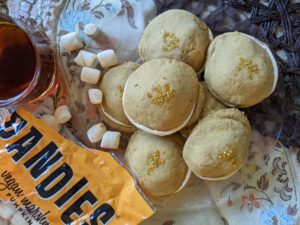
Photo by Rissa Miller
By Rissa Miller, Senior Editor Vegetarian Journal
(Makes about 40 sandwich cookies)
Nothing says fall like biting into a gingery pumpkin cookie.
Stuffing it with soft, fluffy vegan marshmallows only makes the experience
better. Try this recipe with Dandies seasonal pumpkin mini marshmallows or
their regular vegan mini-marshmallows. Testers agreed these cookies were
especially comforting warm from the oven, served with hot tea or cocoa!
Dry Ingredients
2 3/4 cups flour, plus more for rolling
1 teaspoon baking powder
1 teaspoon ground cinnamon
1 teaspoon ground ginger
Pinch ground cloves (optional)
Pinch ground allspice (optional)
Wet Ingredients
1 cup vegan margarine, softened but not liquid (tested with
Earth Balance and Country Crock Almond Plant Butter)
1 cup packed organic brown sugar
1/2 cup canned pumpkin puree (plain, not pie filling)
1 Tablespoon molasses
1 teaspoon vanilla extract
1 Tablespoon plain, unsweetened vegan milk
1 Tablespoons ground psyllium husk seeds
One 5-ounce bag pumpkin Dandies mini-marshmallows
(plain mini Dandies work too)
2 Tablespoons decorative sugar (optional)
In a medium bowl, combine dry ingredients and sit aside. In
a large bowl, mix vegan margarine, brown sugar, pumpkin, molasses, and vanilla
with an electric mixer or by hand until well blended. Add in dry ingredients in
three portions, mixing well each time. Quickly add in vegan milk
and ground psyllium husk seeds. This is the binder and psyllium sets
up very fast, so several fast strokes or a few circles in the bowl with an
electric mixer will do the job. Dough will be soft but not too sticky.
Wrap in parchment
paper or plastic wrap and chill in the fridge for at least one hour or up
to overnight.
When ready to
bake cookies, preheat the oven to 350 degrees and line two cookie sheets with
parchment paper or silicone baking sheets.
On a clean flat
surface, spread some flour and rub flour on a rolling pin (a large jar or glass
bottle will work if you don’t have a rolling pin). Working with half the dough,
roll it flat until it’s about 1/8-inch thick. Add more flour as needed to
prevent sticking. Using a standard (not widemouth) 12 oz. Ball jar, cut out
circles and place on the cookie sheets. Repeat until all dough is used and
there are about 40 “bottoms.” Top each dough circle with 2-3 Dandies,
until all are used up from the 5-ounce bag.
Repeat rolling
second half of cookie dough and cutting circles. Place a dough circle on each
Dandies-topped cookie and press edges lightly to keep the melty marshmallow
inside during baking. If desired, top cookies with a sprinkle of
decorative sugar.
Bake 12-14
minutes at 350 degrees until cookies are lightly browned on the bottom and
Dandies are melted. Some marshmallows will squish out the sides. Allow to cool
on the pan 5 minutes before serving. Store in a sealed container on the counter
up to 3 days or longer in the fridge (if they last that long!).
Posted on
December 04, 2020 by
The VRG Blog Editor
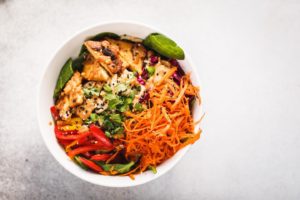
Rainbow Pad Thai from STEM Farm + Kitchen
By
Katelynn Budzich, VRG Intern
R.
House is not your typical food hall. Located in the Remington area of
Baltimore, Maryland arrive and be met by the sight of an imposing gray and
orange building enhanced with rows of windows and opened garage doors that are
vestiges of a former body shop. Walk inside and it is a food lovers paradise.
Abound with ten exciting dining options, you will never leave here hungry.
While surveying the various restaurants in search of you next great meal, don’t
pass by STEM Farm + Kitchen without giving it a try; you won’t be disappointed.
This restaurant has a plant-based menu that specializes in grain bowls, salads, sandwiches, juices, and smoothies. Sustainability being a core value of the restaurant, ingredients are sourced from STEM Farm + Kitchen’s own greenhouse as well as biodynamic farms in Maryland. You can’t go wrong with ordering any menu item, but the restaurant is known for their Korean BBQ cauliflower and rice bowl. After the first bite, it became clear why this dish is so popular. On a bed of brown rice, the bowl is overflowing with cauliflower florets that are large and hearty. The vegetable isn’t mushy or overcooked but instead it is satisfyingly crispy, especially for not being deep-fried. The cauliflower is a perfect choice to be slathered in the sweet and slightly spicy barbecue sauce. Finished with scallions, cilantro, and black sesame seeds, the Korean BBQ cauliflower and rice bowl is perfect for lunch or dinner. To wash it all down, a glass of the homemade green lemonade is an excellent option. Just like the name indicates, apples and kale vibrantly color the drink. This is not your average lemonade; instead it is a refreshing beverage that is balanced in flavor; not too sugary or overly tart, making it a perfect accompaniment to any bowl, salad, or sandwich you order.
If you now find yourself suddenly hungry
for STEM Farm + Kitchen, there are a few things to note first before you go due
to COVID-19. This stall is closed on Mondays and Tuesdays and has varied hours
during the rest of the week. You are able to go inside R. House and order at
the register or you can order online for pick-up through their website. While
there is no inside dining, weather permitting there is a lot of outside seating
on the patio, which wraps around the side of the building. In addition, the
menu at STEM Farm + Kitchen is limited at the moment. What is not currently
being served on the menu are smoothies, acai bowls, fresh-pressed juices
(excluding the lemonade), and juice shots. The full list of everything being
offered is available here: https://www.toasttab.com/stem-farm-kitchen/v3.
Who would of thought a vegan restaurant
would stand out among sushi burritos or wood-fired pizza; but it totally holds
its own as the only vegan restaurant in the food hall. This is not just food
that is healthy, it is also food that transforms fresh ingredients into tasty
meals for anyone to enjoy. Go to R. House, eat at STEM Farm + Kitchen, and the
food will make you feel like you’re eating at your house.
Posted on
December 03, 2020 by
The VRG Blog Editor
For Federal Government workers who would like to donate to The Vegetarian Resource Group through the Combined Federal Campaign, our CFC number is #10601
Posted on
December 03, 2020 by
The VRG Blog Editor
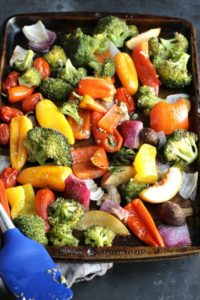
Cooler weather has arrived in many parts of the USA and it’s time to roast
vegetables! A previous article in Vegetarian Journal called Roasting
for Flavor and Sweetness written by Sally Bernstein features these vegan
roasting recipes: Roasted Cherry Tomatoes, Cinnamon Roasted Pears, Roasted
Veggie and Tempeh Sandwiches, Garlic and Rosemary Potatoes, Roasted Baba
Ganoush, and South-of-the-Border Red Pepper Dip.
Another article that ran in Vegetarian Journal featuring vegan
roasting recipes is called Roasting Vegetables and Fruit by Debra
Daniels-Zeller. Recipes included are Roasted Kale Chips, Roasted Roma Tomatoes,
Simple Roasted Root Vegetables, Whole Roasted Cauliflower, Roasted
Maple-Cinnamon Apples, Quinoa Salad with Roasted Asparagus, Roasted Brussels
Sprouts with Lemon-Dijon Sauce, Balsamic Roasted Portobello Mushrooms, and
Orange Roasted Pineapple with Chocolate and Coconut Sorbet.
Posted on
December 02, 2020 by
The VRG Blog Editor
By Chef Nancy Berkoff, EdD,
RD
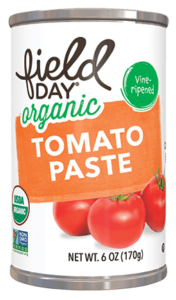
A good-quality tomato paste
is a bit of summer sunshine in a can or a tube, just perfect for this cold time
of year. Tomato paste is the concentrated essence of cooked tomatoes, period.
When purchasing tomato paste, be certain that the main (and hopefully only)
ingredient is tomato; a very small amount of salt or citric acid may be added,
but is usually not necessary.
Tomato paste is used to thicken and
enhance the flavor and color of sauces, pasta fillings, salad dressings, soups,
stews, chili, or in any items where you’d like the tomato flavor to stand out.
You can coat sliced vegetables (such as potatoes, parsnips, plantains, or
mushrooms) with tomato paste and bake or grill to create a tangy crust. Friends
of ours use tomato paste as a sandwich spread, instead of ketchup. Use it
sparingly, however, because tomato paste has an intense flavor. If you are using
only a portion of a can of tomato paste remember to store the remainder in
plastic or glass, never metal, and never, ever in the can (no, we have not been
peeking into your refrigerator). If you like, you can freeze properly-stored
tomato paste until it is needed.
To make tomato paste, ripe tomatoes are
first cooked for several hours to reduce moisture, are strained to remove the
seeds and skin, and then are cooked further to reduce them to a thick, rich
concentrate. Yes, you could try this at home, but you’d need lots and lots of
tomatoes, pots that are not made of aluminum or copper (cast iron is best), and
lots and lots of time.
Ever wondered what the difference is
between tomato purée and tomato paste? We’re glad you asked! Tomato purée
consists of tomatoes that have been cooked briefly and strained, resulting in a
thick liquid with a consistency between tomato paste and crushed tomatoes.
Tomato paste goes a step further, attempting to remove as much moisture as
possible, capturing the tomato “essence.”
Two tablespoons of tomato paste has only 30
calories with no fat and about 20 milligrams of sodium, a bit of fiber, some
iron and potassium, and some Vitamin C and A. Tomato paste, and all tomato
products, contains lycopene, a naturally-occurring plant chemical said to help
reduce the incidence of certain cancers and cardiac conditions.
Tomato paste is indispensable in any
kitchen. You can use it in soups and stews, casseroles and roasted grains, and
as a base for pasta and pizza sauces. Create toaster-oven pizza with bagels or
English muffins topped with tomato paste, your favorite pizza flavorings
(oregano, garlic, basil, etc.), a small spoonful of silken or soft tofu (or
vegan cheese), and a sprinkle of nutritional yeast.
The Vegetarian Resource Group (VRG) is a non-profit organization dedicated to educating the public on veganism and the interrelated issues of health, nutrition, ecology, ethics, and world hunger. We have been helping health professionals, food services, businesses, educators, students, vegans, and vegetarians since 1982. In addition to publishing the Vegan Journal, VRG produces and sells a number of books.
Sign up for our newsletter to receive recipes, ingredient information, reviews of new products, announcements of new books, free samples of products, and other VRG materials.