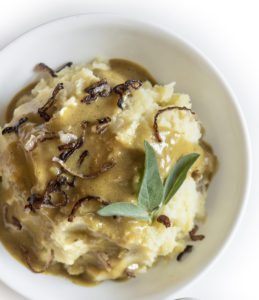
Add cubed potatoes to a large cook pot and cover with water.
Bring to a boil and cook for 30-40 minutes, until potatoes are fork-tender. Put
aside 1 cup of cooking liquid before draining potatoes. Once drained, return
cooked potatoes to cook pot and add ½ cup cooking liquid and ½ cup vegan milk. Using a potato masher, sturdy
fork or electric mixer, mash the potatoes and blend with liquid to desired
texture. If smoother, creamer texture is desired, add more of the cooking
liquid and re-mash. Season to taste with salt and pepper. Serve warm.
Cook’s Note: These
potatoes are wonderful with various add-ins such as a teaspoon of garlic powder
or onion powder, chopped fresh parsley or chives, or even a palm full of
nutritional yeast.
– Info about the launching of an occasional So Many Kids in
the Kitchen group and our first virtual show is next week.
– Parent posted: Part of my doctoral research is focused on
school lunch programs. What is your opinion or take on it? Do your kids eat
school lunches and if yes, do you find enough vegetarian options. For example,
Child Nutrition Program (CNP) officially introduced tempeh as a meat-equivalent
last year. However, how many schools really serve tempeh? Ours does not!
– What is your take on “organic” veggie/fruit
produce? Do you “trust” them enough to spend extra $$ on organic
produce? Do you “believe” they are better for the health of your
children?
– Mention of new veggie book for children called The Turtle Who Fights For Animal Rights.
https://www.facebook.com/groups/VRGparentsandkids/ is intended to be a group that offers support for
families raising children on vegan diets and for vegan kids. We envision it as
a place to get advice about a wide-variety of topics: pregnancy, birthday
parties, school lunches, Halloween, non-leather apparel, cruelty-free products,
summer camps, and more. Please use it as a place to share your wisdom, seek
advice, or just find a sympathetic ear. The goal is to offer support.
Consequently, any profane, defamatory, offensive,
or violent language will be removed. Feel free to disagree, but do so
respectfully. Hateful or discriminatory comments regarding race, ethnicity,
religion, gender, disability, sexual orientation, or political beliefs will not
be tolerated. We expect that posts should relate to vegan diets and lifestyles.
The Vegetarian Resource Group reserves the right to monitor all content and ban
any user who posts in violation of the above rules, any law or regulation,
SPAM, or anything otherwise off topic.
Please share this information
with any veggie families that you know! Thanks.
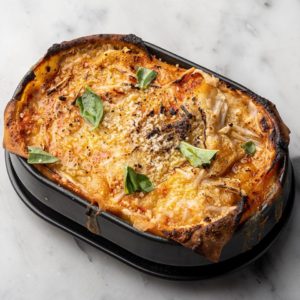
Lasagna Bolognese with Ricotta Mozzarella from BAIA
The Vegetarian Resource Group maintains an online Guide to
Vegan/Vegetarian Restaurants in the USA
and Canada.
Here are some recent vegan restaurant additions. The entire guide can be found
here: http://www.vrg.org/restaurant/index.php
To support the
updating of this online restaurant guide, please donate at: www.vrg.org/donate
Here are some new
additions to VRG’s guide (Note: Due to the coronavirus pandemic many are doing
take-out and/or delivery now):
The Andaluz Vegan, 10540 Cypress Creek Pwky., Houston, TX 77070
The Andaluz Vegan
specializes in Mexican Street food. The menu is filled with delicious options
like jackfruit flautas and gorditas. The flautas are filled with jackfruit and
topped with queso and either creamy chipotle cheese, nacho queso, or creamy
elote green. On the side order the empanadas available in three different
fillings: squash blossom and cheese, potato and cheese, or beans and cheese. To
drink order either the homemade Agua fresca or the horchata. The papaya,
banana, and oat Agua fresca is especially delicious. For dessert order the rice
pudding or churros served with chocolate dipping sauce.
BAIA, 300 Grove St., San Francisco, CA 94102
BAIA is a vegan
restaurant serving delicious plant-based classic Italian dishes. Some favorites
include: Cacio e pepe, lasagna, and the market vegetable pizza. The Cacio e
pepe features black pepper cream with mozzarella, parmesan, and ricotta. The
pasta is tasty and creamy. The lasagna is stuffed with Bolognese sauce,
ricotta, and mozzarella. It is delicious and filling. The market vegetable
pizza is topped with fresh vegetables, greens, and herb sauce. This pizza is
the perfect combination of savory and flavorful. For dessert, order the Torta,
a rich chocolate and hazelnut cake. BAIA will become a new plant-based favorite
with the rotating menu offering new exciting options every week.
Happy Vegan, 1279 Main Ave., Clifton, NJ 07011
The Happy Vegan
specializes in Turkish vegan food. Order the Vegan Çig Köfte made with crack
wheat, tomatoes, pepper, red pepper juice, pomegranate sauce, garlic, and mint.
Another great option is the crispy tofu salad filled with fried tofu, walnuts,
salad, tomatoes, and carrots. On the side, try the dr. OZ Green Juice with apple,
celery, ginger, and lemon. For dessert try the delicious Baklava stuffed with
dough, pistachio, and vegan butter.
House of Vegans, 1426 North 3rd St., Harrisburg, PA 17102
House of Vegans
offers vegan soul food, and on Sundays offer their signature burgers; the Slap
Burger, Open House, and the Big Zaddy. Along the counter runs the phrase “For
the Culture,” which House of Vegans says is at the center of what they do. They
also offer fresh H.O.V. juices, like Banana Express.
M!LK Gelato, 535 Queen St. W., Toronto, ON M5V 2B5 Canada
M!LK Gelato serves
vegan gelato and sorbet made with coconut, oats, and mix-ins to create one of
many different flavors. On top of their cold treats, the shop also serves
cupcakes and waffles, which you can fill with your gelato, and beverages.
They’re located off of Queen Street in the Alexandria Park district, within walking
distance of Alexandria Park.
Sestina, New York, 67 2nd Ave., NY 10003
This upscale eatery
focuses on a variety of vegan pasta dishes along with antipasto, desserts,
espresso, and wine. Call or check on the web to make reservations.
SO Veganly, 26515 Preston Ave., Bldg. C, Spring, TX 77373
Described to have
welcoming customer service and great vegan food, SO Veganly is a woman-owned,
Black-owned, soy-free, organic restaurant. SO Veganly alternates menu themes
monthly, with “Comfort food” or “Mexican food” from one month to the next.
Anyone can order breakfast dishes like cinnamon pancakes, entrees like Coney
style chili dogs and personalized power bowls, while also having catering and
meal prep options.
Uncooked, Fulton Market, 210 N. Carpenter St., Chicago, IL 60607
Uncooked is a vegan,
whole foods, gluten-free restaurant. Located in Fulton Market, they offer delivery
within a 3-mile radius for orders that can be placed through their app.
Delivery or sit-in orders can range from cakes, breakfast dishes, salads, and
entrees, to dips, juices, smoothies, smoothie bowls, coffee, and teas!
In a food
processor or strong blender, combine flour, nutritional yeast, flaxseed meal,
turmeric, paprika, and salt. Pulse twice to mix. Add olive oil and yellow
mustard. Pulse again several times to combine. Next add 4 Tablespoons of water.
Process until well blended and when done, see if dough will hold its form in a
ball. (Open it and check by hand.) If it doesn’t roll into a ball, add only one
more Tablespoon of water at a time until it holds a ball shape. Don’t overdo it
on adding water, or the cracker dough will become too moist.
Tear off two sheets of parchment
paper that are the size of the baking sheet you plan to use in the oven. Form
dough into a ball on top of one piece of parchment on the counter and allow to
rest for 10 minutes for flaxseed meal to form its bonds. When ready, top with a
second parchment sheet and roll the dough until it’s an evenly shaped oval or
rectangle, less than 1/8 inch, about 2 millimeters—very thin to get crispy!
Remove the top layer of parchment and slide onto the baking sheet. Using a
knife or pizza cutter, score the dough into crackers, about 1½ inch square.
It’s likely they won’t be perfect—that’s part of the charm of homemade crackers.
Bake at 350 degrees, turning once
during baking, for 18-20 minutes until edges are browned and crackers are
crisp. Allow to cool for 20 minutes on a baking sheet before eating.
In these economically
challenging times, the WIC (Women,
Infants, Children) Program can be a help to many families with infants and
young children. According to USDA’s website, WIC serves about half of all
infants born in the United States. WIC was developed to protect the health of
low-income pregnant and post-partum women, infants, and children up to age 5.
The program provides participants with vouchers that are used to purchase
specific foods that are identified as being nutritious. WIC is administered by
the USDA and by state health departments.
For vegan post-partum women
and young children, WIC food options may include:
Fresh,
frozen, and canned fruits and vegetables
100%
juice
Breakfast
cereals (some ingredients may not be acceptable to vegans)
Whole
grain bread products, whole grain tortillas, brown rice, whole wheat pasta
(some bread and tortilla ingredients may not be acceptable to vegans)
Dry
or canned beans, peas, or lentils
Peanut
butter
Infant food suitable for
vegans:
Infant
cereal
Infant
fruits and vegetables
Soy formula is available through
WIC. Although it may contain vitamin D derived lanolin, there are no other
options for formula-fed vegan infants.
The WIC food package for women and young children may include vouchers
for non-vegan items such as dairy products, eggs, and canned fish. In some
cases, on a state-by-state basis, specific brands of soymilk and/or tofu may be
available to substitute for cow’s milk. There are not standard vegan
substitutes for eggs or canned fish. If you want to use soy milk and/or tofu to
replace cow’s milk, you may need to discuss this with the WIC nutritionist.
Currently, all states and the District of Columbia appear to allow
approved brands of soy milk to replace cow’s milk. Thirty-four states and the
District of Columbia list certain brands of tofu as an approved substitute for
cow’s milk.
For more information about the WIC
program, visit USDA’s website or search for WIC on
your state’s department of health website.
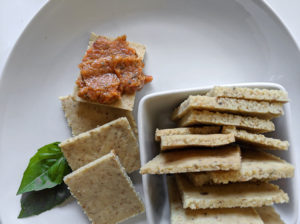
2 cups almond flour 2 Tablespoons ground flaxseed meal ½ teaspoon salt ½ teaspoon ground black pepper (or to taste) 1 Tablespoon olive oil 3-4 Tablespoons water Parchment paper
Preheat oven to 350 degrees. In a food processor or powerful blender, add almond flour, flaxseed meal, salt, and pepper. Pulse twice to mix dry ingredients and break up lumps in almond flour. Add olive oil and 3 Tablespoons water. Turn on processor and allow to mix until dough forms a ball. If it doesn’t roll into a ball, add only one more Tablespoon of water. Don’t overdo it on adding water, or the cracker dough will become too moist. Tear off two sheets of parchment paper that are the size of the baking sheet you plan to use in the oven. Form dough into a ball on top of one piece of parchment on the counter and allow to rest 10 minutes for flax seed meal to form its bonds. When ready, top with second parchment sheet and roll the dough until it’s an evenly shaped oval or rectangle, less than ¼ inch, about 1/8 inch, thick. Remove top layer of parchment and slide onto the baking sheet. Using a knife or pizza cutter, score the dough into crackers, about 1½ inch square. It’s likely they won’t be perfect—that’s part of the charm of homemade crackers. Bake at 350 degrees, turning once during baking, for 18-20 minutes until edges are browned and crackers are crisp. Allow to cool for 20 minutes on a baking sheet before eating.
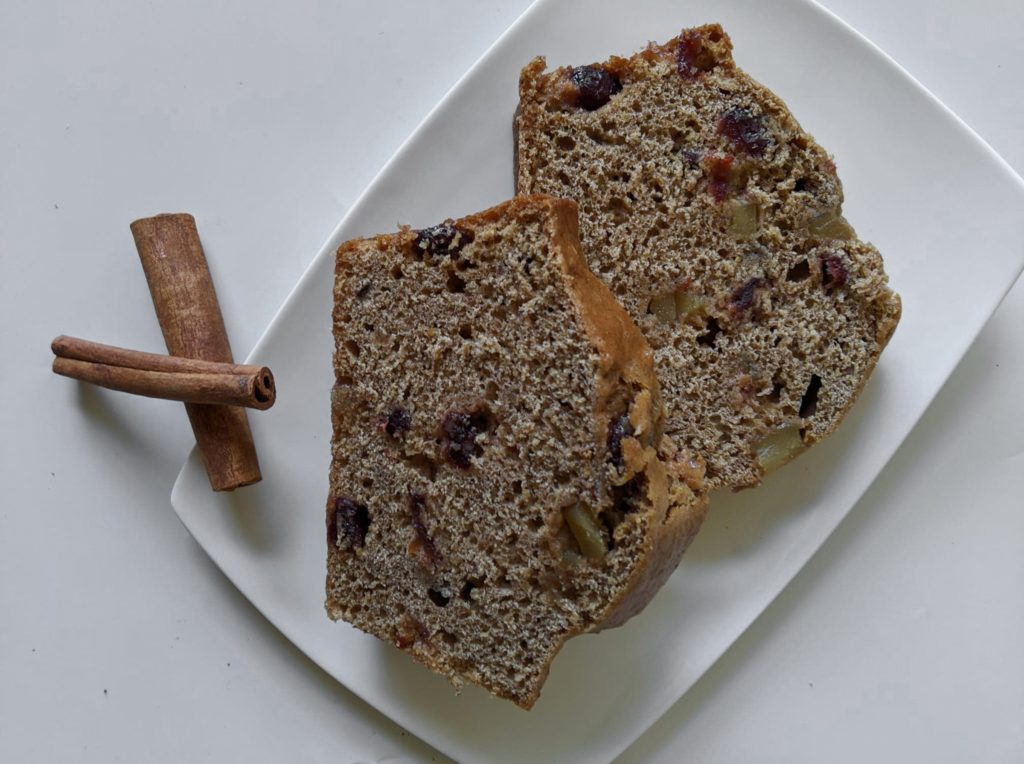
1½ cups all purpose flour ¼ cup sugar 1½ teaspoons baking powder 1½ teaspoons baking soda 1½ teaspoons powdered ginger 1 teaspoon cinnamon Pinch salt (optional) ¼ cup maple syrup ½ cup unsweetened, plain vegan milk (cashew, oat, pea, or soy work best) 2 Tablespoons melted vegan margarine 1 teaspoon vanilla extract ¼ cup dried candied ginger, chopped ½ cup dried cranberries
Preheat oven to 350 degrees. Spray a loaf pan with non-stick pray and set aside. In a small bowl, combine ground flax seed meal with warm water. Stir thoroughly and set aside to congeal into a binder. In a large bowl, mix flour, sugar, baking powder, baking soda, powdered ginger, cinnamon, and salt. Stir a few strokes to mix, then add maple syrup, vegan milk, margarine, vanilla, and flax meal mixture. Stir again, about 30-40 strokes until well combined. Fold in chopped dried ginger pieces and dried cranberries. Pour into prepared loaf pan and bake at 350 degrees for 45-50 minutes until a toothpick comes out clean and edges of loaf are golden brown. Cool 10-15 minutes before slicing and serving.
Per the census data released by the government of India in 2014,1 a total of 72% of males and 71% of females are meat-eaters in populations of 15 years of age and over. Census data from 20042 indicate that three out of four citizens above the age of 15 years are non-vegetarian. Although the percentage of meat eaters has dropped from 75% in 2004 to 71% in 2014, it still seems high for a country that most people view as a vegetarian nation. Also, an analysis of the National Family Health Survey (NFHS) by LiveMint found that vegetarianism has been on the decline between 2005 and 2015. Further, per other research, the percentage of vegetarians may be even lower (by about 10-15%) than indicated by the 2014 census data published by the government of India.
From the census data, it is not clear what
types of meat (red, white, seafood) were included in calculating the numbers.
It is also not clear if an ovo-lacto diet pattern was classified as vegetarian
or “non-vegetarian.” However, the NFHS 2015-2016 surveyed about 800,000 men and
women (700,000 females and 100,000 males) with questions geared at assessing
whether they were fish, chicken, meat (assumption: meat may equate to beef
and/or pork which is consumed in select populations only; may include goat
which is widely consumed), egg, and dairy consumers.
Per the NFHS survey, about 30% of women and
about 20% of men may fall under the lacto-vegetarian category (“Never” consume
“eggs,” “chicken or meat,” “fish or chicken or meat,” “fish”). It is interesting
also to note the contents of another table in the survey that breaks down
consumption patterns by religion. 30% of Hindu women and about 40% of Hindu
males consume some kind of meat. This seems to be in line with the outside
world’s perception that Hindus are predominantly vegetarians.
Another article from the Indian Express,3 an Indian news agency, has reported that meat consumption seems lesser in states that consume more dairy, specifically milk. These statistics were based on the National Sample Survey’s Office (NSSO). Given this, we may be able to assume that India’s vegetarianism numbers from the census may include ovo-lacto vegetarians. Although, we cannot be certain. There are no comments or methodology of survey listed with the census reports.
Even though overseas travel generally has been put on hold
in recent times, our aspirations to one day get back to seeing the world after
Covid-19 have not. If your future travel plans include Israel, you must be sure
to fully indulge in the food. Mediterranean cuisine is not only among the healthiest,
but also most delicious in the world. If you are a vegan, then you are in luck.
There is a plethora of Israeli and Palestinian local dishes which are friendly
to a vegan diet. Below I’ll be discussing exactly what you should look forward
to ordering and some tips on how to make that order happen in a bustling
environment where American standards of patience in the service industry are
non-existent.
Let’s cover some
basics which likely you know already.
Hummus –
a dip made from chickpeas,
olive oil, garlic, sesame oil
Falafel
– a deep-fried ball or patty made from ground chickpeas, fava beans, or both
Babaganoush
– a dip made from mashed cooked eggplant, olive oil, sesame oil, spices
Foods for more seasoned surveyors of
Middle Eastern Cuisine
Shakshouka
– a dish of eggs* poached in a sauce of tomatoes, olive oil, peppers, onion,
and garlic, and commonly spiced with cumin, paprika, cayenne pepper, and nutmeg
(*while this dish traditionally includes poached eggs on top of the dish, have
no worries as you can order it without eggs)
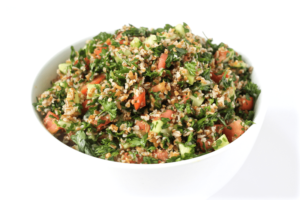
Tabbouleh – a
salad made from bulgur,
chopped onions, mint, garlic, parsley, lemon juice
Fatoush
– salad made from toasted or fried pieces of khubz (like
pita chips) combined with mixed greens and other vegetables, such as radishes
and tomatoes
Fuul – a
stew of cooked fava beans served with vegetable oil, cumin, and optionally with
chopped parsley, garlic, onion, lemon juice, chili pepper, and other vegetable,
herb, and spice ingredients
Za’atar
– a spice mixture that includes the herb Za’atar itself along with toasted
sesame seeds, dried sumac, often salt, as well as other spices
Even more advanced food options
Sabich – an Iraqi Jewish dish of pita or laffa stuffed with fried eggplant, hard boiled eggs*, salad, parsley, amba (Tangy Iraqi Jewish sauce), and tahini sauce (*this can be ordered without egg as well)
Aaleye
– a Palestinian dish in a sauce form consisting of cooked tomatoes, onions, hot
peppers, and spices
Kibbeh
– stuffed balls of bread; the vegetarian kind being stuffed with vegetables and
nuts
Mulkhiya
– a soup made from the Mulkhiya plant also called Jew’s Mallow (*be sure to
inquire if chicken stock is in their recipe)
Malawach
– A Yemenite Jewish dish of fluffy filo dough with various spices and toppings
added and wrapped
Some Tips
Most of these foods you will be able to order on the street. Many establishments where you see shawarma will also be a place to find falafel. Sabich and malawach are less common but also sold on the street. In some instances, malawach may be referred to as jahnun (it can be confusing).
For kibbeh, mulkhiya, shakshuka, fuul, tabbouleh, and fatoush you will likely have to find a traditional restaurant.
Because the food industry in Israel is dominated by kosher
customers, almost every restaurant is certified kosher in order to stay in
business. What does this mean for you? There is a law in Judaism that no dish
can mix dairy and meat products. This serves as a very easy to remember
guideline for vegetarians as you can be confident that if you see dairy on the
menu, there will never be meat at that restaurant; however, there can be fish. Vice
versa, there won’t be dairy in sauces at a kosher meat restaurant.
When ordering, especially from a street vendor, remember
that lines do not really exist in Israel. While there may be something
resembling a line forming, the reality is that in no way does that line
function properly. It is common for friends of the vendor or strangers to hang
out in front of street shops and often they appear to be customers because they
are eating the food. Simply ignore them and say excuse me while you step in
front of the vendor and assert that you want to order.
Additionally, you can also hang out and eat food there too!
It is not seen as rude or unclean to take samples of the toppings being offered
by vendors and you should always accept the offer to try a free ball of
falafel. They love to show off their culinary skills and it is rude to refuse.
Most foods will be made very quickly, but in the event that your food is being
prepared and you notice yourself drowning in the sea of people filing into the
store, be sure not to move. If you are standing in front of the register or
directly blocking someone from ordering, move over a bit. Under no circumstances
should you do the American standard of walking back to the front of the
restaurant and finding a table to wait at. You will never get your food. Stand
exactly where you are and let the natural process of overcrowding encourage the
cooks to move fast and the server to find you.
These small tips will give some legs to any traveler new to the
food scene in Israel. The delicious vegan-friendly cuisine in Israel is
something to chase down and enjoy. Don’t forget to have a strong glass of
coffee with your meal and grab a seat while you eat. Take in the atmosphere and
enjoy the country!
Tamir is fluent in Arabic,
Hebrew, and Spanish. He has traveled to Israel on numerous occasions.
The Vegetarian Resource Group (VRG) is a non-profit organization dedicated to educating the public on veganism and the interrelated issues of health, nutrition, ecology, ethics, and world hunger. We have been helping health professionals, food services, businesses, educators, students, vegans, and vegetarians since 1982. In addition to publishing the Vegan Journal, VRG produces and sells a number of books.
Sign up for our newsletter to receive recipes, ingredient information, reviews of new products, announcements of new books, free samples of products, and other VRG materials.