The Vegetarian Resource Group Blog

Vegan Grocery Shopping During COVID-19
Posted on July 28, 2020 by The VRG Blog Editor

By Reed Mangels, PhD, RD

As an older person living in a state with ever-increasing cases of COVID-19, I try to limit my errand to those that are essential. I’ve chosen to continue to physically going to the grocery store but am doing my best to minimize both the number of trips I make and the time I spend in the store. I recognize that I am very fortunate to have enough space to store food and the money to buy several weeks’ worth of food at a time. Also, I’m only shopping for myself and my husband, not for a large family, which makes things easier. That said, I hope that some of these ideas that allow me to limit grocery shopping to once or twice a month will be helpful to others.

Spend more time planning in order to spend less time in the store.

Gone are the days when I planned the menu for that night or even for the next few days as I walked through the food store, zigging and zagging from the produce department to the pasta aisle and back to produce. Now, while I don’t extensively plan 2-3 weeks’ worth of meals, I have a sense that I will need 6 packages of tofu, 10 cans of assorted beans, some quinoa and rice, 5 cartons of soy milk, a couple of jars of peanut butter, and so forth. I think about recipes I might want to make and if there are any specialty ingredients I’ll need to get for them. I estimate how much fresh fruit and vegetables and bread we’ll need. I look at staples – are we running low on soy sauce or spices or flour? Are there some things I should buy a bit extra of in case plans change – like canned tomato products or pasta?

Make a list.

When I make my grocery list, I do it with the store’s lay-out in mind so that I don’t have to double back and pick up something I forgot. Like many stores, the one where I shop has one-way aisles, adding to the challenge of going back to pick an item I missed on the first pass. Because I never know which shelves will be bare, I try to think of alternatives before going to the store. If there’s no pasta, do we have enough rice or other grains that we can use instead, or do I need to pick up more of these in place of pasta? 

Fruits and Vegetables

Unless you belong to a CSA or go to a farmer’s market, it can be challenging to buy enough fresh produce to last 2 or more weeks. Here’s the way that I approach it.

     I think of produce in 2 categories:

  • Products that should be used within a week or 10 days – including lettuce, stone fruit, most leafy greens, summer squash, herbs, peppers, bananas
  • Sturdier produce that can last for 10 days to 3 weeks or longer – such as cabbage, carrots, winter squash, onions, cauliflower, melon, citrus fruit, apples, beets

     For the first week post shopping trip we focus on food from the first category. We might have lettuce-based salads most days; later in the cycle salads will be coleslaw or carrot-raisin salad.

     Produce lasts longer if stored properly. The Ecology Center has a helpful handout on produce storage. If I notice that vegetables are starting to look tired before we can eat them, I often make a pot of soup or another dish that can be frozen or refrigerated. If all the fruit ripens at once, some can be sliced and frozen to use later in crisps, smoothies, or on oatmeal. Having some frozen vegetables on hand, like frozen sliced peppers or frozen spinach, can add interest to meals when fresh produce is running low.

     When I think about grocery shopping pre-COVID-19, I realize that many of our trips to the store were to pick up cartons of soy or almond milk or a loaf of bread. Now, I’m more likely to buy shelf-stable packages of plant milk for cooking and use the refrigerator space for the refrigerated cartons my husband likes for cereal. We freeze bread before the use-by date, so it doesn’t get moldy and bake our own if we want fresh bread. These ideas aren’t unique to the current situation. They’re ways I can minimize the time I spend on food shopping and minimize food waste.
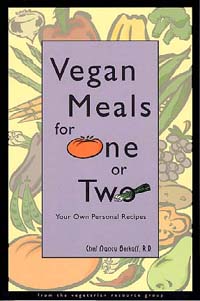
Cooking Meals for Just a Few is Simple with “Vegan Meals for One or Two.”

Posted on July 28, 2020 by The VRG Blog Editor

Chef Nancy Berkoff’s book Vegan Meals for One or Two is published by The Vegetarian Resource Group. Each recipe is written to serve one or two people. Recipes are designed so that you can realistically use ingredients the way they come packaged in the store. Here are two recipes from this cookbook featuring summer produce.

Pasta in Paradise

(Makes 2 servings)

This dish is colorful, with an unexpected secret ingredient (psst… it’s the mango).

4 ounces uncooked vermicelli, rice noodles, or spaghetti

1/4 cup red or yellow bell pepper strips (about 1 medium pepper)

1 cup ripe chopped papaya (about 1 small papaya)

1 cup ripe chopped tomatoes (about 1 medium tomato)

1/2 cup ripe, chopped mango (about 1 half mango or look for frozen cubes)

2 Tablespoons chopped fresh cilantro or flat leafed parsley

2 teaspoons olive oil

1/4 teaspoon cinnamon

1/2 teaspoon white pepper

2 Tablespoons chopped peanuts

Cook pasta according to package directions. Rinse, drain, and set aside to cool. In a large bowl, combine pepper, papaya, tomatoes, mango, cilantro, oil, cinnamon, and white pepper and toss to mix. Add pasta and toss to mix. Top with peanuts.

Total Calories Per Serving Using Rice Noodles and Cilantro: 376

Total Fat as % of Daily Value: 15%     

Protein: 7 gm      Fat: 10 gm      Carbohydrates: 68 gm      Calcium: 44 mg     

Iron: 2 mg      Sodium: 19 mg      Dietary Fiber: 4 gm

Grilled Corn on the Cob, Curry Style

(Makes 3 ears or 3 servings)

This dish is so luscious! You’ll never eat plain corn on the cob again.

3 ears unhusked corn on the cob

3 Tablespoons unsweetened coconut milk

3 teaspoons chopped fresh cilantro (or fresh parsley) 

3 teaspoons curry powder

1 teaspoon red pepper flakes

Peel back the husks from the corn and remove the silk (but keep the husks intact). In a small bowl, combine remaining ingredients. Brush mixture on the corn and pull husks back over the corn, so kernels are covered. If husks won’t stay, use thin strips of foil as closures. Place the corn on the grill, turning frequently for approximately 15 minutes or until the husks have dried out and the kernels begin to brown.

Note: If there’s no barbecue grill available, you can use the same technique in a 475-degree oven.

Total Calories Per Serving: 90      Total Fat as % of Daily Value: 2%     

Protein: 3 gm      Fat:  2gm      Carbohydrates: 19 gm      Calcium: 17 mg     

Iron: 1 mg      Sodium: 22 mg      Dietary Fiber: 4 gm

In the USA only you can purchase this paperback book here: vrg.org/catalog/

The book is also available on Kindle here: Vegan Meals for 1 or 2 on Kindle 

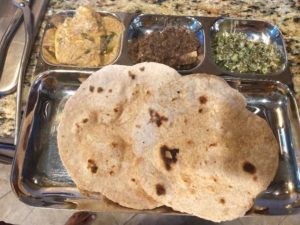
Tofu Chettinaad Curry

Posted on July 27, 2020 by The VRG Blog Editor

By Kavitha Shankar, VRG intern

Enjoy this Indian vegan curry dish!

Ingredients

15.5 ounces extra-firm tofu, drained

½ Tablespoon turmeric powder

1 large lemon

Salt, to taste

2 Tablespoons sesame oil, divided (gingely oil preferred)

1 Tablespoon coriander seeds

½ teaspoon cloves

½ Tablespoon cumin seeds

1 Tablespoon black peppercorn

3-6 dried red chilies (adjust for your spice level)

1 stone flower (dried) – critical for flavor

1 mace flower (dried)

2 bay leaves

2 green cardamoms

1 black cardamom

8 garlic cloves

½ cup coconut powder

1 Tablespoon sliced ginger

½ teaspoon fenugreek seeds – critical for flavor

1 teaspoon poppy seeds

2 teaspoons tamarind extract/paste (or a small ball of fresh tamarind)

1 medium red onion, chopped fine

2 sprigs fresh curry leaves

1 star-anise

Instructions

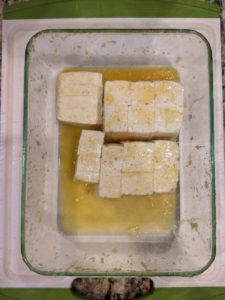
Cube the tofu, add turmeric powder, lemon juice, and salt to taste. Leave to marinate for 1 hour.

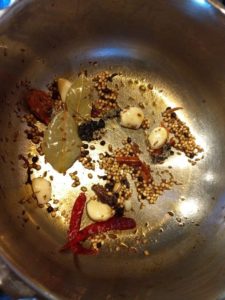
Add 1 Tablespoon sesame oil to a heavy bottomed pan. Add coriander, cloves, cumin, peppercorn, red chili, stone flower, mace, bay leaves, green cardamoms, and black cardamoms. Roast for 2 minutes. Add garlic cloves and roast until deep brown. Transfer the roasted spices to a plate and allow to cool.

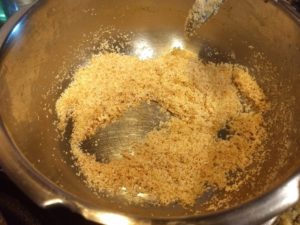
Add ½ Tablespoon of sesame oil to the same pan. Roast the coconut powder until medium to deep brown. Keep stirring. Take care not to char. Transfer the coconut to the plate with roasted spices and allow to cool.

Once the spices and coconut have cooled down fully, transfer to a processor. Add ginger slices, fenugreek, poppy seeds, and tamarind to the processor with spice mix. Grind to a paste.

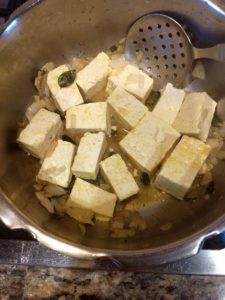
     Add 1 Tablespoon of sesame oil to the pan and sauté chopped onions until golden brown. Add curry leaves and sauté for a minute. Add marinated tofu and sauté for about 2-3 minutes on medium high flame.

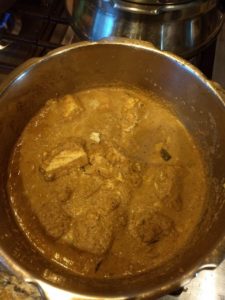
Add the spice and coconut paste from the processor.  Add salt to taste if desired. Add water to bring it to a curry consistency. Close the pan and cook for 7-10 minutes.

Serve with homemade Indian whole wheat bread for best results.

REPORT ON MY VEGETARIAN RESOURCE GROUP INTERNSHIP

Posted on July 27, 2020 by The VRG Blog Editor

by Lucia Rivera, VRG Intern

As I wrap up another portion of my long-distance internship with the Vegetarian Resource Group, I remain very appreciative of this unique opportunity and experience. I have continued to learn about the lives and experiences of other vegan activists, have improved my writing and editing skills, and have developed a deeper appreciation for and understanding of vegetarianism.

    Since I began the second “phase” of my internship, I have worked on numerous pieces ranging across many different subjects. Not only was I able to help inform others by writing blog posts, but I have been able to expand my own knowledge. Examples of projects that allowed me to do so include an article on how to feed large groups vegan food on a budget, a piece on vegan cake decorating, and an article about eating vegan in Abu Dhabi. Especially for the latter I was excited by the information I found out in my interviews, whether they were conducted over the phone or through email. It is definitely inspiring to see how many vegetarians and vegans throughout the world — from a variety of backgrounds — are putting in whatever effort they can to help change the world around them. I was also able to see the truth in that in my work reviewing VRG scholarship applications. I really enjoyed hearing other people’s stories and what vegetarianism or veganism means to them.

    Another way that I have contributed and also grown in the past six months has been through completing translations for both my articles and those by other VRG contributors. Although I am bilingual, I am usually in English-speaking spaces, so it was always a welcomed challenge to do translations from English to Spanish for the VRG website. I also am glad that I can help VRG expand its audience to Spanish-speakers!

    In addition to written contributions, I have also been able to partake in other projects like photography assignments. I was able to challenge myself in another area, which I found really enjoyable. Through VRG I was also able to be interviewed by a podcast for an episode on vegetarianism. This was not a platform I was used to sharing on, but I am glad I was able to help add to the discussion in the media about vegetarian lifestyles. I hope that at least one person heard the podcast episode and was inspired to change their eating habits too. This was also an experience where I was able to acknowledge the importance of planning in advance and being well-prepared, two things that I think served me well during my interview.

    Lastly, working with the VRG has helped me improve my networking and professional skills. Even during this pandemic, I have been able to get to know other young interns with similar passions and goals in life. As a rising high school senior, I will soon enough be thrust into many more professional atmospheres, and my work at VRG will have helped prepare me for those occasions. Whether it be by communicating over email, organizing interviews, or collaborating with others on projects, I have been able to utilize my skills and improve them. Overall, my time thus far with VRG has led to surprises, challenges, successes, and many final products that hopefully make a difference in promoting and informing others about vegetarianism!

For information about The Vegetarian Resource Group internships, see: https://www.vrg.org/student/index.php

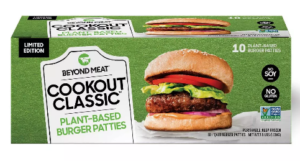
BEYOND MEAT VALUE PACK

Posted on July 24, 2020 by The VRG Blog Editor

In June, Beyond Meat announced that that they will be offering for a limited time packs of ten burgers at $15.99. Call your store ahead of time to see if available. They may be at:

  • ACME
  • Giant Foods
  • Giant Martins
  • Hannaford
  • Harris Teeter
  • HEB
  • HyVee
  • Jewel
  • Lidl
  • Mariano’s
  • Military
  • Publix (available in August)
  • Redner’s
  • Rouses
  • Safeway NorCal, Portland
  • ShopRite
  • Stew Leonards
  • Stop & Shop
  • SuperValu  (Mountain West and Pacific Northwest)
  • Target (see full store list here)
  • Walmart (see full store list here)
  • Wegmans
  • Woodman’s
  • Westside Foods

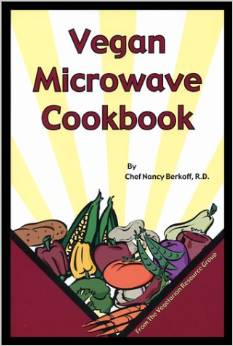
Did you know that you can prepare creative vegan meals in a microwave?

Posted on July 24, 2020 by The VRG Blog Editor

Chef Nancy Berkoff’s book Vegan Microwave Cookbook (published by The Vegetarian Resource Group) has over 165 recipes that are fast, easy, good-tasting, exciting, and comforting. Many of the recipes in this book will take under 10 minutes to prepare. Below are two recipes perfect for the summer from this cookbook.

Fresh Summer Squash Soup

(Serves 4-6)

This soup has a delicate flavor and a wonderful aroma.

1½ pounds fresh yellow squash or zucchini (about 4 cups), washed and ends trimmed off

2 cups vegetable broth or stock

¼ cup chopped onions

1 clove garlic, minced

2 Tablespoon chopped fresh parsley or cilantro

½ teaspoon thyme

1 teaspoon white pepper

¼ cup chopped, cooked vegan fake meat such as Tofurky, veggie hot dogs or sausage, Field Roast, etc. (optional)

Cut squash into small cubes or chunks. In a 2-quart casserole or bowl, combine all ingredients, stirring to mix. Cover with vented plastic or lid and microwave on HIGH for 12 minutes or until vegetables are tender. Stir at least twice during cooking. Place 2 cups of the soup in a blender or food processor and process until smooth. Return to remaining soup and stir to combine. Microwave on HIGH for 2 minutes or until hot.

Note: this soup works well with any soft-shelled squash, such as zucchini, crookneck, delicato, and patty pan. You can mix several squashes in one batch, if desired. Do not prepare this soup with frozen or canned squash, as the texture and flavor will be lacking.

Tri-Colored Herbed Peppers

(Makes 4 servings as a side dish or dip. If puréed, makes about 1½ cups sauce.)

Serve this dish as a side dish, sauce, or condiment.

2 teaspoons olive oil

1 medium red bell pepper, seeded and cut into thin slices (about ¾ cup)

1 medium orange or yellow bell pepper, seeded and cut into thin slices

1 medium green bell pepper, seeded and cut into thin slices

1clove garlic, minced

1 Tablespoon balsamic vinegar or red sherry

1 Tablespoon fresh basil, minced

1 teaspoon dried oregano

1 teaspoon dried sage

1 teaspoon black pepper

In a 2-quart bowl or casserole, toss oil and peppers and garlic. Microwave on HIGH for 2 minutes or until peppers are just tender. Add remaining ingredients, cover, and microwave on HIGH for 1 minute. Stir to combine flavors and serve.

Notes: If a smooth sauce is desired, microwave the cooked peppers for an additional 1-1/2 minutes. Place in a food processor or blender and process until puréed. Serve warm over cooked vegetables or pasta, or as a sauce for baked tofu or a seitan “steak.” Serve cold as a dipping sauce for veggies, chips, or breadsticks, or use as a salad dressing.

In the USA only you can purchase this paperback book here: vrg.org/catalog/

The book is also available on Kindle here: Vegan Microwave Cookbook on Kindle

Mutt’s Comic Strip Features Vegan Lifestyle

Posted on July 23, 2020 by The VRG Blog Editor

Mutt’s comic strip recently featured a storyline about a diner that went vegan. We were given permission to re-post the strip. They said “Thanks for caring about animals and for supporting them in a meaningful way.”

Vegan Food at Festivals

Posted on July 23, 2020 by The VRG Blog Editor
Photo taken at VegFest in West Palm Beach, FL Jan. 2020

By Lucia Rivera, VRG Intern

Through selling vegan foods at festivals throughout the country, young cooks share and promote vegan eating. Two of these cooks are Anayeli Camacho and Thomas Woodruff, who, respectively, works at a vegan restaurant and started his own vegan pop-up business.

     “I would say the benefits of selling vegan food [in a festival setting] is you can reach more people. People who want to live a healthier lifestyle and people who want to help the planet,” Woodruff said.

     Additionally, for Camacho, selling at festivals like a VegFest is a great way to gain more exposure for the restaurant she works for, named Verdine. She also stressed the importance of marketing the restaurant visually at the festival.

     “[Selling food at festivals is] just about spreading your name and letting people know ‘Oh, we have a restaurant as well and you can come check us out anytime.’ That’s why it’s so important when we go to these events to make sure that the food is great because [customers are] going to taste it and say ‘Wow, this is good; where can we try more?’ Then they’re going to come to the restaurant. You’ve just gotta make sure your voice is heard and you’re getting customers,” Camacho said.

     In order to receive the benefits from selling food at festivals there are several factors that need to be executed well according to Camacho. In her experience, making a profit has been a central goal, in addition to speed, organization, and teamwork. Woodruff agreed that organization and teamwork were the “most important” factors, claiming that “everything is so fast paced and if everyone isn’t on the same page it isn’t going to be good.”

     “Especially for a festival, teamwork is a huge thing. [Also] understanding what everybody’s role is and understanding what everybody has to have done by the time we’re up and running [is important]. Like if at 11 it starts, then we need to make sure that at 11 everybody’s done what they’re supposed to be doing and we’re ready to go; we’re ready to serve customers.”

     There are also certain factors that are taken into account when groups choose what food to sell. This includes planning for the respective audience and what other groups will be selling at the festival. In the past, Anayeli has made and sold sushi rolls, tamales, philly cheesesteaks, and cupcakes with her team. Woodruff prefers selling desserts, and in the past has sold at the Front Street Food Festival in Texarkana, Arkansas.

     “I think the best items to sell at festivals are desserts. People are usually more open to trying a dessert and if they like the dessert they usually buy a plate of food,” Woodruff said.

     When Camacho has worked with a prep team at festivals her process has consisted of preparing the food beforehand, assembling her station, heating up the food, and then being ready for arriving customers. Contrastingly, at a restaurant, a team is not focused on producing large

amounts of one item. Necessary materials like water are also not always as on-hand as they would be in a restaurant kitchen.

     “The packaging of it is different because we’ve got to make sure that nobody at the restaurant gets the food meant for the festival. Of course we label it and everything but we’ve got to set aside that equipment and that food and that prepping,” Camacho said. “It’s about really working

with the other prep people because it can become chaotic. There’s people prepping for the restaurant and we’re trying to prep for the festival, so just making sure everybody’s on the same page, everybody knows what’s happening, [and] everybody knows what their role is.

For those that want to organize a veggie festival once the pandemic is over, this information may be helpful: https://www.vrg.org/blog/2011/09/07/putting-on-a-vegetarian-festival-vegetarian-festivals-galore/

You can find quantity recipes here: https://www.vrg.org/fsupdate/index.htm

Here are items that Thomas Woodruff has sold: https://www.txkvegan.com/

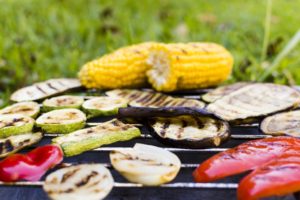
Are you looking for some vegan grilling ideas?

Posted on July 22, 2020 by The VRG Blog Editor

Vegetarian Journal has ran two articles on vegan grilling that you might enjoy:

Gourmet Grilling by Chef Nancy Berkoff, EdD, RD includes grilling tips as well as recipes for Grilled Eggplant, Mediterranean Grilled Portobellos with Pine Nuts, Curried Barbecue Tempeh, Roasted Pepper and Eggplant Dip, Pineapple Peach Salsa, Japanese-Style Grilled Asparagus, Grilled Sweet Peaches, and Roasted Corn. See: https://www.vrg.org/journal/2002issue3/2002_issue3_gourmet.php

Nancy also wrote another article titled Outdoor Feast and it includes vegan recipes for the grill including Tofu and Potatoes Kebobs, Vietnamese “Beef” Salad, Lime and Chili “Steaks,” and Grilled Pineapple. See: https://www.vrg.org/journal/vj2015issue2/2015_issue2_outdoor_feasts.php

To subscribe to Vegetarian Journal in the USA, visit: https://www.vrg.org/member/2013sv.php You can also subscribe to the Kindle version of Vegetarian Journal in the USA and United Kingdom. In the USA, visit: https://www.amazon.com/dp/B07LBY2Y7K/ref=sr_1_1?ie=UTF8&qid=1544727482&sr=8-1&keywords=B07LBY2Y7K  In the United Kingdom, visit: https://www.amazon.co.uk/dp/B07LBY2Y7K/ref=sr_1_1?s=digital-text&ie=UTF8&qid=1544731957&sr=8-1&keywords=B07LBY2Y7K

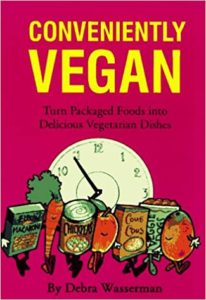
Delicious Easy Vegan Recipes from “Conveniently Vegan”

Posted on July 22, 2020 by The VRG Blog Editor

The Vegetarian Resource Group is publisher of Conveniently Vegan, by Debra Wasserman. In this book you will find 150 recipes using convenience foods along with fresh fruits and vegetables. Here are two summer-friendly recipes from this book:

CARROT/DATE/PEACH SALAD

(Serves 5)

Enjoy this delicious blend of ingredients.

6-7 carrots (1 pound), peeled and grated

4 medium ripe peaches, pitted and finely chopped

5 ounces pitted dates, finely chopped

1/2 teaspoon cinnamon

1/2 cup peach or orange juice

Mix all the ingredients together in a large bowl. Refrigerate at least one hour before serving.

Total calories per serving: 158     Fat: <1 gram    Total Fat as % of Daily Value: <1% Protein: 2 grams    Iron: 1 mg    Carbohydrates: 40 grams    Calcium: 39 mg    Dietary fiber: 6 grams    Sodium: 33 mg

FRUIT PIZZA

(Serves 4)

Here’s a beautiful looking dessert that both children and adults will enjoy. You can also substitute several small pita breads for the large pita bread.

1 large 12-inch wide pita bread

1 cup unsweetened apple butter

1 kiwi, peeled and sliced

6 large strawberries, sliced

1 apple or pear — peeled, cored, and thinly sliced

1/4 teaspoon cinnamon

Spread apple butter over pita bread.  Arrange slices of fruit on top of apple butter.  Sprinkle with cinnamon.  Serve as is or heat in 350 degree oven for 15 minutes and serve warm.

Total calories per serving: 269    Fat: 1 gram    Total Fat as % of Daily Value: 2% Protein: 4 grams    Iron: 1 mg    Carbohydrates: 48 grams    Calcium: 48 mg    Dietary fiber: 2 grams    Sodium: 162 mg

In the USA only you can purchase this paperback book here: https://www.vrg.org/bookstore/index.php

  • Donate

  • Subscribe to the blog by RSS

  • VRG-NEWS

    Sign up for our newsletter to receive recipes, ingredient information, reviews of new products, announcements of new books, free samples of products, and other VRG materials.

    Your E-mail address:
    Your Name (optional):


↑ Top