Posted on
December 03, 2020 by
The VRG Blog Editor
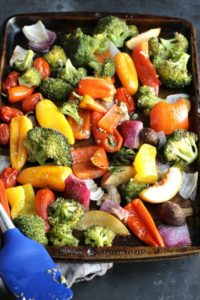
Cooler weather has arrived in many parts of the USA and it’s time to roast
vegetables! A previous article in Vegetarian Journal called Roasting
for Flavor and Sweetness written by Sally Bernstein features these vegan
roasting recipes: Roasted Cherry Tomatoes, Cinnamon Roasted Pears, Roasted
Veggie and Tempeh Sandwiches, Garlic and Rosemary Potatoes, Roasted Baba
Ganoush, and South-of-the-Border Red Pepper Dip.
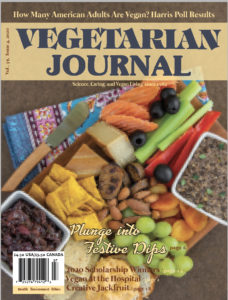
Another article that ran in Vegetarian Journal featuring vegan
roasting recipes is called Roasting Vegetables and Fruit by Debra
Daniels-Zeller. Recipes included are Roasted Kale Chips, Roasted Roma Tomatoes,
Simple Roasted Root Vegetables, Whole Roasted Cauliflower, Roasted
Maple-Cinnamon Apples, Quinoa Salad with Roasted Asparagus, Roasted Brussels
Sprouts with Lemon-Dijon Sauce, Balsamic Roasted Portobello Mushrooms, and
Orange Roasted Pineapple with Chocolate and Coconut Sorbet.
Posted on
December 02, 2020 by
The VRG Blog Editor
By Chef Nancy Berkoff, EdD,
RD
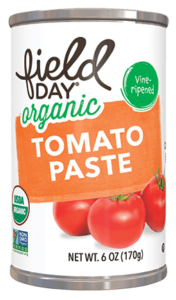
A good-quality tomato paste
is a bit of summer sunshine in a can or a tube, just perfect for this cold time
of year. Tomato paste is the concentrated essence of cooked tomatoes, period.
When purchasing tomato paste, be certain that the main (and hopefully only)
ingredient is tomato; a very small amount of salt or citric acid may be added,
but is usually not necessary.
Tomato paste is used to thicken and
enhance the flavor and color of sauces, pasta fillings, salad dressings, soups,
stews, chili, or in any items where you’d like the tomato flavor to stand out.
You can coat sliced vegetables (such as potatoes, parsnips, plantains, or
mushrooms) with tomato paste and bake or grill to create a tangy crust. Friends
of ours use tomato paste as a sandwich spread, instead of ketchup. Use it
sparingly, however, because tomato paste has an intense flavor. If you are using
only a portion of a can of tomato paste remember to store the remainder in
plastic or glass, never metal, and never, ever in the can (no, we have not been
peeking into your refrigerator). If you like, you can freeze properly-stored
tomato paste until it is needed.
To make tomato paste, ripe tomatoes are
first cooked for several hours to reduce moisture, are strained to remove the
seeds and skin, and then are cooked further to reduce them to a thick, rich
concentrate. Yes, you could try this at home, but you’d need lots and lots of
tomatoes, pots that are not made of aluminum or copper (cast iron is best), and
lots and lots of time.
Ever wondered what the difference is
between tomato purée and tomato paste? We’re glad you asked! Tomato purée
consists of tomatoes that have been cooked briefly and strained, resulting in a
thick liquid with a consistency between tomato paste and crushed tomatoes.
Tomato paste goes a step further, attempting to remove as much moisture as
possible, capturing the tomato “essence.”
Two tablespoons of tomato paste has only 30
calories with no fat and about 20 milligrams of sodium, a bit of fiber, some
iron and potassium, and some Vitamin C and A. Tomato paste, and all tomato
products, contains lycopene, a naturally-occurring plant chemical said to help
reduce the incidence of certain cancers and cardiac conditions.
Tomato paste is indispensable in any
kitchen. You can use it in soups and stews, casseroles and roasted grains, and
as a base for pasta and pizza sauces. Create toaster-oven pizza with bagels or
English muffins topped with tomato paste, your favorite pizza flavorings
(oregano, garlic, basil, etc.), a small spoonful of silken or soft tofu (or
vegan cheese), and a sprinkle of nutritional yeast.
Posted on
December 02, 2020 by
The VRG Blog Editor
Through December 31, 2021, you can give a gift membership to The Vegetarian
Resource Group (includes a 1-year subscription to Vegetarian Journal) for $15 each. Offer is valid
in the USA only!
This is a terrific way to share the vegan message, as well as support VRG
outreach. Gift subscriptions can be done online by simply typing in your
message and the name and address of each gift recipient in the comments field.
Go to: www.vrg.org/donate
Posted on
December 01, 2020 by
The VRG Blog Editor
Chanukah is a time that extended families gather together. Here are some
vegan recipes from The Lowfat Jewish
Vegetarian Cookbook you can share with your friends and family during the
8-day celebration.
Potato Latkes Serves 4
1-½ pounds potatoes, peeled and grated 1 medium onion, peeled and grated 3 Tablespoons cornstarch 1 Tablespoon fresh parsley, finely chopped Dash of pepper 2 Tablespoons tamari or soy sauce
Mix all the ingredients together in a large bowl. Form 3-inch patties and
fry in lightly oiled pan over medium heat for 10 minutes. Flip latkes and fry
for another 10 minutes until crisp on both sides. Serve warm with applesauce or
other cooked fruit.
Broccoli Latkes Serves 5
1 pound broccoli, chopped into small pieces 2 pounds potatoes, scrubbed and cubed into small pieces 1 onion, peeled and finely chopped 3 cups water ½ teaspoon celery seed Salt and pepper to taste 1 Tablespoon oil
Cook all the ingredients (except the oil) in a large covered pot over medium
heat for 20 minutes. Drain mixture and mash ingredients together.
Heat oil in a large non-stick frying
pan over medium heat. Form 10 pancakes. Fry 8 minutes on one side. Flip
pancakes and fry for another 5 minutes on the other side. Serve warm.
Posted on
December 01, 2020 by
The VRG Blog Editor
Due to the pandemic, many
young people’s lives were upended with lost jobs and canceled study abroad
classes. Thus we were honored with twenty-two virtual summer and fall
interns/volunteers from high school through college and beyond, who still
needed their time to be useful.
As one student said, “I am
writing to express my deep gratitude to supporters of VRG, which allowed me to
live and function when the whole world seemed to pause. I had the opportunity
to participate in VRG’s summer internship program which gave me a way to escape
and focus on things other than my collapsing world. During the internship,
I did the only thing I always
loved doing, which is express with words, on a topic (vegan) that has truly
changed my life.”
PhD nutrition student Kavitha,
based on a question sent to us from a registered dietitian, added information
about potassium and phosphorus to our plant-based milk chart. A Johns Hopkins
student worked on research around links between potential pandemics and
concentrated animal feeding operations. A Masters nutrition student from Mexico
is doing her internship with VRG looking at vegan calcium sources and Latinos.
A high school student who hopes to do pre-med studies has interviewed vegan
doctors and dietitians for us.
A rising college freshman
from Alaska let our readers know “that not
everyone in Anchorage
is hunting moose and fishing for salmon to stay alive through the winters.” She
reviewed her favorite restaurant where she can find vegan options. And two of
our interns from Cornell and University
of Delaware assisted
Marcy Schveibinz with a cooking class she is teaching to
formerly homeless men who are in a residential living program.
Thank you so much to Marcy,
VRG Nutrition Advisor Reed Mangels, Vegetarian
Journal Editor Rissa Miller, and VRG researcher Jeanne Yacoubou who helped
us work with all these individuals, so that they could continue to learn and
contribute even with the chaos in their lives.
In spite of a tumultuous
2020, we continue to be very busy. Reed Mangels, PhD, RD spoke virtually about
vegan/vegetarian children at the Maryland Academy of
Nutrition and Dietetics Annual Meeting.
She will also be conducting a 2-hour webinar in December on vegetarian diets for the NY state WIC Women, Infants, and Children agencies (RDs, nutrition assistants, and peer counselors). And volunteer Elsa Spencer, PhD is doing a virtual vegan nutrition session for students at Northern Virginia Community College.
The 2020 Dietary Guidelines
Advisory Committee has completed their review of the evidence on nutrition and
health. The final report reflects the Advisory Committee’s full examination of
the evidence using three rigorous approaches: data analysis, systematic
reviews, and food pattern modeling. The Scientific Report also includes advice
to the United States Departments of Agriculture and Health and Human Services
to consider in the development of the next edition of the Dietary
Guidelines for Americans. Reed and The Vegetarian Resource Group submitted comments on the
Advisory Committee report to the U.S.D.A. and H.H.S. to consider for developing
the 2020-2025 Dietary Guidelines for
Americans.
This document influences policies and food purchasing decisions throughout
the country for years.
Our national polls on the number of vegetarians and vegans continues to be helpful to businesses, students, academics, and health professionals. For our 2020 poll, we even received a note from a rheumatologist doctor in Brazil who wanted to cite the polls as she was earning her masters in Osteoporosis and looking at vegan diets.
Thank you to dietitians Reed, Eric, Cathy, Chef Nancy, and Julie, as well as Elsa for volunteering at our Academy of Nutrition and Dietetics virtual VRG booth. It was not the same as physically
interacting with people, but it was still impactful. We had 1,268 visitors come
by the booth. The conference said they had 13,600 registered attendees from 66
countries.
Comments in our dietetic
conference online chat varied from “I relied on so many of the PDFs and
resources available on the website when I was curating resources for cooking
classes that I was developing a couple years ago” to “Hi I just wanted to share
I’ve been a fan for years, especially for using your vegan iron sources handout.” Another attendee asked about access to our
“Ingredients Are They Vegan,” Vegetarian Nutrition, and patient education
handouts.
Thank you so much to our supporters in these tough times who enable us to assist young people, do research, help consumers, and provide information to health professionals. May next year be better than 2020 for those that are struggling.
Posted on
November 30, 2020 by
The VRG Blog Editor
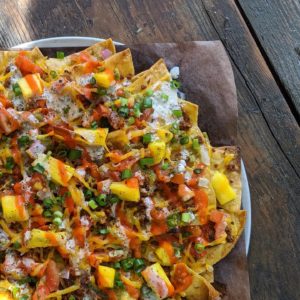
Nachos with pineapple, seitan, buffalo sauce, & ranch from Tucos Tacos Lounge
The Vegetarian Resource Group maintains an online Guide to
Vegan/Vegetarian Restaurants in the USA
and Canada.
Here are some recent vegan restaurant additions. The entire guide can be found
here: http://www.vrg.org/restaurant/index.php
To support the
updating of this online restaurant guide, please donate at: www.vrg.org/donate
Here are some new
additions to VRG’s guide (Note: Due to the COVID-19 pandemic many are doing take-out
and/or delivery now):
Blossoming Lotus Café and Juice Bar,
2122 NW Quimby St., Portland, OR 97210
Blossoming Lotus
Café and Juice Bar offers a variety of plant-based foods, from smoothies to
juices to green bowls. Green bowls feature a variety of vegetables including
kale, avocado and edamame. The smoothies and juices include ingredients with a
priority on various health themes. For example, the café offers a “heart
strong” smoothie, and a “resilience and immunity” smoothie. They also offer
dishes such as Mac and Cheese Bowl, Beet Crunch Bowl, Bibimbap, and more.
Dee’s Vegan To Go, 1540 West Blvd.,
Ste. 100, Charlotte, NC 28208
Dee’s Vegan To Go
restaurant is a family restaurant that strives to serve sustainable meals to
all families. They work hand in hand with local farmers in North Carolina. They
first opened back in 2016 at the Charlotte’s Regional Farmers Market. They even
work with artisans to help them run their bakery and café, completely served
with vegan ingredients. When it comes to what they have on their menu, you can
slurp up their homemade lemonade drinks or gorge on their sweet potato spice
cake desserts! For entrees they provide jambalaya, teriyaki “chicken,” and mac
and cheese. They also make an array of soups and sandwiches.
Earth Based Café, 329 Winchester
Ave., Martinsburg, WV 25401
Earth Based Café
offers various vegan renditions of American favorites. The expansive menu includes
gourmet burgers and hotdogs, such as the Slawdog with coleslaw. The menu also
contains subs and sandwiches, including the Buffalo “Chik’n” Sandwich. In the
mood for something light? Try one of the eight salads – such as the Moroccan
salad with greens, chickpeas, and mushrooms. Don’t forget to try one of the
various appetizers – including their popular Mini Belgian Waffles with Buffalo
“Chicken” Dippers.
Gegen, 5101 W.Sunset Blvd., Los
Angeles, CA 90027
Gegen is most famous
for their vegan burgers and fries. They also offer different vegan subs like
sausage, hot dog sub, and falafel subs. They even make most of their drinks,
from smoothies to chia seed rose water. Their breakfast items are the most
diverse part of the menu. They make anything to acai bowls, bagel with cream
cheese with tomato and basil, to no-bake protein balls. They also make their
own pizzas and provide plenty of gluten-free options.
Riley’s Vegan Sweets and Eats, 1233
W. Brons Ave., Peoria, IL 61604
Birthday Cakes,
donuts, brownies, cookies, cinnamon rolls, Oh my! Whether you’re looking to
satisfy your sweet tooth or bite into a dessert that tastes as good as it
looks, Riley’s Sweets and Eats has you covered. Their cruelty-free treats are
made from scratch with organic ingredients.
The Purple Mint, 6171 Mission Gorge
Rd., Unit 118, San Diego, CA 92120
The Purple Mint serves
many different options of Vietnamese entrées, starters, noodle soups, salads,
and vegan milk iced teas. One of their most popular entrees is the “black rice
pasta in coconut milk,” along with many of their dishes, most are made with
coconut milk for the flavor and extra creaminess in the dishes. They even have
vegan orange “chicken!”
With a casual vibe,
and laid-back ambience, some of the delicious vegan dishes they offer include
the signature Carnitas Tacos, which are filled with jackfruit carnitas, pico de
gallo, and vegetables. Another dish to try is the Chili van Cleef made with house
made seitan and soy chorizo chili. Other offerings include various tacos,
burritos, nachos, salads, and churros for dessert.
Vegan Picnic, 1323 Polk St., San
Francisco, CA 94109
Vegan Picnic offers
a variety of dishes from sandwiches to breakfast foods. The menu has
plant-based protein as a substitute for meat. The sandwiches range from hot
sandwiches such as chicken and steak sandwiches to cold sandwiches such as
caprese and “egg” salad. Further, breakfast foods include waffles and
breakfast burritos.
Zhu Vegan Kitchen, 220 Washington
St., Brookline, MA 02445
Zhu Vegan Kitchen
offers an array of entirely vegan Chinese, Japanese, and Thai food, with plenty
of gluten-free options as well. Main courses include General Tso’s Soy Protein,
Kung Pao Eggplant, and Sweet and Sour Soy Protein. Noodle and rice options
include Stir-Fried Udon and Pad-Thai. Don’t forget to try a dessert – such as
fried ice cream or a banana spring roll – on the way out!
Posted on
November 27, 2020 by
The VRG Blog Editor
By Reed
Mangels, PhD, RD
A recently
published study about fracture risk in non-meat eaters has received a lot of
media attention. Here’s what you need to know.
What is the study?
The study is
from the United Kingdom and was conducted by researchers at Oxford University
and the University of Bristol. Study subjects were recruited between 1993 and
2001 and were studied until 2016. About 55,000 men and women were included in
the study. At the start of the study, subjects were classified into 1 of 4
dietary groups based on their responses to a questionnaire which asked
questions like “Do you eat any meat?” The groups were meat eaters, fish eaters
(did not eat meat but ate fish), vegetarians (did not eat meat or fish, but ate
one or both of dairy or eggs), and vegans (participants who did not eat meat,
fish, dairy, and eggs). At the start of the
study there were 29,380 meat eaters, 8,037 fish eaters, 15,499 vegetarians, and 1,982
vegans.
Some subjects completed a similar
follow-up questionnaire in 2010. The majority of subjects had followed the same
diet for years before the start of the study. For example, 88% of fish eaters, vegetarians, and vegans had
not eaten meat for at least 5 years before recruitment, 85% of vegetarians and
vegans had not eaten fish for at least 5 years before recruitment, and 82% of
vegans had not eaten eggs or dairy for at least 3 years before recruitment.
During the follow-up period,
the occurrence of fractures was determined through use of the National Health
Service’s records. The study’s goal was to determine if there were differences
in fracture risks between vegetarians, vegans, and non-vegetarians.
What did it find?
Over the follow-up
period which averaged 17.6 years, there were 3,491 fractures – 566 arm
fractures, 889 wrist fractures, 945 hip fractures, 366 leg fractures, 520 ankle
fractures, and 467 other fractures. The researchers were not able to determine
how many fractures were due to trauma like auto accidents and how many were due
to osteoporosis (weak bones).
Compared with meat eaters, vegetarians and
vegans had a higher risk of total fractures and hip fractures and vegans had a
higher risk of leg fractures and of vertebral fractures. Vegetarians had a 25%
higher risk of hip fractures than did meat eaters while vegans had more than
twice the risk. No significant differences were seen between the groups in the
risk of wrist or ankle fractures or the risk of arm fractures after controlling
for body mass index (BMI).
Differences in BMI between the groups
account for some of the differences in fracture risk. Vegans tend to have a
lower BMI on average. A lower BMI has been associated with less dense bones
because bones are strengthened by weight-bearing exercise. If a person weighs
more, their bones do more weight-bearing. Additionally, some studies have found
increased risk of hip fractures with lower BMIs, possibly because of less fat
to cushion the hip when a fall occurs.
The vegans had lower average intakes of
calcium and protein from food. The average calcium intake of vegans was 591
milligrams per day, considerably below the approximately 1,000 milligrams per
day which was the average for the other diet groups. However, even when only
those study participants who had calcium intakes above the U.K. recommendations
were examined, the vegans still had a higher risk of bone fractures. The
differences in dietary protein and calcium intake do not account for all the
differences in fracture risk between the groups and the researchers were unable
to explain why differences in fracture risk persisted even after their data
were adjusted for differences in BMI and calcium and protein intake.
Additionally, there was a higher risk of
total fractures among vegans who were not very physically active and who had a
low BMI but vegetarians (not vegans) with a higher BMI had a higher risk of hip
fracture. There were a limited number of subjects who were in these subgroups
which makes it difficult to be confident that these results would hold in a
larger group.
What are the study’s limitations?
While the
investigators examined dietary calcium intake, they did not determine if there
were differences in intake of calcium supplements, nor did they investigate
vitamin D intake or status. Adequate vitamin D is needed to promote calcium
absorption. They also did not investigate vitamin B12 status or intake.
Inadequate vitamin B12 is associated with an
increased fracture risk.
Because of the observational nature of
this study, it is not possible to say if changes in vegans’ dietary or
supplement practices (such as increased calcium, vitamin D, vitamin B12, or
protein intake) could have affected their risk of fracture.
Are there practical implications?
This study
alerts vegans that they may be at increased risk for several types of fractures
including hip and vertebral fractures. Vegans should follow general
recommendations to promote healthy bones including:
Using fortified foods and/or supplements to meet
recommendations for vitamin B12,
Getting weight-bearing exercise.
Tong TYN,
Appleby PN, Armstrong MEG, et al. Vegetarian and vegan diets and risks of total
and site-specific fractures: results from the prospective EPIC-Oxford study. BMC
Med. 2020;18(1):353.
Posted on
November 27, 2020 by
The VRG Blog Editor
By Reed Mangels, PhD, RD
Did you ever wonder how much vitamin B12 you need
or how often you should take a supplement or use foods fortified with vitamin B12?
VeganHealth.org,
a website where vegan registered dietitians review the scientific literature
related to the health benefits of a vegan diet, has just updated their vitamin
B12 recommendations. The recommendations are based on the
Recommended Dietary Allowances (RDAs) and the more recent European Food Safety
Authority’s Adequate Intake value for vitamin B12. These recommendations
and the supporting
information detailing how the recommendations were developed are
based on the most current evidence and address many questions that consumers
and health care professionals may have about vitamin B12.
Posted on
November 27, 2020 by
The VRG Blog Editor
Get ready for a delicious Vegan
Essentials holiday! Whatever you’re celebrating this year, we’ll be carrying
all your favorite vegan roasts, sides, desserts, everything for the new year
and everything in between! We carry over 2,100 different vegan items from
hundreds of different companies! From all your favorite staples to small
companies sold exclusively through us, we have you covered and we ship
everywhere! And for the months of November and December, get 10% off your
orders with the code VRG! Everything is always vegan at Vegan Essentials. Use
this link: https://store.veganessentials.com/?Coupon=VRG
The Vegetarian Resource Group (VRG) is a non-profit organization dedicated to educating the public on veganism and the interrelated issues of health, nutrition, ecology, ethics, and world hunger. We have been helping health professionals, food services, businesses, educators, students, vegans, and vegetarians since 1982. In addition to publishing the Vegan Journal, VRG produces and sells a number of books.
Sign up for our newsletter to receive recipes, ingredient information, reviews of new products, announcements of new books, free samples of products, and other VRG materials.