Posted on
November 27, 2020 by
The VRG Blog Editor
Get ready for a delicious Vegan
Essentials holiday! Whatever you’re celebrating this year, we’ll be carrying
all your favorite vegan roasts, sides, desserts, everything for the new year
and everything in between! We carry over 2,100 different vegan items from
hundreds of different companies! From all your favorite staples to small
companies sold exclusively through us, we have you covered and we ship
everywhere! And for the months of November and December, get 10% off your
orders with the code VRG! Everything is always vegan at Vegan Essentials. Use
this link: https://store.veganessentials.com/?Coupon=VRG
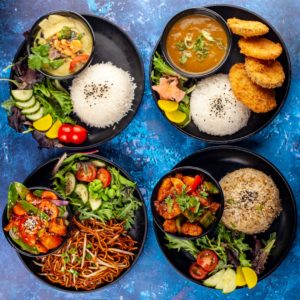
Vegan World: Featuring American junk food, Indian and Asian
starters, burgers, kebabs, boxes, pizza, side dishes, shakes, and desserts. https://www.veganworldtakeaway.co.uk/
Posted on
November 26, 2020 by
The VRG Blog Editor
According to CNN, “The company said Monday that it will test the new plant-based burger in key markets next year. After testing a plant-based burger in some international markets, “we have created a delicious burger that will be the first menu option in a plant-based platform,” said Ian Borden, president of McDonald’s (MCD) International. He added that the McPlant line could eventually include plant-based chicken and breakfast sandwiches, too.” For more info, see https://www.cnn.com/2020/11/09/business/mcdonalds-chicken-sandwich-delivery/index.html
Posted on
November 25, 2020 by
The VRG Blog Editor
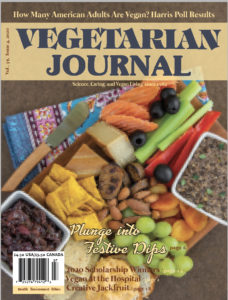
You can now read the latest issue of Vegetarian Journal on Kindle. Some of the articles in this issue include Heavy Lifting (a wide variety of vegan sweet and savory dips, gravy, and sauces for winter); You Don’t Know Jack (creative jackfruit recipes); Nutrition Hotline: Vegan Food During Hospitalization; Scientific Updates; Product Reviews; Harris Poll Results: How Many Vegans and Vegetarians in the USA; VRG’s 2020 Scholarship Contest Winners; and More!
Posted on
November 25, 2020 by
The VRG Blog Editor
By Lucia Rivera, VRG Intern
During the virtual 2020 Food &
Nutrition Conference & Expo, food policy and public health experts Alana
Davidson and Marsha Spence spoke to the issue of food insecurity among college
students in their session “Failing to Make the Grade: Food Insecurity on
College Campuses.” The goal of this session was to “educate RDNs about the
current literature on food insecurity prevalence and its effects on academics,
provide examples of programs on college campuses to improve food security, and
explain SNAP rules for students and how to increase SNAP participation among
this vulnerable demographic.”
The speakers began by discussing “Food Insecurity Rates Among College
Students in the US” and highlighting the most at-risk groups among college
students. “While there are no national data on how many students are food insecure,
campuses and states have been publishing shocking research on this issue over
the last few years. For example, a recent study of 86,000 students found 48% of
students surveyed reported food insecurity,” the speakers explained in their
abstract for the session. More specifically, however there are higher rates of
food insecurity among students at 2-year colleges than at 4-year colleges.
Furthermore, students who are Black, are Latinx, are single parents, have a
disability, are part of sexual or gender minorities, are from low income
backgrounds, are first generation college students, are at low wage jobs, or
are foster kids are more likely to be food insecure.
According to the speakers, coping strategies for food insecurity such as
buying the cheapest food, skipping meals, not paying bills, not purchasing
school supplies or medicine, and couch surfing are ineffective ways for college
students to address this problem. Instead, the speakers provided several
solutions that can be implemented to address food insecurity on college
campuses, including food pantries; food apps; gleaning and repackaging food;
having edible walkways and campus gardens; educating faculty, staff, and
students about food insecurity and available resources; and more.
Additionally, the Supplemental Nutrition Assistance Program (SNAP) is
being severely underutilized by college students, argued the speakers, as “the
Government Accountability Office also released a 2018 report that estimated two
million students were eligible for Supplemental Nutrition Assistance Program
(SNAP) but did not receive benefits.” There are many eligibility requirements
that students must meet to qualify for SNAP, which are updated every four years
through the Farm Bill. For example, if a student lives on campus and has a meal
plan, they are not eligible for SNAP. Students must also attend school more
than half-time and have specific living arrangements.
Davidson and Spence believe that outreach and initiatives to educate
students on SNAP and their potential eligibility is critical to solving food
instability among college students. This includes working with the Department
of Higher Education and Department of Children and Families to destigmatize
SNAP and dispel common confusion about SNAP eligibility.
Unfortunately, the speakers predicted the current pandemic will worsen
food insecurity among college students, especially since federal legislation
does not really address college food insecurity during the pandemic and many
students had their work hours reduced. Despite this, the speakers concluded the
session by emphasizing the work still needed to be done to address this
national issue and the way that SNAP can help do so.
Posted on
November 24, 2020 by
The VRG Blog Editor
The Vegetarian Resource Group is a vegan activist non-profit
organization that does outreach all-year-long. For example, VRG responds to the
public’s questions every day and sends literature free of charge to other
groups/individuals doing educational activities in schools, hospitals, camps,
restaurants, libraries, offices, etc. Our ability to continue doing this
depends on people like you! Your donations allow us to promote the vegan
message whenever we’re called upon for assistance. Please consider becoming a
monthly or quarterly donor to The Vegetarian Resource Group.
During these challenging times, thanks so much for your support.
You can donate online here: vrg.org/donate
Posted on
November 24, 2020 by
The VRG Blog Editor
By Reed Mangels, PhD, RD
From non-dairy milks and cheese to unchicken to burgers that taste like
meat, the food industry is capitalizing on the public’s interest in vegan and
plant-based foods. There’s a huge market for processed vegan foods. In July
2019, the U.S. total plant-based market value was estimated to be $4.5 billion.1
The same study found that retail sales of plant-based foods grew 11 percent in
the past year. 1 “Plant-based” is often a vague term. In this study,
it apparently referred to vegan and vegetarian products although most product
categories appear to be vegan.
Vegan or plant-based foods
are often promoted as healthy, as “cleaner” than animal -based foods, and as a
way of eating a purer diet. Others, however, are calling for avoiding vegan processed
foods, saying that they are “Frankenfoods” and that they violate Mother Nature.
Is there a middle ground?
Are processed foods the miracle foods that some claim or a sure path to
nutritional ruin? Stay with us as we explore these and other issues.
For starters, there is the
question of just what is a processed food? The UK’s National Health Service
provides this definition2: “A processed food is any food that
has been altered in some way during preparation. Food processing can be as
basic as freezing, canning, baking, or drying.” The Academy of Nutrition &
Dietetics3 echoes and amplifies this definition saying that processed
food “includes food that has been cooked, canned, frozen, packaged or changed
in nutritional composition with fortifying, preserving or preparing in
different ways.” So, anything from cooked dried beans to a veggie burger
containing heme produced with genetic engineering to a vegan dessert with 2 dozen
ingredients (most unpronounceable) is considered a processed food.
The Academy of Nutrition & Dietetics
proposes a classification system ranging from minimally processed foods to
heavily processed foods.3 Minimally processed foods could include a bag
of chopped vegetables or roasted nuts. It’s clear what the ingredients are in
these foods. Heavily processed (also called highly processed or ultra-processed)
foods undergo several processing steps, contain multiple ingredients, and may
contain artificial colors and flavors and preservatives. Examples of heavily
processed foods include some crackers, some breakfast cereals, frozen dinners,
and meat analogs. We’ll focus on heavily processed foods in this article.
Concerns with Heavily Processed
Foods
If you read the nutrition facts label on many vegan heavily processed
foods you’ll notice that not uncommonly they contain a lot of fat, sodium, sugar,
calories, and sometimes saturated fat. Often, they are as high or higher in
these substances than similar non-vegan heavily processed foods. Take frozen
pizza for example. A serving (5-ounces) of a popular vegan “pepperoni” pizza
has 410 calories, 17 grams of fat, 7 grams of saturated fat, and 830 milligrams
of sodium. The same serving size of non-vegan frozen pepperoni pizza has 375
calories, 19 grams of fat, 9 grams of saturated fat, and 912 milligrams of
sodium. Neither of these could be classified as a food to eat every day. Or
consider a vegan frozen dessert. A 2/3-cup serving has 340 calories, 29 grams
of added sugar, and 13 grams of saturated fat. Surprise – a similar dairy-based
product has the same amount of calories and saturated fat and slightly less
added sugar. Vegan does not necessarily mean healthy.
One issue to consider is
that heavily processed vegan foods used to be occasional treats. They were
expensive, harder to find, and, honestly, some just didn’t taste that good.
Thanks to demand, there are so many more vegan processed foods available and
many of them skillfully use salt, sugar, and fat to make them highly palatable.
Walk into almost any supermarket and you’ll find a selection of heavily
processed vegan foods.
This is not necessarily a
bad thing. It’s great to have options when you’re looking for a quick meal that
tastes like a well-remembered non-vegan convenience food. The problem comes
when these foods consistently replace the legumes, whole grains, vegetables,
and fruits that are the mainstays of a healthy vegan diet.
While prices have gone down
over the past twenty years, heavily processed vegan foods frequently cost more
than it would cost to make a similar food at home. Some may feel that the time
savings is worth the cost. Others may opt to use less processed foods like
canned beans, pre-cut vegetables, and quick-cooking pasta that cost less but
still save time.
Food manufacturers have
products to sell. They may promote heavily processed foods labeled as
“plant-based” or vegan as healthy choices. For instance, the ads may say, “eat
freely,” implying that you don’t need to consider the sodium, sugar, calories,
or fat in this vegan product. They may make it seem that these foods are what
you need to be a healthy vegan. Watch for label phrases like “high protein,”
“hearty” or “for meat lovers.” There are plenty of hearty sources of protein
and calories for vegans that are minimally processed.
Some heavily processed vegan
foods may use new techniques or ingredients. These processes or modifications don’t
have a track record of being consumed by humans. Is this a problem? It’s too
soon to know for sure. While many new ingredients enter the food stream without
incident, others are recognized as being problematic at some point. You may
remember Olestra which was marketed as a fat substitute in the 1990s. Once side
effects like diarrhea and malabsorption of some vitamins were reported,
Olestra’s popularity declined4 and today, it is banned by some
countries.
Benefits of Heavily Processed Foods
Heavily processed vegan foods have some attractive features. If you
don’t know how to cook, have a disability, or don’t have a lot of time or
energy, these products often require very little effort – reheat in the
microwave or oven or on the stove top. That’s a big advantage for those who
don’t have cooking skills or who have limited mobility. Results are predictable
– a frozen pizza will taste like a frozen pizza. It’s not like following a
recipe where you don’t have the ingredients the recipe calls for or don’t
really understand the directions.
For those with limited
cooking facilities, perhaps only having access to a microwave, heavily
processed foods make it possible to eat a meal that could be better
nutritionally than fast food or snack foods that don’t require any cooking.
When you’re traveling,
heavily processed foods can make it easy to have a decent meal, especially if
you look for products based on whole grains, vegetables, and legumes. You might
even find a lower sodium product. Frozen vegan burritos and canned soups have
been comforting foods when I’m in a motel room with no easy access to other
options.
Some of the ingredients on
the long ingredient lists that accompany heavily processed foods may be
vitamins and minerals that are added to the foods. Nutrients like vitamin D,
vitamin B12, and possibly calcium and iron can be low in vegan diets. Choosing
foods fortified with these nutrients is an alternative that some vegans choose
in place of using a vitamin-mineral supplement.
For new vegans, processed
foods often replace familiar non-vegan foods. Want something cold and sweet?
Vegan frozen desserts, while not necessarily healthier than their dairy-based
counterparts, can help to ease the transition to a vegan diet. And, if you’re
trying not to stand out as a vegan, eating a veggie burger or a sandwich of
vegan deli slices can help.
Based on our
limited observations, heavily processed vegan foods seem more likely to use
organic ingredients than similar animal-based products.
Practical Approaches
There are several approaches that you might choose when considering
whether or not to use heavily processed vegan foods. Each of these has
positives and negatives.
You might opt to never use these foods.
Positives:
You’ll avoid foods known to be full of sodium, fat, saturated fat, and sugar.
It’s likely your food costs will be lower. Potentially you’ll have less
packaging to dispose of. Avoiding these foods could be the incentive you need
to expand your cooking skills.
Negatives:
You may spend more time on food preparation, depending on which foods you
choose to replace heavily processed foods.
You could choose to use these foods occasionally
being aware of which ones are better choices.
Positives:
You can opt to use heavily processed foods selectively – when you’re in a
time crunch or in a situation where there aren’t other options. You’ll become
more aware of what you’re eating when you check labels for healthier options.
Negatives:
Most of the time you may be spending more time on food preparation, similar
to the person who never uses heavily processed foods. You’ll need to do some
research to identify better choices.
You might decide to use these foods fairly often
but combine them with healthier foods. For example, instead of eating two vegan
burgers, eat one burger with a salad and a sweet potato.
Positives:
You’re likely to spend less time on food preparation while still eating
some easy-to-prepare less processed foods. You don’t have to know how or be
able to cook.
Negatives:
Food costs are likely to be higher than for those using fewer heavily
processed foods. Although you’re reducing the amount of sodium, fat, and other
nutritional concerns that you’re eating, you can’t control this as much as you
can if you eat fewer heavily processed foods.
Depending on your situation, you might
move between all these options and that doesn’t mean that you’re doing
something wrong. Food choices are driven by many factors and there are many
ways to have a healthy vegan diet.
Alternatives to Heavily Processed
Food
Since our earliest days, The Vegetarian Resource Group has promoted
quick-and-easy meals. Many of our books feature simple recipes, relying on
basic techniques and unprocessed foods. Our website has a wealth of ideas for
simple meals.
Fresh fruits and vegetables
can be extremely easy to prepare. Just wash them and take a bite. If you prefer
to cook vegetables, you can easily sauté them in a little oil or water or steam
them in the microwave.
Canned beans (rinsed to remove some of the
sodium they’re processed with) can be seasoned and rolled in a tortilla or
mashed with a fork for an easy bean dip.
Potatoes and sweet potatoes can be baked or microwaved and topped with
canned beans or nut butter.
Look for processed foods
with only a few ingredients – a veggie burger made with grains, mushrooms, and
nuts, for example or a frozen entrée featuring brown rice, vegetables, and
beans.
The Food Industry
There are many companies and restaurants producing healthy whole vegan
foods. We hope that people will buy these products and support these
establishments. As a consumer, you can let companies and restaurants know when
you like their products. Write reviews, send in comments, and share your compliments
with them. If you’re concerned about the nutritional quality of a processed
vegan food, contact the company and let them know that you would be more likely
to purchase the product if it had less sugar, sodium, fat, or saturated fat or
had more whole food ingredients.
Conclusions
Ultimately the choice to use, limit, or avoid heavily processed foods
is up to you. We have many options available to us. Consider your health, your
budget, and other factors, as you decide which foods to purchase.
Posted on
November 23, 2020 by
The VRG Blog Editor
By Lucia Rivera, VRG Intern
Vegan advocacy comes in many forms for Dilip Barman, a
twenty-year vegan himself. For over 20 years Barman has worked with the
Triangle Vegetarian Society, based in North
Carolina. “I’ve been a vegan advocate for a long
time. What interested me in vegan activism, was just helping to get the word
out. But the nice thing about veganism is it’s appealing on so many levels.
It’s, as you know, good for the environment, the best thing you can do for the
environment,” Barman said.
One of the biggest
projects Barman helps lead as president of the Triangle Vegetarian Society is
the largest vegan Thanksgiving dinner in the United States. “During the
pandemic, I’m ramping up for our big event. We host the country’s biggest
vegetarian Thanksgiving. So we’re recrafting it for takeout. But normally, you
know, we have Thanksgiving, which keeps me very busy in November and late
October. We used to sell out the restaurant in less than two minutes,” Barman
said.
In addition to the
big Thanksgiving dinner and other potlucks, Dilip maintains a social media
account and sends out a newsletter for the Triangle Vegetarian Society. The
pandemic has also impacted the way that Dilip does vegan advocacy and education
as a Food for Life instructor, as healthy eating plays an important role during
a health crisis. “[At] Food for Life we’re evidence based and so we can’t
promise that if you become vegan, or whole food plant-based, you won’t get
COVID. But something like 94% of the fatalities, people who’ve died of COVID
have had underlying conditions like diabetes, or heart disease or cancer, and
obesity, and every single one of these can be largely prevented, managed,
reversed perhaps with the whole plant-based diet,” Barman said. “We can’t
promise you won’t get it. But if you are whole food plant-based, the chances of
you dying from it or having terrible outcomes are greatly diminished. And so
that’s one thing we’ve been doing to address COVID.”
Barman became a
Food For Life instructor after the local instructor in his area retired and
Barman’s wife suggested he apply. After submitting cooking videos and
demonstrating he was qualified for the job, Dilip was accepted and now “loves”
being a Food for Life instructor and teaching groups of around 15 about whole
food plant-based eating. Being part of this program has helped him change his
own perspective on veganism. “I was a vegan, [but] I wasn’t whole food
plant-based and I wasn’t necessarily healthy. It’s funny, when I’d go grocery
shopping, I’d always pick up a bag of potato chips, or corn chips or something.
And my wife pointed out before I even became an instructor, this is just empty
calories, this junk food, ‘why are you buying it?’ And I tell my students the
same thing. So I stopped,” Barman said. “Two big impacts [from working with
Food for Life] is that I do some cool activism in the schools and I started a
healthy snack program, which has been really exciting. And it’s impacted K-4
directly and indirectly, fifth through eighth graders, and the nutrition
education director of a school.”
As part of Food for
Life, Dilip also is involved with the So Many Cooks in the Kitchen show, which
is aired by the Plant Based Network. “It’s really neat, because I’m the orchestrator
and it’s really fun just kind of organizing all of us. And so, Food for Life is
one of the only groups that I’m super, super comfortable with. What I like
about it is we’re all so good. We all have different ways of teaching and we’re
all super knowledgeable, by definition, the way Physicians Committee selects
us. I love it and I love the fact that we reach people all over the world. And
I love that we’re putting together all these recipes. I love that we have a
kids program.”
Beyond the So Many
Cooks in the Kitchen kids program, Dilip works with children in other ways.
However, he noted, educating kids on vegan diets differs from his work with
adults. “You really have to be careful. when I go into the schools, and even in
our kids class Physicians Committee has a Food for Life kids class. With kids,
we don’t pass value. What I do in my classes is, I say, ‘I know something about
nutrition, but I’m going to share with you ways that I know that are healthy
eating, but always ask your parents what’s the best thing because I don’t know
you as well as your parents,’” Barman said. He also runs the Healthy Snack
Program, influenced by his work as a Food for Life instructor, which funds
healthy eating in schools where there are often kids facing food insecurity.
Dilip also was
Executive Producer for the documentary Code Blue, and regularly writes for
local papers and magazines about vegan eating. He also is the North American
Representative for the International Vegetarian Union. Although he balances his
time through so many varying causes and programs, Dilip finds that it all comes
down to teaching others. “One way [all my jobs intersect] is through my
daughter, because she’s a sixth grader, and we homeschool. She’s my priority
and where I spend most of my time. And she’s, in many ways, more ethical vegan
than I am. She’s really neat. So I guess it all comes together really in
teaching her and teaching other people. I love teaching.”
For those who are
not yet vegan, but want to develop a healthier vegan diet, Barman expresses the
need for good education. “If you’re not a vegan, I’d encourage people to find
out about it. Read any number of books, read the VRG [Vegetarian Resource
Group] VegetarianJournal, which is an excellent vegan magazine,
and join the Plant Based Network, watch So Many Cooks in the Kitchen. Take a
Food for Life Class, there’s so much so much good information out there. So
find out about it, and try to improve your diet. Understand that most doctors
don’t know much about this, but take charge of your own health and eat more
plants,” Barman said.
On the other hand,
Barman expressed the importance of gentle vegan advocacy, and meeting people
where they are. “If you are a vegan, try to be a better role model. I would
encourage people, if you’re vegan, to also focus on being a healthy vegan and
consider moving, you know, a little bit closer to whole food plant-based, which
means eating foods with minimal processing, that looks more or less the way
Mother Nature grew it,” Barman said. “Consider moving more towards a whole food
plant-based diet, limiting your fat and maximizing your fiber. So that you’re a
good role model, so you live for a long time, and so that you’re healthy.”
Posted on
November 23, 2020 by
The VRG Blog Editor
By Julia Stanitski, VRG Intern
Are you a teenager and worried about going vegan? When
changing your diet, it can be really tough dealing with the stresses of school,
parents, and friends. Here are some common questions that, as a teen, you may
have about transitioning to eating vegan. I’ll be answering them personally,
from my own experience, as I became vegan at 17.
My parents don’t agree with me going vegan. How do I
deal with this?
Sometimes, we wish our parents were more
supportive of our diet change. It can be hard for them to understand why you
are going vegan, as they may not even know what it means! If you have eaten
meat, dairy, and/or eggs for your entire life, suddenly not eating those foods
could be a huge change for them. The first thing I did was explain to my
parents WHY I wanted to go vegan, and made sure they understood the reasoning
behind it – my personal reasoning was the incredible short and long-term health
benefits.
Do not expect them to automatically make
vegan meals for you. When you start, you may have to make many meals yourself.
This can be a big adjustment, but it definitely helps your parents get used to
you eating differently.
It may take them a long time to “agree” with
your decision. It is your choice what goes into your body, but for me, it was
very important to remember to be considerate of my parents’ feelings. Many
cultures have traditional foods your parents may be worried about you not
consuming. Online, there are vegan recipes for almost every cultural dish that
you can think of and try out!
What if my friends make fun of me for going vegan?
I have had a lot of experience with backlash
from friends about my diet. It can be very hard to deal with, and hard to
understand why they would make fun of you for eating differently – but it
happens. We have to explain to them why we choose to eat this way. YOUR
reasoning, what you are most passionate about, will help them understand the
most. It may be something they have never experienced before, so it is okay for
them to be confused.
Making fun of you is something different
and more serious – explain you would really appreciate if they respected your
decision, and did not mock you. Tell them they can ask you any questions they
may have about being vegan, too, as they might actually be interested in it at
some point.
I personally have had friends that just think
vegans eat vegetables or salads, and they poke fun at that. This simply isn’t
true, but they may not know exactly what can be vegan and what can’t – show
them the huge variety of food you can eat! Eating vegan is not just chomping on
“rabbit food,” as many like to say – just show them the reality.
When I plan on going out to eat with friends, what do
I order?
When you go out with your friends, what you
order depends on the restaurant you go to. Whenever my friends want to eat out
at a restaurant, first I try to recommend 3 or 4 options of places I know that have
vegan dishes. Out of those choices, my friends will normally like one or two of
them and we end up going there.
Always look at online menus beforehand. Then,
you can determine if they have vegan options, or dishes that you can ask to be
made vegan. For example, there may be a Mediterranean Veggie Sandwich that has
veggies, feta, hummus, and olives. This could easily be vegan if you asked them
to prepare it without the feta cheese! And don’t worry, you aren’t bothering
the waiter with your requests – they’re used to it!
What do I do if I accidentally eat something that
isn’t vegan?
Everyone makes mistakes! It is totally fine if
you accidentally eat something not vegan – you will be okay. There have been
many times when I misread labels on the back of food items, forgot to ask the
ingredients of something, or felt bad saying no when someone made me something
not vegan to eat. Over time, this gets much easier and 1) you get used to
reading labels better to avoid the ingredients of dairy, egg, and meat, 2) you
remember more often to ask what is in food, and 3) as time goes on, more and
more people will recall that you are vegan and will not offer you non-vegan
items.
I am going to a friend’s house. What do I eat when I’m
there?
When I go over to a friend’s house, I always
bring food. For example, if I know I will be there for most of the day, I will
bring at least one big meal in a lunchbox with a bunch of snacks, too. If I
forget to bring my food, I try to stop at the grocery story on my way there, or
offer to go to a restaurant I know has vegan options with my friend. This makes
it easier to not feel the pressure of having to eat non-vegan food at their
house if you get hungry.
After your friends get used to you eating
vegan (and understand what you can eat), they may realize they have vegan food
in their house. For example, peanut butter, hummus, or fruit. These are things
they may offer to you if they know you can eat them!
Will my dining hall at college have vegan options for
me?
Every dining hall will vary from school to
school. It is best to contact whoever is in charge of Food Services at your
college to ask what vegan food is available for you. Most colleges are very
accommodating!
It would also be great to find someone who is
vegan at your college, and has experience going to the dining halls. You could
find someone like this by contacting your school’s vegetarian or vegan
extracurricular club, perhaps.
My parents make dinner for the whole family every
night. How do I eat something separate without being disrespectful?
In my experience, I felt really bad for not
eating my mom’s homemade meals. She spent so much time on preparing them, so
how could I not eat them? I realized I would begin prioritizing my own health
over the home cooked meals, and I explained that to her. I would make my own
meals sometimes, and then I would also try to accommodate some of her meals
into mine. For example, if she were making pasta with meat sauce, I would
kindly ask her to leave out some of the pasta for me so I could eat it with my
own sauce. Or, if she were making tacos, I would still use the same tortillas,
salsa, lettuce, corn, etc., but buy vegan taco meat to use with mine instead.
I think as long as you tell your parents you
are not trying to be rude or disrespectful toward their cooking, they will
understand.
I don’t have a lot of money to spend. How can I afford
vegan food?
Vegan food does not have to be expensive! Many
people think it is, but if you purchase the right foods, it can be very
budget-friendly. My 1st tip is to decrease the amount of times you
eat out at a restaurant, as the cost adds up. The 2nd tip is to buy less
processed foods. The more fruit, veggies, legumes, and grains you eat, versus
vegan ice cream and junk food, the more money you save. My 3rd tip is to find
out what stores have the cheapest prices of what you purchase regularly. I have
three major grocery stores near me, and found one in particular has awesome
sales on fresh fruit and veggies – I always go there! Lastly, the 4th
tip is to buy in bulk. I get tons of my shelf-stable items (like brown rice,
canned beans, quinoa, seeds, etc.) at Costco, where I can get a high amount of
the food for a lower price.
I normally pack my lunches since I am out of the house
during that time. What do I pack?
Pack anything you like! A lot of my lunches look
like some sort of sandwich (peanut butter and jelly, hummus and veggie, or a
veggie burger) with a few sides. These are range of veggies with dip, chopped
fruit, crackers, homemade baked goods, applesauce, and more. Choose what is
easy to make in the morning and is transportable. It is a great idea to invest
in a big lunch box, heavy duty Tupperware containers, and a thermos for hot
meals.
How do I explain to my family and friends what I eat
now that I am vegan?
Your family and friends may not know what vegan
means. You can tell them you no longer eat any animal products – that’s dairy,
meat, eggs, honey, and whatever else you have decided to exclude. You slowly
can show them what you now like to eat now. Also, point out what foods/dishes
they have seen you typically eating in the past that you will not be eating any
longer. This will help them to understand your diet and also help them remember
what foods to offer you.
We hope these FAQs were helpful. As you can see, becoming
vegan may seem difficult, but you will get through the tough parts. For more
information, see https://www.vrg.org/teen/
Posted on
November 20, 2020 by
The VRG Blog Editor
Due to the generosity of an
anonymous donor, The Vegetarian Resource Group each year will award $20,000 in college
scholarship money to graduating U.S. high school students who have promoted
veganism/vegetarianism in their schools and/or communities. Vegetarians do not
eat meat, fish, or fowl. Vegans are vegetarians who do not use other animal
products such as dairy or eggs.
One award of $10,000 and two awards
of $5,000 will be given. Entries may only be sent by students
graduating from high school in spring 2021. Deadline is February
20, 2021. We will accept applications postmarked on or before February
20, 2020. Early submission is encouraged!
Applicants will be judged on having
shown compassion, courage, and a strong commitment to promoting a peaceful
world through a vegan/vegetarian diet/lifestyle. Payment will be made to the
student’s college (U.S. based only). Winners of the scholarships give
permission to release their names to the media. Applications and essays become
property of The Vegetarian Resource Group. We may ask finalists for more
information. Scholarship winners are contacted by e-mail or telephone. Please
look at your e-mail.
The Vegetarian Resource Group (VRG) is a non-profit organization dedicated to educating the public on veganism and the interrelated issues of health, nutrition, ecology, ethics, and world hunger. We have been helping health professionals, food services, businesses, educators, students, vegans, and vegetarians since 1982. In addition to publishing the Vegan Journal, VRG produces and sells a number of books.
Sign up for our newsletter to receive recipes, ingredient information, reviews of new products, announcements of new books, free samples of products, and other VRG materials.