Posted on
November 13, 2020 by
The VRG Blog Editor
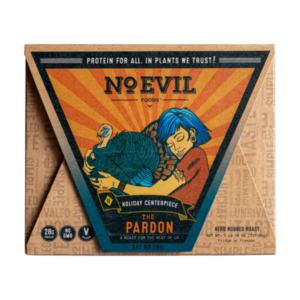
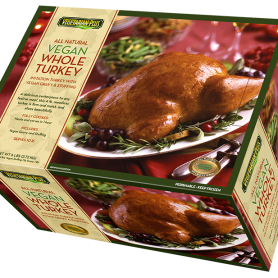
Are you looking for some alternatives to Turkey this Thanksgiving? Fortunately, there are many options today.
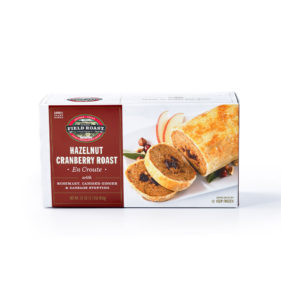
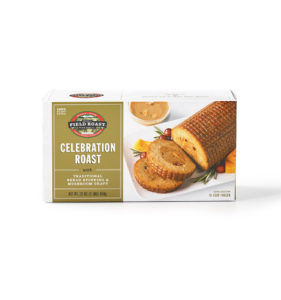
Field Roast offers these choices: 1. Celebration Roast with Traditional Bread Stuffing and Gravy – made with fresh onions, celery, cranberries and butternut squash. 2. Hazelnut Cranberry Roast en Croute – a rich, hazelnut-infused grain meat stuffed with Field Roast sausages, crystallized ginger, cranberries and apples – wrapped in a savory puff pastry. It’s even Toaster Oven friendly! See: https://fieldroast.com/products/field-roast/
Posted on
November 12, 2020 by
The VRG Blog Editor
The Vegetarian Resource Group maintains an online Guide to
Vegan/Vegetarian Restaurants in the USA
and Canada.
Here are some recent vegan restaurant additions. The entire guide can be found
here: http://www.vrg.org/restaurant/index.php
To support the
updating of this online restaurant guide, please donate at: www.vrg.org/donate
Here are some new
additions to VRG’s guide (Note: Due to the COVID-19 pandemic many are doing take-out
and/or delivery now):
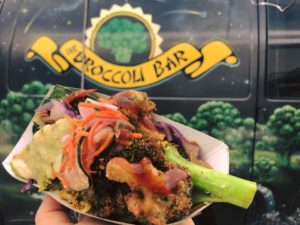
Broccoli Bar, 690 Fulton St.,
Brooklyn, NY 11217
The Broccoli Bar is
a modern restaurant. They represent “Vegan Power!” with their broccoli-themed
takeout menu and awesome looking food. Try out their rice dumplings, tempura
stir-fry, BBQ pakora, and more!! The owners, from Vermont, made The Broccoli
Bar to have street-food inspired offerings that come out to customers Uber
fast, like nothing they have had before. Check this place out!!
Eden, 32860 Pacific Coast Hwy., Ste.
1, Dana Point, CA 92629
Eden offers many
different Asian cuisines such as Chinese, Japanese, and Thai. Their menu is
quite diverse. They have spring rolls, soups, sushi, cabbage salads, Pad Thai,
Kung-Pao Vegan Chicken, Thai Style Vegan Beef, and so much more.
Four different types
of vegan muffins is only the beginning at Jinglepear Deli! Customers can also
order breakfast items, sandwiches, and soups. Grocery items are also sold!
Plant Cakes, 410 South White St.,
Wake Forest, NC 27587
Your taste buds will
never get bored at this place! There are so many different flavors and types of
vegan baked goods, the opportunities are endless. You can get anything from
cookies, donuts, cakes/cupcakes, cheesecakes, and pies. Some of their unique
flavors consist of lemon blueberry cake, pumpkin cinnamon cakes along with a
pumpkin patch cheesecake, mini carrot cupcakes, savory coconut “bacon”
doughnuts, and festive churro doughnuts. This is only a small fraction of their
diverse menu. Most of their concoctions are completely unique to their
bakeshop, making it a very popular place to get vegan wedding cakes.
Supernova Vegan, 7909 SE 13th Ave.,
Portland, OR 97202
Supernova Vegan
features delicious vegan food such as cheese-less mac-and-cheese burritos and
sandwiches like The Hercules Bahn Mi with marinated tempeh and mint. Don’t
forget about their plates such as the South Star that comes with a cheesy sauce
over pasta with broccoli. Their restaurant also has a cute bakery, Ritual
Sweetcraft, selling donuts, cupcakes, and coffee.
The Vegan Yacht, 2000 Southern Oaks
Dr., Austin, TX 78745
Having the best
vegan burrito and bowls as voted by the Austin Chronicle, The Vegan Yacht is
the place to go for delicious, hearty, grilled vegan burritos and other Mexican
foods. They transitioned from a trailer to a lively and colorful restaurant
with indoor and patio seating, and with the option to order online for pickup.
You can try the original Freeto Burrito which is filled with organic tempeh
chili, avocado, and vegan cheese, or if you are in the mood for a bowl you can
try the comida bowl which is made of Mexican soy curls, organic basmati rice,
and lots of organic vegetables.
The Wayside Café & Deli, 500
Capitol Way S., Olympia, WA 98501
This restaurant
offers a warm and cozy atmosphere, as well as a diverse menu including healthy
food, junk food, comfort food, desserts, and a rotating draft selection, all at
affordable prices. All sauces, “meats”, and desserts are produced from scratch using
quality ingredients. You might want to try their Cauliflower Wings, Cajun Chikn
Sandwich, BBQ Bowl, or Mac & Cheez. Every single item on the menu has rave
reviews, so make sure to drop by if you’re ever in Olympia!
Vegan Ahava, 400 College St., New Haven,
CT 06511
A life-long vegan,
Poreyah Benton is the owner of Vegan Ahava food truck and strives to give a
wide variety of locally sourced vegan options that fits every palette. She was
born and raised in Israel, and offers dishes such as falafel and Tabbouleh.
However, her truck also serves everything from vegan po’ boys to vegan Philly
cheesesteaks. Other entrees include their signature lasagna, macaroni and
cheese, and vegetable quiche – Vegan Ahava turns America’s favorite dishes into
a healthier, vegan alternative. Not only are there numerous lunch and dinner
options, but Vegan Ahava also offers an all-day breakfast consisting of
waffles, biscuits, scrambled tofu, and more. Don’t forget to try their famous
fresh-pressed lemonade while you’re there! The menu of Vegan Ahava is
constantly changing, allowing regular visitors to constantly gain new
experiences.
Word of Mouth Food Truck, Los Angeles,
CA 91605
Word of Mouth Food
Truck is a vegan’s dream! They offer Burgers, fries, mac and cheese, chicken
sandwiches, grilled cheese, and the list goes on. If you’re looking to try
vegan options outside of the Impossible burger or Gardein chicken patty, Word
of Mouth offers their own from-scratch products such as seitan, cheese and
veggie patties. If you’re looking for Instagram worthy, comfort food that also
vegan and tastes great be sure to check them out!
Posted on
November 11, 2020 by
The VRG Blog Editor
By Audrey Hunt, VRG Intern
Located
right in the middle of Anchorage, Alaska lays a small community of restaurants
with vegan and vegetarian menus. Middle Way Café is one of many that I tend to
visit occasionally. The small, but busy café has been open since 1994. They
opened with their mission being, “Contribute to a healthy, balanced, and
sustainable life through good food and drink.” First impressions include that
the atmosphere is quite welcoming and provides a warm feeling. The light orange
painted walls, the hanging wall lights, and local Alaskan art decor brings the
café to feel like a home. When walking in you will always find somebody
studying on a laptop or reading a book at a table. Now a days, most people have
decided to go the Grubhub route, and ditch the dine-in due to the coronavirus
pandemic. Besides that, the restaurant always stays busy from the morning to
late lunch.
Middle Way Café is known to have one of the most extensive vegan menus in Anchorage; making it a common hang-out spot for most plant-based eaters. When going into this food review, I wanted to really try everything that they had to offer. I also invited my sister, Ali, (a non-vegan/vegetarian) to help me review the items. I ordered a variety of different dishes on their vegan menu such as the Red Devil beetroot cake, their gluten-free and vegan chili with multigrain bread, their vegan “Middle Way Café Reuben,” the Baja bowl, their vegan lentil burger, the vegan breakfast burrito, and their famous “Summer Breeze” smoothie.
Dessert is first! Starting with the Red Devil beetroot cake, it is made vegan and gluten-free (as is most of their desserts). It won high points for presentation. It is a clean cut and very appetizing looking dessert. Their desserts in general, are always nice and moist, and this particular one was exceptional. It was simple, but also rich. All in all, it was a well-rounded and super chocolatey dessert. From a non-vegan stand-point, it was described as having a slight flavor after taste. Other than that it was given a solid 7.5/10.
Next was the vegan chili with the multigrain bread on the side. For a take-out soup, the presentation was rated high, along with it still staying hot after the drive home. More than anything else, the flavor was immaculate. It is made with spicy Cajun spices that were the perfect amount of heat to warm me up on a cold afternoon. It had a beautiful color, between the squash, carrots, and celery, I definitely recommend this perfect fall comfort food. My sister and my grandpa who are both non-vegetarian, also loved the flavor of the chili. Overall, it was rated an 8.2/10.
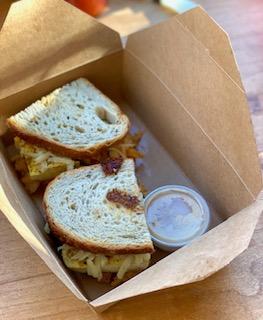
Next up, we tried the vegan “Middle Way Café Reuben.” I was most excited to try this one because a Reuben sandwich is something I haven’t been able to eat since I went vegetarian. The Reuben was made with spiced curry tofu with sauerkraut and vegan Thousand Island dressing on rye bread. It had a beautiful color with the sauerkraut and tofu put together. Most importantly, the flavor was to die for. I could say it was one of the best vegan sandwiches I’ve had. Even people who aren’t that fond of tofu, including my sister, could take down a sandwich like this. The sourness of the sauerkraut with the curry spices in the tofu complimented each other very nicely and made a great, tangy lunch. Overall, it captured the traditional Reuben without the meat! Its total rating was an 8.5/10.
Next was the Baja bowl, which had everything you needed in a well-balanced meal; however, it was the simplest item on the menu. It’s made with a generous serving of black beans, brown rice, lettuce, tomatoes, homemade cashew nacho cheese, and vegan sour cream. All the ingredients came together nicely, and it is the perfect meal when you are hungry and need something to fill you up. The nacho cheese made all the difference when it came to the flavor factor. Spicy, but also creamy when placed with the vegan sour cream. Overall, it was given an 8/10.
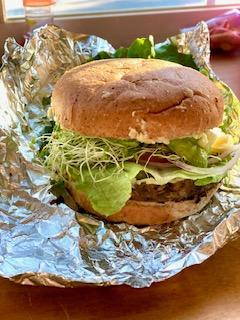
The lentil burger was next, which was the highest rated item! It was so good that I didn’t even come home with leftovers. Both my sister and I described it as having a “Thanksgiving” flavor to it. “The lentil patty reminds me of stuffing a little bit, and I love stuffing,” Ali said. The lentil patty was on the softer side, but it was served with vegan mayo, sprouts, tomatoes, and lettuce on a whole wheat bun. It was a definite recommend and get again. Between its presentation, the flavor, and the overall experience it received a 10/10.
The vegan breakfast burrito was a classic hardy breakfast that you will find many early risers getting at Middle Way. However, the flavor wasn’t entirely there and I felt like it could have been better with some seasonings or perhaps a sauce on the tofu on the inside. Other than that it came with a great presentation, and was perfectly filling. The burrito was made with spinach, tofu, scallions, vegan mozzarella, and black beans served with a side of Pico de Gallo. “It’s a tad bland but definitely not bad,” said Ali. Overall, the burrito was given a 7.3/10.
Lastly, the “Summer Breeze” smoothie is on
the menu. Middle Way Café has always been a favorite place to purchase smoothies.
I have to get one every time I go there, and over half the time, it is a
“Summer Breeze.” The smoothie is made with banana, strawberries, and orange
juice. All their smoothies are juice-based, making them a tart and sour tasting
smoothie, a perfect drink to perk you up in the morning. I never have any
complaints about their fruit smoothies. I am a sucker for them, along with my
whole family. This one is for sure a 10/10 and my most recommended beverage on
their menu.
Stumbling upon a vegan food joint is hard
to come by in Anchorage; however, restaurants offering vegetarian/vegan menus
have been growing. It’s always a treat to find a restaurant like Middle Way
Café. Though not all vegetarian, it provides extensive options for a vegan or
vegetarian. If you want to learn more about Middle Way Café’s menu, just visit
them at this link and try them out for when you come to Alaska!
Posted on
November 11, 2020 by
The VRG Blog Editor
Reviewed by Clarissa Hauber, VRG Intern
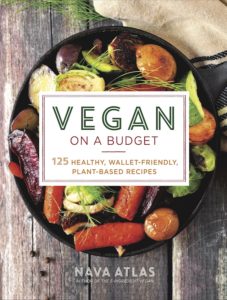
Nava Atlas is a New York-based artist, illustrator, and
cookbook creator. Her latest cookbook – Vegan
on a Budget – contains 125 low-cost, generally simple recipes.
The book begins
with tips for becoming a wallet-friendly vegan including how to shop smartly in
the supermarket, looking for coupons online, handling those expensive natural
foods stores, and more. For those who are beginning their vegan cooking
journey, she provides an in-depth list of essential ingredients, as well as an
entire chapter dedicated to basic recipes.
The first chapter
is dedicated to soups and stews, including Sweet Potato & Black Bean, Ramen
Noodle, and some vegan renditions of American favorites, including Broccoli
Cheddar and Two-Potato. I opted for trying the Quick Lentil & Kidney Bean
Curry Soup. I am glad I did – my nonvegan family loved this one. It was fast,
filling, and provided me nights of delicious leftovers.
Chapter two
involves a variety of skillets and stir-fries. In the mood for something light?
Try the Stir-Fried Collard Greens with Cabbage & Carrots or the Quinoa
& Cauliflower Pilaf. Heartier options include the Barbecue-Flavored Tofu
& Chickpea Bowl. Having made this myself, I can confidently say that this sweet
and savory dish is absolutely one to cook again.
The next chapter
is all about cozy casseroles and baked dishes – perfect for colder seasons –
including Vegetable & Chickpea Potpie, Roasted Root Vegetables with
Brussels Sprouts, and Not-Just-for-Holidays Green Bean Casserole.
Are you tired of
eating the same lunch every day? Try one of the various lunch options,
including Portobello & Seitan Cheesesteak Sandwiches, Barbecue Flavored
Lentil Sloppy Joes, or Mini Tortilla Pizza.
Breakfast ideas
include a healthier Whole Grain Bowl, Chickpea Omelets, and Southwestern Tofu
Scramble – or consider treating yourself with the French Toast Casserole. Finally,
do not forget to look at the dessert chapter, where you can find various
cookies, cobblers, and cakes, perfect for topping off any meal.
Vegan on a Budget (ISBN
978-1-4549-3697-8) is a 213-page book. It is published by Sterling Epicure and
retails for $24.95. Order this book online or at your local bookstore.
Posted on
November 10, 2020 by
The VRG Blog Editor
Get ready for a delicious Vegan Essentials holiday!
Whatever you’re celebrating this year, we’ll be carrying all your favorite
vegan roasts, sides, desserts, everything for the new year and everything in
between! We carry over 2,100 different vegan items from hundreds of different
companies! From all your favorite staples to small companies sold exclusively
through us, we have you covered and we ship everywhere! And for the months of
November and December, get 10% off your orders with the code VRG! Everything is
always vegan at Vegan Essentials. Use this link: https://store.veganessentials.com/?Coupon=VRG
Posted on
November 10, 2020 by
The VRG Blog Editor
By Anayeli Camacho, VRG Intern
As one of many students that had the privilege of graduating
High School in the Class off 2020, predicting the future seemed impossible. The
world we were coming into decided to erupt. Life began to change for almost
everyone. Underneath all the confusion there was always hope for me with my
internship at The Vegetarian Resource Group. As a virtual intern, I had the
opportunity to participate in writing for an organization that carries shared
beliefs of knowledge and growth regarding health while being confined in a
mayhem filled world. This provided me with an outlet and a form of expression
during a difficult time in my life.
During my VRG internship, I interviewed a
woman I hold close to my heart, a Vegan restaurant owner that established her
blog then turned it into a restaurant. Stephanie Rich somehow maintained the
flow and growth of her restaurant during the pandemic. I had the privilege of
interviewing and understanding her mindset during all the chaos. One thing she
said to me will always find its way into my mind. “Life is a monkey bar. Never
let go of one hand without the other already placed.” This gave more depth than
she could have anticipated. I turned it to the bars being knowledge and growth,
me still being the monkey, but my arms being my desires. As I learned with this
internship—Knowledge and expansion are a choice. You must have the desire to
find more, feel more, and live in unpredictable ways to keep it moving. If not,
you are faced with the possibility of remaining stuck and inevitably falling,
only to start again never reaching the end. VRG operates on knowledge and
research. Being a part of this and seeing how broad and deep growth regarding
health can be, changed my entire perspective of life. We had a choice during
Covid-19, to change our outlook of life and reach higher grounds in the
unknown, or remain still and fear the dark. This quote was said to help me
understand—life is unpredictable in fascinating ways.
As an intern for
one of the most, in my personal opinion, groundbreaking organizations, I had
the pleasure of talking to people that conduct life in this mindset. The
unknown territory, the doubts that society could cast on being a vegan can
frighten and push back the possibility of making that life choice. The
Vegetarian Resource Group spreads knowledge and understanding. Conducting
polls, researching, and consulting with youth and like-minded professionals to
spread the understanding that—change is good. The search for truth and the
spread of this truth is what helps you to make these changes. Without fear of
the nutritional deficiency that a few still love to scream about, being
presented with people of this mindset allowed me to broaden my change and
evolve.
Life can turn and
change in drastic ways. But even amid all the disarray during the pandemic (and
other times) lies growth and expansion. It is our choice to find these truths
and wisdom. With my internship at VRG, I found more than I could have hoped.
Admiration lies for this organization that decided to spread understanding and
expansion rather than opinions and stillness.
Posted on
November 09, 2020 by
The VRG Blog Editor
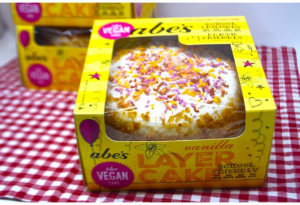
Abe’s is
known for their vegan muffins and pound cakes. Now they are offering three
Celebration Cakes: Vanilla, Carrot, and Chocolate. Treat yourself to one this Thanksgiving!
Posted on
November 09, 2020 by
The VRG Blog Editor
Reviewed by Charles Stahler
Richard Schwartz has been promoting Judaism and
vegetarianism, for almost forty years, since the publication of his book aptly
named Judaism and Vegetarianism in
1982. Richard uses his books as a “business card,” so he can advance the cause
of vegetarianism in media ranging from The
New York Times to The Jerusalem Post
to Mad Magazine. Unlike many
influencers, Richard and his publisher Martin Rowe/Lantern Publishing’s goals
are not fame and getting rich, but promoting ideas they consider important.
Not all Jewish
people or those in or outside of the vegan movement will agree with the
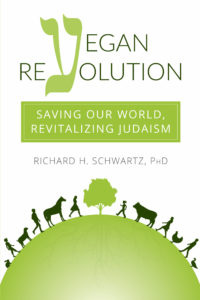
statements in their newest book the Vegan
Revolution, Saving Our World, Revitalizing Judaism. However, for an
overview of ideas related to Judaism and veganism, this is a good start, and
then you can explore more in depth topics that pique your interest. Since
Christianity and Islam have their roots in Judaism, though they diverged in
very different ways, the book would be helpful to those interested in those
other religions in giving a starting point.
Many people see
religion as a way to promote a better world and become a better person.
Religion is also often used to justify your being above others, whether it be
economic or political, and even extending to slavery and killing. Religion for
both sides generally means community, traditions, comfort in bad times, a way
to overcome issues such as addiction, and celebration in good times, ranging
from birth to wedding to death. As humans, most of us, including atheists, generally
use our beliefs for all of this.
Richard starts with the idea that G-d’s original diet in the
Garden of Eden was vegan.
Even religious people that believe in a strict
interpretation of the bible would have to agree with this. Richard then is making
the case how this is the diet that G-d really wants us to follow for health,
compassion, respecting G-d’s creatures, and environmental reasons. Eating
animal products becomes a concession to man and woman’s weakness, not a
command. According to Rabbi Kook, first chief rabbi of pre-state Israel, and
others, the Messianic period would be vegetarian, based on Isaiah’s prophecy
that “a wolf shall live with a lamb… and a lion, like cattle, shall eat
straw… They shall neither harm nor destroy on all my holy mount.” The two
ideal times in Jewish thought are vegan– The Garden of Eden and the Messianic
period. Richard makes his case about health, the environment, world hunger, and
treatment of animals, and how all these are related to the Torah, Jewish thoughts,
and Jewish teachings throughout the ages. He gives opinions on how Jewish
holidays are connected to veganism, and a vegan view of Biblical Animal
sacrifices. A chapter talks about use of leather ritual objects such as
tefillin (used when praying at times) and mezuzot (on Jewish doorposts). He is
trying to strike a compromise, which may not make strict vegans happy, but
reminds people that veganism isn’t the religion, but veganism is a way to
practice your religion. For vegan activists out there, understanding religious
ideas, can be an additional method to promote their cause. For religious
people, veganism can be another way to live their religious beliefs.
The Vegan Revolution (ISBN:
978-1-59056-627-5) is a 230-page book and can be purchased at your favorite
online retailer or at lanternpm.org/books/vegan-revolution.
Reviewed by Charles Stahler
Posted on
November 06, 2020 by
The VRG Blog Editor
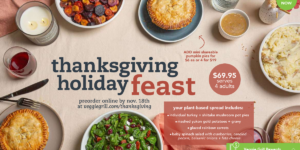
If you live near a Veggie Grill
location, you may want to order their Thanksgiving Feast (pre-orders continue
through November 18, 2020 and can be picked up on November 24-25, 2020). The
menu offering (serves 4) consists of:
Individual ‘turkey’ and mushroom pot pies
Mashed Yukon Gold Potatoes & Gravy
Glazed Rainbow Carrots
Baby Spinach Salad with Cranberries, Candied Pecans, Balsamic Onions, and
Feta Cheese
The Vegetarian Resource Group (VRG) is a non-profit organization dedicated to educating the public on veganism and the interrelated issues of health, nutrition, ecology, ethics, and world hunger. We have been helping health professionals, food services, businesses, educators, students, vegans, and vegetarians since 1982. In addition to publishing the Vegan Journal, VRG produces and sells a number of books.
Sign up for our newsletter to receive recipes, ingredient information, reviews of new products, announcements of new books, free samples of products, and other VRG materials.