Follow The Vegetarian Resource Group on Instagram!
Posted on
November 06, 2020 by
The VRG Blog Editor
By Rissa Miller, Senior Editor Vegetarian Journal
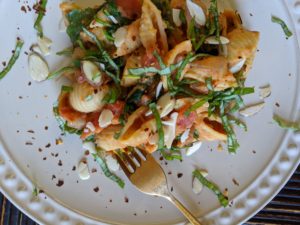
Elegant dinner doesn’t have to be complicated. This meal comes together with the whir of a blender and some boiled pasta. The flavors of fall meld perfectly with the savory smokiness of paprika and fire-roasted tomatoes.
1 box pasta of choice
Smoky Sweet Potato Sauce:
1 cup cooked, peeled sweet potato (also can use canned sweet potato, pumpkin or butternut squash)
15-ounce can white beans, rinsed and drained
1 head roasted garlic (see note below)
1/4 cup plain, unsweetened vegan milk
2 Tablespoons nutritional yeast
1 teaspoon dried sage
1/2 teaspoon dried thyme
Splash of liquid smoke (optional)
Pinch ground white pepper
Pinch red pepper flakes
Pinch ground nutmeg
Salt, to taste
15-ounce can fire-roasted, chopped tomatoes
1 red onion, cut into half moons
2 teaspoons olive oil
4 cups fresh arugula (baby kale or spinach also work)
To serve- sprinkle with extra red pepper flakes, chopped fresh basil, sliced almonds, or chopped walnuts/pecans
Cook pasta according to package directions. Drain and set aside.
In a blender or food processor, combine sweet potato, roasted garlic, milk, nutritional yeast, white beans, sage, thyme, liquid smoke, white pepper, red pepper flakes, nutmeg, and salt. Purée until smooth then pour into a large saucepan. Add canned tomatoes with juices and warm, covered, over low heat.
In a skillet, saute sliced red onion in olive oil until lightly browned, about 3-5 minutes. Turn off heat, and stir in arugula to wilt. Add onions and greens to sweet-potato-tomato sauce. Pour over cooked pasta.
Serve warm topped with red pepper flakes, chopped fresh basil, sliced almonds, or chopped walnuts/pecans.
To make sweet potatoes: Thoroughly wash 1 medium sweet potato, pierce with a fork 4-5 times, and place on a microwave-safe plate. Microwave on high for 4 to 5 minutes until soft. If needed, heat 1 minute more at a time until tender.
To make roasted garlic: Roasted Garlic can be made a day or two in advance and stored in the fridge. Preheat oven to 400. Slice 1/4 to 1/2 inch from the top of the cloves and peel any loose papery outer layers from the bulb. Place bulb in a piece of foil. Drizzle with olive oil and season, if desired with salt and pepper. Add a few Tablespoons of water to the bottom of the foil, so garlic will stem. Tightly close foil and bake (on a pan or in a oven-safe dish) for 45-60 minutes until cloves are lightly browned. Allow to cool before attempting to handle. To use, squeeze roasted garlic from skins.
The Vegetarian Resource Group maintains an online Guide to Vegan/Vegetarian Restaurants in the USA and Canada. Here are some recent vegan restaurant additions. The entire guide can be found here: http://www.vrg.org/restaurant/index.php
To support the updating of this online restaurant guide, please donate at: www.vrg.org/donate
Here are some new additions to VRG’s guide (Note: Due to the COVID-19 pandemic many are doing take-out and/or delivery now):
ATX Food Co., 517 S. Lamar Blvd., Lot 1, Austin, TX 78704
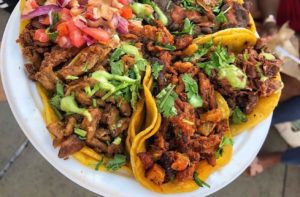
ATX Food Co. is a vegan taco food truck. Their tacos range from being made with mushrooms, tempeh, squash, and even kabocha. They also sell a wide variety of fruit smoothies, all made with fresh fruit and protein like hemp seeds, peanut butter, or sea moss. If you aren’t feeling like a taco, they also offer power bowls, soups, and pancakes. Their mission is to serve quality food, make zero waste, and give make food with healthy ingredients.
El Cocinero, 6265 Sepulveda Blvd. #12, Van Nuys, CA 91411
El Cocinero offers customers a wide array of Mexican food including tacos, burritos, nachos, salsas, and desserts. The restaurant features bright orange walls and a portrait of the Van Nuys resident who started El Cocinero.
Fat Choy, 250 Broome St., New York, NY 10002
Fat Choy has a small selective Chinese menu; however, items run out fast! Their food items are quite unique. They serve anything from smashed cucumbers to mushroom sloppy. They are proud of the presentation of their food, based on the beautiful pictures of the dishes on their website.
Guevara’s, 39 Clifton Pl., Brooklyn, NY 11238
Described as a vegan version of the nearby Mekelburg’s restaurants, Guevara’s is not only a café, but also offers housewares and more within its bright pink walls. Fully vegan donuts, empanadas, sandwiches, nachos, tortas, papas rellenas, and more are available.
Mattie’s Foods, 64110, Kansas City, MO 64110
Mattie’s Foods goes beyond the basic vegan sandwich with vegan brisket sandwiches, buffalo mac, Matt-griddle, Mattie toaster, the Mattie bon (vegan cinnamon roll), and more! Originally a food truck, they now have a brick and mortar location off of Truman Rd. in Kansas City!
Mike’s Vegan Cookout, location varies daily, NC
Mike’s Vegan Cookout food truck travels from city to city to spread their delicious vegan options including burgers, hot dogs, sides, drinks, and more! Their upcoming locations are regularly posted on their Facebook page at @mikesvegancookout.
Mirisata, 2420 SE Belmont St., Portland, OR 97214
Mirisata specializes in Sri Lankan street food. Thy offer several options for lunch, as well as a combo and an additional option for dinner. They are 100% vegan and gluten-free. Examples include rice & curry and Impossible beef rolls. The dishes are meant to be mixed together, combining a variety of flavors.
Plant, 1120 N. Walker Ave., Oklahoma City, OK 73103
Trendy and minimalistic, Plant café is the perfect spot to relax for a vegan meal. In the mood for something light? Try one of their smoothies blended from locally sourced fruits and vegetables and house-made almond milk. If you’re in the mood for something a little heavier, try the quinoa pesto or a bonsai bowl topped with sesame sauce. Don’t forget to take a house-made ice cream or a raw dessert with you on the way out!
The Gentle Giant Café, 13 S. Broadway, Pitman, NJ 08071
The Gentle Giant Café is a quaint and inexpensive restaurant. They sell primarily breakfast items of all sorts. Their most popular ingredient is tofu! You can get tofu in scrambles, wraps, bagel sandwiches, and bowls. They have a comforting and enjoyable environment for people of all ages to grab a bite to eat quickly.
Your Local Seitanist, 3950 Brainerd Rd., Chattanooga, TN 37411
The atmosphere at Your Local Seitanist is lively. Walls are covered in green moss and potted plants decorate the entire space, making you feel like you are dining outside in nature. The restaurant places an emphasis on sustainability by sourcing ingredients from local farmers and small businesses. The menu recreates delicious omnivore dishes by using ingredients like vegan steaks and dairy-free cheese. Some menu items are the Cuban sandwich made with house made h’am seitan, pickles, yellow mustard, and provolone and the Ginger Chickn Wrap filled with chopped slaw, vegetables, and ginger marinated “chicken,” Don’t forget to add a drink to your order, like the White Chocolate Rose Steamer or Salted Caramel Chai, you won’t regret it.
By Rissa Miller, Senior Editor Vegetarian Journal
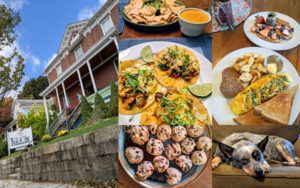
If cold weather finds you longing for a cozy fireplace and warm hospitality, consider a visit to Allegheny Trail House in Frostburg, Maryland. Vegan innkeeper Jason Yowell has been operating the B&B for four years in a historic property dating back to 1865. His brand of hospitality is engaging and comfortable. The second you arrive, you’ll feel like you’re at the home of an old friend as he offers you freshly baked chocolate chip cookies and you get a hearty tail-wag from Gus, the resident canine.
Expect to be well fed when you sit at Yowell’s table. This is no paltry B&B offering, you will get a full plate of freshly prepared food. For breakfast you can sweeten up with gluten-free banana pancakes topped with fresh berries. Go savory with a hash bowl of roasted veggies, potatoes, and vegan sausage, or try Yowell’s epic Trail House Breakfast, which includes a vegan omelette, served with breakfast potatoes, tempeh bacon, or vegan sausage. My omelette was stuffed with fresh veggies as well as Yowell’s own housemade seitan and signature plant-based queso sauce (by which I mean, it’s actually made from real plant ingredients!). Other vegan breakfast offerings include loaded avo toast, steel cut oatmeal, and vegan yogurt parfaits with seasonal fruit and granola.
If you’re planning a day out and about, Yowell offers vegan box lunches. Choose from chickpea salad wraps, vegan hoagies, or an avocado-chik-un sandwich. Sandwiches come loaded with fresh veggies and are served with a dill pickle, bagged chips/snacks, some of those decadent chocolate chip cookies, and a to-go beverage.
Though he’s an expert at offering local dining suggestions, at least one evening be sure to end your day with dinner prepared by the innkeeper. Meals include an appetizer such as nachos with that velvety queso, or house-made vegan mac and cheese (I had this twice and ate it so fast there’s no picture–trust me though–delicious!). Mains include hearty sandwiches like a veggie burger on a pretzel roll or seitan cheezesteaks. If you’re around on a Tuesday, you might get to try Yowell’s tacos with his own vegan asada sauce. Dessert is light-as-air chocolate mousse. The secret ingredient is aquafaba, which gives it a melty, dreamy texture.
The house itself is Greek revival style. There are four guest rooms, each with a private bathroom and television, and several common rooms offer plush sofas, books/games, and work areas. The B&B is walking distance from the shops, cafes, and bars of historic downtown Frostburg, as well as the GAP trail, ideal for cyclists, hikers, and trail runners. In fact, if you’re a cyclist or runner, you’re going to love the Allegheny Trail House. Yowell is a vetran cyclist and runner himself, and can tell you just about everything there is to know regarding the local trails and even offers bicycle repair onsite as well as shuttle transport for trail adventures.
Whether your flavor is to curl up by the fire and pet Gus the dog, or traverse the stunning mountain trails, Allegheny Trail House has something wonderful to offer. For your pre-vegan friends and family, there are other food options as well.
The B&B is located at 156 East Main Street, Frostburg MD. For questions or reservations, call 240-580-9795, message on Facebook at facebook.com/alleghneytrailhouse, or go online, alleghenytrailhouse.com. Dog and bicycle friendly.
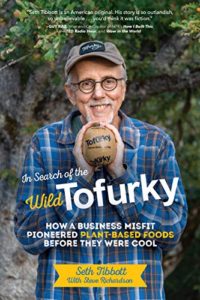
Review by Katelynn Budzich, VRG Intern
In 1980, Seth Tibbott, began a little business called, Turtle Island Soy Dairy. This later became known as Tofurky, the company that created the Tofurky Roast and other plant-based proteins. The book, In Search of the Wild Tofurky: How a Business Misfit Pioneered Plant-Based Foods Before They Were Cool, by Seth Tibbott, is about how a man with no business background grew an organization that sold tempeh and tofu into a multi-million-dollar company, and in the process, launched a plant-based food revolution. The journey was not easy and posed many challenges, but Tibbott demonstrates that with hard work and bootstrapping, success will come. This book was so insightful that it is hard not to share the recipe for success according to Tibbott. Thus, here are 5 pieces of advice I learned from reading In Search of the Wild Tofurky: How a Business Misfit Pioneered Plant-Based Foods Before They Were Cool:
Starting a business is one thing. Starting a business in 1980 is another thing. And starting a business in 1980 that sells tempeh and tofu products is a whole other thing. It requires patience, being humble, and determination. After reading In Search of the Wild Tofurky: How a Business Misfit Pioneered Plant-Based Foods Before They Were Cool, and seeing how Seth Tibbott, the founder of Tofurky created success, now I know that others can as well.
To purchase In Search of the Wild Tofurky, go to https://tofurky.com/book/
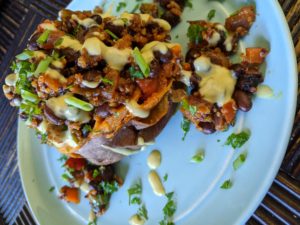
By Rissa Miller, Vegetarian Journal Senior Editor
Occasionally you find a recipe that works for any meal: breakfast, lunch, dinner, or snack. You’ve stumbled onto just such a meal. Tender roasted sweet potato stuffed with a savory, spiced black bean, quinoa, and veggie filling will satisfy anytime of day. Top it anyway you would a favorite taco/burrito and you’re set to chow down.
2 large sweet potatoes
1 cup water
1/2 cup quinoa
1 teaspoon taco seasoning
1/2 small onion (about 1/2 cup)
1/2 cup chopped bell pepper
1 Tablespoon olive oil
1 cup canned black beans, rinsed and drained
2-3 cloves garlic, chopped
1 teaspoon ground cumin
1 teaspoon smoked paprika
1 teaspoon nutritional yeast
1/2 teaspoon dried oregano
1/2 teaspoon salt
2 Tablespoons salsa (optionally more to serve)
2 Tablespoons orange juice (about 1/2 fresh orange)
Zest from 1 orange
To serve: chopped parsley, cilantro, jalapeno, green onion; avocado/guac; salsa or any cheezy sauce you like.
Preheat oven to 375 degrees and bake sweet potatoes, wrapped in foil, for one hour until tender when pierced with a fork. Set aside to cool when done.
While baking sweet potatoes, prepare quinoa. In a saucepan, bring water to a boil. Add quinoa and taco seasoning, cover, and cook for 10-15 minutes. Stir occasionally while cooking; quinoa is done when all liquid is absorbed and quinoa is fluffy. Set aside.
In a large skillet, sauté onion and bell pepper in olive oil over medium heat until onions are lightly browned and fragrant, about 2-4 minutes. Add black beans, garlic, cumin, paprika, nutritional yeast, oregano, salt, salsa, and orange juice, as well as prepared quinoa. Stir well to combine and heat over low heat for 3-6 minutes, until the mixture is warm. Just before serving, stir in orange zest.
To serve, slice baked sweet potatoes lengthwise and squish to open the top wide up. Top each potato with half of the quinoa-black bean filling. Top with your favorites such as chopped parsley/cilantro/jalapeno/green onion, avocado/guac, more salsa or a vegan cheezy sauce.
In the photo, Jalapeno Cashew Cream is shown, recipe at https://nutritiouslife.com/recipes/jalapeno-cashew-cream/

There was a recent advertisement for Ensure Plant-Based Protein, which contains no dairy, but is made from fava bean and pea. Interestingly, this product includes D3 (plant based) and organic sugar. They are stating it is vegan and offering a coupon.
For information see: https://ensure.com/nutrition-products/ensure-plant-based-protein
The Vegetarian Resource Group has been approved for
inclusion in the federal government CFC charity list. The CFC code number
10601. If you are a federal worker, we appreciate your support. If you are not
a federal government worker, you can support our veg outreach and education in
your workplace campaign. For some workplaces that do matching donations,
see: www.vrg.org/donate
Thank you so much for your support!
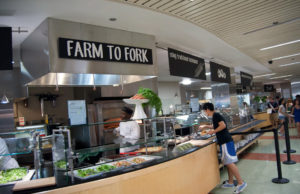
By Julia Stanitski VRG Intern
In this day and age, college food services need to provide food options for people of all dietary restrictions, including a vegan diet. We decided to ask high-schoolers (or recent high school graduates) what vegan foods they want to see at their future colleges. We also asked current college students’ opinions on what their favorite vegan foods at their school are. All of these students we questioned are interns here at the Vegetarian Resource Group. The information below can be very useful to colleges looking to expand their offerings of on- and off-campus vegan options, and also to college activists working on adding vegan offerings.
We asked the younger students, “What vegan foods do you want to see at your future college?”
– healthy vegan options (so not just potatoes, pasta, rice)
– I love fruit and vegetables in almost any form
– faux meat or meat substitutes would be a nice form of protein to have available. I know some schools may offer veggie burgers or tofu too.
– legumes are my main protein source usually so that would be awesome to have available in college! (Examples are pinto beans, lentils, chickpeas, peas, etc.)
– vegan breakfast foods hopefully include cereals or vegan breads
– lastly, I know a lot of schools have salad bars available so that would also be a great go-to.
In general, I just hope that schools are accommodating and considerate. 🙂 I know several of the schools I’m applying to have veggie houses or co-operatives where everyone in that dorm works together to cook vegan foods. I love that idea!
Then, we asked the college students, “What are your favorite foods at your college currently? What do you wish your college had regarding vegan food?”
As you can see, adding more options of vegan food at universities and college campuses is important to these students. The high-schoolers mentioned the importance of having a lot of protein options available – like beans, tempeh, and tofu. They also mentioned the need for a well-rounded diet, not JUST produce. People who follow vegan diets do not just eat fruits and vegetables 24/7, so vegan snacks, non-dairy milks, vegan desserts, and more of the processed items would be nice to have. Clarissa, a high school senior, mentioned that having more international dishes would be great, like a soba noodle bowl.
From the college students, we received an array of answers. The protein options were brought up again – meat alternatives can be very helpful for vegans and vegetarians alike. Rithvik, who attends John Hopkins University, mentioned his love of the Impossible Burger on-campus, but still wish more vegan meats were an option! It was also stated that there should be more vegan items at the smaller convenience stores at colleges, which would include small snacks, frozen meals, and ice cream.
All in all, colleges should make a wide variety of vegan food and meals available to their students. This not only accommodates to the vegan students (and will attract them to certain colleges over others) but will also allow non-vegans to try these healthy choices.
For information on other college food, see:
https://www.vrg.org/teen/#college
https://www.vrg.org/fsupdate/index.htm#College
For info on VRG internships, go to: https://www.vrg.org/student/index.php
The contents of this posting, our website, and our other publications, including Vegetarian Journal, are not intended to provide personal medical advice. Medical advice should be obtained from a qualified health professional. We often depend on product and ingredient information from company statements. It is impossible to be 100% sure about a statement, info can change, people have different views, and mistakes can be made. Please use your best judgment about whether a product is suitable for you. To be sure, do further research or confirmation on your own.
VRG asked the following in a national Harris Poll. See: vrg.org/blog/2020/08/07/how-many-adults-in-the-u-s-are-vegan-how-many-adults-eat-vegetarian-when-eating-out-asks-the-vegetarian-resource-group-in-a-national-poll/
Which of the following, if any, best describes your eating behavior?
We considered those that never eat meat, fish, seafood, or poultry; plus those that never eat meat, fish, seafood, poultry, dairy, or eggs, as vegetarian. We classified that second category of vegetarians who don’t eat dairy or eggs also as vegan. Because we use the word “never” and don’t just ask if a person considers him/herself vegetarian, our numbers may be lower than others. Be wary of comparing to polls in other countries that ask if you are vegetarian or vegan, since people may self define differently. We did not ask about honey.
More than half of the U.S. adult population (54%) always or sometimes eats vegetarian (including vegan) meals when eating out. One fourth (25%) of U.S. adults always or sometimes eats vegan meals when eating out. Six percent of American adults are vegetarian (including vegans) all the time, and half of the vegetarians are also vegan (three percent of American adults).
We asked the following additional question, which may be of interest to food companies, food services, restaurants, marketers, researchers, students, government regulators, and the media.
BEVERAGES LABELED SOYMILK
Which of the following do you expect from a beverage labeled soymilk? Please select all that apply.
If a beverage is labeled soymilk I expect:
TOTAL VEGETARIANS RESPONDENTS (INCLUDES VEGANS)
-To be able to use it in a similar way 43% 53%
on cereal as cow’s milk
-To be able to use it in a similar way 38% 41%
in cooking as cow’s milk
-It to have the exact same amount 22% 20%
of Vitamin D as cow’s milk.
-It to have the exact same amount 21% 15%
of calcium as cow’s milk.
-To have the same allergic reaction 10% 13%
or lack of allergic reaction
as I might have to cow’s milk
-It to have milk from a cow 8% 8%
-None of these 23% 15%
Some groups believe that plant milks should not be labeled milk, as people will confuse these items with cow’s milk. However, according to the survey, only 8% of American adults say if a beverage is labeled soy milk they expect it to have milk from a cow.
Seven percent of individuals with a high school education expected soy milk to have milk from a cow, 8% with some college education expected this, and 9% of college grads expected soy milk to have milk from cow. Education does not seem to have much impact.
As about half of vegetarians (including vegans) (53%) expect that a beverage labeled soy milk can be used in a similar way on cereal as cow’s milk, calling this item a milk could be helpful to the consumer. However, as some vegetarians (including vegans) expect soy milk to have the same amount of calcium (15%) and vitamin D (20%) as cow’s milk, this suggests clear nutrition labeling of all food products is important.
This survey was conducted online within the United States by The Harris Poll on behalf of The Vegetarian Resource Group from June 22-24, 2020 among 2,074 U.S. adults ages 18 and older. This online survey is not based on a probability sample and therefore no estimate of theoretical sampling error can be calculated. For survey methodology, please contact [email protected]. Please note that this poll was taken during the Covid-19 pandemic. We do not know what influence, if any, that may have had on the survey answers. See: https://www.vrg.org/nutshell/faq.htm#poll for more poll information.

Join The VRG with $35 via our subscription form, and receive the Vegan Journal for two years and a copy of Simply Vegan!
The Vegetarian Resource Group (VRG) is a non-profit organization dedicated to educating the public on veganism and the interrelated issues of health, nutrition, ecology, ethics, and world hunger. We have been helping health professionals, food services, businesses, educators, students, vegans, and vegetarians since 1982. In addition to publishing the Vegan Journal, VRG produces and sells a number of books.
Sign up for our newsletter to receive recipes, ingredient information, reviews of new products, announcements of new books, free samples of products, and other VRG materials.