The Vegetarian Resource Group Blog

Quick and Easy Ideas for Brussels Sprouts

Posted on November 06, 2025 by The VRG Blog Editor

By Chef Nancy Berkoff

Brussels sprouts, or petite choux (“little cabbage,” used as a term of endearment as well as a vegetable name) are worth the effort to prepare! Frozen Brussels sprouts are available, but in season, fresh Brussels sprouts offer versatility and delicious flavor.

Preparation
When purchasing fresh Brussels sprouts, look for small heads with tightly closed, green leaves. Yellow or loose leaves mean that the sprouts are not fresh. To prep your sprouts for cooking, wash in cold water, slightly trim the stem end, and shake off any remaining water. To ensure even cooking, cut a small “x” on the bottom of each sprout; this helps the heat distribute evenly.

If you would like to prep the sprouts ahead of time, you can seal them in a plastic bag or a glass or plastic, air-tight container.

Steaming
You can steam Brussels sprouts by cutting them in half, placing them in a metal or wooden steamer. Allow them to steam until they are bright green, about two minutes, or until they are just a bit soft, but still firm.

Roasting
To roast Brussels sprouts, preheat the oven to 400 degrees, toss whole or halved sprouts with a small amount of olive oil (or oil of your choice), cracked pepper and minced fresh garlic or dried garlic, if you like. Spread on a non-stick baking sheet and roast until lightly browned. Brussels sprouts also may be quick-saut?ed with seasoning of your choice. Make certain you use a skillet large enough that the sprouts have room to move around. If the sprouts are “huddled” in the pan, they may develop a strong flavor or a mushy texture.

No matter which cooking method you select, remember to aim for bright green as the end color.

Once you have finished cooking the sprouts, you can enjoy them as is, over rice, quinoa, barley, or couscous, or add them to stir-fried seitan, soy chorizo and potatoes, scrambled tofu with chiles, or hash-browned potatoes. Try them as a daring pizza topping!

Going Raw
Brussels sprouts can be eaten uncooked as well. Raw Brussels sprout leaves can be a little tough, so it’s best to soften them before adding them to salad. This can be done two ways: massaging the leaves with a bit of salt to help break them down, or thinly slicing them to shredded texture, sometimes called shaved Brussels sprouts.

Use raw Brussels sprouts in any traditional slaw recipe or dress them with lemon vinaigrette. To create a Brussels sprouts salad, season them with your favorite herb and spice combination. Balance the flavor by adding sliced apples or pears, dried apricots, raisins, diced prunes or cranberries, walnuts, fresh fennel or daikon, and fresh herbs, such as mint, cilantro, Italian parsley, or oregano.

If you have the time, research a recipe online for pickled Brussels sprouts. This vegetable makes a delicious pickle!

L-Cysteine Update: Could L-Cysteine Still Be Derived from Human Hair or Duck Feathers? [2025]

Posted on November 06, 2025 by The VRG Blog Editor

L-Cysteine Update: Could L-Cysteine Still Be Derived from Human Hair or Duck Feathers? [2025]

By Jeanne Yacoubou, MS

In March 2025, The VRG received an inquiry from a British documentary company asking if we knew of any products that currently use L-cysteine derived from animal sources.

As we have reported in past articles, L-cysteine was commonly used as a dough conditioner in a wide variety of foods especially bread products such as pizza dough and bagels. Its most common sources traditionally have been human hair or duck feathers.

For this update, we contacted several restaurant chains and food companies about their current use of L-cysteine.

 McDonald’s

In 2010, we confirmed that McDonald’s pies contained L-cysteine derived “from an animal source.” We noticed on the ingredient statement for its apple pie in September 2025, that L-cysteine was still listed. We contacted McDonald’s USA through their website contact form to see if their L-cysteine was still derived from an animal source.

Their generic email reply did not mention L-cysteine nor did it lead to a website page with specific information about this ingredient. So, we called the customer service line. The customer service representative informed The VRG that the L-cysteine in their apple pie was derived from “hog hair, human hair, or poultry feathers.” She was unable to be more specific concerning the most likely source when we asked.

On the other hand, on the McDonald’s Great Britain website in 2025 we observed the statement (dated May 21, 2018): “We can confirm that if L-cysteine is used in any of our food it will not be derived from hair or animal origin.”

 Pizza Hut

The apple pie at Pizza Hut does not contain L-cysteine and neither do their pizza doughs. The Thin ‘N Crispy dough at Pizza Hut is vegan. The other crust varieties contain a few questionable ingredients which we have asked about. When we hear back from Pizza Hut, you will find a report on our blog.

 Domino’s Pizza

According to Sean Hislip, Director of Quality Assurance at Domino’s who relayed to us in October 2025: “I can confirm that our L-cysteine is still microbially-derived.” Readers may recall that in 2021, we reported that Domino’s had already been using microbially-derived L-cysteine for years.

Of the six crusts at Domino’s, only the thin crust is vegan, according to the complete ingredient statements on their website.

Papa John’s

Papa John’s lists their full ingredient statement on their website. None of their three pizza crust varieties contain L-cysteine. Vegans should note that their gluten-free crust contains egg whites and whey.

Little Caesars

Little Caesar’s also lists their full ingredient statement on their website. L-cysteine is not listed in any of their four types of crust. Their classic round crust is vegan. The VRG had questions about several microingredients in their other crusts and we’re awaiting responses to our questions. Any further information we receive will be posted on our blog.

Hunt Brothers Pizza

Hunt Brothers Pizza does not have an ingredient listing on their website. They called us back about L-cysteine in their pizza and stated “it is microbial; it is not derived from animals.”

Other Pizza Chains

For this article, The VRG also reached out to California Pizza Kitchen and Giordono’s, as well as Costco and Martin’s stores which distribute Giordono’s products. Giordono’s dough contains a “dough additive” for which we don’t know the source. When we had not received a response after two weeks from anyone, we inquired a second time by phone. If we should hear back, we’ll report their answers in our blog.

 Dunkin’

As its lengthy and comprehensive ingredient lists reveal, Dunkin’ bagels do not contain L-cysteine. In fact, unlike many chain food stores and restaurants which refrain from using the term vegan even for demonstrably vegan foods, a Dunkin’ customer service rep called all its bagels (except the sour cream & onion variety) vegan. He also referred to their hash browns and English muffins as vegan.

Bruegger’s Bagels

A complete ingredient statement is posted on the Bruegger’s Bagels website. No L-cysteine is used. Most of the bagel varieties are based on the plain bagel which is vegan. A few of them contain sugar of an unspecified source. The two wheat bagels at this chain contain honey.

Other Bagel Chains

The VRG also reached out twice to Einstein’s Bagels and Bethesda Bagels. If we get a response, we will post it here.

Mellow Mushroom

In 2014, The VRG reported that the pita bread at Mellow Mushroom contained L-cysteine. When we checked back with them in 2025, we learned that they no longer have pita bread on their menu. Their pizza dough, pretzel bites, burger buns, and hoagie rolls are not made with L-cysteine. Currently, there is no vegan or vegetarian burger available at Mellow Mushroom. They offer tempeh and Follow-Your-Heart dairy-free cheese on their pizza.

Panera Bread

Offering a wide variety of bread products, Panera does not publish on their website a complete list of ingredients in a single document as many restaurant chains do. However, diners can access an ingredient statement on the page for each menu item with a couple extra clicks from their menu button then scrolling down to the button labeled “See all ingredients” to find it. To view their full 2021 menu in a single document, viewers may visit this third-party site.

Panera bagels do not contain L-cysteine. The ingredient statements list dough improver with a helpful parenthetical expression after it containing all components. All bagel varieties, including the plain bagel, contain sugar of an unknown source. Dairy may be in some types. The sprouted grain bagel contains honey.

None of the breads contain L-cysteine but a few contain dairy, honey, or sugar from an unknown source. The sourdough breads, artisan ciabatta, black pepper focaccia, and French baguette are vegan. Many of the breads and bagels contain sorbitan monostearate which could be derived from an animal source. We asked Panera about their source and were told by Nicole in Guest Care “our sorbitan monostearate…is vegetable-sourced.”

 L-Cysteine in Food Products

The VRG scoured the internet to determine if L-cysteine is present in any food products today. We did not uncover many. Here are a few that may interest vegan bakers or bread lovers. Note that we asked several major bread brands but heard back from only one.

  • Martha White Thin and Crispy Pizza Crust Mix is listed as containing the chemically similar cysteine hydrochloride as a dough conditioner. We asked the manufacturer for more information and learned that this compound is derived “from an animal source.” No further information is available.
  • Fleischmann’s Pizza Crust Yeast contains L-cysteine. We spoke with a customer service representative in September 2025 who was not able to answer our question about this ingredient’s source. She escalated our question to Fleischmann’s nutrition team. A few days later we received this email response from Fleischmann’s customer support team: “The L-cysteine in the Fleischmann’s Pizza yeast is synthetic. The enzyme is not animal derived. Fleischmann’s Yeasts are vegetarian.”

Since this reply was confusing since (1) L-cysteine is an amino acid (not an enzyme); and (2) the term synthetic is vague, we asked for further clarification including whether their synthetic L-cysteine were microbially-derived. They replied a few days later with: “It is not microbially-derived; it is a synthetic ingredient (plant-derived). We are unable to provide further details as this information is proprietary.”

This response is also confusing in that it asserts a synthetic ingredient is plant-derived but not microbially-derived. Usually, synthetic means something is microbially-derived (i.e., synthesized by microbes via fermentation) or made from fossil fuel-derived substances (i.e., petrochemicals).

We suspect that Fleischmann’s is using Wacker’s “plant-based” L-cysteine which is produced from a fermentation process using bacteria. If so, it would be correct to call their process microbial as well.

  • Sara Lee breads also contain L-cysteine. We asked their customer relations department about its source and were informed by email: “The L-cysteine that we use is extracted from duck feathers.”

 Microbial L-Cysteine and Alternatives

Microbially-derived L-cysteine manufactured for commercial uses in the food industry has been available for decades but is still cost-prohibitive for most food companies. Wacker-Chemie, a German company, developed the fermentation technology for making L-cysteine using bacteria. Wacker partnered with Kyowa Hakko USA to make this ingredient available in the United States. Wacker markets their L-cysteine as “plant-based” referring to the carbohydrate medium (e.g., corn) fermented by microbes.

There is some research into creating L-cysteine from several enzymatic reactions using gene cloning in an in vitro pathway referred to as metabolic engineering, but no petrochemicals are directly involved. This method involves genes—likely of microbial origin—to yield L-cysteine, but not via traditional microbial fermentation.

The Lesaffre Corporation is another company that uses microbes to produce dough conditioners that function as L-cysteine substitutes. In this case, inactive yeast is used. Jim Gluhosky, the Senior Technical Services Manager at Lesaffre, wrote to us that they currently sell four different types of fungal L-cysteine substitutes, including one that is certified organic.

 L-Cysteine Recommendation and Conclusions

As a general rule, we recommend that you contact a food company or restaurant chain about its source of L-cysteine when in doubt. Note that L-cysteine could be present in a packaged food but subsumed under general terms on ingredient labels such as dough conditioner or dough additive without being explicitly stated.

L-cysteine derived from human hair or poultry feathers is still used in foods today but not as commonly as it was decades ago. It is no longer the first-choice dough conditioner likely because of the ick factor. Unlike calf-derived rennet, which has been almost completely replaced by microbially-derived rennet (except in some specialty cheeses), the same cannot be said for L-cysteine in 2025 for economic reasons. Continued public pressure for “clean” food ingredients—especially non-animal sources—may lead to even more brands choosing microbially-derived L-cysteine or substituting plant-, microbial-, or mineral-based dough conditioners for L-cysteine.

The contents of this posting, our website and our other publications, including Vegan Journal, are not intended to provide personal medical advice. Medical advice should be obtained from a qualified health professional. We often depend on product and ingredient information from company statements. It is impossible to be 100% sure about a statement, info can change, people have different views, and mistakes can be made. Please use your best judgment about whether a product is suitable for you. To be sure, do further research or confirmation on your own.

Other fast food information is at https://www.vrg.org/fastfoodinfo.php

Additional ingredient information is at https://www.vrg.org/ingredients/index.php

To support Vegetarian Resource Group research, donate at www.vrg.org/donate

Or join at https://www.vrg.org/member/

How Can I Find Out if a Food Ingredient is Vegan?

Posted on November 05, 2025 by The VRG Blog Editor

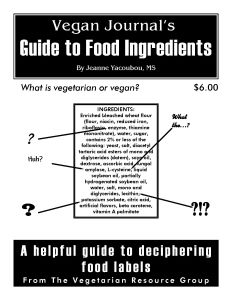
Have you ever wondered if an ingredient listed on a food label is vegan or not? The Vegetarian Resource Group has an online guide to food ingredients that lets you now whether a specific food ingredient is vegan, vegetarian, non-vegetarian, typically vegan, typically vegetarian, may be non-vegetarian, or typically non-vegetarian.

You can search through this guide here: https://www.vrg.org/ingredients/index.php

To support this type of difficult research, please consider making a donation to The Vegetarian Resource Group: vrg.org/donate

Cooking with Pears

Posted on November 05, 2025 by The VRG Blog Editor

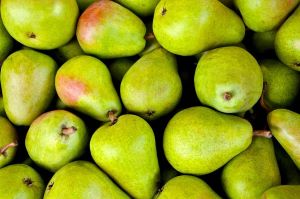
Debra Daniels-Zeller’s article Perfect Pears provides recipes for Reisling-Braised Kale and Pears With Basmati Rice; Sweet And Spicy Yams And Pears With Toasted Pecans; Maple-Sautéed Pears; Creamy Rosemary, Acorn Squash, and Pear Soup; Coconut-Cranberry-Pear Sauce Hazelnut-Orange Asian Pear and Beet Salad; Pear Crisp With Cranberries; Pear-Walnut Bread; and Berry-Poached Pears. She also explains the differences between popular varieties of pears. See: https://www.vrg.org/journal/vj2004issue3/2004_issue3_perfect_pears.php

To subscribe to Vegan Journal in the USA, see: https://www.vrg.org/member/2013sv.php

Colonial Diner in Woodbury, NJ Has a Separate Vegan Menu

Posted on November 04, 2025 by The VRG Blog Editor

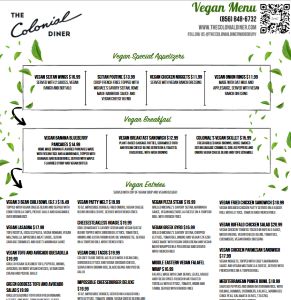
Colonial Diner in Woodbury, New Jersey, offers a huge separate vegan section on their menu. Breakfast dishes offered are Banana Blueberry Pancakes, Plant-Based Sausage Sandwich, and Colonial’s Vegan Skillet. Appetizers include Seitan Wings, Vegan Chicken Nuggets, and Vegan Onion Rings. Among numerous main dishes, you’ll find Vegan Lasagna, Vegan Greek Gyro, Vegan Reuben, Vegan Chili Tacos, Middle Eastern Vegan Falafel Wrap, Mediterranean Power Bowl, and more! And for dessert, choose between Chocolate Brownie, Ginger Scone, Chocolate Coconut Mousse, Banana Walnut Rice Pudding, and other options.


Colonial Diner is located at 924 N. Broad St., Woodbury, NJ 08096. They are open daily for breakfast, lunch, and dinner. For more information, visit https://www.thecolonialdiner.com/

What Are Some Vegan Turkey Alternatives for Thanksgiving?

Posted on November 04, 2025 by The VRG Blog Editor

Are you looking for some alternatives to Turkey this Thanksgiving? Fortunately, there are many options today.

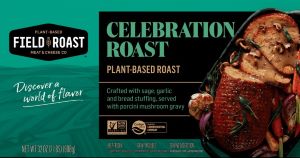
Field Roast offers these choices:
1. Celebration Roast with Traditional Bread Stuffing and Gravy – made with fresh onions, celery, cranberries and butternut squash.
2. Hazelnut Cranberry Plant-Based Roast – a rich, hazelnut-infused grain meat stuffed with Field Roast sausages, crystallized ginger, cranberries and apples – wrapped in a savory puff pastry. It’s even Toaster Oven friendly! See: https://fieldroast.com/products/#roasts-loaves

Gardein offers a plant-based Turk’y Roast. See: https://www.gardein.com/chickn-and-turky/classics/turky-roast

Tofurky offers Tofurky Roast and Gravy. The Roast includes stuffing. See: https://tofurky.com/what-we-make/roasts/

They also have a Ham Style Roast. For details see: https://tofurky.com/what-we-make/roasts/ham-roast/

Vegetarian Plus offers Vegan Whole Turkey. See: https://myrtlegreens.com/products/vegan-whole-turkey

Subscribe to Vegan Journal Today!

Posted on November 03, 2025 by The VRG Blog Editor

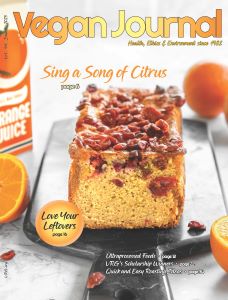
Vegan Journal is published by The Vegetarian Resource Group. Enjoy in-depth original research, product and book reviews, scientific updates on veggie nutrition, delicious vegan recipes with gorgeous photos, plus so much more. Both long-term vegans and those new to a vegan life-style will enjoy this magazine.

To subscribe in the USA only, see: https://www.vrg.org/member/

Warm Up with Casseroles!

Posted on November 03, 2025 by The VRG Blog Editor

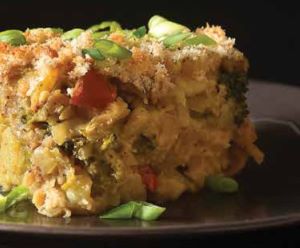
Smashed Potato and Vegetable Bake photo by Linda Tyler

Now that the weather is cooler, you might want to tryout Linda Tyler’s Casseroles piece in a previous issue of Vegan Journal. She serves up the following recipes: Tater Tot Breakfast Casserole, Succotash Gratin, Green Bean Casserole, Smashed Potato and Vegetable Bake, Sesame Soy Curls with Rice, and Millet à la Puttanesca. Start cooking today!

Find the recipes here: https://www.vrg.org/journal/vj2022issue4/2022_issue4_casseroles.php

Subscribe to Vegan Journal in the USA only at https://www.vrg.org/member/2013sv.php

World Vegan Day is November 1st.

Posted on October 31, 2025 by The VRG Blog Editor

World Vegan Day is celebrated on November 1st each year! World Vegan Day first occurred on November 1st, 1994 as a way of commemorating the 50th anniversary of the United Kingdom Vegan Society and the term Vegan. Consider treating a non-veggie friend or co-worker to a delicious vegan meal today. This way you support vegan establishments while showing others how wonderful vegan food can be.

Visit The Vegetarian Resource Group online guide to veggie restaurants in the USA and Canada: https://www.vrg.org/restaurant/index.php

Some Silk Products Supply Iodine

Posted on October 31, 2025 by The VRG Blog Editor

by Reed Mangels, PhD, RD

I’ve written before about the very low levels of iodine in plant milks in the United States and said that one study (1) found that plant milks had about 3% as much iodine as cow’s milk does. Iodine is an essential nutrient which is needed for the thyroid gland to function properly. Although the iodine content of fruits, nuts, and vegetables varies depending on growing conditions, most of these staples of a vegan diet are low in iodine (2). Cow’s milk and other dairy products are a main source of iodine for many people in the United States.

A colleague recently contacted me and pointed out that Silk Soy Original (red carton) is fortified with iodine. According to the product label which I checked on October 15, 2025, a cup of Silk Soy Original has 15 micrograms of iodine (10% of the Daily Value). Also, according to the product label, Silk Soy Vanilla (also in a red carton) has 15 micrograms of iodine in a cup of soymilk. The Silk website indicates that Silk Kids Oatmilk Blend has 30 micrograms of iodine (20% of the Daily Value) in a cup. I am not aware of other plant milks that are fortified with iodine.

The Recommended Dietary Allowance (RDA) for iodine for adults is 150 micrograms per day so it’s unlikely that you’ll get all the iodine you need from fortified Silk. Vegans can also get iodine from iodized salt, iodine supplements, and sea vegetables although the amount of iodine in sea vegetables is variable.

References

  1. Ma W, He X, Braverman L. Iodine content in milk alternatives. Thyroid. 2016;26(9):1308-10.
  2. Ershow AG, Skeaff SA, Merkel JM, Pehrsson PR. Development of databases on iodine in foods and dietary supplements. Nutrients. 2018;10(1):100.

To read more about iodine see:

Iodine in the Vegan Diet

Iodine in Prenatal Supplements

Iodine in Plant Milks

Food Sources of Iodine

The contents of this website and our other publications, including Vegetarian Journal and Vegan Journal, are not intended to provide personal medical advice. Medical advice should be obtained from a qualified health professional. We often depend on product and ingredient information from company statements. It is impossible to be 100% sure about a statement, info can change, people have different views, and mistakes can be made. Please use your best judgment about whether a product is suitable for you. To be sure, do further research or confirmation on your own.

  • Donate

  • Subscribe to the blog by RSS

  • VRG-NEWS

    Sign up for our newsletter to receive recipes, ingredient information, reviews of new products, announcements of new books, free samples of products, and other VRG materials.

    Your E-mail address:
    Your Name (optional):


↑ Top