The Vegetarian Resource Group Blog

Delicious Vegetable Chowders

Posted on April 23, 2020 by The VRG Blog Editor

Perhaps you’re still stuck at home due to the Coronavirus pandemic and looking for a soothing bowl of soup. Look no further! Chef Nancy Berkoff provides recipes for a wide variety of vegetable chowders in her previous Vegetarian Journal article: https://www.vrg.org/journal/vj2000sep/2000_sep_vegetable_chowders.php

Enjoy these recipes (most are inexpensive to prepare): Southwestern Green Bean and Red Pepper Chowder, Carrot, Pear, and White Bean Chowder, Brunswick Stew à la Vegan, Marrano Chowder, Potato and Kale Chowder, and Lentil Chowder

To subscribe to Vegetarian Journal in the USA, see: https://www.vrg.org/member/2013sv.php

You can also subscribe to the Kindle version of Vegetarian Journal in the USA and United Kingdom. In the USA, visit: https://www.amazon.com/dp/B07LBY2Y7K/ref=sr_1_1?ie=UTF8&qid=1544727482&sr=8-1&keywords=B07LBY2Y7K  In the United Kingdom, visit: https://www.amazon.co.uk/dp/B07LBY2Y7K/ref=sr_1_1?s=digital-text&ie=UTF8&qid=1544731957&sr=8-1&keywords=B07LBY2Y7K

Easy Vegan Foods a College Student Can Prepare (when we’re all back in school or sitting at home waiting out the social isolation)

Posted on April 23, 2020 by The VRG Blog Editor

By Tamir Stahler

If you live in an apartment or a house at college, you find yourself staring at the stove once in a while not knowing what to do. For me this usually happens when I get home from classes and my biological clock has me sitting on the couch waiting for the dinner my mother would otherwise have provided me. At least at my school, where only the kids in dorms have access to a food hall by way of a meal plan, these moments on the couch after class are times of contemplation between picking up my phone and spending a thousand dollars on Ubereats or spending my last moments of energy for the day by using the oven or stove-top I fear so much.

For my roommates this event is typically solved by throwing some chicken nuggets in the toaster, and if they’re feeling fancy, dipping them in Peter Luger’s steak sauce. If you’re a college student daring enough to adopt a vegan lifestyle however, you may have to get more creative. Lucky for you, I have a solution. I am a certified lazy, unhealthy college student – but I’m also vegan. And I’ve got a few quick and easy recipes for those lacking nuggets and Peter Luger’s sauce.

Recipe #1 Stir-Fry Ramen

All you need for this one is a packet of ramen noodles that is vegan. I like the Chili flavor. These packets can be easily recognized because certain companies have begun putting the “vegetarian” or “vegan” label on the package.

Simply set some water to a boil. If it’s taking too long just get the water hot enough to soften the noodles. Personally, I like my ramen al-dente for the texture.

Once the noodles are cooked to your liking, strain them and remove the water from the pot. From there all you need to do is throw the noodles into a pan with a little oil. Add a little bit of soy sauce, or even the flavor packet (although both have a lot of sodium) and fry the noodles, making sure to cover them so the steam can envelope the dish. Quickly throw in any desired vegetables (onions, spinach, etc.) or any mock-meat product you desire. Firm tofu also works very well with this dish.

Cooks in about five minutes and tastes great enough to beat most obscure stir-fry restaurants you’ve reluctantly stopped at because your one friend “knows Asian food.”

Recipe #2 Pasta with Beyond Meat Sauce

For this recipe all you need is your favorite type of pasta, although I recommend noodle forms like spaghetti or fettuccine. There are plenty of vegan, non egg-based pasta brands one can choose from. You will also need a package of Beyond Meat sausage. I prefer the Hot Italian Flavor.

Don’t be intimidated, but there is a little bit of prep required here. Simply take out a sausage or two, and gently mash them up with your hands till they become more ground. Beyond Meat sells a ground version, but it tastes nowhere near as good as the method I am recommending. Once you’ve ground the sausage, season it however you want. I like to put on cayenne pepper and paprika. At this point you should begin boiling the water for your pasta. Once the pasta is cooked to your liking, strain it and then put it back into the pot.

While the pasta is boiling you should have the crumbled sausage frying in a pan with a little oil to get it browned. After the pasta is back in the pot and the sausage is appropriately cooked, throw the sausage into the pot with the pasta. Then add some tomato sauce and other spices to your liking.

This cooks in about 7 minutes once you’re good at it and even has my meat-eating friends poking their heads in the kitchen asking what smells so amazing.

Recipe #3 Avocado Toast

Our third recipe is a classic brunch go-to and a well-known dish. Even though you may already know the dish, many vegan college students may fail to realize how easily they can pull off some of the classics that are tasty and healthy.

You simply need toast and avocado for this one. I like to make avocado toast because it’s filling and very quick. 

For the toast, I recommend Tuscan Pane, an Italian bread sold at Trader Joe’s. This bread is a bit thicker, closer to a sour dough style but with great texture and easily cooks.

Either throw the toast in your toaster oven or heat on a pan with a little margarine to begin. Then take your avocado and slice it open. Next, remove the pit. Scoop out the green part of the avocado with a spoon and use a knife to make slices about half an inch thick each.

Gently lay these slices on the hot toast, then season with a little salt and pepper. This is easy to make and quick.

For more simple cooking ideas, see: https://www.vrg.org/teen/#plans

During the Coronavirus Pandemic, What New Dishes Have You Been Preparing with Limited Access to Ingredients?

Posted on April 22, 2020 by The VRG Blog Editor

VRG Co-Director Debra Wasserman is author of Simply Vegan and several other cookbooks. With shopping being difficult these days, she’s been creating meals with ingredients on hand. Here’s some dishes she has prepared since limiting grocery shopping:

  • Potato/Kale Soup
  • Vegetable Soup
  • Vegetable Lo Mein with Seitan (see photo in this posting)
  • Potato Salad
  • Chickpea Burgers
  • Veggie Curry with Tempeh
  • And during Passover: Mushroom/Potato/Onion Croquettes and Fresh Tomato Soup

Please share some dishes that you’ve enjoyed recently! We’d especially like to hear about creative substitutes you’ve made for missing ingredients.

Roland Park Bagels & Sandwiches in Baltimore, Maryland Adds Several Vegan Options

Posted on April 22, 2020 by The VRG Blog Editor

The owner of Roland Park Bagels & Sandwiches in Baltimore City has permanently added several vegan options to their menu. Top your bagel with vegan margarine or cream cheese or better yet, try the Vegan JUST Egg and vegan cheese breakfast sandwich with perhaps a Beyond sausage put on top. They also offer a Vegan Falafel Wrap, Vegan Chik’n Sandwich, Vegan Pizza Bagel, Vegan Grilled Cheese, Falafel Salad, Vegan Meatball and Veggies Panini, as well as BYO Burger made with the Beyond Burger. Beverages include smoothies, and several milk alternative options for your coffee selection. Finally, they often sell vegan desserts and offer vegan pizza pies some evenings.

Roland Park Bagels & Sandwiches is located around the corner from The Vegetarian Resource Group office and offers both indoor and outdoor seating. Please note that during the Coronavirus pandemic you must call in orders for pick-up or place a delivery order.

Information on Roland Park Bagels & Sandwiches can be found here:

https://www.rolandparkbagels.com/

https://www.facebook.com/RolandParkBagels/

For a list of veggie restaurants in the USA and Canada, visit: https://www.vrg.org/restaurant/index.php

Vegan pizza from Roland Park Bagels & Sandwiches

VEGAN SHOPPING DURING THE CORONAVIRUS PANDEMIC: WHAT ARE YOUR EXPERIENCES?

Posted on April 21, 2020 by The VRG Blog Editor

One reader wrote us that The Vegetarian Resource Group should now have a campaign against people being vegetarian and vegan as all the natural foods products like Amy’s were gone from his supermarket’s shelves. He was having a hard time finding what he normally bought as others were finally concerned about staying healthy and hoarded the veggie foods. He jokingly said we need others to eat more animal foods. (This is tongue in cheek of course. It reminds us of one of our members in the 1980’s who said he would stop being vegetarian when everyone else started becoming vegetarian, as he wanted to be different. He’s still vegetarian of course.)

A former staff member had a different experience. She said: “I thought of you the other day because I stopped in at the supermarket and every ice cream on the shelf was gone except the vegan ones! I had a field day stocking up and was remembering all of our VRG vegan ice cream tests in the office.”

And one of our former interns living in hunting country said about her market: “Everything pretty empty down here as well…except the vegan section,” and sent a picture of the vegan deli slices left. We’re sure she’ll eventually scoop those up.

One member was trying to have produce delivered to her 85-year-old mom in Florida. Publix, which is the main supermarket down there, at first said they had a four day backlog in delivering, and then said they weren’t taking orders. A local produce market wasn’t delivering as they were short on food. The shopping cart at Whole Foods/Amazon site wouldn’t take orders for quite some time. After three days and nights of trying, finally they found a window to place a Prime order, and it arrived at her mom’s the same day. And as an emergency order, Edible Arrangements came through with a box of fresh produce and vegetables. By mistake they also showed up with some balloons, but that brought some smiles.

What are your shopping experiences?

SCHOOL FOOD LUNCH TESTIMONY

Posted on April 21, 2020 by The VRG Blog Editor

VRG sent in the following testimony to the USDA concerning school food lunch (comments are due April 22, 2020):

We welcome the opportunity to comment on Simplifying Meal Service and Monitoring Requirements in the National School Lunch and School Breakfast Programs. 

More than 30 million children in the United States participate in the National School Lunch Program yearly and more than 14 million children participate in the School Breakfast Program (2). These programs are federally funded, operate in public and nonprofit private schools, and have a stated goal of providing nutritionally balanced, low-cost or no-cost breakfasts and lunches to children each school day (1,2). 

Children get more than half of their daily calories from school meals so it’s important that these meals provide nutritious food, including whole grains, beans, vegetables, and fruit.

Changes to school meal requirements that were implemented in school year 2012-2013 resulted in significant improvements in the nutritional quality of school meals (3). Specifically, more whole grains, greens, and beans were served to children at lunch and more whole grains and fruit were served at breakfast (3).

The changes proposed by Simplifying Meal Service and Monitoring Requirements in the National School Lunch and School Breakfast Programs would eliminate many of the program improvements that were made in 2012-2013. The proposed changes would reduce the amount of vegetables and fruit required to be served at breakfast and lunch. Fewer red and orange vegetables (sources of vitamin A) would be required to be served at lunch. The proposed change would allow pasta made with vegetable flour to be counted as a serving of vegetables. We do not support these changes. It is important for children to have an opportunity to choose a variety of vegetables and fruits and to become familiar with vegetables that are presented as vegetables.

If breakfast is served outside of the cafeteria, which many school districts do, the amount of fruit included would be cut from one cup to a half cup. Since the number of calories that must be served at breakfast is unchanged, a half cup of fruit could be replaced with cheaper food like sweet pastries. The proposed changes would allow schools to offer potatoes as a vegetable every day. Potatoes could take the place of fruit at breakfast. Potatoes are a fine food, but they don’t supply the generous amounts of vitamin C, vitamin A, calcium, and iron that other vegetables or fruits do.


A rationale given for the changes is that children don’t like the changes that were made in 2012-2013 and that they’ve resulted in more waste. A study conducted by USDA, refutes this argument and shows that after the 2012-2013 changes, there was either less plate waste or about the same plate waste as before (3). We do not support the proposed changes to reduce fruit servings for breakfast served outside of the cafeteria or allowing potatoes to be served as a vegetable daily.

For many children, school meals are an opportunity to have access to healthy food. These proposed changes cut plant foods from school meals and are harmful to children’s nutrition.

Thank you for the opportunity to comment on this issue.

References
1. USDA. The National School Lunch Program. 2017. https://fns-prod.azureedge.net/sites/default/files/resource-files/NSLPFactSheet.pdf
2. USDA. The School Breakfast Program. 2017.  https://fns-prod.azureedge.net/sites/default/files/resource-files/SBPfactsheet.pdf
3. USDA. School Nutrition and Meal Cost Study. 2019. https://fns-prod.azureedge.net/sites/default/files/resource-files/SNMCS_Summary-Findings.pdf

To submit your own testimony by April 22nd, go here.
https://www.federalregister.gov/documents/2020/03/23/2020-05979/simplifying-meal-service-and-monitoring-requirements-in-the-national-school-lunch-and-school

Vegetarian Resource Group Essay Contest for Children: Deadline is May 1st, 2020

Posted on April 20, 2020 by The VRG Blog Editor

Each year The Vegetarian Resource Group holds an essay contest for children. SUBJECT: 2-3 page essay on any aspect of veganism/vegetarianism. Vegetarianism is not eating meat, fish, and birds (for example, chicken or duck). Vegans do not use any animal products. Among the many reasons for being a vegan/vegetarian are beliefs about ethics, culture, health, aesthetics, religion, world peace, economics, world hunger, and the environment.

Entrants should base their paper on interviewing, research, and/or personal opinion. You need not be a vegetarian to enter. All essays become the property of The Vegetarian Resource Group. DEADLINE: Must be postmarked by May 1, 2020 for current year of judging.

Previous winning essays and complete details can be seen here: http://www.vrg.org/essay/

Quick and Easy Tacos

Posted on April 20, 2020 by The VRG Blog Editor

Both adults and kids tend to enjoy tacos and there are so many different ways to make delicious vegan tacos. Vegetarian Journal Vegan Cooking Tips columnist Chef Nancy Berkoff says “Let the taco tasting begin! Whether traditional or 21st century, tacos can be made tasty and quickly! Be certain to match your filling to your taco. If you are using hard shells, you’ll want crunchier ingredients, such as fresh chopped veggies like bell peppers and onions, crumbled tempeh, fresh mushrooms, cut corn, whole beans (rather than mashed), shredded jack or cheddar vegan cheese, and shredded greens. If using a soft shell, such as a steamed corn or flour tortilla, you’ll want to consider softer ingredients, such as mashed black or pinto beans, white or red potatoes, chopped steamed veggies, alfalfa or clover sprouts, salsa, diced and grilled onions, cooked chili, canned tomatoes, diced silken tofu, or steamed grains such as rice or quinoa.”

Some suggestions Chef Berkoff offers are:

Scramble some extra tofu, flavored with soy sauce for dinner or breakfast. Add the scrambled tofu, hot or cold, to a taco shell with some mushrooms and veggies of choice and you have a fast taco. Do the same with leftover Chinese food for a fusion cuisine taco.

For a pizza taco, add a combination of chopped fresh or canned tomatoes, olives, peppers, onions, smoked tofu, and white beans or chopped extra-firm tofu to a taco shell, top with nutritional yeast or shredded vegan cheese, and heat in the oven or microwave until warm.

To find more taco ideas and to read her entire column, go to: https://www.vrg.org/journal/vj2016issue1/2016_issue1_cooking_tips.php

 To subscribe to Vegetarian Journal in the USA, see: https://www.vrg.org/member/2013sv.php

You can also subscribe to the Kindle version of Vegetarian Journal in the USA and United Kingdom. In the USA, visit: https://www.amazon.com/dp/B07LBY2Y7K/ref=sr_1_1?ie=UTF8&qid=1544727482&sr=8-1&keywords=B07LBY2Y7K  In the United Kingdom, visit: https://www.amazon.co.uk/dp/B07LBY2Y7K/ref=sr_1_1?s=digital-text&ie=UTF8&qid=1544731957&sr=8-1&keywords=B07LBY2Y7K

White Castle’s Latest Vegan Menu Option in NY and NJ

Posted on April 17, 2020 by The VRG Blog Editor

The Vegetarian Resource Group recently received a press release announcing White Castle’s latest vegan menu option.

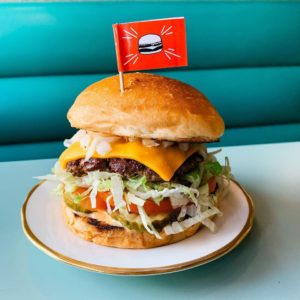
Starting in March 2020, The restaurant chain White Castle is offering the vegan Impossible Slider on its vegan bun with vegan cheese  in New York and New Jersey. According to the press release, White Castle Vice President Jamie Richardson hopes to make it national in the near future.

Sarah Walters, Director of Public Relations of RMD Advertising who represents GOOD PLANet Foods, sent us the press release. The VRG asked her to confirm that everything about this menu offering was vegan.

We started our inquiry by asking for the ingredient statements for all components of this menu item.

We were pleasantly surprised to find that Sarah responded with the complete ingredient statements for all three components (patty, bun, and cheese) manufactured by three different companies within 24 hours. This is highly unusual for a public relations firm to be so prompt, and we expressed our gratitude to Sarah for her professional diligence.

Here are the ingredient statements:

  1. Impossible Slider

Water, Soy Protein Concentrate, Coconut Oil, Sunflower Oil, Natural Flavors, 2% or less of: Potato Protein, Methylcellulose, Yeast Extract, Cultured Dextrose, Food Starch Modified, Soy Leghemoglobin, Salt, Soy Protein Isolate, Mixed Tocopherols (Vitamin E), Zinc Gluconate, Thiamine Hydrochloride (Vitamin B1), Sodium Ascorbate (Vitamin C), Niacin, Pyridoxine Hydrochloride (Vitamin B6), Riboflavin (Vitamin B2), Vitamin B12.

  1. Non-dairy cheese

Filtered Water, Coconut Oil, Food Starch- Modified (Potato & Tapioca), Potato Starch, Calcium Citrate, Sea Salt, Olive Extract, Cheddar Flavor (Vegan Sources), Paprika Extract & Beta Carotene (Colors)

  1. Bun

Enriched Bleached Wheat Flour (Wheat Flour, Malted Barley Flour, Niacin, Iron, Thiamine Mononitrate, Riboflavin, Folic Acid), Water, Sugar, Soybean Oil, Contains 2% Or Less Of Each Of The Following: Yeast, Salt, Vital Wheat Gluten, Calcium Stearoyl Lactylate (Csl), Guar Gum, Monoglycerides, Monocalcium Phosphate, Sodium Alginate, Ascorbic Acid (Vitamin C), Enzymes. CONTAINS: WHEAT

As a follow-up, we asked Sarah about a few microingredients in this White Castle menu offering which could be derived from animal products. We wanted to confirm that they were all plant-derived. We also asked about kitchen protocols.

Here are our questions followed by the answers from White Castle via GOOD PLANeT Foods.

Microingredients:

The VRG: Are the natural flavors in the Impossible Slider animal-derived?

White Castle: The Impossible Slider contains no animal or animal byproducts.

The VRG: In the bun, is the stearoyl part of calcium stearoyl lactylate animal-derived?

White Castle: Our buns contain no animal or animal byproducts.

The VRG: In the bun, are the monoglycerides animal-derived?

White Castle: Our buns contain no animal or animal byproducts.

Preparation:

The VRG: Are the Impossible Sliders prepared separately from animal products? Do they ever come in contact with animal oils or juices on a shared surface?

White Castle: …We do have procedures for cooking the Impossible Slider on a dedicated griddle, separate from menu items containing animal-derived ingredients…They are prepared in a common kitchen and may come into direct or indirect contact with menu items derived from animal ingredients.

The VRG: Is the bun warmed/cooked in a toaster, microwave or oven that’s used to warm/cook animal products or dairy-containing menu items?

White Castle: Yes—customers can request to not have the bun steamed if they would like…

The VRG: Are separate and sanitized utensils, cookware, etc. always used to serve/make this menu item (Impossible Slider + vegan cheese on this bun)?

White Castle: Yes, we have dedicated small wares for cooking the Impossible Slider…Note that our plant-based products are prepared in a common kitchen and may come into direct or indirect contact with small wares that have touched ingredients derived from animal sources.

Readers with further questions about the Impossible Slider with vegan cheese may contact White Castle.

The contents of this posting, our website, and our other publications, including Vegetarian Journal, are not intended to provide personal medical advice. Medical advice should be obtained from a qualified health professional. We often depend on product and ingredient information from company statements. It is impossible to be 100% sure about a statement, info can change, people have different views, and mistakes can be made. Please use your best judgment about whether a product is suitable for you. To be sure, do further research or confirmation on your own.

For information on other restaurant chains, see https://www.vrg.org/fastfoodinfo.php

For information on vegan and vegetarian restaurants in the USA and Canada, see https://www.vrg.org/restaurant/index.php

Celebrate Earth Day on April 22nd by Sharing the Information in this Brochure: Save Our Water—The Vegetarian Way

Posted on April 17, 2020 by The VRG Blog Editor

The Vegetarian Resource Group produced a brochure called “Save Our Water—The Vegetarian Way” looking at water usage and livestock production versus water usage and eating a veggie diet. One chart shows the estimated amount of water in liters used to produce one kilogram of food in the U.S. Another chart shows global averages of the quantity of water required to produce certain food products by liters. We also present the quantity of grains (kg) eaten by U.S. livestock to produce one kilogram of meat. Three sets of statistics are presented due to differing calculations by various statistics.

You can read this brochure here: https://www.vrg.org/environment/water_brochure.php

The brochure is also available online in Spanish: https://www.vrg.org/environment/water_brochure_spanish.php

  • Donate

  • Subscribe to the blog by RSS

  • VRG-NEWS

    Sign up for our newsletter to receive recipes, ingredient information, reviews of new products, announcements of new books, free samples of products, and other VRG materials.
    Your E-mail address:
    Your Name (optional):


↑ Top