The Vegetarian Resource Group Blog

What are some vegan snacks and lunches to bring to camp?

Posted on July 17, 2020 by The VRG Blog Editor

By Clare Broud, VRG Intern

Editor’s Note: We realize that many camps have not opened this summer due to the pandemic. Neverthless, the information below may be helpful in other settings or during a future camp season.

Camp is a great experience for children. Whether it’s day camp, sport camp, religious camp, or sleep away camp, camp can help children build independence, disconnect from technology, and make meaningful memories and friendships that last a lifetime. As a former camper and camp counselor, I know firsthand that most camps are not tailored specifically to kids with vegan or vegetarian diets. Fortunately, there are plenty of camp friendly snacks and lunches vegan kids can bring with them.

Before Camp

There are some things parents or kids can do before getting to camp to help camp directors and counselors better accommodate vegan campers. When signing up for camps, there is often a section for allergies or special notes, and vegan campers should take advantage of these sections to note their dietary needs. Emailing or calling the camp director to figure out their food practices, such as whether they provide snacks and lunch, if there are vegan options, or if kids are allowed to bring their own food, is always a great idea. This advanced notice can allow the camp to prepare vegan options if needed. Chances are the camp has different food options that are allergen friendly, but letting the camp know in advance will make things easier on everyone.

Snacks

When packing snacks for camp, it is important to pack foods that will sustain kids, especially if the camp emphasizes physical activity. Trail mix is a classic camp snack, but the traditional version with M&M’s is not vegan. Making your own trail mix is a fun and interactive way to recreate this classic snack. Using either bulk bins at the grocery store or snacks already on hand, mix food items like nuts, dried fruits, cereal, pretzels, or nondairy chocolate chips to create a custom trail mix. Baby carrots are a great vessel for dips like hummus, vegan ranch, or peanut butter. If your camp is nut-free, carrots and Sun Butter are an easy nut alternative. Tortilla chips can be another good option for dips. Whether homemade or store-bought, salsa and guacamole are fresh and filling snacks.

Lunch

A balanced lunch should include a variety of food groups and nutrients, and this is especially true at camp. Packing lunches that are easy to eat is important in a camp setting. Wraps are an easy way to pack a lot of protein and nutrients into a neat package. What’s great about wraps is that everything can be customized. My personal favorite is a Mediterranean veggie wrap with hummus, tomatoes, lettuce, cucumbers, and falafel. Burritos are another great option. A tofu scramble burrito with peppers, onions, salsa, and guacamole is a nutritious and filling lunch that is easy to pack and eat at camp. Vegan quesadillas are another portable, delicious option. There is the classic quesadilla made with nondairy cheese and soy chorizo or beans. Peanut butter banana quesadilla is another great option. Take a tortilla, spread your nut butter of choice, place sliced banana on half of it, sprinkle on some cinnamon, fold it, and then grill like a normal quesadilla! Salads and bowls are another great option to bring to camp. Just follow the formula of base lettuce or grain, plant-based protein, chopped vegetables, and spread of choice to create a balanced and tasty salad or bowl.

Here are some other ideas.

https://www.vrg.org/teen/#camps

https://www.vrg.org/links/vacation.htm#camps

The contents of this posting, our website, and our other publications, including Vegetarian Journal, are not intended to provide personal medical advice. Medical advice should be obtained from a qualified health professional. We often depend on product and ingredient information from company statements. It is impossible to be 100% sure about a statement, info can change, people have different views, and mistakes can be made. Please use your best judgment about whether a product is suitable for you. To be sure, do further research or confirmation on your own.
Dairy-Free Pizzas & Calzones

Posted on July 16, 2020 by The VRG Blog Editor

Vegan pizza and calzones are delicious! Thanks to Debra Daniels-Zeller, now you can prepare these delicious items in your own home. In her previous Vegetarian Journal article, Debra shares recipes for:

Read the article here: https://www.vrg.org/journal/vj2002issue4/2002_issue4_pizza.php

To subscribe to Vegetarian Journal in the USA, see: https://www.vrg.org/member/2013sv.php

You can also subscribe to the Kindle version of Vegetarian Journal in the USA and United Kingdom. In the USA, visit: https://www.amazon.com/dp/B07LBY2Y7K/ref=sr_1_1?ie=UTF8&qid=1544727482&sr=8-1&keywords=B07LBY2Y7K  In the United Kingdom, visit: https://www.amazon.co.uk/dp/B07LBY2Y7K/ref=sr_1_1?s=digital-text&ie=UTF8&qid=1544731957&sr=8-1&keywords=B07LBY2Y7K

Join the Discussion with 500+ Families in The Vegetarian Resource Group’s Parents and Kids Facebook Group!

Posted on July 16, 2020 by The VRG Blog Editor

Recent topics brought up include:

– Which is the most versatile vegan milk out there? I have tried unsweetened almond, oats, soy, and flax milk. My favorite is oats as a standalone drink but it does not go well with any of my tea, coffee, etc. What is your favorite? And how do you use it in your recipes or daily life?

– Hi all! My family and myself are new to plant-based eating and have a toddler. While we are reading and watching his kids shows I’ve noticed that eating animal products is the “norm” so I’m curious about books and kids shows that talk about the alternative. Any things good to start the conversation early.

– Parents shared cooking videos they created.

https://www.facebook.com/groups/VRGparentsandkids/ is intended to be a group that offers support for families raising children on vegan diets and for vegan kids. We envision it as a place to get advice about a wide-variety of topics: pregnancy, birthday parties, school lunches, Halloween, non-leather apparel, cruelty-free products, summer camps, and more. Please use it as a place to share your wisdom, seek advice, or just find a sympathetic ear. The goal is to offer support.

Consequently, any profane, defamatory, offensive, or violent language will be removed. Feel free to disagree, but do so respectfully. Hateful or discriminatory comments regarding race, ethnicity, religion, gender, disability, sexual orientation, or political beliefs will not be tolerated. We expect that posts should relate to vegan diets and lifestyles. The Vegetarian Resource Group reserves the right to monitor all content and ban any user who posts in violation of the above rules, any law or regulation, SPAM, or anything otherwise off topic.

Please share this information with any veggie families that you know! Thanks.

Are You Searching for a Stylish Vegan Backpack?

Posted on July 15, 2020 by The VRG Blog Editor
Photo from Doshi

If you’re in the market for a vegan backpack, you’ll be happy to know that there’s a wide variety of stylish vegan backpacks available in the USA, Canada, and Europe.

The French company Arsayo offers unisex backpacks in five colors. They are designed in Paris and made from cork material produced in Portugal.

Doshi, an American company, makes backpacks for men and women.

The American company Gosbags offers backpacks in various colors.

Gunas offers backpacks and ships internationally.

Canadian company Jeane & Jax offers backpacks for women.

American company Matt and Nat sells a wide variety of backpacks in several colors.

Pixie Mood ships backpacks to both Canada and the USA.

In Search of the Wild Tofurky by Seth Tibbott

Posted on July 15, 2020 by The VRG Blog Editor

Book Review by Clare Broud, VRG Intern

In his new book In Search of the Wild Tofurky, Seth Tibbott chronicles his journey from nomadic outdoor environmental educator to clueless tempeh entrepreneur to pioneering alternative protein figurehead. The founder and chairman of the Tofurky (Turtle Island Foods) company details the story of how he began a tempeh shop with an initial $2,500 of savings and grew the business into a global alternative protein company worth over $100 million dollars. This journey took decades, and Tibbott does not sugarcoat the difficulties of building his business. However, throughout the life of the Tofurky Company, Tibbott continuously holds his original mission and values intact, a large reason he believes Tofurky is successful, despite his self-admitted initial complete lack of business intuition.

     While today when we think of Tofurky, we think holiday roasts, sausages, and deli slices, Seth Tibbott’s original vision for the company was tempeh, which he believed was the next granola. His ability to pivot into other forms of alternative proteins allowed his business to  expand. This book is a great read not only for vegans or vegetarians, but also for anyone interested in entrepreneurship or business. Tibbott emphasizes the importance of having business values and a mission, and that it is possible to both build a profitable business and improve the world. 

     Tibbott’s life and work philosophy emphasizes lightheartedness in the face of obstacles. He believes that part of the reason Tofurky was able to grow past its initial struggles is the lightheartedness of the company and its approach to business. At first, people did not buy Tofurky because it was better for their health or the environment, but they bought Tofurky because it tasted good and was a convenient alternative, and that is how it was marketed. This philosophy can be utilized in an everyday vegan’s life. Demonstrate lighthearted and positive veganism, and then your mission of animal rights or environmental preservation will follow. Hook people on veganism with taste, and inadvertently the rest will follow.

     Tibbott sees the explosive growth of Tofurky in the past fifteen years as a reflection of a larger trend in plant-based foods. The market is exploding with demand, and those with a passion to bring change through food have a place to succeed in a large part thanks to the decades of work Tibbott spent on Tofurky. Vegan and nonvegan alike can enjoy and appreciate Tofurky’s business journey chronicled in In Search of the Wild Tofurky.

To order In Search of the Wild Tofurky, go to https://tofurky.com/book/

Make Vegan Biscotti at Home!

Posted on July 14, 2020 by The VRG Blog Editor

You can make vegan biscotti in your home. A previous Vegetarian Journal article by Debra Daniels-Zeller provides these recipes:

Read the entire article here: https://www.vrg.org/journal/vj2005issue2/2005_issue2_biscotti.php

 To subscribe to Vegetarian Journal in the USA, see: https://www.vrg.org/member/2013sv.php

You can also subscribe to the Kindle version of Vegetarian Journal in the USA and United Kingdom. In the USA, visit: https://www.amazon.com/dp/B07LBY2Y7K/ref=sr_1_1?ie=UTF8&qid=1544727482&sr=8-1&keywords=B07LBY2Y7K  In the United Kingdom, visit: https://www.amazon.co.uk/dp/B07LBY2Y7K/ref=sr_1_1?s=digital-text&ie=UTF8&qid=1544731957&sr=8-1&keywords=B07LBY2Y7K

Mirum®: An All-Natural Vegan Leather

Posted on July 14, 2020 by The VRG Blog Editor

By Jeanne Yacoubou, MS

The Vegetarian Resource Group published an article on our blog titled How Sustainable Is Vegan Leather? in June 2020. At the time we went to press, we had not yet received responses from several companies that make all-natural vegan leather.

Here we present the Q&A exchange we had through email with Dr. Luke Haverhals, the Founder and CEO of Natural Fiber Welding® (NFW), the company that creates Mirum.

The VRG: What is Mirum made of?

NFW: Mirum is made from plants – both fiber and vegetable oils. Sometimes we use clay and other inorganic fillers as well as natural inputs for colors (e.g., turmeric can produce a lovely orange color).

Because Mirum uses only natural inputs, it does not become toxic waste like plastics. Few people understand that the reason why old clothes, shoes, etc. must be landfilled is that petroleum-based plastic waste is toxic and cannot decompose without harming the biosphere.

The VRG: Do you use ANY petrochemicals at any stage of production of Mirum?

NFW: No, Mirum is natural. Mirum is revolutionary and completely unique in the world in that we do not use any petrochemicals nor any synthetic glues/polymers derived from petrochemicals. For example, Mirum does NOT use polyurethane like many others who claim this high-carbon footprint, petroleum-based material is somehow “vegan.”

This article points out how plastic-containing materials can never be regarded as truly “vegan.”

NFW is pioneering state-of-the-art manufacturing processes that use Plants, Not Plastic™ because we desire to make the lowest resource (e.g., lowest carbon footprint) materials possible.

The VRG: How quickly does Mirum biodegrade and under what conditions?

NFW: It depends. If a tree falls in the forest, it may take a long time to degrade. If the tree is chopped into small bits, the degradation process happens much faster. Mirum formulations are extremely tunable. Mirum is always degradable since it is made only from nutrients. That said, the absolute biodegradation characteristics are tunable as well and depend on both the raw materials utilized as well as the way in which the product is treated at the end of its lifecycle.

It is also worth mentioning that Mirum can be recycled. NFW will be scaling and implementing recycling capabilities as we scale production of Mirum.

While much hype and funding has been given to biotech “solutions” that cannot scale, NFW has been quietly working to develop scalable technologies that actually deliver. In the second half of 2020, there will be major announcements of partnerships with global brands that know NFW has developed the truly game-changing technology platforms that deliver.

Note to Readers: When The VRG receives updates from NFW on Mirum as well as responses from other all-natural vegan leather companies, we will post them here on our blog.

The contents of this posting, our website, and our other publications, including Vegetarian Journal, are not intended to provide personal medical advice. Medical advice should be obtained from a qualified health professional. We often depend on product and ingredient information from company statements. It is impossible to be 100% sure about a statement, info can change, people have different views, and mistakes can be made. Please use your best judgment about whether a product is suitable for you. To be sure, do further research or confirmation on your own.
Healthy Vegan Dishes on a BUDGET

Posted on July 13, 2020 by The VRG Blog Editor

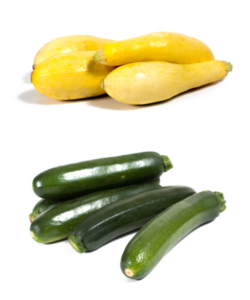
Many people have lost their jobs during the COVID-19 Pandemic and are looking for ideas for inexpensive vegan dishes. In a previous issue of Vegetarian Journal, Debra Daniels-Zeller wrote an article titled “Healthy Vegan Dishes on a BUDGET.” Here you’ll find recipes for Spicy Black Beans; Grilled Pepper and Quinoa-Millet Salad with Raspberry Vinaigrette; Zucchini-Corn Chowder with Tomatoes; Kidney Bean-Sweet Potato Stew; Lemon Cornbread; Lemon-Carrot Coleslaw; and Tofu-Broccoli Noodle Bowl.

Read the entire article here: https://www.vrg.org/journal/vj2017issue3/2017_issue3_dishes_budget.php

To subscribe to Vegetarian Journal in the USA, see: https://www.vrg.org/member/2013sv.php You can also subscribe to the Kindle version of Vegetarian Journal in the USA and United Kingdom. In the USA, visit: https://www.amazon.com/dp/B07LBY2Y7K/ref=sr_1_1?ie=UTF8&qid=1544727482&sr=8-1&keywords=B07LBY2Y7K  In the United Kingdom, visit: https://www.amazon.co.uk/dp/B07LBY2Y7K/ref=sr_1_1?s=digital-text&ie=UTF8&qid=1544731957&sr=8-1&keywords=B07LBY2Y7K

My Vegan Plate from The Vegetarian Resource Group

Posted on July 13, 2020 by The VRG Blog Editor

Nothing beats a simple graphic to get the vegan message out! The Vegetarian Resource Group created My Vegan Plate to display on outreach tables at various events. If you live in the United States, you can request copies of this handout to distribute by emailing us at [email protected]

You can view the handout here: https://www.vrg.org/nutshell/MyVeganPlate.pdf

This same handout can also be read in Spanish here: https://www.vrg.org/images/miplatovegano.jpg

We also have a version you can print out for kids to color on: https://www.vrg.org/nutshell/MyVeganPlateCP.pdf

Donations towards this outreach are always appreciated: www.vrg.org/donate

Carotenoids: Another Benefit of Fruits and Vegetables

Posted on July 10, 2020 by The VRG Blog Editor

By Reed Mangels, PhD, RD

A new study of middle-aged and older women, which you will be able to read about in an upcoming issue of Vegetarian Journal, found that those with higher intakes of total and individual carotenoids had a lower risk of experiencing a decline in brain function with aging.

You may have heard of beta-carotene – a carotenoid which is used to make vitamin A. Other carotenoids include alpha-carotene, beta-cryptoxanthin, lutein + zeaxanthin, and lycopene. Although not all of these can produce vitamin A, they all offer health benefits.

Since fruits and vegetables are, by far, the main sources of carotenoids, those who eat lots of plant foods have an advantage when it comes to carotenoid intake. Based on a dinner conversation at my house, I’ve compiled a list of the top sources of individual carotenoids. Other fruits, especially deep orange ones, and vegetables, especially orange and dark green vegetables, will also add carotenoids to your diet.

Top Sources of Beta-carotene (based on a 1 cup serving) 

  1. Sweet potatoes, cooked
  2. Spinach, cooked
  3. Carrots, raw
  4. Kale, cooked
  5. Mustard greens, cooked
  6. Butternut squash, cooked
  7. Hubbard squash, cooked
  8. Beet greens, cooked
  9. Turnip greens, cooked
  10. Collards, cooked

Top Sources of Alpha-carotene (based on a 1 cup serving) 

  1. Pumpkin, cooked
  2. Carrots, raw
  3. Butternut squash, cooked
  4. Hubbard squash, cooked
  5. Plantain, green, cooked
  6. Tangerines, raw
  7. Tomatoes, raw
  8. Collards, cooked
  9. Corn, cooked
  10. Green peas, cooked

Top Sources of Beta-cryptoxanthin (based on a 1 cup serving unless otherwise specified) 

  1. Butternut squash, cooked
  2. Japanese persimmon, raw (1 fruit)
  3. Papaya, raw
  4. Tangerines, raw
  5. Corn, cooked
  6. Oranges, raw
  7. Apricots, raw
  8. Nectarines, raw
  9. Watermelon, raw
  10. Peaches, raw

Top Sources of Lycopene (based on a 1 cup serving unless otherwise specified)  

  1. Watermelon, raw
  2. Tomatoes, canned
  3. Tomatoes, raw
  4. Papaya, raw
  5. Grapefruit, raw
  6. Japanese persimmon, raw (1 fruit)
  7. Asparagus, cooked

Top Sources of Lutein + Zeaxanthin (based on a 1 cup serving)

  1. Kale, cooked
  2. Spinach, cooked
  3. Mustard greens, cooked
  4. Turnip greens, cooked
  5. Collards, cooked
  6. Cress, raw
  7. Summer squash, cooked
  8. Green peas, cooked
  9. Beet greens, cooked
  10. Pumpkin, cooked

Source: U.S. Department of Agriculture, Agricultural Research Service. FoodData Central, 2019. fdc.nal.usda.gov

  • Donate

  • Subscribe to the blog by RSS

  • VRG-NEWS

    Sign up for our newsletter to receive recipes, ingredient information, reviews of new products, announcements of new books, free samples of products, and other VRG materials.

    Your E-mail address:
    Your Name (optional):


↑ Top