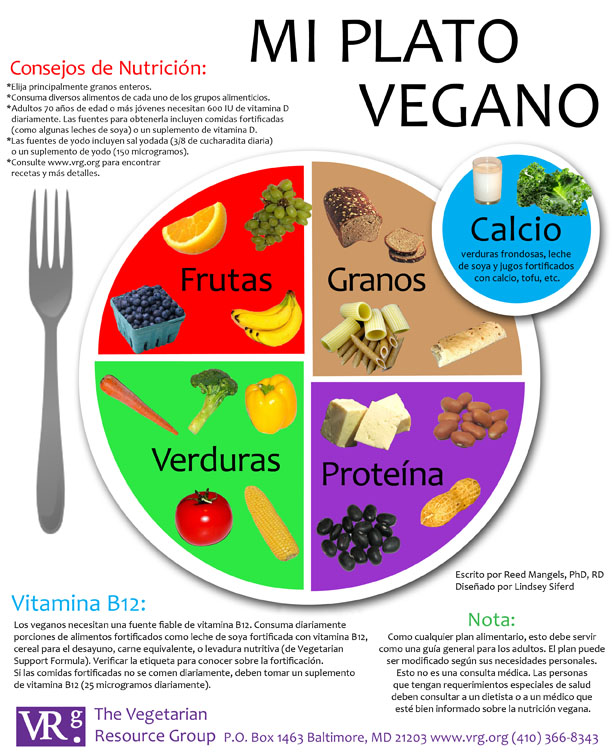
Nothing beats a simple graphic to get the vegan message out!
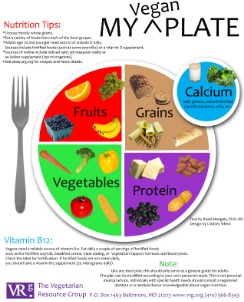
The Vegetarian Resource Group created My
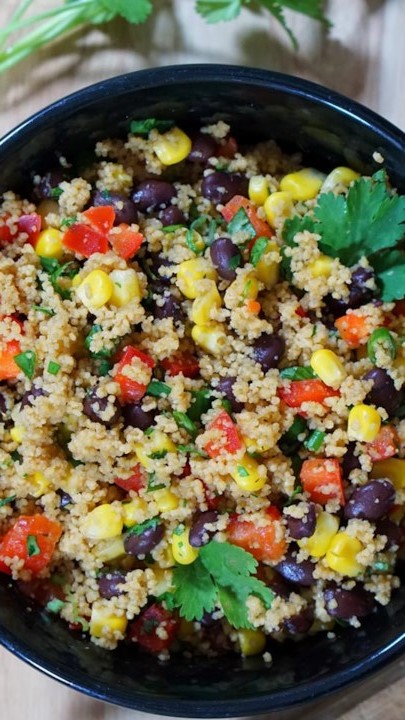
Vegan Plate to display on outreach tables at various events. If you live in
the United States, you can request copies of this handout to distribute by
emailing us at [email protected]
How often have you wanted to make a gift in honor of a loved
one or friend but weren’t sure which charities are vegan-friendly,
pro-environmental, or pro-animal rights? Please remember The Vegetarian
Resource Group. You can make a gift in memory of a loved one or as a living
tribute to honor someone you care about on a special occasion, such as a
wedding or birth. We’ll send an acknowledgment to you and to the recipient(s)
you choose. Your gift will support educational programs and help promote
veganism.
Make checks payable to The Vegetarian Resource Group and
mail to PO Box 1463, Baltimore, MD 21203, or donate at vrg.org/donate.
The VRG received an email inquiry asking us to look into 7-Eleven pizza ingredients. The reader had been trying to get answers from the chain with no luck. For example, is the crust or red sauce vegan?
(EDITORS NOTE: See bottom of this article for vegan pizza
ideas. There are so many frozen vegan pizzas now and restaurants offering vegan
pizza, this is your best bet. We’ve come a long way since our staff would order
pizza without cheese. But we would still recommend that method as a good way to
go sometimes if you don’t want the fat in vegan or non-vegan cheese, and want
to load up with vegetables on the crust.)
In January 2020, The VRG sent a
contact request form through the 7-Eleven website asking for a complete
ingredient statement for the cheese
pizza.
We specifically wanted to know:
Is the cheese made with animal rennet?
Are there animal fats (such as lard) in the crust or sauce?
Is the dough made with animal- or human hair-derived L-cysteine?
We also called the 7-Eleven consumer
line. They wrote down our questions, and told us they would send them to the
corporate office. It would take 3-5 business days to get a response.
A few days later we received an
email from a 7-Eleven business consultant for the Maryland region. That email
contained the ingredient list for the cheese pizza:
VRG NOTE: “Concentrated sponge extract” is a vegetable- and
microbial-sourced ingredient made of water, wheat flour, and microbes.
From this ingredient statement, we concluded that there were
no animal fats such as lard (except from dairy) in the sauce or dough.
L-cysteine was NOT used as a dough conditioner.
Because the source of the cheese
enzymes was not specified, we asked for more information. Kelly soon relayed:
“Took a little while but here is the
manufacture’s response: ‘The enzymes in the cheeses come from microbial
sources.’”
At this time, our inquirer reported
some other information. She related: “I managed to get a pizza [box] from the
cashier the other night and read the contact info!”
So she wrote directly to the company
on the box. She asked the company:
“Menu
Solutions was listed on the back of this product as the
customer contact website. I am a consumer who has been trying to find out 1) if
the cheese on these pizzas has animal rennet; and 2) if the sauce and crust
have vegan or vegetarian ingredients (no animal products or ONLY
dairy/egg). Thank you.”
She then shared with us the response
she had received. It was from Scot at Schwan’s in Minnesota, the apparent
parent company of Menu Solutions, located in Colorado. (The Menu Solutions
website redirected to Schwan’s.)
“The cheese enzyme is microbial-sourced. There
is no egg; however, there is milk in the product. In addition, the product is
not certified vegan.”
Happy to have received a response,
the inquirer then asked: “In the cheese pizza, is there any pork or seafood
by-products (or any animal by-products other than the dairy)?”
Scot replied: “There is no pork nor
seafood in the product. There are no animal [ingredients] other than dairy.”
When I asked the inquirer what she
observed when 7-Eleven staff warmed the pizza, she detailed:
“At 7-11 stores, you can see them
get the pre-made pizza out…They put it on a sheet of paper and put it into
their high-speed oven. That’s here in Denver…”
She mentioned that there is a “high-end” 7-Eleven in her city that makes its own crust. She stated: “The one that makes its own is one of 7-Eleven’s new concept stores. They have an actual full kitchen. They even sell ‘tap’ kombucha.”
Interested readers can find out more
about 7-Eleven’s concept stores in this article.
Wanting to know more about the
concept stores’ ingredients, The Vegetarian Resource Group posed this question
to Kelly at 7-Eleven: “One of our members told us that a 7-Eleven in her city
(Denver) makes its own pizza. How common is this?
“She also said that another store
uses the food service branch of Menu Solutions whose website redirected to
Schwan’s based in Minnesota. If true, does Schwan’s supply the entire USA? So,
the information you’ve provided about ingredients is true for ALL
7-Eleven stores (that don’t make their own pizza) in the USA?
Also, what is the protocol for warming/cooking
the pizza? Could it be prepared close to animal foods or on the same surface as
animal foods (including eggs)?”
Kelly responded to The VRG:
“1. All pizza is from the same
distributor, so yes, [ingredients] would be the same.
2. We cook the pizza in the same oven as the chicken, beef patties.”
Wanting more detail on the kitchen
protocol, we asked: “Do you sanitize the oven between uses? Do you use a baking
sheet of some type?”
Kelly replied: “The oven is cleaned
and sanitized once a day. We use paper and cooking sheets to cook the product.”
The VRG then asked “Are the paper
and cooking sheets changed for each product?”
Kelly responded: “They are supposed
to change each time.”
VRG Recommendations
When in doubt about ingredients and
you find the staff to be unable to answer your questions, request to see the
food packaging. Look for an ingredients label and supplier information. Follow
up directly with the supplier if store staff cannot help you.
To avoid cross contamination with
animal foods when dining out, ask for a clean baking sheet for your meal and
request that it be prepared separately.
We appreciate the responses from
7-11. Not all businesses are as quick to answer.
The contents of this posting, our
website, and our other publications, including Vegetarian Journal, are not
intended to provide personal medical advice. Medical advice should be obtained
from a qualified health professional. We often depend on product and ingredient
information from company statements. It is impossible to be 100% sure about a
statement, info can change, people have different views, and mistakes can be
made. Please use your best judgment about whether a product is suitable for
you. To be sure, do further research or confirmation on your own.
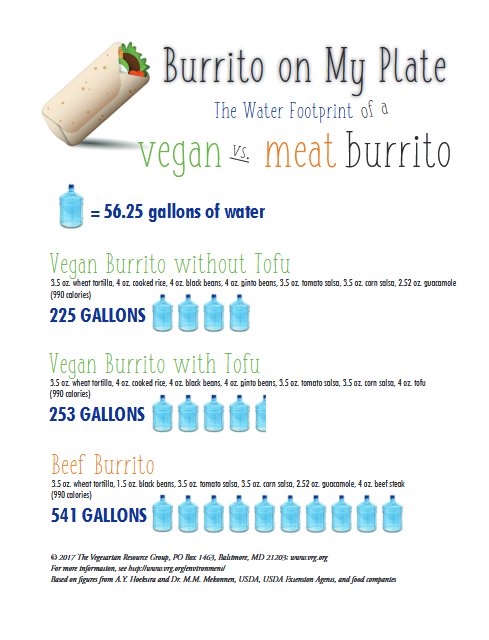
The Vegetarian Resource Group has a graphic called Burrito
on My Plate, which shows viewers the water footprint of a vegan versus a
meat-based burrito. It takes 225 gallons of water to make a vegan burrito
without tofu and 253 gallons of water to make a vegan burrito with tofu. In
comparison, it takes 541 gallons of water to make a beef burrito.
We recently visited Urban Vegan Kitchen located at 41 Carmine St., New York, NY 10014. It was a Saturday night and they were very crowded. In fact, it’s a good idea to make reservations!
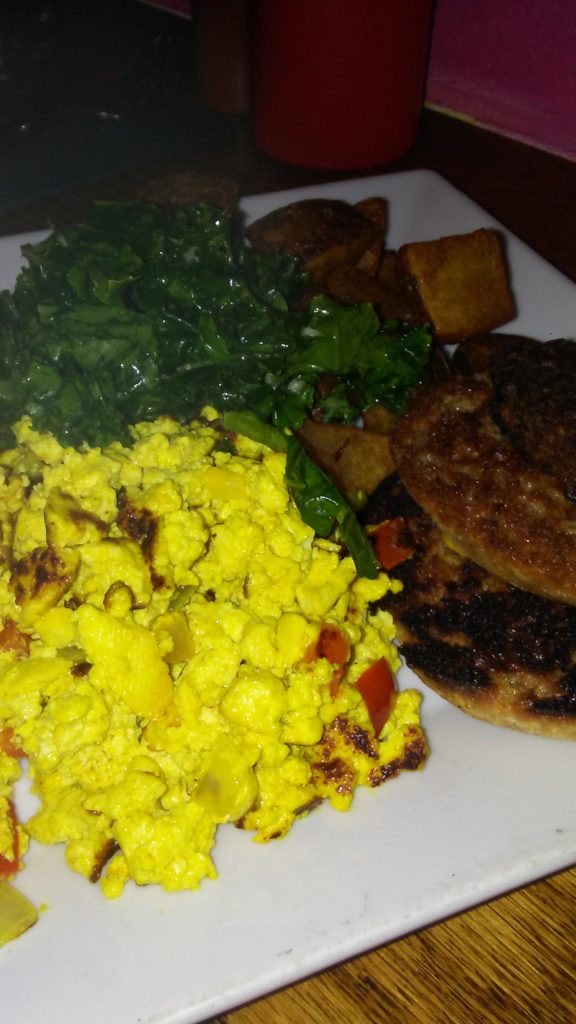
The restaurant seems to attract a diverse young crowd and the staff is friendly and very accommodating. While there, we sampled their Tofu Scramble Plate which consisted of marinated kale, a homemade sausage, home fries, a multi-grain English muffin along with the tofu scramble. (Yes, they serve breakfast items in the evening.) We also enjoyed an incredible slice of chocolate cake along with a mocktail.
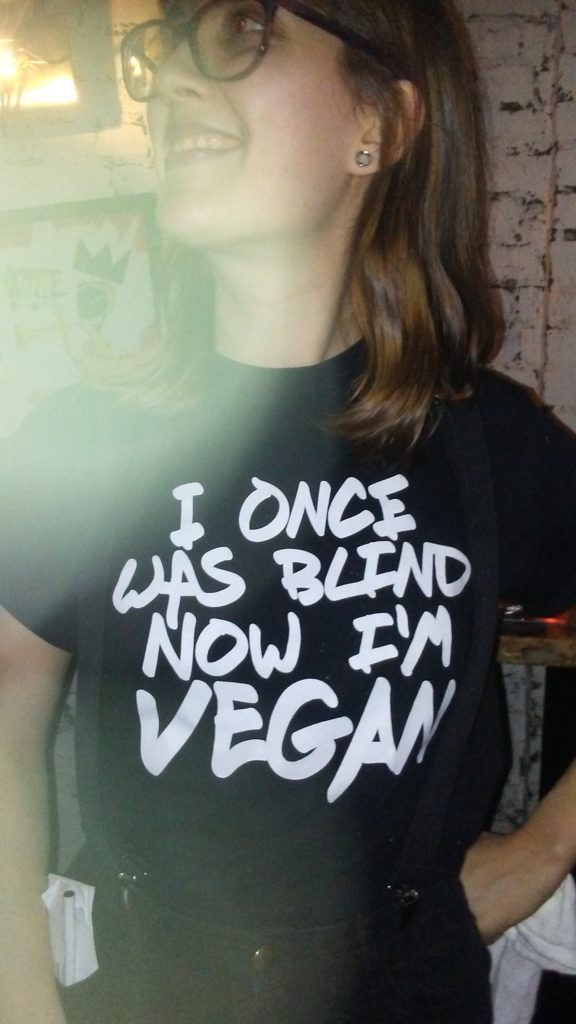
Urban Vegan Kitchen also sells vegan t-shirts that say “I once was blind — Now I’m vegan.”
The Vegetarian Resource Group has one needs based paid
internship ($4,200 stipend) in Baltimore this coming summer for eight weeks.
To apply send a resume, writing sample, and cover letter
addressing your need, vegetarian knowledge, past activism, short term and long
term goals, and what you hope to learn from the internship.
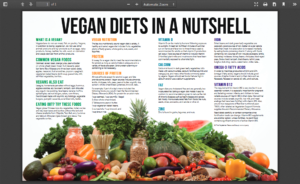
Are you looking for a one-page handout that simply explains
vegan diets? Vegan Diets in a Nutshell from The Vegetarian Resource Group is a
great educational tool for people thinking about going vegan.
If you’re in the mood for creative vegan Chinese food when
in New York City, be sure to try out Go Zen. They are located at 144 West 4th Street, New York, NY 10012 near Washington
Square Park and New York University.
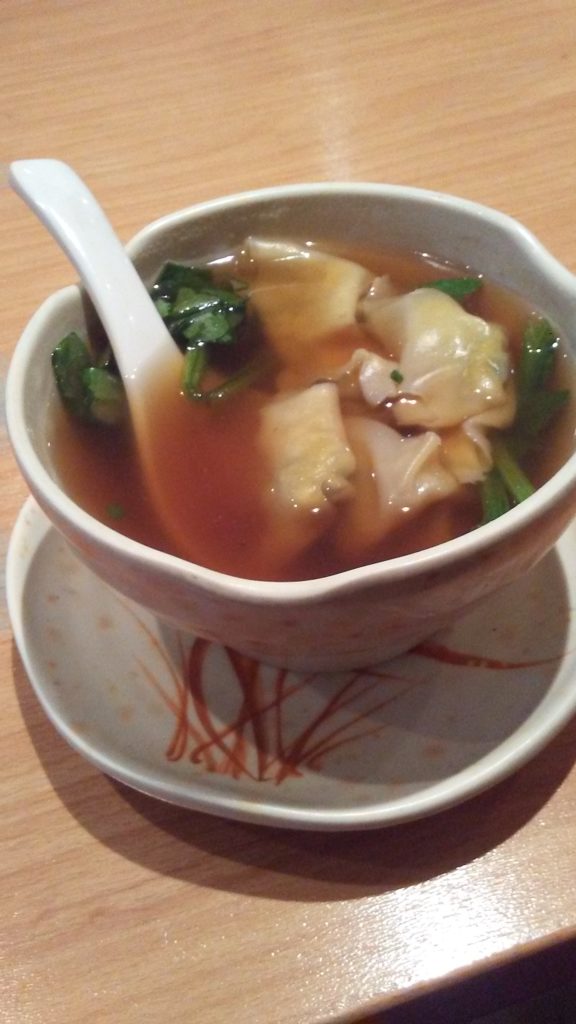
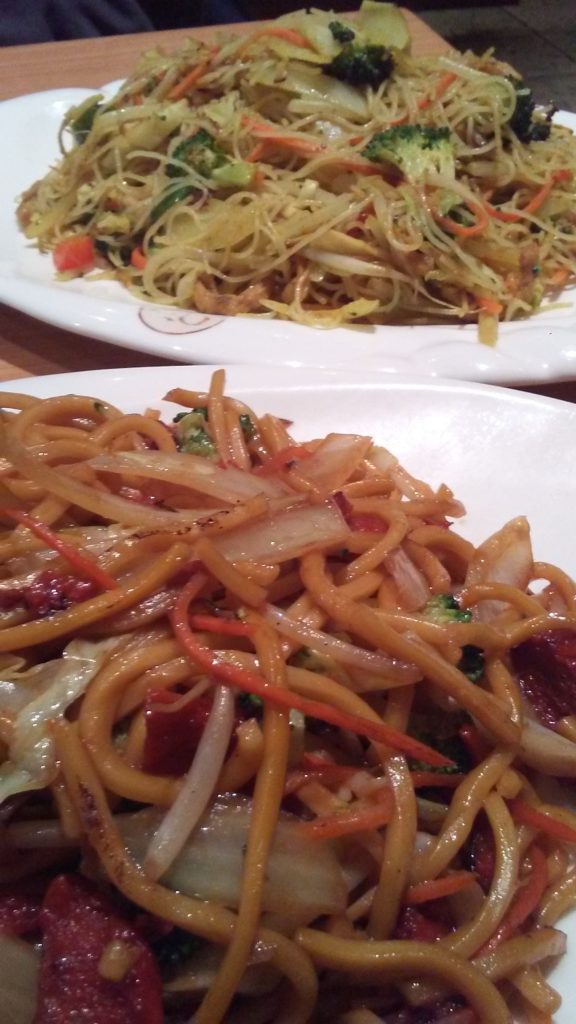
On a recent visit, we ordered their hot and sour soup and wonton soup. Both were delicious! We also enjoyed two noodle-based dishes: Singapore Mai Fun (vermicelli rice noodles with mixed seasonal vegetables and soy protein) and Bar-B-Q Seitan with Yakisoba Noodle (yakisoba wheat noodles with mixed seasonal vegetables and seitan).
The Vegetarian Resource Group (VRG) is a non-profit organization dedicated to educating the public on veganism and the interrelated issues of health, nutrition, ecology, ethics, and world hunger. We have been helping health professionals, food services, businesses, educators, students, vegans, and vegetarians since 1982. In addition to publishing the Vegan Journal, VRG produces and sells a number of books.
Sign up for our newsletter to receive recipes, ingredient information, reviews of new products, announcements of new books, free samples of products, and other VRG materials.