The Vegetarian Resource Group Blog

Vegan Teens Survival in a City

Posted on August 15, 2017 by The VRG Blog Editor

By Davin Cheyenne, VRG Intern

High skyscrapers, great sightseeing, friendly faces, and loads of work opportunities is a major attraction for teenagers living in a city. However, this has its challenges, mainly the health of one’s body. Because we are always on the go and city living is expensive, many teenagers struggle with balancing health and our checkbooks.
Some complaints I get from my peers about going vegan is that there are no quick and filling vegan options readily available. The social settings they are around only offer animal-based meals. Lastly the cost (for example, the price of a tomato compared to a bag of chips is roughly the same price in many stores), can be a deal breaker to many.
So what’s a teen to do in these situations, especially if you are living in a home with meat eaters, like yours truly?

First, take a deep breath…are you breathing? With a little motivation and preparation these obstacles can be tackled. Next, list the foods and meals that you love, even if it is meat-based (like wings and pot-roast). List it! Then make a list of the reasons why you want to be vegan. Doing this will push you to look, think, and create the lifestyle you want for yourself.

For me, I listed the two reasons I wanted to become vegan: health reasons and animals. I wanted to lose weight and lower my risk for family related health issues. Also, I love companion animals; but I realize that farm, and wild animals are beings as well who deserve love.

Second, research filling vegan meals; there is a wide variety of ingredients to choose from. I suggest opting for items such quinoa, rice, tofu, hummus, and beans. Many grocery stores (such as Aldi’s or Safeway), carry these ingredients for reasonable prices. These ingredients can make enough meal portions to eat throughout the week.
Some items that I buy weekly are bananas, oranges, grapes, spinach, tomatoes, bread, and occasionally vegan deli slices and cheeses. Monthly, I stock up on rice, beans, spices, nuts, and seeds.

A typical day of meals in high school for me: breakfast, oats mixed with frozen berries and soy milk; for lunch a bowl of rice with beans, veggies, and a salad to top it; and for dinner a pot cooked meal, like soup or veggie pot-roast.

For me, snacking was a big thing. I had very little time to eat between traveling to classes and heading home from band practice. So, I chose fruits and veggies as cost effective snacks. Fruits (such as apples, oranges), were easy for me to separate in plastic bags and take with me. Bags of nuts and seeds or cucumbers and tomatoes were options when snacking on the go. It was perfect to keep me full, and most importantly cost effective.

Being a teenager put me in the position to start branching out into many social settings. There were my friends in class, in my after school clubs, weekend outings, family events, and church. For many teenagers like me, eating vegan was difficult for my friends and family to accept. I personally know what it’s like to have friends who eat completely differently from me and find it hard to choose vegan-friendly or places with vegan options. We just all want to spend time together without fretting over food options. For this dilemma, come prepared! Reading the menu and reviews from vegan customers before arriving to the restaurant ensures you will not become the friend watching everyone else eat due to the limiting options available. I like to research restaurants that are popular in my area (Applebee’s, Red Robin, Subway, etc.). Then, I call to ensure those options are actually there or use online information to guide me. When I get there, I ask the waiter for the veggie option. The world of veganism is becoming so popular that many fast food chains, restaurants, and fun places (like amusement and sports parks) are beginning to serve vegan-friendly options!

Finally, I want to touch on lack of motivation. It is challenging to live in a fast paced lifestyle in a limited veggie environment. Sometimes it’s easier to set aside one’s own morals and go with the flow to not become the outcast. However, I encourage you to be the change you want to see. I know that sounds cliché but this is coming from someone who went vegan in a public high school where eating vegan was not common. While everyone else ate Cheetos, I ate tomatoes which really set me apart for a while. It wasn’t until I started losing weight and feeling and looking happier and healthier that people started asking me how they could be healthier too. Trust the process: you might be the odd one out, but you can be the face of change!

I hope this helps! Stay focused and be prepared, my friends.
Davin

For more information, see: http://www.vrg.org/teen/#plans

MEATLESS MONDAYS GUIDES FOR RESTAURANTS

Posted on August 14, 2017 by The VRG Blog Editor

To help restaurants incorporate Meatless Mondays, see:
http://www.meatlessmonday.com/images/photos/2017/07/meatless-monday-guide-food-service-restaurant.pdf

Join the VRG Parents and Kids Facebook Group!

Posted on August 14, 2017 by The VRG Blog Editor


https://www.facebook.com/groups/VRGparentsandkids/ is intended to be a group that offers support for families raising children on vegan diets and for vegan kids. We envision it as a place to get advice about a wide-variety of topics: pregnancy, birthday parties, school lunches, Halloween, non-leather apparel, cruelty-free products, summer camps, and more. Please use it as a place to share your wisdom, seek advice, or just find a sympathetic ear. The goal is to offer support.

Consequently, any profane, defamatory, offensive, or violent language will be removed. Feel free to disagree, but do so respectfully. Hateful or discriminatory comments regarding race, ethnicity, religion, gender, disability, sexual orientation, or political beliefs will not be tolerated. We expect that posts should relate to vegan diets and lifestyles. The Vegetarian Resource Group reserves the right to monitor all content and ban any user who posts in violation of the above rules, any law or regulation, SPAM, or anything otherwise off topic.

Recent discussion topics include:
School Districts adding veggie options in their cafeteria
www.VeganCamp.org had a vegan burger taste test – see results
Cool vegan cookbook suggestions
Plus much more!

Please share this information with any veggie families that you know! Thanks.

WHAT DOES PLANT-BASED MEAN TO THE PUBLIC?

Posted on August 11, 2017 by The VRG Blog Editor


One Poll conducted a U.S. online survey July 11, 2017 to July 14, 2017 of 1,000 individuals. When asking, “I think a plant based diet means,” with only one choice allowed per person, the responses were:

A Vegetarian Diet: 20.3%
A Vegan Diet: 16.9%
A vegetarian or vegan diet that is composed of whole foods: 17.8%
A whole foods diet, but can include animal products: 13.4%
I don’t know what a plant-based diet is: 23.8%
Other options: 7.8%

In this survey, 35.5% ate one or more vegetarian meals per week. However, only a total of 8.5% said they would describe themselves as a vegetarian, vegan, or eating a plant-based diet.

Of the people eating one or more vegetarian meals per week, when making food choices, most important to them to them was:

Taste: 48.5%
Personal Health: 22.3%
Cost: 13.2%
Convenience: 6.5%
9.5% (Other choices including ethics, religious beliefs, the environment, animal welfare, and not any of these)

From our observations, the people that caused the vegan and vegetarian movement and growth of products to happen had ethical, religious, environmental, and animal welfare beliefs. However, the great success of vegetarian festivals and growth of vegan products in almost every store is because of appealing to people’s taste, cost, and convenience, as well as investors wanting to make money. At vegetarian festivals, the longest lines are often for vegan baked goods or other desserts. People flock to the free or inexpensive festivals as they are low cost. A turning point in vegan products in supermarkets was when Silk Soy Milk moved soy milk from an asceptic package on the shelf to the refrigerator case next to cow’s milk, which made it much more convenient.

Of those that eat one or more vegetarian meals per week, 29.6% said they would buy “Your Favorite veggie burger cooked on the same grill where meat is cooked, if the grill is cleaned first. 26.8% said they would buy a veggie burger from the store. 11.8% said they would buy a meat alternative grown from animal cell DNA obtained ten years ago, which does not currently involve the raising of animals.

Of those that eat one or more vegetarian meals per week, 32.7% stated they would buy “Your favorite dessert containing sugar, if the source of the sugar isn’t specified.” However, only 11.6% would buy “Your favorite dessert containing sugar whitened through a bone char filter, if bone char is not in the sugar.” This seems to indicate that consumers say they will make different decisions based on knowledge. We would recommend clear labeling of sources on packages and on company websites so consumers can make their own informed choices, and have confidence in the business.

So when the respondents think about a plant-based diet, they can have very different ideas of what it means or what is important to them. If a business wants to cater to people on a plant-based diet, based on this survey, the business would need to do more research on their customers to find out what they want. If a dietitian is counseling a patient who says he/she is on a plant-based diet, that health professional would also have to ask more questions.

Note there are always sampling errors in surveys. Since the One Poll was not weighted towards the actual makeup of the U.S. population, we wouldn’t extrapolate these results to make conclusions about numbers in the U.S. population. One Poll surveyed 1,000 U.S. adults online July 11, 2017 to July 14, 2017. One Poll is MRS and ESOMAR accredited.

For information about additional polls, see:
http://www.vrg.org/nutshell/faq.htm#poll

VRG has a Booth at the Waverly 32nd Street Farmers Market in Baltimore

Posted on August 10, 2017 by The VRG Blog Editor

Waverly Farmer's Mkt

By Davin Cheyenne

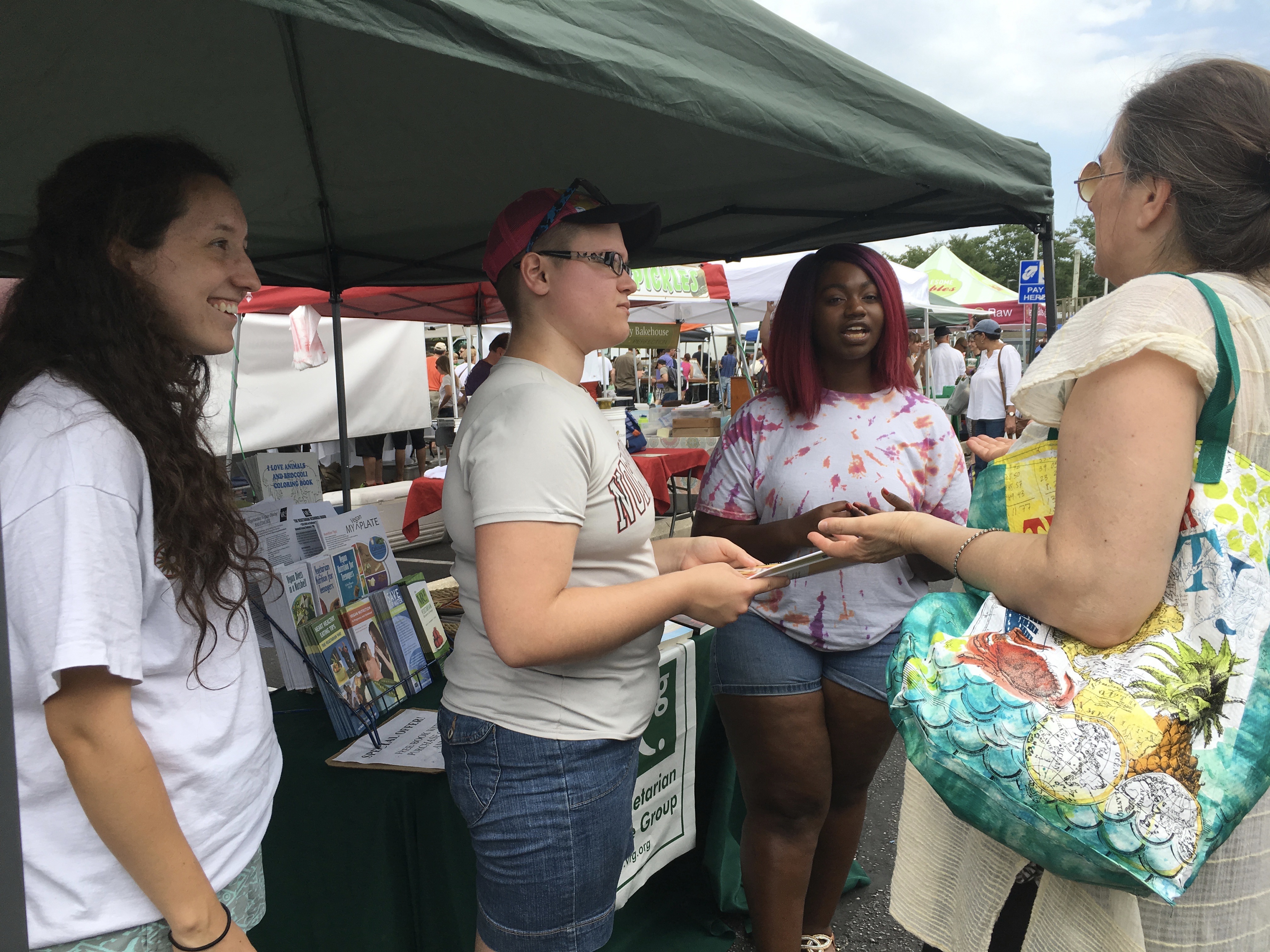
As dawn approaches, the dew from the previous night melts into the freshly picked soil each farmer touches. Fresh produce such as peaches, cherries, eggplants, and tomatoes are packed into baskets ready to make the one to two-hour journey into the city. During this time the first light is clicked on, as families awaken in their homes preparing for their early morning walk down the street to pick up fresh local groceries for the week. Bag in hand, or foot on the gas pedal, both journeys lead to the same place.

Picture a place that connects the people of the community with the farmlands surrounding them, and where people who come from a low-income background with little education on nutrition, are able to afford cherries and peaches in a friendly atmosphere. With music and dancing filling the walkways this is what Waverly Farmers Market is known for in Charm City.

Waverly Farmers market is a local farmers market conveniently located in Baltimore, and is year-round every Saturday from 7 in the morning to 12 pm. At the market expect to see a parking lot containing eccentric booths full of friendly faces and exciting samples to try, from spicy ginger pickles to homemade kombucha and freshly picked berry jams. Each booth carries a special story with its products. Something I noticed is that there are booths that have been there since the beginning of the markets opening 32 years ago, which are local favorites.

As a Vegetarian Resource Group volunteer, I only expected to hand out Vegetarian Journal magazines, sell books, and give out information on veganism. Instead, I found that the more I listened, the more I, in turn, learned and developed a relationship with each new visitor. Each individual brought along an interesting reason of why veganism is actually important for the community as a whole, from the first person that stepped up to the booth (an older gentleman who has recently converted to vegetarianism due to his fight with diabetes), to a young woman, who since childhood lived on a vegan diet, however, wanted to learn more about the impact environmental and humane reasons of veganism can have on her neighborhood.

I see the important impact volunteering at The Vegetarian Resource Group booth on Saturday had on me. Volunteering allowed me to connect more with individuals and spread the true message of veganism which is a love of all, beyond condition. I made friends with people I believe I will see all around the city, and I can only believe will help with the building of community projects I hope to be a part of in the future.

For information on how to become a part of The Vegetarian Resource Group’s volunteer group please contact Brigette at [email protected]

VRG Exhibited at the Richmond Virginia VegFest

Posted on August 09, 2017 by The VRG Blog Editor

Richmond VegFest booth

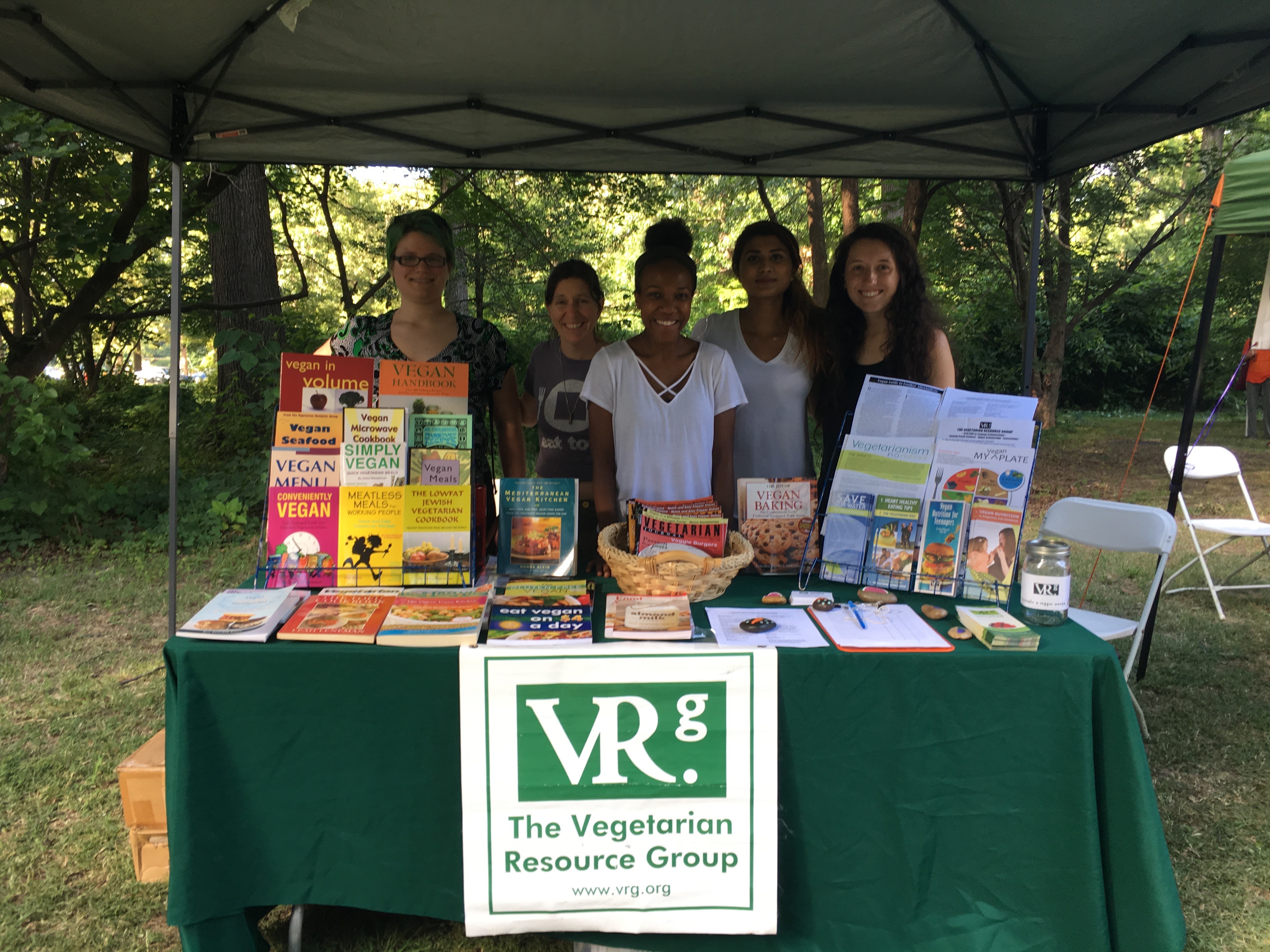
Earlier this summer, multiple interns and volunteers with The Vegetarian Resource Group volunteered at Richmond Vegfest in Virginia. While there, they were able to distribute resources to the crowd and connect with many individuals who stopped by the booth. As usual, our resources including “Vegetarianism in a Nutshell” handouts, “I Love Animals and Broccoli” coloring books, and copies of the Vegetarian Journal were very popular. The volunteers met with a variety of people at the event who all shared a common interest: a veggie lifestyle. Parents stopped by the booth looking for kid-friendly recipe ideas to prepare for their children. The volunteers were able to direct them to our Parents and Kids Facebook group (https://www.facebook.com/groups/VRGparentsandkids/) and suggest multiple different kid-friendly cookbooks that they could try. Other individuals stopped by looking for resources on transitioning to vegetarianism and suggestions of vegan meat and cheese alternatives that they could purchase. The interns and volunteers had a great time at this event and loved being able to connect with many different people in a lovely park setting.

Veggie Outreach at a Summer Camp in Baltimore

Posted on August 08, 2017 by The VRG Blog Editor
PastedImage-5

By Casey Brown and Marissa Thobe

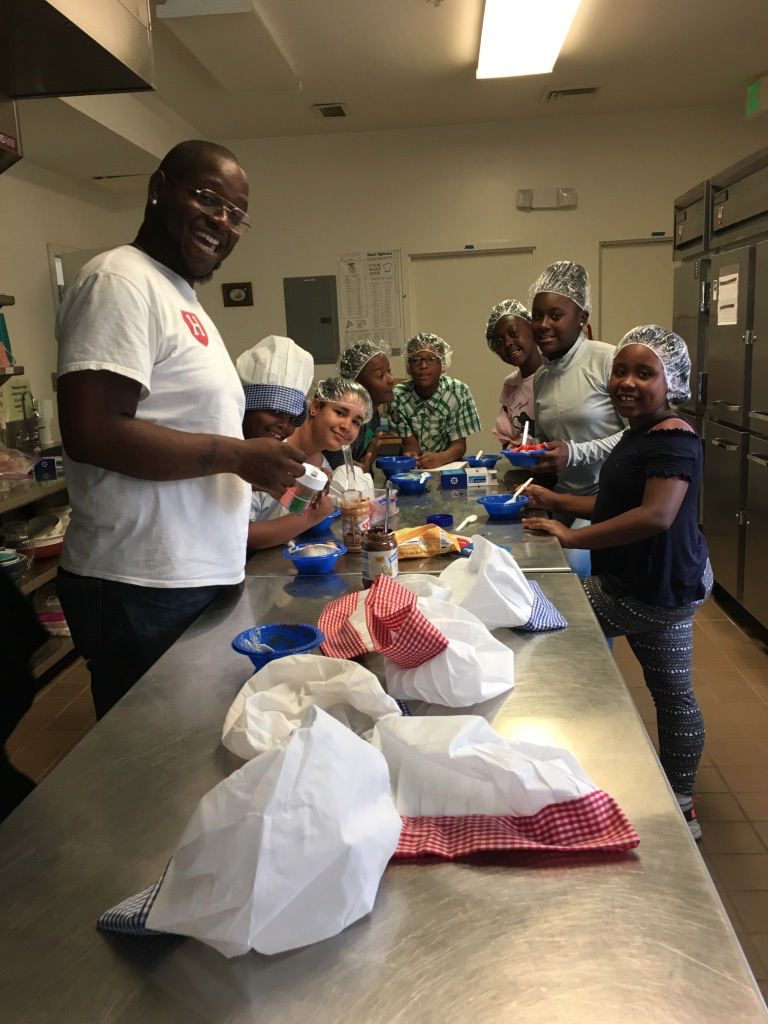
The Vegetarian Resource Group recently sent five interns and volunteers to Tuttie’s Place in Gwynn Oak, Baltimore. There, we talked to youngsters ages 5-20 about what vegetarianism is, what vegetarians eat, and reasons why people go vegetarian or vegan. The students sampled vegan foods and participated in hands-on activities to learn more about vegetarianism in an interactive manner.

Tuttie’s Place is a nonprofit community organization that provides after-care and summer programs to the youth of Baltimore and residential services to foster care children. We had the privilege of working with over 20 intelligent, young children who were very curious and eager to learn about vegetarianism. The younger children (under 14) were energetic and full of spunk and they were excited to try vegan foods and meet us. The older kids (14 and up) included aspiring musicians, writers, and community leaders from schools all over Baltimore City. They were specific in their questions and thoughtful in their discussions. It was obvious to us that Tuttie’s Place empowers these students and builds their confidence.

Prior to visiting Tuttie’s Place, we formulated a lesson plan according to the age groups of the camp. Tuttie’s Place has students ranging from 5-years-old to 21-years-old, and we knew it would be better to divide them up and educate them accordingly. The classrooms were broken up into 3 sections: 5-8 year olds, 9-13 year olds, and 14-21 year olds. We decided we would start with a general introduction to the entire camp to teach them about The Vegetarian Resource Grouop and the basics of vegetarianism. We also brought different vegan foods for everyone to sample. Then we planned to divide everyone into their separate classrooms and participate in different activities with each age group.

The youngest group (5-8 year olds) would learn about My Vegan Plate, food groups, and vegetarian snacks. The middle group (9-13 year olds) would review My Vegan Plate, learn about vegan sources of calcium, discuss vegan foods and vegan cooking, and learn about Meatless Mondays. The oldest group (14-21 year olds) would guide their discussion focused around questions they had pertaining to veganism and vegetarianism. Throughout the lesson, each of the groups would also have a chance to prepare and enjoy a delicious, non-dairy dessert: banana ice cream.

We initially talked with the entire group to see what they already knew about vegetarianism. Around half of the kids were returning to the camp and remembered VRG visiting last year. The group was familiar with vegetarianism and many of the students knew someone who was vegetarian or vegan. We then asked the students what foods they thought vegetarians ate. Common answers included tofu, vegetables, almond milk, and fruits. We told them about other options including lentils, beans, nuts, and vegan specialty options, and we brought a bag full of vegan food items that they would be familiar with. We had packages of common vegan food items including pasta, chips, oats, Daiya macaroni, vegan deli meats, and plant-based milks.

Next, we sampled multiple vegan products with the students. They were all very eager to try the foods we brought, which included almond milk and soy milk, Daiya macaroni, and Tofurky deli slices. The majority of the group enjoyed all of the products and were very willing to try them. We gave each student two varieties of Tofurky slices and asked them to guess which was real meat and which was vegan meat. This allowed the kids to be more open-minded going into the taste-test, and they ended up really enjoying both flavors. They were shocked to learn that they were actually both vegan! The students also enjoyed the soy milk and almond milk, and we found that most kids preferred the soy milk option. Many students even asked for seconds since they thought it was delicious. We asked the students to raise their hands if they enjoyed the macaroni sample, and most hands shot up in the air since they loved this delicious snack!

After sampling the different foods, we split off into different classes that were based on age groups. This was vital to guiding discussions in the right direction since the younger children had different questions regarding vegetarianism than the older students would.

In the first classroom (5-8 year olds), we taught the students about My Vegan Plate, vegan snacks, and vegan cooking. We began by asking the students if they understood what vegetarians and vegans ate. We were surprised since the students answered perfectly, showing great understanding, and they even mentioned some vegan foods and meals that they regularly ate. We then asked whether the students were involved with cooking at home. The majority of the students said that they were involved in cooking and would often help prepare ingredients under their parent’s supervision. Next, we taught the kids about My Vegan Plate and we were surprised to find that many of the students were already familiar with it. We played a game with the students by asking them which category different foods fell under. Examples included chickpeas, bananas, tofu, soymilk, carrots, berries, rice, peanuts, and pasta. Most students knew which food group each ingredient belonged to, and they only needed a little assistance for the protein category. Following these activities, the students were able to color in “I Love Animals and Broccoli” coloring books, while further discussing vegetarianism.

In the second classroom (9-13 years old), we discussed the terms vegetarian and vegan. The students understood the difference between these terms, but they had a lot of questions about whether certain foods were vegetarian or vegan. They were curious whether vegetarians could eat bread, salad dressing, fish, and other items. These students were very interested in going vegetarian or trying Meatless Mondays. They informed us that they had their own Meatless Monday during camp the previous week and prepared a vegetarian taco dish for lunch. Another student said he wanted to try a vegan day, so we encouraged him to do his own vegan version of Meatless Monday. They all loved cooking and said they frequently helped with cooking at home. They were familiar with MyPlate, so we showed them My Vegan Plate and explained vegan sources of calcium to them. They were very knowledgeable about the different food groups, and we had them each draw what their plate typically looks like and categorize the foods into the appropriate food group. The students understood the importance of eating a diet with a variety of foods, with half of their plate being fruits and vegetables. We then went through a crossword and other games with the students, which challenged their knowledge about the origin of their food. We used the I Love Animals and Broccoli Shopping Basket workbook, which had questions such as “this meat comes from baby cows,” “tofu is made from _”, and “pork comes from which animal.” These questions allowed the students to make a better connection between animals and food. After the activities, we talked with a few of the students who were excited about trying a more vegetarian-friendly diet. They told us that they wanted to make banana ice cream at home with their families, try Meatless Mondays, and try cooking tofu or other vegan alternatives at home. One of the students was hoping to try a cheese alternative, so we told him about vegan brands or options like nutritional yeast or nuts that could be used in place of dairy cheeses. Overall, we had a great time working with these students, and it was awesome to see how excited and curious they were to learn more about vegetarian and vegan diets. They were very engaged throughout the lesson and learned a lot from each other and from us.

In the oldest age group (14-20 years old), we talked about the agriculture industry, how animal products can harm one’s health, and the ethics of veganism. The maturity of the students was imperative to the discussion of these topics. At first, a few of them were opposed to the idea of going vegetarian because of limiting factors such as the taste of meat and family meals being meat-based. A few of the students knew others who were vegetarian, but many did not understand the reasons why one would choose to stop eating their favorite foods, including fried chicken and burgers. We also discussed how more vegetarian foods are being introduced to the market with the increasing demand for plant-based foods. Because of this, vegetarian products are constantly improving in quality and more closely resembling their non-vegetarian counterparts. Many of these foods can often replicate the experience of non-vegetarian meats or dairy without harming animals, the environment, or our health. Our group also addressed the ethics of eating meat and how unnatural it is to drink cow’s milk when humans are the only species to consume the milk of another animal. We brought up the question: if livestock gets nutrients from plants, why not just consume the plants as a primary source of energy and not get the used energy from a secondary consumer? Their reactions to this logic ranged from more complex questions to silent contemplation. The students responded well to commonly unknown facts about animal agriculture. We tried to give them knowledge about the animal agriculture industry instead of telling them why they should or shouldn’t eat certain foods. Our goal was to educate the students so that when they are able to make decisions on their own, they can use this knowledge and wisdom to make smart choices.

During the lesson, each of the classrooms prepared banana ice cream for a healthy, nondairy dessert. The kids were extremely excited when we announced that we would be making this since many of them remembered it and loved making it last year. Prior to the camp, we froze around 30 bananas (split into 2-3 pieces) and put them into gallon-sized bags. We also purchased sprinkles, chocolate chips, peanut butter, fresh strawberries, and a vegan chocolate spread. We brought along plenty of bowls, spoons, napkins, and other supplies, so everyone could enjoy the dessert. We used a Yonanas machine to prepare the ice cream. The Yonanas machine is a fruit soft serve machine that takes frozen fruits and churns them into delicious, frozen, creamy desserts. The machine can be purchased at many stores or online, and it typically costs around $50. In place of the machine, a blender could be used, however the resulting dessert might be slightly less creamy and a liquid might need to be added to help blend the ingredients. For the dessert, each kid got around 3 pieces of bananas to make their ice cream, which was about one banana total. They then topped it with their toppings of choice and enjoyed the delicious dessert!

We all loved being able to talk with and meet the students at Tuttie’s Place. The students’ excitement and curiosity made this lesson exciting and engaging, and we felt that they were able to learn a lot. While not all of the students were ready to switch to a vegetarian or vegan diet, many of them expressed an interest in it, and we were able to open their minds to the idea. We hope that the students will continue learning more about vegetarianism and we hope to return to Tuttie’s Place again next year to educate the students more about these lifestyles.

Summer Camp Lesson Plan:
http://www.vrg.org/family/TuttiesPlaceLessonPlan.pdf

For more lesson plans, see:
http://www.vrg.org/family/kidsindex.htm#plans

To support this type of outreach, please donate to The Vegetarian Resource Group here:
vrg.org/donate
LISA SHAPIRO ACTIVIST AWARD

Posted on August 07, 2017 by The VRG Blog Editor

The 2017 Lisa Shapiro Awards honor the unsung heroes of the global animal advocacy movement. Nominations are now officially open! Please help us say thank you to your favorite inspiring grassroots animal activists by nominating them at thepollinationproject.org/hero. This year’s award comes with a no-strings-attached $2,500 cash prize and a whole lot of vegan love from all over the world!

HYPOTHRYOIDISM: A reader asked if there is any medication out there suitable for vegans?

Posted on August 04, 2017 by The VRG Blog Editor

By Reed Mangels, PhD, RD

Medication recommendations should be discussed with your health care provider since individual situations vary. There are a number of different causes of hypothyroidism. Depending on your specific condition, certain medications may or may not be appropriate. We cannot recommend specific medications. We have not evaluated ingredients that are used in medication so cannot say with confidence whether or not a product is vegan.

A starting place, if you are trying to make decisions about medications, is to discuss options with your physician. Once you have a list of medications, websites like PDR – Prescribers’ Digital Reference can help you identify ingredients. You can also search online for specific medication names and the company who makes them. You can contact the company for more information. Your pharmacist may also be able to help with this research.

As an example of how you could approach this, suppose your provider told you that medications to treat hypothyroidism include Levoxyl and Synthroid. Products containing thyroid hormone from pigs are occasionally used but these have largely been replaced by synthetic hormones such as those in Levoxyl and Synthroid.

According to the company’s website, “The active ingredient in LEVOXYL (levothyroxine sodium) is a synthetic hormone that is identical to the thyroxine hormone naturally made by the thyroid gland.”

According to the PDR, Synthroid’s ingredients include lactose monohydrate (http://www.pdr.net/full-prescribing-information/Synthroid-levothyroxine-sodium-26). According to the company’s website, Levoxyl does not have lactose as an ingredient (http://labeling.pfizer.com/ShowLabeling.aspx?id=688). This is an obvious difference but we can’t say for certain whether or not either of these products contains animal ingredients. We also don’t know whether or not animal testing was used in their development.

The recent book, Even Vegans Die, offers some advice about medications. “It is also not practical to refuse medications that you need when no alternative exists. There are times when the only choice is a non-vegan choice. We work toward a world where there are alternatives to all products that involve animal use. But that world does not yet exist.”

Please discuss your specific needs and concerns with your physician.

The contents of this posting, our website and our other publications, including Vegetarian Journal, are not intended to provide personal medical advice. Medical advice should be obtained from a qualified health professional. We often depend on product and ingredient information from company statements. It is impossible to be 100% sure about a statement, info can change, people have different views, and mistakes can be made. Please use your best judgment about whether a product is suitable for you. To be sure, do further research or confirmation on your own.

Baltimore Vegan Restaurant Week will be Held August 18-26, 2017

Posted on August 03, 2017 by The VRG Blog Editor

o

By Shannon Borgoyn, VRG volunteer

Baltimore Restaurant Week is an attraction for Baltimore residents and tourists alike. Unfortunately, not everybody (namely vegans and vegetarians) can find options at participating restaurants. However, this will change with Baltimore Vegan Restaurant Week. Baltimore’s vegan restaurant week will be held August 18-26, 2017 and will feature a variety of vegan and non-vegan restaurants. It is sponsored by VegFund, Yelp, the Restaurant Association of Maryland, HB, the Land of Kush, Golden West Cafe, and the Black Vegetarian Society of Baltimore.

Golden West employee and coordinator of the event Shannon Light Hadley gave me some background information about Baltimore Vegan Restaurant Week. The idea of a vegan restaurant week was born of a desire for more vegan options at restaurants throughout Baltimore. She noticed the only vegan option at many restaurants is salad, which often isn’t filling and can lack variety. Hadley wanted to change this. She drew inspiration from Golden West’s vegan weekends, which have occurred twice per year for the last 2-3 years. From these vegan weekends, she got the idea for a vegan restaurant week.

To make this a reality, Hadley got in touch with the owner of the Land of Kush, Naijha Wright-Brown, to form a partnership with them and Golden West Cafe. Together, they’re working to bring Baltimore Vegan Restaurant Week to life: Wright-Brown is doing the street work (advertising on the streets, raising funds and grants, etc.) and Hadley handles the computer work (creating advertisements, running the event site, examining restaurant applications, etc.). Really, this is something similar to what they do on a daily basis. Besides being the owner of the Land of Kush, Wright-Brown is also the Executive Director of the Black Vegetarian Society of Maryland and Co-founder of the Vegan Soulfest. As for Hadley, she has a background in graphic design and marketing, has done professional design for ten years, and much more. With all the hard work being put into the event, it’s clear that Hadley and Wright-Brown are extremely passionate about Baltimore Vegan Restaurant Week.

The ultimate goal of Baltimore Vegan Restaurant Week is to challenge local restaurants to create vegan menu items. Hadley believes that restaurants without vegan options are truly missing out on a lucrative opportunity: having no options means little business from the vegan crowd. Over the years, veganism and vegan foods have become ubiquitous, but there are still many places that don’t yet provide vegan options. Baltimore Vegan Restaurant Week could create a better, more welcoming environment for vegans and vegetarians. Usually, Baltimore Restaurant Week features expensive, multi-course meals, but Baltimore Vegan Restaurant Week will feature affordable, simple, one-course vegan meals. Hadley hopes the event will arouse people’s curiosity about vegan food. Vegan food sometimes has the stereotypes of being costly and consisting of “rabbit food.” Through Baltimore Vegan Restaurant Week, Hadley hopes people will see that vegan food can be as affordable and delicious as mainstream fare. Additionally, Hadley hopes everybody involved with the event will unify into an inclusive community where nobody feels shunned.

Already, the Internet is buzzing about Baltimore Vegan Restaurant Week: the Baltimore Sun’s article “Vegan Restaurant Week coming to Baltimore in August” link on Facebook has gotten several likes, shares, reactions, and comments; and Facebook group “Baltimore Vegans” is brimming with excitement. Hadley only expects Baltimore Vegan Restaurant Week to get more popular closer to event week. In the future, Hadley “would like to expand into the greater Baltimore area and throughout Maryland.”

Participating locations of Baltimore Vegan Restaurant Week include event sponsors the Land of Kush and Golden West Cafe, as well as Big Bean Theory, Sprout, Dangerously Delicious Pies, and many more! A more comprehensive list of participating locations can be found at https://www.mdveganeats.com/; as the event nears, more restaurants will be announced. Currently, Hadley has a Baltimore Vegan Restaurant Week Facebook event page in the works, will soon be launching the event’s site, and more. For restaurants interested in participating, the application can be found at https://www.mdveganeats.com/.

Links
Baltimore Vegan Restaurant Week: https://www.mdveganeats.com/
Baltimore Sun article: http://www.baltimoresun.com/entertainment/dining/baltimore-diner-blog/bs-fe-vegan-restaurant-week-20170705-story.html

For Maryland restaurants that serve vegetarian and vegan food year round, see
http://www.vrg.org/restaurant/Maryland.php

  • Donate

  • Subscribe to the blog by RSS

  • VRG-NEWS

    Sign up for our newsletter to receive recipes, ingredient information, reviews of new products, announcements of new books, free samples of products, and other VRG materials.

    Your E-mail address:
    Your Name (optional):


↑ Top