The Vegetarian Resource Group Blog

Is Coconut Oil Good for You?

Posted on December 13, 2016 by The VRG Blog Editor

1493

The Nutrition Hotline column in the latest issue of Vegetarian Journal focuses on coconut oil. Specifically this question is addressed: Is coconut oil good for you? I see it in so many vegan products.

To read the entire article go to: http://www.vrg.org/journal/vj2016issue4/2016_issue4_nutrition_hotline.php
To subscribe to Vegetarian Journal, visit: http://www.vrg.org/member/2013sv.php

Chef John Shields of Gertude’s Restaurant in Baltimore, Maryland Shares Some Recipes

Posted on December 12, 2016 by The VRG Blog Editor

outside

Chef John Shields is the owner of Gertrude’s Restaurant next to the Baltimore Museum of Art in Baltimore, Maryland. For quite some time, Gertrude’s menu has included several vegan options and now he is sharing some of his recipes with you. Enjoy!

The complete article can be found here:
http://www.vrg.org/journal/vj2016issue4/2016_issue4_john_shields.php
To subcribe to Vegetarian Journal, visit:
http://www.vrg.org/member/2013sv.php

Charitable donations from your IRA could save taxes!

Posted on December 12, 2016 by The VRG Blog Editor

According to the Law Office of Jill A Snyder, Congress has revived a
law that lets you make charitable donations (such as to The Vegetarian
Resource Group) directly from your IRA, which might provide you with
some significant tax advantages.

If you a’re over the age of 70½, you’ are required to take minimum
distributions each year from your IRA, and you have to pay income tax on
those distributions. But the “charitable rollover” law lets you transfer
assets from your IRA to a charity, and whatever amount you transfer
reduces the amount you a’re required to withdraw. So if you a’re
required to withdraw $20,000 in 2016, but you instead donate $20,000 to
charity, you don’t have to withdraw any funds for yourself, and you
don’t have to pay any income tax.

You won’’t get a charitable deduction for the amount you donate in this
way. However, donating directly from an IRA may be better than taking a
distribution and then making a donation, because it results in a lower
adjusted gross income – which can help you avoid taxes on Social
Security benefits, reduce your Medicare premiums, limit the 3.8% surtax
on investment income, and qualify for other deductions and credits.

In addition, donating from an IRA is definitely to your advantage if you
otherwise wouldn’’t be eligible for a charitable deduction, either
because you don’’t itemize your deductions or because you’ are subject
to the charitable deduction “phase-out” for higher-income taxpayers.

To qualify, you must contact the plan custodian and have the custodian
transfer the assets directly to the charity. If the custodian sends you
the funds and then you give them to the charity, you’’ll have to pay
income tax on the distribution.

You can donate up to $100,000 to charity each year from an IRA. A
married couple can donate up to $100,000 each, as long as each spouse
contributes from his or her separate account.

This is not legal or financial advice, which you should obtain from your
legal or financial advisor.

What’s the deal with vegan leather?

Posted on December 09, 2016 by The VRG Blog Editor

By Savannah Lawrence, VRG Intern

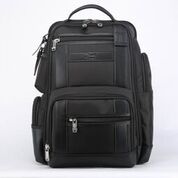
A member emailed The Vegetarian Resource Group back in December 2015 asking about vegan leather alternatives for Kindle covers. He’d come across many covers on Amazon claiming to be non-leather or even vegan because they were made with PU or polyurethane leather, which is made from plastic/polymer. However, when reading the products’ reviews, he realized there was confusion over what the label “PU leather” truly meant. He asked VRG to research the confusion over the term and other similar labels.

According to Colourlock, a European leather specialist, PU leather is used to describe both synthetic leather and bi-cast or split leather. According to Advanced Leather Solutions, a San Francisco based leather repair and restoration group, “Bicast products are manufactured by bonding a thick polyurethane coating to a split-hide leather or composite leather substrate.” Based on the information provided by the two leather companies, I concluded that PU leather have one of two meanings: A product is 100 percent plastic/polymer and is indeed synthetic, or a product is part plastic/polymer and part leather byproduct because of the leather substrate backing. Thus the confusion from the member.

Read more about what Colourlock said about the topic at https://www.colourlock.com/tip/furniture/pu-bycast-leather.html?store=usa

Read more about what Advanced Leather Solutions said about the topic at http://advleather.com/bicast.html

To find out whether or not this type of confusing labelling was legal, I turned to the Federal Trade Commission (FTC). The FTC regulations for commercial practices in regards to select leather and imitation leather products are meant to protect consumers against purchasing non-leather products that are falsely advertised as leather products, not the reverse.

The first part of the regulations reads as follows:

24.2 Deception as to composition

It is unfair or deceptive to misrepresent, directly or by implication, the composition of any industry product or part thereof. It is unfair or deceptive to use the unqualified term “leather” or other unqualified terms suggestive of leather to describe industry products unless the industry product so described is composed in all substantial parts of leather. This section includes, but is not limited to, the following:

(a) Imitation or simulated leather. If all or part of an industry product is made of non-leather material that appears to be leather, the fact that the material is not leather, or the general nature of the material as something other than leather, should be disclosed. For example: Not leather; Imitation leather; Simulated leather; Vinyl; Vinyl coated fabric; or Plastic.

All regulations for select leather and imitation leather products can be found at http://www.ecfr.gov/cgi-bin/text-idx?c=ecfr&SID=da0fff93d248d84476b245ccfa2ce5bc&rgn=div5&view=text&node=16%3A1.0.1.2.14&idno=16

After reading the regulations listed above, it’s clear that terms like “imitation leather,” “stimulated leather,” and even “plastic” do not indicate whether or not a product contains some amount of leather. As long “as part of an industry product is made of non-leather that appears to be leather” it must be disclosed and labelled with terms like the preceding, leaving consumers to guess whether or not the product still contains some trace of leather or leather byproduct.

Listed later in the regulations, one suggestion is that a partial leather and partial non-leather product’s label read, “Bonded Leather Containing 60% Leather Fibers and 40% Non-leather Substances.” However, this percentage breakdown is merely one example that sellers may or may not choose to follow. As long as a seller has “an adequate disclosure” and does not claim the product is genuine leather when it is not, the seller is abiding by FTC guidelines.

Since reading the guidelines still left me with many unanswered questions, I contacted the FTC directly. I spoke with Susan Arthur, FTC southwest region employee who’s worked on the FTC regulations in previous years, and was told that protecting consumers looking to avoid products containing leather is “not the focus of these regulations.” Moreover, I was told that the regulations are “guidelines not law.”
The guidelines were written to help sellers follow a law called the Federal Trade Commission Act Section 5: Unfair or Deceptive Acts or Practices. Section 5 “prohibits unfair or deceptive acts or practices in or affecting commerce.” An act or practice is considered deceptive when “A consumer’s interpretation of the representation, omission, or practice is considered reasonable under the circumstances.” However, since “reasonable” is a vague term with a varied interpretation from person to person, the FTC also publishes the guidelines to help sellers navigate the ambiguous legal standards. Looking back to those guidelines, there are no suggestions to protect consumers who want 100 percent non-leather products.

To read more about Section 5, visit https://www.federalreserve.gov/boarddocs/supmanual/cch/ftca.pdf
When commenting on today’s consumer preferences toward cruelty-free products, Arthur said, “Marketplace changes and concerns are different from when these guides were originally passed.”

Because of changing preferences, the guidelines will undergo regulatory review and possible revision in 2019. Public input is highly encouraged prior to the review.

Instructions for submitting a comment regarding possible amendments to the leather labelling guidelines can be found at https://www.ftc.gov/faq/ftc-info/file-comment

Readers are strongly encourage to submit positive, constructive comments that could lead to guideline modifications!

While Arthur contended that the guidelines do not protect against the misrepresentation of leather products as non-leather, she did say that consumers should file complaints if a product is labelled as vegan but still contains leather.

Directions for submitting such complaints can be found at https://www.ftc.gov/faq/consumer-protection/submit-consumer-complaint-ftc
Until 2019, consumers will have to be vigilant and look beyond a product’s tag. To truly know the make up of a product prior to purchase, contact the seller directly or look on the seller’s website for more detailed product information. You can also search the various terms listed on the product’s tag or in the product’s online description, but please be advised that it may require extensive research to truly understand what a label means.

For information on sources of nonleather shoes and other items, see
http://www.vrg.org/nutshell/leather.php

The contents of this posting, our website and our other publications, including Vegetarian Journal, are not intended to provide personal medical advice. Medical advice should be obtained from a qualified health professional. We often depend on product and ingredient information from company statements. It is impossible to be 100% sure about a statement, info can change, people have different views, and mistakes can be made. Please use your best judgement about whether a product is suitable for you. To be sure, do further research or confirmation on your own.

Please Give a Gift Membership to Family and Friends this Holiday Season!

Posted on December 09, 2016 by The VRG Blog Editor

file5341261158894

Through December 31, 2017, you can give a gift membership to The Vegetarian Resource Group (includes a 1-year subscription to Vegetarian Journal) for $15 each (40% discount). This is a terrific way to share the vegan message, as well as support VRG.

Gift subscriptions can be done online by simply typing in your message and the address(s) of the gift recipient(s) in the comments field. Go to: Gift Sub

MY INTERNSHIP AT THE VEGETARIAN RESOURCE GROUP

Posted on December 08, 2016 by The VRG Blog Editor

4-1

By Savannah Lawrence

In fall 2016, I interned with The Vegetarian Resource Group (VRG) while receiving credit from my college, Stevenson University, which is located just outside of Baltimore. As a Business Communication major, I was able to apply the skills and knowledge I’ve gained throughout my college years while at VRG.

Writing for the Vegetarian Journal and VRG’s blog allowed me to practice my written communication skills. This was especially important to me because I hope to pursue a writing career after college. Because I wrote for the journal and blog, I have wonderful writing samples to include in my portfolio and to direct future employers to when they’re deciding whether or not to hire me. Being published in a credible magazine goes a long way in the writing field, and it makes a huge difference in the job market for a new college graduate.

Beyond written communication, I also practiced my verbal, interpersonal, and intercultural communication skills when interacting with other interns, VRG employees, and VRG members. While the commonality of veganism and vegetarianism brings all interns, employees, and members together, we all come from different cultures and socio-economic backgrounds. I enjoyed asking Alicia, an intern from Germany, about her educational and social experiences back home. I gained new perspectives from Charles and Debra about major issues in the vegan community. I learned about the lives of other local vegans and vegetarians at the VRG Pre-Thanksgiving Potluck. I met Marv, a Maryland man who’s conserved his 20+ acres of land from future development, and learned about the importance of preserving land for future generations as well as the hunting laws in Maryland. I read scholarship applications and responded to applicants, learning more about what young people are doing to promote meat-free lifestyles. I was immersed in the culture that veganism produces from all different angles and perspectives; this allowed me to broaden my thinking as both a writer and individual.
I’ve also enjoyed the opportunity to incorporate my passions while writing for VRG. Staff encouraged me to write about topics pertinent to my life. For example, when Charles learned I was a distance runner, he assigned me the task of writing an article on vegan snacks for runners. After talking with Debra about living with my meat-eating fiancé, she assigned me an article entitled “Feeding Your Non-Vegan Significant Other.” When Charles and Debra heard me rave about my idol Scott Jurek, a record-setting vegan ultra-runner, they encouraged me to contact him for a feature in the Journal and let me review his memoir. Not all supervisors care about engaging their interns in the work, but VRG staff do. Allowing me to weave all of my passions into my writing made this an internship and experience that was enjoyable and interesting.

If you’re looking for an internship that will engage you and challenge you to become a better communicator, look no further than The Vegetarian Resource Group. They will make you feel at home, taking an interest in your life beyond VRG’s office. You’ll also gain valuable work samples and skills. I feel confident applying to post-graduate jobs because of the work I’ve produced at VRG, and I wouldn’t be as prepared for the job market had it not been for the internship.

For more information about VRG internships, see http://www.vrg.org/student/index.php

To support The Vegetarian Resource Group projects and internships, donate at https://www.givedirect.org/donate/?cid=1565

Or join VRG and receive Vegetarian Journal at http://www.vrg.org/member/2013sv.php

Consider Giving a Vegan Cookbook from The Vegetarian Resource Group Book Catalog This Holiday Season!

Posted on December 08, 2016 by The VRG Blog Editor

Whether your friend or family member is vegan or perhaps just interested in adding more vegan cuisine to their diet, consider purchasing a book from the VRG online book catalog. The Vegetarian Resource Group Book Catalog offers a wide range of vegan books including:

    Vegan Meals for One or Two
    Vegan for the Holidays
    Vegan Cupcakes Take Over the World
    Simply Vegan
    Vegan Brunch
    The Joy of Vegan Baking
    Vegans Know How to Party
    The Lowfat Jewish Vegetarian Cookbook
    Teff Love
    More Fabulous Beans
    Soups On!
    Nona’s Italian Kitchen
    Vegan Soul Kitchen
    Artisan Vegan Cheese
    Gluten-Free Tips and Tricks for Vegans
    Food Allergy Survival Guide
    The Natural Vegan Kitchen
    Asian Fusion
    The Indian Vegan Kitchen
    The 4-Ingredient Vegan
    The Almond Milk Cookbook
    Grills Gone Vegan
    The Everything Vegan Pregnancy Book
    And so many more….

FREE media mail shipping for orders over $30 in the United States only! Inquire about shipping costs outside the USA before placing your order.

Visit http://www.vrg.org/catalog/ to order books online and support VRG’s outreach at the same time!

Do Vegan Alternatives Exist for Enzymes Used in Research Labs?

Posted on December 07, 2016 by The VRG Blog Editor

By Jeanne Yacoubou MS

The VRG received an email inquiry in October 2016 from a graduate student studying nutritional science in Germany:
Question: Do you know if there’s any resource for finding vegan alternatives to animal sourced enzymes/other laboratory “ingredients”?
For my master’s thesis I..[am] extracting cardiac glycosides from plants, separating them with chromatography (HPTLC), and then doing a bioassay directly on the HPTLC plate.

This bioassay will be with pig Na+/K+-ATPase because cardiac glycosides inhibit this enzyme specifically.

[VRG Note: Here is an animated depiction of how Na+/K+-ATPase functions in cell membranes: http://academic.brooklyn.cuny.edu/biology/bio4fv/page/atp_ann.htm]

Answer: There have been technological advances in manufacturing on a large scale some proteins such as albumin, trypsin or insulin using non-animal sources:

https://www.emdmillipore.com/US/en/products/biopharmaceutical-manufacturing/upstream-processing/cell-culture/cell-culture-ingredients-supplements/non-animal-origin-supplements/b.ib.qB.2oYAAAFD9.lUTxI9,nav?ReferrerURL=https%3A%2F%2Fwww.google.com%2F&bd=1

https://tools.thermofisher.com/content/sfs/brochures/GIBCO_CC19_v3.pdf
http://www.diapedia.org/management/8104090217/animal-insulins
To the best of our knowledge there is currently no commercially available non-animal enzyme source for Na+/K+-ATPase. Major laboratory suppliers use porcine organs:

http://www.sigmaaldrich.com/catalog/product/sigma/a7510?lang=en&region=US

It is possible to create Na+/K+-ATPase using yeast as this article describes: http://www.jbc.org/content/271/5/2514.full.pdf

The Materials and Methods section beginning on p. 2 (in paragraph titled “Plasmid Constructions”) identifies the source of the original pig gene from a cDNA library. Libraries for many species are widely available. https://web.archive.org/web/20090303224855/http://image.hudsonalpha.org/

Genetic copies begin from an original gene from the source organism. The process is described in Step 1: http://biotechlearn.org.nz/themes/dna_lab/dna_cloning

In the case of porcine ATPase, the animal DNA, when incorporated into the genetic material of microbes such as yeast, may result in the production by the microorganism of large amounts of the protein (i.e., the ATPase enzyme) coded for by the copied gene.

Interested readers may note that enzyme research may be carried out using animal cells such as those from squid because they are large: http://www.nature.com/articles/ncomms8622

Lastly, the microorganisms involved in recombinant DNA technology are often grown on broths containing the dairy protein casein ( a common ingredient in the LB medium mentioned on p. 2 of the article cited above), or on sucrose or glucose (i.e., sugar) which may have been filtered through cow bone char.

If any reader knows of a vegan source for laboratory enzymes please let us know at [email protected].

The contents of this posting, our website and our other publications, including Vegetarian Journal, are not intended to provide personal medical advice. Medical advice should be obtained from a qualified health professional. We often depend on product and ingredient information from company statements. It is impossible to be 100% sure about a statement, info can change, people have different views, and mistakes can be made. Please use your best judgment about whether a product is suitable for you. To be sure, do further research or confirmation on your own.

For more ingredient information, go to http://www.vrg.org/ingredients/index.php

To support The Vegetarian Resource Group research, donate at www.vrg.org/donate

Join at http://www.vrg.org/member/2013sv.php

CHEWY CARAMEL COCOMELS

Posted on December 06, 2016 by The VRG Blog Editor

naked-cocomels

By Savannah Lawrence, VRG Intern

Chewy, smooth Naked Cocomels are vegan caramels made with non-dairy coconut milk. They come in four mouth-watering flavors. Keep a bag or two at your desk, and they’re sure to be gone by the day’s end! Original delivers a rich caramel taste with a hint of sweet coconut, and Sea Salt combines salty and sugary goodness into one luscious bite. Vanilla is light but greets your tongue with warmth, while Espresso is heavy and allows you to truly taste every coffee bean. Each flavor is gluten-free, soy-free, and is made with organic, non-GMO ingredients. Naked Cocomels can be purchased directly from JJ’s Sweets at https://jjssweets.com/. They’re also available nationwide at King Soopers, Whole Foods Markets, and Natural Grocers.

Visit https://jjssweets.com/pages/cocomels-store-locator to find a store near you.

Also, see:
https://www.instagram.com/jjscocomels/
https://www.facebook.com/Cocomels/
https://twitter.com/jjscocomels

VEGAN FRIENDLY WINE

Posted on December 05, 2016 by The VRG Blog Editor

copa-de-mosto

I am writing to introduce you to our family of organic wines. All of the wines in our portfolio are imported from small family farmers in Europe. They are made with 100% USDA certified organically grown grapes, and some as indicated below have no sulfites added and carry the organic seal on the label. All of the wines are vegan-friendly. Pizzolato wines are Certified Vegan by the Vegan Society of the UK, using no animal byproducts in processing, and are Non-GMO Project Verified. The wines are available at Whole Foods Market and 365 by Whole Foods Market and other fine retailers nationwide.


See: http://www.naturalmerchants.com/pizzolato-cabernet-No-Added-Sulfites.html

  • Donate

  • Subscribe to the blog by RSS

  • VRG-NEWS

    Sign up for our newsletter to receive recipes, ingredient information, reviews of new products, announcements of new books, free samples of products, and other VRG materials.

    Your E-mail address:
    Your Name (optional):


↑ Top