The Vegetarian Resource Group Blog

The Vegetarian Resource Group Will Hold Their 35th Pre-Thanksgiving Vegan Potluck on Sunday, November 20, 2016 in Baltimore!

Posted on November 02, 2016 by The VRG Blog Editor

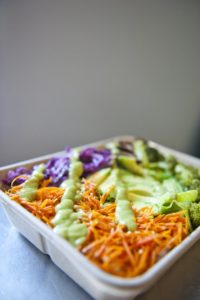
Fresh pumpkin soup and vegetables
VRG will be having its 35th pre-Thanksgiving vegan potluck on Sunday, November 20th at 5 pm. The event is open to the public and is being held in the Roland Park section of Baltimore City at the North Baltimore Mennonite Church, 4615 Roland Avenue, Baltimore, MD 21210. The cost is $4 per adult (children can attend for free) plus a vegan dish that serves 4 per adult in your party. We are also collecting canned veggie food that will be distributed to those in need. Please share the information with your friends!

Details on this event can be found here: http://www.vrg.org/VeganThanksgivingPoster2016.htm

Today is World Vegan Day — Celebrate!

Posted on November 01, 2016 by The VRG Blog Editor

imgres

World Vegan Day is celebrated around the world on November 1st each year. This designated day was inaugurated in 1994 by The Vegan Society in the United Kingdom.

You can celebrate this day by preparing a vegan dish and sharing it with your family and friends. The Vegetarian Resource Group offers endless vegan recipes online here: http://www.vrg.org/journal/CookingAndRecipes.htm

Don’t like to cook? We have that covered as well. Visit one of the many vegan restaurants listed on our online guide to veggie restaurants throughout the USA and Canada here: http://www.vrg.org/restaurant/index.php

Lesson Plan: Veggie Health for Kids

Posted on October 31, 2016 by The VRG Blog Editor

old-school-sign

By Alicia Hückmann and Heather Francis, VRG interns

Teachers and other presenters who would like to promote a healthier lifestyle for their children can use this outline to plan a lesson about vegetarianism/veganism. It is suited for younger children in elementary school and middle school but can be adapted for high schools as well.

Motivation (5-10 minutes)

The pupils talk about their personal experiences in regard to meat-free diets and get to know the difference between a vegetarian and a vegan.

Questions to ask:
· Who can explain what a vegetarian is?
· What is the difference between a vegetarian and a vegan?
· in order to help young children understand, you can bring vegetables, fruits, and pictures of or empty packages of animal products and ask them to label them suitable for vegans, vegetarians, both, or neither.You can show comic strips that have featured vegetarians.(Look through a few week of your weekend comics.)

Discussion (20-30 minutes)
The pupils learn to understand why vegetarians choose not to eat meat. At the same time, they find reasons for being a vegetarian.

Question: Why do many people choose to become vegetarian?
· Let them work in pairs of two to three for a few minutes first, then ask them to present their results.
· If there are vegetarians/vegans in your class, encourage them to share their motivation.
· Write down key terms as soon as they come up (environment, ethics, health).
· This can be a mind map (a hierarchical diagram that structuralizes and visualizes information) the children copy into their notebooks.
· provide background information, facts and figures to each key term if necessary.

1. Environment
See http://www.vrg.org/environment/

2. Ethics
See http://www.vrg.org/animal_rights/index.php

3. Health
See http://www.vrg.org/nutrition/
(Also religion, taste, animal welfare, influence of friend and family, allergies, cost, availability)

Retain and Transfer (5-10 minutes)

The pupils elaborate on a reason that they find especially convincing. Furthermore, they think of ways in which they as well as society as a whole can move towards responsible consumption.

Questions to ask:
· Which reason is the most important one in your opinion and why?
· What can we change about our lifestyle to help animals, the environment and our own health?

Activity (up to 1 hour)

The pupils make their own healthy, vegan nice-cream. They learn that cutting out animal products and artificial sugars from a meal does not necessarily mean it is tedious, more expensive or more difficult to make.

You will need:
· Enough cut up frozen bananas (1-2 for each pupil)
· A variety of toppings
· Fruit (pineapple, strawberries, blueberries, raspberries, coconut, cherries…)
· Peanut butter
· Non-dairy vegan chocolate chips
· Nuts (if no allergies)
· Sprinkles
· Reusable or recyclable dishes and cutlery
· Blender(s) or food processor(s). A Yonanas works well. See: http://yonanas.com/

Set everything up before the lesson starts or ask your pupils to help you if they are old enough. Show the pupils how they blend the bananas, then let them try for themselves.

Making a Difference as a Vegan School Teacher

Posted on October 27, 2016 by The VRG Blog Editor

bus

By Alicia Hueckmann, intern visiting from Germany

Of all professions related to veganism, school teachers are probably not
among the jobs one would think of first. Is it even possible to actively
promote a lifestyle that is completely different from that of many
families and not get in trouble? As a student teacher who has taught
several middle and high school classes, I have found quite a few
‘loopholes’ that have enabled me to share my love for animals with my
students without having to fear consequences.

Before we move over to my list, I would like to make clear first that my
experience is limited to relatively liberal German schools – I have
never actually experienced what it is like to be a teacher in the USA.
So before you start any of the following vegan ‘projects,’ take into
consideration how liberal your school is in general (e.g. do they raise
awareness for or deny climate change?), how open-minded the staff at its
cafeteria is (do they try to serve healthy food or do they rely on junk
food?), and how well you get on with your class parents (are there any
overly protective parents or parents that tend to complain much about
what you do?).

While making a difference as a vegan biology teacher is probably very
easy – they usually have many opportunities to show their pupils how
beautiful nature is and that it is our duty to take responsibility for
animals and the environment – this does not mean that they are the only
ones that can. I, for example, ‘only’ teach English, German, and Math and
it works perfectly, as you will see in the following list.

1. Implicitly make veganism a part of your lessons
In modern languages, pupils in Germany are required to talk about
environment-related topics at school. As my class’ textbook (11th grade)
only shortly mentioned the impact of the meat industry on the
environment, I decided to dedicate a whole lesson to the topic by having
a classroom discussion that was supposed to prepare the class for their
upcoming oral exam. In my experience, many people become very passionate
when it comes to their eating habits – and it is also a topic that
literally everybody has experience with (unlike local politics, for
example). This was why even those students that are usually not
motivated enough to raise their hands, made some kind of contribution
that day.

Before the discussion started, I divided the class into two equally
large groups, based on their personal preference and my own assessment:
The first group promoted meatless diets. The second one was in favor of
omnivore diets. I printed out several articles for both groups which
listed the advantages or disadvantages of the two lifestyles. It was up
to the students to decide which articles were reliable and convincing
enough to quote in the discussion as I did not only bring articles by
scientists or journalists but also rather biased activist groups and
climate change deniers.

As to be expected, almost all of my students participated in the
discussion and both groups came up with serious, reasonable arguments.
At the end of the discussion, one of the vegetarian pupils of this class
thanked me for giving her and her friends an opportunity to share their
beliefs with their classmates. My meat-eating supervisor was also happy
with my ideas and the lesson’s theme which enabled and encouraged
everybody to participate. See http://www.vrg.org/environment/

This was one example of a way in which you could make veganism (or
rather the impact of the animal industry) part of your lessons. For
Math, I could also think of math text problems in which you ask students
to calculate how much water it takes to produce a burger patty or how
many showers equal the amount of water needed for a steak etc. as part
of a group of questions related to environmental protection.

2. Bring vegan treats for your class
I have been in charge of my former school’s English Drama Groups for two
years now. It has become a bit of a tradition for me to bake a cake or
muffins to make dress rehearsals more enduring or to celebrate a
successful performance. Some of my pupils were very skeptical when I
told them that I made vegan sweets for them for the first time –
apparently, the only time they had heard the word ‘vegan’ before was in
a negative context – but after having a bite, they completely changed
their mind; some even asked for the recipe. But this is not the only
reason why I am sure that veganism is now connoted very positively with my
students. As two of my student are allergic to lactose and eggs, it is
usually very difficult for them to feel as part of a group during a
community meal during most of which they are the only ones that cannot
participate. As vegan food does not contain any animal products,
however, they never had a reason to feel excluded or disadvantaged. So
the next time you and your classes have a reason to celebrate, bring
some vegan treats with you. You won’t even have to explain the benefits
of this diet – let the food speak for itself!

3. Support vegetarian or vegan groups
Another great way of making a change at your school is encouraging
students who are already vegetarian or vegan to share their passion. If
you know any vegetarians or vegans in your class, talk to them after
school and ask them if they would be interested in starting a veggie
club. If your school requires supervisors for clubs, make sure you are
the first one to volunteer. Veggie clubs can work on many different
projects like encouraging their school cafeterial to offer healthier,
more plant-based options, raise money for a good cause by selling veggie
food, organizing a school debate, etc. In this case, your students will do
most of the work and you will mostly be in the background providing
support. As a consequence, you will be able to indirectly reach those
classmates and students that you as a teacher wouldn’t usually reach
with the help of your pupils.

My Internship with The Vegetarian Resource Group

Posted on October 27, 2016 by The VRG Blog Editor

img_4845

By Alicia Hückmann, intern visiting from Germany
 
Considering my ethnic and academic background, I was probably one of the more unusual candidates for an internship at The VRG. I am studying German, English, and Math to become a teacher, I am not a native English speaker, and I live in a city about 4,000 miles away from the VRG office in Maryland. Nevertheless, I decided to take a chance and applied for an internship during my summer break from August to Mid-October in 2016.

Before I tell you about my experiences during my internship, let me answer a question that you might be asking yourself at this point: Why would a student teacher from Germany want to work at a non-profit organization in the US that is in no relation to any of her college majors or career goals? The reason why I started to look for internships abroad was my motivation to improve my English writing skills as well as deepen my understanding of other cultures and mentalities. As I am interested in animal rights, protecting the environment, and veganism, I focused on organizations that raise awareness of these issues. After days of research, I had compiled a list of non-profits all across the English speaking world that both matched my preferences and accepted applications for three-month internships. After some further research, however, this list shrank down to a certain non-profit in Baltimore that I had never even heard of before. The reason for this was the fact that the VRG was the only organization on my list which promotes their agenda based on facts rather than emotions, which covers a large variety of topics, and which probably wasn’t going to send me out on the streets in a bunny costume to raise money. (Only recently have I heard rumors about the existence of such a costume somewhere in the dark corners of the VRG office).

Even though I primarily came for the language experience (rather than career opportunities), I ended up getting both, as many of the projects co-directors Charles and Debra assigned to me were somehow related to my future profession. During the first weeks of my internship, for example, a group of VRG interns and I had a chance to talk to children and teenagers at TuTTie’s place (a residential group home in Baltimore) about the benefits of being vegetarian and to make vegan banana ice cream with them. I also wrote two articles about being a vegan teenager in a meat eating family, one giving advice for teenagers whose parents do not approve of their decision and the other one directed at parents who do not know how to deal with their children’s new lifestyle. Other articles I wrote were assigned to me because of my personal interests and experience including vegan recipes of German dishes as well as veg(etari)anism in Germany and Ireland.

Although writing texts for the VRG homepage and journal was my main occupation during the time of my internship, I was also able to work at VRG booths at festivals. Among my personal favorites were the Vegan Soulfest in Baltimore and the DC Vegfest, both of which are exciting events to attend as a plant eater (mainly because of all the plants you can eat). However, I also really enjoyed other events which were not exclusively vegan like the Hamilton Street Festival and the Waverly Farmers Market. It was very interesting to see how people responded differently to our booths in different areas – while the people in Hamilton were mostly interested in the environmental and ethical advantages of vegetarian diets, those who approached us in Waverly were more interested in health benefits and fighting diseases.

Hands down the highlight of my internship was attending the Natural Products Expo East in Baltimore. The amount of vegan foods was simply overwhelming. I was able to taste all kinds of different products like sushi, jackfruit, pizza, mock cheese, brownies, and many more and most of which I hadn’t noticed in shops before. This convention was also the place where I discovered some of the best vegan ice cream on this planet and which is one of the many reasons why I am going to cry my eyes out when I get on my plane back to Germany in a few days.

Long story short, I have taken so much more away from my time at the VRG than I could have imagined. I did not only learn many new things about the vegan movement but also how important it is to question common assumptions and “facts.” The people I met and worked with are some of the most inspirational and dedicated people I know and made me feel at home from the first day of my internship. I had an amazing experience here in the US and I will definitely continue to support the VRG in the future.

For more information about The Vegetarian Resource Group internships, see: http://www.vrg.org/student/
To support The Vegetarian Resource Group outreach, donate at www.vrg.org/donate
Or join at http://www.vrg.org/member/2013sv.php

ENVIRONMENTAL TALK

Posted on October 27, 2016 by The VRG Blog Editor

8a3f66240efc45a41286bbfbc82300d7

By Heather Francis

I went with Vegetarian Resource Group Volunteer Coordinator, Brigette where she did a brief talk for an office of canvassers for an environmental group. They have a tight schedule, since they’re constantly knocking on doors to receive signatures for a cause, so it was awesome we were able to squeeze in some time to give a talk about Environmental Veganism.
Brigette began by asking the group of canvassers if they were Vegetarian or Vegan. Out of about 12 people, most of them were vegetarian. One was a “carnivore” as she put it, and another stated she was vegetarian but ate fish occasionally (which is technically a pescatarian). There were a few people who wanted to become vegan but getting rid of eggs was the hardest part. I was mostly surprised that most of these people weren’t already vegan. Environmental issues is one of the main reason many people stop eating meat, so it was interesting seeing that those working for an environmental group weren’t already vegan.

Our point in doing the brief was to talk about Environmental Veganism. Brigette went over 4 contributing factors to the problems within our environment: Air, Land, Water, and Transportation. We can help save the environment in these areas just by reducing our meat consumption or choosing to not eat meat at all.

Of course, we all (should) know that the number one contributor to Greenhouse Gas Emissions is Animal Agriculture. What is even more devastating, is how if someone is living near a CAFO (Confined Animal Feeding Operation), they may have to walk outside with masks because the air is so polluted.

After giving the group of canvassers VRG’s Save Our Water The Vegetarian Way brochure, this caused a lot of discussion based on how much water is used for Animals. They seemed surprised. For example there is about 13,000 Liters needed for one Kilogram of Beef whereas for Soybeans it’s only 1,900 based off of Hoekstra and Chapagain. See: https://www.vrg.org/environment/water_brochure.pdf

After speaking, we opened up for questions.We spoke a bit on how to find vegan foods on a budget. We had empty boxes of veganic food to show them, brochures, and a few articles out for the canvassers to take. Vegan on a Shoestring was highly popular because as young people it’s hard to find healthy nutritious food that is cheap. In the long run, it is healthier especially buying bulk, but dependent on the fruit/vegetable season and if you need to purchase fake meats as part of your transition, it may be harder to find simple and cheap vegan recipes. So below is an attachment to the article, if you’re interested:
http://www.vrg.org/journal/vj2015issue1/2015_issue1_vegan_shoestring.php

The brief came to a close, and I felt personally it was beneficial for me because I always assumed younger people involved with environmental causes were already vegan. It was interesting to see a different side. At the end one of the canvassers told Brigette that she had opened her mind.

So I know there is a lot more work to be done, and the environment is just one part of why anyone should or does go vegan. Brigette became a vegan when she worked as an environmental canvasser, so it wouldn’t surprise me if others did the same. I myself turned vegetarian, then vegan for health reasons. Yet, as a vegan I know that I’m not a vegan for health, I’m a vegan for the environment, ethics, and health. Watching the canvassers leave to go ban fracking, Brigette and I were confident we had helped at least someone realize the problems with animal agriculture on our ecosystem.

For information about The Vegetarian Resource Group internships, see http://www.vrg.org/student/index.php

To support The Vegetarian Resource Group outreach, donate at www.vrg.org/donate

Or join at http://www.vrg.org/member/2013sv.php

Thank You Very Much to Samosa House in Santa Monica, CA for Supporting VRG’s Outreach to Young People!

Posted on October 27, 2016 by The VRG Blog Editor

Samosa House is an entirely vegetarian Indian restaurant offering both northern and southern Indian food. They have many unique dishes such as Banana Curry, Hara-Bhara Kabab (spinach and peas kabob), and Soy Tikka Masala (soy nuggets with tomato sauce and coconut milk). They also offer a vegan Mango Lassi (a beverage). They are located at 2301 Main Street, Santa Monica, CA 90405. They are open daily for lunch and dinner.

For more information on this restaurant see: http://www.samosahouse.com/

Tasting of American meat alternative and opportunities in Germany for those products

Posted on October 25, 2016 by The VRG Blog Editor

By Alicia Hückmann, intern visiting from Germany

Thanks to this year’s Natural Products Expo at the Baltimore Convention Center, I was able to discover some amazing brands and products that I had never seen or paid attention to at grocery stores before. Tofurky was the only US brand for meat alternatives that I had tried before and heard of, so this event was a fantastic opportunity to broaden my horizon. Some of the products that I was very impressed with include:

1. Sweet Earth Naturals – Hickory & Sage Benevolent Bacon
When I opened the package at home, I was actually undecided about whether to fry the strips or throw them out right away. As I actually liked the smell, I decided to give them a try anyway. The best decision I made that day! After no more than two minutes, the stripes’ color had changed to dark red and their texture had become more firm, crispy even. Needless to say, they tasted absolutely heavenly. The combination of spices tasted as good as it smelled and completely blended with the mock meat during the frying process.

2. Vegetarian Plus – Vegan Black Pepper Steak
Of all products at the Vegetarian Plus Booth, this was by far my favorite (as well as a personal Products Expo highlight). Covered in mouthwatering thick, shiny black pepper sauce, this meat alternative looks just as delicious as it tastes. Its texture is close to perfection as it is chewy, yet soft enough to be easily enjoyed. Although it is made from soy, it is virtually impossible to guess because the spiciness of the sauce cover up the soy’s signature taste very well. The food is easily prepared as it only need to be heated up.

3. Hilary’s – Root Veggie Burger
Although (or rather because) this product does not even try to imitate meat taste-wise or appearance-wise, it has become one of my favorite meat alternatives. While it is conveniently shaped and can be used like a meat pattie, it uses plants to create an original flavor rather than reproduce an already existing one. Its texture is extremely soft and fluffy, which is, however, also a little bit of a disadvantage as it tends to fall apart relatively easily. Hilary’s uses natural, organic ingredients for their burgers and is free from common allergens.

4. Jackfruit products – The Jackfruit Company and Edward and Sons
I had never heard of jackfruit before coming to the USA so I was a little skeptical when I was offered samples of a meat alternative made from fruit at the expo. I am glad I tried it anyway! Considering the fact that the cans of jackfruit contained very few ingredients besides the fruit itself, I was even more surprised how tough the texture and how savory the taste was. Jackfruit meat substitutes were some of the products whose taste came less close to that of animal meat compared to others. The reason why I enjoyed them as much as I did, however, was the fact that they had a very unique flavor that blended perfectly with added spices and sauces.

5. Beer Brats – Tofurky
Back in the days when I still ate meat, I used to be a passionate lover of German sausages. In fact, I still remember exactly what they taste like even after not having had any in more than two years. When I first came across Tofurky’s Beer Brats a few weeks ago, I couldn’t help but raise my eyebrow at the idea of an American vegan brand attempting to imitate German sausages. But after witnessing how they did not only look but also almost exactly tasted like the Bratwursts I grew up with after frying them in a pan, I entirely changed my mind about this product. Who would have thought I would find my favorite vegan version of a German dish in the US? It is amazing what a good recipe and a few spices can do!

In my opinion, meat alternatives in America are generally better at imitating meat products. The foods I tried at the expo were astonishingly similar tasting. Apparently, many Americans attach great importance to alternatives being very similar to meat products that they grew up with or were used to eating as non-vegetarians. This would explain why Vegetarian Plus sells vegan whole turkeys for example.

Needless to say, I merely managed to get a glimpse of the US market for meat analogues during the three months of my stay but this is a rather striking tendency I noticed. Products like Hilary’s burgers remained more of an exception. During my two meatless years in Germany, on the other hand, I observed that the market there is a little more diverse. While some products willingly imitate the shape and texture of meat (like fake Schnitzel, sausages, cold cuts, and patties), this is mainly due to the fact that these shapes are very convenient when it comes to frying, grilling, and preparing food. In regard to taste, many products work with their original soy, seitan, or tofu base’s flavor rather than trying to cover it up entirely. The companies selling products that do are often part of the meat industry and either imitate their own products (like Rügenwalder Mühle) or traditional products popular among meat eaters that claim to taste like the original.

I see three different gaps on the German market for meat alternatives:

1. Meat alternatives that come close enough to animal meat to confuse a regular meat eater
Products that might have a chance to fill this particular gap include those by Sweet Earth Naturals, Vegetarian Plus, and Tofurky. All genuinely German brands I have tried so far either didn’t taste like meat at all or contained many artificial and fatty ingredients.

2. Jackfruit
As I mentioned before, Jackfruit is hardly known in Germany. Although I read a few articles by German bloggers about it, I haven’t seen any Jackfruit products in supermarkets so far. This might be the perfect time for Jackfruit producers to claim the market before European brands catch up with the trend.

3. Vegetable and grain based alternatives
While the German market does certainly not need any more average tofu, tempeh, and seitan products, meat alternatives made from vegetables and superfood like quinoa is definitely a rarity on supermarket shelves. I can imagine that they might even be more appealing to occasional meat eaters and vegetarians alike. As they do not even try to compete with the taste of animal meat, they can create unique flavors that cannot be found anywhere in the traditional omnivore cuisine but are exclusive to the vegetarian one.

Thank you, Samosa House!

Posted on October 24, 2016 by The VRG Blog Editor

screen-shot-2016-10-21-at-9-07-54-pm

Thank You Very Much to Samosa House in Los Angeles, CA for Supporting VRG’s Outreach to Young People!

Samosa House is an entirely vegetarian Indian restaurant and market offering both northern and southern Indian food. They have many unique dishes such as Banana Curry, Hara-Bhara Kabab (spinach and peas kabob), and Soy Tikka Masala (soy nuggets with tomato sauce and coconut milk). They also offer a vegan Mango Lassi (a beverage). After you have enjoyed your meatless meal, check out the Indian spices, sweets, teas, and much more in the store!

Samosa House has been a landmark since 1979. They are located at 11510 W. Washington Blvd., Los Angeles, CA 90066. They are open daily for lunch and dinner.

For more information on this restaurant see: http://www.samosahouse.com/

GUACAMOLE FROM SUBWAY

Posted on October 24, 2016 by The VRG Blog Editor
KONICA MINOLTA DIGITAL CAMERA

KONICA MINOLTA DIGITAL CAMERA

According to the Subway website, their guacamole contains Hass avocados,
jalapeno puree (white vinegar, jalapeno peppers, salt), onion, garlic,
and sea salt. They do not include sour cream in the ingredients.

The contents of this posting, our website and our other publications,
including Vegetarian Journal, are not intended to provide personal
medical advice. Medical advice should be obtained from a qualified
health professional. We often depend on product and ingredient
information from company statements. It is impossible to be 100% sure
about a statement, info can change, people have different views, and
mistakes can be made. Please use your best judgment about whether a
product is suitable for you. To be sure, do further research or
confirmation on your own.

For more fast food listings, see http://www.vrg.org/fastfoodinfo.php

For listings of vegetarian and vegan restaurants in the USA and Canada,
see: http://www.vrg.org/restaurant/index.php

  • Donate

  • Subscribe to the blog by RSS

  • VRG-NEWS

    Sign up for our newsletter to receive recipes, ingredient information, reviews of new products, announcements of new books, free samples of products, and other VRG materials.

    Your E-mail address:
    Your Name (optional):


↑ Top