The Vegetarian Resource Group Blog

VEGDINING.COM invites you to celebrate World Vegetarian Month (October)

Posted on October 20, 2016 by The VRG Blog Editor

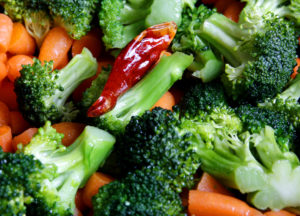
vegetables and fruits

Our friends at VegDining.com invite you to celebrate World Vegetarian Month (October). Visit one or more of your favorite veg restaurants during October and for each fully veg restaurant you visit, submit a mini-review (3 sentences or more) on VegDining.com. You’ll be entered to win a veg prize, including a $100 VRG gift certificate! Last date to enter Oct 31 – more details and contest entry at http://vegdining.com/Go.cfm?id=Review

Books Meet Food at Red Emma’s in Baltimore

Posted on October 19, 2016 by The VRG Blog Editor

By Alicia Hückmann, intern visiting from Germany

One of the first restaurants I went to upon arriving in Baltimore was Red Emma’s, a worker cooperative not far away from Penn Station and the Maryland Institute of Art (30 West North Avenue). What’s truly unique about this place, even more so than the food itself, is its alternative spirit as well as its political and social commitment. Founded in 2004 by members of Black Planet Books, Red Emma’s was originally meant to provide financial support for the anarchist book shop by selling food and creating an atmosphere that appeals to a variety of people.

Today, they do not only provide a stage for activist groups, authors and speakers (I witnessed a speech by the transgender community while enjoying dinner there once) but they also encourage customers to make a small donation that funds meals for people in need. Furthermore, there is always an affordable, healthy $5 option on the menu for those unable to spend much money on food. My personal highlight, however, has to be the book store that is crammed with all kinds of genres of leftist and radical literature. There are books on animal rights, cookbooks, social injustice, minority groups, sexual orientation, politics, and feminism; classical novels and children’s books dealing with controversial themes and taboos, as well as works by some of the key figures of sociology like Judith Butler and Michel Foucault.

The actual reason why I first set foot into this restaurant was food, though – vegan food to be more precise. Although Red Emma’s is not 100% vegan (they are all vegetarian), a large part of their menu is (as well as all of their desserts!) and there are vegan alternatives for almost all vegetarian items. I decided to order a spanakopita as my main dish, which is a spinach and cashew-“cheese” filled pastry from Greece. My food was ready to pick up at the counter after a few minutes, so I didn’t have to wait long at all. The spanakopita was served with a small cup of homemade vegan Tzatziki sauce that complimented the flavor of the pastry: As the spanakopita had a rich, savory flavor while the sauce was rather spicy and piquant, they both fitted together really well. For this dish, I paid $6 which is a good deal considering that Red Emma’s uses organic ingredients.

Ordering dessert at Red Emma’s always means making a very tough choice. They usually serve four different kinds of sweet vegan pastry (like whoopie pies, cupcakes, and cake) that they put on display in a showcase. The prices for a piece range between $3-6. I decided to be a little daring this time when I ordered a blueberry-ginger cupcake (I love blueberries but I hate ginger!). Upon taking my first bite, I knew that I had no reason to regret my decision. The muffin was very fluffy, not too sweet and had a slightly tangy touch to it that I really liked. The frosting on top on the other hand was creamy and although it was made from vegan butter, I didn’t find it to be too fatty or greasy.

Red Emma’s is definitely a great place to go if you’re looking for a unique, extraordinary and affordable dining experience. Check out their menu and their website to learn more about them: https://redemmas.org/pages/menu

For information about other vegetarian restaurants in the United States, see:
http://www.vrg.org/restaurant/index.php

21ST ANNUAL BOSTON VEGFEST TO BE HELD OCTOBER 22-23, 2016

Posted on October 19, 2016 by The VRG Blog Editor

bvff-logo-newnameThe annual Boston VegFest will be held on Saturday October 22 (11am to 6pm) and Sunday October 23 (10am to 6pm) at the Reggie Lewis Athletic Center, 1350 Tremont Street, Boston, Massachusetts. Admission is free and you will find a wide variety of non-profit groups exhibiting, as well as veggie food vendors and more. There are also numerous speakers each day.

For details, visit: http://www.bostonveg.org/foodfest/index.html

What do I say when people ask about my vegan/vegetarian diet?

Posted on October 18, 2016 by The VRG Blog Editor

By Savannah Lawrence, VRG intern

As someone who enjoys socializing over food, I often get unsolicited questions about my choice to be a vegetarian. Be it dining at someone’s home where there are no meatless options present, attending a holiday dinner at a distant relative’s home, or dining out and having to inquire about meatless options not listed on the menu, it’s hard to conceal that I’m a vegetarian when it’s time to eat. Sometimes I want to hide it because I know that I’ll be peppered with questions regarding my diet once people find out or are reminded. However, I’m there to enjoy my friends and family, not start a debate about animal welfare, the food industry, or the health benefits of a meatless diet.

While other vegans and vegetarians may take different approaches when asked questions about their diets, I don’t wish to discuss my reasoning, and I like to make that known from the start. I treat my diet like I treat my political opinions – neither are something I’ll willingly discuss at any time. While I don’t want to counter with, “Why do you care? It’s not like I ask why you eat meat?” when questioned about my diet, there are a few responses I use that are polite and understanding but still firm. Try one of these non-confrontational phrases to shut down comments you may not wish to engage:

· “I’d like us to have the chance to enjoy our meal without going into detail about our dietary choices, but maybe we can talk about them later.”

· “While I’d be happy to discuss my reasoning for choosing a vegetarian/vegan diet at another occasion, it’s not something I wish to do right now. Let’s set up a separate time.”

· “I appreciate your interest in my lifestyle choices, but my reasons for choosing a vegetarian/vegan diet are personal, so I typically don’t discuss them OR I’d rather not discuss them right now.”

Perhaps the person isn’t so polite and understanding. When attending an Easter dinner at the home of my fiancé’s grandparents, his grandfather loudly proclaimed in the middle of dinner that a vegetarian diet was stupid. If caught in a similarly uncomfortable situation, try responding with, “I respect your choice to eat meat, and I hope that you could respect my choice not to.” As the saying goes, kill them with kindness. Responding with an equally brash comment will get you nowhere; I would’ve only solidified the opinion that a vegetarian diet was stupid!

If you’re willing to discuss your reasoning, consider the setting and company before deciding how detailed a response to give. For example, if sitting at a restaurant with a group of friends, it’s probably not appropriate to give detailed horrors about the meat industry with the insights from the latest PETA videos you saw. A better response may be, “I’ve learned some sad details about how animals at most factory farms are treated, so I decided to stop eating animal products.” If asked for details, consider saying no until people are done eating or ensure that everyone at the table wants to hear the details.

Unfortunately, it’s almost impossible to avoid questions about your diet as a vegetarian or vegan, but there are ways to manage the questions and put yourself in control of the conversations. Maybe you have all the information you need and would love to start a debate, but if you’re just trying to eat your dinner in peace, approach the questions by considering the setting, company, and a respectful yet resolute response. You don’t have to stay silent, but you also don’t have to respond defensively. Take a minute to step back and think before responding, and you’ll create a positive image for vegetarians and vegans everywhere!

VEGAN FOODS FOR NON-VEGETARIAN 10-12 YEAR OLDS

Posted on October 17, 2016 by The VRG Blog Editor

file0001063723859

By Whitney Gray, VRG intern

Looking back on my own childhood, I had no clue what a vegan or even a vegetarian was. I just ate what my parents gave me, which wasn’t particularly healthy and rarely vegan, save for some unadulterated fruit or accidentally vegan junk food (sorry mom, love you). I find my little cousins who I currently live with to have similar taste buds to what I had at their ages, which are 10-12. They’re three boys with huge appetites and they love fast food, cookies, chips, and all the mac and cheese they can fit in their little bellies. But to my surprise, one has been taking an interest in my meals, asking why I eat differently, “What’s the green stuff?,” and “Does it still taste good?” With one happy accident, I got them to try a healthy meal, and they actually loved it.

I decided to make a stir-fry the other day to use up some ingredients I had lying around. My mom and I had bought tons of quinoa a few months back, and discovered that we didn’t like eating it on its own after a few nights of force feeding ourselves and willing it to be delicious. To use it all up, I usually mix about a cup with two cups of jasmine rice and cook it all together. I also had some pre- cooked, marinated tempeh and fresh broccoli in the fridge that I had to use up before it went bad. I threw in a stir-fry vegetable mix from the freezer for some extra veggies. I cooked the mixture in a just a bit of coconut oil and of course added soy sauce and an array of spices until I was satisfied with the flavor.

Right when I was dishing up a portion for myself, one of the boys came in the kitchen begging if he could have some as well. They’re accustomed to eating Chinese takeout at least once a week, so when they see rice, they just assume it’s close enough to what they’re used to. I let him try just about a spoonful and his big eyes lit up. The twins, who are 10, eat like grown men so they ended eating almost all of my stir-fry, but I was over the moon. They kept raving about how delicious it was and one even called it the best rice he ever had. My aunt also had a plate and thoroughly enjoyed it. What was most amusing, however, was that no one noticed the quinoa. The jasmine rice was light brown from the soy sauce, so the color disguised the little quinoa grains mixed throughout the dish. The tempeh didn’t go by unnoticed, but the boys just thought it was meat, even though they know I don’t eat or cook any. One even said, “This could use some meat,” and smirked in my direction just to annoy me and then another chimed in with “The meat is right here, see,” while pointing his fork at a tiny cube of tempeh.

I sat grinning and watching as my family devoured a meal full of new ingredients with no complaints. The thing that people don’t realize about vegan cooking is that it isn’t very different from using animal products. No one boils a chicken breast and just eats it plain, or at least I hope you wouldn’t put yourself through that. If anything, people will at least add salt and pepper to their meals and those with more cooking experiences know how to play around with a variety of herbs and spices to add more flavor. You can take any plant food and create a delicious meal with the right seasoning and cooking methods. I was so happy to show the kids that no, not everything Cousin Whitney eats is gross or weird. It’s just another version of what they’re used to.

Swedish Vegan Recipes

Posted on October 14, 2016 by The VRG Blog Editor

ka%cc%8alpudding-photo

swedish-photo

By Petra Cavini, VRG volunteer from Sweden

Swedish Kroppkakor (Swedish Filled Dumplings)
(Serves 4)

1 pound potatoes
4 Tablespoon powdered egg replacer
4 Tablespoons water
¾ cup potato or durum flour
½ teaspoon salt

The filling
1 onion
9 ounces smoked tofu
3 drops of liquid smoke
2 teaspoons oil
7 ounces soy crumbles
2 teaspoons ground allspice
1 teaspoon ground white pepper
Salt, to taste
2 teaspoons oil

For serving
Cranberry jam or jelly
Melted vegan butter (optional)

Peel and cook the potatoes. Let them cool. Mix egg replacer with water. Mash the potatoes and add the egg replacer mixture, flour, and salt. Knead the dough with your hands until it becomes well mixed.

Mince the onion and dice the tofu into small pieces. Add liquid smoke and fry in a pan with 2 teaspoons oil. Place into a separate bowl.

Mix the soy crumbles with all the spices and fry in a pan with 2 teaspoons oil. Place into a separate bowl.

Roll the potato dough into a big roll. Slice it in about 20 even pieces. Gently roll out one piece of dough. Place it on to your hand and add your filling in the middle. Seal the edges together so no filling can get out. Roll into a ball. Repeat this step.

Boil water in a large saucepan and add some salt. Carefully place the kroppkakor into the saucepan, one layer at a time. Cook for about 10-15 minutes. Remove kroppkakor from saucepan.

Serve with cranberry jam or jelly and melted vegan butter.

Swedish Vegan Kålpudding (Swedish Vegan Cabbage Casserole)
(Serves 4)

The kålpudding
1/2 green cabbage
2 ounces vegan butter or margarine
1 teaspoon ground allspice
1 pinch of white pepper
1 pinch nutmeg
Salt, to taste
1 Tablespoon soy milk
1 teaspoon powdered egg replacer
1 Tablespoon water
9 ounces soy crumbles

Cream sauce
2 cups blended silken tofu
2-3 teaspoons soy sauce
2-3 teaspoons cornmeal

Preheat oven to 350 degrees.

Coarsely chop the cabbage and rinse. Cook it slowly in the vegan butter or margarine over a low heat. Add all the spices and salt. When the cabbage starts to become tender, add the soy milk. Let it reduce until the cabbage absorbs the milk. Remove the cabbage from the stove and let cool.

Mix the powdered egg replacer with the water in a bowl. Add the soy crumbles. Pour over the cabbage and stir it all together.

Place the cabbage and soy crumbles mixture into a 10-inch square non-stick baking pan. Press the mixture until it becomes compact and stable. Bake for 30 minutes at 350 degrees.

Place all your cream sauce ingredients into a covered saucepan. Let it cook over low heat until the sauce becomes perfectly thick and creamy. Serve sauce over the cabbage.

Chocolate Coconut Cake (Gluten-free)

Posted on October 13, 2016 by The VRG Blog Editor

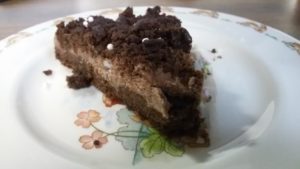
chocolate-cake

By Alicia Hückmann, VRG intern visiting from Germany

For the batter:
1 cup sugar
1¼ cups Edward and Sons’ banana flour
3 tsp baking powder
3 Tbsp cocoa
½ tsp salt
1-1/3 cups plant milk (plain, chocolate, or vanilla flavored)
1/3 cup water
1 Tbsp vinegar
1 Tbsp vanilla extract

For the cream:
13.5 oz can Edward and Sons’ heavy coconut cream (refrigerated)
2-4 Tbsp cocoa powder

Mix all dry ingredients for the batter (sugar, flour, baking powder, cocoa, and salt) in a bowl, then add plant milk, water, vinegar, and vanilla. Stir until smooth.

Fill an 8-inch round baking dish with about 2/3 of the batter and bake it for 25-30 minutes at 350 degrees. Repeat with the remaining 1/3 batter in a separate 8-inch round baking dish (baking time: 20-25 minutes).

In the meantime, take the coconut cream out of your refrigerator. Place the solid coconut cream in a bowl and discard the remaining liquid. Add 2-4 Tbsp cocoa powder (depending on whether you prefer more of a coconut or chocolate flavor). Whip the cream until it’s smooth and has an even brown color. Once the 2/3 cake base has cooled down, spread the cream on top using a knife. Crumble the remaining 1/3 and use the crumbs to cover the cream.

Visit The Vegetarian Resource Group’s Booth at the Academy of Nutrition and Dietetics

Posted on October 13, 2016 by The VRG Blog Editor

anda

Visit The Vegetarian Resource Group’s Booth at the Academy of Nutrition and Dietetics Conference in Boston, MA Sunday, October 16, 2016 – Tuesday, October 18, 2016

If you’re a dietitian and attending the Academy of Nutrition and Dietetics Conference in Boston, MA, please stop by The Vegetarian Resource Group’s booth and introduce yourself. We’d love to meet you!

Also, VRG will be holding a vegan dinner in Boston on Sunday, October 16, 2016, at 6 PM. You can sign up for this event at the VRG booth on Sunday.

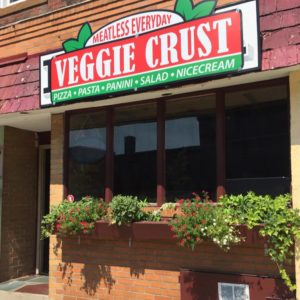
Visit Veggie Crust & Nice Cream in Somerville, Massachusetts!

Posted on October 12, 2016 by The VRG Blog Editor

14095801_249484932112733_8040502731736433124_n

Crusts are available as thin whole wheat at this pizzeria/ice cream vegetarian establishment. You can build your own pizza from 6 different sauces and 15 toppings. Most of the specialty pizzas have a vegan option: for example, the spicy Cauliflower Manchurian or the Curry Leaf Pesto Portobello can be constructed with vegan cheese instead of dairy-based cheese. They also have Vegan Alfredo Sauce as an option. And you can try Vegan Bolognese Penne as well. A fully stocked juice bar offers a wide selection. You can finish your meal with vegan “Nice Dream” (coconut-based) for dessert.

Veggie Crust & Nice Cream is located at 445 Somerville Ave., Somerville, MA 02143. They can be reached at (617) 764-4605. They are open for lunch and dinner daily.

Be sure to visit their Facebook page: www.facebook.com/pureveggiee
and their website: http://www.vegcrust.com

AMERICAN VEGAN PRODUCTS IN GERMANY

Posted on October 11, 2016 by The VRG Blog Editor
tofurky-deli-slices-peppered-package-1

By Alicia Hückmann, intern visiting from Germany

As vegan foods become more popular around the world, these foods are increasingly being exported and imported to different countries. Are there different tastes internationally? What does a German think of an American product now available in her country, such as Tofurky? Of course, remember that tastes everywhere, even in the same family, differ dramatically.

Review

I tasted the following products:

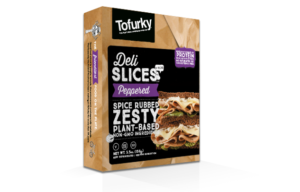
– peppered deli slices

– bologna deli slices

– pepperoni deli slices

The reason why I am only going to review cold cuts is because they are the only meat alternatives I consume on a regular basis. While I certainly tasted enough brands and flavors to do a knowledgeable review on Tofurky’s deli slices, I lack experience with other types of products.

Positive

1. Taste

Tofu- and soy-based products are among the best when it comes to vegan cold cuts in my opinion. Thus it didn’t come as a surprise that I enjoyed Tofurky’s deli slices as much as I did. I have to admit, however, that they didn’t beat my personal favorite, the plant-oil based cold cuts by Gut Wudelstein. Even though I really like Tofurky’s use and balance of spices, they don’t always neutralize the slices’ natural tofu flavor (especially in mild flavors like bologna). The spicy slices (peppered and pepperoni) are definitely among my all time top 5 vegan cold cuts, though. Not only taste-wise but also because they are a great source for protein and iron among others. Furthermore, they seem much healthier than the aforementioned cold cuts that mostly consist of fat and oil.

2. Freshness

While other cold cuts are usually dried out after three days and make pretty good crackers after seven, this was not the case for Tofurky’s deli slices. Although it takes me about a week to finish one package, they remain moist and soft until the very last day – only the edges harden a little after a while. At first I thought this was only due to the fact that they come in a block of slices and are therefore less likely to transpire but changed my mind when I witnessed how two leftover slices (bologna style) still tasted relatively fresh after laying in the fridge for another three days.

DIFFERENCES

1. texture

As I am generally a big fan of Tofurky’s deli slices, all suggestions I have to say are really minor issues and wouldn’t actually prevent me from buying the products. One of them is the texture which could be a little more tender in my opinion. For me, the perfect cold cuts are the ones that you can bite through easily (the pepperoni come very close). I often eat a little while working on my computer or reading, so having a snack that doesn’t make make my fingers greasy and that doesn’t need to be held in two hands is very convenient. When putting a deli slice on a slice of bread, however, I always have to hold on to it with both hands in order not to pull it off with my teeth.

2. Packaging

While I appreciate the fact that Tofurky uses less plastic than many other brands for their cold cuts, I sometimes get a little frustrated due to the way they are sealed. Opening the package can be a bit of a struggle because there is only little space between the tightly sealed bits of the package and the block of slices. This makes it literally impossible to tear it open and also very difficult to cut it open using a knife or even a pair of scissors (which will most likely come into contact with the cold cuts). Once it is open, I have to take out the whole block in order to grab a slice, which I wouldn’t mind if putting it back were less of a challenge due to the aforementioned space issue. Furthermore, the package cannot be resealed which means that the products’ smell will spread inside the fridge unless it is put into a second or different plastic bag (not exactly an environmentally friendly solution).

German taste buds and meat alternatives

General information and recent developments:

The perfect meat alternatives for Germans

A survey conducted by the German Vegetarian Union (Vebu) in 2012 reported that only 15% of all respondents think that meat alternatives should look like meat. 70% on the other hand prefer meat alternatives that have a different name than the products they imitate or are inspired by and another 70% don’t care if meat substitutes taste like meat at all. On the other hand, many consumers seem to attach great importance to organic labeling. 44% think that all meat substitutes should be organic, 26% at least partly agree to this statement, and only 22% attach little to no importance to organic labeling. In general, the majority of all people interviewed was very satisfied with the average quality, taste, texture, and variety of products available on the food market.

Tofu and Soy products

Tofu and Tempeh are the most popular bases for meat alternatives. In the aforementioned survey, these soy products make up about 35% of the average respondent’s consumption. I have the impression, however, that some German vegans, vegetarians, and other consumers are cutting down on soy products at the moment. The reason for this are studies suggesting that consuming “too much” soy can lead to a higher risk of hormone-related types of cancer due to the amount of phytoestrogens it contains. And even though many don’t know what “too much” means, they are still inspired by the headlines to cut down on soy or give it up altogether. As I already suffer from hypothyroidism and have relatives who were diagnosed with breast cancer, I was tempted to do the very same until I did a little more research on the many benefits of soy as well as the exact meaning of “too much.” In order to demystify soy and fully restore its good reputation, more companies need to highlight and advertise its advantages (great source for protein and iron, environmental friendly, etc.).

For more info, see http://www.vrg.org/journal/vj2003issue3/2003_issue3_hotline.php

Major brands might be unhealthy

Another headline that is likely to cause changes on the market for meat alternatives relates to the most recent reviews by Stiftung Warentest (a German consumer organization). Out of 20 products that were tested, 6 contained too high amounts of pollutants – e.g. 400 mg mineral oil/“mosh” per kg in Rügenwalder Mühle Schnitzel. This is one of the highest concentrations of mosh in food products that has ever been measured by the institute. Other products that have been reported to contain mosh are meat alternatives by Alnatura, Netto, Alberts, Viana, and Taifun (20-60 mg each), all of which are commercially successful brands carried by many major supermarket chains. Some supermarkets drew consequences shortly after the test results were published, like the chain REWE, which is going to remove the product “Naturgut Bio-Veggie-Schnitzel” from its shelves. All companies accused of pollution tried to explain the findings by suggesting that white mineral oils (which are almost identical to mosh but considered to be harmless) are to blame. Rügenwalder Mühle announced that they would stop putting them into their products nevertheless.

Mosh is a problematic (accidental) ingredient that affects the food market as a whole. It often finds its way into products if harvested crops come in contact with lubricating oil or if products are transported or packaged in recycled carton boxes. According to foodwatch, rice, noodles, and cereals are among the most polluted products (31 out of 42 tested products contained this type of mineral oil).

Stiftung Warentest did not only criticize the products’ pollution with mosh but also their composition. Only 2 out of 20 products were described as well-balanced in regard to their nutrients. Some products, on the other hand, contained more fat than the recommended amount for a main course (100g sausages by Meica) or 2/3 of the daily recommended sodium intake (100g burgers by Berief). Both of the aforementioned products did also fairly bad concerning environmental friendliness. Other brands have been revealed to use soy from areas that contribute to deforestation or partially genetically modified soy. Only two companies reported that they exclusively use soy grown within the EU.

Stiftung Warentest focused on the category of vegetarian meat alternatives in this particular study. In previous studies, they analyzed the quality of other products including meat. In one of these studies (mincemeat testing in 2015), the conductors found out that every second sample contained E.coli bacteria and antibiotic-resistant germs. One product contained salmonella.

It is also important to bear in mind that Stiftung Warentest only reviews a very small part of the overall market. They focus on products that are sold in or even produced by discounters as well as very popular brands. The majority of these brands are not vegetarian/vegan-only labels but in fact owned by meat producers (like Ruegenwalder Muehle – one of Germany’s major poultry producers). Several of my favorite foods from vegetarian companies were not reviewed.

The contents of this posting, website, and our other publications, including Vegetarian Journal, are not intended to provide personal medical advice. Medical advice should be obtained from a qualified health professional. We often depend on product and ingredient information from company statements. It is impossible to be 100% sure about a statement, info can change, people have different views, and mistakes can be made. Please use your best judgment about whether a product is suitable for you. To be sure, do further research or confirmation on your own.
  • Donate

  • Subscribe to the blog by RSS

  • VRG-NEWS

    Sign up for our newsletter to receive recipes, ingredient information, reviews of new products, announcements of new books, free samples of products, and other VRG materials.

    Your E-mail address:
    Your Name (optional):


↑ Top