The Vegetarian Resource Group Blog

Eating Veggie Indian Cuisine at Mango Grove in Columbia, Maryland

Posted on August 10, 2016 by The VRG Blog Editor

indian

By Heather Francis, VRG Intern

There was no wait or pause walking into Mango Grove (a vegetarian restaurant), in Columbia, Maryland. We were seated right away, and we were then pulled right over to the lunch buffet to start eating.

When told I would be eating at an Indian lunch buffet, I was expecting limited options. Instead I was pleasantly surprised with the amount of dishes that were prepared. As we were being seated, we were asked if we were vegetarian or vegan. Then following the question, we were shown which of the items on the buffet weren’t vegan. There were only two, which left a whole line of options for us vegans and no complaints.

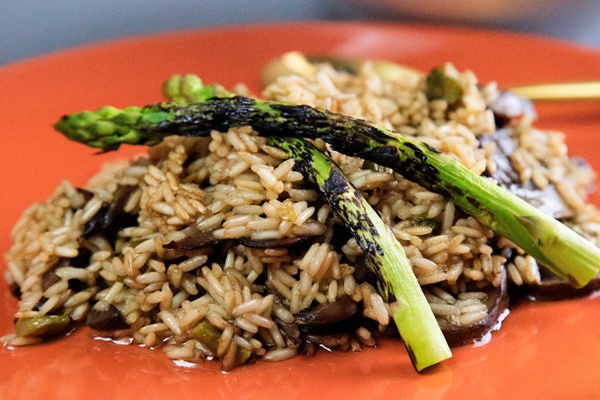
My favorite part was the huge tray of channa masala on the buffet line. My first plate (of two) consisted of tomato rice, broccoli, channa masala, cauliflower curry, mushroom and potato curry, potato pancake, and their vegan version of naan. It took me awhile to get through the first plate, but I scraped off every last bite. I am a personal fan of curry, so for me, it was easy to devour the food in front of me. Adding a second plate was difficult, but I powered through. Even though I was full two bites in, I couldn’t let the food go to waste. The only motive I had moving forward during consuming the meal was the fact I was eating a plate full of vegetables and it was delicious.

The ambiance of the restaurant added to the perfect lunch, as the staff were superb in providing service. Our glasses never stayed empty, and once we finished a plate, they were cleared right away.

Overall I would have to say, this Indian restaurant integrated into my list of my favorite Indian places to eat. Even though it’s a half an hour away from the city of Baltimore and Washington D.C, it’s a perfect place to check out if you are craving healthy, spicy, and satisfying Indian food. It’s 100% worth the drive. The all-you-can eat lunch buffet is available every weekday from 11:30 to 3 p.m, and it’s only $11.95 a person. With the amount of food that is given, it is definitely worth it for a super filling meal.

For more information on this restaurant please visit: http://themangogrove.net/index.html

If you would like to learn more about dining veggie dining options in the USA and Canada, go to the VRG’s online restaurant guide at www.vrg.org/restaurant/index.php

To volunteer with maintaining our restaurant guide, contact Brigette at [email protected]

How You Can Help The Vegetarian Resource Group When Shopping for Back-to-School Supplies through Amazon

Posted on August 10, 2016 by The VRG Blog Editor

file0001788871696

Support The Vegetarian Resource Group when you shop for back-to-school items (or any Amazon products). Go to http://smile.amazon.com/ch/52-1279034 and Amazon donates money to the VRG! Thanks!

The Vegetarian Resource Group at Hamilton Street Festival in Baltimore

Posted on August 09, 2016 by The VRG Blog Editor

IMG_2508

By Alicia Hückmann, VRG intern visiting from Germany

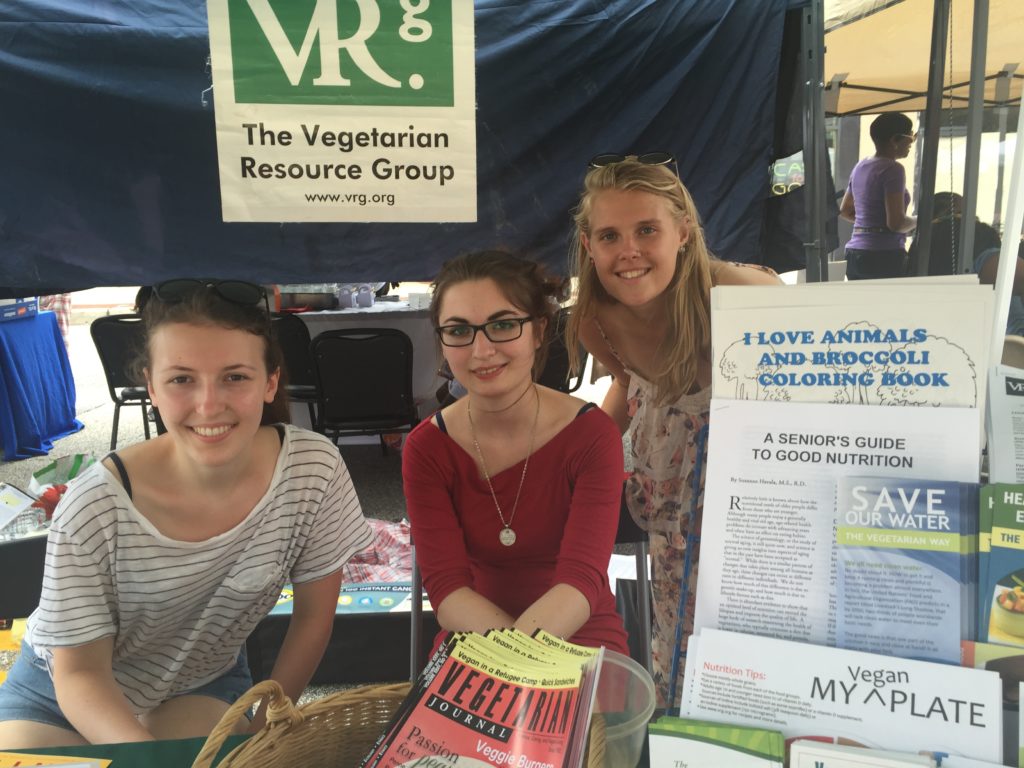
On Saturday, July 30th, Heather Francis (another intern at The Vegetarian Resource Group) and I set up a booth at the 23rd Hamilton Street Festival (Baltimore) in order to promote veganism. Among others, we brought brochures and several copies of our Vegetarian Journal that we handed out for free, inexpensive books, DVDs, and stickers. Since Hamilton is known to be a neighborhood inhabited by people from diverse backgrounds, it was not very surprising that both children and adults, teenagers and elderly people would come to our booth to take some info material and have a chat with us. While some only stopped to let us know they could never live without meat, others were actually interested in learning more about veggie lifestyles. One lady especially appreciated the amount of free resources we provided, as she is currently making the transition to a meat-free diet. We even met an entire vegetarian family whose eldest daughter was interested in interning at our office.

Apart from the The VRG, Hamilton also welcomed other non-profits like the local Planned Parenthood and the Black Lives Matter group as well as representatives of political parties like the Republican and the Green party. The majority of the booths, however, belonged to artists and vendors advertising and selling their handmade or vintage products including jewelry made from cutlery, recycled t-shirts, or grotesque paintings. A broad variety of bands and musicians added to the atmosphere of this fantastic event. Last but not least, there was a vegan hot dog stand thanks to which no vegan had to starve amidst barbecue grills and burger vendors.

Even though the festival was planned to take place between 11am and 7 pm, many participants (including us) decided to leave after 4 hours due to very heavy rain. Nevertheless, Hamilton Street Festival was a great experience for both of us and we are already looking forward to having a booth at the Waverly Farmer’s Market (Baltimore) this coming Saturday on August 13, 2016.

To volunteer at future booths, in the office, or other ways, contact Brigette at [email protected]
To support The Vegetarian Resource Group outreach, donate at www.vrg.org/donate

Paid Workers Needed at Veggie Booths During Natural Products Expo East in Baltimore September 22-24,2016

Posted on August 09, 2016 by The VRG Blog Editor

EE15_FaviconLogo

Reliable, responsible workers in the Baltimore area needed to assist veg manufacturers in their booths at the Natural Products Expo East at the Baltimore Convention Center on Thursday, Friday, and Saturday, September 22, 23, 24. Must be available to work all 3 days. Paid positions. If interested, please email [email protected]

Tips on Trying to Talk to Others About Veganism

Posted on August 08, 2016 by The VRG Blog Editor

OLYMPUS DIGITAL CAMERA

By Heather Francis, VRG Intern

1. Don’t introduce yourself as a vegan.
Every conversation you partake is not necessarily an opportunity to press down on veganism — “My name is Jo, and I’m a vegan.” The vegan conversation is bound to be a topic of conversation at any party, barbecue, picnic, restaurant, or any place food is involved. Eventually, you will ask the person at the grill if they have a veggie burger or someone will notice your plate is filled with salad and fruit instead of chicken wings. Then you will get the question, “Do you eat meat?” and the conversation will begin. This will give you an advantage because they won’t be turned off. Instead their mind will be intrigued. So l recommend you don’t introduce yourself as a vegan. Eventually people will figure it out. Eventually it will come up, and the conversation won’t be forced. Even if it’s your first time talking with someone, you shouldn’t feel the need to broadcast or unveil your veganism.

2. Ask questions.
When someone asks you why you’re a vegan, you can ask them about their diet. You will be able to make more of an impact by understanding their choice of diet, rather than constantly talking about your own beliefs. Remember everyone is different. Some believe hunting is a sport. Some grew up eating kosher. Some live with a family where milk is served with each meal. The way someone chooses to eat emphasizes certain aspects and importance of them. It’s important to ask and listen, rather than spend the entire conversation talking about why veganism is necessary or it’s the only way to eat. Personally, I have noticed the most change when I ask multiple questions.

3. Be Honest.

  • Talk about how your family/friends reacted
  • Explain how easy or hard your transition was
  • Explain what foods you can and don’t eat
  • Show them different options or ways they can eat vegan
  • Say “I don’t know,” if you can’t answer any questions
  • Refer them to documentaries, groups, and/or articles on online

  • 4. Remember how you thought before veganism.
    Unless you grew up without eating animals and/or dairy products and eggs, there was a time where you felt you couldn’t live without meat. So remember before encountering a person in a conversation that they are in that same place. Frustration may happen especially when talking to those who have Sunday dinners with their families which consist only of chicken Parmesan or baby back ribs. For some people they could be more willing to change their diet, but not everyone will. Just try to recall moments where you felt you couldn’t go without meat, fish, milk, cheese, eggs, etc.

    5. Follow Up.
    Conversations shouldn’t end after an hour at a coffee house, especially with such an important issue as animal rights. The biggest impact made is with an ongoing conversation. If you meet someone at a party who seems interested in veganism, get their cell phone number or email so you will be able to send them links to websites or articles they might be interested in. Try getting together with someone again and take them to a vegan restaurant. You don’t even need to keep talking about animal rights, just let them know that if they were ever interested or wanted more information they could rely on you.

    6. Don’t talk.
    I find this tip very useful with family members and close friends. By not talking, it creates a huge and long lasting impact. I know with a lot of my friends and a few family members who have decided to become vegetarian/vegan, it wasn’t because I told them to or gave them tips on how to. Sure, I influenced them because they were around my veganism, but they decided for themselves to become vegetarian or vegan. Of course, I’m not saying don’t talk about issues that are important that you want to share with them, but I mean stand back on trying to directly influence them. By just continuing your day to day life and setting an example without preaching or trying to convert, it will make an indirect, but also deep impact in helping your friends and family to eat less meat. They’ll be eating a burger, while you’re eating a veggie burger. Making comments or faces might only make them want to eat another burger rather than think about trying a bite of your veggie burger. Also, while discussing veganism constantly, it could help someone decide to convert, but they may feel like it wasn’t their own decision. The vegan movement is growing and it’s important to make an impact that will stick.

    B12 MYTHS

    Posted on August 05, 2016 by The VRG Blog Editor

    IMG_20151028_225433

    By Reed Mangels, PhD, RD

    Myths about vitamin B12 abound. For example, there’s the myth that sources of vitamin B12 include everything from rainwater to potatoes. In truth, reliable sources of vitamin B12 for vegans are foods fortified with this vitamin (for example soymilk, breakfast cereals, meat substitutes, etc. — read the label) and supplements. That’s it. You can read more about vitamin B12 sources on The Vegetarian Resource Group website: http://www.vrg.org/nutrition/b12.php

    Then there’s the whole question of absorption. Getting vitamin B12 into our bodies in a form so that it can be used is much more complicated than just drinking a glass of fortified soymilk. Of course, we’re not aware of all of the steps, but it is quite a process. It’s actually simplest for vitamin B12 that is not bound with protein. This would be the case for vegan sources of the vitamin. In contrast, sources from animals like meat, fish, dairy products, and eggs have even more steps to go through, since in these products, vitamin B12 has to be released from food protein before it can be absorbed.

    Let’s say that you take a multi-vitamin that contains vitamin B12. In the stomach, and possibly to some extent in the mouth, the multi-vitamin is digested so that the binders that hold the different kinds of vitamins together dissolve. Vitamin B12 is now able to connect up with a special protein, called R protein, which our body makes and which is found in saliva and in the digestive juices in our stomach. The R factor-vitamin B12 complex leaves the stomach and moves into the first part of the small intestines. There, enzymes make the pancreas digest the R protein so that vitamin B12 is able to connect to intrinsic factor, a substance made by cells in our stomach. Vitamin B12 has to be connected to intrinsic factor to keep the vitamin from being destroyed by enzymes in the small intestine. Once the intrinsic factor-vitamin B12 complex gets to the ileum (the last part of the small intestine), it is absorbed into the blood, vitamin B12 is released from the intrinsic factor and connected to a protein that transports it in the blood (1-3). The same process would take place whether you’re getting vitamin B12 from a multi-vitamin, a fortified food, or a vitamin B12 supplement.

    Sublingual vitamin B12 supplements are on the market. These can be taken in sublingual form (allowed to dissolve under the tongue). This can be a way to get vitamin B12 into the body without having to go through all the steps described above. However, sublingual vitamin B12 does not seem to be more effective than oral vitamin B12 (4).

    References

    1. Medeiros DM, Wildman REC. Advanced Human Nutrition, 3rd edition. Burlington, MA: Jones and Bartlett Learning, 2015.

    2. National Institutes of Health Office of Dietary Supplements. Vitamin B12 Dietary Supplement Fact Sheet for Health Professionals. https://ods.od.nih.gov/factsheets/VitaminB12-HealthProfessional/ 2016.

    3. Institute of Medicine. Dietary Reference Intakes for Thiamin, Riboflavin, Niacin, Vitamin B6, Folate, Vitamin B12, Pantothenic Acid, Biotin, and Choline. Washington, DC: National Academy Press, 1998.

    4. Yazaki Y, Chow G, Mattie M. A single-center, double-blinded, randomized controlled study to evaluate the relative efficacy of sublingual and oral vitamin B-complex administration in reducing total serum homocysteine levels. J Altern Complement Med 2006;12:881-5.

    If you’d like to read more about vitamin B12, try these websites:

    Jack Norris, RD’s excellent webpage – Vitamin B12 – Are You Getting It?

    NIH Office of Dietary Supplements. Vitamin B12 Fact Sheet for Consumers

    Linus Pauling Institute Micronutrient Information Center. Vitamin B12

    Vegan Foods Available at Seton Hall University

    Posted on August 04, 2016 by The VRG Blog Editor

    file0001063723859

    By Christiana Rutkowski

    As a vegan, an area of concern for many individuals is whether or not vegan options will be available in certain settings. Specific settings that are of great importance to many are the dining halls and cafeterias on college campuses across the USA. As a collegiate student-athlete myself, making sure I can find vegan foods on my campus at Seton Hall University is a priority for me. Luckily, finding vegan options in Seton Hall’s dining hall was easier than I thought it would be.

    In Seton Hall’s dining hall, there are different stations located throughout the entire area. These stations include a “wok” station to prepare stir-fry dishes, a pasta station, a burrito/quesadilla section, a sandwich station, a vegetable station, a breakfast bar, a soup station, a salad bar, and more. At these stations, students are able to prepare their own dishes at areas that include pans and a spatula. Food is available to the students to mix and match and cook to their liking. I will be talking about these stations only because the prepared food you may find in the cafeteria is almost never vegan-friendly except for at the “vegan” station specifically.

    At the many different stations, options that are vegan include: plain pasta (lightly coated in a bit of olive oil to keep from sticking), plain white and brown rice (I have asked personally if they include anything on the rice, the answer is no), raw vegetables (waiting to be cooked by the students), tofu, beans, salsa, bagels (these bagels are taken from our campus’ Dunkin Donuts, I know the plain bagels are vegan from the ingredients listed for them), peanut butter, jelly, dried fruit, oats (just plain, cooked in water), raisins, bread and wraps (they leave out the packaging for these items, so you are able to check the ingredients yourself, and they are always vegan), olive oil, tomato sauce (also vegan, as I have asked which kinds it is and they contain no animal products), dry cereals (the brand and ingredients are always listed next to them), soy and almond milk, bananas, apples, and other various fruits they put out.

    Alongside all of these vegan options are also “sides” that are offered next to prepared food stations. One of the sides I opt for when in the dining hall are the plain baked white potatoes or plain baked sweet potatoes. Again, I have asked numerous times if they make these with butter and the answer is always “no.” These are a great option to pair with meals or to have as a meal itself.

    The vegan option available changes each day, but no matter what day it is, there are always plenty of ways to prepare a vegan dish with the various options offered. While it may take some looking around and getting creative, vegan food will always be available to the individual at Seton Hall.

    The contents of this posting, our website and our other publications, including Vegetarian Journal, are not intended to provide personal medical advice. Medical advice should be obtained from a qualified health professional. We often depend on product and ingredient information from company statements. It is impossible to be 100% sure about a statement, info can change, people have different views, and mistakes can be made. Please use your best judgment about whether a product is suitable for you. To be sure, do further research or confirmation on your own.

    VEG DINING CARDS

    Posted on August 04, 2016 by The VRG Blog Editor

    VegDining.com is pleased to donate 10% of all VegDining Card purchases by VRG subscribers and supporters during July and August. The VegDining Card is an international vegetarian discount card with over a hundred vegetarian restaurants and other businesses offering discounts to cardholders on their goods and services. Visit VegDining.com to order your card (be sure to mention “VRG” to ensure a donation will be made on your purchase). VegDining is a guide to vegetarian dining, promoting vegetarianism around the world since 1999.

    VegDining-Logo-HomePage

    Is it reasonable to travel to Germany as a vegan?

    Posted on August 03, 2016 by The VRG Blog Editor

    58d76acfe5e8f673c51227b3879232b1

    By Alicia Hückmann, VRG intern visiting from Germany

    Is it reasonable to travel to Germany as a vegan? Absolutely yes! Even though typical German cuisine – Schnitzel, Bratwurst, Spätzle, etc. – is not exactly plant-based, we have developed our very own vegan culture inspired by both international cuisines and our own traditions. As a result, German cities are among the best places to visit as an open-minded vegan person.

    Let me make one thing clear first: We are by far not a vegan nation. Each year, over 750 million animals get killed in our slaughterhouses so that the average citizen can indulge in their annual 190 pounds of meat. As a result, Germany has become one of the most unhealthy, overweight countries in the world.

    Despite all this, our vegan community has been growing rapidly in the past few years – and so has the variety of plant-based products. Most German supermarket chains do not only label vegetarian and vegan products, some major chains like Edeka, Tegut and Kupsch actually have exclusively vegan sections. The products you find there –meat alternatives, plant-based beverages, yogurt, whipped cream, chocolate, spreads and many, many more items – are not only 100% cruelty-free but also mostly organic and non-GMO. By the way, did you know that Veganz, the first and only exclusively vegan supermarket chain in Europe was actually founded in Germany?

    Germans are pretty obsessed with organic products (fun fact: Even junk food giants like McDonald’s manage to sell some in Germany), which is why organic supermarkets supporting local and seasonal farming, as well as small distribution companies, are so popular. Denn’s and Alnatura are among the most well-known chains, however there are also numerous family-owned businesses in nearly every city. Which are the craziest items I have discovered in these stores so far? Vegan vanilla blueberry apple pie ice cream and green smoothie sorbet (both by Das Eis).

    If I was planning on dining out a lot, I would avoid the German countryside. Some touristic areas like the Bavarian Forest are great for hiking and skiing but their restaurants are not exactly vegetarian-, let alone vegan-friendly. Good news is that most hostels have a fully equipped kitchen that allow you to prepare your own meals.

    Every city, especially if there is a university, is safe to go as an herbivore. I study in Würzburg (population about 120,000), in which many restaurants, cafes, and bakeries offer vegan options. Since this summer, we even have an ice cream parlor that makes amazing vegan sundaes. Check in advance if the place you’re traveling to has a veggie blog or a facebook group to get insider tips!

    There is one city in particular that I would call a must-see for every proper vegan: Berlin. According to HappyCow.com, Berlin is not only Europe’s herbivore capital with more genuinely vegan restaurants than any other city but it has also been voted the vegan-friendliest city worldwide by the website’s users. Rightly so – you’ll find anything from vegan festivals to wedding cakes; from cupcake shops to cocktail bars. You can even go on a donation-based vegan culinary sightseeing tour (https://www.facebook.com/vegantoursberlin/) if you like.

    Enjoy your trip to Germany!

    Some helpful German words and phrases for your trip:

    vegan/Veganer: vegan/a vegan
    vegetarisch/Vegetarier: vegetarian/a vegetarian
    Bio (bee-oh): organic
    Ich esse kein Fleisch: I don’t eat meat.
    Ich esse keine Tierprodukte: I don’t eat animal products.
    Haben Sie vegane/vegetarische Produkte? Do you have any vegan/vegetarian products?
    Enthält das Fleisch/Milch/Eier/Honig? Does this contain meat/milk/eggs/honey?
    Kann das auch vegan zubereitet werden? Is there a vegan version of this meal?

    Starting an Animal Rights Organization at School

    Posted on August 02, 2016 by The VRG Blog Editor

    DSC00248 copy

    By Heather Francis, VRG Intern

    Are you dedicated about fighting for animal rights?
    Do you go crazy over Non-Dairy Ben & Jerry’s Ice Cream?
    Are you inspired to make a difference in your school’s cafeteria?
    Do you want to start an animal rights club?

    If you said yes to all of those questions, and don’t know where to start, don’t worry. I have compiled a condensed list of steps as a guideline in creating an animal rights group in high school or on your university’s campus.

    Meet with your group
    1) First, find people who are interested in Animal Rights
    · It’s time you start befriending those who are interested in making a difference, and those who are already. Talking about the idea of creating an organization is a great way to start introducing new people into the movement. Also find an advisor (a professor on campus, or teacher) who is interested in animal activism
    2) Once you find a handful of people:
    · Meet-up together. Find a place in the center of campus or in someone’s dorm. Go out for some delicious vegan food together.
    3) Vote on an Executive Board
    · President, Vice President, Secretary, and Treasurer. As time goes on you may think about adding a Social-Media Liaison or an Event Planner for what you feel is most needed for your campus community.
    · In the beginning stages of your organization it’s important to choose a strong leadership team who are invested in the organization so the organization will begin with dedication.
    4) Discuss ways to do outreach on campus to find more members
    · Use flyers, social media, and/or blast emails.
    · Ask teachers/professors if you are able to talk in class about the organization.
    · Reach out to other organizations on campus to ask them to advertise the organization.
    5) Decide on a name!
    · Choose a name that’s simple, to the point, and could be made into an acronym. For example: The VRG (The Vegetarian Resource Group) and PETA (People for the Ethical Treatment of Animals).

    Obtain Charterment
    1) Contact Student Government on campus and figure out how to get chartered as a group on campus.
    2) Set up rules/regulations for your club (Some schools have a constitution you could adopt with said rules/regulations in it)
    Examples of these rules include:
    · Approximation of when the club votes for a new executive board
    · How many meetings one has to attend to be a general member
    · Meeting times and days
    · Who counts the votes
    · What happens if there is a tie
    · How often the executive board meets
    3) Get chartered
    · This is dependent on your school’s requirement. It may take up to a month or perhaps a week to be recognized as a school organization. Personally, for my school, organizations are only able to become chartered in the spring semester.
    4) Understand Funding
    · All Schools are different. Some schools use matching funds, which means they will match the amount of money your organization raises, or they provide funds to you.
    · To begin, know how you hope to utilize the funds given to your organization.

    Become educated on animal rights issues related to the environment, health, and ethics.
    · Watch: Cowspiracy, Earthlings, Vegucated, Forks Over Knives, Fed Up, Soul Food Junkies, Blackfish, and more.
    · Read articles online: The Vegetarian Resource Group, One Green Planet, PETA, and more.

    Create a network
    · Create Social Media accounts for your group using Twitter, Instagram, and Facebook.
    · Jump on your school’s organization portal(if there is one).
    · Start mobilizing and and reaching out to students on campus about your organization.
    · Make connections with animal rights campus organizers on your campus.
    · Keep reaching out to similar organizations on campus, such as The Environmental Club, Public Health Club, or a Nutrition Organization.

    Congratulations, you’re officially an organization…now what?
    1) Set meeting dates/times
    2) Vote in needed Executive Board members
    3) Start brainstorming with your club about events to do on campus or for the community for outreach
    · Pay Per View
    · Leafleting
    · Information Tables about cruelty-free make up, factory farms, and the vegan/vegetarian diet
    · Taste Testing using Vegan Food (Use Vegfund.org to apply for Vegan Taste Tests on your campus)
    · Movie Night on campus (Watch Cowspiracy or Vegucated)
    · Vegan Potlucks
    · Yoga night
    · Smoothie Bar
    · Cosponsoring Events with other organizations
    · Vegan/Cruelty-Free Bake Sale
    · Meatless Monday Campaigns
    · Protests/Petitions
    4) Begin to notice the difference your organization has already made

    In conclusion, from my personal experience, I know it definitely won’t be easy to start an organization. There’s a lot of dedication involved. When I was petitioning for more options in the dining halls through my organization, someone said to me “If there is going to be more vegetarian options then there will be less burgers, and I want to eat burgers.” People will shake their head, or they will make jokes about how you’re a “hippie” organization. My advice is to rely on your passion and keep pushing to make a difference in the animal rights field.

    Links for more information:
    http://www.peta.org/action/activism-guide/start-animal-rights-group/

    http://www.peta2.com/about/frequently-asked-questions/how-do-i-start-an-animal-rights-group-at-school/

    https://www.petfinder.com/animal-shelters-and-rescues/starting-a-pet-adoption-organization/starting-nonprofit-help-animals/\

    http://adoptacollege.org/
    Vegfund is a non-profit organization where you can apply for grants to hold taste testing, pay per view, or larger scale outreach programs to students on campus related to animal rights.
    See: http://www.vegfund.org/

    Free Resources for your organization:
    http://www.vrg.org/nutshell/

    http://www.chooseveg.com/vsg
    http://veganoutreach.org/order-form/

    • Donate

    • Subscribe to the blog by RSS

    • VRG-NEWS

      Sign up for our newsletter to receive recipes, ingredient information, reviews of new products, announcements of new books, free samples of products, and other VRG materials.

      Your E-mail address:
      Your Name (optional):


    ↑ Top