The Vegetarian Resource Group Blog

CHLOE FALKENHEIM FROM VIRGINA IS 2015 VEGETARIAN RESOURCE GROUP $10,000 COLLEGE SCHOLARSHIP WINNER

Posted on July 22, 2015 by The VRG Blog Editor

Chloe said she became vegetarian at age 9 during a family dinner. Though her parents didn’t become vegetarian, she feels lucky they were supportive.

Chloe wrote: “I founded my vegetarian club at Yorktown High School, called Students Advocating Vegetarian Eating (SAVE) in my sophomore year, and have been president since. Through the club, I met with the Food and Nutrition Services directors at Yorktown High School. The directors agreed to add falafel, bean wraps, couscous salad, and tomato sauce (instead of meat sauce) to the school menu and we designed a labeling system to facilitate eating vegetarian and vegan in the cafeteria. I brought speakers, such as from the Humane League, to talk to 500 students about factory farming and the benefits of vegetarianism. I successfully advocated adding plant based nutrition to the Yorktown High School teacher’s health curriculum. My club has given out 2,000 food samples. We were awarded $945, mostly from Veg Fund, to do so … The club was originally called ‘The Animal Rights Club,’ but I decided to change the branding to focus more on vegetarianism … I started the school garden through the Roots and Shoots club at my high school. I mentored a fellow club member to apply for a grant from the Pollination Project for $1000. We also raised $842 through a fundraising partnership with Chipotle … We grew plants such as basil and broccoli and we delivered them to the cafeteria to be included in the school’s meals.”

Chloe said when she started these activities she couldn’t find a youth activist and felt isolated. “Then I realized that if there was no youth vegan community, I would create one. That is how I founded Vegetarian and Vegan Youth (www.VegYouth.com), a non-profit network of student leaders and youth … I built the VegYouth 110-page website myself. I wrote over 50 articles about vegetarianism and veganism and about starting student groups … I hired three unpaid summer interns and managed 25 volunteers. I correspond with an advisory board of 16 leaders in the vegetarian movement.

Chloe’s references said about her: “I can wholeheartedly say that I have never met another 17-year-old with such fervor and drive … I consider Chloe to be a force of nature … She is being viewed as one of the top movement builders for vegan and vegetarian youth nationwide.”

Chloe stated, “I had a shy personality growing up and had to overcome it to do much my vegetarian activist work … Initially I was perfectionistic and had extremely high expectations for activism … I felt as if I had to give out 1,000 samples in each sampling event. With time I learned to let go and appreciate each small success, and I realized that they add up to a lot.”

Beyond college, Chloe hopes “to have a career that addresses multiple world challenges. I would like to improve the food system and food policy to make healthy, sustainable food cheaper and more abundant … Vegetarianism already encompasses so many social justice issues that I care about – the environment, human rights, hunger, health, and animal rights …” She said with this scholarship, “the financial support would free me to be able to support many more teens and college students to become vegetarian and leaders for vegetarianism.”

To apply for the 2016 Vegetarian Resource Group college scholarships, go to:
https://www.vrg.org/student/scholar.htm

To financially support additional scholarships or internships, you can donate
at www.vrg.org/donate; The Vegetarian Resource Group, P.O. Box 1463, Baltimore, MD 21203; or call (410) 366-8343 9am-5pm ET Monday through Friday.
Getting Involved in Organic Farming

Posted on July 21, 2015 by The VRG Blog Editor

Written by Anne Custer, VRG Intern

Veganism, as many know, is not just a diet, but a complete lifestyle change. Becoming more aware of where food comes is a common interest among vegans. Learning about environmental effects of meat and dairy production made me more aware and concerned about the way our world is treated. This new awareness led me to start my own garden and compost pile and hopefully one day to work short term on an organic farm. I’m not saying all vegans are gardeners and tree huggers, but veganism does come with a greater appreciation and respect for the Earth.

Have you ever been curious about gardening, composting, or small scale farming? Working on an organic farm would allow you to experience and learn about all of these facets and more. Devlyn Perugini, former VRG intern, has experienced this first hand while working on a farm for two months on the North Shore of Oahu, Hawaii. She still credits it as the “greatest, most rewarding and life changing experience.” As a high schooler, Devlyn was intrigued by a booth at her local farmers market and decided to talk to them about her budding interest in organic farming. They allowed her to come work on the farm whenever she wanted. She later found out about World Wide Opportunities on Organic Farms (WWOOF) which is an organization that connects host farms with people willing to work on a farm for short or long term stays. Check out their website, wwoofusa.org, for opportunities across the United States, including Puerto Rico.

On the website, you can search based on many different criteria including diet. If you click “Vegan” under diet with no other criteria, there are still over one thousand farms to choose from! Devlyn was a vegetarian while working on the farm and had no problem sustaining her lifestyle. She said there was a vegan staying on the farm as well and she maintained her diet “healthfully and comfortably.” She says, “We had everything we needed readily available to us.” That certainly is a perk living on an organic vegetable farm.

As for day to day tasks, Devlyn was up early at 6:00 am to start fieldwork and then to eat breakfast at 8:00 am. They would work for three more hours, take a lunch break, and then work for two more. After the eight hour work day, they were done for the day as long as they were ready for the big harvest each Thursday. “The fieldwork on any particular day could include, weeding, harvesting, creating new seedlings, planting the new seedlings, composting or daily chores such as, watering the new plants/trees, feeding the chickens*, making breakfast or any other side job.” (*Vegans may feel more comfortable on a farm that doesn’t raise chickens.) Devlyn also said the farm she worked at not only attended farmers markets, but delivered food to different restaurants and cafés, a local Whole Foods, and a Community Supported Agriculture (CSA) program in Hawaii.

Devlyn’s advice for people interested in this type of work is to be prepared to work hard. “If you can’t or don’t want to work hard then it would be best to not invest your time and money on something that you may have to leave.” She suggests trying out a local farm for a day and if you could picture yourself doing it for a longer period of time, give WWOOF a try. WWOOF is said to be a credible, safe website. An annual membership allows you to see different farms, read reviews of experiences, and ask farmers specific questions. You can easily find a farm tailored to your particular interests and geographical preference.

“My most valued advice I could give would be to be accepting of change. Understand that it will be a beautiful adventure that you can create incredible memories. Try your best and follow your heart.” Big thanks to Devlyn for sharing her experience and challenging others to live their dreams.

For more information on organic farming, visit: https://www.vrg.org/journal/vj2010issue2/2010_issue2_farmers_view.php.

Everything You Ever Needed or Wanted to Know About Picnics, Vegan Style

Posted on July 17, 2015 by The VRG Blog Editor
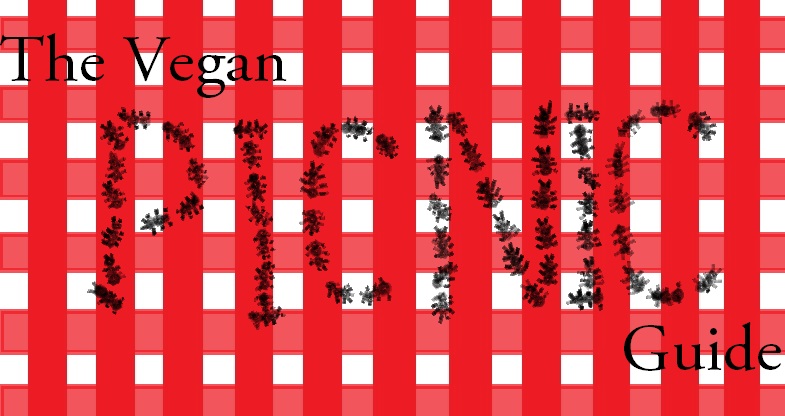
Image created by VRG Intern, Myrial Holbrook.

Image created by VRG Intern, Myrial Holbrook.

Picture it, the perfect picnic: a summer sun shines down on families and friends toting red checkered blankets and baskets laden with delicious food, and all around them, nature hums and buzzes in beautiful harmony. Burgers, hot dogs, cole slaw, salads, cookies, cakes, and pies galore…it’s a meat and dairy lover’s paradise, right? Or so you once thought. With the right recipes and tips, the comfort food at picnics can be 100% vegan and 100% delectable. Below you will find all the essential recipes to satisfy your savory side, your sweet tooth, and everything in between. You’ll find prepare-ahead recipes to bring to picnics as well as easy options to make on-site. If you’re not much of a picnicker, but you do like to camp or grill out, these recipes can still be great options for you. We’ve also included articles with specific tips, tricks, and recipes for picnicking, camping, and grilling alike. Bon appetit!

Menu Ideas

Main Courses:

Oat Nut Burger
Greens Quiche
Meatless Black Bean Burrito
Multi-Veggie Burger

Salads:

Cherry Tomato, Cucumber, and Sweet Onion Salad
Pineapple-Carrot Salad with Citrus Dressing
Corn Relish Salad
Herbed Potato Salad
Potato Salad with Thai Peanut Dressing
German Potato Salad
Mexican Cole Slaw
Asian Slaw
Easy Pasta Salad
Middle Eastern Macaroni Salad
Pecan and Red Pepper Pesto Macaroni Salad
Wild Rice Picnic Salad
Cold Quinoa Salad

Side Dishes:

Pinto Beans with Watercress or Arugla
Dried Tomato Tapenade
Couscous Taboulleh
Chunky Bean Spread
Better Baked Beans

Desserts:

Lemony Blueberry Muffins
Chocolate Chip-Raisin Blondies
Unbaked Oatmeal Peanut Butter Fudgies
Citrus Slices
Delicious Cherry Pie

Your A-Z of Picnic-Related Articles

Cold Salads for Warm Months
Cookies, Cookies, Cookies
Cool, Crisp Summer Salads
Deli Salads
Fast Sandwich Spreads
Flavorful Salad Dressings without the Oil!
Gourmet Grilling
Menu Construction Lecture-see Grill On!, Summer Sandwiches, Beyond Green, and Happy Ending sections
Picnic Pleasures
Spring is in the air and so is the smell of veggie dogs!
Traveling with Vegan Children-see Car Travel section
Vegan Backpacking
Vegan Dishes without the Added Oil, Salt, or Sugar
Vegetarian Journal’s Guide to Veggie Dogs

Thanks to Myrial Holbrook for compiling this piece while doing an internship with The Vegetarian Resource Group.

My Visit to Poplar Spring Animal Sanctuary

Posted on July 16, 2015 by The VRG Blog Editor

By Ivy Grob

I’ve been an environmentalist my whole life, and when I became a vegan, it was for the environmental reasons. It look me a while to make the connection that all animals, including the ones typically eaten, are also part of this environment that I’ve made my life mission to protect. Animal rights were never important to me until this stage of my life, something I cannot fathom since I grew up surrounded by animals and the wildlife of coastal Northern Florida. Veganism has taught me to extend my love to animals beyond cats and dogs, and to see all creatures as worthy of respect and care. So when I heard there was a farm animal sanctuary just outside of Baltimore called Poplar Spring, I knew I had to go.

As I drove through the beautiful, lush Maryland countryside, my excitement grew and grew. I was finally going to be able to check going to an animal sanctuary off of my vegan wish list. The moment I stepped out of the car I knew I was in a special place. There was a welcoming cow hanging out at the entrance to the driveway and a flock of geese and ducks waddling across the road towards the pond. The vegan bumper stickers on all the other cars served as a good indicator that I was going to be among like-minded, passionate people. I arranged ahead of time to volunteer, so I headed over to the sheep barn to meet the co-director, Terry, and I got to work. Throughout the morning I helped clean up animal pins and fields, with plenty of breaks to stop and admire the animals.

At noon, the tour began and I was able to learn more about the story of Poplar Spring. This animal sanctuary is located in Poolesville, Maryland and is home to over 200 rescued animals on over 400 acres of land. They are able to operate solely from public donations and do not rely on any other assistance. The animals that they care for come from abused and abandoned situations, and they are brought to Poplar Spring to be rehabilitated and to live out the rest of their lives in peace and comfort. I was able to experience the care Poplar Spring gives to their animals firsthand. During the tour we visited pigs, chickens, turkeys, horses, cows, goats, sheep, and even had the privilege of seeing the peacock up close and personal. To the owners of Poplar Spring, every animal is a family member and they know each one by name.

My favorite part of the day was feeding bananas to the pigs and rubbing the backs of cows as they stare back at you in wonder. I was filled with amazement at the stories we were told about what some of the animals have gone through, and it made me glad that I am able to live a lifestyle that promotes non-violence. If you live in the Baltimore or Washington, DC area, or ever find yourself passing through Maryland, I highly suggest a visit to Poplar Spring Animal Sanctuary. If you are able, you can donate while on the farm or through their website www.animalsanctuary.org, where you can also find out how to sponsor an animal. If you are unable to do either of these things, you can still help animals everywhere by choosing compassion every single day. Veganism is compassion.

Ivy wrote this piece while doing an internship with The Vegetarian Resource Group.

What Should I Do if I’m Discouraged After Being Vegan for a While?

Posted on July 16, 2015 by The VRG Blog Editor

By Anne Custer

A few months or maybe years into your journey you may become
discouraged. You may ask yourself if it’s all worth it because it may
seem like you are the only one that cares. Well, you aren’t! If you need
an extra push or a reawakening into veganism, here are some great
resources that helped me get back on track.

I found the following helpful because they inspire me to continue on in
veganism through the realms of cooking, health, and the environment.
Seeing all the healthy food prepared in documentaries inspires me to
create my own recipes and try new food. Watching people lose weight, get
off their medication, and reverse their diseases makes me excited to
enter the health field. Reading other people’s experiences and following
their journey encourages me to continue on in my own. And finally,
learning about the ways the meat industry affects the environment fuels
my passion to live sustainably.

Documentaries:
Forks Over Knives
Hungry for Change
Cowspiracy
Vegucated

Books:
Becoming Vegan

Whole
Omnivore’s Dilemma

Blogs:
My Eclectic Kitchen
Oh She Glows
Fork & Beans
Minimalist Baker

In addition to resources, find a group of local vegans who share your
values. Visit www.vegan.meetup.com to find a group in your city. Once you plug into a community, you may find it easier to be vegan because
you have people supporting you. You never know who you might meet! Get
involved in your local vegan or vegetarian society. If your city doesn’t
have one, consider creating your own. Someone else is probably looking
for the same thing. Attend a local vegan or animal rights festival or
conference. There you can talk to different organizations, sample
delicious food, and learn more about the movement. I’m positive you will
walk away encouraged just seeing all the people who are as passionate
and involved as you are. Also, it may be a good idea to write down why
you became a vegan. That way, you can look back and remind yourself of
how you felt when you first made the switch. Finally, try a new vegan
restaurant. Food never fails to make me happy and being in an all vegan
restaurant makes me excited (and a bit overwhelmed) because I can choose
anything on the menu and it’s safe to eat. Here is a list of restaurants
across the United States and Canada that cater to vegan diets:
http://www.vrg.org/restaurant/index.php

Visit the VRG site for more resources and answered questions:
http://www.vrg.org/

Anne Custer wrote this piece while interning with The Vegetarian Resource Group.

Ipanema Café

Posted on July 14, 2015 by The VRG Blog Editor

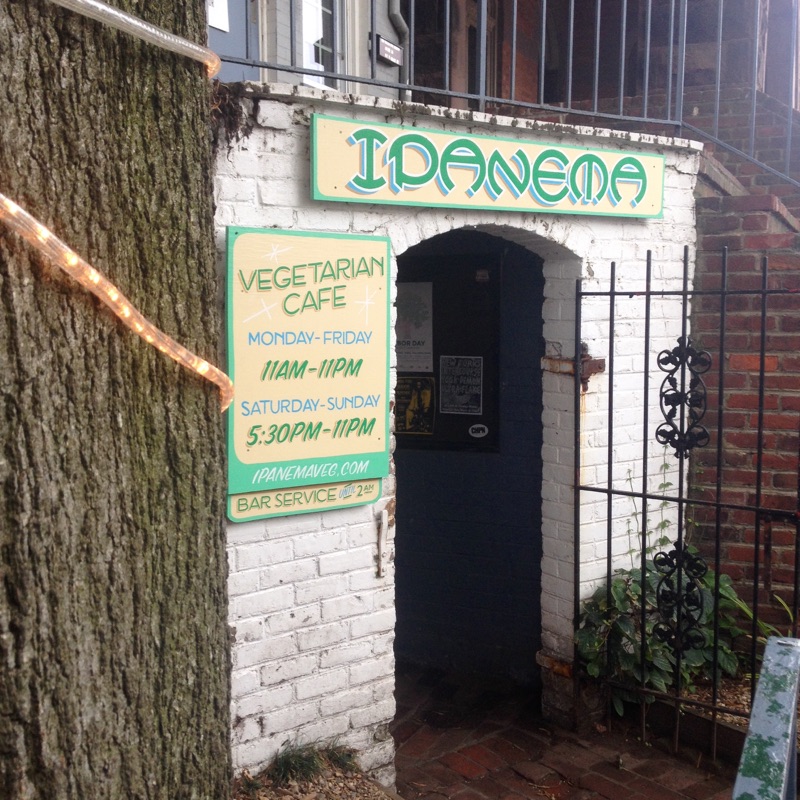
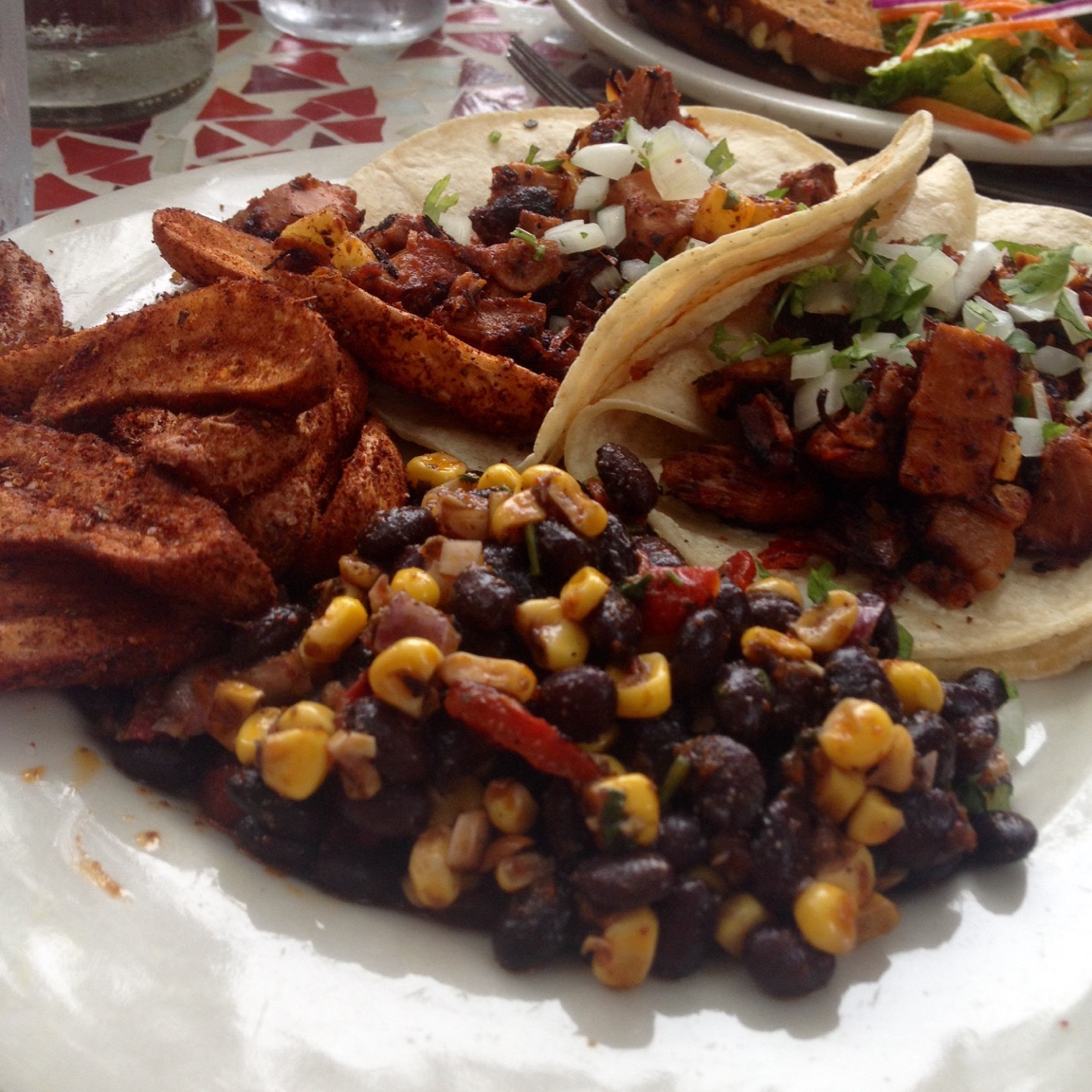
This Fourth of July weekend I had the opportunity to return to my hometown of Richmond to visit my family. Only three and a half hours on the Amtrak separated me from Baltimore and an awesome dinner on the patio of Ipanema Café. The café is neatly tucked in underneath an apartment complex and barber shop across the street from Insomnia Cookies. Located on West Grace Street, Ipanema is sure to please vegetarians and meat eaters alike. We walked into the dimly lit restaurant and must have looked confused. The friendly staff explained that there is only one menu and it’s posted on a chalkboard on the wall of the café. Once you’ve decided what you want, you find a place to sit and a waiter will come take your order. We opted for the quaint patio seat outside. Each table had a beautiful mosaic decoration on it and we were shaded by a tree decorated with lights next to our seat. Our waitress came bearing water and a tall glass bottle for refills. I ordered jackfruit tacos al pastor and patiently waited for it to be served.

anneRichmond is an eclectic city and the people are the same so it was fun to sit and people watch while we waited for our food. Once served, I dug into a delicious meal bursting with flavor and spice. The black bean and corn salad was the perfect mild compliment to the spicy tacos. The potatoes were crispy and hearty side. The jackfruit was seasoned with cayenne pepper and served on two thin corn tortillas with onions and cilantro. It was similar to barbeque in the way it pulled apart easily. This was my first jackfruit experience and it did not disappoint. After I was finished, I became increasingly curious as to what jackfruit actually was. I didn’t want to be a pretentious vegan and pretend to know every fruit and vegetable there ever was so I asked our waitress to explain. Jackfruit is an essentially bland tropical fruit grown in areas of Southeast Asia. It soaks up any flavor added to it and has a “meaty” texture. You can buy it in a can at Asian food stores.

anne2
After that mystery was solved, I wondered how my parents liked their food since I dragged the meat-eaters to this vegetarian restaurant. My dad ordered the Caesar salad (sans tofu) and my mom ordered a smoked Gouda sandwich. My dad doesn’t really enjoy crotons, but he said these were seasoned perfectly and tasted great especially with the crisp lettuce and vegan Caesar dressing. My mom’s sandwich came with a side salad and sweet potato fries. The dressing on the salad was a homemade ginger that was light and tasty. The actual sandwich, although not vegan, was topped with tomato, thyme, and caramelized onion. Based on their clean plates, I didn’t feel bad making them eat vegetarian for one meal. Looking back at their menu, I’m excited to try the hummus and fried chickpea wrap and the BBQ jackfruit sandwich next time I go. My only regret from eating at Ipanema Café is not ordering dessert.

For a list of vegetarian restaurant across the U.S. and Canada, visit: http://www.vrg.org/restaurant/index.php

Written by Anne Custer, VRG Intern.

Vegan Options at SaladWorks

Posted on July 10, 2015 by The VRG Blog Editor

By Anne Custer

SaladWorks prides themselves in claiming to be the first and largest fresh-tossed salad franchise. Eat it in store or take it to go, all items are made-to-order right in front of you. Eating vegan there is particularly easy, especially with their helpful website. Go to www.saladworks.com, click “Allergens,” then select your allergens or dietary restrictions and you have yourself a list of all menu items that are safe for you to eat. They even have a section where they offer modifications for menu items that can be made vegan or allergen free. If you don’t want to go to the website yourself, here is a list of items considered to be vegan. I did discover that three of the dressings listed honey as an ingredient, so those will not be included on this list. There are a few items listed as containing enzymes and natural ingredients. I have reached out to SaladWorks to verify that these are from vegan sources, but have not heard a response.

I’ve eaten at SaladWorks a few times and thoroughly enjoyed my fresh, customizable meal. I will advise you to not be overwhelmed with all your options and put them all on one salad. It will still be a hearty meal, but some of the flavor combinations will not compliment each other. I was caught in this trap the first time I went, but I figured my way out and now know how to order a delicious salad.

Here is my order:

·Spinach
·Chickpeas
·Cucumbers
·Green Peppers
·Edamame
·Onions
·Sunflower Seeds
·Balsamic Vinaigrette

Another great thing about the website is you can plug in your order to get the nutrition information! My salad is 230 calories with 12 grams of plant protein. Customize yours at: http://www.saladworks.com/salad/create-your-own-salad

As for vegan menu items:

Salads:

Garden Deluxe

Bases:

Baby Fresh Mix
Fresh Spinach
Romaine/Iceberg Blend

Toppings:

Tofu
Apple Chips
Chow Mein Noodles
Craisins
Glazed Pecans (Made with brown sugar)
Sunflower Seeds
Tortilla Chips
Walnuts
All Vegetables

Dressings:

Balsamic Vinaigrette
Classic French
Italian Vinaigrette
Lite Raspberry Vinaigrette
Oriental Sesame

Soups:

Spring Vegetable
Three Bean Chili

Spreads:

Spicy Brown Mustard

Breads (contain enzymes except focaccia breads):

Sourdough
Wheat Focaccia
Wheat Rolls
White Flour Tortilla
White Focaccia
White Rolls
Whole Wheat Tortillas

Carvery Dressings (Select Locations):

Nutty Sesame
Balsamic Dijon

Modifications:

Greek Salad, No feta
Caprese Panini, No garlic spread or cheese

For more information about dining at chain restaurants, visit: http://www.vrg.org/fastfoodinfo.php.

The contents of this posting, our website, and our other publications, including
Vegetarian Journal, are not intended to provide personal medical advice.
Medical advice should be obtained from a qualified health
professional. We often depend on product and ingredient information
from company statements. It is impossible to be 100% sure about a
statement, info can change, people have different views, and mistakes
can be made. Please use your best judgement about whether a product is
suitable for you. To be sure, do further research or confirmation on
your own.

How Do I Transition into Veganism?

Posted on July 09, 2015 by The VRG Blog Editor

By Anne Custer

Once you’ve made a successful transition to vegetarianism, you might start to wonder about veganism. Vegetarians do not eat meat, fish, or poultry. Vegans, in addition to being vegetarian, do not use other animal products and by-products such as eggs, dairy products, honey, leather, fur, silk, wool, cosmetics, and soaps derived from animal products. There are many reasons why people decide to transition. For me, it was a deep conviction that I did not want to contribute to any type of suffering. Being a dietetics student, I was also interested in the nutrition benefits of a plant based diet and the healing and restorative power it can have. Those were the main reasons why I chose veganism, but everyone has their own. A few others are environmental or social justice reasons.

When you decide to become a vegan, it may be tempting to quit cold Tofurky. This works for some people. For others, this way may not be sustainable long term. To slowly wean yourself off of animal products, I suggest making a list of everything you eat in one day. Then, identify the animal products on your list. Each day after that, omit one item you’ve identified from your diet. It may take a few days for you to completely omit one product, but this is an adjustment; take the time you need to solidify your choices.

When I made the decision to become vegan, I stopped eating animal products immediately. I never really enjoyed cheese and I knew I could find a substitute for my Greek yogurt fix. I went to my local grocery store and searched around the natural foods section. Most stores I’ve been to have this type of section and this is where I find most of the packaged foods I buy. This is also where I found substitutes for yogurt, ice cream, and pizza. I enjoy So Delicious brand products such as their dairy-free blueberry yogurt and salted caramel cashew milk ice cream. For breakfast, I would take a container of yogurt and mix it with granola and fresh berries. Amy’s is also a great brand for a quick and delicious meal alternative. They have the best pizza too!

If you are concerned about vegan baking, eggs are surprisingly easy to replace in recipes. Mash a banana, use some oil, or make a flax egg. Take 1 Tablespoon of flax meal and mix it with 3 Tablespoons of water. Let it sit for a few minutes until a gelatinous mixture is formed. You can also do the same with chia seeds. As for eating eggs, tofu is a great substitute for scrambled style. Crumble the tofu and stir-fry it with veggies and any seasoning you usually use on eggs. Tofu crumbles and soaks up flavor easily making it one of the most versatile vegan foods. I’ve used it in smoothies, baked goods, stir-fries, and most commonly as a meat substitute.

As my friend once said, “Not all vegan cheese is created equal.” Some can be way too gooey or slimy and others get the taste all wrong. Field Roast’s Chao Creamy Original is my personal favorite. As you can see, the market has inspired companies to make a plethora of vegan substitutes for anything you may want. I’ve found that after eating vegan for over two years, I simply don’t crave animal products and desire the taste of wholesome, plant based foods instead.

After you’ve weaned off of animal products, people are going to start to notice and ask you all kinds of questions. Where do you get your protein? What about calcium or iron? Do you miss cheese? Wouldn’t the world be overpopulated with animals if we didn’t eat them? Here is a great resource for responses to common questions vegans are asked: http://www.vrg.org/teen/#responses. My best advice is to be prepared and do all the research you can. At the end of the day, all you can do is stand firm in your beliefs and if people can’t accept that, then that is their prerogative. Explain to people, in a non- defensive manner, your stance and reasoning behind going vegan. Most people are genuinely interested and will respect your choice. But for that judgmental friend or overly concerned uncle, you may have to just smile and nod. Some people will never understand our choices, but as long as you have a reason, that’s all that matters.

Visit the VRG site for more resources and answered questions: http://www.vrg.org/

Anne Custer wrote this piece while interning with The Vegetarian Resource Group.

The contents of this posting, our website and our other publications, including Vegetarian Journal, are not intended to provide personal medical advice. Medical advice should be obtained from a qualified health professional. We often depend on product and ingredient information from company statements. It is impossible to be 100% sure about a statement, info can change, people have different views, and mistakes can be made. Please use your best judgement about whether a product is suitable for you. To be sure, do further research or confirmation on your own.

Reminder: VRG’s Veggie Video Contest Deadline is July 15, 2015

Posted on July 09, 2015 by The VRG Blog Editor

The Vegetarian Resource Group is once again holding a video contest and we will be awarding monetary prizes. Create and submit a video relating what you want to tell others about veganism. Some possible topics: food, nutrition, your feelings about veganism, water usage and vegetarianism, vegetarianism and animal rights, or other vegetarian topics which appeal to you. Humor and feelings are appreciated. All videos should be positive, not be critical of anyone, and not include any footage of animal cruelty. You may submit a video you have already made.

Aspects of judging include accuracy and judges wanting to share the video with others.

Entrants give permission to The Vegetarian Resource Group to post and share the video, to link to and from the video, and share the video with the media.

For details and to see previous winning videos see: http://www.vrg.org/videoscholarship.php

Eating Vegan While Abroad In A Secluded Area — From refugee camps to big cities

Posted on July 08, 2015 by The VRG Blog Editor

By Anne Custer

When I was in Spain, I was just a vegetarian, but looking back I realize I ate mainly vegan food while there, besides all the ice cream. The family we stayed with was very accommodating and even made authentic paella without the meat just for me! I ate different fruits I’d never tried before, pasta with veggies, delicious breads, and gazpacho. My host family was understanding about my diet and I wasn’t secluded in an area that didn’t have a store or market to buy food I could eat. But what if you were visiting a secluded region?

Yasmin Radbod has lived in Egypt, China, Nepal, and Thailand. Traveling to a different country as a vegan may be hard to fathom, but Yasmin has lived it. From refugee camps to big cities, she has maintained her vegan lifestyle no matter where she’s been.

She’s been vegan since she was fifteen, so she has had some practice finding food to eat. It was first put to the test when she studied abroad in China at Nanjing University. Since then, she has discovered it’s possible to be vegan anywhere. “It is essential to find the word or phrase in the local language to express what vegan means. That is what saved me in every country,” Yasmin explains.

As for items that may help you abroad, Yasmin brings fiber pills, nuts, and high energy biscuits. Fiber pills are used when you aren’t getting enough fiber in your diet. Not enough fiber can lead to constipation. When finding food was at its worst, she relied mainly on starchy food such as potatoes, rice, and bread. She also used high energy biscuits, which are typically used to provide nutrition to disaster victims worldwide, but when you are in a secluded area with limited options, these biscuits can provide you with the nourishment you need. When times weren’t as bad, in some areas, her diet mainly consisted of white rice, potatoes, curried vegetables, fruit, and beans. In her experience, African and Middle Eastern countries such as Egypt were the worst at providing vegan options. South and East Asia, specifically Bangkok were places where it was easier to find vegan food. However, finding vegan options varies greatly from country to country and even within a country. Yasmin explains that even though finding food in Bangkok was easy, she still returned to a refugee camp in Thailand where it wasn’t as easy.

The biggest obstacle of eating vegan while abroad? “Your own willpower,” says Yasmin explaining that it is completely viable to maintain a vegan lifestyle as long as you are committed and resourceful. “I’ve heard plenty of nonsense from people who have lived in the same places as me who said being vegan was impossible, and that certainly was not true–I’m proof.”

For more resources on traveling while vegan, visit: http://www.vrg.org/teen/#travel and www.vrg.org/restaurant/index.php

The contents of this posting, our website, and our other publications, including Vegetarian Journal, are not intended to provide personal medical advice. Medical advice should be obtained from a qualified health professional. We often depend on product and ingredient information from company statements. It is impossible to be 100% sure about a statement, info can change, people have different views, and mistakes can be made. Please use your best judgement about whether a product is suitable for you. To be sure, do further research or confirmation on your own.

  • Donate

  • Subscribe to the blog by RSS

  • VRG-NEWS

    Sign up for our newsletter to receive recipes, ingredient information, reviews of new products, announcements of new books, free samples of products, and other VRG materials.

    Your E-mail address:
    Your Name (optional):


↑ Top