The Vegetarian Resource Group Blog

Reminder: Applications for VRG’s $5,000 College Scholarship Due Feb 20

Posted on February 04, 2013 by The VRG Blog Editor

Applications are due on Feb 20!


Each year, VRG awards $10,000 in college scholarship money to two high school seniors who have promoted vegetarianism in their schools/communities ($5,000 to each). The deadline – February 20 – is right around the corner, so if you want to apply, or know someone who should apply, click here for more information.

VRG also offers The Eleanor Wolff Scholarship which is a paid summer internship ($2,500 plus $1,000 toward housing) at VRG’s Baltimore office. Here’s what our interns have had to say about their experiences: http://www.vrg.org/student.

Good luck!

Chipotle to Test Vegetarian ‘Sofritas’ in 7 San Francisco Bay Area Restaurants

Posted on February 01, 2013 by The VRG Blog Editor

Chipotle Mexican Grill has announced that they plan to test a vegetarian menu item at selected locations in the San Francisco Bay Area in February. From the press release:

“Sofritas, shredded tofu braised with chipotle chilis, roasted poblanos and a blend of aromatic spices, is made with organic, non-GMO tofu from Oakland’s Hodo Soy. Chipotle expects Sofritas to appeal to vegetarian and vegan customers….”

For more information, see: http://ir.chipotle.com/phoenix.zhtml?c=194775&p=irol-newsArticle&ID=1778960&highlight=

Bone Char-Free Sugar from Florida Crystals® and Domino® Sugar

Posted on January 29, 2013 by The VRG Blog Editor

By Jeanne Yacoubou, MS
VRG Research Director

The VRG received an inquiry from a food company in January 2013 about vegan sugar defined as sugar that had not been processed through cow bone char. As we reported in a 2007 update, most United States cane sugar continues to be decolorized through cow bone char.

We spoke with two employees at C&H® Sugar in January 2013 who told us that most of their sugar not certified USDA Organic is processed through “natural charcoal” (i.e., cow bone char). Their Washed Raw Sugar has not been decolorized using bone char but it is only produced at its Hawaii plant and not available for widespread distribution especially in large quantities. However, the company is looking into purchasing cane sugar from other nations in order to expand production of the Washed Raw Sugar.

C&H® directed us to its sister companies: Florida Crystals® and Domino® Sugar. Florida Crystals sugar, both conventional and USDA Organic varieties, has not been processed through cow bone char. It is widely available in both large and small quantities.

Comparatively speaking, Florida Crystals® is more expensive than other sugar brands. For example, in January 2013 The VRG noticed several online stores selling their own store brand conventional sugar for approximately $3/4 lbs. while Florida Crystals® sugar sells for approximately $6/4 lbs. http://shop.floridacrystals.com/Natural-Sugar

Similarly, large quantities of sugar differ significantly in price. Conventional cane sugar at several online stores sells for approximately $23/50 lbs. while Florida Crystals® cane sugar sells for approximately $36/25 lbs. Florida Crystals® Demerara Sugar costs approximately $58/50 lbs.

The VRG spoke with Shannon, a customer service representative at Domino® Sugar. She explained that although most Domino® Sugar has been processed through cow bone char, it is possible to tell from the sugar bag label whether is came from one of two of its nine North American plants in which processing does not involve cow bone char. One of the plants is located in Yonkers, NY and the other is in Orlando, FL.

The first number/letter on the package code reveals the plant in which the sugar was processed. The number “1” identifies the Yonkers plant as the processing location. The letter “X” means that the sugar was processed at the Orlando plant.

The second number refers to the year in which the sugar was packaged (“2” for 2012). The third refers to the week in that year when the sugar was processed (“8” means the eighth week). The following number refers to the day of the week on which the sugar was processed (“2” refers to Tuesday). The following “A, B, or C” indicates the shift (morning, afternoon, or night) when the sugar underwent processing. The last number identifies the machine on which the sugar was processed.

Shannon could not specify whether sugar is only sold close to its plant of origin or whether it may travel long distances before being sold. Therefore, we cannot say that only stores close to Yonkers or Orlando carry Domino® Sugar that has not been processed through cow bone char.

In December 2012, The VRG reported that Australia has not used cow bone char to decolorize its sugar since 1990. Instead, Australians use non-animal activated carbon filters. The major Australian sugar company told us that they do not distribute to North or South America. http://www.vrg.org/blog/2012/12/19/non-animal-coal-filters-used-to-process-cane-sugar-in-australia/

The contents of this article, our website, and our other publications, including The Vegetarian Journal, are not intended to provide personal medical advice. Medical advice should be obtained from a qualified health professional. We often depend on product and ingredient information from company employees or company statements. Information does change and mistakes are always possible. Please use your own best judgment about whether a product is suitable for you. Further research or confirmation may be warranted.

To purchase our Guide to Food Ingredients, please visit our website: http://www.vrg.org/catalog/index.php?main_page=product_info&cPath=1&products_id=8

For information on food ingredients, fast food, and for other information of interest to vegetarians and vegans, please subscribe to our enewsletter at http://www.vrg.org/vrgnews/

To support VRG research, you can donate at http://www.vrg.org/donate

There are many ways to stay connected to The Vegetarian Resource Group!
Get our blog delivered right to your inbox: http://feeds.feedburner.com/TheVRGBlog
Like us on Facebook: http://www.facebook.com/thevegetarianresourcegroup
Follow us on Twitter: http://twitter.com/VegResourceGrp

6th International Congress on Vegetarian Nutrition, Loma Linda, California

Posted on January 24, 2013 by The VRG Blog Editor

If you’ll be at ICVN, come to our table and say hi!

6th International Congress on Vegetarian Nutrition, Loma Linda, California
February 24-25, 2013
www.VegetarianNutrition.org

Every five years this scientific conference on the health effects of plant based diets offers an opportunity for health professionals and researchers to learn from each other in plenary sessions, workshops, poster presentations and social gatherings.

Program Highlights

  1. The Great Debate: Are all Omega-3’s created equal?
  2. Vegetarian diet pattern and longevity
  3. Are vegetarian diets the solution to healthy aging?
  4. Role of plant foods in prevention of chronic diseases
  5. Environmental cost of vegetarian diet patterns
  6. Vegetarian studies around the globe
  7. Myths and controversies surrounding soy
  8. New frontiers in nut research
  9. Plant versus animal foods: the eternal debate
  10. Dairy foods: what is the verdict?
  11. Why and how vegetarian diets prevent obesity
  12. Challenges of defining vegetarian diet
  13. And many more. . .

Sapthagiri Indian Restaurant in Jersey City, NJ

Posted on January 22, 2013 by The VRG Blog Editor

By Gianna Mautone, VRG Intern

Purely vegetarian, authentic South and North Indian fare offered in a very casual, friendly environment – this is what defines a dining experience at Sapthagiri in Jersey City, NJ. On a Thursday night, the restaurant was lively and full of patrons, many of whom appeared to be regulars. The restaurant is medium-sized, with enough space for approximately 50 people and some outdoor seating in the front. Sapthagiri offers an extensive, purely vegetarian menu, with many vegan options clearly indicated. If not 100% vegan, various dishes are listed as having a “vegan option available.” The menu also specifies which dishes are gluten-free, low carb and low fat. The staff at Sapthagiri are very compassionate toward vegetarian and vegan eating, which made the experience very comfortable and enjoyable. The atmosphere of the restaurant is very friendly and welcoming, as the owner and waiter cracked jokes with our party and offered very attentive service throughout the duration of our dinner.

Our table ordered a variety of items to share, which made for a fun dining experience. We started with a sample plate as an appetizer. The plate featured an Idly (steamed rice cake), a Vada (fried lentil donut), a Masala Vadla (flat fried donut made with lentils, peanuts, garlic and spices), an Aloo Bonda (potato dumpling coated in chickpea batter), and a Samosa (crispy, flaky crust stuffed with potatoes and green peas).

A feature item on the menu is the Dosa, a thin crepe made from rice and lentils. The dosas were all served with a chutney and sambar (a spicy vegetable stew). The “Mysore Masala Dosa” came stuffed with potatoes, onions, peas, cashew nuts and a spicy sauce, while the “Paper Dosa” (a very long, crispy crepe) was served plain and intended to be ripped and dipped into the chutney or spread with curried potatoes. The Paper Dosa was huge, perfect for sharing and full of crisp flavor. Both Dosa plates were delicious and I enjoyed sampling the various spreads and dips that were served alongside.

In addition to the Dosa, another Indian bread that our table ordered was the Poori (a very fluffy fried whole wheat bread). The Poori was served with a side of channa masala, spiced chick peas. In my opinion, the channa masala was seasoned perfectly – the heat of the dish and its flavorful spices were balanced and complimented each other just right.

An extensive list of South Indian and North Indian curries are also available on the menu. The curry dish I tried featured vegetables cooked in coconut milk with a spicy kick and was served along side a bowl of rice. I enjoyed the spiciness of this dish, though the waiter informed me that he requested it be made at medium spice, so it could have been made even hotter. The waitstaff was very accommodating to any special requests or additions our party asked for.

The variety of authentic Indian spices, flavors and Dosa that I tried at Sapthagiri made for an interesting and enjoyable dining experience. As someone who had limited knowledge of Indian cuisine, I felt that Sapthagiri’s descriptive menu and helpful waitstaff made for an easy and welcoming experience. I will definitely be back to Sapthagiri soon. There are over 100 items on the menu, many of which I have my eye on!

For more information about Sapthagiri, visit their website: http://www.sapthagiri.biz/index.aspx. For more information about other vegan/vegetarian restaurants around the U.S. and Canada, see our Restaurant Guide at: http://www.vrg.org/restaurant/index.php.

School-age children and vegetarian/vegan diets with Reed Mangels, PhD, RD

Posted on January 16, 2013 by The VRG Blog Editor

VRG’s Nutrition Advisor Reed Mangels, RD, PhD, was on the Dr. Don Show on January 9 to speak about vegetarian & vegan diets for school-age children. If you missed it live, you can listen to it on the Dr. Don Show archives here: http://bullheadurgentcare.com/archives/playfiles/01092013p.html.

You can find more archives of the Dr. Don Show here: http://bullheadurgentcare.com/archives/index.html, including the April 25, 2012 show, in which Dr. Mangels spoke about vegetarian diets in infants, and the March 6, 2012 show, in which Dr. Mangels discussed pregnancy, lactation and vegetarian diets.

For more information on vegan pregnancy, see:

Applications for VRG’s $5,000 College Scholarship Due Feb 20

Posted on January 14, 2013 by The VRG Blog Editor


Each year, VRG awards $10,000 in college scholarship money to two high school seniors who have promoted vegetarianism in their schools/communities ($5,000 to each). The deadline – February 20 – is right around the corner, so if you want to apply, or know someone who should apply, click here for more information.

VRG also offers The Eleanor Wolff Scholarship which is a paid summer internship ($2,500 plus $1,000 toward housing) at VRG’s Baltimore office. Here’s what our interns have had to say about their experiences: http://www.vrg.org/student.

Good luck!

Cooking Vegan by Vesanto Melina, MS, RD and Chef Joseph Forest

Posted on January 11, 2013 by The VRG Blog Editor

Cooking Vegan book cover

This dietitian and chef duo have produced a wonderful vegan cookbook with extensive nutrition information. You’ll find a lot of helpful tips in this book including 12 menus, a chart of foods grouped according to six tastes, a shopping list, and kitchen equipment list. Nutritional analyses are also provided.

There are many creative recipes including Good Morning Granola, Sunflower-Sesame Spread, Carrot, Lemongrass and Basil Soup, Vietnamese Salad, Avocado, Grapefruit and Chipotle Dressing, Sushi Rolls, African chickpea Stew, Sweet and Sour Tofu, Cashew Cheese Lasagne, Tamarind-Date Sauce, Rosemary Gravy, Lemon Roasted Potatose, Chocolate-Orange Cake, and Lime Pie.

During the summer, you want to make the following recipe from this cookbook. It is a quick and easy vegan dish to prepare that involves little cooking. For a complete meal, you can serve this dish with rice and salsa.

Black Beans with Coconut and Mango
Makes about two 1-cup servings

  • 1 3/4 cups cooked or canned black beans, rinsed
  • 1/4 cup coconut milk
  • 1 Tablespoon freshly squeezed lime juice
  • 1 teaspoon chili powder
  • 1/4 teaspoon salt
  • 2 cups fresh or frozen mango pieces

Put the black beans, coconut milk, lime juice, chili powder, and salt in a medium saucepan and stir until combined. Cook over medium-high heat until the coconut milk comes to a boil. Decrease heat to medium-low, cover, and cook, stirring occasionally, for 10 minutes. Stir in the mango, cover, and cook stirring occasionally, for 3 minutes, or until heated through.

Variations: Omit the mango. Slice or cube 1 avocado. Garnish each portion with half of the avocado before serving. Also, you can replace the mango with one small papaya, peeled, seeded, and cubed.

Cooking Vegan (ISBN 978-1-57067-267-5) is 264-pages. It is published by Book Publishing Company and can be purchased from The Vegetarian Resource Group from our online bookstore.

Giving Minimum Required IRA Distributions to Charity

Posted on January 09, 2013 by The VRG Blog Editor

According to Forbes, the fiscal cliff deal had a special tax break for cash donated by seniors to charity in Jan. 2013.

It’s a variation on the rule that allows those 70½ and older to transfer as much as $100,000 per year from their traditional IRAs to charity. The provision last expired at the end of 2011. In the tax deal enacted this week, Congress has extended it through 2013, with a brief window of opportunity for 2012 donations.

Unless an IRA is a Roth, the account owner must take yearly minimum required distributions starting at age 70½ and pay tax on the distribution. With the charitable IRA rollover, as it is called, the donation can count against the minimum required distribution he/she would otherwise be required to take.

Instead of taking money out of an IRA, the owner asks the custodian of the account to send a certain sum directly to charity. Annual minimum distributions have to be taken by December 31st. Congress carved out a compromise for 2012 donations. It only applies to taxpayers who delayed taking their IRA distributions until December. If they donate cash to charity between now and Jan. 31, they can have it count to satisfy all or part of their 2012 minimum required distribution. In 2013, you must ask the IRA custodian to send the distribution directly to the charity.
While there is no income tax deduction for the donor’s contributions, the sum going to charity is not included in gross income

IRA funds donated this way can not be used for contributions to donor-advised funds, supporting organizations or private non-operating foundations. Otherwise, the money can go to any organization to which you can make a gift that would qualify as a charitable deduction on your tax return.

This is not personal tax or legal advice. Please speak to your lawyer or financial advisor.

To donate to The Vegetarian Resource Group, visit www.vrg.org/donate, call (410) 366-8343, or write to The Vegetarian Resource Group, P.O. Box 1463, Baltimore, MD 21203.

Iron in the Vegan Diet

Posted on January 07, 2013 by The VRG Blog Editor

Iron is another nutrient that new vegans and vegetarians are often concerned about. Fortunately, there are many excellent plant sources of iron. Our recently-updated article, Iron in the Vegan Diet, contains a list of the iron content of selected vegan foods, a comparison of iron sources, and some sample menus that provide more than the daily recommended amount of iron.

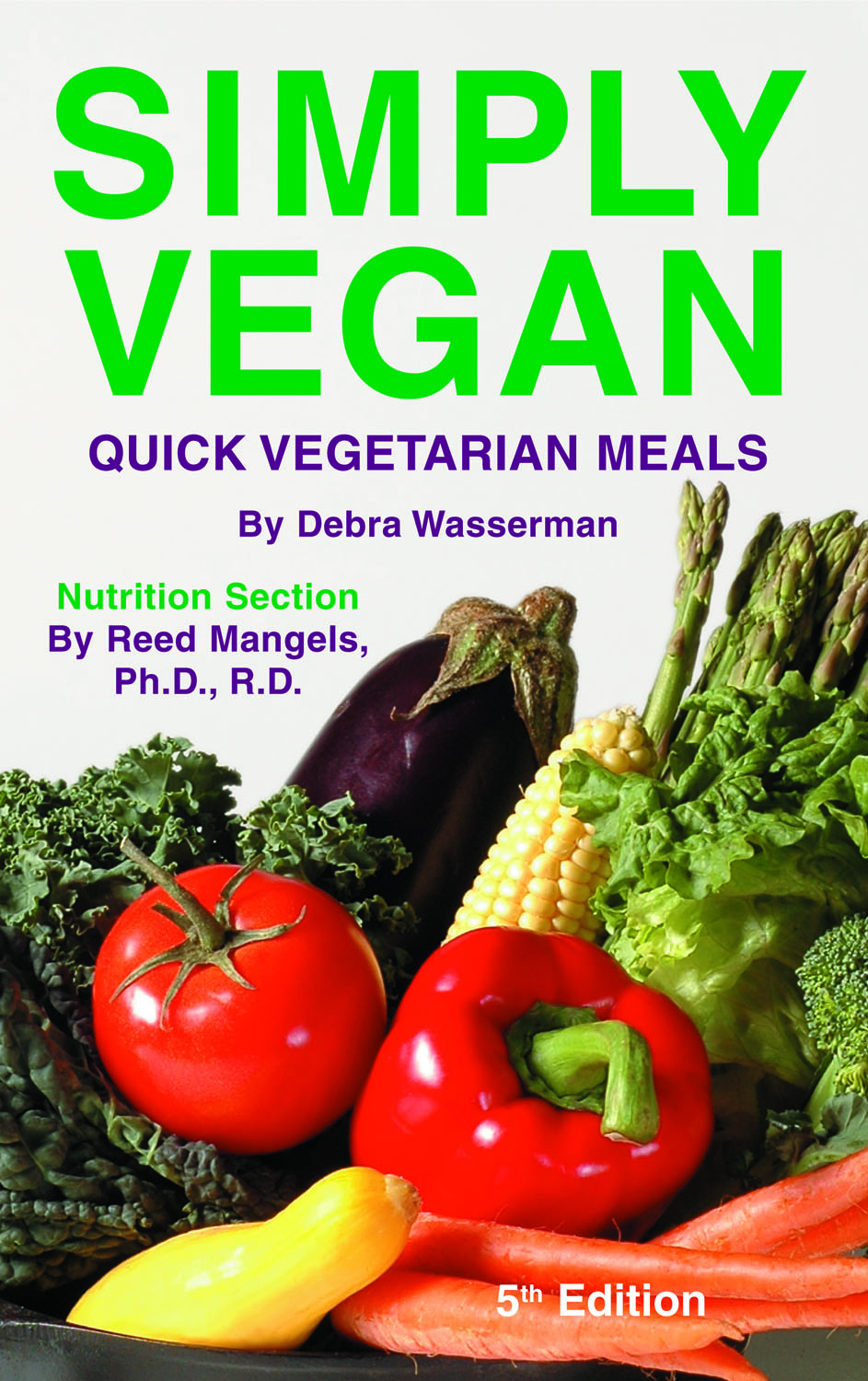
Iron in the Vegan Diet is excerpted from the newly released 5th Edition of Simply Vegan. For a limited time, we’re offering 50% off the cover price when you order 5 copies from our online bookstore. For more information about vegan nutrition, visit the Nutrition section of our website.

The Vegetarian Resource Group relies upon the generosity of our supporters. Please donate so we can continue to provide vital nutrition information like this.

Thanks to VRG volunteer Alan Polster for converting this update into HTML!

  • Donate

  • Subscribe to the blog by RSS

  • VRG-NEWS

    Sign up for our newsletter to receive recipes, ingredient information, reviews of new products, announcements of new books, free samples of products, and other VRG materials.

    Your E-mail address:
    Your Name (optional):


↑ Top