The Vegetarian Resource Group Blog

Vegan Eggplant Dishes From the Middle East and North Africa

Posted on March 11, 2011 by The VRG Blog Editor

This article originally appeared in Vegetarian Journal Issue 2, 2010

Delightful Eggplant Dishes From the Middle East and North Africa

By Habeeb Salloum

From large and egg-shaped to small and thin, the many varieties of eggplants in produce sections have been catching an increasing number of consumers' fancy. From black to blue, mauve, purple, white, and all the shades in between, eggplants draw those seeking appetizing foods.

Versatile, visually appealing, and delicious, eggplants are a vegetarian's dream vegetable. For thousands of years, they were one of the most popular vegetables in their lands of origin. In China, India, Japan, the Balkans, and eastern Mediterranean countries, they have been used as a meat substitute for untold centuries. It is said that, if the eggplant recipes of all the Mediterranean countries were gathered, there would be well over a thousand. In the Arab countries of the Middle East alone, at least 150 eggplant dishes are known.

The nutritional value of eggplant is about average, on the same level as tomatoes. On the other hand, eggplants are not high in calories (if they are not fried), making them ideal for those watching their weight.

Eggplants can be cooked or preserved in various ways. When they are to be puréed, they can be roasted over coals or in the oven. Broiling over an open fire gives them a delicate smoky flavor, but baking them in the oven is much easier. The skin should be pierced in several places before roasting or baking, and the eggplant turned a few times as it bakes. When the skin blisters, the eggplant is cooked, and the skin should be removed immediately. The cooked pulp's light, creamy texture is extraordinarily delectable.

If the eggplant is to be fried or used in salads and stews, it should be sliced or cubed, placed in a strainer, and then sprinkled with salt. Next, a weight should be placed on top for an hour; this allows the pieces to drain and release their bitter juices. Then, fry the eggplant slices or cubes quickly to cut down on oil absorption.

When eggplants are to be preserved, use pickling ingredients and oil. This gives the pickled eggplant a smooth, rich taste. Centuries of experience have demonstrated that olive oil is the perfect medium to use when cooking or preserving eggplant.

Keeping these hints in mind, a cook can plunge quickly into the badhinjan world of the Middle Eastern lands. Try these simple recipes, modified and using very little oil to meet vegetarian and dieters' needs.

BADHINJAN MUTABBAL (EGGPLANT APPETIZER)

(Serves 4)

Traditionally, when this recipe is made, the slices are fried in olive oil. However, baking the slices in the oven is a much healthier method of preparing eggplant.

  • 1 medium-sized eggplant (approximately 1 pound), peeled and sliced lengthwise and then cut into half-moon slices approximately ¼-½ inch thick

SAUCE

  • 2 Tablespoons finely chopped coriander leaves
  • 1 Tablespoon pomegranate concentrate or grenadine syrup (can be purchased online), diluted in 2 Tablespoons water
  • 1 Tablespoon lemon juice
  • 2 cloves garlic, crushed
  • ½ small jalapeño pepper, very finely chopped
  • ½ teaspoon salt
  • ½ teaspoon black pepper
  • 2 Tablespoons toasted blanched almonds
  • Sprigs of fresh coriander

Preheat oven to 350 degrees.

Place eggplant in a pan and bake for 30 minutes, turning over once. Allow eggplant to cool somewhat. Remove from pan and allow to cool.

In the meantime, make the sauce by combining the coriander, diluted concentrate or grenadine syrup, lemon juice, garlic, jalapeños, salt, and pepper. Set aside.

Place the eggplant slices on a serving platter, and then spoon the sauce evenly over top. Decorate with the almonds and the sprigs of coriander and serve.

Total calories per serving: 67 Fat: 3 grams
Carbohydrates: 11 grams Protein: 2 grams
Sodium: 296 milligrams Fiber: 4 grams

EGGPLANT AND TOMATO DIP

(Serves 6)

  • 1 medium-sized eggplant (approximately 1 pound)
  • 2 cups stewed tomatoes
  • 2 Tablespoons fine vegan bread crumbs
  • 2 cloves garlic, crushed
  • 1 teaspoon crushed dry basil
  • ½ teaspoon salt
  • ½ teaspoon cumin
  • ½ teaspoon black pepper
  • 2 Tablespoons pomegranate seeds
  • 2 Tablespoons toasted pine nuts
  • 2 Tablespoons finely chopped parsley
  • 1 Tablespoon olive oil (optional)

Preheat oven to 350 degrees.

Place eggplant in a pan and bake, turning over frequently, for 1 1 / 4 hours or until the skin is crisp. Allow eggplant to cool somewhat. When cool enough to handle, remove and discard the skin.

Place eggplant in a blender, along with the tomatoes, bread crumbs, garlic, basil, salt, cumin, and pepper. Blend into a smooth paste. Place in a serving bowl and refrigerate for an hour.

Decorate with pomegranate seeds, pine nuts, and parsley. Drizzle a little olive oil over top just before serving, if desired.

Total calories per serving: 78 Fat: 3 grams
Carbohydrates: 12 grams Protein: 2 grams
Sodium: 366 milligrams Fiber: 4 grams

SHAWRABAT BADHINJAN WA KUSA (EGGPLANT AND ZUCCHINI SOUP)

(Serves 8)

Numerous versions of this soup are found in North Africa; however, the eggplant is usually fried before it is added as an ingredient. This version is more healthful and even tastier.

  • 1 medium-sized eggplant (approximately 1 pound), peeled and diced into 1-inch cubes
  • 1 medium-sized zucchini (approximately 6-7 inches long), diced into ½-inch cubes
  • 1 medium-sized onion, finely chopped
  • 4 cloves garlic, crushed
  • ½ cup finely chopped fresh coriander leaves
  • 5 Tablespoons no-salt-added tomato paste, diluted in 2 cups water
  • ¼ cup uncooked white rice
  • 2 Tablespoons olive oil
  • 1 teaspoon salt
  • 1 teaspoon cumin
  • ½ teaspoon black pepper
  • ¼ teaspoon cayenne
  • 4 cups low-sodium vegetable broth
  • 4 Tablespoons finely chopped fresh basil

Place all ingredients, except the basil, in a saucepan and bring to a boil. Cover and simmer over medium-low heat for 40 minutes. Stir in the basil and serve hot.

Total calories per serving: 96 Fat: 4 grams
Carbohydrates: 14 grams Protein: 2 grams
Sodium: 376 milligrams Fiber: 3 grams

EGGPLANT SALAD

(Serves 6)

This recipe, which originated in Yemen, can also be served as a side dish or as a dip.

  • 1 medium-sized eggplant (approximately 1 pound)
  • 1 small Spanish onion, very finely chopped
  • 2 Tablespoons olive oil
  • 1 clove garlic, crushed
  • ½ teaspoon salt
  • ½ teaspoon black pepper
  • 4 Tablespoons lemon juice
  • 1 small tomato, finely chopped
  • ¼ cup finely chopped fresh coriander leaves
  • ½ teaspoon paprika

Preheat oven to 350 degrees.

Place eggplant in a pan and bake, turning over frequently, for 1 1 / 4 hours or until the skin is crisp. Allow eggplant to cool somewhat. When cool enough to handle, remove and discard the skin.

In a mixing bowl, mash eggplant into pulp. Then, stir in the onions, olive oil, garlic, salt, pepper, and lemon juice. Mix well.

Transfer to a serving bowl and decorate with tomatoes and coriander. Sprinkle with paprika just before serving.

Total calories per serving: 69 Fat: 5 grams
Carbohydrates: 7 grams Protein: 1 gram
Sodium: 199 milligrams Fiber: 3 grams

SALATAT BADHINJAN WA LUZ (EGGPLANT AND ALMOND SALAD)

(Serves 5)

This is a unique salad. You can use other types of nuts-such as Brazil nuts, pecans, cashews, or walnuts- in this salad instead of the almonds.

  • 1 medium-sized eggplant (approximately 1 pound), peeled and diced into ½-inch cubes
  • 2 Tablespoons lemon juice
  • 2 Tablespoons olive oil
  • ½ teaspoon salt
  • Nonhydrogenated vegan margarine to prepare baking pan
  • ½ cup coarsely ground toasted almonds
  • 4 Tablespoons finely chopped fresh coriander leaves
  • 1 Tablespoon pomegranate concentrate, diluted in 3 Tablespoons water
  • 2 cloves garlic, crushed
  • ½ teaspoon black pepper
  • Parsley sprigs

Preheat oven to 350 degrees. Place the eggplant, lemon juice, olive oil, and salt into a bowl and thoroughly mix until the cubes are coated. Spread evenly on a greased baking pan and bake for 30 minutes. Set aside to cool.

Combine the eggplant mixture and the almonds in a bowl. Set aside.

In a separate bowl, combine the remaining ingredients, except the parsley sprigs. Then, stir into the eggplant-almond mixture.

Place in a serving bowl, decorate with parsley sprigs, and serve.

Total calories per serving: 135 Fat: 10 grams
Carbohydrates: 10 grams Protein: 3 grams
Sodium: 236 milligrams Fiber: 4 grams

SHALADA BRANIYA (MOROCCAN EGGPLANT SALAD)

(Serves 6)

In Morocco, salads are often made from cooked vegetables.

  • 1 large eggplant (approximately 2 pounds), peeled and diced into ½-inch cubes
  • 4 cloves garlic, finely chopped
  • 5 cups water
  • 1 teaspoon salt, divided
  • 2 medium tomatoes, finely chopped
  • 1 teaspoon cumin
  • 1 teaspoon paprika
  • ¼ teaspoon black pepper
  • 1/8 teaspoon cayenne
  • 4 Tablespoons lemon juice
  • 2 Tablespoons olive oil
  • 4 Tablespoons chopped fresh coriander leaves
  • Lemon slices or wedges

Place the eggplant, garlic, water, and ¾ teaspoon salt in a saucepan. Cover and bring to a boil. Cook over medium-low heat for approximately 5 minutes until the eggplant is cooked but still firm.

Place the saucepan contents in a strainer. Allow to drain and cool.

Transfer saucepan contents to a salad bowl and sprinkle with the remaining salt. Stir in the remaining ingredients, except the coriander and lemon wedges, and then gently toss. Decorate the salad with the coriander leaves and lemon wedges and serve.

Total calories per serving: 89 Fat: 5 grams
Carbohydrates: 12 grams Protein: 2 grams
Sodium: 395 milligrams Fiber: 6 grams

BABA GHANNUJ (EGGPLANT-TAHINI DELIGHT)

(Serves 6)

This dish originated around Syria, but it has become very popular in all the eastern Arab countries. Now, it is found at every feast and party, having become a true part of all eastern Arabs' kitchens.

  • 1 large eggplant (approximately 2 pounds), pierced with a fork on all sides
  • 2 cloves garlic, crushed
  • ½ teaspoon salt
  • ½ teaspoon black pepper
  • ½ teaspoon cumin
  • ½ teaspoon ground coriander seeds
  • 5 Tablespoons lemon juice
  • 5 Tablespoons tahini
  • 4 Tablespoons water
  • ½ cup finely chopped fresh parsley
  • 1 small tomato, finely chopped
  • A little olive oil (optional)

Preheat oven to 350 degrees.

Place eggplant in a pan and bake, turning over frequently, for 1 1 / 4 hours or until the skin is crisp. Allow eggplant to cool somewhat. When cool enough to handle, remove and discard the skin. Mash pulp well, place in a mixing bowl, and set aside.

Place remaining ingredients, except the parsley, tomatoes, and olive oil, in a blender. Blend mixture for a few moments, adding a little water if too thick. Stir the mixture into the eggplant.

Transfer the mixture to a serving bowl. Decorate with parsley and tomatoes and serve. Drizzle a little olive oil over top just before serving, if desired.

Total calories per serving: 119 Fat: 7 grams
Carbohydrates: 13 grams Protein: 4 grams
Sodium: 218 milligrams Fiber: 7 grams

MANAZILET BADHINJAN (EGGPLANT AND CHICKPEA CASSEROLE)

(Serves approximately 6)

Changing up the ingredients, such as by adding potatoes, zucchini, or mushrooms, yields tasty variations for this dish.

  • 2 Tablespoons olive oil
  • 1 large onion, finely chopped
  • 2 medium sweet red peppers, chopped
  • 4 garlic cloves, crushed
  • 1 medium-sized eggplant (approximately
  • 1 pound) peeled and diced into ½-inch cubes
  • 2 cups fresh or frozen peas
  • 2 cups stewed tomatoes
  • 2 cups cooked chickpeas
  • 1 teaspoon cumin
  • 1 teaspoon dried thyme
  • 1 teaspoon dried oregano
  • 1 teaspoon salt
  • ½ teaspoon black pepper
  • ¼ teaspoon cayenne
  • 1 cup water

Preheat oven to 350 degrees.

Heat the oil in a frying pan. Sauté the onions and red peppers over medium heat for 7 minutes. Add the garlic and stir-fry for another 3 minutes. Add the eggplant cubes and quickly stir-fry for 1 minute.

Transfer the frying pan contents to a casserole dish and stir in the remaining ingredients. Cover and bake for 50 minutes. Remove the cover and bake for an additional 10 minutes.

Total calories per serving: 237 Fat: 7 grams
Carbohydrates: 36 grams Protein: 10 grams
Sodium: 551 milligrams Fiber: 11 grams

BADHINJAN MISHWI BIL FURN (BAKED EGGPLANT STEAKS)

(Serves 6-8)

Serve this dish with mashed potatoes or cooked rice.

  • Nonhydrogenated vegan margarine to prepare casserole dish
  • 1 large eggplant (approximately 2 pounds), peeled and cut into ½-inch slices
  • ½ teaspoon salt

BASTING

  • ½ cup chopped fresh basil
  • ½ cup chopped fresh coriander leaves
  • ½ cup finely chopped fresh dill
  • ½ small jalapeño pepper, chopped
  • 1 medium onion, chopped
  • 4 garlic cloves, crushed
  • 2 Tablespoons lemon juice
  • 2 Tablespoons olive oil
  • 2 teaspoons sugar (Use your favorite vegan variety.)
  • ½ teaspoon black pepper
  • ½ teaspoon salt

Grease baking pan or casserole dish with margarine. Set aside.

Lightly sprinkle eggplant with the salt and place in the pan. Set aside.

Preheat oven to 350 degrees.

Make the basting by placing the remaining ingredients into a blender and making a soft paste, adding a little water, if necessary.

Brush the eggplant slices with a quarter of the basting and bake for 20 minutes. Turn slices over, brush with another quarter of the basting, and bake for another 25 minutes or until done. Top with remaining basting and serve hot.

Total calories per serving: 95 Fat: 5 grams
Carbohydrates: 13 grams Protein: 2 grams
Sodium: 394 milligrams Fiber: 6 grams

BADHINJAN MAQ'ID (CANDIED EGGPLANTS)

(Serves 8)

  • 1 dozen tiny eggplants (approximately 3 inches long), washed and stemmed
  • 2 cups sugar (Use your favorite vegan variety.)
  • 3 cups water
  • 6 whole cloves
  • 1 Tablespoon orange or rose blossom water
  • 4 Tablespoons lemon juice

Place eggplants in a large pot and cover with water. Bring to a boil and cook over medium heat for approximately 5 minutes. Remove and drain in a strainer.

Place the sugar, water, and cloves in a saucepan. Bring to a boil over medium heat, stirring constantly. Add the eggplants, cover, and cook over medium-low heat for 25 minutes. Stir in the orange or rose blossom water and lemon juice and cook for another few minutes. Remove and allow to cool before serving, with or without the syrup.

Total calories per serving: 236 Fat: <1 gram
Carbohydrates: 60 grams Protein: 2 grams
Sodium: 5 milligrams Fiber: 6 grams

L-Cysteine in Bread Products Still Mostly Sourced from Human Hair, Duck Feathers, Hog Hair

Posted on March 09, 2011 by The VRG Blog Editor

by Jeanne Yacoubou, MS
VRG Research Director

The VRG recently surveyed food ingredient manufacturers and suppliers as well as bread and bagel companies to find out if the animal sources of the common amino acid dough conditioner and human and pet food reaction flavor used to make flavor enhancers, L-cysteine, were still dominant in the marketplace as they were in 2007 when we last reported on L-cysteine. The answer was a resounding "yes."

One leading amino acid supplier reported to us in February 2011 that "duck feathers or human hair" were the sources, based on an official statement received from its Chinese supplier.

A product manager with another food ingredients company reported to The VRG in August 2010 that "it’s not human hair, not duck feathers, that’s the major source of L-cysteine today; it’s hog hair." He estimated hog hair to be the source of 90% of the Chinese L-cysteine supply.

A manager of company that produces non-animal L-cysteine stated in September 2010 that the major animal source of L-cysteine today was "human hair mostly" followed by "duck feathers or hog hair when the human hair supply was low." According to this source, feathers and hog hair "are reportedly inefficient compared to [human] hair [in yielding great quantities of L-cysteine]. So if there is a problem with hair [supply], then hog hair or feathers may be a backup."

In September 2010, the VRG asked companies that produce non-animal versions of L-cysteine how their product was doing on the market. Estimates given by the leading companies put the vegetable-based fermentation or synthetic product at approximately 10% of the L-cysteine market today. The reason given for the low market share is the high price of non-animal L-cysteine (two to three times as much) compared to the much cheaper and much more plentiful Chinese (and Indian, to a lesser but growing degree), supply.

A second reason given is that a growing number of food companies are demanding a "natural" product and a "synthetic" L-cysteine does not meet that criterion. Furthermore, a major reseller of L-cysteine told us in September 2010 that the company policy is to label anything using an animal-derived (i.e., hair or feathers) L-cysteine as "non-vegetarian" even though it is still technically "vegetarian" and considered "natural." Their labeling decision was precautionary in response to those who prefer to avoid all animal-sourced ingredients. (Note: one company does sell an L-cysteine manufactured through microbial fermentation and another is in the process of developing their own fermentation technique. The latter company estimates that it may take two-three years to perfect the process on an industrial scale and then bring it to market.)

The writer noticed through canvassing many companies in February and March 2011, compared to 2007 when The VRG last updated L-cysteine, (http://www.vrg.org/vrgnews/2007jul.htm#s2), that a growing number of companies are requesting or reselling only non-animal derived L-cysteine for food use.

Concerned individuals who would like to see more of the non-animal L-cysteine used in their bread products as well as in other human food and pet products are encouraged to voice their opinion politely to food companies and restaurant chains that are using the animal-sourced L-cysteine. Likewise, food companies and chains which are using non-animal L-cysteine are due a "thank you."

To purchase our Guide to Food Ingredients, go to:
http://www.vrg.org/catalog/index.php?main_page=product_info&cPath=1&products_id=8

To support VRG’s research, please donate at:
https://www.givedirect.org/give/givefrm.asp?CID=1565
or
http://www.vrg.org/catalog/index.php?main_page=index&cPath=4

VRG’s $2,500 Eleanor Wolff Scholarship

Posted on March 08, 2011 by The VRG Blog Editor

Eleanor Miltimore Wolff became a committed vegan late in life. Once she learned and understood that dietary choices affected not only one’s personal health, but also the health of the planet and the well being of the animals, there was no looking back. Leather shoes and purses, along with non-vegan food products went out the door. Her children and grandchildren were showered with vegan reading material. When she exercised she would sport a T-shirt proclaiming: “I think, therefore I am — a vegetarian”. Eleanor was a military censor during World War II, but there was no censoring her commitment to a plant based diet and lifestyle.

In her memory, the Eleanor Wolff Scholarship is a $2,500 paid internship at the VRG office in Baltimore (plus $1,000 toward housing) for a student who:

  1. Wants to be an effective change agent on behalf of vegetarianism
  2. Is motivated to use knowledge gained from the internship to make a significant impact within his/her world
  3. Could not participate in this development effort without a little financial assistance

Currently, the Eleanor Wolff Scholarship funds one internship per year. VRG also has unpaid internships available.

If you would like to apply for a VRG internship, please send a resume, writing sample, and cover letter detailing your interests, skills, goals, and vegetarian knowledge to:

The Vegetarian Resource Group
P.O. Box 1463
Baltimore, MD 21203

or e-mail to [email protected]

For more information about the Eleanor Wolff Scholarship and to view what past recipients have said of their experiences, click here.

VRG’s Annual Essay Contest – Due May 1st

Posted on March 07, 2011 by The VRG Blog Editor

**1st prize is a $50 savings bond**

SUBJECT: 2-3 page essay on any aspect of vegetarianism. Vegetarianism is not eating meat, fish, and birds (for example, chicken or duck). Among the many reasons for being a vegetarian are beliefs about ethics, culture, health, aesthetics, religion, world peace, economics, world hunger, and the environment.

Entrants should base their paper on interviewing, research, and/or personal opinion. You need not be a vegetarian to enter. All essays become the property of The Vegetarian Resource Group.

ENTRY CATEGORIES:

  • A. Age 14-18.
  • B. Age 9-13.
  • C. Age 8 and under.

PRIZES: A $50 savings bond will be awarded in each category.

DEADLINE: Must be postmarked by May 1 for each current year of judging.

SEND ENTRIES TO: The Vegetarian Resource Group, PO Box 1463, Baltimore, MD 21203.

FAX: (410) 366-8804. Include your name, address, telephone number, age, grade, school, and teacher’s name.

Click here to read essays from past winners.

Research Participation Request from PhD Student

Posted on March 04, 2011 by The VRG Blog Editor

The following study participation request is from a student who is working on her PhD thesis through Syracuse University:

The study is evaluating dietary practices and beliefs with an emphasis on vegetarian and vegan eating habits (although you do not have to be a vegetarian or vegan to participate in the study).

The survey will take approximately 10 minutes to complete and your identity will be blinded once you submit your responses. Your participation in this research will help to further analyze eating attitudes of the vegetarian and vegan populations in comparison to those following a traditional omnivorous diet.

Please click on the following link to access the survey:
https://www.surveymonkey.com/s/7YSD2BY

Thank you in advance for your help.

Sincerely,
Chaya Lee Charles, RD, CDN

Our Passover Book Specials!

Posted on March 03, 2011 by The VRG Blog Editor

Need vegan recipes for Passover?

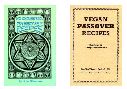
Right now we’re offering a special: get both Vegan Passover Recipes and No Cholesterol Passover Recipes for just $12 and free shipping!

Click here to order, or call us at 410-366-8343, Mon-Fri 9-5.

No Cholesterol Passover Recipes is a must for every home that wants to celebrate a healthy and ethical Passover. Enjoy eggless blintzes, dairyless carrot cream soup, festive macaroons, apple latkes, sweet and sour cabbage, knishes, vegetarian chopped “liver,” no oil lemon dressing, eggless matzo meal pancakes, and much more.

Dishes included in No Cholesterol Passover Recipes have also been featured in The Washington Post, Jewish World, and many other publications.

In Vegan Passover Recipes, Chef Nancy Berkoff, EdD, RD provides the basics: Vegetable stock without chicken fat or added sodium, Savory Spaghetti Sauce, Zucchini/Potato Kugel, and Sweet and Sour Stuffed Cabbage (a new spin on an oldie, but goody).

Looking for spicier dishes? Try Minted Carrots with Chilies, Moroccan Roasted Eggplant and Pepper Salad, Spinach and Okra Stew, and Coconut Curry over Greens, and much more.

VRG’s New Visa Platinum Rewards Card

Posted on March 02, 2011 by The VRG Blog Editor

VRG’s new affinity Visa® Platinum Rewards credit card is now available!

When a cardholder activates the card, VRG receives $50. Then for the life of the program, VRG will receive a portion of every dollar that each cardholder charges. The VRG Visa® Platinum Rewards card offers qualified cardholders exceptional benefits including no annual fee, a low APR and reward points for shopping at participating merchants.

Add your support with every purchase when you use the The Vegetarian Resource Group Visa® Platinum Rewards card. To apply, see:
http://www.cardpartner.com/app/vrg

For FAQs about the program, see: http://www.vrg.org/credit_faqs.php


Thanks to Bobbi Pasternak!

Posted on February 28, 2011 by The VRG Blog Editor

A big thank-you to Bobbi Pasternak who has been sending out VRG’s email newsletter and assisting with outreach for over 15 years!

VRG-NEWS is our monthly email newsletter. VRG-NEWS offers recipes, ingredient information, reviews of new products, announcements of new books, free samples of products, and highlights of activist materials that are available through VRG.

To sign up for VRG-NEWS and to view the archives, please visit http://www.vrg.org/vrgnews/.

McDonald’s New Fruit & Maple Oatmeal Can Be Ordered without the Cream

Posted on February 24, 2011 by The VRG Blog Editor

by Jeanne Yacoubou, MS
VRG Research Director

New for 2011 on McDonald’s national menu is Fruit & Maple Oatmeal. Made with whole grain rolled oats, it may be ordered with or without cream. This product may also be ordered without brown sugar, diced apples, or the cranberry raisin blend according to Ashley, a customer service representative at McDonald’s who spoke with us about the Fruit & Maple Oatmeal. Patrons must request their preferences upon ordering.

Readers who looked at the Ingredients Statement posted on McDonald’s website in early February 2011 may have been confused by the presence of two entries for this product, one of which omitted the word “cream” but was followed by “contains milk.” The second entry also omitted “cream” but did not have an allergen alert for milk.

We contacted McDonald’s to clear up the confusion. Ashley called me back and said it was an error. The word “cream” now appears in the entry. Later, Amanda, a supervisor on the consumer hotline at McDonald’s, confirmed that cream is a standard part of the menu item. Upon ordering, patrons must request that it not be added.

The word “cream” does appear in the entry at this time but there is no “contains: milk” in bold after it. Other entries containing milk products do have this allergen alert in the Ingredients Statement, but the Fruit & Maple Oatmeal does not. We have mentioned this to a supervisor on the McDonald’s hotline. She stated that “it’s common knowledge” that “cream” is a milk product.

(At the end of February 2011, The VRG noticed a similar confusion with the low-fat granola, served in a separate packet along with the Fruit ‘n Yogurt Parfait (which contains gelatin, an animal-derived ingredient). Two entries are listed. One entry for granola (which contains honey) includes the milk allergen alert while the second does not. Neither ingredient list appears to contain milk products.)

Readers may also note that McDonald’s acknowledges that there is no maple syrup or maple sugar derived from maple trees in McDonald’s Fruit and Maple Oatmeal. This became an issue in Vermont due to laws regarding how the word “maple” is used in products and how it appears on labels. Through settlement, McDonald’s has agreed to offer maple syrup and sugar as options in its Fruit and Maple Oatmeal sold in that state.

Fruit & Maple Oatmeal is offered throughout the day at McDonald’s restaurants. Patrons must make their preferences clear when ordering if they do not wish the cream or other components to be added.

For more information on quick service chains, see:
http://www.vrg.org/journal/vj2008issue2/veggieRestaurantChains.htm
http://www.vrg.org/fastfoodinfo.htm#2009_mcdonalds_l-cysteine

To support VRG’s ingredient and restaurant research, please donate at
https://www.givedirect.org/give/givefrm.asp?CID=1565
or
http://www.vrg.org/catalog/index.php?main_page=index&cPath=4

Todo acerca del Soyrizo

Posted on February 23, 2011 by The VRG Blog Editor

The following is a translation of an article that appeared in Vegetarian Journal Issue 1, 2011. To see VRG’s other Spanish materials, click here.

Todo acerca del Soyrizo

Por la Chef Nancy Berkoff, RD, EdD, CCE
Traducción al español por Laura Rico

Chorizo es el nombre de una familia de salchichas originarias de España pero ahora adoptadas en todo el mundo de habla hispana. El chorizo tradicional está hecho de carne de puerco y sasonado con pimientos rojos secos, chiles rojos, ajo y posiblemente, otras especias. Cuando se cocina, usualmente se hace moronas como una fina carne molida. El chorizo puede ser "dulce" o "picante", seco o fresco y con demasiadas especias dependiendo de la región de origen.

La versión vegana de esta salchicha es llamada a menudo "soyrizo" y está disponible comunmente es su variedad fresca y húmeda. Las marcas difieren en la cantidad de "picante", así que seguramente querrás hacer una prueba de sabor para decidir cual de todas es la mejor para tí.

Ten en cuenta que la mayoría de los soyrizos veganos no son bajos en grasa y sodio. Por ejemplo, El Burrito Soyrizo es vegano y kosher. Sin embargo, una porción de 2 onzas contiene 120 calorías (lo que es bueno), pero 80 calorías son de grasa. Además, tiene 440 miligramos de sodio. Esta marca provee algo de calcio y hierro, pero aún así, debes de usar el soyrizo sólo en ocasiones especiales.

El Soyrizo vegano debe estar refrigerado, pero puede congelarse y luego descongelarse cuando estís lista para hacerlo. El Soyrizo queda mejor cuando es cocinado rápidamente sobre fuego alto. Precalienta un sartín sin aceite y pon el chorizo en íl, moviíndolo y presionándolo constantemente para evitar que se pegue. Una vez que el soyrizo estí caliente, está listo para comerse.

Sirviendo el Soyrizo

  • Calienta el soyrizo como se describió previamente. Agrega tofu suave y cocina hasta que el tofu haya cuagulado. Sirve la mezcla sola, en una tortilla suave o en tostada, o sobre arroz o granos cocidos.
  • Para un platillo horneado, calienta el soyrizo como se describió previamente. Engrasa un molde para hornear, agrega el soyrizo, agrega tofu suave en la parte superior y hornea hasta que estí burbujeante.
  • Para una cena en cacerola, corta papas cocidas que hayan sobrado. Calienta el soyrizo como se describió previamente. Luego agrega las papas o arroz cocido, frijoles cocidos, vegetales cocidos, jitomates picados y cebollas picadas.
  • Usa soyrizo en moronas para ponerlo sobre papas horneadas, con algo de crema agria vegana, cebollines picados y pimientos verdes o cebolla picada.
  • Haz moronas de soyrizo y ponlas sobre pizzas hechas en casa.
  • Combina moronas de soyrizo con cebolla y pan molido o mezcla para relleno.
  • Rellena pimientos morrones o jitomates y hornea.
  • Combina moronas de soyrizo con granos cocidos y mezcla de vegetales cocidos para tener una comida completa en un sólo plato.
  • Usa una pequeña cantidad de soyrizo para sazonar frijoles blancos, negros o rojos o garbanzos.
  • Es tambiín grandioso para agregarlo a sopas de leguminosas como guisantes o minestrone.

Fuentes de Soyrizo

Nancy Berkoff es asesora de The Vegetarian Resource Group's Food Service. Ella es dietista registrada y chef. Traducido por Laura Rico.

  • Donate

  • Subscribe to the blog by RSS

  • VRG-NEWS

    Sign up for our newsletter to receive recipes, ingredient information, reviews of new products, announcements of new books, free samples of products, and other VRG materials.

    Your E-mail address:
    Your Name (optional):


↑ Top