The Vegetarian Resource Group Blog

Veggie Counting Game for Kids!

Posted on July 20, 2010 by The VRG Blog Editor

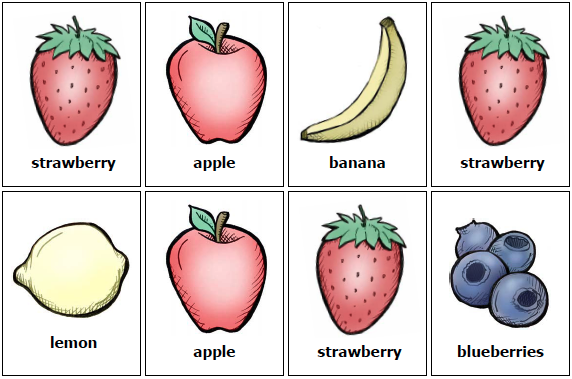
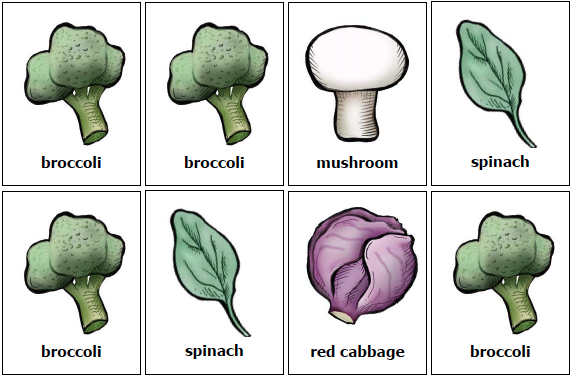
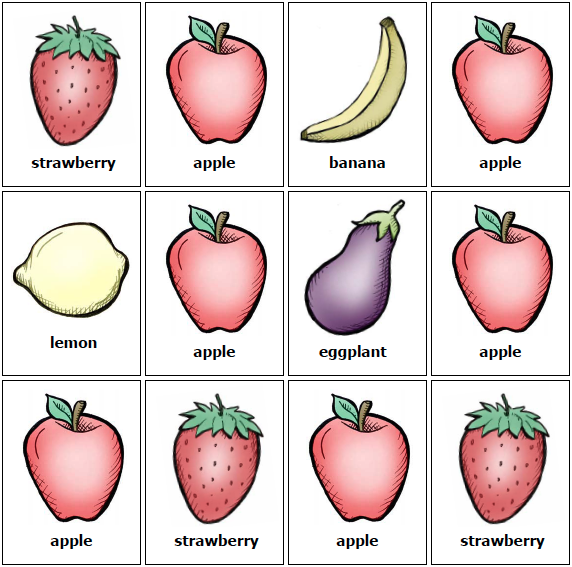
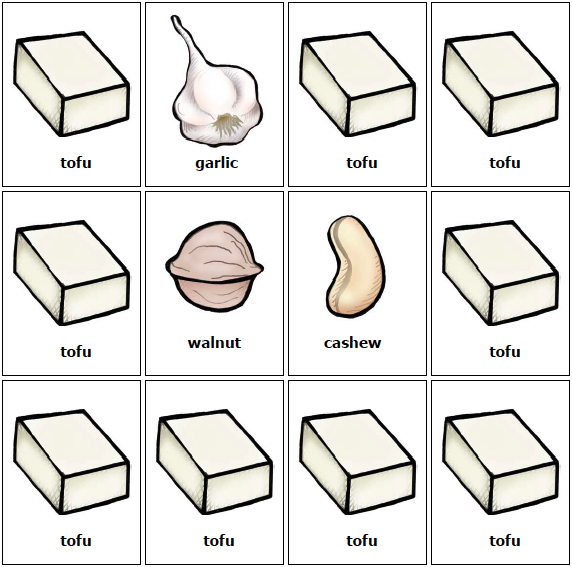
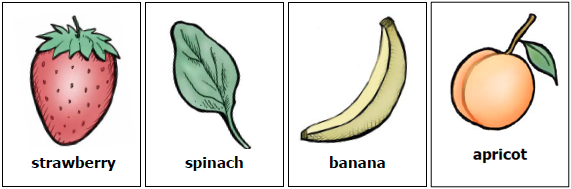
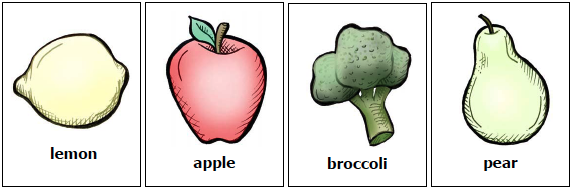
Thanks to VRG volunteer Ellen Tattenbaum for making this veggie counting game. Artwork © Jessica Dadds; originally made as memory cards.

Click here to download this game in a Word document

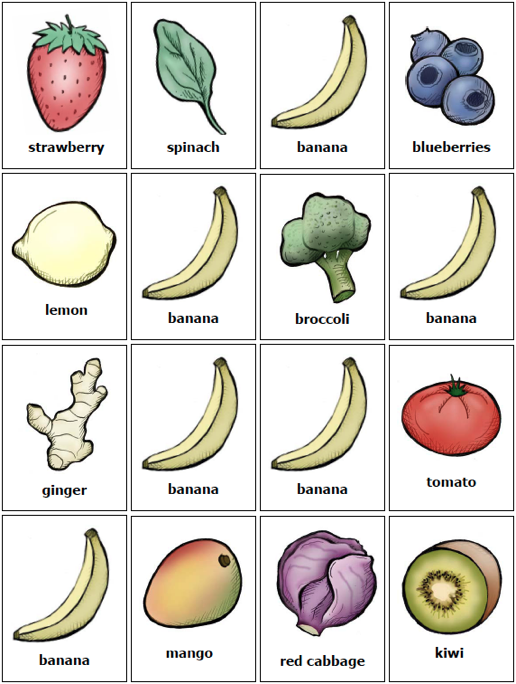
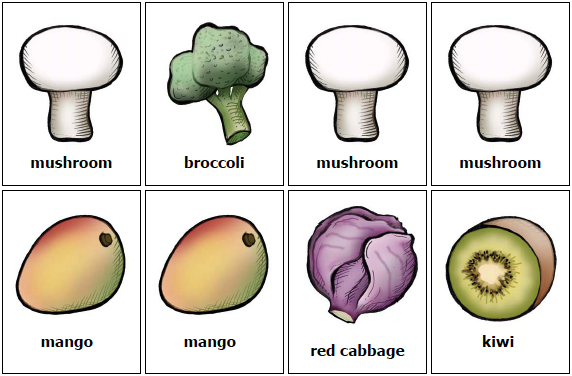
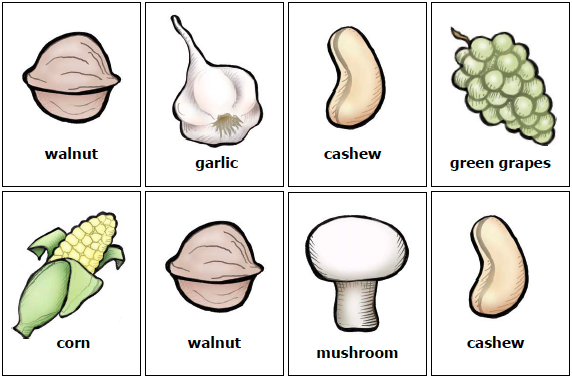
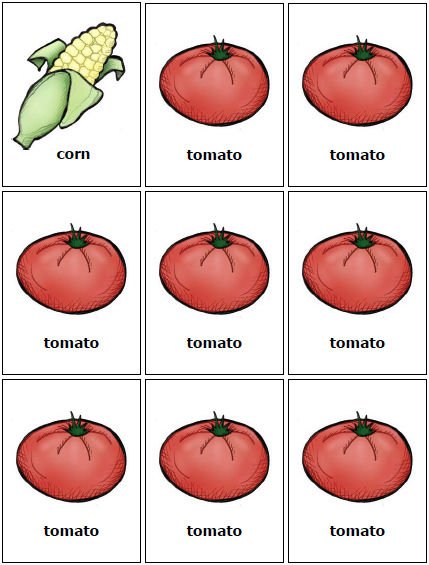
1) How many fruits do you see?


2) How many vegetables do you see?


3) How many bananas do you see?


4) How many of these fruits and vegetables begin with the letter m?


5) How many nuts do you see?


6) How many tomatoes are there?


7) How many of these fruits are red?


8) How many of these vegetables are green?


9) How many apples can you find?


10) How many pieces of tofu can you find?

VRG’s Vegan Dinner in Boston 11/7/10

Posted on July 19, 2010 by The VRG Blog Editor

VEGAN DINNER
Sunday, November 7, 2010, 6 PM
MY THAI CAFE
CHINATOWN, BOSTON, MASSACHUSETTS

The Vegetarian Resource Group will hold a vegan dinner during the American Dietetic Association Food and Nutrition Conference and Expo. Dietitians, VRG members, and the public are invited. Come and meet the dietitians from the ADA Vegetarian Nutrition Dietetic Practice Group. Please reserve early. Hope to see you there.

MENU
Thai Coconut Soup with Tofu
Thai Mango Salad
Yellow Curry with brown rice
Wide Rice Noodles with Chinese Broccoli and Gluten
Fresh Fruit Cocktail
Jasmine tea

This vegan restaurant also sells unique vegan Bubble Tea and vegan cakes. You may want to order takeout after the meal to sample these treats.

COST: $25 before October 1, 2010. $28 after October 1.
Children 12 and under are $12. Includes tax and tip. PAYMENT MUST BE
MADE IN ADVANCE. Menu subject to change. Please reserve
early. Refunds will be made only if we have a replacement for your seat.

Call (410) 366-8343 between 9 AM and 5 PM Eastern Time Monday to Friday; fax (410) 366-8804; click on the donation button at www.vrg.org and write “ADA Dinner” in the notes section; or send a check to VRG, P.O. Box 1463, Baltimore, MD 21203.

NAMES:
NUMBER ATTENDING: x $25/person before 10/1/10= $ Enclosed
NAMES ATTENDING:
ADDRESS:
STATE/ZIP
E-MAIL:
PHONE:
DONATION:
TOTAL ENCLOSED:

VRG’s Comments on USDA Dietary Guidelines 2010

Posted on July 15, 2010 by The VRG Blog Editor

The Vegetarian Resource Group
PO Box 1463
Baltimore, MD 21203

Carole Davis
Co-Executive Secretary of the Dietary Guidelines Advisory Committee
Center for Nutrition Policy and Promotion
U.S. Department of Agriculture
3101 Park Center Drive, Room 1034
Alexandria, VA 22302

July 13, 2010

Comments submitted electronically at www.dietaryguidelines.gov

Dear Ms. Davis:

The Vegetarian Resource Group is a nonprofit educational organization that works with individuals, consumer groups, food companies, professional associations, government agencies, academic institutions, and other relevant constituencies to disseminate accurate information and sound advice to the public concerning vegetarian diets.

We were extremely impressed with the thoroughness of the recent Report of the Dietary Guidelines Advisory Committee on the Dietary Guidelines for Americans, 2010. The report makes a clear and compelling case for a rapid shift in the American diet to one that is more plant-based. The evidence-based approach used throughout the report allows readers to understand the basis for the recommendations that are made. This is an impressive report and we commend and thank the committee members for their diligence.

In an earlier letter we stated, “As advocates for people who choose to follow a vegetarian diet, we believe that the Dietary Guidelines should include information about vegetarian diets. This has been done somewhat in the past with suggestions for alternatives to meat products but information is limited. “We were quite pleased to see that this report contains a much more extensive discussion of vegetarian diets than previous reports.

We hope the following suggestions will be considered when finalizing the report.

1. Decrease or eliminate emphasis on combining plant proteins.

The need to combine plant proteins is repeatedly stressed throughout the report. For example, the Executive Summary states, “Plant proteins can be combined to form complete proteins if combinations of legumes and grains are consumed. Plant-based diets are able to meet protein requirements for essential amino acids through planning and offer other potential benefits, such as sources of fiber and nutrients important in a health-promoting diet.” Part D, Section 4, Protein states, “Individuals who restrict their diet to plant foods may be at risk of not getting adequate amounts of certain indispensable amino acids because the concentration of lysine, sulfur amino acids, and threonine are sometimes lower in plant than in animal food proteins. … Vegetarian diets that include complementary mixtures of plant proteins can provide the same quality of protein as that from animal protein. Education is needed for those designing diets containing complementary proteins for consumers switching to a more plant-based diet.”

While protein combining may be necessary in situations of extremely limited food choices, there is no evidence of protein or amino acid deficiencies in those eating plant-based, vegetarian, or vegan diets in countries where a variety of foods are readily available. A classic review of plant proteins supports the lack of evidence for combining proteins, even on a daily basis and says, “Although protein and amino acid requirements are conventionally expressed as daily rates (of intake) there is no implication that these amounts must be consumed each and every day. Therefore, it is not essential, at least in adults, that daily intakes of protein, or presumably of each indispensable amino acid, must equal or exceed the physiological requirement; it is apparently sufficient for the average intake over a number of days to achieve this level.” Our concern is that over-emphasis of this concept or of the need to carefully plan a plant-based diet will lead people to avoid potentially health-promoting plant-based, lacto-ovo vegetarian, and vegan diets. Even without stressing the concept of protein combination, the food patterns that accompany this report ensure that a variety of protein sources will be eaten. For example, the vegan food pattern includes grains, beans and peas, soy products, nuts and seeds, and (non-dairy) milk.

Additionally, there is no evidence of deficiencies of lysine, sulfur amino acids, and threonine in those who restrict their diet to plant foods.

2. Clarify information on plant-calcium sources and on the risk of fractures associated with vegan diets.

The report describes vegetable sources of calcium as being of limited bioavailability. For example, Part D, Section 2, Nutrient Adequacy states, “In addition, many vegetables contain calcium, another nutrient of concern; although the bioavailability of calcium in these foods is limited.” and “Some plant foods contribute calcium that is well absorbed, but the large quantity of these plant foods that would be needed to provide the equivalent amount of calcium found in 8 ounces of fluid milk may be unachievable for many.”

A number of dark green leafy vegetables contain significant amounts of bioavailable calcium. The research on this topic has been summarized in a review article by Weaver and Plawecki. Along with calcium that is better absorbed than calcium from dairy products, vegetables such as kale, turnip greens, broccoli, and Brussels sprouts also supply vitamin C, iron, potassium, vitamin A, and other key nutrients. As the report states, “calcium naturally occurring in foods is the recommended source.” Consideration should be given to increasing recommendations for these vegetables, especially as a source of calcium. Weaver and Plawecki’s review indicates that approximately 1 cup of turnip greens or 1.5 cups of Chinese cabbage or mustard greens would provide calcium equivalent to that found in 8 ounces of fluid milk. This certainly sounds possible for many to achieve, as a replacement for 1 or 2 cups of milk or milk equivalents.

The report states, “Vegan diets may increase risk of osteoporotic fractures.” Evidence is limited to support this statement. The EPIC study in the U.K. did find a higher rate of fractures in vegans but the difference in rates disappeared when the analysis was restricted to subjects who consumed at least 525 mg/day of calcium. This suggests it is total calcium intake rather than a vegan diet that affects fracture risk.

3. Provide specific information about foods to avoid/eat less.

We find recommendations such as the following to clearly indicate which foods should be emphasized: “2. Shift food intake patterns to a more plant-based diet that emphasizes vegetables, cooked dry beans and peas, fruits, whole grains, nuts, and seeds.” In contrast, the following type of statement does not provide specific guidance as to which foods should be avoided or limited: “Significantly reduce intake of foods containing added sugars and solid fats because these dietary components contribute excess calories and few, if any, nutrients”. Major sources of solid fats have been identified as cakes, cookies, pies, doughnuts, granola bars, regular cheese, sausage, franks, bacon, ribs, pizza, fried white potatoes, and dairy-based desserts, such as ice cream. A clear statement that these foods should be modified (for example cheeseless and meatless pizza, baked fries, sorbet) or limited would add clarity to the recommendations. We are surprised that a marked reduction in processed meat intake is not strongly and specifically recommended based on the reported findings of a 42% higher risk of CHD and 19% higher risk of type 2 diabetes associated with processed meat as well as the possible relation between processed meat and colorectal and prostate cancers (as discussed in Part D, Section 4, Protein).

4. Reconsider the use of 3 cups milk-equivalents per day.

Although Appendix E-3.6 compares meal plans containing 3 cups of milk-equivalents to those containing 0 cups of milk-equivalents, we do not, see a comparison of meal plans with 1 or 2 cups of milk-equivalents and with appropriate increases in servings of alternative sources of key nutrients (e.g. calcium, vitamin D, potassium) such as dark green leafy vegetables, fortified foods, dried beans, and soy products. Many Americans do not use 3 cups of milk-equivalents daily; it seems more realistic to promote alternative sources of key nutrients. Additionally, no consideration has been given to the environmental impact of the substantial increase in dairy product production that would be needed to meet these recommendations.

5. Recommend expanded vegetarian and vegan choices in the School Meals Program.

The report clearly identifies a need to “Improve foods sold and served in schools, including school breakfast, lunch, and after-school meals and competitive foods so that they meet the recommendations of the IOM report on school meals (IOM, 2009) and the key findings of the 2010 DGAC. This includes all age groups of children, from preschool through high school.” The sections of this report supporting the health benefits and nutrient adequacy of vegetarian diets clearly indicate the need for increased provision of vegetarian and vegan options in school meals. We suggest that a recommendation be included in this report supporting expanded vegetarian and vegan choices in school meals.

We applaud the Committee’s decision to include specific recommendations for future research and are hopeful that funding will be available for studies on plant compared to marine n-3 fatty acids; the development of better methods of conducting cohort studies of populations consuming plant-based diets compared to animal based diets, including defined classifications of vegetarian and “near vegetarian” eating patterns and more specific impacts of dried beans and peas on health; key nutrients in plant-based diets including calcium, iron, vitamin B12, and protein quality, especially in children and the elderly; and development of better assessment tools to classify vegetarian patterns in epidemiologic studies. Research in these areas would be of significant benefit to those consuming plant-based, vegetarian, and vegan diets. We especially support the allocation of funds for studies of food intakes of vegetarians and vegans so that separate patterns can be developed based on actual proportionate consumption of plant foods in all groups.

We appreciate the committee’s work on Dietary Guidelines 2010 and its solicitation of these public comments.

Sincerely,

Reed Mangels, PhD, RD, LD, FADA
Nutrition Advisor, The Vegetarian Resource Group

Charles Stahler
Co-Director, The Vegetarian Resource Group

Debra Wasserman
Co-Director, The Vegetarian Resource Group


1. Young VR, Pellett PL. Plant proteins in relation to human protein and amino acid nutrition. Am J Clin Nutr. 1994;59:1203S-12S.

2. Weaver CM, Plawecki KL. Dietary calcium: adequacy of a vegetarian diet. Am J Clin Nutr. 1994;59(suppl):1238S-1241S.

3. Appleby P, Roddam A, Allen N, Key T. Comparative fracture risk in vegetarians and nonvegetarians in EPIC-Oxford. Eur J Clin Nutr. 2007;61:1400-1406.

4. Micha R, Wallace SK, Mozaffarian D. Red and processed meat consumption and risk of incident coronary heart disease, stroke, and diabetes mellitus: A systematic review and meta-analysis. Circulation. 2010;121:2271-83.
Vegan Options at Red Robin

Posted on July 12, 2010 by The VRG Blog Editor

by Jeanne Yacoubou, MS
VRG Research Director

We recently reported that Red Robin now offers the vegan Boca™ Original Burger at most of its US locations along with the vegetarian Gardenburger™ which has been on its menu for some time.

We followed up with Red Robin about the Boca's™ preparation and bun options. A senior quality assurance manager at Red Robin told us that the vegan patties are "microwaved in their original plastic wrapper." Then they are "crisped on the flattop grill which may be used for other proteins." Guests have the option of requesting that the Boca™ patty be microwaved only.

It appears that the whole grain bun and the sesame bun are entirely composed of plant-based ingredients including the mono- and diglycerides and sodium steroyl-3 lactylate. The whole grain and sesame buns are Kosher-certified.

These two ingredients in the ciabatta bun, herbed focaccia bun, jalapeño cornmeal bun, onion bun and slider bun are also from vegetable sources. However, these buns contain L-cysteine “derived from poultry” and are not certified Kosher.

Red Robin also offers a number of salads, all of which may be customized upon ordering like most menu items. However, it appears that only the Natural Toasted Sesame Dressing is all plant-based. The Italian and the Caesar Dressings contain anchovies. The Balsamic Vinaigrette contains egg yolks. All of the others contain dairy or honey.

All of the soups at Red Robin contain animal ingredients. The French onion is made with a beef base.

A "Veggie Rice Bowl" is on Red Robin's menu. It may be customized to be entirely vegan by choosing from the black beans, chipotle beans, white rice, salsa and/or steamed vegetables. All of these components are prepared apart from animal products.

Wontons are a new item at Red Robin. They cannot be microwaved and may be fried along with animal products. It is uncertain whether the L-cysteine in the wontons is derived from an animal source. Except for this ingredient, they appear all plant-based.

Red Robin's Steak Fries is a signature item free of all animal ingredients according to the senior Q&A manager with whom we spoke. The Fries are cooked in a designated fryer apart from all meat products "a majority of the time" according to our contact. Guests may request that their Steak Fries be cooked in the designated fryer.

Call-A-Dietitian Day Friday, July 16th

Posted on July 09, 2010 by The VRG Blog Editor

If you have general nutrition questions, Mark Rifkin, MS, RD, LDN, will be available from 2:30 p.m. – 5:30 p.m. EST on Friday, July 16, 2010. To reserve a 20-minute time slot, please email the VRG office at [email protected] or call (410) 366-8343.

Please be advised that these sessions are not individualized nutritional counseling. Such advice should only be provided through direct in-person contact with a qualified health professional. There is no charge, but if you do commit, please call on time. Otherwise you are taking someone else’s spot.

Mark Rifkin, a VRG volunteer since the mid-1980s, holds a Master’s Degree in health education and is a Registered Dietitian. Through many different settings, he focuses on plant-based diets to prevent and treat chronic diseases and nutrient deficiencies, particularly for women, seniors, minority populations, and vegetarians. He also presents on other topics, such as reducing food costs and “green” issues. He has been presenting on nutrition and food-related topics since 1997.

In addition, Mark is offering a 20% discount on any service for VRG members. This is for his private practice and is not affiliated with The VRG or Call-A-Dietitian Day.

Vegetarian Exchange Student from Lebanon Seeks Host Family

Posted on July 07, 2010 by The VRG Blog Editor

Pacific Intercultural Exchange (PIE), a nonprofit agency, is searching for a volunteer host family for an international student who is vegetarian. The student is from Lebanon and is an exceptional US State Department sponsored scholarship student who is vegetarian. She is active in sports such as basketball, tennis, swimming, and dancing. She speaks English, has medical insurance and her own spending money.

A volunteer host family provides a room (which may be shared), meals, and a caring environment for their student. Students arrive in mid August and stay through June while attending the local public high school where the host family resides. Students are encouraged to integrate themselves into their host family by doing chores, participating in family activities and attending the public high school. For more information about the program or to become a host family, please contact Mary Armstrong at 952-236-0745/ website: www.pieusa.org / email: [email protected]

Pacific Intercultural Exchange (PIE) is a non profit agency, and it is fully accredited by CSIET and abides by US State Department guidelines. Students are screened based on English abilities and academics and are eligible to participate in high school extra curricular activities such as athletics, drama clubs, etc.

Hawaii and Virginia Teen Each Awarded $5,000 Vegetarian Scholarship

Posted on July 06, 2010 by The VRG Blog Editor

The Vegetarian Resource Group is honored to present a $5,000 scholarship to Melissa Monette of Mililani, Hawaii, for her outstanding work in promoting vegetarianism one pound of food at a time. With diligence and the help of community members and donors, she was able to collect over 28,000 pounds of fruits and vegetables to feed over 133,000 individuals.

Melissa's non-profit charity, A Harvest For Many Inc., was created after her grandmother was turned away from a non-profit which distributed canned goods only to the homeless. Melissa noticed that her grandmother, who was left to survive on a single income after the passing of her husband, and others like her needed help. Melissa's program has been able to provide vegetarian food assistance to senior citizens, the homeless, displaced teens, battered women, and to children living in shelters.

After acquiring both fresh and canned fruits and vegetables from farms, organizations, supermarkets, can food drives, and the homeowners of Oahu that donated surplus fruits and vegetables, Melissa found it important to also focus on fitness and nutrition. An integral part of A Harvest For Many Inc., an aerobics class, encompassed both the fitness and nutrition aspect of Melissa's vision. Vegetarian meals were prepared for those that participated in the aerobics class. She arranged for dietitians to provide nutritional presentations about eating healthy Hawaiian foods. With great bountiful locally grown food in Hawaii such as mango, papaya, and taro, Melissa's program gave individuals nutritional information about these vegetarian products. Melissa was also able to coordinate several vegetarian potlucks. She even plans to create a vegetarian cookbook from some of the best dishes and recipes used at the potlucks.

Melissa also encouraged low income facilities to create community gardens to grow their own produce. By planting tomato seedlings herself, Melissa was able to advocate a healthy vegetarian diet and ensure that there would be at least one more pound of food growing.

A vegetarian for approximately 5 years now, Melissa's activism does not stop at her non-profit charity. As captain of her tennis team and Oahu Interscholastic Association (OIA) state champion, she regularly prepared vegetarian pasta dishes for her teammates. She also gave presentations at neighborhood board meetings and community service meetings about the vegetarian diet.


The Vegetarian Resource Group is also honored to present a $5,000 scholarship to Nina Gonzalez, of Stratford High School, for her diligence in changing school lunches at both the local and national level. With all the meat options students could choose from, Gonzalez envisioned healthy, vegetarian dishes and worked hard to implement her vision at the school cafeteria.

Nina conducted extensive research on the National School Lunch Program, learning about all the different dietary requirements of food in school cafeterias. After having successfully learned about all this information, she was able to set up a meeting with a certified dietitian to become more informed about the dietary guidelines for adolescents and was then able to meet with the school district nutrition director where she discussed her vegetarian proposal using schools in Fairfax County as an example of institutions that had adopted a vegetarian-friendly cafeteria.

Shortly following a taste test that was conducted at her school with vegetarian and non-vegetarian students, she was able to successfully encourage the inclusion of vegetarian lunch items such as bean burritos, taco salads, pita and hummus, as well as a salad bar and potato bar. These changes were available to all school levels; from adolescents in high school to children in elementary school.

Nina's activism did not just stop once vegetarian meals were implemented in her school's cafeteria. As a top athlete in tennis, golf, and cross country, she has been able to transfer similar energy and perseverance she used when qualifying for the Virginia State Golf Championships and apply it when she promotes vegetarianism.

Nina successfully has been able to project her views to truly impact those around her. She has been involved by leafleting through Vegan Outreach near the University of Maryland and at different entertainment venues to reach today's youth.

In 2008, she even got involved by voicing and effectively presenting her opinions to the U.S Dietary Guidelines Advisory Committee. Nina also testified twice this spring in front of the Senate committee on Nutrition in Washington as a teen advocate for vegetarian and vegan school lunch options nationwide. She was able to voice her passion and commitment for the vegetarian diet and keep working to ensure that a plant based meal is available upon request in our nation's schools. Nina was able to further do this at a Congressional hearing regarding vegetarian meals at schools, part of the Healthy Schools Meal Act, and was able to meet with the senator and representative to voice her own personal story and dedication to the health and compassion benefits of vegetarian diet. Just this past April, Nina went to New York and did a video for Good Morning America Health, where she promoted vegetarianism by revealing alarming nutritional facts, such as the fat content in burgers.


A vegetarian does not eat meat, fish, or fowl. A vegan is a vegetarian who does not use other animal products such as eggs and dairy. For more information on a vegetarian diet, visit The Vegetarian Resource Group at www.vrg.org or write to The Vegetarian Resource Group, P.O. Box 1463, Baltimore, MD 21203.

The Vegetarian Resource Group is a national non-profit organization dedicated to educating the public about vegetarianism. VRG publishes the quarterly Vegetarian Journal, and sponsors two annual $5,000 scholarships for graduating high school seniors who have promoted vegetarianism in their communities. Applicants are judged on having shown compassion, courage, and a strong commitment to promoting a peaceful world through a vegetarian diet/lifestyle. Entries should be sent in a student's senior year before February 20th. Early submission is encouraged. For more information on the scholarship, visit http://www.vrg.org/student/scholar.htm.

Reed Mangels to Speak at Pediatric Nutrition Conference in Philadelphia

Posted on July 02, 2010 by The VRG Blog Editor

On Friday, November 19, 2010, VRG nutrition advisor Reed Mangels, PhD, RD will speak at the 1-day conference “Pediatric Nutrition: Current Concepts and Controversies” at the Children’s Hospital of Philadelphia to an audience of pediatric dietitians, nurses, and physicians. The title of Reed’s talk will be “Vegetarian Children and Teens: A Growing Population.”

Click here to view more information about the schedule of events for the conference.

VRG’s Booth at LatinoFest

Posted on July 01, 2010 by The VRG Blog Editor

By Veronica Lizaola

LatinoFest 2010

LatinoFest 2010

LatinoFest in Baltimore, which took place on June 26 and 27, 2010, was full of culture, vibrancy, and very hot weather. The scorching 100 degree weather, however, did not prevent such a vast array of Latin American cultures from interacting with each through conversation, food, music, and dance. The Latinos – Mexicans, Salvadorians, Hondurans, Puerto Ricans, and Cubans to just name a few – each added their own spice and flair to the festival. Vendors sold all kinds of unique items; ranging from soccer jerseys to platano maduro (fried plantains) to handmade jewelry and clothing.

Representing the Vegetarian Resource Group was truly an interesting experience all in its own. In addition to the Walters Art Museum that was also there, we were the only nonprofit organizations to help educate the public.

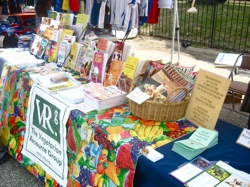
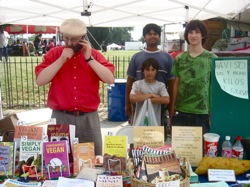
The VRG had all kinds of items that made our stand visually appealing to the eye and it definitely helped draw in children and adults. All of our colorful books, the vibrant table cloth with depictions of fruits and vegetables, our bilingual signs, different bags of beans that acted as paper weights and as conversation starters, free copies of the Vegetarian Journal, a multitude of handouts, and the model of what 5 lbs. of body fat looks like all caught the attention of any onlooker.

Many of the people that were attracted to our table were Latino. There was a lot of diversity in our audience, which included those who only spoke Spanish, some who spoke both Spanish and English, or those who only spoke English. There were men, women, adolescents, and children of all different Latino heritages, each with a different interest.

Booth visitors included attendees who were already vegetarian and were looking for help in transitioning to vegan, omnivores who were interested in transitioning to vegetarian, and others just simply interested in eating healthier, or were interested in different unique recipes. We gave individual copies of Vegetarian Journal, and encouraged the children to take one copy of each of the three different coloring books available, including a test of our new Spanish coloring book.

The majority of the Latino population was really interested in the information we had about diabetes and the vegetarian diet. Those that only spoke Spanish took the sixteen page handout in Spanish and were really happy about the sample menu inside. Those that could speak English took our free copy of VRG’s book on diabetes. So many people were impressed with our commitment and complemented us for taking the time to be there. It was definitely really helpful that Mark Rifkin, a registered dietitian, was present to help answer any questions. Many people had very specific queries about problems they were facing, such as with blood pressure and each case differed from the rest. There was even a young woman who had joined the Peace Corp and was going to be sent to Kazakhstan and wanted information so that she would be able to continue her vegetarian diet!

A really popular handout that was given was the Baltimore dining sheet that has helpful restaurant information for vegetarians/vegans. Since there wasn’t a great amount of vegetarian food at the festival, people were really receptive to restaurant suggestions. The coloring books were also very popular for the children and I was really happy that I gave out copies of our Spanish coloring book, El Arco Iris Vegetariano (The Vegetarian Rainbow). With the Walters Art Museum stand directly across from us, children could use the markers that were available there and color our coloring book pages.

I was able to learn so much myself! Since this is my first visit to Baltimore, I was able to see the Latino population here flourish in front of me. It really helped me interact with the Latino population, something that since before the start of my internship, I had made a priority, as I am of Mexican heritage. I was also able to learn so much about the amount of sugar in so many products ranging from brownies and cookies to soda. Mark had different test tubes labeled as these products filled with the amount of sugar each product contained. I was so surprised to know how many teaspoons were present in each of these and I think this definitely has made me more aware of what is being consumed. I have no doubt the individuals that talked to us left with that same awareness or even more! It was an enlightening experience to be able to share so much of this information to all of the individuals that were present at Patterson Park Latino Festival.

Thanks to Brandi, Shamim, Eric, Ann Marie, Mike for volunteering at VRG’s booth.

To support VRG’s outreach efforts and presence at such events as LatinoFest, click here

New additions to the VRG Bookstore

Posted on June 28, 2010 by The VRG Blog Editor

Buy a nice gift for your friends or relatives, and help support vegetarian outreach. Please visit the Vegetarian Resource Group bookstore.

The most recent titles added to the bookstore are:

  • Donate

  • Subscribe to the blog by RSS

  • VRG-NEWS

    Sign up for our newsletter to receive recipes, ingredient information, reviews of new products, announcements of new books, free samples of products, and other VRG materials.

    Your E-mail address:
    Your Name (optional):


↑ Top