Posted on
January 07, 2011 by
The VRG Blog Editor
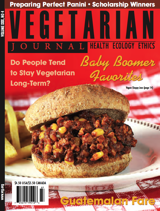
The following is a translation of an article that appeared in Vegetarian Journal Issue 4, 2010. To see VRG’s other Spanish materials, click here.
Cocina Vegana Guatemalteca
Por la Chef Nancy Berkoff
Traducción al español por Laura Rico
Guatemala es la nación más al norte de América Central, tiene aproximadamente 42,000 millas cuadradas de superficie y es casi del mismo tamaño de Tennessee. Hace frontera con México hacia el norte y oeste, con Belice y el mar Caribe hacia el este, con El Salvador y Honduras hacia el sureste y con el Océano Pacífico hacia el suroeste. El terreno es predominantemente montañoso con un clima tropical que atraviesa las planicies fértiles de las costas. Estas condiciones contribuyen a la rica biodiversidad del país y al fomento de la producción de plátanos, cocoa, café, arroz y azúcar.
Guatemala es mejor conocida por su rica herencia Maya que data desde al menos 12,000 A.C. Los españoles empezaron a explorar lo que ahora es Guatemala en 1519 y lo reclamaron como parte de la Nueva España. En 1821, Guatemala y sus vecinos, El Salvador, Honduras, Nicaragua y Costa Rica, ganaron su independencia y poco después formaron las Provincias Unidas de América Central. Sin embargo, las guerras civiles contribuyeron a que la federación se colapsara y Guatemala se convirtió en una república independiente en 1839. El país sobrellevó dictaduras y golpes de estado durante el siglo XX, pero ahora es una república democrática constitucional con un presidente electo y un congreso unicameral.
Guatemala tiene una población de 14 millones de habitantes, y la mitad de los ciudadanos son Mayas. ¡De hecho, hay por lo menos 22 distintos grupos mayas con igual número de lenguajes! Los guatemaltecos que no son mayas están divididos entre ladinos, quienes son descendientes de europeos e indios; inmigrantes africanos; y una minoría europea, principalmente de españoles.
Acerca de la Cocina Guatemalteca
Mucho de la cocina guatemalteca refleja una combinación de un muy sofisticado estilo pre-colombino de cocinar con influencias europeas, así como la habilidad de crear productos alimenticios de todo el mundo. ¡No es posible capturar todo el color y la variedad de la vasta colección de cocina guatemalteca en un sólo artículo! Sin embargo, aquí hay algunas cosas fundamentales.
El maíz es el rey en este país y los frijoles son las reinas. Los frijoles son servidos en casi cada comida proveyendo mucho de la proteína necesaria. Los frijoles rojos o negros son muy populares; son cocinados lentamente durante todo el día con chiles o pimientos, ajo, cebolla y la tradicional manteca. Es muy común machacar los frijoles y hacer una pasta gruesa y servirlos con tortillas de maíz suaves o fritas. Una manera más saludable de disfrutar los frijoles es usando un poco de aceite vegetal para cocinarlos y calentar al vapor o tostar las tortillas.
Muchas de las comidas en Guatemala son similares a las de su vecino del norte, México, que requieren de maíz, frijoles, arroz, queso y tortillas como ingredientes recurrentes. Encontrarás nachos, tamales y enchiladas como opciones para comer en cafés y puestos en cada esquina, especialmente en las ciudades. En el país, encontrarás vegetales asados sobre fuego abierto y pan horneado en grandes hornos de barro. Los desayunos guatemaltecos pueden ser un surtido de tortillas, frijoles y plátanos machos, frecuentemente acompañados de maravillosas frutas tropicales, como plátanos (¡de muchísimas variedades!), papaya, mangos y aguacates.
Guatemala produce uno de los cafés más sabrosos del mundo, pero el mejor grano está reservado para exportación. Así que el café guatemalteco "tradicional" puede ser débil y servido con mucha azúcar. Otra bebida popular es el atole, una bebida caliente hecha de maíz machacado, caña de azúcar, canela, vainilla y chocolate o fruta según se quiera. Hay muchas versiones de atole en América Central y América del Sur, y los ingredientes y densidades varían de acuerdo al país y región. El atole es común para el desayuno, pero es frecuentemente servido con tamales para la cena. Es particularmente popular durante la época navideña.
Comida amigablemente vegana
Algunos platillos guatemaltecos pueden ser "traducidos" fácilmente a su versión libre de carne y lácteos:
- Kak'ik es una tradicional sopa hecha con pavo y sazonada con cilantro, achiote o annato (dándole un color amarillo-naranja brillante) y chiles. Con tofu o tempeh ahumado se puede fácilmente reemplazar el pavo.
- Los chile rellenos son chiles rellenos de arroz, queso, carne y vegetales. Estos saben muy bien usando soya molida o chorizo de soya y queso vegano.
- Los tamalitos son similares a los pequeños tamales al vapor y la masa de maíz puede hacerse sin agregarle carne. Los tamalitos son sazonados en ocasiones con chipilín y una menta fresca y suave, y se sirven con crema agria.
- Las pupusas vienen en diferentes variedades pero, en general, son gruesas y suaves tortillas rellenas de queso o carne, doradas en una parrilla y servidas con una salsa hecha a base de jitomate. Las calabazas y frijoles refritos son también rellenos tradicionales, así que puedes convertir fácilmente esta "comida rápida" a una comida vegana sin sacrificar su autenticidad o su sabor.
- Los elotes, o maíz asado, son usualmente comprados en las esquinas y servidos con limón y chile en polvo, queso, mantequilla o mayonesa. Usa queso rallado vegano y mayonesa vegana y listo!
- Si puedes encontrar mangos verdes en tu mercado local, sírvelos como los chefs en Guatemala lo harían, con limón y chile en polvo.
- Seguramente estás familiarizado con el guacamole; aguacates maduros, machacados con jugo de limón (verde o amarillo) y mezclado con cebollas, jitomates, cilantro y posiblemente ajo. El guacamole es servido como refrigerio con tostadas o usado para adornar el plato fuerte.
- La salsa picosa de calabaza y ajonjolí que es tradicionalmente servida con el pollo pipián es de hecho, vegana! Las semillas de calabaza y de sésamo son molidas hasta formar una pasta y combinadas con agua, cilantro y tomatillos. Esta salsa puede ser servida sobre vegetales asados, tofu firme o seitán asados, o arroz, combinados con mangos, fresas, guayabas, piña o plátanos, frescos o congelados.
Y la lista de comida tentadora puede seguir y seguir! Si se te está haciendo agua la boca mientras lees los platillos de arriba, tal vez quieras empezar tu aventura culinaria guatemalteca con las ideas que siguen.
Sopa de Pepino
(5 porciones)
Para esta receta, querrás pepinos tiernos y "sólidos". Mientras menos semillas tengan, mejor. Si tus pepinos tienen una gran cantidad de semillas, puedes sustituir 1/2 taza (o 1/4 de libra) por calabaza amarilla fresca en cubos para darle mayor textura. Si hay disponibles pepinos-melones, pueden usarse en lugar de los pepinos.
- Aceite vegetal en spray
- 3/4 taza de cebollas amarillas picadas
- 1 libra (aproximadamente 2 1/2 tazas) de pepinos, pelados y picados
- 1/2 taza de pimientos morrones rojos o amarillos, picados
- 3 tazas de consomé de vegetales bajo en sodio
- 1/2 cucharadita de pimienta negra molida
- 4 Cucharadas de crema agria vegana o yogurt natural de soya
- 1 Cucharada de cilantro fresco picado
Calienta una olla y rocíala con aceite vegetal. Agrega las cebollas y cocina, a temperatura media, moviendo hasta que se suavicen, aproximadamente 2-4 minutos. Agrega los pepinos y los pimientos morrones, moviendo y cocinando hasta que todos los vegetales estén suaves, aproximadamente 10 minutos. Agrega el consomé y la pimienta negra, mueve para combinar, tapa y cocina a fuego lento por 10 minutos.
Remueve de la estufa. En partes, licua la sopa en una licuadora o procesador de alimentos. Regrésala al fuego y cocina a fuego lento por otros 5 minutos. Sirve en platos hondos individuales, decora con crema agria vegana y cilantro y sirve inmediatamente.
| Total de calorías por porción: 71 |
Grasa: 2 gramos |
| Carbohidratos: 11 gramos |
Proteína: 1 gramo |
| Sodio: 151 miligramos |
Fibra: 1 gramo |
Picado de Rábano
(5 porciones)
Esta es una refrescante ensalada de "guarnición" que se puede servir como entrada con panecitos largos o como acompañante para darle un toque picante a los elementos del menú. O crear una nueva y enteramente renovada ensalada combinando esta receta con algunas hojas verdes, pasta fría cocida, quinoa, arroz integral o cebada.
- 2 tazas de rábanos rojos sin las puntas y finamente rebanados (no daikon o rábano blanco)
- 3 Cucharadas de menta fresca picada
- 1/2 taza de jugo de naranja fresco
- 2 Cucharadas de jugo de limón
- 1 cucharadita de pimienta negra molida
Combina todos los ingredientes en un recipiente no reactivo. Refrigera o enfría en hielo por lo menos 30 minutos antes de servir. Esta ensalada se puede hacer la noche anterior.
| Total de calorías por porción: 21 |
Grasa: <1 gramo |
| Carbohidratos: 5 gramos |
Proteína: 1 gramo |
| Sodio: 19 miligramos |
Fibra: 1 gramo |
Mango y Aguacate Picantes
(5-6 porciones)
Picoso, dulce y cremoso— todo en uno! Usa esta receta como guarnición, como condimento o como plato fuerte acompañado con granos cocidos.
Si sobra un poco, puede hacerse puré y servirse como dip con pedazos de tostadas de maíz.
- 1 taza de pedazos de mango, frescos o descongelados
- 3/4 taza de pimientos morrones rojos, en cubos y sin semilla
- 1/4 taza de jitomates frescos o de lata (drenados) en cubos
- 2 tazas de aguacate maduro, pelado y sin hueso
- 1/4 taza de cebollas frescas y en cubos
- 2 Cucharadas de jugo de limón
- 2 cucharaditas de hojuelas de pimiento rojo (opcional)
Combina todos los ingredientes en un recipiente no reactivo. Cubre y refrigera o enfría en hielo por lo menos 30 minutos antes de servir.
| Total de calorías por porción: 127 |
Grasa: 9 gramos |
| Carbohidratos: 14 gramos |
Proteína: 2 gramos |
| Sodio: 6 miligramos |
Fibra: 5 gramos |
Sopa de Arroz
(5 porciones)
Las zanahorias y los jitomates agregan color a la receta. Puedes usar arroz integral o quinoa para esta receta, pero el arroz blanco es la opción más auténtica.
Esta puedes ser una sopa o un platillo de arroz. Cocínalo por un periodo corto, dejando bastante líquido para hacer una sopa, o cocínalo hasta que esté casi seco para hacer un platillo de arroz.
- 1 Cucharada de aceite vegetal
- 1/2 taza de cebollas picadas
- 1 diente de ajo, picado
- 1 taza de arroz blanco, arroz integral, o quinoa crudo
- 1/4 taza de zanahorias picadas
- 1/4 taza de jitomates picados o de jitomates en lata drenados y picados
- 1/4 taza de papas Yukon dorado o papas blancas, peladas, hervidas y en cubos
- 2 tazas de consomé vegetal bajo en sodio
Precalienta un sartén y agrega el aceite. Incorpora las cebollas y el ajo, mezcla y cocina a fuego medio hasta que las cebollas estén translúcidas, aproximadamente 2-4 minutos. Agrega el arroz o la quinoa y continúa moviendo y cocinando hasta que el arroz esté cubierto por la mezcla de cebollas y ajo, aproximadamente 5 minutos. Cuando el arroz esté translúcido, agrega las zanahorias, los jitomates, las papas y el consomé. Cubre y cocina a fuego lento por 30 minutos o más, hasta alcanzar el nivel deseado de "sopa".
| Total de calorías por porción: 190 |
Grasa: 3 gramos |
| Carbohidratos: 35 gramos |
Proteína: 4 gramos |
| Sodio: 63 miligramos |
Fibra: 2 gramos |
Plátanos horneados
(4-8 pociones)
La miel de abeja es un ingrediente tradicional, pero la miel de maple puede funcionar igual de bien. Estos plátanos son un gran desayuno o entrada para bufetes o para un picante postre. Si hay sobrantes, pueden rebanarse y agregarse a un cereal caliente para el desayuno.
- 4 plátanos grandes (aproximadamente 8 pulgadas)
- 4 cucharaditas de margarina vegana no hidrogenada
- 2 Cucharadas de miel de maple
- 2 cucharaditas de jugo de limón
- 4 Cucharadas de crema ácida vegana
Precalienta el horno a 375 grados.
Pela los plátanos y córtalos a lo largo, como si fueras a hacer una banana split. Coloca los plátanos con la parte plana hacia arriba en un molde antiadherente. Agrega un poco de margarina a cada plátano.
En una taza, mezcla la miel de maple y el jugo de limón y ponlo de manera uniforme sobre los plátanos. Hornea por 10 minutos, asegurándote de que los plátanos no empiecen a quemarse.
Coloca los plátanos en un platón para servir. Justo antes de servirlos, decora con crema agria o permite que cada persona la agregue según lo desee. Este platillo puede servirse caliente, tibio o frío.
| Total de calorías por porción: 223 |
Grasa: 7 gramos |
| Carbohidratos: 42 gramos |
Proteína: 2 gramos |
| Sodio: 123 miligramos |
Fibra: 4 gramos |
Vinagre de Piña
(Aproximadamente 8 tazas)
Los vinagres de frutas son muy populares en América Central. Son fáciles de hacer y de conservar. Son picantes sin el sabor ácido del vinagre blanco.
Para procesar este vinagre necesitarás un frasco de cristal "esterilizado" o un recipiente con tapa. Puedes agregar agua hirviendo a un frasco de cristal para hacer esto. Esta receta toma algún tiempo de planificación ya quede principio a finel vinagre necesitará "reposar" por 4-6 semanas.
Si el vinagre guardado desarrolla un "fantasma" (una masa nebulosa en el fondo) está bien. Esa es la llamada "madre" y puede ser usada para empezar otro tanto de vinagre. Si no te interesa empezar otro tanto de vinagre, la "madre" puede simplemente ser removida.
- 1 piña (1 ½ – 2 libras)
- 3/4 taza de azúcar morena vegano
- 2 litros de agua fría
Remueve la parte verde de arriba de la piña y la parte de abajo y deséchalo. Lava bien la piña y pícala finamente con todo y cáscara. (¡Es verdad!)
Agrega la piña picada, el azúcar y el agua al frasco de cristal o recipiente y mezcla para combinar. Tapa apretando bien y guárdalo en un lugar oscuro y tibio, así como un gabinete cerca de la estufa, por 4-6 semanas. El líquido deberá estar café nebuloso al principio, pero eventualmente, el líquido se hará claro y los sólidos se irán hasta el fondo. cuando el líquido se haya aclarado por dos días, cuélalo con varios filtros de café o con una tela limpia. Desecha los sólidos, vierte el vinagre en varios frascos pequeños y limpios y almacénalos en un lugar oscuro y fresco o en tu refrigerador.
| Total de calorías por porción: 95 |
Grasa: <1 gramo |
| Carbohidratos: 25 gramos |
Proteína: <1 gramo |
| Sodio: 6 miligramos |
Fibra: 1 gramo |
Nancy Berkoff es asesora de The Vegetarian Resource Group's Food Service. Ella es dietista registrada y chef. Traducido por Laura Rico.