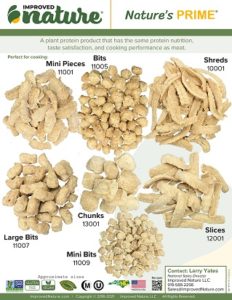
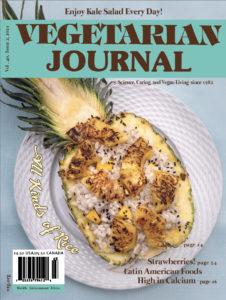
In the latest issue of Vegetarian Journal you’ll find a review of Improved Nature’s soy-based proteins. They come in bits, chunks, fillets, nuggets, pieces, poppers, shreds, slices, and tenders and are shelf-stable for two years. To prepare simply boil in water or broth for a few minutes. Our testers loved the hearty, meaty texture and the shreds were popular on barbecue sandwiches.
The product is sold to both consumers and food services. Buy online here: www.improvednature.com
Deseed dried peppers and hydrate by boiling for about 8 minutes.
Keep pepper-boiling water to blend other ingredients together.
Meanwhile, rinse TVP and in a separate
pan, rehydrate TVP by boiling in water for 15 minutes over medium-low heat.
Drain thoroughly and set aside when done.
Add olive oil to a
pan and sauté onion over low heat, until lightly browned and fragrant.
Next, cook the
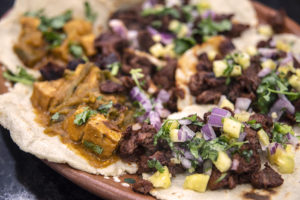
sauce for the Tacos al Pastor for about 15 minutes. Add rehydrated peppers,
pepper-water, chipotles, garlic, orange
juice, cumin, oregano, and cinnamon to a pan and simmer over low
heat, stirring occasionally for 15 minutes. Sauce will thicken and reduce. Add
sauce to TVP and allow to marinade a few hours in the fridge or up to 24 hours.
Assemble Tacos
1/2 cup finely minced yellow onion
3 teaspoons olive oil, divided
Taco shells or tortillas, your favorite
Fresh cilantro or oregano, to serve
Shredded lettuce, radishes or other favorite taco toppings to
serve
Pineapple Salsa
1 pineapple, skinned and diced
Salt, to taste, optional
1-3 Jalapeño peppers, seeded and minced (to taste)
2 cucumbers, minced
1/2 purple onion, sliced
Juice from 1 lime
To make the tacos, add marinated TVP to a skillet with onions and olive oil. Sauté over low heat until onions are light brown and everything is cooked through.
While doing that, begin
preparing the pineapple salsa. Finely chop pineapple and sauté in olive oil
until charred. This will sweeten the flavor. Add salt if desired.
Meanwhile, toss Jalapeno, cucumbers,
purple onion and cilantro with fresh lime juice. Add charred pineapple.
To assemble tacos, layer TVP and onion,
and pineapple salsa and other taco toppings as desired into a taco shell.
Tofu Con Rajas Poblanas from Chef Carlos Roberto Erez
(Fills about 10-12 tacos)
Tofu Filling
1 box firm tofu
Salt, to taste, optional
3 Poblano peppers
Sauce
4 plum tomatoes, quartered
1 teaspoon olive oil
1/4 large yellow onion, chopped
3 fresh Jalapeños, seeded and sliced (more or less,
to taste)
4-5 cloves peeled garlic
4 Tablespoons cilantro, finely minced
1 teaspoon garlic powder, optional
Salt, to taste, optional
Taco shells or tortillas
Favorite toppings (such as chopped lettuce, radishes, cilantro, etc.)
For the tofu filling, cut tofu into small pieces and sprinkle with salt.
Put tofu in an air fryer at 350 or medium power for about 15 minutes, or spread
out on a sheet pan and bake in the oven about 20-30 minutes at 350, until edges
are crispy and hard.
Meanwhile, roast Poblano peppers over open flame of gas stove or, in
your oven set to broil. They should be pitch black when ready. Place them in a
container to sweat for several minutes, until it’s easy to peel the skin. This
process imparts a delicious smokey flavor. Peel skin and then slice into thin
slivers. Set aside.
To make the sauce, sauté tomatoes in olive oil over
medium heat for about 2-4 minutes until they begin to wilt. Add onion,
Jalapeños, and fresh garlic. Cook until all ingredients are lightly charred.
Add to a blender with
cilantro and garlic powder, and pulse until it is the texture of salsa. Add
salt to taste. If you want a smooth sauce, add a little water and purée again.
Transfer sauce to pan and cook over medium heat until slightly reduced. Stir in sliced Poblanos and cooked tofu. Serve in taco shells or tortillas of choice with other toppings, as desired.
The latest issue of Vegetarian Journal features a recipe
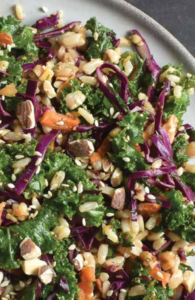
piece by Linda Tyler featuring Kale Salads. These recipes will inspire you to
eat your greens! Find recipes for:
Are you searching for make-up brushes
made without animal products? The Luxie Glimmer Set is entirely vegan and they
are soft. Find our complete review in the latest issue of Vegetarian
Journal. Available from Amazon and Nordstrom’s or online at www.luxiebeauty.com
Create and submit a video relating what you want to tell others
about vegetarianism/veganism.
Some possible topics: food, nutrition, your feelings about
veganism/vegetarianism, water usage and vegetarianism, veganism and animal
rights, or other vegan topics which appeal to you. Humor and feelings are
appreciated. All videos should be positive, not be critical of anyone, and not
include any footage of animal cruelty. You may submit a video you have already
made.
Aspects of judging include accuracy and judges wanting to
share the video with others. Entrants give permission to The Vegetarian
Resource Group to post and share the video, to link to and from the video, and
share the video with the media. Deadline to enter this year is July 15, 2021.
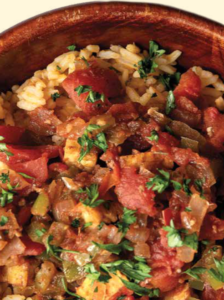
Sofrito with Carolina Gold Rice photo by Rissa Miller
In the latest issue of Vegetarian Journal, Chef Nancy Berkoff,
EdD, RD shares information on all the different types of rice sold in grocery
stores these days and offers up these recipes:
Each issue of Vegetarian Journal features a column called Vegan Action. In the latest issue, VRG intern Lucia Rivera interviewed Dilip Barman who has been vegan for over 20 years and a vegan activist. In addition to being president of the Triangle Vegetarian Society in the Raleigh-Durham area of North Carolina, Dilip teaches cooking classes for children and also was an Executive Producer for the documentary Code Blue,which features doctors and leading health experts discussing how lifestyle changes can prevent, manage, or reverse chronic diseases..
Every issue of Vegetarian Journal features a column
titled “Scientific Update,” by Reed Mangels, PhD, RD. Reed reviews recent
scientific papers related to vegetarianism. Recently she covered topics
including Vegan Pregnancy, as well as Bone Health.
Each issue of Vegetarian Journal
features a column called Vegan Cooking Tips by Chef Nancy Berkoff. The latest
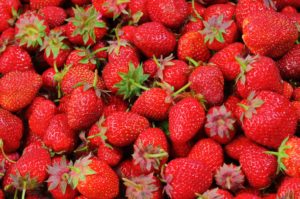
column focuses on strawberries.
Here are some ideas for enjoying strawberries
at every meal:
• Add sliced strawberries to mixed green or
pasta salads.
• Layer sliced strawberries, whole
blueberries, and vegan yogurt or silken tofu in a glass bowl to make an
attractive dessert or breakfast parfait. Sprinkle with chopped nuts, sesame
seeds, or pumpkin seeds if desired.
• Mash fresh or frozen chopped strawberries
with a dash of maple syrup and serve as a topping for waffles and pancakes.
• Blend strawberries with a little bit of
orange juice concentrate and use as a fresh fruit sauce for fruit salad,
pancakes, pound cake, cookies, or vegan ice cream.
• Add strawberries to breakfast smoothies to
give them a more vibrant taste and color.
• Create strawberry vinaigrette by blending
with oil, vinegar, and dried oregano, garlic, and nutritional yeast.
• To make baked oatmeal with strawberries,
simply mix oatmeal with boiling water, pat into a baking dish, top with sliced
strawberries, and bake at 350 degrees until firm.
• Create a soaked strawberry cake with
leftover cake or wheat bread cut into cubes, and mixed with blended
strawberries.
• Blend a strawberry lassi using
strawberries, vegan yogurt, coconut milk, and lemon zest.
Because the threats to the world are so
great, I am making my latest book, VEGAN REVOLUTION: SAVING OUR WORLD,
REVITALIZING JUDAISM, available to as many people as possible. I hope this
starts many respectful dialogues that will help shift our imperiled planet onto
a sustainable path.
Here is a link to the complete text of
my book. -Richard Schwartz
The Vegetarian Resource Group (VRG) is a non-profit organization dedicated to educating the public on veganism and the interrelated issues of health, nutrition, ecology, ethics, and world hunger. We have been helping health professionals, food services, businesses, educators, students, vegans, and vegetarians since 1982. In addition to publishing the Vegan Journal, VRG produces and sells a number of books.
Sign up for our newsletter to receive recipes, ingredient information, reviews of new products, announcements of new books, free samples of products, and other VRG materials.