Because the threats to the world are so
great, I am making my latest book, VEGAN REVOLUTION: SAVING OUR WORLD,
REVITALIZING JUDAISM, available to as many people as possible. I hope this
starts many respectful dialogues that will help shift our imperiled planet onto
a sustainable path.
Here is a link to the complete text of
my book. -Richard Schwartz
Each issue of Vegetarian Journal has a column titled
Nutrition Hotline by Reed Mangels, PhD, RD. In the latest issue Reed discusses
the topic “Vegan Diet and Acne.” For example, Reed states that “Some foods or
categories of foods, especially dairy products and diets that cause a quick rise
in blood sugar, are associated with an increased risk of acne.”
“Eating
vegan is too expensive.” This mainstream misconception
can be an instant turn-off for those considering a diet switch, an easy excuse,
as well as a major concern for low-income individuals interested in eating
vegan. However, as a low-income vegetarian teen, I can assure you, that it does
not take penny-pinching to make vegan and vegetarian diets affordable.
Breakfasts
that Don’t Break the Bank
Whether you want a breakfast that’s easy to
eat on the go or are looking for an indulgent dish for a brunch, eating
delicious vegan breakfasts does not have to be expensive.
Vegan eating does not limit one’s palate, but
rather opens a door to an entirely new way of creative, flavorful, and
sustainable eating. Vegan breakfast hashes are a perfect example of how a basic
concept can evolve into a myriad of different flavor combinations and nutrient
options. Choose a high-carbohydrate vegetable such as potatoes, yams, or corn
as the base for your dish. This will make the meal one that will keep you
satisfied and full of reliable energy for hours after breakfast. Add your
protein source: beans or tofu are some of the most cost-efficient and
nutrient-packed options. (Buying shelf-stable tofu can be a cheaper option
compared to refrigerated tofu depending on your store and allows you to keep this
product in your cabinet at all times). Finally, add any other vegetables you
want! A favorite mix of mine is yams, black beans, bell peppers, and tofu
scramble seasoned with cayenne, cumin, and a dash of cinnamon. To cut costs,
consider which vegetables you can find in your store’s frozen aisle. Spinach,
kale, and other leafy greens can be much less pricey when bought in this form
and add iron, potassium, and many other nutrients to your dish. After all, once
you have this mix all cooked up, you won’t be able to tell if it was bought
fresh or frozen. However, if you prefer to eat fresh produce, you can always
keep an eye out for low-cost vegetables at your local farmers’ market and in
stores, because depending on the season, sometimes buying fresh can be just as
financially practical as buying frozen. Simply, chop all of your veggies, sauté
the mix together in a frying pan paying special attention to which vegetables
will need to begin cooking first (frozen vegetables need to be defrosted and
potatoes and yams need to be added first to be fully cooked or you can boil a
large amount of potatoes, yams, etc. at the beginning of the week, keep them in
your fridge, and have those ready to use), add all the spices and flavors you
like, and voila, you have your easy, nutrient-dense, and delicious breakfast.
Another, albeit less labor-intensive,
breakfast to try is oatmeal. Not only are oats a great source of carbs, fiber,
and even protein, but they also are an easily customizable dish. Oats can be
topped with just about anything from dried fruits, nuts, chocolates, or
berries, and I recommend not buying brand-name oats. When it comes to oats,
there is no difference between brands beyond the price, so reach for the lowest
cost you can find at your grocery store. For overnight oats, choose your
flavors, pour in one part uncooked oats with two parts plant milk then toss
your add-ins into a sealable container (add chia seeds for added omega-3 fatty
acids). Leave your creation in the fridge overnight to have a delectable
breakfast you can easily eat the next morning. Another great option is
quick-oats, with these just boil some water or plant milk on a stovetop or in
the microwave, add in your oats, then let sit for a few minutes, and you have a
quick breakfast.
For my mornings, coffee is a must. I have
found that even with my morning cup of Joe I can save a few cents with some
easy switches. When you buy plant milks instead of buying refrigerated cartons
found in the dairy aisle, look to see if your grocery stocks shelf-stable boxed
plant milk. Where I live in Mississippi, a quart of shelf-stable soymilk costs
just a few dollars, and when bought in bulk, costs around eleven dollars for 6
quarts. In comparison, a refrigerated quart of soymilk costs around three
dollars. Also, you cannot practically buy these in bulk considering this
product must be refrigerated and expires sooner than the aseptic boxed plant
milk. While the difference between the costs of these two types of milk is not
a large one, I have found that it is a simple switch.
Don’t
Splurge on Snacking
While snacks are not meals, I have found that
as a teenager who is constantly running to class, extracurricular activities,
or work, that something quick-and-easy to eat can be just as important as a
sit-down meal. Although there are low-cost pre-made snack options, I find that
cooking up my own creations is the most cost-effective method for snacking.
Snacking on seeds, nuts, and dried fruits is a
go-to. These items are shelf-stable, simple to pack for on-the-go snacking, and
full of flavorful nutrients. However, buying nuts, seeds, and dried fruits can
be expensive if you do not seek out the best deals. Depending on if your
stores have continued the use of their bulk bins and dried food dispenser
stations throughout COVID-19, you may find lower prices in this area of the
store. This is also a good way to reduce your use of single-use packaging
Finding which stores in your area carry
low-cost produce, grains, and other vegan staples is also a necessary step in affordable
vegan eating. Check out your local markets or farmers’ markets to see if they
stock produce from nearby farms at a lower price. For your canned, dried, and
frozen items, almost any dollar store or discount market will stock these. I
recommend buying store brand items to cut costs.
Granola is another, easily customizable, snack
that you can make at the beginning of the week and continue to enjoy
throughout. While there are some fairly-priced vegan granolas on the market, I
have found that I prefer the flavors and the low cost of my homemade granola.
When making granola you use oats as the base before tossing in the add-ins of
your choosing. I usually, sprinkle in nuts, seeds, and dried coconut from my
stash of snacks. After you have completed your mix, you add in an oil (I prefer
coconut oil as it can be bought for as low as two dollars for a 10-ounce
canister) and a sweetener such as agave, maple syrup, or molasses, which while
can be higher-price items but can be rationed overtime to make the product a
worthy investment. Next, after a quick stir, you are ready to load this
mouth-watering mix into your oven. Let your granola toast to a golden brown
color at 300 degrees Fahrenheit for 15 minutes before it’s ready to enjoy.
Low-cost
Lunches
On the menu for lunch are the low-cost and
endless possibilities of dishes that beans and lentils present. From chickpea
salad sandwiches to Mexican-street food-inspired black bean and corn dip to
hummus, there are endless easy-to-make and delicious to-eat lunches that one
can create using beans. These are another food staple where you can seek out
the best prices by investigating multiple areas of your local grocery store.
Some stores have a wide variety of dried beans that usually are at a lower cost
than those sold in cans. Dried beans can be bought from the bulk bin section or
from where the shelf-stable dry goods are kept, and these dehydrated products
still contain the same nutrients and flavors as their fresh or canned
counterparts but can be bought at a more economical price. With dried beans and
lentils, you just soak the beans in cold water in a stove pot, bring them to a
boil, reduce heat, and then let them sit for a few hours. Once the beans are
rehydrated you will find that you can cook with them just as easily as you
would beans from a can to make lunches such as lentil daal, roasted chickpeas,
and red beans and rice.
From topping my salad with roasted chickpeas
to hummus and veggie sandwiches, I have found that a staple and favorite of
mine is chickpeas. Although hummus is another product you can usually find for
a reasonable price in stores, I prefer making my own. The recipe can be as
simple or elaborate as you would like. Add chickpeas, olive oil, lemon juice,
spices, and tahini to a blender or food processor, and after a few minutes of
blending, you have a creamy, protein- and flavor-packed dip. I bought a jar of
tahini from my local Mediterranean market for just a couple of dollars months
ago, and I have yet to finish it, I find it to be a great investment. From
using hummus as a spread for sandwiches to dipping vegetables or chips, this
delicious dip can be added to almost any lunch.
Discount
Dinners
Personally, after getting home from a long day
of school, stress, and all the responsibilities that high school students have,
I am not up for spending hours in the kitchen. One-pan roasted vegetable
combinations have become my savior on such nights. Simply cut up any vegetables
you have lying around, or for a cheaper option, pull a bag of frozen vegetables
out of the freezer and plop them straight in the pan. After seasoning with
whatever sauces, spices, or aromatics that you are craving just pop the pan in
the oven set at 350 degrees Fahrenheit, and then rest as the vegetables do the
work for you.
Rice, quinoa, and other such grains can be
added to your steaming pile of roast veggies to give it a boost of carbohydrate
energy. Buying these ingredients from the dried bins at your store allows them
to be a cheap way to add bulk to any meal. Brown rice contains more fiber than
white rice which can promote gut health. Quinoa is another nutrient-packed
option. Not only are these grains inexpensive in my area, but they are also
easy to prep at the beginning of the week and enjoy with multiple dinners. Whether
you are simply adding these grains to roasted vegetables, on top of a salad, or
smothering them in stewed lentils, they make any dinner complete.
For this next discount dinner option, I
recommend heading to your local Dollar Store, Dollar General, or any low-price
market. With a quick glance at the nutrition labels in their pasta aisle, you
will realize that most of these products are surprisingly vegan. Pick up a jar
of premade sauce, making sure that the ingredients do not contain animal
products, and you have yourself a simple, cheap, and delicious pasta meal for
as low as two dollars!
Inexpensive
Indulgences
Although dessert is not an official meal, I
would argue that it is just as important as breakfast, lunch, or dinner. For a
simple, low-cost, but succulent sweet end to the day, homemade fruit cobblers
are always my go-to. Whether I make a full dish of this dessert to share with
my family and friends or making a single serving in a mug, I can always use
frozen fruit. Buying fruit frozen instead of fresh is a very simple switch that
cuts costs as well as halves your time prepping fruit when cooking. I just grab
a bag of peaches, strawberries, or whatever fruit I am craving from the
freezer, portion out the amount I am making, add sugar, cinnamon, and lemon
juice, and then pop this mixture into the microwave or oven. To spruce the dish
up I often create a crumble topping out of flour, spices, and coconut oil that
can be sprinkled over the fruit filling minutes before the dish is done
cooking. After allowing the crumble to turn a golden brown and the fruit to
become a gooey, jammy filling, this easy fruit cobbler is ready to be devoured!
With minimal planning, some price scanning,
and creative cooking, I’m sure you will find that being vegan will not bankrupt
you and that it can be even more cost-effective than eating animal products!
The contents of this posting, website, and our
other publications, including Vegetarian Journal, are not intended to provide
personal medical advice. Medical advice should be obtained from a qualified
health professional. We often depend on product and ingredient information from
company statements. It is impossible to be 100% sure about a statement, info
can change, people have different views, and mistakes can be made. Please use
your best judgment about whether a product is suitable for you. To be sure, do
further research or confirmation on your own.
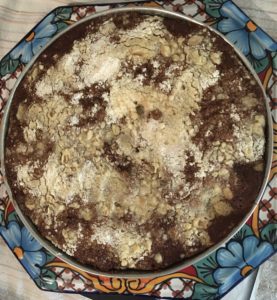
Shoofly pie is associated with the Pennsylvania Dutch. It’s made with molasses and brown sugar and is so sweet that the flies have to be shooed away. Long ago, a friend and co-worker gave me a recipe for Shoofly Cake, which has the flavor of shoofly pie without the work of making a pie crust. I made a few substitutions to make it vegan and adjusted the baking time and it has been a favorite family birthday cake for years.
Shoofly Cake (makes 1 9” round cake)
2½ cups all-purpose flour
¾ cup organic sugar
1 teaspoon baking soda
½ teaspoon salt
1/3 cup vegan stick margarine or shortening
1 cup hot water
½ cup molasses (not blackstrap molasses)
Preheat oven to 350 degrees. Lightly oil a 9-inch round cake
pan.
Combine flour,
sugar, soda, and salt in a large mixing bowl. Cut in margarine with a pastry
blender or a fork until the mixture resembles fine crumbs. Reserve 1/3 cup of
the crumbs and set aside.
Stir together the
hot water and molasses and add to the flour mixture in the large mixing bowl.
Stir just until combined. Spread batter into prepared pan and sprinkle with
reserved crumb mixture. Bake 30-35 minutes until it is done.
The
VRG received an inquiry about pig-derived kosher gelatin. Our reader wondered
if there were any updates to our 2008 article titled Gelatin:Sometimes Kosher But Still not Typically Vegetarian.
At that time we interviewed several leading kosher certifying agencies who unequivocally stated that pig-derived gelatin could never be kosher. In April 2021, we contacted two leading kosher certifying agencies, Star-K and the Orthodox Union, to see if their positions had changed. Again, representatives on both of their consumer telephone lines said without any hesitation that “gelatin from pigs is never kosher.” For more, see:
Rabbi
Amiel Novoseller of the kosher certifying agency, Ko Kosher Service , did not agree
with that stance in 2008 when we last spoke with him. In his opinion, porcine
gelatin is kosher.
We
caught up with him in 2021 to see if there were any updates to his viewpoint.
Rabbi Novoseller told us that his stance “has not changed at all.” Here is his
justification (reprinted from our 2008 article):
“…gelatin is not a food. At one time
during its processing, when the bones and hides of animals are treated with
acid during the gelatin extraction process, gelatin was not a food. In fact, it
was “inedible even to a dog,” referring to a commonly known Jewish
test of what is or is not a food. According to Jewish dietary laws, “If
something is not a food, it cannot be non-kosher.” Therefore, according to
Rabbi Novoseller, gelatin is kosher, regardless of animal species and
slaughter method.”
Gelatin
used as a processing aid in food and beverage products and in pharmaceuticals
During
our discussion in April 2021, Rabbi Novoseller provided added insight to the
issue of gelatin in food products. He stated that sometimes gelatin may be used
during the processing of a food because it performs well during certain
filtration or suspension stages, unlike other substances. In these cases,
gelatin is not in the final food, and, so, would not appear on the label.
Vegetarians
and vegans, in these cases, could not know if gelatin were used as a processing
aid unless they contacted the food product company directly about unlabeled
processing aids. For tips on how to get ingredient information from food
companies, readers may find our article on this topic
helpful.
Rabbi
Novoseller also pointed out that gelatin of any source, used for medicinal
purposes, could be considered permissible for consumption under Jewish law on
the basis of “preservation of life” whether the gelatin had been certified
kosher or not. This includes porcine gelatin in pharmaceuticals used during
manufacture or in the final product. He noted, however, that kosher
alternatives, if they exist, are always preferred.
If
consumers are unsure of what to ask companies specifically about gelatin
used as a processing aid in food or beverage products or in pharmaceuticals
that they wish to consume, they should consult with the kosher agency that
certified the product in question for more information.
Rabbi
Novoseller declined to provide names of specific products or companies using
porcine gelatin that he certifies. He noted that there are at least 4-5 other
rabbis/kosher certifiers who consider porcine gelatin as kosher.
He
also pointed out that since several of these certifiers as well as pig gelatin
manufacturing plants exist, we can conclude that kosher and non-kosher porcine
gelatin are currently in many food and beverage products and pharmaceuticals.
Rabbi
Sheldon Goldsmith on porcine gelatin
Another
kosher certifier of porcine gelatin is Rabbi Sheldon Goldsmith who spoke with
The Vegetarian Resource Group in May 2021. Rabbi Goldsmith’s position is that
pig-derived gelatin is not a meat byproduct, and, so, can be considered both
kosher and pareve.
He
later wrote to us:
“The production of the gelatin starts with the refinement of collagen-bearing tissues of any animal that has been raised and slaughtered for food purposes. The principal collagen-bearing tissue used is hide trimmings. These materials are carefully soaked in alkalis and/or acids and washed in clean water to remove almost all non-collagen constituents, including meat. During this soaking period the collagen is converted to gelatin. The treated materials are then cooked gently in pure water to extract the gelatin, which is further refined by filtration. The gelatin extract is then evaporated and dried to produce gelatin of the highest grade. (Contrary to common belief, gelatin is not manufactured from horns or hooves or meat of animals, for these do not contain the necessary collagen.)
It is interesting to note that during manufacture of gelatin, chemical changes take place so that, in the final gelatin product, the composition and identity of the original material is completely eliminated. Because of this, gelatin is not considered a meat food product by the United States government. The [manufacturing] plant is under supervision of the U.S. Food and Drug Administration. If the government considered gelatin a meat food product, the plant would operate under the Meat Inspection Branch of the Department of Agriculture.”
Rabbi
Goldsmith provided a summary of the Halachic principles used to justify his
view:
“…When by chemical processes, the
elements are separated and a new substance is produced… since it cannot be
attained unless the original material is dried and spoiled, even if later, by
chemical processes, it is given a good taste, it is considered a new
substance…Kosher and Pareve. Thus, by all standards Gelatin may be classified
as a new substance regardless of its origin prior to the various
chemical treatments and processes preceding the product called gelatin.” [Note:
Bold accent added by The VRG.]
NOTE FROM
THE EDITOR: When relying on kosher, vegetarian, vegan, animal welfare, organic,
or any other certification on a label, you should investigate the criteria of
the certification and how it matches your needs. Each certification most likely
will have somewhat different approaches and interpretations.
The contents of this posting, our website, and our other publications, including
Vegetarian Journal, are not intended to provide personal medical advice.
Medical advice should be obtained from a qualified health professional. We
often depend on product and ingredient information from company statements. It
is impossible to be 100% sure about a statement, info can change, people have
different views, and mistakes can be made. Please use your best judgment about
whether a product is suitable for you. To be sure, do further research or
confirmation on your own.
Bbq sauce, cashew mozz, poblano peppers, bell peppers, charred corn, spicy chickpeas, chipotle ranch drizzle pizza from Goodbeet
The Vegetarian Resource Group maintains an online Guide to
Vegan/Vegetarian Restaurants in the USA
and Canada.
Here are some recent vegan restaurant additions. The entire guide can be found
here: http://www.vrg.org/restaurant/index.php
To support the updating of this online restaurant guide,
please donate at: www.vrg.org/donate
Here are some new additions to VRG’s guide (Note: Due to
the COVID-19 pandemic many are doing take-out
and/or delivery now):
Aratham
Gourmet to Go, 3381 Rochester Rd., Troy, MI 48083
Aratham Gourmet to Go is making eating healthy vegan meals
affordable and accessible. With to-go, delivery, and catering service providing
delicious dishes like their vegan take on a Philly Steak Sandwich and the “Tuna
Melt”, you can’t go wrong! Don’t miss out on their colorful freshly squeeze
juices, like the Aratham Red, Green #1, or Yellow, and make sure to stop by to
try their new dishes that are added every week!
Fermento,
1048 West Beech St., Long Beach, NY 11561
Inspired by Italian and Mediterranean cuisine, this café
serves a selection of baked goods, lunch items, and even serves fresh-squeezed
orange juice! They also offer espresso, tea, and a myriad of other coffee
drinks. Be sure to try their homemade pancakes or a tofu scramble bowl for
breakfast.
Goodbeet,
29 Haddon Ave., Westmont, NJ 08108
With a focus on using local organic produce and making
baked goods in-house using coconut sugar, Goodbeet offers a wide range of
healthy twists on casual comfort foods and proves just how creative vegan
cuisine can be. From starters like Tofu Nuggets with BBQ or maple Dijon dipping
sauce to the Wedge Salad with coconut bacon to the Sloppy Jack made with BBQ
jackfruit, their menu offers something for every craving. They also offer a
wide variety of lattes and smoothies—including the Birthday Cake smoothie,
which includes vanilla protein and sprinkles on top. Hopefully you can manage
to save some room for the in-house baked goods for dessert.
Mondays
Plant Café, 208 4 St. NE, Calgary, AB T2E 3S2 Canada
Mouth-watering options include Rainbow Pad Thai –
spiralized beet, zucchini, and carrot in a creamy peanut dressing, with edamame
beans, sesame seeds, and local micro greens; Plant Bowl – greens, lentils,
carrot, cashew-ricotta, sunflower seeds, creamy basil dressing, micro-greens;
plus much more.
Think of all the Italian favorite dishes made from plants
twist. Plethora of Italian sandwiches available in half or whole gumbo
portions. Mouth-watering options such as Get the F Outa Here: Onions and
peppers caramelized to perfection with brown sugar, then slow-cooked in bbq
sauce with diced habaneros. Served on Italian garlic bread with Italian
sausage, and topped with crispy onion strings, ”Sausage and peppers never
tasted so good’’. Check out their desserts as well!
Poor
Man Vegan, 90 Monticello Ave., Jersey City, NJ 07304
It may be known for its vegan cupcakes, but this Jersey
City café serves it all. Made noticeable by its bright-green and yellow
exterior, this café offers a rotating buffet that makes it easy to get your
delicious meal quickly. Poor Man Vegan serves breakfast all day, and you can
even get your food delivered! Be sure to try their popular vegan empanadas,
which are offered in five different flavors.
Soulshine,
3864 Mission Blvd., San Diego, CA 92109
Make your day a little brighter by indulging in the
delicious drinks that Soulshine is serving up. Take a gander around the vegan
market in-store while you sip on their Lavender Latte or House made Matcha
Lemonade. If you are looking for a quick bite to go along with your coffee then
you must try the Herb Biscuit Sandwich, a cheddar & jalapeño biscuit loaded
with a pho-egg patty, “bacon,” fresh lettuce and topped with a slice of vegan
smoked provolone cheese, or satisfy your sweet tooth with one of their seasonal
pastries.
The
Nile Coffee Shop, 105 West Main St., Mesa, AZ 85201
The Nile Coffee Shop offers a 100% vegan breakfast and
lunch menu. Several options have a southwestern theme as might be expected in
Arizona. Chipotle mayo is served with several of the breakfast burritos
including the Arizona tofu burrito with vegan cheddar and bacon, the southwest
burrito with soyrizo and sweet potato hash, and the copper state burrito with
vegan ham and cheddar. The lunch menu includes salads and sandwiches such as
the mushroom melt with vegan provolone and bacon, and the Philly steak sandwich
with peppers, onions, and vegan provolone. The Nile Coffee Shop is located in
the historic Nile Theater and hosts live music venues.
Vaca’s
Creamery, 1436 W. Blackhawk St., Chicago, IL 60642
Vaca’s Creamery is an all-vegan ice cream parlor. They
have a variety of options such as ice cream, handshakes, drinks, various
toppings, and sundaes. Some flavors that they have are Vanilla, Chocolate,
Strawberry, Chocolate cake. Dulce de leche. They are located near the North
Branch Chicago River.
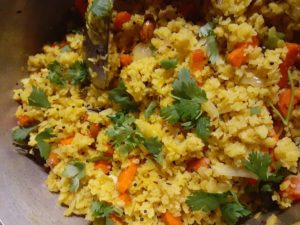
3-1/2 cups poha (medium to thick poha,
which can be found in Indian or Asian markets)
4 Tablespoons coconut oil
6 Tablespoons peanuts
2 teaspoons mustard seeds
2 teaspoons cumin seeds
2 chopped red chili
3 curry leaves chopped
3 pinches hing (asafoetida)
1-1/2 medium-sized onions, chopped
1 cup chopped green bell pepper
2 cups chopped carrots
2 Tablespoons of turmeric
Salt to taste
Lemon juice to taste
Chopped coriander leaves, for
garnish
In a
large pot clean the poha and be careful not to rinse it too much as it can get
soggy and mushy. In a separate pot add 1 Tablespoon of coconut oil and then add
peanuts and fry over medium heat until golden brown. Take out the peanuts and
put them aside. In the same pot add 3 more Tablespoons of coconut oil and wait
for 2 minutes. Add mustard seeds and cumin seeds and stir for 1 minute. Next,
add red chili, curry leaves, hing, and onions and fry for 2 minutes. Add green
bell pepper and carrots and stir for 3 more minutes. Add turmeric and mix for 1
minute. Add the soft poha and peanuts and integrate everything. For taste, add
salt and lemon juice, and on top garnish with coriander leaves.
Are you looking for
comfortable shoes that are vegan-friendly? Merrell offers a wide selection for
men and women. Search under the word vegan at https://www.merrell.com/
Tempeh (also known as tempe) is a traditional fermented
product that originated in Indonesia. It is made by hulling, soaking, and
partially cooking whole soybeans or other legumes, grains, or seeds. The beans
are then inoculated with a tempeh starter (most commonly rhizopus spores) and incubated. The final product, tempeh, is a
solid cake that has a mat of white mycelium (fine filaments) holding together
the beans, grains, or seeds. Tempeh’s taste has been described as “nutty,”
“cheesy,” “yeasty,” or “like mushrooms.”
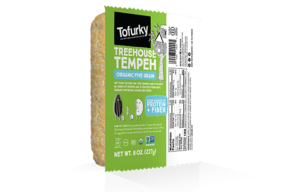
Commercial varieties of tempeh, in addition to soy tempeh
include Tofurky’s Five Grain Tempeh made with soybeans, brown rice, sesame
seeds, sunflower seeds and millet; Lightlife’s Three Grain Tempeh made with
soybeans, brown rice, barley, and millet; and SoyBoy’s Five Grain Tempeh made
with soybeans, brown rice, millet, kasha, and quinoa. Soy-free tempeh products
include those made with azuki beans, chickpeas, and black beans, split peas,
and lentils.
Nutritionally speaking, tempeh has a lot going for it. A
3-ounce serving of soy-based tempeh has 150-190 calories; tempeh made from
other legumes may be somewhat lower in calories. Tempeh made with soybeans has
more protein than a similar amount of tofu with a 3-ounce serving of tempeh containing
11-20 grams of protein. Tempeh made with other legumes and/or grains is lower
in protein. Tempeh is a good source of fiber with 2 to 5 times more fiber than
a similar amount of tofu.
Tempeh is a reasonably good source of iron with 2 milligrams
in a 3-ounce serving and of calcium. A 3-ounce serving of soy-based tempeh has
70-100 mg of calcium. Unless vitamin B12 or a vitamin B12- producing bacteria
are added during processing, tempeh is not a reliable source of vitamin B12. Tempeh is low in sodium although it may be
used to make higher sodium foods like tempeh bacon and tempeh burgers.
Tempeh can be marinated and broiled or grilled, sautéed,
added to stir-fries or soups, used to top pizza, and to fill tacos or burritos.
The Stanford Inn Resort,
is offering guests the opportunity to grow their lunch and eat it too with two
new vegan retreats – one this summer and another in the fall.
“Everything we serve at our resort is organic,
plant-based, and conscientiously prepared with respect for the land,” said Jeff
Stanford, owner of the resort. “We field so many questions, we felt a couple of
retreats would allow guests an authentic hands-on experience.” From cooking to
nutrition, effective habit-change to environmental and ethical issues, guests
will learn everything they need to know to be a happier, healthier person. The
luxury eco-property has its own USDA Organic certified farm that provides
produce for the Resort’s award-winning plant-based Ravens Restaurant.
The vegan retreats offer guests of the Stanford
Inn Resort a chance to learn how to practically and logistically be vegan, and
to show how simple it can be with regard to nutrition and cooking. There seems
to be a feeling that transitioning to a vegan lifestyle is difficult. Stanford
Inn Resort takes the guess work out of the process, and clears the confusion.
There are two vegan retreat sessions available:
· Thursday, July
29 – Monday, August 2
· Thursday,
September 9 – Monday, September 13
Each vegan retreat includes:
· 4-night stay
· 4 breakfasts
· 4 dinners
· 2 cooking
classes
·
Nutrition/healthy living class with author/nutritionist Sid Garza-Hillman
· Sid’s Small
Steps Approach with author/nutritionist Sid Garza-Hillman
· “Bringing it
Home” talk with Jeff Stanford & Sid Garza-Hillman–how to apply what you’ve
learned!
· Complimentary
book copies of: Dining at
the Ravens Cookbook by Jeff & Joan Stanford and The Art of Play by Joan
Stanford; Approaching the
Natural by Sid Garza-Hillman
· Raising Healthy Parents: Small Steps,
Less Stress, and a Thriving Family by Sid Garza-Hillman
· Mountain bike
rental
Cost:
$2150/person + tax (single occupancy),
gratuities not included
$1390/person + tax (double occupancy),
gratuities not included
The
Stanford Inn Resort is located at 44850 Comptche Ukiah Road, POB 487,
Mendocino, CA 95460. In addition to its farm and sprawling ecological
landscape, the Stanford Inn Resort also hosts the Environmental Leadership
Field School, an intensive experience that mobilizes future leaders from
different fields to support and enhance the environment, biodiversity, and
equitable relationships.
Guests at the Resort wander freely on the
grounds, where they’ll see a variety of plants including edible flowers as well
as a small menagerie of rescued animals. Those seeking a variety of other
experiences make their way to resorts wellness center, which offers massage in
the forest, nutrition and cooking classes, creative play shops, guided hikes,
and various yoga and meditation classes. The Stanford Inn Resort’s outdoor shop
offers different paddling and peddling experiences and specializes in redwood
outrigger custom built canoe rentals, including the Canine Cruiser series – the
only canoes in the world designed specifically for dogs and people to cruise
together safely in style, with a raised and padded pooch floor.
The Vegetarian Resource Group (VRG) is a non-profit organization dedicated to educating the public on veganism and the interrelated issues of health, nutrition, ecology, ethics, and world hunger. We have been helping health professionals, food services, businesses, educators, students, vegans, and vegetarians since 1982. In addition to publishing the Vegan Journal, VRG produces and sells a number of books.
Sign up for our newsletter to receive recipes, ingredient information, reviews of new products, announcements of new books, free samples of products, and other VRG materials.